

Ford Edge Code C1168: ABS Wheel Sensor Fault or a Wiring Connector Issue?
On a Ford Edge, 'C1168' has two distinct meanings. It is commonly a trouble code for a 'Right Rear Wheel Speed Sensor Coherency Fault', usually fixed by replacing the sensor (~$25-$75). However, Ford also uses 'C1168' as a name for a specific wiring connector, and damage near it can cause engine cooling sensor problems, as noted in TSB SSM 47791.
- First, determine if your issue is with the brakes (ABS/Traction lights) or engine cooling (temperature gauge/fans). This will tell you which 'C1168' you are dealing with.
- If you have ABS lights, C1168 almost always points to a problem with the right rear wheel speed sensor circuit.
- The most likely fix for the ABS code is replacing the right rear wheel speed sensor, which is an affordable and accessible DIY job.
- If you have engine cooling issues, refer to TSB SSM 47791 and inspect the wiring near the connector labeled C1168, rather than replacing sensors.
- Always use a scanner that can read ABS live data to confirm which wheel sensor is failing before buying parts.
What's Unique About the 2015-2019 Ford EDGE
The main challenge for the 2015-2019 Ford Edge is this dual use of the 'C1168' designator. Owners may find C1168 defined as an ABS code on scanning tools, while a technician referencing a Ford TSB for an unrelated engine cooling issue might be directed to a physical connector with the same name. It is critical to know which system is showing a fault: the ABS module or the Engine Control Module (ECM). The symptoms present in the vehicle are the best guide to determine which issue you are facing.
Diagnostic Flowchart
Tap your situation to follow the diagnostic path that matches what you're seeing on this vehicle.
Symptoms You May Notice
- ABS warning light is on
- Traction control or stability control (AdvanceTrac) warning light is on
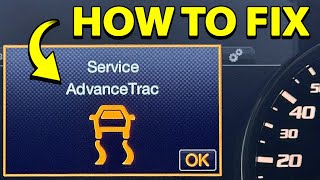
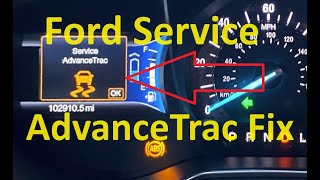
- "Service AdvanceTrac" message on the dashboard 🎬 Watch: Understanding the Service AdvanceTrac message and common fixes.
- "Hill Start Assist Disabled" message
- Brake pedal feels different during hard stops as ABS will not activate
- Collision Warning Malfunction message may appear simultaneously
- Replacing the wheel bearing when only the sensor is bad.
- Confusing the ABS code with the wiring connector location mentioned in TSBs for unrelated issues.
- Replacing the ABS module when the fault lies in the wiring or a sensor.
Most Likely Causes
- Defective Right Rear ABS Wheel Speed Sensor 🔴 High Probability → Shop ABS Wheel Speed Sensor Wheel speed sensors are exposed to harsh conditions (water, road debris, vibration) and are a common failure point on most modern vehicles. Ferrous deposits from brake wear can accumulate on the sensor tip, impeding its ability to read the tone ring.
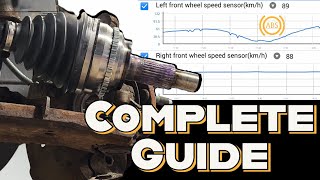
How to confirm: Use an OBD-II scanner capable of reading ABS codes and live data. Monitor the 'RR Wheel Speed' PID while driving. If the reading is erratic, drops to zero, or doesn't match the other wheels, the sensor is likely bad.
Typical fix: Replace the right rear ABS wheel speed sensor. It is typically held in by a single 8mm bolt and can often be replaced without removing brake components. 🎬 See this walkthrough on replacing the ABS wheel speed sensor.
Est. part cost: $25-$75 - Damaged or Debris on Wheel Bearing Magnetic Tone Ring 🟡 Medium Probability The tone ring, which the sensor reads, is often integrated into the wheel bearing seal. Rust jacking or metallic debris from brake wear can accumulate on it, distorting the signal. In some cases, the ring itself can be damaged, which is a less common but known issue.
How to confirm: After removing the wheel speed sensor, visually inspect the tone ring inside the hub assembly using a flashlight. Look for cracks, missing teeth (if applicable), or a buildup of metallic shavings. The surface should be clean and free of damage.
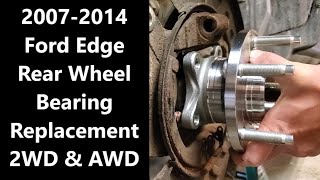
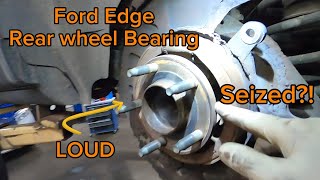
Typical fix: Clean the tone ring carefully with a brush and brake cleaner. If the ring is damaged or part of the sealed bearing, the entire wheel hub and bearing assembly must be replaced. 🎬 Watch: Step-by-step guide to replacing the rear hub bearing assembly.
Est. part cost: $100-$250 - Wiring or Connector Damage to the RR Wheel Speed Sensor ⚪ Low Probability → Shop ABS Wheel Speed Sensor
How to confirm: Visually inspect the wiring harness leading from the sensor up into the wheel well for any signs of chafing, breaks, or corrosion in the connector. Perform a continuity test on the wires between the sensor connector and the ABS module connector using a multimeter. Sometimes the copper wire can break internally while the outer insulation appears intact.
Typical fix: Repair the broken or corroded section of wire using solder seal connectors or a new pigtail connector. Ensure the repair is weatherproof.
Est. part cost: $15-$40
Rare But Worth Checking
- Failing ABS Control Module: This is rare. Before condemning the expensive ABS module, exhaust all other possibilities including sensor, tone ring, and wiring issues. This would typically be accompanied by other communication codes, such as U0121 (Lost Communication With ABS Control Module).
- Low Battery Voltage or Poor Connection: Modern vehicles are sensitive to voltage. A failing battery or corroded terminals can cause multiple, seemingly unrelated electronic faults, including triggering the 'Service AdvanceTrac' message. Before extensive diagnostics, ensure the battery is fully charged and the terminals are clean and tight.
Diagnosis Steps
- Confirm the Fault: Use an ABS-capable OBD-II scanner to confirm that C1168 is an active or pending code in the ABS module.
- Monitor Live Data: Access the live data stream for all four wheel speed sensors. Drive the vehicle slowly (under 15 mph) and observe the readings. The right rear (RR) sensor should read identically to the others. If it lags, drops out, or is erratic, you have confirmed the fault location.
- Visual Inspection: Raise and safely support the rear of the vehicle. Remove the right rear wheel. Visually inspect the ABS sensor and its wiring harness for obvious damage, like breaks, melting, or chafing.
- Inspect the Tone Ring: Unbolt and remove the ABS sensor (typically an 8mm bolt). Shine a light into the mounting hole and inspect the tone ring on the hub assembly. Look for rust, metallic debris, or physical damage.
- Test the Sensor (Optional): If you have a multimeter, you can test the sensor. Disconnect the sensor and set the multimeter to measure resistance (Ohms). A typical passive sensor should read between 800-2500 Ohms. An 'OL' reading indicates an open circuit. Alternatively, set the meter to AC Volts, spin the wheel by hand, and look for a small generating voltage (e.g., >200mV AC).
- Check Wiring Continuity: If the sensor and tone ring appear good, disconnect the sensor and the main ABS module connector. Use a multimeter to check for continuity and shorts to ground on the two wires running to the right rear sensor.
- Conclude the Diagnosis: Based on the steps, the most likely failure is the sensor itself, followed by the tone ring/hub, and finally the wiring.
Parts You'll Likely Need
- Right Rear ABS Wheel Speed Sensor
(OEM #J2GZ-2C204-D (supercedes BRAB-346, CT4Z-2C190-A))— This sensor is the most frequent cause of a C1168 coherency fault due to its exposed location and electronic nature.
Trusted brands: Motorcraft, Bosch, Delphi, Standard Motor Products, Duralast
OEM price range: $50-$90
Aftermarket price range: $25-$75 - Right Rear Wheel Hub Bearing Assembly — This is needed if the magnetic tone ring, which is integrated into the hub, is damaged or if the bearing itself has failed, causing excessive play that affects the sensor reading.
Trusted brands: Motorcraft, Timken, SKF, MOOG
OEM price range: $175-$300
Aftermarket price range: $100-$250
Related Codes That Often Appear With This One
- C1175 — C1175 is 'Speed Wheel Sensor LR Input Circuit Failure'. It is common to see faults for multiple wheel speed sensors if there is a systemic issue like wiring harness damage or an ABS module fault.
- C1236 — C1236 is 'Speed Wheel LR Input Signal Missing'. Like C1168, this points to an issue with a wheel speed sensor circuit, just on the left side.
- U0121 — This code indicates a 'Lost Communication With ABS Control Module'. If seen alongside C1168, it could point towards a more serious issue with the module itself or its main power/ground connections, rather than just a single sensor circuit.
Technical Service Bulletins (TSBs) & Recalls
- SSM 47791: Points to potential wiring damage for the ECT sensor circuit near a connector named C1168. This does not relate to the ABS trouble code C1168 but is a critical point of confusion. It applies to the Edge, MKX/Nautilus, Fusion, and Continental.
Platform-Specific Known Issues
- TSB SSM 47791 - Clarification: This bulletin addresses issues with the Engine Coolant Temperature (ECT) sensor, NOT the ABS system. It directs technicians to inspect wiring near a connector named 'C1168'. If your car has engine cooling problems (like fans always on) and you came across this TSB, your issue is wiring repair, not an ABS sensor. The TSB explicitly warns *against* replacing the ECT sensor if damaged wiring is found at this location.
- Wiring Harness Routing: The rear wheel speed sensor harness is routed through the wheel well and secured with several plastic clips. These clips can become brittle and break, allowing the harness to contact moving suspension or wheel components, leading to chafing and wire damage.
Mechanic-Grade Diagnostic Values
- Active ABS Wheel Speed Sensor Resistance — expected: High resistance, typically in the hundreds of kΩ (kilo-ohms) or several MΩ (mega-ohms).. Failure: An 'OL' (Open Loop) or infinite resistance reading on a multimeter indicates a failed sensor. Unlike older passive sensors, these should not show low resistance.
- Passive ABS Wheel Speed Sensor AC Voltage Generation — expected: Greater than 0.25 Volts AC when the wheel is spun by hand at about half a revolution per second.. Failure: Voltage less than 0.25V AC indicates a weak or failed sensor. Note: This test applies to older, passive-style sensors and may not be applicable to the active sensors on the 2015-2019 Edge, but it is a common general diagnostic step.
- ABS Sensor Harness Continuity Check — expected: Less than 5 ohms of resistance between the sensor-side harness connector and the corresponding pins at the ABS module connector.. Failure: Resistance greater than 5 ohms indicates excessive resistance or an open circuit in the wiring harness.
Scan Tool Commands That Help
- Ford IDS (or FORScan): All CMDTCs (Self Test) — This is the initial step to retrieve all Continuous Memory Diagnostic Trouble Codes from the ABS module and confirm the C1168 fault code is present.
- FORScan: ABS Service Bleed — After replacing the ABS hydraulic control unit (HCU) or if air is suspected to be trapped in the module. This function cycles the internal solenoids and pump to purge trapped air during the brake bleeding process.
- Ford IDS (or FORScan): Programmable Module Installation (PMI) / As-Built Configuration — This is required when replacing the ABS control module. It configures the new (or used) module with the vehicle's specific VIN and option data (known as 'as-built' data) to ensure it communicates correctly with other systems on the CAN bus.
Wiring & Ground Locations
- ABS Module Fuses — In the under-hood fuse box (Battery Junction Box), located in a 'hidden' compartment underneath the main fuse tray. You must lift the main tray to access them.. Fuse #69 (30A) powers the ABS valves and Fuse #87 (60A) powers the ABS pump. A loss of power can cause various ABS codes and system failure, so these should be checked early in the diagnosis.
- C135 — The main electrical connector at the ABS control module, located behind the battery tray area in the engine compartment.. This is the termination point for all wheel speed sensor circuits. Advanced wiring diagnostics, such as checking for continuity or shorts from the right rear sensor, must be performed at the specific pins of this connector.
- G105 / G107 — G105 is a primary ground point on the left front of the engine compartment. G107 is on the right front of the engine compartment.. The ABS module relies on a solid ground connection to function. A corroded or loose ground at these points can cause intermittent and difficult-to-diagnose electronic faults, including ABS errors.
Real Owner Repair Stories
- YouTube channel 'Duct Tape Garage' (Ford Edge (year not specified, but similar generation)) — ABS light, Traction light, brake pedal goes to the floor, codes C0020:12AB and C0020:13AB.
❌ Tried (didn't work) Attempting to remove only the electronic portion of the ABS module without removing the hydraulic pump proved impossible due to clearance issues.
✅ What actually fixed it The entire ABS module/pump assembly was replaced with a used unit from a junkyard. After installation and bleeding the brakes (using a pressure bleeder and the FORScan ABS service bleed function), the new module was programmed using FORScan. The 'load factory AB' (As-Built) function successfully configured the used module to the car, resolving the warning lights. - YouTube channel 'Fix It Angel' (Ford Edge (year not specified, similar generation)) — ABS and Traction Control lights on, codes C1175 & C1236 (Left Rear sensor faults).
✅ What actually fixed it The video demonstrates a diagnostic technique, not a final repair. To determine if the fault was the sensor or the wiring, the technician disconnected both the left rear and right rear sensor harnesses. He then plugged the known-good right rear sensor into the left rear harness. When the wheel was spun, the scan tool now showed a signal on the 'Left Rear' data PID. This proved the left rear sensor was bad and the vehicle's wiring to the ABS module was good. This technique is directly applicable to diagnosing C1168.
When the Usual Fixes Don't Work
- A critical correction from Pass 2 data involves the OEM part number for the most common fix. Code C1168 is for the Right Rear (RR) wheel speed sensor. The part number previously listed, J2GZ-2C204-D, is for the FRONT Right sensor. Installing this part will not fix the code. The correct OEM part number for the REAR sensor is in the F2GZ-2C190-x family. This highlights the importance of verifying part location before purchase, as front and rear sensors are not interchangeable.
OEM Part Supersession History
CT4Z-2C190-A→F2GZ-2C190-A, then F2GZ-2C190-B— Part revision or supplier change.
Heads up: This is the correct part chain for the REAR wheel speed sensor applicable to code C1168. The previously listed part number J2GZ-2C204-D is for the FRONT sensor and will not work for this fault.
Model Year Variations Within This Range
- 2019: The 2019 model year was a mid-cycle refresh. It featured cosmetic updates (grille, liftgate), a new 8-speed automatic transmission, and a redesigned center console with a rotary gear selector. The high-performance ST trim with a 2.7L V6 was also introduced. However, for the standard 2.0L engine, the underlying ABS hardware and wheel speed sensors remained largely the same, so the diagnosis for C1168 is consistent with earlier years.
Helpful Videos

We Have This Part in Stock



The information in this article is provided for general reference and educational purposes only. Vehicle specifications, procedures, and part compatibility can vary by production date, trim level, and region. Always consult your vehicle's factory service manual and verify part numbers before purchasing or performing repairs. Safety-critical components such as airbags, seat belts, and braking systems should be installed by a qualified professional.
- Ford EDGE:
- 🧭 Diagnostic Flowchart
- 🎬 Helpful Videos
- 🛍️ Shop This Part
- What's Unique About the 2015-2019 Ford EDGE
- Symptoms You May Notice
- Most Likely Causes
- Rare But Worth Checking
- Diagnosis Steps
- Parts You'll Likely Need
- Related Codes That Often Appear With This One
- Technical Service Bulletins (TSBs) & Recalls
- Platform-Specific Known Issues
- Mechanic-Grade Diagnostic Values
- Scan Tool Commands That Help
- Wiring & Ground Locations
- Real Owner Repair Stories
- When the Usual Fixes Don't Work
- OEM Part Supersession History
- Model Year Variations Within This Range
- 🎟️ Get 5% Off