

C1168 on 2015-2019 Ford F-150: Rear Right ABS Sensor Fault Causes and Fixes
Code C1168 on a 2015-2019 Ford F-150 indicates a fault with the rear right (RR) wheel speed sensor circuit. The most common cause is a failed sensor or damaged wiring. For 2018-2019 models, check TSB 20-2046, as a software update may be the fix. Otherwise, expect to pay $25-$70 for a new sensor and about an hour of labor if done at a shop.
- C1168 points directly to a problem in the rear right wheel speed sensor circuit.
- The most likely fix is replacing the rear right wheel speed sensor, an affordable and accessible DIY job.
- For 2018-2019 models, investigate TSB 20-2046 for a potential software fix before replacing parts.
- Do not drive aggressively or in poor weather, as your ABS and traction control safety systems are disabled.
- A host of other warning lights (AdvanceTrac, Hill Start Assist) are normal symptoms of this single fault.
- Always check the wiring harness for damage, especially for chafing against the frame, before replacing parts.
What's Unique About the 2015-2019 Ford F-150
On the 13th generation F-150 (2015-2020), the rear wheel speed sensors and their wiring are exposed to road debris, water, and flexing from the suspension. A particularly vulnerable area is where the harness runs along the frame, where it can chafe against the frame rail or other components, eventually wearing through the insulation. Some owners also report issues with rodents chewing on the soy-based wire insulation used in these trucks. While TSB SSM 47791 mentions C1168, it applies to other Ford vehicles; for the F-150, C1168 is almost exclusively related to the ABS wheel speed sensor system.
🎬 Watch: A professional diagnostic walkthrough for F-150 ABS and traction lights.Diagnostic Flowchart
Tap your situation to follow the diagnostic path that matches what you're seeing on this vehicle.
Symptoms You May Notice
- ABS warning light is on
- AdvanceTrac / Traction Control warning light is on
- Hill Descent Control Fault warning
- Hill Start Assist Not Available warning
- Cruise control may not work
- Parking aid warnings may appear
- Drive modes (e.g., Sport, Tow/Haul) may be unavailable
- Replacing the ABS module first. This is an expensive part and is rarely the cause for a single wheel speed sensor code.
- Replacing the wheel bearing/hub assembly without first inspecting the wiring and sensor, which are more common and cheaper failure points.
- On 2018-2019 models, replacing hardware (sensor, wiring) without first checking with a dealer if TSB 20-2046 applies, as a software update could be the correct fix.
Most Likely Causes
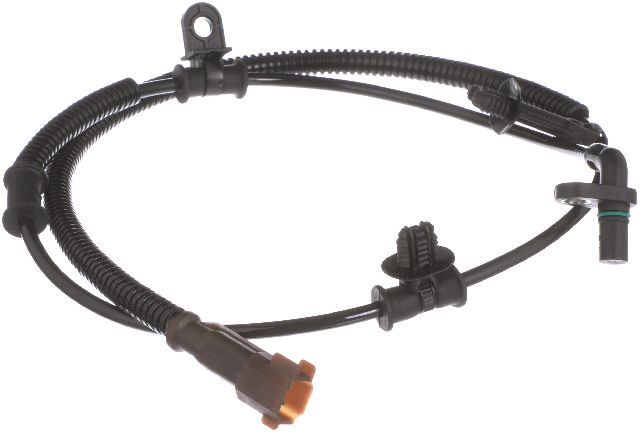
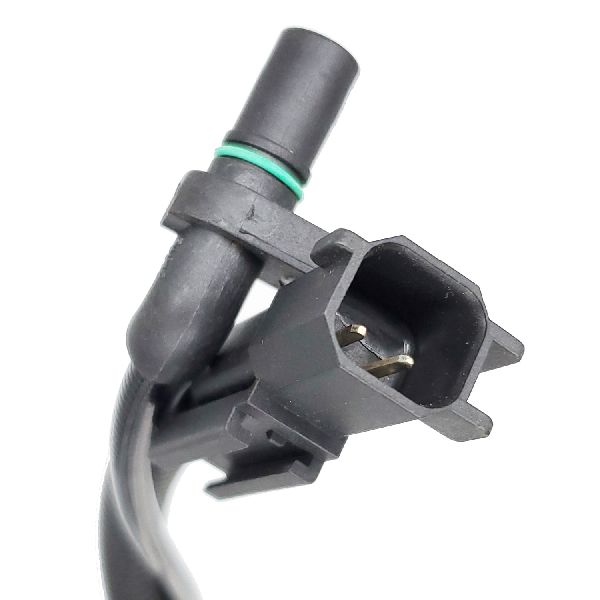
- Failed Rear Right Wheel Speed Sensor 🔴 High Probability → Shop ABS Wheel Speed Sensor The sensor is a plastic electronic component bolted directly to the differential tube or wheel hub, where it's exposed to intense heat, water, and road salt. Corrosion can cause the sensor to fail internally or seize in its mounting bore, making removal difficult.
How to confirm: Test the sensor's resistance with a multimeter (it should not be an open circuit) or watch its live data on a capable OBD-II scanner while spinning the wheel. A lack of signal or an erratic signal compared to the other three wheels indicates failure.
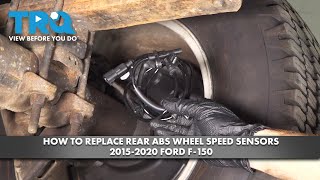
Typical fix: Replace the rear right wheel speed sensor. This involves removing the wheel, unbolting the sensor (typically one 10mm bolt), carefully prying it out, and disconnecting its electrical connector.
Est. part cost: $25-$70 - Damaged Wiring Harness 🟡 Medium Probability The wiring harness runs along the frame and axle, where it can be damaged. Specific documented failure points include the harness rubbing through on the frame rail, damage from tire rub, and rodent damage attributed to the soy-based wire insulation. Connectors under the truck are also prone to corrosion.
How to confirm: Visually inspect the entire length of the wiring from the sensor to the main harness. Pay close attention to where the harness is clipped to the frame and suspension. Check for breaks, chafing, or corrosion, especially at the connector's red locking tab. Perform a continuity test on the wires between the sensor connector and the ABS module.
Typical fix: Repair the broken or shorted section of wire using solder and heat-shrink tubing. In severe cases, the entire sensor pigtail or a section of the chassis harness may need to be replaced.
Est. part cost: $5-$50 for repair materials, $50-$150 for a new pigtail harness. - Damaged or Debris on Tone Ring ⚪ Low Probability The tone ring is part of the rear axle shaft or wheel bearing assembly. 'Rust jacking' can occur, where rust builds up underneath the ring, causing it to expand, crack, and send an erratic signal. Metallic debris from a previous differential failure (e.g., spider gears) can also get stuck to the magnetic sensor and damage the tone ring teeth.
How to confirm: After removing the wheel speed sensor, visually inspect the tone ring through the sensor mounting hole with a flashlight. Look for broken teeth, heavy rust, cracks, or metallic debris. Spin the hub slowly to inspect the entire ring.
Typical fix: Clean the tone ring of any debris. If the ring is cracked or damaged, the rear axle shaft or wheel bearing/hub assembly must be replaced, as the ring is typically not serviced separately.
Est. part cost: $250-$500+
Rare But Worth Checking
- Faulty ABS Module: This is rare and should only be considered after all other possibilities have been ruled out. However, on 2018-2019 models, a software glitch can mimic a hardware failure. TSB 20-2046 addresses this with an ABS module reprogram. A true hardware failure will often present with multiple wheel speed sensor codes or communication errors.
Diagnosis Steps
- Connect a capable OBD-II scanner to verify the C1168 code is present and check for any other related codes.
- For 2018-2019 models, check for the applicability of TSB 20-2046, which may require a dealer to reprogram the ABS module.
- Use the scanner to monitor the live data for all four wheel speed sensors while driving. Confirm that the RR sensor reads 0 MPH or has an erratic/inconsistent signal compared to the others.
- Raise and safely support the rear of the vehicle. Remove the right rear wheel.
- Visually inspect the wheel speed sensor and its wiring harness. Look for obvious signs of damage, chafing against the frame, or loose connections.
- Disconnect the sensor (push the red locking tab first) and test its internal resistance with a multimeter. An open or shorted sensor is faulty.
- If the sensor seems okay, inspect the wiring harness continuity from the sensor connector back to the ABS module. Wiggle the harness during testing to find intermittent breaks.
- If wiring and sensor are good, remove the sensor (typically a single 10mm bolt) and inspect the tone ring inside for damage, cracks, or debris.
- When replacing the sensor, clean the mounting bore thoroughly with a wire brush or sandpaper. Tighten the new sensor's retaining bolt to approximately 11 ft-lbs (133 in-lbs).
- If all components check out, the fault may lie within the ABS module itself, which typically requires professional diagnosis.
Parts You'll Likely Need
- Rear Wheel Speed Sensor
(OEM #Motorcraft BRAB-412 (replaces FL3Z-2C190-B), ML3Z-2C190-D. Note: Part numbers are frequently superseded; always verify with a dealer using your VIN.)— This is the most frequent failure point for a C1168 code, due to its exposed location and electronic nature.
Trusted brands: Motorcraft, Bosch, Standard Motor Products (SMP), Delphi, TRQ
OEM price range: $40-$70
Aftermarket price range: $25-$60
Technical Service Bulletins (TSBs) & Recalls
- SSM 47791: While this TSB mentions C1168, it's important to note it applies this code to Edge/MKX/Fusion/Continental vehicles for an ECT wiring issue. It does NOT link C1168 to the F-150.
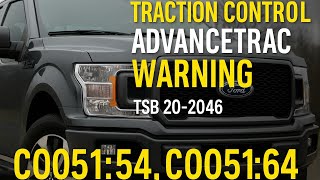
- TSB 20-2046: For some 2018-2019 F-150s, this bulletin addresses false ABS and AdvanceTrac warnings caused by a software glitch. The fix is to reprogram the ABS module, which may resolve the issue without replacing any parts.
Platform-Specific Known Issues
- Owners frequently report multiple warning lights appearing at once (ABS, AdvanceTrac, Hill Start Assist) when a single wheel speed sensor fails.
- The main wiring harness is known to chafe against the driver's side frame rail, leading to short circuits that can cause various intermittent electrical faults, including ABS codes.
- The soy-based wiring insulation used on this generation can attract rodents, leading to chewed wires in the engine bay or along the frame.
Mechanic-Grade Diagnostic Values
- Rear Wheel Speed Sensor Resistance (Active Sensor) — expected: Approximately 2.9 MΩ (Mega-ohms). Compare to the known-good sensor on the opposite side.. Failure: An open circuit (OL or infinite resistance) or a reading significantly different from the opposing sensor indicates a failed sensor.
- Voltage at Harness Connector (Key On, Sensor Unplugged) — expected: Approximately 12 Volts (Battery Voltage).. Failure: No voltage suggests a problem with the wiring harness or the ABS module, not the sensor itself.
Scan Tool Commands That Help
- Ford IDS / FORScan / High-End Scanner: ABS Service Bleed — This bidirectional command is required after replacing the ABS hydraulic unit or module to properly bleed air from the internal valves.
- Ford WDS / Capable OBD-II Scanner: Live Data Monitoring (PIDs: RR_WSPD, LR_WSPD, etc.) — Used as the primary diagnostic step to confirm which wheel speed sensor is providing an erratic, inconsistent, or absent signal while the vehicle is moving.
Wiring & Ground Locations
- G108 — On the left (driver's side) front radiator support.. This is a primary ground point for the ABS system. A loose or corroded connection here can cause various intermittent ABS faults, including sensor codes.
- C405 — The main electrical connector at the ABS module, located on the driver's side of the engine bay, below the air filter box.. This is the termination point for the wheel speed sensor circuits. Advanced diagnostics, like checking for continuity from the sensor, are performed at the pins of this connector.
- C426 — A connector in the rear wheel sensor wiring harness.. This connector has been identified as a specific point of failure due to rodent damage, where wires were chewed through, causing an open circuit.
Real Owner Repair Stories
- YouTube channel 'Diagnostico y Reparacion' (Ford truck, consistent with 2015-2020 F-150 rear axle setup) — ABS light on, code for left rear wheel speed sensor.
❌ Tried (didn't work) The mechanic directly proceeded to test the circuit, comparing the faulty side to the known-good side.
✅ What actually fixed it A resistance test on the faulty left rear sensor showed an open circuit (OL). The known-good right rear sensor measured ~2.9 MΩ. The left rear sensor was internally faulty and was replaced. - Ford F150 Forum thread (2020 F-150 XLT 2.7L) — A cluster of warnings including ABS, Service AdvanceTrak, Park Aid N/A, and Pre-Collision Assist N/A.
❌ Tried (didn't work) The dealership diagnosed a damaged harness at connector C426 and quoted ~$600 for repair, which the owner declined.
✅ What actually fixed it The owner received a photo from the dealer showing wires chewed by rodents at connector C426. The confirmed fix was to self-repair (splice) the obviously damaged wires instead of replacing the entire harness.
When the Usual Fixes Don't Work
- While C1168 almost always points to the ABS wheel speed sensor circuit on an F-150, technicians should be aware of TSB SSM 47791. This bulletin is frequently found when searching for C1168 but is misleading. It refers to an Engine Coolant Temperature (ECT) sensor wiring issue on other Ford vehicles (like the Edge and Fusion) where 'C1168' is the designation for a wiring connector, not the DTC itself. Following this TSB on an F-150 for an ABS fault would be a misdiagnosis.
OEM Part Supersession History
FL3Z-2C190-B→ML3Z-2C190-D (Motorcraft BRAB-412)— Standard part revision/update for models without electric parking brake.Varies→HL3Z-2C190-A— Specific part for models equipped with the optional electric parking brake.
Heads up: This part is for trucks with the electric parking brake and is not interchangeable with the standard sensor. Always verify the correct part using the vehicle's VIN.
Model Year Variations Within This Range
- 2018-2019: A potential software glitch in the ABS module can falsely trigger C1168 and other warnings. TSB 20-2046 addresses this with a module reprogram, which may be the only fix required.
- 2017-2020: Models equipped with the optional electric parking brake use a different rear wheel speed sensor and harness assembly (Part # HL3Z-2C190-A). Using the standard sensor on these trucks will not work.
Helpful Videos
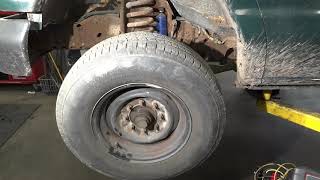
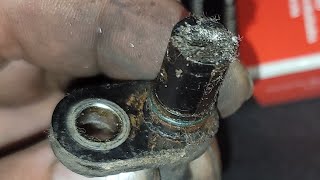
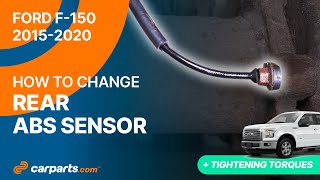
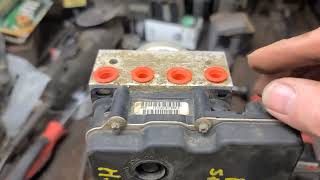
We Have This Part in Stock


The information in this article is provided for general reference and educational purposes only. Vehicle specifications, procedures, and part compatibility can vary by production date, trim level, and region. Always consult your vehicle's factory service manual and verify part numbers before purchasing or performing repairs. Safety-critical components such as airbags, seat belts, and braking systems should be installed by a qualified professional.
- Ford F-150:
- 🧭 Diagnostic Flowchart
- 🎬 Helpful Videos
- 🛍️ Shop This Part
- What's Unique About the 2015-2019 Ford F-150
- Symptoms You May Notice
- Most Likely Causes
- Rare But Worth Checking
- Diagnosis Steps
- Parts You'll Likely Need
- Technical Service Bulletins (TSBs) & Recalls
- Platform-Specific Known Issues
- Mechanic-Grade Diagnostic Values
- Scan Tool Commands That Help
- Wiring & Ground Locations
- Real Owner Repair Stories
- When the Usual Fixes Don't Work
- OEM Part Supersession History
- Model Year Variations Within This Range
- 🎟️ Get 5% Off