

C1168 on 2017-2019 Lincoln Continental: Not a Code, But a Clue to an ECT Sensor Problem
C1168 is not a fault code on your Lincoln Continental. It's a wiring connector number. If you've seen this number, it's likely in reference to Technical Service Bulletin SSM 47791, which points to damaged wiring for the Engine Coolant Temperature (ECT) sensor. Check the wiring before replacing the sensor.
- C1168 is a connector part number for your Continental, not a fault code.
- The actual problem is likely an Engine Coolant Temperature (ECT) sensor circuit fault, which will set a 'P' code (e.g., P0117, P0118).
- A Ford/Lincoln Technical Service Bulletin (SSM 47791) points to damaged wiring near connector C1168 as the likely cause.
- Always have the wiring harness inspected before spending money to replace the ECT sensor.
- This is not a simple DIY fix; professional diagnosis is recommended due to the complexity of wiring repairs.
What's Unique About the 2017-2019 Lincoln CONTINENTAL
The use of a 'C' number for a connector can be confusing, as C-prefix codes are typically chassis-related fault codes (like for ABS). On some other, often older, vehicles, C1168 can be a valid trouble code for a wheel speed sensor. However, for the 2017-2019 Continental and its platform mates (Ford Edge, Fusion, Lincoln MKX/Nautilus), its documented significance comes from a manufacturer TSB that identifies it as a location for a common wiring problem, not as a fault code itself.
Diagnostic Flowchart
Tap your situation to follow the diagnostic path that matches what you're seeing on this vehicle.
Symptoms You May Notice
- Check Engine Light is on (with codes like P0117, P0118, or P0128)
- Engine temperature gauge reads incorrectly (e.g., stays on cold, jumps to hot, or doesn't move)
- Engine cooling fans run constantly, even when the engine is cold 🎬 Watch: Why your radiator fan stays on and won't stop.
- Engine cooling fans do not turn on when the engine is hot
- Reduced fuel economy and poor engine performance
- Engine may run rough, hesitate, or be hard to start
- Black smoke from exhaust due to an overly rich fuel mixture
- Replacing the Engine Coolant Temperature (ECT) sensor without first inspecting the wiring harness as directed by TSB #SSM 47791. This is the most common mistake and will not fix the issue if the wiring is at fault.
- Confusing a thermostat issue (like code P0128) with a sensor circuit issue. While a bad sensor can cause a P0128, the root cause is different.
Most Likely Causes
- Damaged or Improperly Seated Wiring 🔴 High Probability This is a known issue documented by Ford/Lincoln in TSB #SSM 47791. The wiring between connectors C1016 and C1168 can become damaged, or the connector itself may not be fully seated. This issue is common enough that it's also documented for platform mates like the Ford Edge.
How to confirm: A technician will use a wiring diagram to locate connectors C1016 and C1168 and perform a visual inspection for chafed wires, loose pins, or corrosion. A continuity test with a multimeter can confirm a break or short in the circuit. Disconnecting the sensor and seeing if a P0118 code appears can also help diagnose a P0117, though this can be confusing if the wiring fault is near the connector.
Typical fix: Repairing the damaged section of the wire harness and ensuring the connector is secure. This may involve soldering, using butt connectors with heat shrink, or replacing a connector pigtail if the connector itself is damaged.
Est. part cost: $5-$50 - Faulty Engine Coolant Temperature (ECT) Sensor ⚪ Low Probability → Shop Engine Coolant Temperature Sensor While possible, the TSB specifically warns against replacing the sensor if wiring damage is found, indicating wiring is the more probable cause for this specific issue. Technicians often mistakenly replace the sensor first.
How to confirm: If a thorough inspection confirms the wiring and connectors are in perfect condition, the sensor itself would be the next component to test. This is done by checking its resistance with a multimeter at various temperatures and comparing the readings to the vehicle's specifications.
Typical fix: Replace the ECT sensor. Be prepared for a small amount of coolant to spill.
Est. part cost: $30-$80
Rare But Worth Checking
- Faulty Powertrain Control Module (PCM): This is extremely rare. The PCM should only be considered after all wiring and sensor diagnostics have been exhaustively performed by a professional.
Diagnosis Steps
- Confirm the actual Diagnostic Trouble Code (DTC) stored in the Powertrain Control Module (PCM) using an OBD-II scanner. Do not proceed based on 'C1168' alone.
- If an ECT-related code (like P0117, P0118) is present, reference TSB #SSM 47791.
- Obtain a vehicle wiring diagram to locate connectors C1016 and C1168. These diagrams are often found in official service manuals or through services like ALLDATA.
- Carefully inspect the wiring harness between these two connectors. Look for any signs of physical damage, such as chafing, melting, or breaks. Pay close attention to the wiring right at the back of the connectors.
- Disconnect the connectors and inspect the pins for corrosion, damage, or looseness (poor pin fit). A loose connection is a common point of failure.
- If no obvious damage is found, use a multimeter to test for continuity on the signal wire and reference voltage wire between the PCM and the ECT sensor connector. Check for the 5V reference signal and ground at the connector with the key on.
- If damage is found, repair the wiring harness. If the connector is damaged, replace the connector pigtail. 🎬 Watch this guide on repairing and replacing the sensor connector.
- If no wiring issues are found, proceed with standard diagnostic procedures for the stored ECT code, which would involve testing the sensor's resistance and signal.
- Clear the DTCs and perform a drive cycle to confirm the repair was successful.
Parts You'll Likely Need
- Wiring Repair Supplies — The most common cause is damaged wiring, which requires supplies like wire, terminals, and heat-shrink tubing for a proper repair.
OEM price range: $5-$25
Aftermarket price range: $5-$25 - Engine Coolant Temperature Sensor
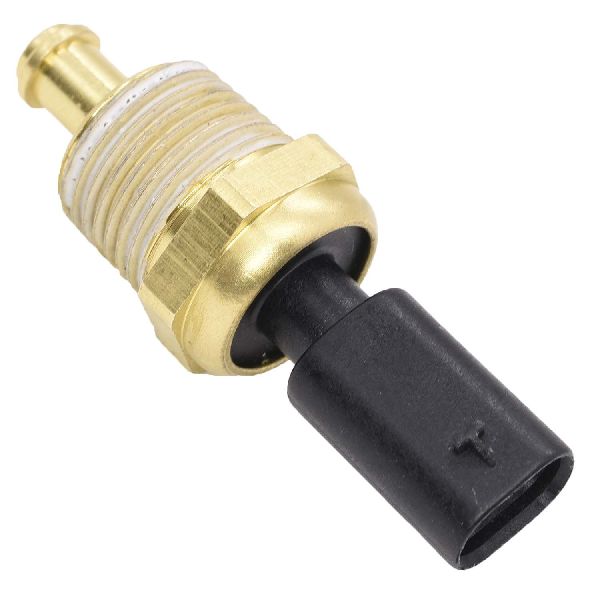
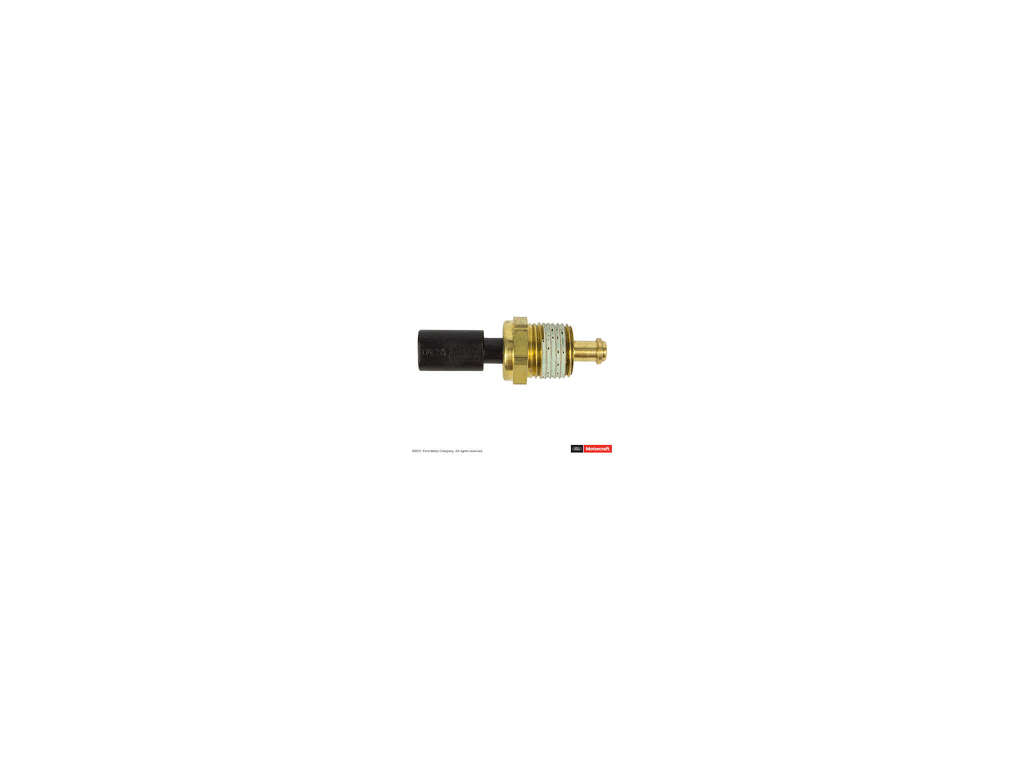
(OEM #FT4Z-12A648-B)— If the wiring is confirmed to be good, the sensor itself is the next most likely part to have failed.
Trusted brands: Motorcraft (DY1309), Walker Products (211-2024)
OEM price range: $40-$80
Aftermarket price range: $30-$60 - ECT Sensor Connector Pigtail
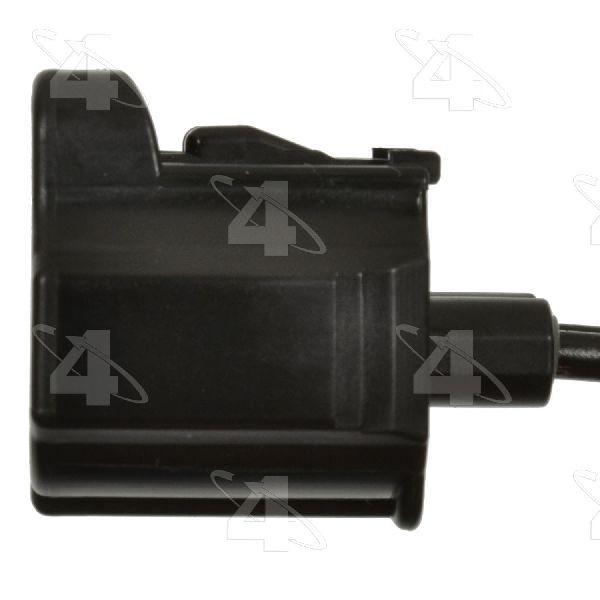
(OEM #BU2Z-14S411-RA (Motorcraft WPT-931))— If the connector itself is damaged or corroded, or if a wire is broken right at the connector, a replacement pigtail is the best repair method.
Trusted brands: Motorcraft, Connector Experts
OEM price range: $25-$45
Aftermarket price range: $15-$30
Related Codes That Often Appear With This One
- P0117 — Indicates Engine Coolant Temperature Sensor Circuit Low Input, consistent with a shorted wire.
- P0118 — Indicates Engine Coolant Temperature Sensor Circuit High Input, consistent with an open or broken wire. This often causes the temp gauge to read minimum (-40°F) and the cooling fans to run constantly.
- P0128 — Indicates Coolant Thermostat (Coolant Temperature Below Thermostat Regulating Temperature), which can be triggered by an inaccurate sensor reading making the PCM think the engine isn't warming up properly.
Technical Service Bulletins (TSBs) & Recalls
- SSM 47791: Warns of potential damage to the wiring for the engine coolant temperature (ECT) sensor between connectors C1016 and C1168, advising against sensor replacement if wiring damage is found. This applies to the Continental, Edge, MKX/Nautilus, and Fusion.
- SSM 46906: A similar TSB for the Ford Edge, also pointing to wiring issues between C1016 and C1168 as a cause for ECT-related codes.
- SSM 48991: For platform mates with the 2.7L EcoBoost, this TSB advises replacing both the ECT sensor and the knock sensor wiring harness to resolve a persistent P0118 code.
Platform-Specific Known Issues
- A known wiring issue exists as documented in TSB #SSM 47791, where damaged wiring between connectors C1016 and C1168 can cause ECT sensor circuit faults. This TSB specifically warns technicians not to replace the ECT sensor if wiring damage is found.
- The 3.7L V6 engine used in some base models has a known, unrelated issue with an internal water pump that can fail and cause catastrophic engine damage. While not related to this code, it's a significant concern for owners of that engine.
Mechanic-Grade Diagnostic Values
- ECT Sensor Resistance — expected: Approx. 3,520 Ω at 68°F (20°C) and approx. 241 Ω at 194°F (90°C).. Failure: Infinite resistance (open circuit) or values significantly outside the expected range for a given temperature indicates a faulty sensor.
- ECT Sensor Circuit Voltage at PCM — expected: Below 4.6V during normal operation.. Failure: A voltage reading greater than 4.91V will trigger a P0118 code, indicating an open circuit.
- Reference Voltage at ECT Connector — expected: Approximately 5 volts on one of the two pins (with key on, engine off, sensor unplugged).. Failure: Missing or low reference voltage indicates a wiring problem between the connector and the PCM.
- Jumper Wire Test at ECT Connector — expected: With the sensor unplugged and a fused jumper wire connecting the two terminals in the harness connector, the scan tool's temperature reading should go to its maximum value (e.g., >250°F / 121°C).. Failure: If the temperature reading does not go to maximum, it confirms the fault is in the wiring harness or the PCM, not the sensor itself.
Scan Tool Commands That Help
- Ford IDS (Integrated Diagnostic System): Active Command - Cooling Fan Control — After confirming an ECT-related code, a technician can use this bidirectional command to manually turn the cooling fans on and off. This helps verify if the PCM and the fan control module are capable of operating the fans, isolating the problem to the sensor input side of the circuit if the fans work when commanded.
Wiring & Ground Locations
- C1168 — A major engine harness-to-body harness inline connector, likely located in the engine compartment on the driver's side, near the main power distribution box and battery.. TSB SSM 47791 identifies this as one of the end points for a section of wiring that is prone to damage, causing ECT sensor circuit faults. The break or short often occurs in the harness between C1168 and C1016.
- C1016 — A primary engine harness inline connector, likely located closer to the engine itself, possibly near the firewall or at the back of the cylinder head area.. This is the other key connector mentioned in TSB SSM 47791. A technician must inspect the wiring loom running between this connector and C1168 to find the source of the open or short circuit.
OEM Part Supersession History
FT4Z-12A648-A, DY-1298→FT4Z-12A648-B— Part revision and consolidation by the manufacturer.
Helpful Videos

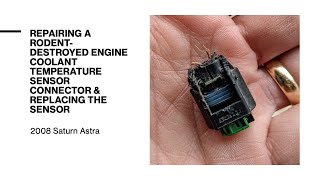
We Have This Part in Stock

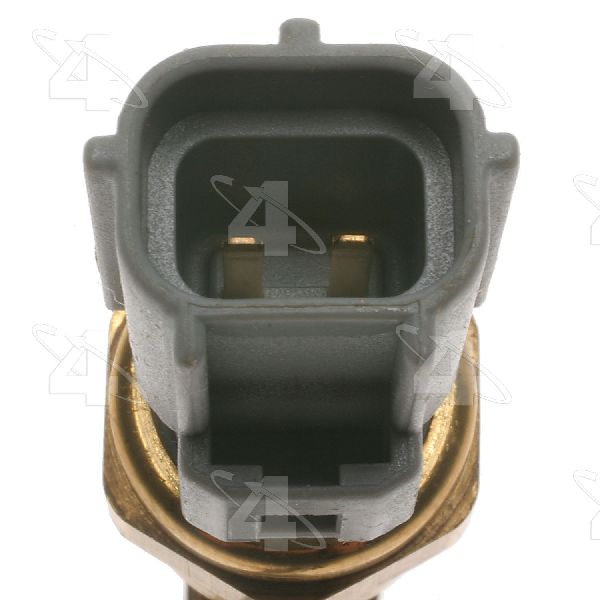

The information in this article is provided for general reference and educational purposes only. Vehicle specifications, procedures, and part compatibility can vary by production date, trim level, and region. Always consult your vehicle's factory service manual and verify part numbers before purchasing or performing repairs. Safety-critical components such as airbags, seat belts, and braking systems should be installed by a qualified professional.
- Lincoln CONTINENTAL:
- 🧭 Diagnostic Flowchart
- 🎬 Helpful Videos
- 🛍️ Shop This Part
- What's Unique About the 2017-2019 Lincoln CONTINENTAL
- Symptoms You May Notice
- Most Likely Causes
- Rare But Worth Checking
- Diagnosis Steps
- Parts You'll Likely Need
- Related Codes That Often Appear With This One
- Technical Service Bulletins (TSBs) & Recalls
- Platform-Specific Known Issues
- Mechanic-Grade Diagnostic Values
- Scan Tool Commands That Help
- Wiring & Ground Locations
- OEM Part Supersession History
- 🎟️ Get 5% Off