

OBD-II Code C1171: Steering Angle Sensor Circuit Malfunction
The Ultimate Guide to C1171: What it means, why it triggers, and how to fix it for good
- Code C1171 disables your vehicle's ABS and Electronic Stability Control (ESC) due to an illogical signal from the Steering Angle Sensor.
- Always verify wheel alignment and perform a mandatory sensor calibration before spending $300+ replacing the steering angle sensor.
- Repair costs range from $150 for a simple alignment and calibration to over $1,300 for an OEM sensor replacement on luxury vehicles like Infiniti or BMW.
- On 2024-2025 Chevrolet Traverse and GMC Acadia models, C1171 indicates a TPMS network failure covered under TSB #24-NA-166, not a steering fault.
- Manufacturer definitions vary wildly; on BMWs, a failing Intelligent Battery Sensor (IBS) triggers this code, while on diesel Hyundais, it indicates a fuel pressure drop.
What Does C1171 Mean?
C1171 signifies the car's main computer (typically the ABS or ESC module) is receiving an illogical, inconsistent, or faulty signal from the Steering Angle Sensor (SAS). This sensor tells the computer the precise angle and direction of the steering wheel. Modern safety systems require this data to anticipate the driver's intended path and intervene during a skid or loss of traction.
Technical definition: The SAE/ISO definition for C1171 is 'Steering Angle Sensor Circuit Fault' or 'Steering Angle Sensor Coherency Failure'. This indicates the ABS module detects an electrical problem or an illogical signal from the SAS circuit. Definitions vary by manufacturer: on 2024+ GM models it points to a TPMS issue, on certain Lancias it indicates a wheel speed sensor fault, and on some diesel Hyundais, it relates to fuel pressure.
Can I Drive With C1171?
Yes, But With Caution. Yes, but driving is strongly discouraged for anything other than a short trip to a repair shop. An active C1171 code disables critical safety systems like the Anti-lock Braking System (ABS) and Electronic Stability Control (ESC). This increases stopping distance on slippery surfaces by 20-35% and dramatically elevates the risk of losing control in an emergency maneuver. Ignoring the code does not risk direct damage to other major components, but the safety compromise is severe.
Common Causes
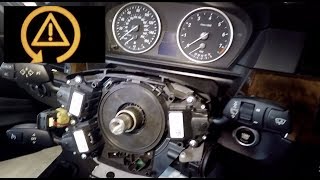
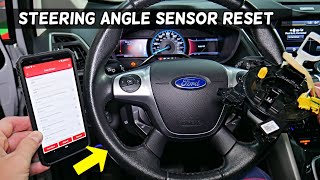
- Needs Steering Angle Sensor Calibration (Very Common) — After any work affecting steering or suspension geometry—such as replacing tie rods, control arms, or getting a wheel alignment—the steering angle sensor's zero point requires recalibration. Failing to 🎬 Watch: How to calibrate the steering angle sensor after alignment perform this reset is the most frequent reason this code appears post-repair.
- Poor Wheel Alignment (Very Common) — If the vehicle's wheels are misaligned, the steering wheel sits off-center when driving straight. This creates a persistent data mismatch between the steering angle sensor and the yaw rate/wheel speed sensors, immediately triggering the code.
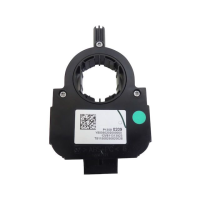
- Faulty Steering Angle Sensor (SAS) (Very Common) — The sensor itself fails frequently. Internal electronic components, whether optical or contact-based, wear out over time, sending incorrect, intermittent, or zero signals to the control module.
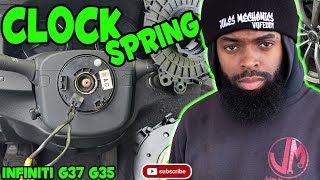
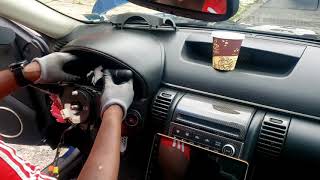
- Failed Clock Spring (Common) — The steering angle sensor is often integrated into the clock spring assembly. This component contains flexible ribbon wiring that allows the steering wheel to turn. Millions of rotations cause this wiring to fatigue and break, disrupting the SAS signal.
- Low or Unstable Battery Voltage (Common) — Modern vehicles require precise battery voltage. A weak battery or a faulty Intelligent Battery Sensor (IBS, common on BMWs) causes temporary voltage drops and communication errors across modules, triggering a C1171 code without an actual sensor failure.
- Wiring or Connector Issues (Less Common) — Damaged wires or corroded, loose connectors in the circuit between the SAS and the control module interrupt the signal. This stems from previous sloppy repairs, heavy vibrations, or moisture intrusion.
- Software/Firmware Glitches (Less Common) — On specific vehicles, particularly 2011-2020 Ford models, a software bug in the Power Steering Control Module (PSCM) misinterprets sensor data. A dealer software update is the only fix.
- Faulty ABS or ESC Control Module (Rare) — The computer module receiving the signal fails internally. The module develops software or hardware faults preventing it from processing a perfectly functional sensor signal.
Symptoms
- Traction Control and ABS Lights Illuminated — The Traction Control System (TCS/ESC) and Anti-lock Braking System (ABS) warning lights illuminate simultaneously because both systems disable themselves when steering angle data is lost.
- Disabled Driver-Assist Features — Advanced features like lane-keeping assist, adaptive cruise control, and pre-collision systems disable automatically because they depend on accurate steering input.
- Unexpected ABS/Traction Control Activation — The system briefly and incorrectly intervenes by applying brakes to a single wheel or cutting engine power during normal driving, misinterpreting a standard turn as a skid.
- Car Pulls to One Side or Drifts — An uncalibrated sensor or severe misalignment makes the car pull to one side, requiring constant steering corrections to track straight.
- Heavy or Stiff Power Steering — Electric power steering systems use the SAS to determine assistance levels. A faulty signal causes the steering to feel unusually heavy or unresponsive at low speeds.
Diagnostic Flowchart
Tap your situation to follow the diagnostic path that matches what you're seeing on this code.
Common Fixes & Costs
- Perform a Four-Wheel Alignment and SAS Calibration — Parts: $0, Labor: $150-$350, ~1.5 hr book time (Professional)
- Replace Steering Angle Sensor
— Parts: $150-$850, Labor: $150-$300, ~2 hr book time
(Intermediate)
: OEM 47945-JK00A (to 01/2010), 47945-1HA0A (2010+) (Alt: Duralast SU17005, ACDelco 13513905)
: OEM 47945-3FY0A, 47945-1ET0A (Alt: Standard Motor Products, Walker Products) - Replace Clock Spring Assembly (if SAS is integrated)
— Parts: $80-$500, Labor: $150-$300, ~2.5 hr book time
(Professional)
: OEM Varies with SAS assembly (Alt: Dorman 905-617, Standard Motor Products CSP357)
: OEM Contact dealer with VIN (Alt: Dorman 525-217, Motorcraft CLS127) - Repair Damaged Wiring or Connectors
— Parts: $10-$50, Labor: $120-$350, ~2 hr book time
(Intermediate)
: OEM 26501515 (Alt: N/A) - Replace and Register Vehicle Battery — Parts: $150-$450, Labor: $50-$150, ~0.5 hr book time (Beginner)
Used vs. New Parts: Buying Guide
When a used part is worth it: For expensive OEM-only assemblies (common on Infiniti/Nissan/BMW), a used part from a low-mileage, non-collision donor vehicle is cost-effective. It makes no sense for common vehicles where quality aftermarket parts are affordable.
Donor-vehicle mileage cap: roughly under 60000 miles for the part to have meaningful remaining life.
Donor quality checklist:
- Verify the part number matches exactly; electronics are rarely interchangeable.
- Source from a reputable salvage yard guaranteeing functionality.
- Avoid parts from vehicles involved in floods or major front-end collisions.
Decision logic:
- If Quality aftermarket part is available for < $200 → Buy new aftermarket. The warranty and reliability are worth the small premium over a used part.
- If OEM-only part costs > $700 and vehicle is over 8 years old → A low-mileage used part is a reasonable choice to save money, accepting the risk of a shorter lifespan.
- If Part is a clock spring assembly with integrated sensor → Buy new (OEM or quality aftermarket) due to the high failure rate of delicate internal ribbon cables in used units.
Warranty tradeoff: Used parts typically include a 30-90 day functional warranty. New aftermarket parts offer 1-year to limited lifetime warranties. New OEM parts carry a 12-month/12,000-mile warranty.
Worst-case if a used part fails: $300-$600 if a used part fails after installation, representing repeat labor costs and the need to purchase another part.
What Happens If You Wait — Timeline
- 0-1 week: Code sets, ABS and ESC/TCS warning lights illuminate. Active safety systems are disabled. No other symptoms are perceived in normal driving. (MPG impact: 0%% · Added cost: $0)
- 1 week - 3 months: The primary consequence is the severe safety risk of driving without ABS and stability control. If the root cause is a bad alignment, tire edges begin showing accelerated wear. (MPG impact: 0-1%% · Added cost: $0 (unless an accident occurs, costing an insurance deductible of $500+))
- 3-9 months: Continued driving with a severe misalignment causes pronounced, irreversible uneven tire wear ('feathering' or 'scalloping'). The vehicle wanders on the highway. (MPG impact: 1-3% (due to tire scrub from misalignment)% · Added cost: $200-$800 for premature replacement of tires.)
- 9+ months: Severe misalignment puts long-term stress on suspension components like wheel bearings and ball joints, leading to early failure. The safety risk remains the paramount concern. (MPG impact: 2-5%% · Added cost: $400-$1500+ (for a full set of tires and suspension component repair).)
Cost of Not Fixing It
- Immediate: Disabled ABS and Electronic Stability Control (ESC). This is a severe safety risk, increasing the chance of wheel lock-up during hard braking and loss of control in emergency maneuvers. (Added cost: $0 (unless an accident occurs))
- 1-6 Months: No direct progressive mechanical damage occurs. The primary cost is the sustained safety risk. An accident caused by the lack of ABS/ESC results in costs ranging from an insurance deductible to total vehicle loss. (Added cost: $500 - $25,000+)
- 6+ Months: Severe uneven tire wear occurs if the root cause is a bad alignment. The ongoing safety hazard of driving without active safety systems remains the primary concern. (Added cost: $100 - $800 (for premature tire replacement))
Diagnosis Steps
- Retrieve All Diagnostic Trouble Codes (DTCs)
Use an advanced OBD-II scanner capable of reading Chassis (C) and Network (U) codes. Confirm C1171 is present and document related codes (e.g., C0051, U0126) to pinpoint the fault before clearing.
Tools: Advanced OBD-II Scanner (Beginner) - Analyze Live Steering Angle Sensor Data
Monitor the Steering Angle Sensor value using the scanner's live data function. With wheels pointing perfectly straight, the reading must be 0 degrees (+/- 3 degrees). Turn the wheel lock-to-lock; the value must change smoothly. Jumps, glitches, or a stuck value (e.g., 719 degrees) confirms a faulty sensor or clock spring.
Tools: Advanced OBD-II Scanner (Intermediate) - Verify Wheel Alignment and Steering Centering
Drive on a flat surface. If you must hold the steering wheel off-center to drive straight, a wheel alignment is mandatory. Even a visually straight wheel off by >2mm triggers this code. Fix alignment before replacing parts.
Tools: Professional Alignment Rack (Intermediate) - Attempt a Steering Angle Sensor Calibration
Perform the SAS calibration or 'Zero-Point Reset' using an advanced scan tool. This sets the current steering position as the straight-ahead reference. If calibration fails repeatedly, you have a hardware fault in the sensor or circuit.
Tools: Advanced OBD-II Scanner (Intermediate) - Inspect Battery Health and Perform a Hard Reset
Verify the battery provides stable voltage (12.4-12.6V engine off, ~14V engine on). Perform a hard reset by disconnecting both battery terminals and holding them together for 60 seconds to discharge capacitors and clear module glitches.
Tools: Digital Multimeter, Wrench Set (Beginner) - Test the Sensor Circuit (Pro Tip)
Disconnect the SAS connector. Using a wiring diagram, identify power, ground, and signal wires. With the key on, check for reference voltage (5V or 12V) at the power pin and continuity to ground (<1 ohm) on the ground pin to confirm power delivery.
Tools: Digital Multimeter, Vehicle Service Manual (Advanced) - Analyze the Sensor Signal with an Oscilloscope (Pro Tip)
Back-probe the two signal wires (CAN High/Low) with an oscilloscope. Turning the steering wheel must produce two clean, opposing square wave patterns. Missing signals or distorted waveforms prove a failing sensor or wiring issue.
Tools: Automotive Oscilloscope, Wiring Diagram (Advanced) - Inspect the CAN Bus Network
If direct wiring tests good, check for a communication breakdown. Use a breakout box to verify CAN bus voltage (2.5V on High and Low at idle) and signal integrity at the OBD-II port.
Tools: Oscilloscope, CAN Breakout Box (Advanced) - Check Hyundai/Kia Fuel Pressure (Model Specific)
For specific Hyundai/Kia diesels where P1171 indicates fuel pressure issues, monitor 'Rail Pressure' via scan tool. Failure to build or maintain pressure (290 to 3,600+ PSI) points to a fuel pump/regulator issue, not the SAS.
Tools: Advanced OBD-II Scanner, Fuel Pressure Gauge (Advanced)
When This Code Triggers (Freeze-Frame Conditions)
- Vehicle Speed: 25-65 mph (Normal driving. The fault logs when a discrepancy between the steering angle and the vehicle's actual path (measured by wheel speed and yaw sensors) is detected.)
- Steering Angle: Variable (Triggers either during a turn (> 90 degrees) or when driving straight if the sensor's 'zero point' is incorrect due to bad alignment.)
- Engine RPM: 1200-2500 RPM (The fault sets during active driving, not typically at idle.)
- System Voltage: 13.5-14.5V (Sets when the charging system is active. A low voltage condition (<12V) during startup also triggers electronic glitches that set this code.)
Related Codes
- C0051 — Points to the 'Steering Wheel Position Sensor' circuit. C0051 identifies the faulty component, while C1171 describes the symptom (illogical signal). Having both confirms the sensor or direct wiring is the problem.
- U0126 — Indicates 'Lost Communication With Steering Angle Sensor Module'. U0126 means zero data is received, proving a complete electrical failure (broken wire, blown fuse, dead clock spring). C1171 means a signal is received, but it is irrational.
- C1172, C1173, C1174 — On 2024-2025 GM models, these codes appear alongside C1171. They correspond to TPMS relearn failures for each wheel. This combination proves the issue is the network fault documented in TSB #24-NA-166, not a steering sensor.
- C0051:67 — A Ford-specific code meaning 'Signal Incorrect After Event'. It strongly points to a known software glitch in the Power Steering Control Module (PSCM), fixed with a dealer software update per TSB 22-2119.
Climate & Environmental Factors
- High Humidity: Moisture accelerates corrosion on electrical connectors within the SAS circuit. This increases resistance and causes intermittent signal dropouts, triggering C1171 without a sensor failure.
- Extreme Cold: Aging plastic and wiring become brittle and susceptible to breaking. Grease inside mechanical sensor components thickens, causing momentary sluggishness that the control module interprets as a fault.
How to Talk to a Mechanic About This Code
Say this: "I have a C1171 code with the ABS and traction control lights on. I'd like to schedule a diagnostic. Please start by checking the live data from the steering angle sensor and verify if a calibration is needed before recommending any part replacement."
This signals you understand the common causes are calibration, alignment, or the sensor itself. It directs the mechanic to perform a proper diagnosis instead of immediately suggesting an expensive part replacement.
Avoid saying:
- 'My ABS light is on, can you look at it?'
- 'Just fix whatever is wrong.'
- 'The car is doing something weird, I don't know.'
Questions to ask before authorizing the repair:
- Did you check the live data from the steering angle sensor? What was the degree reading when the wheels were straight?
- Did you attempt a steering angle sensor calibration, and did it succeed or fail?
- Have you confirmed the wheel alignment is still within specification?
- If you are recommending a new sensor, what is the warranty on the part and your labor?
Where to Take It: Dealer vs Independent vs Chain
- Dealer:
Recommended for brand-new vehicles (like 2024+ GM models with the TSB), complex German cars, or if you want absolute certainty the correct calibration procedure is followed.
Best for: Vehicles under warranty., Manufacturer-specific quirks (e.g., GM TSB for TPMS, BMW IBS issues)., Complex ADAS-equipped vehicles requiring guaranteed access to the latest calibration tools.
Downsides: Highest labor rates, often 1.5-2x more than independent shops., Defaults to replacing entire assemblies rather than performing simpler repairs. (Typical cost: +50% vs. baseline) - Independent Shop:
Best overall fit. Before committing, confirm they have a scan tool capable of reading ABS/Chassis codes and performing a steering angle sensor calibration for your specific vehicle.
Best for: Most out-of-warranty vehicles., Common failures on well-known platforms (e.g., Infiniti G37, Ford F-150)., Building a long-term relationship with a trusted mechanic.
Downsides: Quality and equipment vary widely. You must vet the shop., May lack the latest ADAS calibration equipment for brand new models. (Typical cost: +0% vs. baseline) - Chain Shop:
Use with extreme caution. Acceptable for a wheel alignment ONLY if you confirm beforehand they possess the specific tool to perform the SAS calibration. Not recommended for diagnosing root causes beyond alignment.
Best for: Tire replacement and basic wheel alignments (with a major caveat for this code).
Downsides: Technician skill and diagnostic equipment are highly variable., Frequently lack the advanced scan tools required for mandatory SAS calibration., High pressure to meet sales targets leads to upselling unnecessary services. (Typical cost: -10% vs. baseline)
When to Walk Away From the Repair
If the estimated repair cost exceeds 50% of the car's private-party value, consider walking away. However, the disabled safety features (ABS/ESC) make this a non-negotiable repair for daily driving.
- Car worth $12000, fix is $1300: Fix it. The repair is just over 10% of the car's value and restores critical safety systems.
- Car worth $4000, fix is $1300: Borderline. This is 32.5% of the vehicle's value. Get a second opinion to ensure the diagnosis is correct before proceeding.
- Car worth $3000, fix is $1800: Walk away. The repair cost is 60% of the car's value. It is not economically sensible.
What Scan Tool You Need for This Code
Minimum: A scanner capable of reading and clearing Anti-lock Brake System (ABS) / Chassis (C) codes and displaying live sensor data. Basic engine-only code readers will NOT work for C1171.
A $20 reader cannot see Chassis codes. Proper diagnosis requires viewing the live data stream from the steering angle sensor to determine if it is stuck, erratic, or just needs calibration.
Budget: BlueDriver Pro (~$99) — Reads and clears ABS codes like C1171. Displays live data for the steering angle sensor, allowing you to see real-time readings. It does NOT perform the calibration procedure itself.
Mid-range: Foxwell NT510 Elite / Autel MaxiCOM MK808S (~$150-370) — The sweet spot for DIY. Offers bi-directional control to read live data AND perform the mandatory Steering Angle Sensor (SAS) calibration/reset function after an alignment or part replacement.
Professional: Autel MaxiSys MS906Pro / XTOOL D8S (~$1000-1500) — Offers full, OEM-level diagnostics. Provides advanced functions like module coding, comprehensive live data graphing, and handles complex network or module-related faults.
Rent vs buy: Most parts store rental scanners are basic models incapable of reading ABS codes or performing calibrations. For C1171, you must buy a capable scanner. If this is a one-time fix, paying a shop a 1-hour diagnostic fee is more cost-effective than buying a mid-range scanner.
How to Clear the Code After You Fix It
- Reconnect battery if disconnected for repair.
- Use an OBD-II scan tool to clear all codes from the ABS/ESC module.
- Perform the Steering Angle Sensor calibration/zero-point reset procedure with the scan tool.
- Complete a full drive cycle to confirm the light does not return and to allow emissions readiness monitors to set.
Drive cycle (~20 minutes): Start with a cold engine. Idle for 2-3 minutes. Drive in stop-and-go city traffic for 5-7 minutes. Accelerate to highway speed (55-65 mph) and maintain a steady speed for 5-7 minutes. Safely decelerate to a stop. Let the vehicle idle for 1-2 minutes before shutting down.
Readiness monitors affected: Catalyst Monitor, Evaporative System (EVAP) Monitor, O2 Sensor Monitor, Heated O2 Sensor Monitor
Before emissions retest: drive at least 50 miles to fully set monitors.
Watch out for:
- Clearing the code resets all emissions readiness monitors to 'Not Ready'. Attempting an emissions test before completing a drive cycle results in an automatic failure.
- If the root cause (bad alignment, faulty sensor) remains unfixed, the C1171 code and warning lights reappear within minutes of driving.
- Forgetting to perform the SAS calibration after a repair guarantees the code returns immediately.
Will This Fail Emissions / State Inspection?
Yes — this code typically fails an OBD-II emissions inspection.
- California: While a C-code doesn't cause an emissions fail directly, clearing the code to turn off the ABS light resets all readiness monitors. California allows only one 'Not Ready' monitor for 2001+ models; having more results in an automatic smog check failure.
- New York: An illuminated ABS warning light is grounds for the vehicle to fail its mandatory annual safety inspection.
- Texas: In counties requiring inspection, an illuminated warning light for any primary safety system, including ABS, causes an automatic failure of the safety portion of the inspection.
Most Commonly Affected Vehicles
- Infiniti G35, G37 (2007-2015) — Extremely common. The sensor is integrated with the clock spring. Part numbers vary by production date (e.g., 47945-JK00A for early G37s, 47945-1HA0A for later models). Replacing the entire assembly is the definitive fix.
- Nissan 350Z, 370Z, Murano, Kicks, Versa (2006-2021) — Shares platforms with Infiniti, suffering the same high failure rate for the SAS/clock spring assembly. A recall (NHTSA 22V693) covers 2021 Kicks/Versa models for a related power steering sensor issue.
- GMC Acadia (2024-2025) — C1171 specifically indicates a TPMS relearn failure caused by electrical interference from the OnStar module, not a steering sensor fault. Requires a dealer-installed wiring overlay (P/N 26501515) per GM TSB #24-NA-166.
- Chevrolet Traverse (2024-2025) — Points to the exact same TPMS relearn issue covered by TSB #24-NA-166 as the GMC Acadia. Do not replace steering or TPMS sensors.
- Ford F-150, Explorer, Edge (2011-2020) — Often caused by missing recalibration after alignment. Ford SSM 47701 for 2016-2019 F-150s notes C0051 sets due to towing or worn suspension causing a data mismatch, not a failed sensor.
- Subaru Outback, Forester, Crosstrek (2013-2019) — Frequently appears after a battery replacement or alignment. Recalibration with a capable scan tool is the mandatory first step.
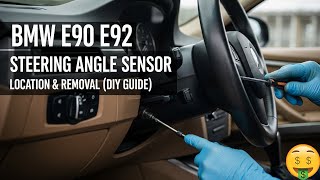
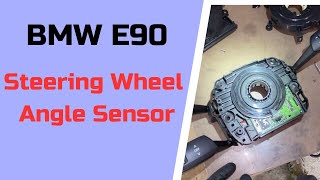
- BMW 3-Series (E90), 5-Series (E60) (2005-2013) — Triggers the DSC light. A failing Intelligent Battery Sensor (IBS) on the negative terminal disrupts the electrical system. Unregistered batteries also cause charging issues that trigger SAS faults.
- Hyundai / Kia Santa Fe, Sorento, various models (2011-2017) — Requires calibration after alignment. Hyundai/Kia reuse codes: on some diesels, P1171 indicates a fuel pressure problem, while on others it relates to wheel speed sensors.
Manufacturer-Specific Notes
- General Motors (GM): On 2024-2025 Chevrolet Traverse, GMC Acadia, and Buick Enclave models, C1171 is a 'TPMS Relearn Failure' due to a grounding issue with the OnStar module's ethernet cable. The fix is a dealer-installed wiring harness overlay (P/N 26501515) under TSB #24-NA-166.
- Infiniti/Nissan: The steering angle sensor is integrated with the clock spring. When the sensor fails, the entire clock spring assembly requires replacement. This preemptively fixes future issues with steering wheel buttons or the airbag light.
- BMW: A DSC/ABS light and steering angle fault is frequently a symptom of a failing Intelligent Battery Sensor (IBS) or an unregistered battery. Always check IBS health and battery registration status before replacing steering components.
- Lancia: On some Lancia models, C1171 defines a fault with the 'rear right wheel speed sensor signal', completely unrelated to the steering angle sensor.
- Hyundai: For diesel models like the Santa Fe, a P1171 code indicates a 'CPC Mode Monitoring - Low Input' or 'Minimum Rail Pressure Exceeded' fault within the common rail fuel system, entirely unrelated to steering.
Real Owner Stories
2010 Infiniti G37 at 110K miles
VDC (stability) and SLIP lights illuminated intermittently, then stayed on. No other symptoms were present.
What they tried:
- Checked brake fluid, which was full.
- Mechanic read code C1171.
- Mechanic initially suspected a bad wheel speed sensor, but live data proved the Steering Angle Sensor was unresponsive.
Outcome: Replaced the entire steering angle sensor/clock spring assembly. The OEM part was expensive, but it definitively fixed the issue. Lights extinguished after installation and calibration.
Lesson: On Infiniti/Nissan vehicles, C1171 almost always points to the integrated SAS/clock spring assembly. Do not waste money on other diagnoses if the live data for the SAS is erratic or dead.
2017 Ford F-150 at 45K miles
ABS and AdvanceTrac warning lights appeared immediately after getting four new tires and a wheel alignment at a tire shop.
What they tried:
- Returned to the tire shop twice; they corrected the physical alignment, but the code persisted.
- Owner took the truck to a Ford dealer.
Outcome: The Ford dealer performed a Steering Angle Sensor calibration using their diagnostic tool. The procedure took 30 minutes and cost $150. The lights disappeared permanently.
Lesson: A wheel alignment is incomplete without an SAS calibration. Many tire shops lack the specific scan tools to perform this. If the code appears immediately after an alignment, get a proper calibration done at a dealership or qualified independent shop.
2011 BMW 328i (E90) at 95K miles
DSC (stability) and ABS lights illuminated. The car drove normally, but turn signals no longer self-canceled.
What they tried:
- A local shop scanned the car, found a steering angle sensor fault, and recommended replacing the entire steering column switch center for over $1000.
- Owner researched BMW forums and learned about the Intelligent Battery Sensor (IBS).
Outcome: The owner disconnected and cleaned the IBS connector on the negative battery terminal. After reconnecting, the codes cleared and did not return. Voltage fluctuations from a faulty IBS communication caused the fault, not a bad SAS.
Lesson: On BMWs, electrical faults are frequently symptoms of a failing battery management system (IBS) or an unregistered battery. Always investigate battery health and IBS status before replacing expensive modules.
2024 GMC Acadia with <1,000 miles
Brand new vehicle displayed a 'Service Tire Monitor System' message alongside codes C1171, C1172, C1173, and C1174. The vehicle drove perfectly.
What they tried:
- Owner took the vehicle to the GMC dealership, concerned about a major steering failure.
Outcome: The dealership performed a warranty repair according to GM TSB #24-NA-166. They installed a wiring harness overlay (P/N 26501515) to fix a grounding issue with the OnStar module interfering with TPMS communication.
Lesson: Always check for TSBs on newer vehicles. On 2024-2025 GM SUVs, C1171 has nothing to do with steering; it is a known, warranty-covered TPMS network fault.
How to Prevent This Code From Triggering
- Perform regular wheel alignments (Every 12-15 months or 12,000 miles) — Keeps the steering wheel centered, preventing a data mismatch between the SAS and vehicle dynamics sensors, which is a primary trigger for C1171.
- Maintain proper battery health (Test annually after 3 years of age) — Unstable voltage causes random communication errors and glitches in sensitive electronic modules like the SAS. Stable power prevents phantom codes.
- Clean undercarriage and electrical connectors (Annually, especially after winter in salt-belt regions) — Washing away road salt prevents corrosion on the SAS wiring harness and connectors, ensuring a clear signal to the control module.
- Avoid turning the steering wheel to full lock and holding it (Daily habit) — Hitting the steering stops puts mechanical stress on the clock spring's internal ribbon cable. Over time, this fatigues the wires, leading to SAS and airbag faults.
- Insist on SAS calibration after any steering or suspension work (Per event) — Any change to vehicle geometry changes the steering's 'zero point'. Calibration ensures the system has the correct baseline, preventing the code from appearing post-repair.
Frequently Asked Questions
What is the most common misdiagnosis for C1171?
The most common mistake is immediately replacing the steering angle sensor without checking simpler causes. Technicians and DIYers frequently overlook a bad wheel alignment or fail to perform a mandatory SAS calibration after an alignment.
Can I just clear the code and keep driving?
You can clear the code, but if the underlying fault remains, it returns immediately. While active, critical safety systems like ABS and stability control are disabled. Ignoring it significantly increases the risk of an accident in emergency situations.
What happens if you don't calibrate a new steering angle sensor?
A new sensor will not work correctly until calibrated because the control module lacks an accurate 'straight-ahead' reference point. This causes the C1171 code to return immediately and triggers incorrect stability control interventions during normal turns.
Can a bad clock spring cause only the C1171 code?
Yes. The clock spring contains multiple electrical circuits, and the steering angle sensor circuit can fail independently of the airbag or steering wheel buttons. However, if you also have an airbag light on or your horn fails, the clock spring is definitively the culprit.
How much does it cost to fix C1171?
The cost depends entirely on the cause. A wheel alignment with calibration typically costs $150-$350. Replacing the steering angle sensor itself ranges from $300 to $1,350, depending on whether you use aftermarket parts or expensive OEM assemblies.
Is it safe to drive with the C1171 code?
The car will drive, but your primary active safety systems (ABS and stability control) are offline. This increases the risk of losing control in an emergency maneuver or on slippery roads. Get it repaired immediately to restore these critical safety features.
My traction control and ABS lights are on. Is C1171 the reason?
Yes, it is very likely. The ABS and traction control systems require steering wheel position data to function. When the signal is lost or irrational, the systems disable themselves as a fail-safe and illuminate their respective warning lights.
Key Takeaways
- Code C1171 disables your vehicle's ABS and Electronic Stability Control (ESC) due to an illogical signal from the Steering Angle Sensor.
- Always verify wheel alignment and perform a mandatory sensor calibration before spending $300+ replacing the steering angle sensor.
- Repair costs range from $150 for a simple alignment and calibration to over $1,300 for an OEM sensor replacement on luxury vehicles like Infiniti or BMW.
- On 2024-2025 Chevrolet Traverse and GMC Acadia models, C1171 indicates a TPMS network failure covered under TSB #24-NA-166, not a steering fault.
- Manufacturer definitions vary wildly; on BMWs, a failing Intelligent Battery Sensor (IBS) triggers this code, while on diesel Hyundais, it indicates a fuel pressure drop.
Helpful Videos

Shop the Parts Behind C1171
Below are the parts most often responsible for code C1171, ranked by how frequently each one is the actual culprit (per the diagnosis above). Tap any to see what we have for your vehicle.




The information in this article is provided for general reference and educational purposes only. Vehicle specifications, procedures, and part compatibility can vary by production date, trim level, and region. Always consult your vehicle's factory service manual and verify part numbers before purchasing or performing repairs. Safety-critical components such as airbags, seat belts, and braking systems should be installed by a qualified professional.
- 🧭 Diagnostic Flowchart
- 🎬 Helpful Videos
- 🛍️ Shop This Part
- What Does C1171 Mean?
- Can I Drive With C1171?
- Common Causes
- Symptoms
- Common Fixes & Costs
- Used vs. New Parts: Buying Guide
- What Happens If You Wait — Timeline
- Cost of Not Fixing It
- Diagnosis Steps
- When This Code Triggers (Freeze-Frame Conditions)
- Related Codes
- Climate & Environmental Factors
- How to Talk to a Mechanic About This Code
- Where to Take It: Dealer vs Independent vs Chain
- When to Walk Away From the Repair
- What Scan Tool You Need for This Code
- How to Clear the Code After You Fix It
- Will This Fail Emissions / State Inspection?
- Most Commonly Affected Vehicles
- Manufacturer-Specific Notes
- Real Owner Stories
- 2010 Infiniti G37 at 110K miles
- 2017 Ford F-150 at 45K miles
- 2011 BMW 328i (E90) at 95K miles
- 2024 GMC Acadia with <1,000 miles
- How to Prevent This Code From Triggering
- Frequently Asked Questions
- What is the most common misdiagnosis for C1171?
- Can I just clear the code and keep driving?
- What happens if you don't calibrate a new steering angle sensor?
- Can a bad clock spring cause only the C1171 code?
- How much does it cost to fix C1171?
- Is it safe to drive with the C1171 code?
- My traction control and ABS lights are on. Is C1171 the reason?
- Key Takeaways
- 🎟️ Get 5% Off