

OBD-II Code C1173: Manufacturer-Specific Chassis Fault
The Ultimate Guide to What C1173 Means, Why It Triggers, and How to Fix It for Good
- C1173 is manufacturer-specific: it indicates a failed Steering Angle Sensor on Mercedes/BMW, a $20 brake light switch on Hyundai/Kia, or a TPMS wiring flaw on 2024+ GM models.
- Never replace a Steering Angle Sensor without first checking if a recent wheel alignment threw off the calibration, which costs $75-$150 to reset.
- On 2024 and newer GM vehicles, do not buy new TPMS sensors; the code requires a dealer-installed wiring overlay (TSB #24-NA-166) covered under warranty.
- Replacing a Steering Angle Sensor requires a professional bi-directional scanner to perform a mandatory 'Zero-Point Calibration' before the ESP system will function again.
What Does C1173 Mean?
C1173 is a manufacturer-specific chassis code. On Mercedes-Benz, BMW, and Nissan, it indicates a steering angle sensor failure. On 2024+ GM vehicles, it signals a Tire Pressure Monitoring System (TPMS) communication fault. On Hyundai/Kia, it points to a faulty brake light switch, and on Ford, a parking brake switch short.
Technical definition: Manufacturer-specific definitions include: 'N49 (Steering Angle Sensor) : Plausibility Error' (Mercedes-Benz), 'Tire Pressure Monitor Sensor Relearn Failure' (General Motors), and 'Park Brake Switch #1 Released Circuit Short to Gnd' (Ford).
Can I Drive With C1173?
Yes, But With Caution. You can drive, but your primary accident-avoidance system (ESC or ABS) is offline. In an emergency swerve or on a slippery surface, the risk of a spin-out or rollover increases significantly. Limit driving, especially in adverse weather, until the system is repaired.
Common Causes
- Faulty Steering Angle Sensor (SAS) (Very Common) — The most frequent cause on Mercedes-Benz, BMW, and Nissan. The sensor fails internally or its internal optical disc becomes dirty (common on BMWs), sending illogical data and disabling the Electronic Stability Program (ESP/DSC/VDC).
- Incorrect Wheel Alignment without Recalibration (Common) — A significant change in wheel alignment without a corresponding steering angle sensor recalibration triggers a plausibility fault. The computer sees a conflict between the steering angle and the wheel speed sensors.
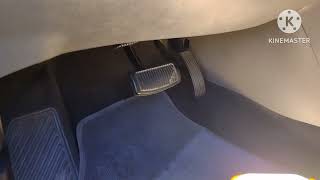
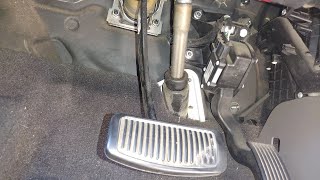
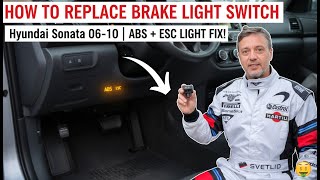
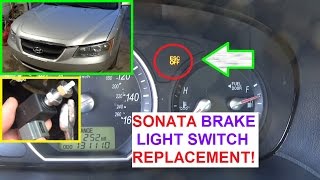
- Faulty Brake Light Switch (Hyundai/Kia Specific) (Common) — On Hyundai and Kia vehicles, a failing plastic brake light switch sends an erroneous signal to the ESC module, logging a C1173 code. This is a highly common, inexpensive failure point. 🎬 Watch: How to replace the Hyundai brake light switch.
- TPMS Communication Interference (GM Specific) (Common) — On 2024-2025 GMC and Chevrolet models, electrical interference from the OnStar module prevents the TPMS from learning sensor positions. Technical service bulletin TSB #24-NA-166 addresses this known defect.
- Faulty Parking Brake Switch (Ford Specific) (Less Common) — On Ford models, the code indicates the switch detecting the parking brake release has an electrical short to ground.
- Low Battery Voltage or Poor Ground (Less Common) — Sensitive ABS/ESP controllers require stable voltage. A weak battery or corroded ground connection causes voltage drops that lead to communication errors and plausibility faults.
- Wiring or Connector Damage (Rare) — Corrosion, melted insulation, or a loose connection in the wiring harness leading to the SAS, TPMS module, or brake switch interrupts the signal.
Symptoms
- ESP, Traction Control, or ABS Light On — The vehicle disables safety systems because it cannot verify the driver's steering input.
- TPMS Warning Light On (GM) — The TPMS light illuminates with a 'Service Tire Monitor System' message. Individual tire pressures disappear from the dashboard.
- Power Steering Feels Heavy — Electronic Power Steering (EPS) systems use the SAS to determine assistance levels. A faulty sensor causes heavy or delayed steering response.
- Cruise Control Inoperative — The vehicle disables cruise control when it detects a fault in the stability control or brake systems.
- Parking Brake Warning Light On (Ford) — The dashboard warning light illuminates due to a short in the parking brake switch circuit.
Diagnostic Flowchart
Tap your situation to follow the diagnostic path that matches what you're seeing on this code.
Common Fixes & Costs
- Replace Steering Angle Sensor — Parts: $150 - $450, Labor: $150 - $400, ~2.5 hr book time (Professional)
- Steering Angle Sensor Calibration — Parts: $0, Labor: $75 - $150, ~0.8 hr book time (Professional)
- Replace Brake Light Switch (Hyundai/Kia) — Parts: $15 - $40, Labor: $50 - $120, ~0.7 hr book time (DIY)
- Install GM Wiring Harness Overlay (TSB #24-NA-166) — Parts: $160 - $260, Labor: $400 - $650, ~4 hr book time (Professional)
- Replace Parking Brake Switch (Ford) — Parts: $10 - $50, Labor: $40 - $100, ~0.9 hr book time (DIY)
Used vs. New Parts: Buying Guide
When a used part is worth it: Buying a used Steering Angle Sensor is not recommended. The risk of premature failure is high, and the labor to install it is expensive. Only buy used for simple mechanical switches (like a Ford parking brake switch) where access is easy.
Donor-vehicle mileage cap: roughly under 60000 miles for the part to have meaningful remaining life.
Donor quality checklist:
- Verify the donor vehicle's mileage is low.
- Ensure the part comes with at least a 90-day warranty.
- Match the part number exactly, as multiple versions exist for the same model.
- Avoid parts from collision-damaged vehicles where the steering column sustained impact.
Decision logic:
- If The part is a Steering Angle Sensor or integrated clock spring → Buy a new OEM or reputable aftermarket part (e.g., Bosch). The risk of a used electronic part failing is too high.
- If The part is a simple mechanical switch (e.g., parking brake switch) → A used part is a reasonable option if the cost savings are significant.
- If Labor for replacement requires removing the airbag and steering wheel → Buy new. The cost of repeat labor far exceeds the savings from a used part.
Warranty tradeoff: Used parts offer a 30-90 day functional warranty that does not cover labor. New aftermarket parts offer a 1-year warranty. New OEM parts carry a 1-2 year warranty, covering labor if installed by a dealer.
Worst-case if a used part fails: $300-800. This represents the cost of repeat labor for installation and calibration if the used sensor fails.
What Happens If You Wait — Timeline
- Immediate: Warning light illuminates. The corresponding safety system (Stability Control or TPMS) disables. The vehicle is drivable but lacks key safety features. (MPG impact: 0%% · Added cost: $0)
- 1-6 months: If caused by a miscalibrated SAS, uneven tire wear begins as the driver makes constant, tiny steering corrections. The car pulls slightly. (MPG impact: 0-1%% · Added cost: $200 - $800 (Premature replacement of front tires))
- 6-12 months: Continued driving with a faulty SAS signal strains the Electronic Power Steering (EPS) motor. The vehicle fails mandatory state safety inspections. (MPG impact: 0-2%% · Added cost: $500 - $2000 (Added wear on the power steering rack or motor))
Cost of Not Fixing It
- Immediate: Disabled Electronic Stability Control (ESC/VDC/DSC). This results in a significantly higher risk of losing vehicle control during an emergency maneuver. (Added cost: N/A (Safety risk))
- 0-6 months: Accelerated and uneven tire wear. A miscalibrated steering angle sensor causes the vehicle to pull slightly, forcing constant minor steering corrections. (Added cost: $200 - $800 (Premature replacement of front tires))
- 6+ months: Strain on the Electronic Power Steering (EPS) motor. A bad SAS signal forces the power steering motor to work incorrectly, leading to premature wear. (Added cost: $500 - $2000 (Cost of steering rack or power steering component failure))
Diagnosis Steps
- Identify the Affected System
Determine what C1173 means for your vehicle by checking the dashboard. An ESP/Traction light points to the Steering Angle Sensor or Brake Switch. A TPMS light points to the tire monitor system. A Parking Brake light points to the brake switch.
Tools: None (Beginner) - Read Live Data (Steering Angle Sensor)
Use an advanced OBD-II scanner to read live data from the chassis module. With wheels straight, the steering angle must read 0 degrees (+/- 2.5 degrees). Turn the wheel; the angle must change smoothly. If the value is stuck or jumps erratically, the sensor is faulty.
Tools: Advanced OBD-II Scanner (Intermediate) - Test the Brake Light Switch (Hyundai/Kia)
Ensure the brake lights work correctly. Use a scanner to monitor the switch status in the live data stream, which must change from 'Off' to 'On' instantly when the pedal is pressed. Alternatively, test the switch for continuity with a multimeter.
Tools: Multimeter or Advanced OBD-II Scanner (Beginner) - Attempt TPMS Relearn Procedure (GM)
For 2024+ GM vehicles, perform the TPMS relearn procedure outlined in the owner's manual. If the procedure fails on the front tires, it confirms the communication interference issue covered by TSB #24-NA-166.
Tools: TPMS Relearn Tool (if required by vehicle) (Intermediate) - Test the Parking Brake Switch Circuit (Ford)
Locate the parking brake switch. Disconnect it and test across its terminals with a multimeter. You must see continuity when engaged and an open circuit when released. If the switch tests good, trace the wiring for a short to ground.
Tools: Multimeter, Vehicle Wiring Diagram (Advanced) - Inspect Wiring and Connectors
Visually inspect the wiring harness for the identified component. Look for chafing, melting, corrosion, or loose pins at the steering column base (Mercedes) or behind interior trim (GM).
Tools: Flashlight, Trim Removal Tools (Intermediate) - [PRO TIP] Check SAS Voltage and Ground
Identify the power, ground, and signal wires at the SAS connector. With the key on, verify battery voltage (12.0-12.6V) at the power pin and a solid ground (<0.1V) at the ground pin. A lack of power confirms a wiring or fuse issue, not a faulty sensor.
Tools: Multimeter, Vehicle Wiring Diagram (Advanced) - [PRO TIP] Perform Zero-Point Calibration
If the sensor reads 5-10 degrees while driving straight, perform a 'Zero-Point Calibration' using a professional scan tool. This teaches the ESP module the exact straight-ahead position. If the code returns, the sensor requires replacement.
Tools: Professional OBD-II Scanner with Calibration Function (Professional)
When This Code Triggers (Freeze-Frame Conditions)
- Vehicle Speed: 20-70 mph (Steady driving. The fault sets when the vehicle moves straight, but the sensor reports a steering angle due to an offset or internal failure.)
- Steering Angle: Erratic or non-zero value (e.g., 5-15 degrees) while driving straight (The ECU detects a 'plausibility error' between the reported steering angle and the wheel speed sensors, which indicate no turn is in progress.)
- System Voltage: 13.0-14.5V (Normal operating voltage. A low voltage event during startup triggers the code if the battery is failing.)
Related Codes
- C1172 — On Mercedes-Benz, this code for an 'Internal Fault' confirms a dead sensor. C1173 ('Plausibility Error') means the signal is illogical, pointing to alignment or wiring issues.
- C1171, C1172, C1174 (GM) — These codes are part of the GM TPMS relearn failure family. If multiple codes appear together, it confirms the system-wide communication interference issue covered by TSB #24-NA-166.
- C1036 — Indicates a 'Fault in CAN Communication With Steering Column Module' on Mercedes. C1036 points to a network failure, while C1173 points specifically to bad data from the sensor.
Climate & Environmental Factors
- Cold Weather: Extreme cold thickens hydraulic fluids, affecting electronic power steering systems. Low battery voltage on cold starts frequently causes spurious electronic fault codes like C1173.
- High Humidity / Water Intrusion: Moisture accelerates corrosion on electrical connectors for the SAS, brake switches, or ABS module. Clogged sunroof drains allow water to drip onto sensitive steering column electronics, causing short circuits.
How to Talk to a Mechanic About This Code
Say this: "I have a C1173 code on my [Make, Model, Year] and the [ESP/TPMS] light is on. Based on my research, it is likely the [steering angle sensor/brake light switch/TSB #24-NA-166]. Can you start by checking the [live data from the SAS/brake switch function] before recommending a more expensive repair?"
This signals you are an informed customer, directing the technician to the most likely cause first. It avoids a costly misdiagnosis (like replacing an ABS module) and focuses diagnostic time on known failure points.
Avoid saying:
- 'Just fix whatever's wrong'
- 'My traction control light is on, can you look at it?' (Too vague, invites an expensive diagnostic process)
- 'I think my ABS computer is bad.' (Do not diagnose the problem for them; describe the symptoms and specific code.)
Questions to ask before authorizing the repair:
- For a Steering Angle Sensor: Did you check the live data? What did it read? Does the estimate include the mandatory zero-point calibration?
- For a Hyundai/Kia: Did you physically test the brake light switch and check the pedal stopper?
- For a new GM vehicle: Are you aware of TSB #24-NA-166 for this TPMS issue? Will this be handled as a warranty repair?
- If the code appeared after an alignment: Does your alignment service include the required steering angle sensor calibration?
Where to Take It: Dealer vs Independent vs Chain
- Dealer:
Best for: Vehicles under warranty (especially new GM models with TSB #24-NA-166)., Complex German brands (Mercedes, BMW) requiring proprietary diagnostic tools (STAR/ISTA) for calibration., Recalls related to the fault (e.g., Hyundai/Kia brake switch recalls).
Downsides: Significantly higher labor rates and parts costs., Defaults to replacing entire assemblies when a smaller component repair suffices. (Typical cost: +50% vs. baseline) - Independent Shop:
Best choice for most scenarios. Ask if they have experience with electronic stability control faults and can perform steering angle sensor calibrations.
Best for: Out-of-warranty vehicles where cost is a factor., Common fixes like the Hyundai/Kia brake light switch or Ford parking brake switch., Post-alignment calibration issues.
Downsides: Shop quality varies. You must confirm they own a professional scanner capable of SAS calibration., Lacks access to the latest TSBs for brand-new models. (Typical cost: +0% vs. baseline) - Chain Shop:
Not Recommended. This code requires diagnostic skill and equipment beyond the scope of chain repair shops.
Best for: None for this code. Their services are suited for tires, brakes, and oil changes.
Downsides: Technicians lack training for nuanced electronic diagnostics., Lacks the advanced, bi-directional scan tools required for SAS calibration., High risk of misdiagnosis. (Typical cost: -10% vs. baseline)
When to Walk Away From the Repair
If the total estimated repair cost exceeds 40-50% of your car's current private-party market value, consider selling or trading in the vehicle instead of repairing it.
- Car worth $4000, fix is $150: Fix it. This is a minor cost relative to the car's value, likely a simple switch replacement or calibration.
- Car worth $6000, fix is $1200: Borderline. The repair is 20% of the car's value. Get a second opinion from an independent specialist before authorizing a dealer repair for a steering angle sensor.
- Car worth $3500, fix is $1500: Walk away. The repair cost is nearly 43% of the car's value. It is not economical to proceed.
What Scan Tool You Need for This Code
Minimum: A scanner that reads and clears codes from the ABS/Chassis control module and displays live sensor data. A basic engine-only code reader will NOT work.
A standard $20 code reader only communicates with the Engine Control Module (ECM). C1173 is stored in the ABS/ESP module. Diagnosing this requires viewing live data from the steering angle sensor.
Budget: Autel ML629 / Foxwell NT301 (~$100) — Reads and clears codes from the ABS module. Displays live data, allowing you to see the steering angle reading to check for plausibility. It cannot perform calibrations.
Mid-range: Autel MaxiCOM MK808S / Foxwell NT510 Elite (~$350) — Offers full system diagnostics and bi-directional control. It performs the mandatory 'Steering Angle Sensor Calibration' required after a sensor replacement or alignment.
Professional: Autel MaxiSys MS906 Pro / Launch X431 Series (~$900-1200) — Provides full OEM-level diagnostics, bi-directional control, and advanced ECU coding. Essential for a professional shop environment.
Rent vs buy: Auto parts store loaner tools are basic engine code readers and cannot diagnose C1173. Pay for a professional diagnosis or buy a mid-range scanner with SAS calibration capabilities.
How to Clear the Code After You Fix It
- Perform the required repair (e.g., replace sensor, fix wiring).
- For Steering Angle Sensor replacement, perform a 'Zero-Point Calibration' using a professional bi-directional scan tool.
- Use the scan tool to clear the C1173 fault code from the ABS/ESP module.
- Perform a short road test, including straight-line driving and several turns, to confirm the warning light stays off.
Drive cycle (~15 minutes): Start the vehicle and let it idle for 2 minutes. Drive for 10 minutes in a mix of city and steady-speed conditions, executing several full left and right turns. Confirm the ESP/ABS/TPMS light does not re-illuminate.
Readiness monitors affected: This code does not affect emissions-related readiness monitors., It relates exclusively to the self-test status of the chassis control systems (ABS, ESP, TPMS).
Watch out for:
- Clearing the code without performing the mandatory SAS 'Zero-Point Calibration' guarantees the code returns immediately.
- Using a basic $20 OBD-II code reader fails because it only accesses the engine module, not the chassis (ABS/ESP) module where C1173 is stored.
Will This Fail Emissions / State Inspection?
No — by itself this code doesn't fail OBD inspection (but it can keep readiness monitors from setting, which causes a separate fail).
- California: Will NOT fail a smog test. California primarily fails vehicles for an illuminated Check Engine Light. ABS, traction control, or TPMS lights do not cause a smog check failure.
- New York: Will NOT fail the emissions inspection, but WILL fail the mandatory annual safety inspection. An illuminated ABS or traction control light is grounds for a safety failure.
- Texas: For non-commercial vehicles, this code will not cause a failure. For commercial vehicles, an illuminated ABS or brake warning light fails the required safety inspection.
Manufacturer-Specific Notes
- Mercedes-Benz: Code C1173 means the steering angle sensor failed. Replacement and a specific 'Zero-Point Calibration' using a STAR diagnostic tool are mandatory.
- General Motors: On 2024+ models, C1173 is NOT a bad TPMS sensor. It is electrical interference from the OnStar module requiring a dealer-installed wiring harness per TSB #24-NA-166.
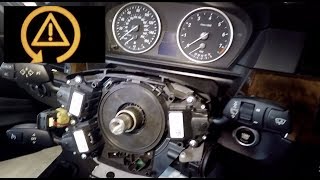
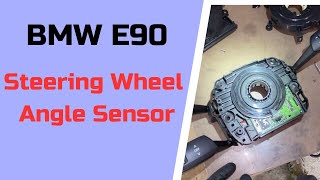
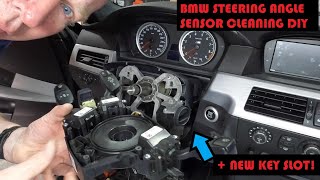
- BMW: On E9x/E6x era cars, the steering angle sensor uses an optical disc that gets dirty. Cleaning the disc with isopropyl alcohol often resolves the fault without replacing the sensor.
- Hyundai / Kia: The ESC light with code C1173 is frequently caused by a $20 faulty brake light switch. Always check this component first before diagnosing the steering system.
Real Owner Stories
2011 Hyundai Elantra at 110K miles
ESC light stayed on. Brake lights failed to illuminate even after replacing the bulbs.
What they tried:
- Replaced brake light bulbs.
- Checked fuses.
- Unhooked and re-plugged the brake light switch.
Outcome: Replaced the brake light switch ($20 part). The owner found pieces of the old switch's plastic stopper on the floor mat. The new switch fixed the brake lights and cleared the ESC light.
Lesson: On a Hyundai/Kia with an ESC light, check the inexpensive brake light switch first. It saves you from a costly and incorrect diagnosis of the steering angle sensor.
2005 Mercedes-Benz C200
ESP fault light appeared immediately after getting new tires and a wheel alignment. Cruise control stopped working.
What they tried:
- Diagnostic scan showed C1173 (Plausibility Error) and C1172 (Internal Fault).
Outcome: The alignment shop adjusted only one tie rod, causing the steering wheel to be off-center. This created a conflict between the SAS and wheel speed sensors. A correct alignment and a STAR diagnostic calibration resolved the issue.
Lesson: If C1173 appears immediately after a wheel alignment, the sensor is not bad. The alignment shop failed to calibrate the sensor. Insist on SAS calibration during any alignment service.
2024 GMC Acadia with low mileage
TPMS warning light illuminated. The owner could not see individual tire pressures, and the dealer could not complete the TPMS relearn procedure.
What they tried:
- Attempted manual TPMS relearn.
Outcome: The dealer identified electrical interference from the OnStar module's ethernet cable per TSB #24-NA-166. They installed a new overlay wiring harness under the Bumper-to-Bumper warranty.
Lesson: On 2024+ GM vehicles, C1173 is a complex wiring issue covered by a TSB. Do not pay for new TPMS sensors; request warranty repair per TSB #24-NA-166.
2008 BMW 3-series (E90) at 85K miles
DSC, ABS, and brake warning lights illuminated. The ABS activated at low speeds on dry pavement before the lights came on.
What they tried:
- Diagnostic scan confirmed a steering angle sensor fault.
Outcome: The owner disassembled the steering column switch cluster and cleaned the SAS optical disc with isopropyl alcohol. After reassembly and a lock-to-lock calibration, the fault codes cleared permanently.
Lesson: For E90-era BMWs, a dirty optical disc inside the SAS causes C1173. Cleaning the disc is an advanced DIY step that saves hundreds of dollars on a replacement sensor.
How to Prevent This Code From Triggering
- Perform SAS calibration after every wheel alignment (Every alignment) — Alignments change the steering's center point. Failing to electronically reset the sensor causes the computer to see a conflict between the steering angle and the vehicle's direction of travel.
- Maintain a healthy battery and charging system (Annual testing) — Sensitive electronic modules require stable voltage. A weak battery causes voltage drops during startup, leading to spurious communication and plausibility fault codes.
- Check the brake pedal stopper (Hyundai/Kia) (Every 30,000 miles) — A brittle plastic 'stopper' pad on the brake pedal arm disintegrates over time, causing the switch to fail and trigger an ESC fault. Replacing this $2 part prevents a breakdown.
Frequently Asked Questions
I just had an alignment and now my ESP/VDC light is on with code C1173. Is this related?
Yes. A wheel alignment changes the steering's 'straight-ahead' position. The steering angle sensor needs a professional scan tool recalibration to learn this new center point. Without it, the computer sees a conflict and triggers the code.
What is the difference between C1172 and C1173 on a Mercedes?
C1172 is an 'Internal Fault,' confirming a dead sensor. C1173 is a 'Plausibility Error,' meaning the sensor's signal contradicts other sensors like wheel speed. While C1173 usually means a bad sensor, it also triggers from bad alignments or wiring issues.
Can a bad battery cause a C1173 code?
Yes. Low system voltage from a weak battery causes electronic modules, including the ABS/ESP controller, to malfunction. Test the battery and charging system before replacing complex sensors.
My TPMS light is on with C1173. Should I replace the tire sensors?
If you drive a 2024+ GM vehicle, do not replace the TPMS sensors. The cause is a known communication issue (TSB #24-NA-166) requiring a specific dealer wiring repair. This is covered under the new car warranty.
Can I replace a steering angle sensor myself?
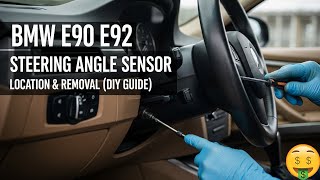
No. The job requires removing the airbag, which is dangerous without proper training. Furthermore, the new sensor requires a mandatory electronic calibration using a professional scan tool that most DIYers do not own.
What does 'Plausibility Error' mean for a steering angle sensor?
It means the computer receives data from the sensor, but it contradicts other vehicle data. For example, the sensor reports a 90-degree turn while wheel speed sensors show the car driving straight. This conflict forces the computer to disable the ESP system.
My mechanic says the C1173 code means my ABS module is bad. Is that possible?
While an ABS module can fail, it is rarely the cause of C1173. The code typically indicates a problem with an input to the module, like the steering angle sensor. Get a second opinion before replacing an expensive ABS module.
Why is the repair so expensive for a sensor?
The steering angle sensor itself costs $150-$450. Labor is high because technicians must safely remove the airbag and steering wheel to access it. The mandatory electronic calibration also adds to the final cost.
My VDC/Slip light is on with C1173 on my Nissan/Subaru, what should I check first?
Check your brake fluid level first. On many Nissan and Subaru models, the VDC system ties into the brake system. Low fluid triggers warnings for the entire safety network.
Can I just clear the C1173 code and keep driving?
You can clear it, but it returns immediately because it stems from a hard fault. You can drive the vehicle, but stability control or TPMS remains disabled. Fix the root cause to restore these critical safety systems.
How do you reset the steering angle sensor without a scanner?
A true 'zero-point calibration' requires a professional scanner. However, after a battery disconnect, you can attempt a basic initialization by turning the steering wheel lock-to-lock and back to center. This restores basic readings but will not fix a hardware failure.
Key Takeaways
- C1173 is manufacturer-specific: it indicates a failed Steering Angle Sensor on Mercedes/BMW, a $20 brake light switch on Hyundai/Kia, or a TPMS wiring flaw on 2024+ GM models.
- Never replace a Steering Angle Sensor without first checking if a recent wheel alignment threw off the calibration, which costs $75-$150 to reset.
- On 2024 and newer GM vehicles, do not buy new TPMS sensors; the code requires a dealer-installed wiring overlay (TSB #24-NA-166) covered under warranty.
- Replacing a Steering Angle Sensor requires a professional bi-directional scanner to perform a mandatory 'Zero-Point Calibration' before the ESP system will function again.
Helpful Videos


Shop the Parts Behind C1173
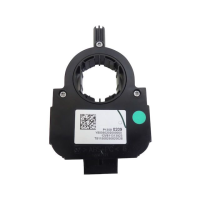
Below are the parts most often responsible for code C1173, ranked by how frequently each one is the actual culprit (per the diagnosis above). Tap any to see what we have for your vehicle.



The information in this article is provided for general reference and educational purposes only. Vehicle specifications, procedures, and part compatibility can vary by production date, trim level, and region. Always consult your vehicle's factory service manual and verify part numbers before purchasing or performing repairs. Safety-critical components such as airbags, seat belts, and braking systems should be installed by a qualified professional.
- 🧭 Diagnostic Flowchart
- 🎬 Helpful Videos
- 🛍️ Shop This Part
- What Does C1173 Mean?
- Can I Drive With C1173?
- Common Causes
- Symptoms
- Common Fixes & Costs
- Used vs. New Parts: Buying Guide
- What Happens If You Wait — Timeline
- Cost of Not Fixing It
- Diagnosis Steps
- When This Code Triggers (Freeze-Frame Conditions)
- Related Codes
- Climate & Environmental Factors
- How to Talk to a Mechanic About This Code
- Where to Take It: Dealer vs Independent vs Chain
- When to Walk Away From the Repair
- What Scan Tool You Need for This Code
- How to Clear the Code After You Fix It
- Will This Fail Emissions / State Inspection?
- Manufacturer-Specific Notes
- Real Owner Stories
- 2011 Hyundai Elantra at 110K miles
- 2005 Mercedes-Benz C200
- 2024 GMC Acadia with low mileage
- 2008 BMW 3-series (E90) at 85K miles
- How to Prevent This Code From Triggering
- Frequently Asked Questions
- I just had an alignment and now my ESP/VDC light is on with code C1173. Is this related?
- What is the difference between C1172 and C1173 on a Mercedes?
- Can a bad battery cause a C1173 code?
- My TPMS light is on with C1173. Should I replace the tire sensors?
- Can I replace a steering angle sensor myself?
- What does 'Plausibility Error' mean for a steering angle sensor?
- My mechanic says the C1173 code means my ABS module is bad. Is that possible?
- Why is the repair so expensive for a sensor?
- My VDC/Slip light is on with C1173 on my Nissan/Subaru, what should I check first?
- Can I just clear the C1173 code and keep driving?
- How do you reset the steering angle sensor without a scanner?
- Key Takeaways
- 🎟️ Get 5% Off