

OBD-II Code C1204: ABS & Traction Control System Fault Guide
The Ultimate 2026 Guide: What C1204 means, why it triggers, and how to fix it for good.
- Code C1204 disables your vehicle's ABS and traction control systems, increasing your stopping distance by up to 20% on wet or icy roads.
- Diagnose the front right wheel assembly first on Hyundai and Kia vehicles, as a failed $40-$150 wheel speed sensor is the culprit in over 70% of cases.
- Never replace the wheel speed sensor without first measuring wheel bearing play; a hub wobble exceeding 0.005 inches will trigger this code even with a brand-new sensor.
- Expect repair costs to range from $150 for a DIY sensor replacement to $900 for a professional wheel bearing installation, depending on the root cause.
What Does C1204 Mean?
Code C1204 is a chassis-specific Diagnostic Trouble Code (DTC) indicating a fault within the Anti-lock Braking System (ABS). Though definitions vary by manufacturer, it most commonly points to a 'Range/Performance' or 'Intermittent' issue with the front right wheel speed sensor circuit. The ABS control module receives an erratic or illogical signal from this wheel, forcing it to shut down the ABS, TCS, and ESC systems as a safety precaution.
Technical definition: The formal definition of C1204 varies by manufacturer. Common definitions include: "Wheel Speed Sensor Front-RH Range / Performance / Intermittent" (Hyundai, Kia) or "ABS Outlet Valve Coil Rear Circuit Short To Battery" (General Motors). Other definitions include "4WD Solenoid" (Nissan) or "Abnormality in FR/RL wheel cut valve system" (Mitsubishi).
Can I Drive With C1204?
Yes, But With Caution. Yes, but drive with extreme caution. Your standard hydraulic brakes still function, but critical safety systems—Anti-lock Braking System (ABS), Traction Control (TCS), and Electronic Stability Control (ESC)—are disabled. In an emergency stop or on slippery surfaces, your wheels will lock up, causing a skid and a complete loss of steering control. Short-term driving won't damage other components, but the accident risk is high. Get the vehicle diagnosed immediately.
Common Causes
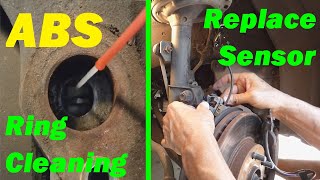
- Faulty Front Right Wheel Speed Sensor (Very Common) — The most frequent culprit on Hyundai and Kia vehicles. 🎬 Watch: How to replace a Hyundai ABS wheel sensor. The sensor fails internally and sends an erratic, jumping, or inconsistent signal to the ABS module.
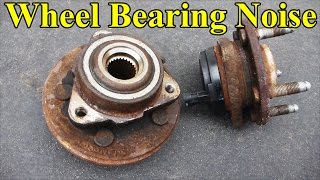
- Worn or Faulty Wheel Bearing/Hub Assembly (Common) — A worn wheel bearing introduces excessive play in the hub. This constantly changes the critical air gap between the sensor and the reluctor ring, causing an erratic signal that triggers a C1204 'performance' code.
- Damaged or Dirty ABS Reluctor Ring (Common) — The toothed 'tone' ring clogs with road grime, rust, and metallic debris. It also cracks, swells with corrosion, or loses teeth, disrupting the sensor's reading.
- Damaged or Corroded Wiring/Connector (Common) — Wires break, fray from suspension movement, or connector pins corrode, leading to an intermittent signal or a short circuit.
- Wiring Short in ABS Valve Coil Circuit (Less Common) — Common on GM vehicles, this points to a wire in the harness for a rear ABS outlet valve that rubbed through and shorts to a power source.
- Incorrect Air Gap After Component Replacement (Uncommon) — Replacing a CV axle, hub, or sensor with an incorrect part creates an air gap that is too large or too small. This is a known issue on Hyundai models requiring a shim.
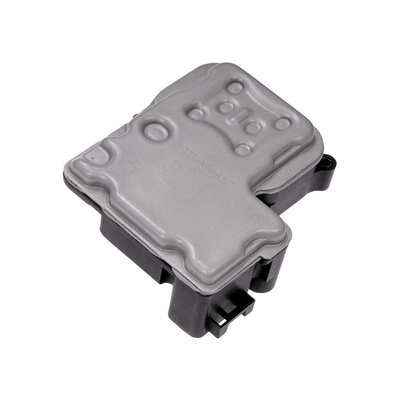
- Faulty ABS Control Module or Hydraulic Unit (Less Common) — The ABS control module (ECU) or attached hydraulic unit fails internally due to cracked solder joints, a failed valve relay, or a faulty driver transistor.
- Faulty 4WD Control Unit (Rare) — On 2013-2014 Nissan Pathfinders, this code points to a failure in the 4WD control unit triggered by cold weather (TSB NTB15-021A).
- Low Battery Voltage or Charging System Issues (Rare) — Extremely low battery voltage during startup causes electronic modules to set erroneous communication or performance codes.
Symptoms
- ABS Warning Light is On — The primary and most certain indicator of a fault within the ABS system.
- Traction Control (TCS) or Stability Control (ESC) Light is On — These systems depend on wheel speed sensor data. When the ABS has a fault, these systems disable automatically.
- ABS Activates Incorrectly at Low Speeds — An erratic signal tricks the ABS module into thinking a wheel is locking up during normal braking, causing unwanted pedal pulsation or a grinding noise.
- Cruise Control is Disabled — Vehicles disable cruise control when an ABS fault is present because true vehicle speed cannot be reliably determined.
- Spongy or Unresponsive Brake Pedal — If the ABS hydraulic control unit fails internally, drivers experience a soft, spongy brake pedal requiring more effort to stop.
Diagnostic Flowchart
Tap your situation to follow the diagnostic path that matches what you're seeing on this code.
Common Fixes & Costs
- Replace Front Right Wheel Speed Sensor — Parts: $40-$150, Labor: $100-$200, ~1.2 hr book time (DIY)
- Replace Wheel Hub/Bearing Assembly — Parts: $120-$400, Labor: $250-$500, ~2.5 hr book time (Intermediate)
- Clean or Replace ABS Reluctor Ring — Parts: $20-$80, Labor: $150-$300, ~2.5 hr book time (Intermediate)
- Repair Damaged Wiring or Connector — Parts: $15-$60, Labor: $150-$450, ~2.0 hr book time (Intermediate)
- Replace ABS Control Module/Hydraulic Unit — Parts: $600-$2200, Labor: $250-$450, ~2.0 hr book time (Professional)
Used vs. New Parts: Buying Guide
When a used part is worth it: Buy used only for an expensive ABS control module, provided it comes from a low-mileage vehicle and includes a warranty. Never buy a used wheel bearing or wheel speed sensor.
Donor-vehicle mileage cap: roughly under 60000 miles for the part to have meaningful remaining life.
Donor quality checklist:
- Match the ABS module part number exactly.
- Verify the donor vehicle was not scrapped due to flood or fire.
- Avoid parts from 'Rust Belt' regions to prevent internal corrosion.
Decision logic:
- If The part is a wheel speed sensor or wheel bearing. → Always buy new. Cost savings are minimal and not worth the risk of premature failure.
- If The part is an ABS control module and a new OEM unit is over $1,000. → A used module from a reputable salvage yard is a viable budget option, but requires professional programming.
- If The part is electronic and has a high failure rate. → Favor a new or professionally rebuilt unit with a longer warranty over a used part.
Warranty tradeoff: Used parts offer a 30-90 day warranty. Aftermarket new sensors and hubs include 1-year to limited lifetime warranties.
Worst-case if a used part fails: $300-$600 if a used sensor or hub fails after installation, requiring repeat labor.
What Happens If You Wait — Timeline
- 0-1 month (for a bad sensor/wiring): ABS/TCS lights appear intermittently. Cruise control disables. Safety systems are offline when the light is on. (Added cost: $0)
- 0-2 months (for a bad wheel bearing): A faint humming or growling noise begins. The C1204 code sets due to hub wobble. (Added cost: $0)
- 2-6 months (for a bad wheel bearing): The humming noise becomes constant. A vibration is felt in the steering wheel. The bearing is rapidly destroying itself. (Added cost: $200-$500 (Potential damage to the hub surface))
- 6+ months (for a bad wheel bearing): Catastrophic failure. The bearing collapses, causing the wheel to wobble violently or separate from the vehicle. (Added cost: $800-$2000+ (Cost of a new steering knuckle, hub, bearing, and CV axle).)
Cost of Not Fixing It
- Immediate: Disabled ABS, Traction Control, and Stability Control systems. This creates a significant safety hazard, dramatically increasing the risk of losing control during a panic stop. (Added cost: $0 (unless an accident occurs))
- 1-6 months: If the cause is a bad wheel bearing, continued driving leads to complete bearing failure. This causes grinding noises, vibrations, and excessive wheel wobble. (Added cost: $800-$2000 (for additional damage to the knuckle, axle, and suspension))
- 6+ months: Continued operation with a bad wheel bearing destroys the hub and steering knuckle. A wiring short damages the expensive ABS control module over time. (Added cost: $1500-$3000+)
Diagnosis Steps
- Retrieve ABS/Chassis Fault Codes
Use an OBD-II scanner to access the ABS module. Confirm C1204 is present and note any other codes. A 'performance' code like C1204 requires a different diagnostic path than an 'open circuit' code.
Tools: OBD-II Scanner (with ABS capability) (Beginner) - Analyze Live Wheel Speed Sensor Data
Use your scanner's live data function to view all four wheel speed sensors simultaneously while driving. A front right sensor that lags, jumps erratically, or differs by more than 2-4 MPH from the others confirms the fault location.
Tools: OBD-II Scanner (with live data) (Beginner) - Perform a Detailed Visual Inspection
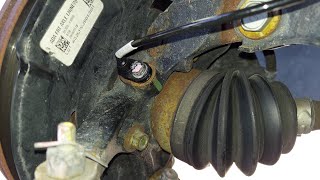
Lift and support the vehicle. Inspect the front right wheel area. Check sensor wiring for chafing or breaks. Examine the reluctor ring for rust buildup or cracks. Check for wheel bearing play by grabbing the tire at 12 and 6 o'clock and rocking it.
Tools: Jack, Jack Stands, Flashlight (Intermediate) - [PRO TIP] Test Wheel Bearing Play with a Dial Indicator
Mount a dial indicator with a magnetic base to the knuckle. Place the tip on the hub flange. Push and pull the hub assembly firmly. Acceptable end play is 0.001" to 0.005" (0.025mm - 0.127mm). A reading greater than 0.005" confirms a failed bearing.
Tools: Dial Indicator with Magnetic Base (Advanced) - Inspect and Clean the Reluctor Ring
Remove the sensor. Use a small brush and brake cleaner to thoroughly clean the reluctor ring. Inspect it closely for cracks or missing teeth. Rust scale swells and disrupts the magnetic field.
Tools: Brake Cleaner, Wire Brush, Inspection Mirror (Intermediate) - [PRO TIP] Test Active Sensor with a Multimeter
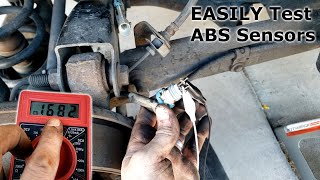
Disconnect the sensor and turn the ignition ON. Probe the harness connector for a reference voltage (5V or 12V) and ground. Reconnect the sensor and backprobe the signal wire. Slowly turn the wheel; voltage must rapidly switch between two values (e.g., 0.7V and 1.4V). A stuck signal indicates a bad sensor.
Tools: Multimeter, Backprobe Kit, Service Manual (Advanced) - [PRO TIP] Test Passive Sensor with a Multimeter
For older 2-wire passive sensors, disconnect and measure resistance (typically 800-1,400 Ohms). Infinity (OL) or zero indicates failure. Switch to AC Volts and spin the wheel; it must produce a small AC voltage that increases with speed.
Tools: Multimeter, Service Manual (Advanced) - [PRO TIP] Visualize the Signal with an Oscilloscope
Backprobe the sensor's signal and ground wires. A good active sensor produces a clean square wave. Look for dropouts, noise, or inconsistent amplitude. Any deviation from a clean pattern indicates a problem.
Tools: Oscilloscope, Backprobe Kit (Advanced) - Check Wiring Harness for Shorts/Opens
Disconnect the harness from the sensor and the ABS module. Check for continuity on each wire from end to end. Check for a short to ground and a short to power. Wiggle the harness while testing to find intermittent breaks.
Tools: Multimeter, Service Manual with Wiring Diagrams (Advanced) - Final Check: The ABS Module
If the sensor, reluctor ring, and wiring test perfectly, the fault lies within the ABS control module. Replacement requires special equipment for programming and brake bleeding.
Tools: Advanced Scan Tool (Professional)
When This Code Triggers (Freeze-Frame Conditions)
- Vehicle Speed: 25-55 mph (40-90 km/h) (The code sets during steady-state driving when the ABS module compares the speeds of all four wheels and identifies a clear outlier.)
- Brake Pedal Status: Not Applied (Performance codes trigger during normal driving, not necessarily during a braking event. An erratic signal also causes unwanted ABS activation at low speeds.)
- Engine RPM: 1200-2500 RPM (Typical for light-load cruising conditions where wheel speeds must remain stable and consistent.)
- System Voltage: 12.5-14.5V (The code sets when the electrical system operates normally; it is not caused by low voltage.)
Related Codes
- C1203 — Means 'Front Right Wheel Speed Sensor Circuit Open/Shorted'. While C1204 indicates an illogical signal, C1203 points to a complete electrical failure like a broken wire.
- C1205 — The corresponding code for the Front Left wheel speed sensor circuit, indicating a 'Range/Performance' issue on the opposite side.
- P0500 — Generic code for 'Vehicle Speed Sensor Malfunction'. If the ABS module sets C1204 and cannot provide a reliable speed signal, the PCM sets P0500. Fixing C1204 resolves P0500.
- U0121 — Means 'Lost Communication With ABS Control Module'. This is a network problem. If you see U0121, the entire ABS module is offline due to a power, ground, or CAN bus failure.
Climate & Environmental Factors
- Cold Weather / Snow and Ice: Extreme cold makes sensor wiring brittle. Snow and ice pack into wheel wells, blocking the sensor's view of the reluctor ring or introducing moisture that freezes. For the 2013-2014 Nissan Pathfinder, C1204 is a known cold-weather issue below 0°F (-18°C) related to the 4WD control unit.
- Humidity and Road Salt: High humidity and road salt accelerate corrosion. This causes the reluctor ring to swell with rust, changing the air gap or destroying the sensor. It also corrodes wiring connectors.
How to Talk to a Mechanic About This Code
Say this: "I have an ABS light on and my scanner shows code C1204. Please check the live data from all four wheel speed sensors, inspect the front right tone ring and wiring, and check for any play in the wheel bearing before recommending a part."
This directs the technician to perform a thorough diagnosis rather than just replacing the most likely part, preventing you from paying for unnecessary repairs if the true cause is a bad bearing or wiring.
Avoid saying:
- 'My ABS light is on, can you just fix it?'
- 'I think I need a new wheel speed sensor.'
- 'Just do whatever you think is best.'
Questions to ask before authorizing the repair:
- What did the live data from the wheel speed sensors show?
- Did you find any play in the wheel bearing or see any damage to the tone ring?
- Can you show me the old part and explain why it failed?
- What is the warranty on this specific repair?
Where to Take It: Dealer vs Independent vs Chain
- Dealer:
Best for: Vehicles under warranty., Known manufacturer-specific issues covered by a TSB, like on a Nissan Pathfinder., Complex electrical issues requiring ABS module programming.
Downsides: Highest labor rates, often 50-100% more than independent shops., May recommend replacing an entire assembly when only a sensor is needed. (Typical cost: +75% vs. baseline) - Independent Shop:
Best overall fit. An experienced independent technician diagnoses the common causes of C1204 effectively and at a much lower cost than a dealer.
Best for: Out-of-warranty vehicles where cost is a factor., Diagnosing and repairing the most common causes of C1204 (sensor, bearing, wiring).
Downsides: Quality varies greatly; look for ASE certifications., May lack expensive, manufacturer-specific diagnostic tools for the newest models. (Typical cost: +0% vs. baseline) - Chain Shop:
AVOID for initial diagnosis, as they frequently misdiagnose a bad wheel bearing or wiring fault as a simple sensor issue.
Best for: Simple, clear-cut repairs like replacing an already-diagnosed wheel speed sensor.
Downsides: Technician skill is inconsistent., Lack the advanced diagnostic tools for complex ABS issues., Business model pressures technicians to upsell services. (Typical cost: -10% vs. baseline)
When to Walk Away From the Repair
If the estimated repair cost exceeds 40-50% of the car's private-party value, seriously consider selling or trading in the vehicle instead of repairing it.
- Car worth $4000, fix is $2200: Walk away. The repair cost is over 50% of the car's value.
- Car worth $12000, fix is $750: Fix it. This repair is well below the threshold and restores a critical safety feature.
- Car worth $3000, fix is $400: Borderline, but likely worth fixing to restore a major safety system if the rest of the car is in good shape.
What Scan Tool You Need for This Code
Minimum: A scanner that reads and clears ABS codes and views live data from the wheel speed sensors. A basic engine-only code reader fails for C1204.
A basic $20 scanner only reads 'P' (Powertrain) codes. C1204 is a 'C' (Chassis) code stored in the ABS module. Without live wheel speed data, you cannot diagnose the problem.
Budget: BlueDriver Pro (~$100) — Connects to your smartphone via Bluetooth. It reads ABS codes and displays live data for all four wheel speed sensors.
Mid-range: Innova 5610 or Foxwell NT630 Plus (~$350) — Handheld units that offer live ABS data and bi-directional controls to command the ABS pump and valves.
Professional: Autel MaxiCOM MK808Z or Launch X431 series (~$500-1200) — Professional-grade tablets offering full-system diagnostics, bi-directional control, and advanced functions like ABS module coding and bleeding procedures.
Rent vs buy: Auto parts stores read ABS codes for free. However, their tools rarely show live data. If you plan to diagnose the issue yourself, buying a scanner like the BlueDriver is essential.
How to Clear the Code After You Fix It
- Ensure all connectors are securely fastened and parts are torqued to specification.
- Use an OBD-II scan tool with ABS capabilities to clear the C1204 code from the ABS module.
- Perform the ABS drive cycle to allow the module to self-test and confirm the repair.
Drive cycle (~15 minutes): Start the vehicle and drive in mixed conditions, including stop-and-go traffic and steady driving above 30 mph. The ABS module performs a self-test upon startup and continuously monitors sensors. A 15-minute drive is sufficient to confirm the light stays off.
Readiness monitors affected: This is a chassis code ('C') and does not affect emissions readiness monitors.
Watch out for:
- Using a basic scanner that cannot read or clear ABS-specific codes.
- Skipping the drive cycle, causing the light to reappear on the drive home.
- The code returning immediately because a bad wheel bearing or wiring short was ignored.
Will This Fail Emissions / State Inspection?
No — by itself this code doesn't fail OBD inspection (but it can keep readiness monitors from setting, which causes a separate fail).
- California: An illuminated ABS light will NOT cause a failure on the emissions-only Smog Check.
- New York: An illuminated ABS light is NOT a cause for rejection during the annual safety inspection.
- Texas: An illuminated ABS light will NOT cause a failure during the annual safety inspection.
Most Commonly Affected Vehicles
- Hyundai Elantra (2011-2016) — Extremely common for C1204 due to front right wheel speed sensor failure. An incorrect air gap after CV axle replacement is also a known cause.
- Hyundai i30 (2012-2013) — Commonly indicates an intermittent issue with the front right wheel speed sensor.
- Kia Forte (2010-2013) — Frequently experiences C1204 due to faults in the front wheel speed sensor circuits.
- Ford F-150 (2015-2020) — Caused by wiring damage near the wheel or failure of the integrated wheel bearing/hub assembly containing the tone ring.
- Chevrolet Equinox / GMC Terrain (2010-2017) — On these GM models, C1204 points to the 'ABS Outlet Valve Coil Rear Circuit Short To Battery' definition, requiring diagnosis of the main wiring harness.
- Toyota Camry (2007-2011) — Triggered by a failing wheel speed sensor or an internal failure of the ABS actuator assembly.
- Nissan Pathfinder (2013-2014) — C1204 points to a '4WD Solenoid' fault addressed by TSB NTB15-021A, requiring replacement of the 4WD control unit.
- Mitsubishi Lancer (2008-2011) — Indicates an internal fault in the ABS/ASC hydraulic unit (ECU). Diagnosis begins by checking CAN bus lines.
- Mercedes-Benz A-Class (W168) (1997-2004) — Related to the BAS (Brake Assist System) diaphragm travel sensor.
Manufacturer-Specific Notes
- Hyundai / Kia: C1204 means 'Wheel Speed Sensor Front-RH Range / Performance / Intermittent'. The cause is frequently a bad sensor, but improper air gap after a CV axle replacement is a common misdiagnosis trap.
- General Motors (Chevy, GMC): The definition is 'ABS Outlet Valve Coil Rear Circuit Short To Battery'. Diagnosis must focus on checking the rear valve circuit wiring for a short to power, not the front wheel speed sensors.
- Nissan: On 2013-2014 Pathfinders, C1204 is defined as '4WD Solenoid' and is addressed by TSB NTB15-021A, directing technicians to replace the 4WD control unit.
- Mitsubishi: Points to an internal failure of the ABS hydraulic unit (ASC-ECU). The service manual suggests replacing the entire hydraulic unit if CAN bus lines are intact.
Real Owner Stories
2012 Hyundai Elantra at 110K miles
ABS and Traction Control lights came on intermittently during wet weather, eventually staying on permanently.
What they tried:
- Ignored the light initially.
- Used a basic OBD-II scanner, which showed no codes.
- Took it to a local shop that used an advanced scanner to pull code C1204.
- The shop replaced the front right wheel speed sensor.
Outcome: Replacing the front right wheel speed sensor ($80 part, $120 labor) solved the problem permanently.
Lesson: For Hyundai/Kia, C1204 is overwhelmingly the front right wheel speed sensor. Intermittent behavior in wet conditions is a classic symptom of sensor failure.
2011 Chevy Equinox at 135K miles
ABS and StabiliTrak lights stayed on. Cruise control was disabled.
What they tried:
- Replaced the front right wheel hub assembly unnecessarily.
- Checked the wiring at the wheel and found no damage.
- Researched the GM-specific definition for C1204 ('ABS Outlet Valve Coil Rear Circuit Short To Battery').
- Inspected the wiring harness near the main ABS control module and found a chafed wire.
Outcome: Repaired the chafed wire with a butt connector and heat shrink. The original hub replacement was a waste of money.
Lesson: Always verify the manufacturer-specific definition. For GM, C1204 is a wiring issue at the ABS module, not a wheel sensor fault.
2014 Nissan Pathfinder at 75K miles
The '4WD ERROR' message and ABS light appeared only on winter mornings below 0°F.
What they tried:
- Ignored the code as it cleared itself when the weather warmed up.
- Took it to the dealership while the light was active the following winter.
Outcome: The dealership replaced the 4WD Control Unit as instructed by TSB NTB15-021A. The problem did not return.
Lesson: For 2013-2014 Pathfinders, C1204 in cold weather is a known 4WD control unit failure, not a wheel speed sensor issue.
2013 Kia Forte at 95K miles
ABS light was on with code C1204. The owner replaced the front right wheel speed sensor, but the light returned immediately.
What they tried:
- Replaced the sensor twice, assuming the first new part was defective.
- Watched live data while spinning the wheel on jack stands; the signal was erratic.
- Used a dial indicator to confirm the wheel bearing had excessive play (0.010").
Outcome: Replaced the front right wheel hub/bearing assembly, fixing the excessive play and providing a stable signal.
Lesson: A worn wheel bearing is a common cause of a 'performance' code like C1204 because hub movement creates an unstable air gap.
How to Prevent This Code From Triggering
- Perform a brake fluid flush. (Every 2-3 years or 30,000 miles.) — Old, water-contaminated fluid causes corrosion inside the expensive ABS hydraulic control unit and its sensitive solenoid valves.
- Inspect and clean reluctor rings during brake service. (Whenever wheels are off for brake pad/rotor replacement.) — Road grime and metallic brake dust build up on the magnetic tone rings, disrupting the sensor's signal.
- Apply dielectric grease to sensor connectors. (During any wheel-end service.) — Dielectric grease blocks moisture and oxygen from reaching the connector pins, preventing corrosion.
- Regularly wash the vehicle's undercarriage. (Monthly, especially in 'Rust Belt' or coastal areas.) — Washing away road salt reduces the corrosive environment that attacks wiring harnesses, sensor bodies, and reluctor rings.
Frequently Asked Questions
What is the most common mistake when fixing code C1204?
The biggest mistake is immediately replacing the wheel speed sensor without proper diagnosis. Technicians and DIYers often fail to inspect the reluctor ring for damage, check the wheel bearing for play, or test the wiring for intermittent shorts. Replacing the sensor will not fix a cracked tone ring or wobbly bearing, and the code will return.
Can a bad wheel bearing cause a C1204 code?
Yes, absolutely. A worn wheel bearing allows excessive movement in the hub. This movement constantly changes the distance between the sensor and the reluctor ring, creating an erratic signal that triggers the C1204 code.
How much does it really cost to fix code C1204?
The cost varies dramatically based on the root cause. A DIY wheel speed sensor replacement costs under $150, while professional repair runs $250-$430. Wheel bearing replacements cost $400-$900, and a failed ABS control module ranges from $1,000 to over $2,500.
Will clearing the code turn off the ABS light?
Clearing the code with a scanner turns the light off only momentarily. Because C1204 is a persistent hardware or electrical fault, the ABS module detects the problem again during its startup self-test. The light will reappear as soon as you start driving.
Can I pass a safety inspection with the ABS light on?
In most jurisdictions with vehicle safety inspections, an illuminated ABS warning light is an automatic failure. The ABS system is a critical safety component. It must be fully functional to pass.
What is a reluctor ring and how does it fail?
A reluctor ring (or tone ring) is a toothed metal ring mounted on the axle or wheel hub that generates a signal as it passes the wheel speed sensor. These rings fail by cracking, swelling with rust, breaking teeth, or accumulating metallic debris. Any of these issues disrupt the signal and trigger a C1204 code.
Is the front right sensor always the problem?
While C1204 points to the front right wheel speed sensor for brands like Hyundai and Kia, verify the code definition for your specific vehicle. For General Motors vehicles, this code points to a rear ABS valve circuit. Looking at the front right wheel on a GM vehicle wastes time and money.
Key Takeaways
- Code C1204 disables your vehicle's ABS and traction control systems, increasing your stopping distance by up to 20% on wet or icy roads.
- Diagnose the front right wheel assembly first on Hyundai and Kia vehicles, as a failed $40-$150 wheel speed sensor is the culprit in over 70% of cases.
- Never replace the wheel speed sensor without first measuring wheel bearing play; a hub wobble exceeding 0.005 inches will trigger this code even with a brand-new sensor.
- Expect repair costs to range from $150 for a DIY sensor replacement to $900 for a professional wheel bearing installation, depending on the root cause.
Helpful Videos
Shop the Parts Behind C1204
Below are the parts most often responsible for code C1204, ranked by how frequently each one is the actual culprit (per the diagnosis above). Tap any to see what we have for your vehicle.



The information in this article is provided for general reference and educational purposes only. Vehicle specifications, procedures, and part compatibility can vary by production date, trim level, and region. Always consult your vehicle's factory service manual and verify part numbers before purchasing or performing repairs. Safety-critical components such as airbags, seat belts, and braking systems should be installed by a qualified professional.
- 🧭 Diagnostic Flowchart
- 🎬 Helpful Videos
- 🛍️ Shop This Part
- What Does C1204 Mean?
- Can I Drive With C1204?
- Common Causes
- Symptoms
- Common Fixes & Costs
- Used vs. New Parts: Buying Guide
- What Happens If You Wait — Timeline
- Cost of Not Fixing It
- Diagnosis Steps
- When This Code Triggers (Freeze-Frame Conditions)
- Related Codes
- Climate & Environmental Factors
- How to Talk to a Mechanic About This Code
- Where to Take It: Dealer vs Independent vs Chain
- When to Walk Away From the Repair
- What Scan Tool You Need for This Code
- How to Clear the Code After You Fix It
- Will This Fail Emissions / State Inspection?
- Most Commonly Affected Vehicles
- Manufacturer-Specific Notes
- Real Owner Stories
- 2012 Hyundai Elantra at 110K miles
- 2011 Chevy Equinox at 135K miles
- 2014 Nissan Pathfinder at 75K miles
- 2013 Kia Forte at 95K miles
- How to Prevent This Code From Triggering
- Frequently Asked Questions
- What is the most common mistake when fixing code C1204?
- Can a bad wheel bearing cause a C1204 code?
- How much does it really cost to fix code C1204?
- Will clearing the code turn off the ABS light?
- Can I pass a safety inspection with the ABS light on?
- What is a reluctor ring and how does it fail?
- Is the front right sensor always the problem?
- Key Takeaways
- 🎟️ Get 5% Off