

Ultimate Guide to OBD-II Code C1207: Rear Left Wheel Speed Sensor Signal Fault
The Most Comprehensive C1207 Diagnosis and Repair Guide. What it means, why it triggers, and exactly how to fix it.
- Code C1207 disables your ABS and stability control by flagging an erratic signal from the rear left wheel speed sensor, increasing emergency stopping distances by up to 30%.
- Always check the live data stream first; a rear left wheel speed reading stuck at 0 mph indicates a dead sensor or broken wire, while erratic jumps point to a cracked tone ring or loose wheel bearing.
- Do not blindly replace the sensor; visually inspect the wiring harness for chafing and the magnetic tone ring for heavy rust or missing teeth, which cause over 40% of these faults.
- Expect to pay between $105 and $250 at an independent shop to replace a faulty wheel speed sensor, but you can DIY this repair in under an hour with basic hand tools and a $50 OEM-equivalent part.
What Does C1207 Mean?
C1207 indicates the Anti-lock Brake System (ABS) module detects an erratic, intermittent, or incorrect signal from the rear left wheel speed sensor. This sensor reports the rotational speed of the wheel to the computer. When this signal drops out or contradicts the other three wheels, the computer disables the ABS and stability systems as a safety precaution because it cannot trust the data.
Technical definition: The SAE/OBD-II definition for C1207 is 'Wheel Speed Sensor Rear-LH Range / Performance / Intermittent'. This means the rear left sensor signal shows sudden speed jumps, dropouts, or implausible readings compared to the other wheels while the vehicle is moving.
Can I Drive With C1207?
Yes, but not recommended Driving is technically possible, but strongly discouraged. Your Anti-lock Braking System (ABS), traction control, and stability control systems are completely disabled. Without ABS, your wheels lock during hard braking, increasing stopping distances by up to 30% on slippery surfaces and causing uncontrollable skids. Seek repair immediately to restore these critical safety systems.
Common Causes
- Faulty Rear Left Wheel Speed Sensor (Very Common) — Internal electronics fail from heat cycles, vibration, and road salt, causing the sensor to send an unstable or dead signal to the ABS module.
- Damaged Wiring or Connector (Common) — Suspension movement chafes wires, and water intrusion corrodes connector pins, causing intermittent signal loss over bumps or during rain.
- Contaminated or Cracked Tone Ring (Common) — Rust, mud, or broken teeth on the axle's magnetic tone ring prevent the sensor from reading a clean pulse, resulting in erratic speed data.
- Worn Wheel Bearing/Hub Assembly (Less Common) — A worn bearing introduces wheel wobble, constantly changing the critical air gap between the sensor and tone ring and triggering a performance fault.
- Incorrect Sensor Installation (Rare) — Rust buildup in the mounting hole prevents the sensor from sitting flush, creating too large of an air gap for a reliable reading.
- Failing ABS Control Module (Rare) — The module's internal processor fails, misinterpreting a perfect sensor signal. Live data often shows the wheel stuck at an impossible speed like 158 mph.
Symptoms
- ABS Warning Light On — The primary symptom. The ABS light illuminates permanently on the dashboard. 🎬 Watch: Fixing ABS and traction control lights on a Santa Fe.
- Traction/Stability Control Light On — The ESC, VSC, or TCS lights illuminate because these systems rely on accurate wheel speed data to function.
- Brake Pedal Pulsation at Low Speeds — An erratic signal tricks the ABS module into thinking a wheel is locking up, causing the brake pedal to pulse and grind unnecessarily at speeds under 10 mph.
- Loss of Anti-Lock Braking — During panic stops or on wet roads, the wheels lock up and skid because the ABS system is disabled.
Diagnostic Flowchart
Tap your situation to follow the diagnostic path that matches what you're seeing on this code.
Common Fixes & Costs
- Replace Rear Left Wheel Speed Sensor — Parts: $25-$90, Labor: $80-$150, ~0.8 hr book time (DIY)
- Repair Wiring Harness Connector Pigtail — Parts: $20-$50, Labor: $100-$200, ~1.5 hr book time (Intermediate)
- Replace Rear Wheel Bearing / Hub Assembly — Parts: $150-$350, Labor: $150-$300, ~2.2 hr book time (Intermediate)
- Replace Axle Shaft (for cracked tone ring) — Parts: $100-$250, Labor: $150-$300, ~2.0 hr book time (Intermediate)
- Replace ABS Control Module — Parts: $400-$1200, Labor: $150-$250, ~1.8 hr book time (Professional)
Used vs. New Parts: Buying Guide
When a used part is worth it: Buying a used wheel speed sensor is never recommended. It is a cheap wear item, and repeat labor costs negate any initial savings. Used ABS modules, however, are viable if the module itself fails.
Donor-vehicle mileage cap: roughly under 20000 miles for the part to have meaningful remaining life.
Donor quality checklist:
- Source used ABS modules only from low-mileage, wrecked vehicles.
- Avoid parts from flood-damaged or rust-belt vehicles.
- Match the OEM part number exactly.
Decision logic:
- If The part is a wheel speed sensor or wiring pigtail → Always buy new from an OEM or reputable aftermarket brand (Bosch, NTK). The cost savings of used sensors are negligible.
- If The part is a complete ABS module/pump assembly → A used or remanufactured unit is a cost-effective option, saving you $1,000+ over a new dealer part.
Warranty tradeoff: Used sensors offer 30-day warranties. New aftermarket sensors offer 1-year to lifetime warranties.
Worst-case if a used part fails: $150 if a used sensor fails, requiring repeat labor.
What Happens If You Wait — Timeline
- 0-4 weeks: ABS and traction control are fully disabled. Wheels lock and skid in emergency stops. No physical damage occurs yet. (MPG impact: 0%% · Added cost: $0)
- 1-3 months: The vehicle automatically fails state safety inspections due to illuminated warning lights. (MPG impact: 0%% · Added cost: $50-$200 in fines or re-inspection fees.)
- 3-12 months: If caused by a severely worn wheel bearing, continued driving leads to catastrophic bearing failure, potentially causing wheel separation. (MPG impact: 1-5%% · Added cost: $400-$800 for hub and knuckle damage.)
- 6-18+ months: Erratic signals cause frequent low-speed ABS pump activation, destroying the hydraulic unit from excessive cycling. (MPG impact: 0%% · Added cost: $1000-$2500+ for a new ABS hydraulic control unit.)
Cost of Not Fixing It
- Immediate: ABS and traction control are disabled. Increased skidding risk and up to 30% longer stopping distances in emergencies. (Added cost: $0 (Safety risk))
- Within weeks: Automatic failure of state safety inspections due to illuminated dashboard warning lights. (Added cost: $50-$200 in fines or re-inspection fees.)
- 1-6+ months: Erratic signals trigger the ABS hydraulic pump unnecessarily at low speeds, causing premature wear and destroying the pump assembly. (Added cost: $1000-$2500+ for a new ABS module/pump.)
Diagnosis Steps
- Read Live Data
Use an ABS-capable scanner to view all four wheel speeds while driving straight at 15 mph. The rear left reading will jump erratically or drop to zero, confirming the fault location.
Tools: ABS-capable OBD-II Scanner (Beginner) - Visual Inspection
Raise the rear left wheel. Inspect the sensor for cracks and follow the wiring harness, looking for chafed insulation. Unplug the connector and check for green pin corrosion.
Tools: Jack, Jack Stands, Flashlight (Beginner) - Inspect Tone Ring
Remove the wheel and examine the toothed tone ring on the axle or hub. Clean off heavy rust with a wire brush. If the ring is cracked or missing teeth, replace the axle or hub.
Tools: Wire Brush, Brake Cleaner, Flashlight (Intermediate) - Check Wheel Bearing
Grasp the rear left tire at 12 and 6 o'clock and rock it firmly. Any clunking or play indicates a worn wheel bearing that is disrupting the sensor's air gap.
Tools: Jack, Jack Stands (Intermediate) - Wiggle Test
While watching live scanner data, aggressively wiggle the sensor's wiring harness from the wheel hub up into the chassis. If the speed reading spikes or drops, you found a broken wire.
Tools: ABS-capable OBD-II Scanner (Intermediate) - Multimeter Circuit Test
For passive 2-wire sensors, check resistance (typically 800-1,700 Ω). For active sensors, verify the 5V or 12V reference voltage from the ABS module with the ignition ON. No voltage indicates a wiring break.
Tools: Multimeter with back-probe pins (Advanced) - Oscilloscope Analysis
Back-probe the sensor wires with an oscilloscope. Spin the wheel to verify a clean square wave (active) or sine wave (passive). Clipped peaks or heavy noise confirm a bad sensor or tone ring.
Tools: Automotive Oscilloscope (Advanced)
When This Code Triggers (Freeze-Frame Conditions)
- Vehicle Speed: 10-55 mph (16-88 km/h) (The fault registers during steady driving. The ABS module continuously compares all four wheel speeds, making discrepancies obvious when moving.)
- Wheel Speed (Individual): Erratic or Mismatched (Freeze frame shows the rear-left sensor reading a speed significantly different from the other three wheels, a sudden spike, or a dropout to zero.)
- System Voltage: 12.0-14.5V (The code sets under normal operating voltage. Voltage below 11V triggers systemic communication codes rather than individual sensor faults.)
- Brake Pedal Status: Off / Not Applied (The fault is detected during cruise conditions when no braking occurs, as all wheels should rotate at identical speeds.)
Related Codes
- C1206 — Refers to the Rear Right Wheel Speed Sensor (Range/Performance). Diagnostic procedures are identical, just on the opposite side.
- C1208 — Refers to the Rear Left Wheel Speed Sensor (Invalid/No Signal). C1207 implies an erratic signal, whereas C1208 suggests a complete loss of signal from a broken wire or dead sensor.
- U0121 — Means 'Lost Communication With ABS Module'. If paired with C1207, ignore the sensor and diagnose the module's power and ground connections first.
Climate & Environmental Factors
- Road Salt and Coastal Air: Saltwater accelerates pin corrosion and seeps into microscopic sensor cracks, causing electrical shorts. This heavily impacts Hyundai and Kia models in coastal states.
- Snow and Ice: Packed ice physically blocks the sensor's magnetic view of the tone ring or forces water into the connector, causing temporary winter faults.
How to Talk to a Mechanic About This Code
Say this: "I have an ABS light on with code C1207. Please check the live data for the rear left wheel speed sensor, inspect the wiring and tone ring, and check for wheel bearing play before recommending any parts."
This directs the shop to follow a logical diagnostic procedure (sensor signal, wiring, tone ring, bearing) rather than blindly replacing the sensor or guessing at an expensive ABS module.
Avoid saying:
- My ABS light is on, can you just fix it?
- I think I need a new wheel speed sensor, can you replace it?
- Just do whatever you think is necessary.
Questions to ask before authorizing the repair:
- What did the live data for the rear left wheel speed sensor show compared to the other wheels?
- Did you inspect the tone ring for damage and the wheel bearing for play?
- Did you perform a wiggle test on the wiring harness to check for an intermittent connection?
- If recommending an ABS module, how did you rule out the sensor, wiring, and tone ring?
Where to Take It: Dealer vs Independent vs Chain
- Dealer:
Recommended only if the vehicle is under warranty or has a known manufacturer-specific issue.
Best for: Vehicles under warranty, Ford or Toyota models where C1207 means a hydraulic or transmission fault, When a replacement ABS module requires proprietary coding
Downsides: Highest labor rates and part costs., More likely to suggest replacing entire assemblies rather than repairing wiring. (Typical cost: +50% vs. baseline) - Independent Shop:
Best fit for most C1207 situations. They perform detailed diagnoses and offer cost-effective repair options.
Best for: Out-of-warranty vehicles., Diagnosing common faults like a bad sensor, wiring, or wheel bearing.
Downsides: Diagnostic capabilities vary; ensure they have a scanner that reads ABS live data. (Typical cost: +0% vs. baseline) - Chain Shop:
Use with caution. Acceptable if you have already diagnosed the problem as a failed sensor. Avoid for initial diagnosis.
Best for: Simple wheel speed sensor replacement if you are certain that is the issue.
Downsides: Technician skill is inconsistent., May lack the expertise to diagnose intermittent wiring or tone ring issues. (Typical cost: -10% vs. baseline)
When to Walk Away From the Repair
If the estimated total repair cost exceeds 40-50% of your car's private-party value, seriously consider whether the repair is worth it.
- Car worth $8000, fix is $350: Fix it. Replacing a wheel hub assembly is well below the threshold and restores a critical safety system.
- Car worth $4000, fix is $1800: Walk away. If the diagnosis points to a failed ABS module, it's not economically viable to fix on a car of this value.
- Car worth $2000, fix is $1500: Walk away. The repair cost is 75% of the car's value. Do not invest further.
What Scan Tool You Need for This Code
Minimum: An OBD-II scanner that reads ABS codes and displays live data for all four wheel speed sensors.
A basic $20 engine code reader cannot communicate with the ABS module. It will not see the C1207 code or display live wheel speed data, leaving you guessing at the cause.
Budget: FOXWELL NT301 / Autel AutoLink AL619 (~$70) — Reads and clears ABS codes and displays live data streams to watch wheel speed sensor readings.
Mid-range: BlueDriver Pro / Innova 5610 (~$120) — Offers full-system diagnostics, ABS live data graphing, and bidirectional controls to test the ABS pump motor.
Professional: Autel MaxiCOM MK808 (~$500-1200) — Provides professional-level diagnostics, bidirectional controls, and the ability to perform coding if the ABS module needs replacement.
Rent vs buy: For a one-time diagnosis, borrow an ABS-capable scanner from AutoZone or O'Reilly. If you do your own maintenance, buying a tool in the $100-$200 range offers the best long-term value.
How to Clear the Code After You Fix It
- Fix the underlying mechanical or electrical problem.
- Use an ABS-capable OBD-II scan tool to erase the C1207 fault code from the ABS module.
- Perform a 10-minute test drive to confirm the fix.
Drive cycle (~10 minutes): Start the vehicle and drive for 10 minutes, including stop-and-go traffic and steady cruising above 20 mph. The ABS system performs a continuous self-test; if the fault persists, the light returns immediately.
Readiness monitors affected: None. ABS faults do not affect engine emissions readiness monitors.
Watch out for:
- Disconnecting the battery does not clear ABS codes; a scan tool is mandatory.
- Replacing the sensor without inspecting the tone ring or wiring guarantees the code will return if the sensor wasn't the root cause.
- Basic $20 engine code readers cannot access or clear ABS module codes.
Will This Fail Emissions / State Inspection?
Yes — this code typically fails an OBD-II emissions inspection.
- California: An active ABS light fails the general safety inspection and the OBD-II plug-in portion of the test.
- New York: An illuminated ABS warning light is immediate grounds for failing the annual safety inspection.
- Texas: An illuminated ABS warning light is technically not a cause for rejection during the safety inspection, though individual stations may flag it.
Most Commonly Affected Vehicles
- Hyundai Santa Fe, Elantra, Tucson (2006-2016) — Extremely common. TSB 17-01-009-2 addresses water intrusion into the rear sensor housing in coastal states.
- Kia Sorento, Sportage (2011-2016) — TSB SC148 documents seawater entering the rear wheel speed sensor housing, requiring sealant or cap replacement.
- BMW 3 Series (E90), 5 Series (E60), X5 (2005-2013) — A frequent failure that mimics early symptoms of the expensive ABS/DSC hydraulic pump failure.
- Ford Focus, Mondeo, Kuga (2007-2015) — On Ford platforms, C1207 means 'ABS Rear Isolation Valve Circuit Open', pointing to a hydraulic control unit fault, NOT a wheel speed sensor.
- Mercedes-Benz C-Class (W204), E-Class (W212) (2007-2014) — A faulty sensor triggers C1207 and the 'Run Flat Indicator Inoperative' dashboard message.
- Toyota Tundra, Land Cruiser (2001-2007) — On early 2000s trucks, C1207 indicates a 'Neutral Start Switch Circuit' fault, unrelated to wheel speed.
- Honda Accord, Civic, CR-V (2003-2012) — Wiring insulation becomes brittle and cracks, leading to intermittent shorts. A wiggle test easily diagnoses this.
- Volkswagen Jetta, Golf, Passat (2008-2018) — Because VW uses an indirect TPMS relying on wheel speed data, C1207 always triggers the tire pressure warning light.
Manufacturer-Specific Notes
- Hyundai / Kia: TSBs exist for water getting into the rear sensor housing (Hyundai Campaign 949, Kia Campaign SC148). These involve applying sealant or replacing sensor caps in coastal states.
- Ford / Lincoln: C1207 means 'ABS Rear Isolation Valve Circuit Open'. This points to a fault in the hydraulic control unit solenoid, not a wheel speed sensor.
- Toyota: On early 2000s trucks, C1207 means 'Neutral Start Switch Circuit'. The ABS module uses this to confirm gear selection; a fault here sets the code.
Real Owner Stories
2009 Hyundai Santa Fe 3.3L AWD
ABS, traction control, and AWD warning lights illuminated simultaneously with code C1207.
What they tried:
- Replaced the rear left wheel speed sensor, and then the rear right sensor. The code returned immediately.
Outcome: The owner found no obvious wiring issues. The problem remained unresolved, pointing towards a complex wiring short or a fault in the ABS module itself.
Lesson: When a new sensor doesn't fix the issue, perform a thorough 'wiggle test' of the wiring harness while watching live data before suspecting the expensive ABS module.
2014 Hyundai i30 with 250,000 km
ABS light appeared after replacing both rear axles with aftermarket parts. Experienced low-speed brake grinding.
What they tried:
- Replaced the rear left wheel speed sensor.
- Replaced the tone ring.
- Replaced the ABS module.
Outcome: The code persisted despite replacing every major component. The root cause was likely an incompatible aftermarket axle that positioned the tone ring too far from the sensor.
Lesson: If a code appears immediately after a repair, the new part or installation is the culprit. Verify the air gap between the sensor and tone ring on aftermarket axles.
How to Prevent This Code From Triggering
- Clean tone rings during brake service (Every 30,000 miles) — Metallic brake dust builds up on the magnetic tone ring, disrupting the signal. Cleaning it with brake cleaner prevents erratic readings.
- Inspect the sensor wiring harness (Annually) — Exposed wiring chafes against suspension parts. Securing the harness in its clips prevents open circuits.
- Apply dielectric grease to sensor connectors (When replacing a sensor) — Seals electrical connectors from moisture and road salt, preventing the pin corrosion that plagues Hyundai/Kia models.
Frequently Asked Questions
Can I fix a C1207 code myself?
Yes, for many drivers. Replacing a wheel speed sensor or cleaning a tone ring is a straightforward DIY repair. Diagnosing intermittent wiring faults or a faulty ABS module requires an oscilloscope and advanced knowledge, making it a job for a professional.
I replaced the sensor, but the code came back. What now?
If a new, high-quality sensor didn't fix the code, the problem lies in the circuit or mechanical components. Meticulously inspect the tone ring for cracks, check the wheel bearing for play, and perform a 'wiggle test' on the wiring harness. If all physical components pass, the ABS control module itself is the likely culprit.
What happens if I ignore code C1207?
Your ABS and stability/traction control systems remain completely disabled, creating a major safety hazard. Your stopping distance in an emergency increases by up to 30%, and the vehicle becomes unstable in slippery conditions. The persistent warning lights also trigger an automatic failure during state safety inspections.
Will clearing the code fix the problem?
No. The code reports an active problem, and clearing it only turns off the light temporarily. As soon as you drive above 10 mph and the ABS module sees the erratic signal again, the code and warning lights immediately return.
Can bad weather or a car wash cause a C1207 code?
Yes. If the sensor housing cracks or the wiring connector's weather seal degrades, moisture from heavy rain or a high-pressure car wash shorts the connection. This is a documented failure point on 2011-2016 Kia Sorentos and 2006-2016 Hyundai Santa Fes.
Why did the ABS light appear right after hitting a pothole?
A sharp impact from a pothole damages the fragile electronics inside the wheel speed sensor. It also jolts the wiring harness enough to break an already-brittle wire, causing an open circuit and an immediate C1207 fault.
Can a low battery cause a C1207 code?
Yes. A weak battery or failing alternator drops system voltage below 11V, causing unpredictable behavior from the ABS controller. If you experience slow engine cranking alongside the C1207 code, test the battery and charging system before replacing ABS components.
What is a tone ring and how do I inspect it?
A tone ring is a notched magnetic ring that rotates with the wheel, creating pulses that the sensor reads to determine speed. To inspect it, remove the wheel and examine the ring mounted on the hub or axle shaft. Look for obvious cracks, broken teeth, or heavy rust buildup that blocks the magnetic signal.
Key Takeaways
- Code C1207 disables your ABS and stability control by flagging an erratic signal from the rear left wheel speed sensor, increasing emergency stopping distances by up to 30%.
- Always check the live data stream first; a rear left wheel speed reading stuck at 0 mph indicates a dead sensor or broken wire, while erratic jumps point to a cracked tone ring or loose wheel bearing.
- Do not blindly replace the sensor; visually inspect the wiring harness for chafing and the magnetic tone ring for heavy rust or missing teeth, which cause over 40% of these faults.
- Expect to pay between $105 and $250 at an independent shop to replace a faulty wheel speed sensor, but you can DIY this repair in under an hour with basic hand tools and a $50 OEM-equivalent part.
Helpful Videos

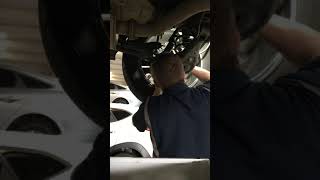

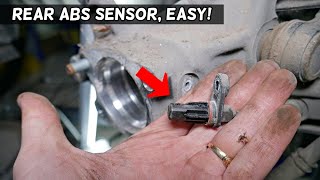
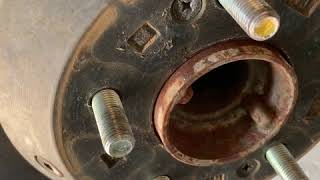

Shop the Parts Behind C1207
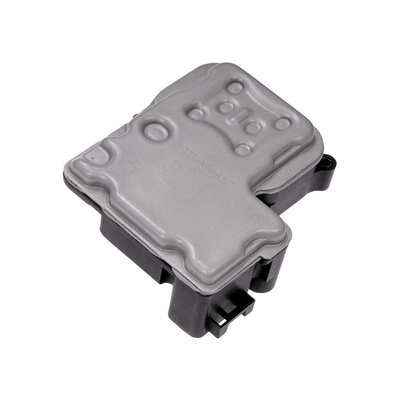
Below are the parts most often responsible for code C1207, ranked by how frequently each one is the actual culprit (per the diagnosis above). Tap any to see what we have for your vehicle.




The information in this article is provided for general reference and educational purposes only. Vehicle specifications, procedures, and part compatibility can vary by production date, trim level, and region. Always consult your vehicle's factory service manual and verify part numbers before purchasing or performing repairs. Safety-critical components such as airbags, seat belts, and braking systems should be installed by a qualified professional.
- 🧭 Diagnostic Flowchart
- 🎬 Helpful Videos
- 🛍️ Shop This Part
- What Does C1207 Mean?
- Can I Drive With C1207?
- Common Causes
- Symptoms
- Common Fixes & Costs
- Used vs. New Parts: Buying Guide
- What Happens If You Wait — Timeline
- Cost of Not Fixing It
- Diagnosis Steps
- When This Code Triggers (Freeze-Frame Conditions)
- Related Codes
- Climate & Environmental Factors
- How to Talk to a Mechanic About This Code
- Where to Take It: Dealer vs Independent vs Chain
- When to Walk Away From the Repair
- What Scan Tool You Need for This Code
- How to Clear the Code After You Fix It
- Will This Fail Emissions / State Inspection?
- Most Commonly Affected Vehicles
- Manufacturer-Specific Notes
- Real Owner Stories
- 2009 Hyundai Santa Fe 3.3L AWD
- 2014 Hyundai i30 with 250,000 km
- How to Prevent This Code From Triggering
- Frequently Asked Questions
- Can I fix a C1207 code myself?
- I replaced the sensor, but the code came back. What now?
- What happens if I ignore code C1207?
- Will clearing the code fix the problem?
- Can bad weather or a car wash cause a C1207 code?
- Why did the ABS light appear right after hitting a pothole?
- Can a low battery cause a C1207 code?
- What is a tone ring and how do I inspect it?
- Key Takeaways
- 🎟️ Get 5% Off