

OBD-II Code C1213: Wheel Speed Frequency Error
What C1213 means, why it triggers, and how to fix it
- Code C1213 disables your ABS and Traction Control, increasing panic stopping distances by up to 30% on wet roads.
- Use an advanced OBD-II scanner to view live data at 5-10 mph; a speed difference of more than 2 mph between wheels pinpoints the failing corner.
- Inspect the wiring harness and clean the magnetic tone ring before spending $40-$150 on a replacement wheel speed sensor.
- A worn wheel bearing with more than 0.005 inches of play alters the sensor's air gap and triggers this code at highway speeds.
What Does C1213 Mean?
C1213 means your car's main computer detects an illogical, erratic, or inconsistent wheel speed signal compared to the other wheels, but it cannot isolate the fault to a specific sensor. This general alert forces the ABS system to shut down as a precaution.
Technical definition: The SAE/ISO definition for C1213 is 'Wheel Speed Frequency Error.' The Anti-lock Brake System (ABS) control module detects an abnormal wheel speed sensor signal frequency or a significant speed difference between wheels out of the permissible range. The module sets this code when the signal issue persists for a set duration, typically 10 seconds.
Can I Drive With C1213?
Yes, But With Caution. You can drive, but your Anti-lock Braking System (ABS) and Traction Control are disabled. Regular brakes function, but losing ABS increases panic stopping distance by up to 30% on wet surfaces and eliminates steering control during hard braking. Avoid driving in adverse weather, as the collision risk is significantly higher.
Common Causes
- Damaged, Corroded, or Loose Wiring/Connectors (Very Common) — The wiring harness is exposed to elements, vibration, and suspension movement. Wires break internally, rub through insulation, or connectors fill with water, causing an intermittent signal.
- Damaged or Debris-Covered ABS Tone Ring (Common) — The sensor reads a toothed or magnetic ring that spins with the wheel. If this ring is cracked, missing teeth, or covered in rust and metallic debris, the sensor cannot get a clean reading.
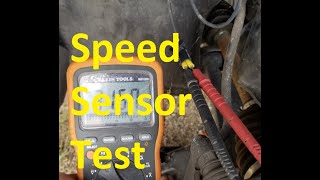
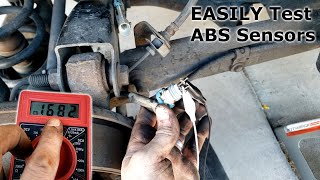
- Faulty Wheel Speed Sensor (Common) — The sensor fails internally due to age, heat from the brakes, or internal short circuits. It is frequently misdiagnosed when the actual problem is wiring 🎬 Watch: How to test sensors for resistance and AC voltage. or the tone ring.
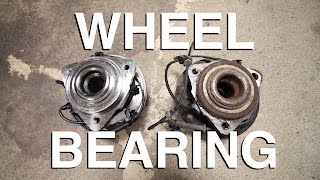
- Failing Wheel Hub/Bearing Assembly (Less Common) — A loose or worn wheel bearing wobbles. This wobble changes the critical air gap between the sensor and the integrated tone ring, creating an erratic signal that the ABS module flags as a fault.
- Incorrect or Mismatched Tire Sizes (Uncommon) — Mismatched tire diameters force wheels to rotate at different speeds. The ABS module interprets this consistent difference as a sensor frequency error, triggering C1213.
- Low Battery Voltage or Poor Ground Connection (Uncommon) — A dying battery, faulty alternator, or corroded chassis ground causes voltage drops that lead to erratic module behavior and false codes like C1213.
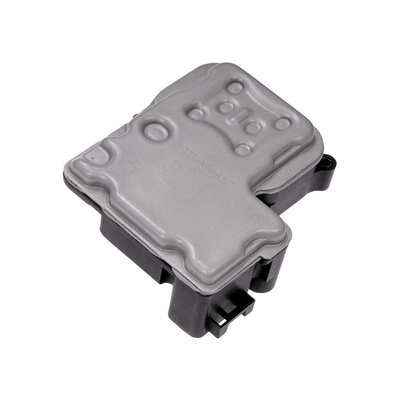
- Faulty ABS Control Module (Rare) — The module fails due to internal electronic issues, software glitches, or failure of the integrated pump relay, requiring repair or replacement.
Symptoms
- ABS Warning Light On — The 'ABS' light on your dashboard is steadily illuminated.
- Traction Control/Stability Control Light On — Because traction and stability control systems use the same wheel speed sensors, their warning lights also turn on.
- ABS and Traction Control are Disabled — During a hard stop, wheels lock up and skid. When accelerating on a slippery surface, wheels spin freely without system intervention.
- Erratic Speedometer or Cruise Control Failure — If a wheel speed sensor is the primary source for the speedometer, a fault causes the speedometer to bounce or drop to zero. Cruise control is disabled.
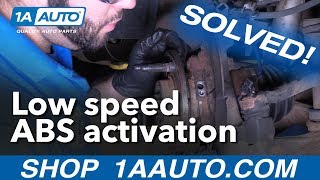
- Pulsing Brake Pedal or Grinding Noise at Low Speeds — An erratic signal tricks the ABS module into thinking a wheel is locking up at low speeds, activating the ABS pump unnecessarily 🎬 See how to fix low speed ABS activation on trucks. and causing a pulsing pedal.
- Stored Chassis ('C') Fault Code (scan-tool only — no driver-felt sign) — The C1213 code is stored in the ABS control module's memory, readable only with a compatible scan tool.
Diagnostic Flowchart
Tap your situation to follow the diagnostic path that matches what you're seeing on this code.
Common Fixes & Costs
- Repairing Damaged Wiring or Connectors — Parts: $20-$50, Labor: $150-$250, ~1.5 hr book time (Intermediate)
- Cleaning the Tone Ring and Sensor Tip — Parts: $5-$10, Labor: $80-$150, ~1 hr book time (DIY)
- Replacing a Wheel Speed Sensor
— Parts: $40-$150, Labor: $130-$150, ~1 hr book time
(DIY)
Hyundai Santa Fe (2007-2012): OEM 95670-2B200 (Front Left), 95670-2B210 (Front Right) (Alt: Duralast SU10203, NTK AB1785)
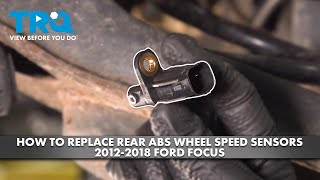
Ford Focus (2012-2018): OEM AV6T2B372EC (Rear) (Alt: Dorman 970-5302, Bosch 0265008953)
Chevrolet Impala (2006-2013): OEM 23144527 (Alt: ACDelco 213-3241, Dorman 970-040) - Replacing a Wheel Hub & Bearing Assembly
— Parts: $150-$400, Labor: $200-$300, ~2 hr book time
(Intermediate)
Hyundai Santa Fe (2007-2012): OEM 51750-2B000 (Alt: Timken HA590333, MOOG 513266)
Ford Focus (2012-2018): OEM G1BZ-1104-A (Alt: Timken HA590529, MOOG 512517)
Chevrolet Impala (2006-2013): OEM 13502789 (Alt: Timken SP580311, MOOG 513289) - Replacing or Repairing the ABS Control Module — Parts: $200-$2200, Labor: $150-$350, ~2.5 hr book time (Professional)
Used vs. New Parts: Buying Guide
When a used part is worth it: Buying used parts for common C1213 fixes (sensors, hubs) is strongly discouraged. These are wear-and-tear components with unknown lifespans. A used part fails quickly, forcing you to pay labor twice.
Donor-vehicle mileage cap: roughly under 10000 miles for the part to have meaningful remaining life.
Donor quality checklist:
- Never buy a used wheel bearing or hub assembly; its history is unknown.
- Avoid used wheel speed sensors, as internal wiring breaks are common.
- If buying a used ABS module, ensure the part number is an exact match and the seller offers a 90-day warranty.
Decision logic:
- If The failed part is a wheel bearing, hub assembly, or wheel speed sensor → Buy new. Choose OEM for guaranteed compatibility or a reputable aftermarket brand (Timken, MOOG, SKF, NTK) for a balance of quality and cost.
- If The failed part is the ABS Control Module and a new part is prohibitively expensive → Use a professional repair service for your existing module or buy a warrantied used module from a reputable salvage yard.
- If The part is a simple wiring connector or pigtail → Buy a new aftermarket pigtail. It is inexpensive and better than cutting a used one from a junkyard harness.
Warranty tradeoff: Used parts have a 30-90 day warranty. Quality aftermarket new parts offer 1-year to limited lifetime warranties. New OEM parts carry a 1-year manufacturer warranty.
Worst-case if a used part fails: $300-$600 if a used sensor or hub fails after the warranty period, requiring repeat labor costs.
What Happens If You Wait — Timeline
- 0-2 weeks (from initial fault): ABS light illuminates. The system logs code C1213 and disables ABS and Traction/Stability Control. Regular hydraulic brakes still function. (MPG impact: 0%% · Added cost: $0)
- 2 weeks - 4 months (if cause is a failing bearing): A faint humming or rumbling noise begins, most noticeable at highway speeds. The noise changes pitch when turning. The failed bearing creates increased friction. (MPG impact: 1-3%% · Added cost: $20-60 in wasted fuel.)
- 4-8 months (if bearing is ignored): The humming becomes a loud grinding noise. The bearing has significant play, causing uneven tire wear and steering wander. Excess heat and wobble damage the integrated ABS sensor and wheel hub. (MPG impact: 3-8%% · Added cost: $300 - $800 (for a new tire and potential damage to the hub/sensor).)
- 8+ months (catastrophic failure): The bearing seizes or disintegrates completely. The wheel locks up or separates from the vehicle, leading to a total loss of control. The failure destroys the steering knuckle and CV axle. (MPG impact: N/A (Vehicle is disabled)% · Added cost: $1500 - $3000+ (for replacement of the hub, bearing, steering knuckle, CV axle, plus towing).)
Cost of Not Fixing It
- Immediate: ABS and Traction Control are disabled. In an emergency stop, wheels lock, increasing stopping distance and causing loss of steering control. Collision risk is significantly higher. (Added cost: $0 (unless an accident occurs))
- 1-6 Months: If the cause is a failing wheel bearing, continued driving leads to severe noise and vibration. The bearing fails completely, damaging the wheel hub, steering knuckle, or axle. (Added cost: $500 - $1500+)
- 6+ Months: Catastrophic failure of a neglected wheel bearing leads to wheel separation while driving, resulting in a total loss of control and a severe accident. (Added cost: Total vehicle loss or cost of major collision repairs.)
Diagnosis Steps
- Read the Codes with an Advanced Scanner
Use an OBD-II scanner that reads 'C' (Chassis) codes. Look for other codes pointing to a specific wheel sensor (e.g., C0035, C0040). If C1213 is the only code, the module is confused, and you must proceed to live data analysis.
Tools: Advanced OBD-II Scanner (Beginner) - Analyze Live Data
View the live data stream for all four wheel speed sensors. Have a helper drive in a straight line at a steady 5-10 mph. All four readings must be identical. A difference of more than 2 mph, a drop to zero, or an erratic reading pinpoints the problem corner.
Tools: Advanced OBD-II Scanner (Intermediate) - Visual Inspection
Safely raise and support the vehicle at the corner identified in Step 2. Visually inspect the wiring going to the wheel speed sensor for chafed, stretched, or broken wires. Ensure connectors are clean, dry, and securely plugged in.
Tools: Jack, Jack Stands, Flashlight (Beginner) - Check the Wheel Bearing and Hub
Grab the tire at the 12 and 6 o'clock positions and wiggle it. Any play or clunking noise indicates a bad wheel bearing. A wobble of more than 0.005 inches disrupts the sensor signal and triggers this code.
Tools: Jack, Jack Stands (Intermediate) - Inspect the Tone Ring
Remove the wheel speed sensor from the knuckle. Use a flashlight to look inside the mounting hole at the tone ring. Look for rust buildup, metallic debris, or cracked teeth. A damaged ring is a common cause of this fault.
Tools: Basic Hand Tools, Flashlight (Intermediate) - Test Passive (2-Wire) Sensor Circuit
Disconnect the sensor. Set your multimeter to Ohms (Ω). Measure resistance across the sensor's two pins (typically 1,000-2,500 Ω). 'OL' or near 0 Ω indicates a failed sensor. Next, set the multimeter to AC Volts. Spin the wheel by hand. You must see a generated voltage of at least 200mV.
Tools: Digital Multimeter (Advanced) - Test Active (3-Wire) Sensor Circuit
Never test resistance on an active sensor. Turn the ignition to 'ON'. Back-probe the ground wire (must be <100mV). Check the reference wire for a steady 5V or 12V DC from the ABS module. Back-probe the signal wire while turning the wheel; voltage must toggle between two values (e.g., 0V and 5V).
Tools: Digital Multimeter, Back-probe Kit (Advanced) - Verify the Signal with an Oscilloscope
Back-probe the sensor's signal wire. Spin the wheel. A passive sensor produces a clean AC sine wave. An active sensor produces a clean digital square wave. Gaps or dropouts in the waveform indicate a bad sensor or tone ring.
Tools: Oscilloscope, Back-probe Kit (Advanced) - Check for Power and Ground at the ABS Module
If sensors and wiring check out, locate the power and ground pins on the main ABS module connector using a wiring diagram. Verify battery voltage (12.0-14.5V) and a good ground (<0.1V drop). A loss of either causes false codes.
Tools: Digital Multimeter, Vehicle-Specific Wiring Diagram (Professional)
When This Code Triggers (Freeze-Frame Conditions)
- Vehicle Speed: 0 mph (The ABS module performs a circuit integrity self-test at key-on. An electrical fault like an open or short sets the code before the vehicle moves.)
- Vehicle Speed: 10-25 mph (At low speeds, especially during turns, signal dropouts from a bad wheel bearing or excessive sensor air gap trigger the code.)
- Vehicle Speed: 35-55 mph (During steady-state cruise, the ABS module compares signals from all four wheels. An inconsistent signal from one wheel triggers the code.)
- System Voltage: 12.0-14.8V (The code sets when system voltage is normal. If voltage is too low, module power supply codes set instead.)
Related Codes
- C0035 - C0050 — Specific codes for a fault in a wheel speed sensor circuit (e.g., C0035 for Left Front). If you see these, the problem is at that specific wheel. If you only see C1213, the ECU is confused.
- C1214 — Indicates a specific fault with the 'Right Front Inlet Valve Coil Circuit' inside the ABS module. C1214 points directly to an internal module failure, not a wheel sensor or wiring issue.
- U0121 — Means 'Lost Communication With Anti-Lock Brake System Control Module'. Suggests a severe problem, such as a complete power loss to the ABS module or a CAN bus network failure.
- P0500 — Generic Powertrain code for 'Vehicle Speed Sensor Malfunction'. If the vehicle uses a wheel speed sensor as its primary speed input, a fault setting C1213 also sets P0500.
Climate & Environmental Factors
- Road Salt and Humidity: Road salt and high humidity accelerate corrosion. Salt and moisture attack wiring connectors, causing high resistance, and corrode the tone ring, causing it to swell or rust, disrupting the sensor's reading.
- Extreme Cold: In very cold temperatures, plastic wiring insulation and connector housings become brittle and crack. This leads to intermittent open circuits when the suspension moves over bumps.
- Water and Mud: Driving through deep water or mud forces moisture and debris into connectors. It also packs mud and metallic particles onto the sensor tip and tone ring, immediately blocking the signal.
How to Talk to a Mechanic About This Code
Say this: "I have an ABS light on and my scanner shows a C1213 code. I'd like to book a diagnostic appointment. Please use a scan tool to watch the live data from all four wheel speed sensors while driving to pinpoint which corner is sending an erratic signal."
This signals to the shop that you understand C1213 is a general code requiring live data analysis. It prevents them from immediately guessing and replacing a sensor or hub assembly that is not faulty.
Avoid saying:
- 'My ABS light is on, can you fix it?'
- 'I think I need a new wheel speed sensor.'
- 'Just replace whatever is necessary.'
Questions to ask before authorizing the repair:
- Which specific wheel sensor showed the incorrect speed reading on the live data graph?
- Before replacing the sensor or hub, did you inspect the wiring harness for damage and the tone ring for debris?
- If the wheel bearing needs replacement, can you show me the excessive play in the wheel?
- What is the warranty on the parts and labor for this repair?
Where to Take It: Dealer vs Independent vs Chain
- Dealer:
Best for: Vehicles still under warranty., Complex cases involving a suspected ABS module failure requiring programming., Known manufacturer-specific quirks (e.g., certain Ford models where C1213 points to an internal module fault).
Downsides: Highest labor rates, often 1.5-2x more than independent shops., Defaults to replacing an entire assembly (like a hub) when a smaller component (like wiring) is the true cause. (Typical cost: +50% vs. baseline) - Independent Shop:
Best fit for most situations. A reputable independent shop has the necessary scan tools to read live ABS data and handles the vast majority of C1213 causes more affordably than a dealer.
Best for: Out-of-warranty vehicles where cost is a major factor., Diagnosing and repairing the most common causes of C1213 (bad sensor, wiring, or wheel bearing)., Getting a second opinion on a high dealership quote.
Downsides: Quality and diagnostic capability vary widely. Vet the shop for ASE-certified technicians., Lacks specific tools to program a new ABS module if that is the ultimate failure. (Typical cost: +0% vs. baseline) - Chain Shop:
Use with caution. Acceptable if you are certain a specific wheel speed sensor needs replacement, but avoid them for initial diagnosis of a vague code like C1213.
Best for: Simple, clear-cut part replacements if the diagnosis is already certain.
Downsides: Technician skill is inconsistent., Lacks advanced diagnostic experience for intermittent electrical faults common with C1213., High potential for misdiagnosis, leading to unnecessary parts replacement. (Typical cost: -10% vs. baseline)
When to Walk Away From the Repair
If the estimated repair cost for the ABS system exceeds 40-50% of your car's private-party value, sell the car as-is or trade it in rather than repairing it.
- Car worth $3000, fix is $1800: Walk away. A repair costing over half the car's value for a safety system is not economical. Disclose the issue and sell as a 'mechanic special' or trade it in.
- Car worth $10000, fix is $750: Fix it. This repair (likely a wheel hub assembly) is well below the threshold and restores a critical safety feature, preserving the vehicle's value.
- Car worth $4500, fix is $1500: Borderline. The repair is 33% of the car's value. Get a firm diagnosis and a second opinion. If the rest of the car is in excellent shape, fix it. If it has other pending issues, sell it.
What Scan Tool You Need for This Code
Minimum: A scanner that reads and clears Chassis ('C') codes from the ABS module and displays live data for all four wheel speed sensors simultaneously.
A basic $20 code reader only sees 'P' (Powertrain) codes and shows 'No Codes Found' even with the ABS light on. To diagnose C1213, you MUST see live speed readings from each wheel to find the failing one.
Budget: BlueDriver Pro (~$100) — Connects to your smartphone via Bluetooth. It reads the C1213 code, clears it, and graphs live data from all four wheel speed sensors, which is the essential diagnostic step.
Mid-range: Foxwell NT510 Elite / NT630 Plus (~$180) — A dedicated handheld unit providing live ABS data graphing. These models include bidirectional controls to perform an 'ABS bleed' service after replacing hydraulic components.
Professional: Autel MaxiCOM MK808 / MK808BT (~$500) — Offers full-system diagnostics, extensive live data, and bidirectional controls to activate the ABS pump and solenoids. Necessary if you suspect an ABS module failure requiring programming.
Rent vs buy: For a one-time fix, auto parts stores like AutoZone or O'Reilly offer loaner tools. Pay a fully refundable deposit. Ensure you ask for a scanner that reads ABS codes and live data.
How to Clear the Code After You Fix It
- Use an ABS-capable OBD-II scan tool to clear the fault codes from the Chassis Control Module.
- Perform a short test drive including straight-line driving and at least two turns.
- Re-scan the system to confirm the code has not returned.
Drive cycle (~15 minutes): A specific long-distance drive cycle is not required. After clearing the code, drive for 10-15 minutes at speeds above 25 mph. The ABS light remains off if the repair was successful. The system self-tests at every key-on.
Readiness monitors affected: None directly. ABS codes are 'C' codes and do not affect emissions readiness monitors. If a related 'P' code (like P0500) was present, monitors require a 50-100 mile drive cycle to reset.
Before emissions retest: drive at least 50 miles to fully set monitors.
Watch out for:
- Using a basic code reader that cannot access or clear 'C' (Chassis) codes.
- Disconnecting the battery, which does not clear the code from the ABS module's memory.
- The code returning immediately, indicating the root cause was not correctly identified and fixed.
Will This Fail Emissions / State Inspection?
No — by itself this code doesn't fail OBD inspection (but it can keep readiness monitors from setting, which causes a separate fail).
- California: Will NOT fail. California's smog check only fails for an illuminated 'Check Engine' light and emissions-related faults. An ABS light is ignored.
- New York: Will NOT fail. According to NYS DMV regulations, an illuminated ABS warning light is an advisory item, not a cause for rejection during the annual safety inspection.
- Texas: Will NOT fail. The Texas vehicle safety inspection does not fail a car for the ABS light. A lit 'BRAKE' warning light is a failure, but the ABS light is not.
Most Commonly Affected Vehicles
- Hyundai Santa Fe, Elantra, i30 (2006-2013) — Widely known for setting C1213 due to faulty wheel speed sensors or wiring issues. The code indicates a general frequency error where the module cannot isolate the fault.
- Chevrolet Impala (2006-2013) — Prone to wiring harness problems running to the front wheel hubs, causing intermittent ABS warnings. The sensor is integrated into the hub assembly.
- Ford Focus (2012-2018) — Frequently suffers from rear wheel speed sensor failures. Both rear sensors often fail around the same time. Kits are available to replace both at once.
- Volkswagen Golf, Jetta, Passat (2010-2015) — A C1213 code often accompanies ABS, ESC, and Steering lights. The cause is frequently a single failed rear wheel speed sensor or tone ring corrosion.
- Subaru Outback, Legacy, Impreza (2010-2014) — Prone to ABS/wheel speed sensor failures triggering C1213 along with Hill Assist warnings. A failing brake light switch (Part #83370AA001) also causes this combination of lights.
- Dodge / Jeep Durango / Grand Cherokee (2018-2019) — Part of a major safety recall (NHTSA 24V838000) for a faulty ABS module causing this code and disabling safety systems. The remedy involves replacing module parts and updating software.
- Ford E-Series Van / F-150 (1999-2008) — On these trucks, the code points to a specific circuit fault within the ABS hydraulic module itself, such as an 'ABS Front Right Dump Valve Circuit Fault', requiring module repair.
- General Motors (Various) Silverado, Tahoe, Suburban, Sierra (2007-2014) — Rust builds up under the front wheel hub mounting surface, pushing the hub outward. This increases the sensor air gap, triggering C1213. The fix is removing the hub and cleaning the mounting surfaces.
Manufacturer-Specific Notes
- Hyundai / Kia: C1213 is almost always a 'Wheel Speed Frequency Error,' indicating an illogical signal without isolating the sensor. Diagnosis requires watching live data from all four wheels while driving.
- Ford / Lincoln / Mercury: C1213 often means 'ABS Front Right Dump Valve Circuit Short To Ground,' pointing to an internal fault in the ABS hydraulic control unit, requiring module repair or replacement.
- General Motors (Chevrolet, GMC, Buick): ABS faults are frequently caused by a chafed wiring harness between the body and the front wheel hubs. On trucks, rust buildup on the hub mounting surface increases the sensor air gap.
- Subaru: A C1213 code illuminates the ABS, Traction Control, and Hill Assist lights simultaneously. While typically a sensor fault, a failing brake light switch also causes this combination.
Real Owner Stories
2008 Chevy Impala at 115K miles
ABS and StabiliTrak lights came on intermittently, especially after hitting bumps or making sharp turns.
What they tried:
- Initially ignored it as it would go away after restarting the car.
- Replaced the front right wheel hub assembly based on a friend's advice, but the lights returned within a day.
Outcome: Took it to a shop that found a chafed wire in the harness leading to the front left wheel speed sensor. The repeated flexing from steering broke the wire internally. They repaired the harness for $150.
Lesson: Intermittent faults triggered by movement are classic signs of a wiring issue. Always inspect the wiring harness carefully before replacing expensive parts like a hub assembly.
2013 Ford Focus at 80K miles
ABS light came on and stayed on. A basic scan at an auto parts store showed no codes. Cruise control also stopped working.
What they tried:
- Bought an advanced scanner (BlueDriver) which revealed code C1213.
- Watched live data and saw the right rear wheel speed sensor reading 0 mph at all times.
Outcome: Replaced the right rear wheel speed sensor ($40 part). The sensor was seized in the knuckle and broke during removal, requiring careful drilling. After replacement, all lights went out and cruise control worked again.
Lesson: A basic code reader cannot see 'C' codes. Investing in a better scanner is crucial. Be prepared for sensors to be seized; apply penetrating oil generously before attempting removal.
2011 Hyundai Santa Fe at 130K miles
ABS, ESC, and Downhill Assist lights all came on simultaneously. Code C1213 was present.
What they tried:
- Checked live data, but all four sensors appeared to be working correctly at low speeds.
- Visually inspected all four corners, couldn't find any obvious wiring damage.
Outcome: The owner noticed a slight humming noise getting progressively louder. Jacked up the car and found significant play in the front left wheel. Replacing the front left wheel bearing/hub assembly ($180 part) fixed the noise and cleared the C1213 code.
Lesson: A C1213 code means the module is confused. Even if live data looks okay at first, a worn wheel bearing causes enough wobble at higher speeds to create an erratic signal. Do not ignore secondary symptoms like noise or play in the wheel.
2007 GMC Sierra 1500 at 155K miles
ABS activated unnecessarily at very low speeds (under 5 mph), causing a grinding noise and making the truck hard to stop smoothly. Code C1213 was stored.
What they tried:
- Replaced the front right wheel speed sensor, but the problem persisted.
Outcome: A forum search revealed a GM Technical Service Bulletin (TSB) about rust buildup on the hub's sensor mounting surface. The owner removed the front sensors and hubs, cleaned the rust off the mounting pads with a wire wheel, and reassembled. The problem was completely resolved.
Lesson: On many GM trucks, rust jacks the sensor away from the tone ring, increasing the air gap and causing a weak signal at low speeds. Always check for TSBs related to your specific vehicle and code.
How to Prevent This Code From Triggering
- Perform a brake fluid flush every 2-3 years. (Every 2-3 years or 30,000 miles) — Brake fluid absorbs moisture. This moisture corrodes the sensitive solenoids and pump inside the ABS module over time. A flush with an ABS cycle activated by a scan tool removes all old fluid.
- Periodically clean undercarriage, especially wheel wells. (After every winter season or off-road trip.) — Washing away road salt, mud, and debris prevents it from caking on connectors, wiring, and tone rings, reducing corrosion-induced shorts and signal blockage.
- Apply dielectric grease to sensor connectors. (When replacing a sensor or performing related brake work.) — Applying dielectric grease to the connector seal keeps moisture out, preventing fretting corrosion that causes intermittent signals.
- Inspect wheel bearings during tire rotations. (Every 5,000-7,500 miles) — While tires are off, check for bearing play or listen for roughness when spinning the wheel. Catching a bearing failure early prevents ABS codes and component damage.
Frequently Asked Questions
I replaced the sensor but the code came back. What now?
If a new sensor does not fix the issue, the problem lies elsewhere in the circuit. Inspect the wiring harness for hidden breaks, check the tone ring for damage, and verify the wheel bearing is not loose.
Can low battery voltage cause a C1213 code?
Yes. The ABS module requires a stable power supply of at least 12.0 volts to function correctly. A weak battery, failing alternator, or poor ground connection causes voltage fluctuations that trigger a false C1213 code.
Can I just replace all four wheel speed sensors to fix code C1213?
You could, but it is an expensive and inefficient strategy. The problem is just as likely a simple wiring issue, a bad wheel bearing, or the ABS module itself. Perform live data diagnostics to find the exact point of failure before buying parts.
Is it safe to drive in the rain or snow with a C1213 code?
It is strongly discouraged. While your normal brakes work, the ABS and traction control systems are disabled. This significantly increases your risk of skidding and losing steering control during emergency braking on wet or icy roads.
Why did my ABS, Traction Control, and Stability Control lights all come on at once?
All of these safety systems rely on the exact same wheel speed sensors to function. When the computer detects a fault with a sensor signal, it disables all dependent systems as a precaution. This triggers all their respective warning lights simultaneously.
Can a bad wheel alignment cause a C1213 code?
No, a bad wheel alignment does not directly cause a C1213 code. The code is triggered by an electrical signal fault from the wheel speed sensor system. However, severely worn suspension components that affect alignment also cause wheel bearing play, which triggers the code.
My cheap code reader doesn't show any codes, but the ABS light is on. What's wrong?
Basic, inexpensive code readers only access 'P' (Powertrain) codes from the engine computer. ABS codes are 'C' (Chassis) codes. You need an advanced scanner that specifically reads ABS modules to see this code.
What does it mean if the ABS light comes on only when I hit a bump?
This almost always indicates a wiring problem. Hitting a bump moves the suspension, which jiggles a loose connector or a wire with an internal break. This momentarily interrupts the signal and triggers the light.
Key Takeaways
- Code C1213 disables your ABS and Traction Control, increasing panic stopping distances by up to 30% on wet roads.
- Use an advanced OBD-II scanner to view live data at 5-10 mph; a speed difference of more than 2 mph between wheels pinpoints the failing corner.
- Inspect the wiring harness and clean the magnetic tone ring before spending $40-$150 on a replacement wheel speed sensor.
- A worn wheel bearing with more than 0.005 inches of play alters the sensor's air gap and triggers this code at highway speeds.
Helpful Videos
Shop the Parts Behind C1213
Below are the parts most often responsible for code C1213, ranked by how frequently each one is the actual culprit (per the diagnosis above). Tap any to see what we have for your vehicle.


The information in this article is provided for general reference and educational purposes only. Vehicle specifications, procedures, and part compatibility can vary by production date, trim level, and region. Always consult your vehicle's factory service manual and verify part numbers before purchasing or performing repairs. Safety-critical components such as airbags, seat belts, and braking systems should be installed by a qualified professional.
- 🧭 Diagnostic Flowchart
- 🎬 Helpful Videos
- 🛍️ Shop This Part
- What Does C1213 Mean?
- Can I Drive With C1213?
- Common Causes
- Symptoms
- Common Fixes & Costs
- Used vs. New Parts: Buying Guide
- What Happens If You Wait — Timeline
- Cost of Not Fixing It
- Diagnosis Steps
- When This Code Triggers (Freeze-Frame Conditions)
- Related Codes
- Climate & Environmental Factors
- How to Talk to a Mechanic About This Code
- Where to Take It: Dealer vs Independent vs Chain
- When to Walk Away From the Repair
- What Scan Tool You Need for This Code
- How to Clear the Code After You Fix It
- Will This Fail Emissions / State Inspection?
- Most Commonly Affected Vehicles
- Manufacturer-Specific Notes
- Real Owner Stories
- 2008 Chevy Impala at 115K miles
- 2013 Ford Focus at 80K miles
- 2011 Hyundai Santa Fe at 130K miles
- 2007 GMC Sierra 1500 at 155K miles
- How to Prevent This Code From Triggering
- Frequently Asked Questions
- I replaced the sensor but the code came back. What now?
- Can low battery voltage cause a C1213 code?
- Can I just replace all four wheel speed sensors to fix code C1213?
- Is it safe to drive in the rain or snow with a C1213 code?
- Why did my ABS, Traction Control, and Stability Control lights all come on at once?
- Can a bad wheel alignment cause a C1213 code?
- My cheap code reader doesn't show any codes, but the ABS light is on. What's wrong?
- What does it mean if the ABS light comes on only when I hit a bump?
- Key Takeaways
- 🎟️ Get 5% Off