

OBD-II Code C1214: ABS & Traction Control System Fault
What C1214 means, why it triggers, and how to fix it
- Code C1214 disables your ABS and traction control, increasing emergency stopping distances and the risk of skidding on wet surfaces.
- On GM and Ford vehicles, a failed internal Electronic Brake Control Module (EBCM) relay is the primary cause, fixable for $150-$400 via a mail-in repair service.
- Test your battery for a minimum of 12.6 volts and clean the main EBCM frame ground connection to bare metal before replacing any expensive modules.
- On 2004-2015 Toyota Prius models, C1214 combined with code C1391 indicates a failed brake actuator assembly, requiring a $2,000 to $3,500 dealership repair.
What Does C1214 Mean?
Code C1214 indicates the Electronic Brake Control Module (EBCM) detects a critical fault within the anti-lock brake and traction control systems. This is usually an electrical failure, such as a broken internal power relay or a poor ground connection, preventing the ABS pump and solenoids from receiving power. The system deactivates these safety features and illuminates dashboard warning lights.
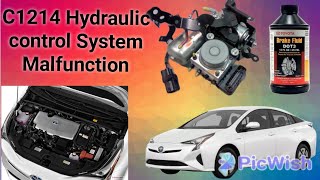
Technical definition: The SAE/OBD-II definition for C1214 varies by manufacturer. General Motors defines it as "Solenoid Valve Relay Contact or Coil Circuit Open." Toyota defines it as "Hydraulic Control System Malfunction." 🎬 See this diagnostic walkthrough for Toyota hydraulic control system faults. Ford groups it with codes indicating a general ABS module or hydraulic control unit fault. It universally signifies an electrical or hydraulic failure rendering the ABS inoperative.
Can I Drive With C1214?
Yes, But With Caution. Yes, but with caution. Your regular hydraulic brakes function, but your Anti-lock Braking System (ABS) and Traction Control are disabled. This increases stopping distances in panic situations and causes wheel lock-up or skidding on wet surfaces. Repair this promptly to restore critical safety features and prevent secondary damage to the ABS pump.
Common Causes
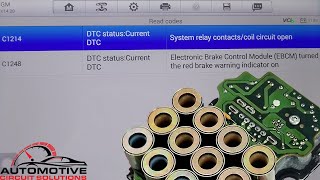
- Faulty Electronic Brake Control Module (EBCM) (Very Common) — The leading cause on GM and Ford vehicles is a failed internal relay on the EBCM's circuit board due to cracked solder joints from years of thermal cycling. This cuts power to the ABS system. A mail-in repair service fixes this for a fraction of the cost of a new module. 🎬 Watch: How to fix the EBCM internal relay on GM vehicles.
- Corroded or Loose EBCM Ground Connection (Common) — The main EBCM ground wire bolted to the vehicle's frame rail corrodes, creating high electrical resistance. This causes intermittent voltage drops that trigger the code.
- Low Battery Voltage or Weak Battery (Common) — The EBCM triggers the code if solenoid relay voltage drops below 8 volts during engine startup due to a weak battery or failing alternator.
- Blown ABS System Fuses (Less Common) — A blown ABS module or pump motor fuse in the under-hood fuse box indicates an overcurrent condition. Always check these first.
- Damaged Wiring Harness or Connectors (Less Common) — Heat, vibration, or chafing damages the wiring harness leading to the EBCM. Corroded or bent pins in the main connector create open or short circuits.
- Faulty Brake Pressure Modulator Valve (BPMV) (Less Common) — An internal short circuit in the BPMV's hydraulic pump motor draws excessive current, damaging the EBCM's internal relay and triggering C1214 as a secondary fault.
- Improper Brake Service Procedure (Toyota) (Rare) — Retracting caliper pistons during a brake job on Toyota hybrids increases fluid travel distance, which the system misinterprets as a hydraulic pressure control malfunction. Clearing the code usually resolves this.
- Foreign Matter or Air in Hydraulic System (Toyota) (Rare) — Air in the brake lines, debris in a solenoid valve, or pressure fluctuations from severely warped rotors trigger this code on Toyota models.
Symptoms
- ABS Light On — The Anti-lock Braking System (ABS) warning light illuminates on the dashboard.
- Traction Control Light On — The Traction Control System (TCS) or Vehicle Stability Assist (VSA) warning light illuminates, as these systems rely on the ABS hardware.
- Brake Warning Light On — The main red "BRAKE" warning light illuminates, often triggered by a companion code indicating the EBCM requested the light.
- No ABS Function in Hard Braking — Wheels lock up and skid during emergency stops because anti-lock functionality is disabled. Normal braking power remains unaffected.
- Spongy or Hard Brake Pedal — Drivers notice a spongy or hard brake pedal if an underlying hydraulic issue exists, which is common on Toyotas with this code.
Diagnostic Flowchart
Tap your situation to follow the diagnostic path that matches what you're seeing on this code.
Common Fixes & Costs
- Repair the Electronic Brake Control Module (EBCM)
— Parts: $150-$400, Labor: $75-$150, ~1 hr book time
(Intermediate)
Chevrolet Corvette C5 (2001-2004): OEM
Chevrolet Impala (2000-2005): OEM - Clean or Repair Ground Wires — Parts: $0-$10, Labor: $50-$150, ~0.8 hr book time (DIY)
- Replace the Battery — Parts: $150-$350, Labor: $25-$50, ~0.5 hr book time (DIY)
- Replace the EBCM
— Parts: $600-$1200, Labor: $100-$300, ~1.8 hr book time
(Professional)
Ford F-250/F-350 (2002-2004): OEM - Replace Brake Actuator Assembly (Toyota)
— Parts: $1200-$2000, Labor: $300-$700, ~5.5 hr book time
(Professional)
Toyota Prius (2004-2009): OEM
DIY vs Professional
- Repair the Electronic Brake Control Module (EBCM) — Beginner:
- Clean or Repair Ground Wires — Beginner:
- Replace the Battery — Beginner:
- Replace the EBCM — Beginner:
- Replace Brake Actuator Assembly (Toyota) — Beginner:
Used vs. New Parts: Buying Guide
When a used part is worth it: A used EBCM is rarely recommended. It likely has the same internal design flaw and requires expensive VIN programming. Use only as a last resort if new or rebuilt units are unavailable.
Donor-vehicle mileage cap: roughly under 50000 miles for the part to have meaningful remaining life.
Donor quality checklist:
- Verify the part number matches exactly.
- Ask for a functional warranty (at least 90 days).
- Avoid parts from vehicles in rust-belt states due to potential connector corrosion.
Decision logic:
- If A mail-in repair service is available for your module → Choose mail-in repair. It is cost-effective, requires no programming, and often includes a lifetime warranty.
- If Your module is not repairable and your budget is tight → Purchase a remanufactured unit from a reputable brand (e.g., Dorman, Cardone).
- If The vehicle is newer and you want the longest possible warranty → Buy a new OEM part from a dealership, but expect high costs and programming fees.
Warranty tradeoff: Used parts: 30-90 day warranty. Remanufactured/Repaired: 1-year to lifetime warranty. New OEM: 1-2 year parts warranty, may require dealer installation.
Worst-case if a used part fails: $300-$600 if a used or improperly repaired module fails, requiring repeat labor and another part.
What Happens If You Wait — Timeline
- 0-1 month: ABS and Traction Control warning lights illuminate. Normal braking feels fine. (MPG impact: 0%% · Added cost: $0)
- 1-6 months: The vehicle fails state safety inspections. Wheels lock up during panic stops. A shorted internal relay causes a parasitic battery drain. (MPG impact: 0%% · Added cost: $150-$350 (for a new battery if drained repeatedly))
- 6-12 months: Parasitic drain from a faulty module causes premature failure of the alternator as it constantly recharges a depleted battery. (MPG impact: 0%% · Added cost: $500-$900 (for potential alternator replacement))
- 12+ months: Tires develop flat spots from wheel lock-up during hard braking. A continuously running ABS pump motor burns out, requiring replacement of the entire hydraulic unit. (MPG impact: 0%% · Added cost: $400-$3000+ (Cost of new tires or a complete ABS hydraulic unit))
Cost of Not Fixing It
- Immediate: Loss of ABS and Traction Control increases the risk of wheel lock-up and skidding in panic stops. Automatic failure of vehicle safety inspection. (Added cost: Potential cost of an accident.)
- 1-6 months: If the failure causes the ABS pump to run continuously, it creates a parasitic battery drain, killing the battery and damaging the pump motor. (Added cost: $150-$350 for a new battery, plus the original repair cost.)
- 6+ months: Driving without ABS leads to uneven tire wear or flat spots if wheels lock up during hard braking, requiring premature tire replacement. (Added cost: $400-$1200 for a new set of tires.)
Diagnosis Steps
- Check the Fuses
Locate and inspect the fuses for the ABS module and ABS pump motor in the under-hood fuse box. Replace any blown fuses.
Tools: Owner's manual, fuse puller (Beginner) - Test the Battery and Charging System
Test the battery with a multimeter. A healthy battery shows ~12.6 volts with the engine off and 13.7-14.7 volts when running. Low voltage causes this code.
Tools: Multimeter (Beginner) - Inspect and Clean Ground Connections
Locate the main EBCM ground wire bolted to the frame rail. Disconnect the battery, unbolt the ground, and clean the terminal, bolt, and frame surface to bare metal with a wire brush. Re-secure tightly.
Tools: Socket set, wire brush, safety glasses (Intermediate) - The 'Tap Test'
With the ignition on and engine off, lightly tap the plastic housing of the EBCM with a screwdriver handle. If the ABS/Traction lights flicker or turn off, the internal relay or solder joints have failed.
Tools: Screwdriver (Intermediate) - Inspect EBCM Wiring and Connector
Visually inspect the EBCM wiring harness for melting or chafing. Unplug the main connector (battery disconnected) and check for bent or corroded pins.
Tools: Flashlight, contact cleaner (Intermediate) - Perform Ground Circuit Voltage Drop Test
Set a multimeter to DC Volts. Back-probe the EBCM ground pin with the red lead and touch the negative battery terminal with the black lead. With the ignition on, voltage must be less than 0.1 volts (100mV). Higher readings indicate excessive ground resistance.
Tools: Multimeter with back-probe pins (Advanced) - Test EBCM Main Power and Ground Pins
Check for a steady 12+ volts at the EBCM's main power input pin using a multimeter and wiring diagram. Check for less than 1 ohm of resistance to ground on the main ground pin.
Tools: Multimeter, vehicle-specific wiring diagram, back-probe pins (Advanced) - Test the BPMV Pump Motor Resistance
Disconnect the 2-pin pump motor harness from the BPMV. Measure resistance between the two pins. A good motor reads 0.1 to 5 ohms. Infinite resistance or a short to ground indicates a failed pump motor.
Tools: Multimeter, vehicle-specific service manual (Advanced) - Check EBCM Relay Command Voltage
Monitor the 'Solenoid Valve Relay' status with a scan tool. Command the relay 'On' and back-probe the relay supply voltage pin at the EBCM connector. If the tool commands 'On' but voltage remains 0V, the EBCM failed internally.
Tools: Advanced scan tool, Multimeter (Advanced) - Retrieve Toyota INF Codes
Use Toyota Techstream to read Information (INF) codes associated with C1214. Codes like INF 431 (Pressure Increase Malfunction) pinpoint whether the issue is a leak, stuck valve, or internal actuator fault.
Tools: Toyota Techstream or equivalent advanced scan tool (Advanced)
When This Code Triggers (Freeze-Frame Conditions)
- System Voltage: 11.5-12.5V (During power-on self-test, immediately after ignition start)
- Vehicle Speed: 0 mph (Code often sets during the initial system check before driving)
- ABS/TCS Status: Inactive/Off (The fault is detected when the EBCM attempts to initialize the system)
- Ignition Cycle Counter: 1 (Fault detected on the first ignition cycle after the error occurred)
Related Codes
- C1248 — On GM vehicles, this code ('EBCM Turned On Red Brake Warning Lamp') is informational and almost always accompanies C1214. Diagnostics should focus entirely on C1214.
- C1391 — On Toyota vehicles, C1391 ('Abnormal Leak of Accumulator Pressure') points directly to a failing brake actuator assembly. If both are present, the root cause is the failure indicated by C1391.
- C1185 — On Ford vehicles, C1185 ('ABS Power Relay Output Circuit Failure') points to a failure in the power relay circuit within the ABS module. Appearing with C1214 strongly suggests an internal module failure.
- C0265 — A GM code defined as 'EBCM Relay Circuit'. It is functionally identical to C1214 and indicates the same internal power relay failure within the EBCM on different vehicle platforms.
Climate & Environmental Factors
- Thermal Cycles: Repeated heating and cooling causes expansion and contraction of the EBCM's circuit board. Over time, this thermal stress cracks the solder joints on the internal power relay, the primary failure mechanism for GM and Ford vehicles.
- Moisture Intrusion: High humidity or direct water intrusion corrodes the EBCM's external connector pins and internal circuit board components. It also accelerates corrosion on frame ground points, causing voltage drops.
- Road Salt: Salt spray severely corrodes the EBCM ground bolt and wiring harness connectors, leading to a higher incidence of this code in winter climates due to poor electrical connections.
How to Talk to a Mechanic About This Code
Say this: "I have an ABS and traction control light on, and my scanner shows code C1214. I've already checked the battery and cleaned the main EBCM ground. For GM/Ford, please check if the module is repairable before recommending a full replacement. For Toyota, please check for related codes like C1391 and any applicable warranty extensions."
Directs the mechanic to cost-effective solutions and avoids misdiagnosis where an expensive hydraulic unit is replaced for a simple electrical fault.
Avoid saying:
- 'My ABS light is on, can you fix it?'
- 'Just do whatever it takes to fix it.'
- 'I think the whole ABS pump is bad.'
Questions to ask before authorizing the repair:
- Did you perform a voltage drop test on the EBCM ground circuit? What was the reading?
- For GM/Ford, is this an internal module failure? Is the module a candidate for a mail-in repair service?
- For Toyota, did you find any other codes like C1391 or specific INF codes? Is the brake actuator assembly covered by any warranty extensions?
- What is the warranty on the proposed repair, for both parts and labor?
Where to Take It: Dealer vs Independent vs Chain
- Dealer:
Recommended for Toyota Prius owners due to the complexity of the brake actuator. For most other vehicles, avoid due to high costs.
Best for: Vehicles under warranty or covered by a specific warranty extension (like the Toyota Prius brake actuator)., Complex manufacturer-specific issues requiring proprietary software like Toyota Techstream.
Downsides: Highest labor rates., More likely to recommend a full, expensive component replacement rather than repairing the existing module. (Typical cost: +50% vs. baseline) - Independent Shop:
Best fit for most C1214 repairs, especially on GM and Ford models. They readily facilitate mail-in repair services, saving significant money.
Best for: Out-of-warranty GM and Ford vehicles where the fix is a bad ground or a repairable EBCM., Owners who need a shop to facilitate a mail-in module repair.
Downsides: Quality varies. Ensure the shop has experience with ABS diagnostics and is ASE certified., May lack manufacturer-specific tools for complex jobs like Toyota brake actuator replacement. (Typical cost: +0% vs. baseline) - Chain Shop:
Avoid for C1214 diagnosis. The risk of misdiagnosis and unnecessary part replacement is high.
Best for: Simple fixes like a battery replacement if low voltage is the confirmed cause.
Downsides: Not equipped for in-depth electronic module diagnosis., High likelihood of recommending unnecessary replacement of the entire ABS unit. (Typical cost: -10% vs. baseline)
When to Walk Away From the Repair
If the estimated repair cost exceeds 50% of your car's private-party market value, consider alternatives, especially on older vehicles with other pending issues.
- Car worth $4000, fix is $2500: Walk away. A $2,500 repair on a $4,000 car is not a sound investment. This is typical for a Toyota Prius needing a full brake actuator replacement out of warranty.
- Car worth $8000, fix is $400: Fix it. A $400 repair is a reasonable cost to restore a critical safety system. This is a typical cost for a mail-in EBCM repair on a GM vehicle.
- Car worth $3000, fix is $150: Fix it immediately. A $150 repair for a bad ground connection or simple fuse is highly cost-effective.
What Scan Tool You Need for This Code
Minimum: An OBD-II scanner that reads and clears Anti-lock Brake System (ABS) codes. Basic engine-only code readers cannot see chassis codes like C1214.
Standard $20 OBD-II scanners only read 'P' (Powertrain) codes. C1214 is a 'C' (Chassis) code stored in the ABS module.
Budget: BlueDriver Pro (~$99) — Reads and clears ABS codes, displays freeze-frame data, and views live data from wheel speed sensors. Sufficient for diagnosing common C1214 causes like a bad ground.
Mid-range: Foxwell NT510 Elite / Autel MaxiCheck Pro (~$150-250) — Offers bidirectional controls to perform an 'active test' commanding the ABS pump and solenoids. Necessary for automated ABS bleed procedures after replacing hydraulic components.
Professional: Autel MaxiCOM MK808 / Toyota Techstream (~$500-1600) — Provides dealer-level diagnostics. Essential for reading manufacturer-specific INF codes on Toyotas and programming new modules to the vehicle's VIN.
Rent vs buy: Auto parts stores offer free code reading, but their scanners often cannot read ABS codes. Buying a budget pick like the BlueDriver is recommended to confirm the fix.
How to Clear the Code After You Fix It
- Reconnect battery if disconnected for the repair
- Use an OBD-II scan tool to erase the C1214 fault code from the ABS module
- Start the vehicle and confirm the ABS and Traction Control lights turn off after the initial self-test
Drive cycle (~20 minutes): Drive the vehicle above 10 mph to allow the EBCM to verify all wheel speed sensors are working. Perform a few normal stops. A lengthy drive cycle is not required for the ABS system to confirm the fix.
Readiness monitors affected: None directly, as C1214 is a chassis code, not an emissions code.
Before emissions retest: drive at least 50 miles to fully set monitors.
Watch out for:
- The code returns instantly at the next key-on if the root cause was not fixed.
- Disconnecting the battery does not clear the code from the ABS module's memory.
Will This Fail Emissions / State Inspection?
No — by itself this code doesn't fail OBD inspection (but it can keep readiness monitors from setting, which causes a separate fail).
- California: An illuminated ABS or BRAKE warning light is an automatic failure of the mandatory vehicle safety inspection.
- New York: An active ABS warning light causes the vehicle to fail the safety portion of the NYS inspection.
- Texas: The ABS light must illuminate during the bulb check and then turn off. If the light stays on, the vehicle fails the annual safety inspection.
Most Commonly Affected Vehicles
- Chevrolet Corvette (C5) (1997-2004) — Extremely common. 2001-2004 models use an EBCM (Part #10343433) that is easily rebuilt by mail-in services. 1997-2000 models have an early EBCM that is notoriously difficult to repair or replace.
- Chevrolet Impala / Monte Carlo (2000-2005) — Frequently experiences C1214 due to internal EBCM relay failure, often appearing with code C1248. The module is easily accessible in the engine bay.
- Buick LeSabre / Park Avenue / Century (2000-2005) — Shares the Delphi ABS/TCS system with other GM platforms, making them highly susceptible to EBCM internal relay failure from cracked solder joints.
- Toyota Prius (2004-2015) — C1214 points to a 'Hydraulic Control System Malfunction.' It often appears with C1391, indicating a failing brake actuator assembly, which is a very expensive repair.
- Ford Super Duty (F-250/F-350) / Excursion (2002-2004) — C1214 often appears with codes like C1185 and C1198, pointing to an internal ABS module failure due to bad solder joints, similar to the GM issue.
- Ford E-Series Van (2003-2007) — Appears alongside ABS codes like C1210, pointing to issues within the Kelsey-Hayes hydraulic control unit or its wiring. Repair services are available for these modules.
- Honda Accord (2013-2017) — An internal failure of the VSA modulator triggers a cascade of warning lights and stores manufacturer-specific codes like 121-11 or 85-01, the equivalent root cause of C1214.
- Nissan Altima (2019-2022) — Similar symptoms are caused by faulty tie rods, engine bearing defects, or problems with brake switches and wheel speed sensors.
Manufacturer-Specific Notes
- General Motors (Chevrolet, Buick, Pontiac): C1214 is overwhelmingly caused by the failure of a non-serviceable relay inside the EBCM due to cracked solder joints. Third-party services repair the module for a fraction of the cost of a new one. The 'tap test' is a reliable driveway diagnostic.
- Toyota: Defined as 'Hydraulic Control System Malfunction,' it is often a precursor to C1391, indicating an expensive brake actuator failure. Toyota issued Warranty Enhancement Programs (ZJB, ZG1) extending coverage for this assembly, though most have expired based on time.
- Ford: Ford modules suffer from internal circuit board failures manifesting as a cluster of codes (C1214, C1185, C1198, C1210). Mail-in repair services are a popular and cost-effective fix.
- Honda: The equivalent failure occurs within the Vehicle Stability Assist (VSA) modulator. It triggers a cascade of warning lights and stores Honda-specific codes like 121-11 or 85-01 due to broken internal aluminum wiring.
Real Owner Stories
2001 Chevrolet Corvette with 85K miles
ABS, Traction Control, and Active Handling warning lights became constant. Pulled code C1214.
What they tried:
- Cleaned the main EBCM ground connection on the frame rail.
- Checked all related fuses.
- Performed the 'tap test' on the EBCM, which caused the lights to flicker, confirming an internal module fault.
Outcome: Owner mailed the EBCM to a repair service for $150. The service repaired the internal relay solder joints. After reinstallation, the code cleared and did not return.
Lesson: On GM vehicles, C1214 is almost always an internal EBCM failure. The 'tap test' is an effective diagnostic, and mail-in repair is far cheaper than replacing the unit.
2007 Toyota Prius with 140K miles
ABS, BRAKE, and VSC lights illuminated with a loud beeping noise and loss of braking power. Codes C1214 and C1391 were stored.
What they tried:
- Checked the brake fluid level.
- Researched the codes and discovered Toyota's Warranty Enhancement Program ZG1 for the brake actuator assembly.
Outcome: The dealer confirmed the brake actuator assembly failed. Because the vehicle was within the 10-year, 150,000-mile secondary coverage period of the ZG1 warranty, the $2,500+ repair was performed for free.
Lesson: On a Prius, C1214 combined with C1391 indicates a failing brake actuator. Always check for applicable warranty extensions before paying for this expensive repair.
2004 Chevrolet Impala with 110K miles
ABS and Traction Control lights were on. A mechanic found code C1214 and recommended replacing the entire ABS pump and module assembly for $800.
What they tried:
- Sought a second opinion online.
- Located the EBCM ground wire on the driver's side frame rail and found significant corrosion.
Outcome: The owner cleaned the ground terminal and frame contact point with a wire brush. After reconnecting the battery, the warning lights disappeared. Total cost: $0.
Lesson: Never replace an expensive EBCM without checking simple causes. A corroded ground connection mimics a complete module failure and should be checked immediately after fuses and battery.
How to Prevent This Code From Triggering
- Perform a complete brake fluid flush (Every 2-3 years or 30,000 miles) — Brake fluid absorbs moisture over time, causing internal corrosion of delicate solenoid valves inside the ABS modulator and EBCM.
- Clean and protect main electrical ground points (Every 2-3 years) — Cleaning the EBCM ground connection to bare metal and applying dielectric grease prevents corrosion that causes voltage drops.
- Use a battery tender for long-term storage (Any time the vehicle sits for more than 2-3 weeks) — Low system voltage triggers C1214. Keeping the battery fully charged prevents voltage drops during startup.
- Periodically activate the ABS system (Once every few months) — Performing hard stops in a safe area exercises the ABS pump and solenoids, circulating fluid and preventing internal components from seizing.
Frequently Asked Questions
Can I just clear the C1214 code?
You can clear the code with a scan tool, but it returns immediately during the next power-on self-test if the underlying electrical or hydraulic fault remains.
What is the most common misdiagnosis for C1214?
Mechanics frequently replace the expensive ABS hydraulic unit (BPMV) when only the electronic module (EBCM) or a simple frame ground connection has failed. Always verify battery voltage and ground resistance before condemning the module.
Will C1214 cause my car to fail an inspection?
Yes, an active ABS or red BRAKE warning light on the dashboard results in an automatic failure during a mandatory vehicle safety inspection.
What is the difference between the EBCM and the BPMV?
The EBCM (Electronic Brake Control Module) is the computer brain, while the BPMV (Brake Pressure Modulator Valve) is the hydraulic block containing brake lines and valves. You can often replace the EBCM without opening the hydraulic system, avoiding the need to bleed the brakes.
Is the 'tap test' a reliable way to diagnose the EBCM?
Tapping the module with a screwdriver handle is a strong indicator of bad internal solder joints if the dashboard warning lights flicker. However, a lack of flickering does not rule out a completely failed module.
Can I fix the EBCM myself?
Physically repairing the internal circuit board requires advanced soldering skills to fix cracked relay pins without destroying the board. Most DIYers safely remove the module from the vehicle and mail it to a professional repair service.
What are the 'INF' codes that appear with C1214 on a Toyota?
Toyota vehicles store specific Information Codes (INF), like 431 for a pressure increase malfunction, alongside C1214. Advanced scan tools read these INF codes to pinpoint the exact hydraulic fault inside the actuator assembly.
Key Takeaways
- Code C1214 disables your ABS and traction control, increasing emergency stopping distances and the risk of skidding on wet surfaces.
- On GM and Ford vehicles, a failed internal Electronic Brake Control Module (EBCM) relay is the primary cause, fixable for $150-$400 via a mail-in repair service.
- Test your battery for a minimum of 12.6 volts and clean the main EBCM frame ground connection to bare metal before replacing any expensive modules.
- On 2004-2015 Toyota Prius models, C1214 combined with code C1391 indicates a failed brake actuator assembly, requiring a $2,000 to $3,500 dealership repair.
Helpful Videos
Shop the Parts Behind C1214
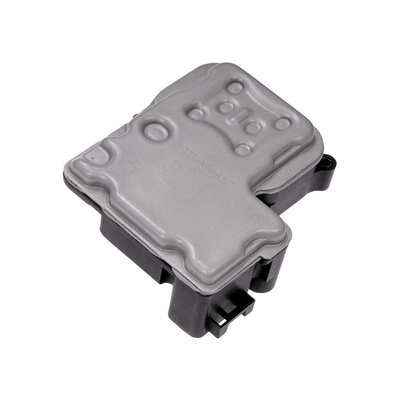
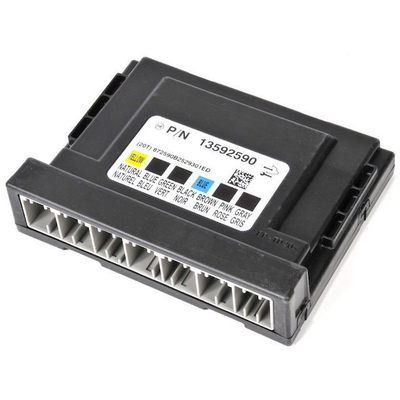
Below are the parts most often responsible for code C1214, ranked by how frequently each one is the actual culprit (per the diagnosis above). Tap any to see what we have for your vehicle.


The information in this article is provided for general reference and educational purposes only. Vehicle specifications, procedures, and part compatibility can vary by production date, trim level, and region. Always consult your vehicle's factory service manual and verify part numbers before purchasing or performing repairs. Safety-critical components such as airbags, seat belts, and braking systems should be installed by a qualified professional.
- 🧭 Diagnostic Flowchart
- 🎬 Helpful Videos
- 🛍️ Shop This Part
- What Does C1214 Mean?
- Can I Drive With C1214?
- Common Causes
- Symptoms
- Common Fixes & Costs
- DIY vs Professional
- Used vs. New Parts: Buying Guide
- What Happens If You Wait — Timeline
- Cost of Not Fixing It
- Diagnosis Steps
- When This Code Triggers (Freeze-Frame Conditions)
- Related Codes
- Climate & Environmental Factors
- How to Talk to a Mechanic About This Code
- Where to Take It: Dealer vs Independent vs Chain
- When to Walk Away From the Repair
- What Scan Tool You Need for This Code
- How to Clear the Code After You Fix It
- Will This Fail Emissions / State Inspection?
- Most Commonly Affected Vehicles
- Manufacturer-Specific Notes
- Real Owner Stories
- 2001 Chevrolet Corvette with 85K miles
- 2007 Toyota Prius with 140K miles
- 2004 Chevrolet Impala with 110K miles
- How to Prevent This Code From Triggering
- Frequently Asked Questions
- Can I just clear the C1214 code?
- What is the most common misdiagnosis for C1214?
- Will C1214 cause my car to fail an inspection?
- What is the difference between the EBCM and the BPMV?
- Is the 'tap test' a reliable way to diagnose the EBCM?
- Can I fix the EBCM myself?
- What are the 'INF' codes that appear with C1214 on a Toyota?
- Key Takeaways
- 🎟️ Get 5% Off