

OBD-II Code C1218: ABS Pump Motor Circuit Malfunction
What C1218 means, why it triggers, and how to fix it
- Code C1218 disables your ABS and Traction Control due to an electrical fault in the pump motor circuit, increasing your risk of skidding.
- On 1999-2006 GM vehicles, cleaning the corroded EBCM ground wire on the frame rail fixes this code over 50% of the time for $0.
- If you hear the ABS pump running continuously after turning the car off, pull the 40A-60A ABS fuse immediately to prevent a dead battery and a burned-out pump motor.
- Using a mail-in rebuild service for a faulty Electronic Brake Control Module (EBCM) costs around $150-$250, saving you over $1,000 compared to buying a new assembly.
- Always perform a bidirectional scan tool test to command the pump motor on; this isolates the fault between a $150 module repair and a $2,000 pump replacement.
What Does C1218 Mean?
Code C1218 signifies the vehicle's Electronic Brake Control Module (EBCM) detected an electrical malfunction in the ABS pump motor circuit. This pump pressurizes the brake fluid during an ABS event. The EBCM identified an abnormal voltage reading—either a short circuit or an open circuit—forcing it to disable the ABS and related safety systems to prevent erratic braking behavior.
Technical definition: The SAE/ISO definition for C1218 is 'Pump Motor Circuit Shorted to Voltage or Motor Ground Open'. The EBCM triggers this code when the voltage on the motor's control circuit does not match the commanded voltage. For example, the code sets if the system voltage is above 8V, but the actual voltage at the pump motor is 3 volts less than commanded, indicating high resistance or a broken connection.
🎬 Watch: A diagnostic walkthrough of code C1218 on a Chevy Impala.Can I Drive With C1218?
Yes, But With Caution. Yes, but drive cautiously. Your primary hydraulic brakes still work, but the Anti-lock Braking System (ABS), Traction Control, and Stability Control are disabled. This significantly increases the risk of wheel lock-up and skidding during hard braking or on slippery surfaces. Fix this promptly to restore critical safety systems.
Common Causes
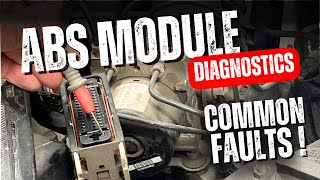
- Corroded or loose EBCM ground wire (Very Common) — This is the most frequent cause, especially on General Motors (GM) vehicles. 🎬 See how to fix ABS lights by cleaning the ground connection. The main ground wire for the ABS module, bolted to the frame under the driver's side, corrodes. This poor connection creates high resistance, starving the pump motor of the current it needs to run.
- Faulty Electronic Brake Control Module (EBCM) (Common) — The EBCM is the brain of the ABS. Internal components, like the driver circuit, power transistors, or the internal relay controlling the pump motor, fail from heat, vibration, and voltage spikes, causing an internal short or open circuit.
- Failed ABS pump motor (Common) — The electric motor driving the ABS pump wears out over time. The failure is typically an internal short circuit, an open circuit in the motor windings, or mechanical seizure from contaminated brake fluid.
- Damaged wiring harness or loose connector (Less Common) — The wiring harness between the EBCM and the ABS pump motor frays, breaks, or corrodes from exposure to moisture and road debris. Additionally, brittle plastic locking tabs on the main connector vibrate loose, causing intermittent electrical faults.
- Blown ABS fuse or faulty relay (Rare) — The main high-amperage fuse (typically 30A-60A) or relay supplying power to the ABS pump motor blows due to a voltage spike or an underlying short circuit, instantly cutting power to the motor.
- Low battery voltage (Rare) — A failing battery supplies low system voltage during startup, causing spurious error codes across various modules. On some vehicles, a weak battery triggers a dashboard lit up with ABS, ESC, and steering warnings.
Symptoms
- ABS and Traction/Stability Control lights illuminated — The ABS, 'TRAC OFF', and 'Service Stabilitrak' lights illuminate on the dashboard immediately after the fault is detected, as these systems rely entirely on the ABS pump.
- Loss of Anti-Lock Braking — During a hard stop or on a slippery surface, the wheels lock up and skid because the electronic anti-lock function is disabled.
- ABS pump motor runs continuously (even when off) — An internal short circuit in the EBCM causes the ABS pump motor to run constantly, emitting a buzzing sound from the engine bay even after the key is removed, rapidly draining the battery.
- Spongy brake pedal — Drivers occasionally notice a softer brake pedal feel, though primary hydraulic braking remains functional.
Common Fixes & Costs
- Clean and re-secure EBCM ground wire — Parts: $0-$5, Labor: $75-$150, ~0.8 hr book time (DIY)
- Replace blown ABS fuse — Parts: $5-$20, Labor: $0-$50, ~0.2 hr book time (DIY)
- Repair or rebuild the Electronic Brake Control Module (EBCM)
— Parts: $150-$250, Labor: $150-$300, ~1.5 hr book time
(Intermediate)
Chevrolet Impala / Monte Carlo (2001-2005): OEM N/A (Repaired) (Alt: Cardone 12-10283)
Chevrolet Silverado / GMC Sierra (2000-2002): OEM 19244883 (Alt: Dorman 599-700)
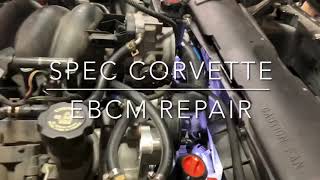
Chevrolet Corvette C5 (2001-2004): OEM 10343433 (Alt: Mail-in repair service) 🎬 Watch: How to repair a common EBCM failure on C5 Corvettes. - Replace the ABS pump and module assembly — Parts: $800-$2,500, Labor: $250-$500, ~2.5 hr book time (Professional)
- Repair damaged wiring harness or connector — Parts: $20-$150, Labor: $200-$600, ~2.8 hr book time (Professional)
DIY vs Professional
- Clean and re-secure EBCM ground wire — Beginner: Yes
Tools: Socket set, wire brush, safety glasses. - Replace blown ABS fuse — Beginner: Yes
Tools: Fuse puller or needle-nose pliers. - Repair or rebuild the Electronic Brake Control Module (EBCM) — Beginner: No (Repair), Yes (Removal/Reinstallation)
Tools: Torx bit set, small ratchet. - Replace the ABS pump and module assembly — Beginner: No
Tools: Flare nut wrenches, brake fluid, catch pan, bidirectional scan tool for ABS bleeding. - Repair damaged wiring harness or connector — Beginner: No
Tools: Multimeter, wiring diagrams, wire strippers, soldering iron, heat shrink tubing.
Used vs. New Parts: Buying Guide
When a used part is worth it: A used EBCM or ABS assembly is cost-effective for older, high-mileage vehicles where a new part exceeds the car's value. It makes sense if you source from a non-Rust Belt state to avoid pre-existing corrosion.
Donor-vehicle mileage cap: roughly under 100000 miles for the part to have meaningful remaining life.
Donor quality checklist:
- Match the part number exactly; many modules look identical but are not interchangeable.
- Source from a reputable seller offering a 30-90 day warranty.
- Avoid parts from vehicles in the 'Rust Belt'.
- Verify if the used module requires VIN reprogramming by a dealer.
Decision logic:
- If A reputable mail-in repair service is available for your specific module → Choose repair/rebuild. It costs $150-$250, avoids VIN programming issues, and includes a warranty.
- If Vehicle is older (>10 years) and budget is the primary concern → A warrantied used part is a reasonable choice, but accept the risk of a shorter lifespan.
- If The part is for a newer vehicle or safety is the top priority → Buy a new OEM or high-quality remanufactured part for maximum reliability.
Warranty tradeoff: Used parts offer a 30-90 day warranty. Remanufactured units come with a 1-year to lifetime warranty. New OEM parts carry the standard manufacturer warranty.
Worst-case if a used part fails: $300-$600 if a used part fails after the warranty period, representing repeat labor costs plus another replacement part.
Cost of Not Fixing It
- Immediate: Loss of ABS, Traction Control, and Stability Control. Increased risk of skidding and loss of control during hard braking. (Added cost: $0)
- Days to Weeks: If an internal EBCM short causes the pump to run constantly, it will drain and permanently ruin the vehicle's battery. (Added cost: $150-$350)
- Months: A continuously running ABS pump motor burns itself out, requiring replacement of the entire expensive hydraulic assembly instead of just the electronic module. (Added cost: $800-$2500)
Diagnosis Steps
- Read the ABS Codes
Use an OBD-II scanner capable of reading ABS/Chassis (C-prefix) codes to confirm C1218 is active. Note any other codes, as they provide critical clues. A standard engine-only code reader cannot see ABS codes.
Tools: ABS-capable OBD-II Scanner (Beginner) - Inspect ABS Fuses and Relays
Locate the under-hood fuse box. Find the large-amperage fuse (40A-60A) and relays labeled for the ABS or EBCM. Visually inspect for damage and test for continuity with a multimeter. A good fuse reads near 0 ohms.
Tools: Owner's Manual, Multimeter, Fuse Puller (Beginner) - Inspect and Clean the EBCM Ground Connection
Locate the ABS module and follow its wiring harness to the main ground wire (a thick black wire bolted to the vehicle's frame). Disconnect the battery, unbolt the ground wire, and clean the wire terminal and frame contact point with a wire brush until shiny. Re-secure tightly.
Tools: Socket Set, Wire Brush, Safety Glasses (Beginner) - Perform a Voltage Drop Test on the Ground Circuit
Connect the positive lead of a multimeter to the EBCM ground wire terminal and the negative lead to the negative battery terminal. With the ignition on and an assistant pressing the brakes, the reading must be less than 0.2 volts. A reading over 0.5 volts indicates excessive resistance.
Tools: Multimeter (Intermediate) - Check Power and Ground at the EBCM Connector
Disconnect the main electrical connector from the EBCM. Using a wiring diagram, check for constant battery voltage (12.6V) at the main power pins using a test light to confirm the circuit carries a load. Check for continuity to ground on the ground pins.
Tools: Multimeter, Test Light, Vehicle-specific Wiring Diagram (Intermediate) - Test the ABS Pump Motor Resistance
If possible, separate the EBCM from the pump assembly (usually 4-6 Torx screws) to access the two motor terminals. Measure resistance across these pins. A reading of 5 ohms or more indicates a failed open pump motor. Less than 5 ohms suggests the motor is good and the EBCM has failed.
Tools: Multimeter, Torx Socket Set (Advanced) - Diagnose the EBCM with a Bi-Directional Scanner
If wiring, grounds, and fuses test okay, use an advanced scan tool to command the pump motor on. If the command is sent but the pump doesn't run (and it has verified power/ground), the EBCM's internal driver has failed.
Tools: Advanced Bi-Directional Scanner (Advanced) - Measure Parasitic Draw (If Battery Dies)
If the pump runs continuously, disconnect the negative battery cable and connect a multimeter in series on the 10A DC amps setting. If the draw is over 0.05A after the modules sleep, pull the ABS fuse. If the draw drops, the EBCM is internally shorted.
Tools: Multimeter with Amperage function (Advanced) - Analyze Pump Motor Activation with an Oscilloscope
Connect a lab scope to the pump motor's power and ground circuits. Command the pump on. You should see a sharp vertical line indicating inrush current, followed by a stable noisy waveform. A flat line confirms the EBCM is not grounding the motor circuit.
Tools: Automotive Oscilloscope, Wiring Diagram (Professional)
When This Code Triggers (Freeze-Frame Conditions)
- System Voltage: 10.5-14.5V (During EBCM self-test at startup)
- Vehicle Speed: > 5 MPH (The code sets after the vehicle starts moving and the EBCM performs its rolling self-test.)
- Ignition Status: ON / RUN (The fault is detected during the key-on self-test sequence.)
- Time Since Key-On: < 1 second (The EBCM detects the circuit fault almost instantly during its power-on self-check.)
Related Codes
- C1214 — Indicates 'Solenoid Valve Relay Contact Circuit Open'. Seeing C1214 alongside C1218 strongly suggests an internal EBCM failure, as the module controls both circuits and they share internal power paths.
- C1243 — Indicates 'BPMV Pump Motor Stalled'. C1218 is an electrical fault that prevents the motor from running, which directly causes the C1243 stalled code. Fix the C1218 electrical issue first.
- C1095 — This is the Ford-specific equivalent of a pump motor circuit failure, pointing to the exact same set of problems: bad pump motor, bad ABS module, or wiring issues.
- U0121 — Indicates 'Lost Communication With ABS Control Module'. Seeing this alongside C1218 is a major red flag that the EBCM is failing entirely and dropping off the vehicle's data network, requiring module replacement.
Climate & Environmental Factors
- High Humidity and Road Salt: Moisture and de-icing chemicals accelerate corrosion of the main EBCM ground point on the vehicle frame, leading to high resistance. This makes C1218 significantly more common in 'Rust Belt' regions.
- Extreme Cold: Freezing temperatures make wiring insulation brittle and allow moisture inside connectors to freeze, causing an intermittent open circuit that triggers the code at startup but disappears as the engine warms.
How to Clear the Code After You Fix It
- Reconnect any disconnected components (EBCM, ground wire, battery).
- Use an ABS-capable OBD-II scan tool to access the 'Chassis' or 'ABS' menu.
- Select the 'Clear Codes' or 'Erase DTCs' function.
Drive cycle (~10 minutes): After clearing the code, drive the vehicle above 10 MPH. The ABS module performs a self-test at low speeds. If the repair was successful, the ABS light remains off. No complex drive cycle is required.
Readiness monitors affected: None directly. ABS codes do not affect engine emissions readiness monitors.
Watch out for:
- Using a standard engine code reader that cannot access or clear ABS (C-prefix) codes.
- Disconnecting the battery will not clear the code, as it is stored in non-volatile memory within the EBCM.
- Clearing the code without fixing the electrical problem results in the code returning immediately upon the next self-test.
Will This Fail Emissions / State Inspection?
No — by itself this code doesn't fail OBD inspection (but it can keep readiness monitors from setting, which causes a separate fail).
- California: An ABS light will NOT cause a failure of the emissions (smog) test. However, salvage vehicles must pass a 'Brake and Lamp Inspection' where a non-functional ABS fails the vehicle.
- New York: Under current NYS DMV regulations, an illuminated ABS warning light is NOT a cause for rejection during the annual safety inspection, though proposed legislation seeks to change this.
- Texas: An illuminated ABS light is not an automatic failure for the safety inspection. As of 2025, safety inspections are being phased out for non-commercial vehicles in favor of an emissions-only test in 17 counties.
Most Commonly Affected Vehicles
- Chevrolet Impala / Monte Carlo (2000-2005) — Extremely common issue due to a poorly located, corrosion-prone EBCM ground wire under the driver's side. Repair services for the Delphi ABS module are widely available.
- Chevrolet / GMC Silverado, Tahoe / Sierra, Yukon (1999-2006) — These trucks use a Kelsey-Hayes ABS module prone to internal solder joint failure and frame ground corrosion. The ground point is on the frame rail below the driver's door.
- Buick LeSabre / Century (2000-2005) — Uses the Delphi DB-C 1350 ABS module, known for identical EBCM internal failures and ground problems as its GM platform-mates.
- Pontiac Bonneville / Grand Prix (2000-2005) — Prone to the exact same EBCM and ground circuit failures due to shared GM architecture.
- Chevrolet Corvette (C5) (2001-2004) — Famous for internal EBCM failures triggering C1218 and C1214. A replacement module costs over $1,000, but mail-in repair services fix the original unit for $150-$250.
- Ford Fiesta / Focus (2008-2016) — Known for ABS module failures, though they often present with Ford-specific code C1095. The root cause and repair costs are identical.
- Subaru Outback / Legacy (2015-2018) — A broken plastic locking tab on the electronic parking brake actuator connector triggers similar ABS warning lights. Subaru issued a warranty extension and a clip kit for a permanent fix.
- Volkswagen Passat / Jetta / Golf (2010-2018) — A cascade of warning lights (ABS, ESC, Power Steering) is frequently caused by a failing 12V battery dropping system voltage during cranking, rather than a true ABS failure.
Manufacturer-Specific Notes
- General Motors (Chevrolet, Buick, Pontiac, Cadillac): The most common cause for C1218 on 1999-2006 GM vehicles is a corroded EBCM ground connection on the frame rail below the driver's door. Cleaning this ground point resolves the issue over 50% of the time without parts.
- Ford: On many Fords, C1218 means 'Lamp ABS Warning Output Circuit Failure', pointing to a problem in the dashboard warning light circuit itself, not the pump motor. Pump motor failures usually set C1095.
- Subaru: For 2015-2018 models, Subaru issued TSB 06-87-22R for a faulty electronic parking brake connector lock tab. A broken tab creates a loose connection that disables safety systems and illuminates brake warnings.
Frequently Asked Questions
Is it safe to drive with code C1218?
You can drive, but it is not recommended. Your primary brakes work, but ABS, traction, and stability control are disabled. This significantly increases your risk of skidding during sudden stops or on wet roads.
Will my brakes fail completely with a C1218 code?
No, your primary hydraulic braking system is separate and continues to work. C1218 only disables the electronic anti-lock functions. However, if the red 'BRAKE' light also illuminates, stop driving immediately as you may have low fluid.
Could a bad wheel bearing or wheel speed sensor cause code C1218?
No. Code C1218 specifically targets the ABS pump motor's electrical circuit. A faulty wheel speed sensor or bearing sets distinct codes (like C0035) pointing to a specific wheel.
Why are my ABS, traction control, and other warning lights all on at once?
Modern safety systems are interconnected, so a failure in the ABS disables traction and stability control, triggering all their lights. On some vehicles, a weak battery causes low voltage at startup, creating a cascade of false warning lights.
What's the difference between C1218 and a wheel speed sensor code?
C1218 indicates a central power or ground failure at the main ABS pump motor. Wheel speed sensor codes point to a problem at a specific wheel's sensor or wiring. Diagnosis for C1218 focuses on the main module, not the individual wheels.
Can I just clear the code to fix the problem?
No. C1218 is a 'hard fault' indicating a persistent electrical problem. The system performs a self-test every time you drive; if the underlying issue isn't fixed, the code returns immediately.
Can I replace just the electronic module (EBCM) or do I need the whole pump assembly?
On many vehicles, you can unbolt the electronic module (EBCM) from the hydraulic pump and replace or rebuild it separately. This avoids opening the brake lines, saving you from a complex brake bleeding procedure. However, some manufacturers only sell them as a single integrated unit.
Key Takeaways
- Code C1218 disables your ABS and Traction Control due to an electrical fault in the pump motor circuit, increasing your risk of skidding.
- On 1999-2006 GM vehicles, cleaning the corroded EBCM ground wire on the frame rail fixes this code over 50% of the time for $0.
- If you hear the ABS pump running continuously after turning the car off, pull the 40A-60A ABS fuse immediately to prevent a dead battery and a burned-out pump motor.
- Using a mail-in rebuild service for a faulty Electronic Brake Control Module (EBCM) costs around $150-$250, saving you over $1,000 compared to buying a new assembly.
- Always perform a bidirectional scan tool test to command the pump motor on; this isolates the fault between a $150 module repair and a $2,000 pump replacement.
Helpful Videos

Shop the Parts Behind C1218
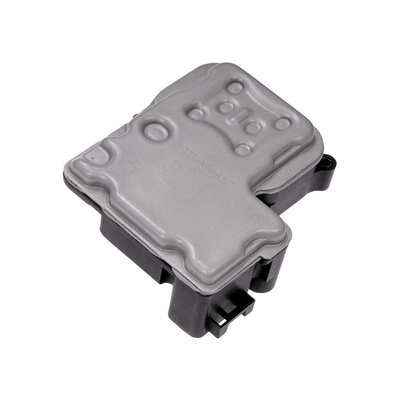
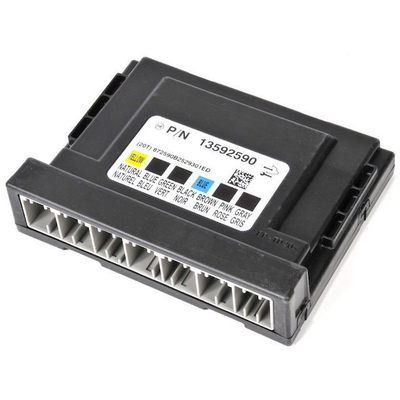
Below are the parts most often responsible for code C1218, ranked by how frequently each one is the actual culprit (per the diagnosis above). Tap any to see what we have for your vehicle.


The information in this article is provided for general reference and educational purposes only. Vehicle specifications, procedures, and part compatibility can vary by production date, trim level, and region. Always consult your vehicle's factory service manual and verify part numbers before purchasing or performing repairs. Safety-critical components such as airbags, seat belts, and braking systems should be installed by a qualified professional.
- 🎬 Helpful Videos
- 🛍️ Shop This Part
- What Does C1218 Mean?
- Can I Drive With C1218?
- Common Causes
- Symptoms
- Common Fixes & Costs
- DIY vs Professional
- Used vs. New Parts: Buying Guide
- Cost of Not Fixing It
- Diagnosis Steps
- When This Code Triggers (Freeze-Frame Conditions)
- Related Codes
- Climate & Environmental Factors
- How to Clear the Code After You Fix It
- Will This Fail Emissions / State Inspection?
- Most Commonly Affected Vehicles
- Manufacturer-Specific Notes
- Frequently Asked Questions
- Is it safe to drive with code C1218?
- Will my brakes fail completely with a C1218 code?
- Could a bad wheel bearing or wheel speed sensor cause code C1218?
- Why are my ABS, traction control, and other warning lights all on at once?
- What's the difference between C1218 and a wheel speed sensor code?
- Can I just clear the code to fix the problem?
- Can I replace just the electronic module (EBCM) or do I need the whole pump assembly?
- Key Takeaways
- 🎟️ Get 5% Off