

OBD-II Code C1226: A Comprehensive Guide for Professionals
Definitive Meanings, Advanced Diagnostics, and Manufacturer-Specific Fixes for Brake Warning and Wheel Speed Faults
- Scan the vehicle with a manufacturer-specific OBD-II tool immediately, as C1226 means 'Brake Lamp Circuit Short' on Fords but 'Right Front Wheel Speed Sensor' on GM and BMWs.
- Inspect the trailer wiring adapter and center high-mount brake light socket first on 1997-2006 Ford trucks, as melted plastic in these 2 locations causes 80% of Ford C1226 codes.
- Visually inspect the right front ABS reluctor ring for rust-induced cracks before buying parts for BMW and Hyundai vehicles, as a $20 broken ring mimics a $150 failed sensor.
- Swap the right front and left front wheel speed sensors on GM vehicles to definitively isolate the fault; if the code changes to C1225, the sensor is dead.
- Remove aftermarket stainless steel brake lines or add a dedicated chassis ground wire on 1997-2004 C5 Corvettes to eliminate electrical noise triggering false C1226 codes.
What Does C1226 Mean?
C1226 is a manufacturer-dependent code with two primary meanings. For Ford, Lincoln, and Mercury vehicles, it signifies 'Brake Warning Lamp Output Circuit Short To Ground,' indicating a short in the dashboard's brake warning light circuit. For General Motors, BMW, and Hyundai, C1226 points to a performance issue with the right front (RF) wheel speed sensor, such as 'RF Excessive Wheel Speed Variation'. This means the signal from the sensor is erratic, lost, or inconsistent with the other wheels. A third meaning for some Toyota models indicates an internal ABS module failure.
Technical definition: The official SAE/ISO definition for C1226 is 'Lamp Brake Warning Output Circuit Short To Ground'. However, manufacturer-specific definitions override this and include 'Right Front Wheel Speed Sensor Circuit Performance', 'RF Excessive Wheel Speed Variation', and Toyota-specific meanings like 'Control Module Communication Bus Off'. Always trust the definition from a manufacturer-specific scanner.
Can I Drive With C1226?
Yes, But With Caution. Yes, but drive only to a repair shop. If the code indicates a wheel speed sensor failure, your Anti-lock Braking System (ABS) and Traction Control (TCS) are disabled. This significantly increases the risk of wheel lock-up and loss of control during emergency braking or on slippery surfaces. Continued driving does not damage further components, but the safety risk is high.
Common Causes
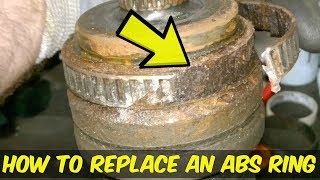
- Cracked or Corroded ABS Reluctor Ring (Very Common) — Rust forms on the axle underneath the toothed metal reluctor ring, forcing the ring to expand and crack. This broken ring generates an erratic signal or physically strikes and destroys the wheel speed sensor. This is the primary failure point for BMW, Kia, and Hyundai models. 🎬 Watch: How to replace a cracked ABS reluctor ring on a BMW.
- Faulty Wiring or Corroded Connectors (Very Common) — Exposed wheel speed sensor wiring harnesses sustain damage from road debris, improper routing, or suspension movement. Moisture and road salt corrode connector pins, creating high resistance. On Fords, brake warning light wiring chafes behind the dashboard, creating a direct short to the chassis.
- Defective Wheel Speed Sensor (Common) — The sensor fails internally due to age, heat cycles, or moisture intrusion. It develops an internal short/open circuit or loses its magnetic properties, preventing signal generation.
- Rust Buildup Under Wheel Speed Sensor (Common) — Rust accumulates on the hub surface where the wheel speed sensor mounts. This physically pushes the sensor away from the reluctor ring, increasing the air gap and leading to a weak signal that the ABS module interprets as a fault.
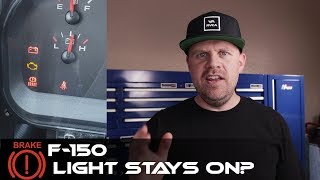
- Melted Bulb Socket or Trailer Light Adapter (Common) — Specific to the 'Brake Lamp Circuit' fault on Ford trucks and vans, an overheated bulb melts the plastic socket, causing the contacts to short. A faulty or corroded trailer wiring adapter is another frequent cause of shorts in this circuit. 🎬 See how to repair the red brake warning light on Ford trucks.
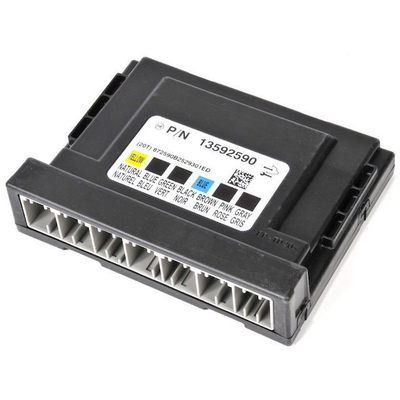
- Failing Body Control Module (BCM) or ABS Module (Less Common) — An internal failure, such as a shorted MOSFET driver on the BCM's circuit board, causes the 'Brake Lamp Circuit' fault. The ABS module also fails internally, misinterpreting sensor data or losing communication entirely.
- Improperly Installed Aftermarket Accessories (Rare) — Incorrectly wired trailer hitches or remote start systems short the brake light circuit. On C5 Corvettes, aftermarket stainless steel brake lines lack the proper grounding path of OEM lines, introducing electrical noise that the EBCM misinterprets as a wheel speed sensor fault.
- Blown or Fractured Fuse (Rare) — A fuse related to the ABS or instrument cluster develops an internal fracture that creates an intermittent connection. In documented cases for Ford F-250s, a loose fuse filament causes a C1226 code.
Symptoms
- ABS and/or Traction Control Light On — The most direct symptom for the wheel speed sensor variant of the code. The ABS, TCS/VSC, and Hill Assist lights illuminate on the dashboard, indicating safety systems are disabled.
- Brake Warning Light Stays On or Flashes — For the 'Brake Lamp Circuit' variant, the red 'BRAKE' light remains on constantly, flashes erratically, or fails to illuminate entirely.
- Brake Pedal Pulsation or Juddering at Low Speeds — A classic sign of a failing wheel speed sensor or damaged reluctor ring. The erratic signal tricks the ABS module into thinking a wheel is locking up during slow braking, unnecessarily activating the ABS pump for that wheel.
- Inaccurate Speedometer (Dodge Ram) — On third-generation Dodge Ram trucks, the rear wheel speed sensor on the differential provides the speedometer signal. A fault here causes the speedometer to operate intermittently or stop working entirely.
Diagnostic Flowchart
Tap your situation to follow the diagnostic path that matches what you're seeing on this code.
Common Fixes & Costs
- Replacing Wheel Speed Sensor
— Parts: $40-$190, Labor: $90-$150, ~1.2 hr book time
(DIY)
Chevrolet Corvette C5 (1997-2004): OEM ACDelco 25956031 (Alt: Standard Motor Products ALS1335, Duralast SU1283)
BMW 3-Series E90 (2006-2013): OEM BMW 34526870075 (Alt: Bosch 0986594519, ATE 34527853586) - Replacing ABS Reluctor Ring
— Parts: $10-$50, Labor: $250-$450, ~3.5 hr book time
(Advanced)
BMW 3-Series E90: OEM N/A (Typically part of axle shaft) (Alt: Various aftermarket suppliers) - Replacing Wheel Hub Assembly (includes sensor/ring) — Parts: $150-$400, Labor: $150-$300, ~2 hr book time (Intermediate)
- Repairing Damaged Wiring or Connector
— Parts: $10-$50, Labor: $125-$250, ~1.8 hr book time
(Intermediate)
Chevrolet Corvette C5 (1997-2004): OEM ACDelco PT2300 (Pigtail) (Alt: Dorman 645-509) - Replacing the Body Control Module (BCM) or ABS Module
— Parts: $300-$900, Labor: $150-$400, ~2.5 hr book time
(Professional)
Ford F-250 Super Duty (2006): OEM Ford 4C7Z-15604-AC (Alt: Cardone 78-2068F (Reman))
DIY vs Professional
- Replacing Wheel Speed Sensor 🟢 Beginner
Tools: Jack, jack stands, socket set, torque wrench, wire brush. - Replacing ABS Reluctor Ring 🟢 Beginner
Tools: Full socket set, breaker bars, press or specialized puller/installer tool, blow torch, safety gear. - Replacing Wheel Hub Assembly 🟢 Beginner
Tools: Jack, jack stands, large breaker bar, torque wrench, axle nut socket, basic hand tools. - Repairing Damaged Wiring or Connector 🟢 Beginner
Tools: Soldering iron, heat shrink tubing, wire strippers, multimeter, depinning tools. - Replacing the Body Control Module (BCM) or ABS Module 🟢 Beginner
Tools: Trim removal tools, socket set, professional scan tool with programming capabilities.
Used vs. New Parts: Buying Guide
When a used part is worth it: For an expensive ABS or BCM module, a used part from a reputable seller offers significant savings ($50-$150 used vs. $500-$1000+ new). For bolt-on wheel speed sensors or hub assemblies, new aftermarket parts are the better value.
Donor-vehicle mileage cap: roughly under 100000 miles for the part to have meaningful remaining life.
Donor quality checklist:
- Verify the exact OEM part number matches your original module; many look similar but are not interchangeable.
- Purchase from a seller offering a 30-90 day warranty.
- Confirm the donor vehicle was not scrapped due to flood or fire damage.
Decision logic:
- If The failed part is a simple bolt-on wheel speed sensor. → Buy a new aftermarket part. The cost is low and reliability is high.
- If The failed part is a complete wheel hub assembly. → Buy a new aftermarket assembly. A used hub has unknown bearing wear and is not worth the labor risk.
- If The failed part is the ABS or BCM electronic module and the vehicle is over 10 years old. → Buy a used module, but confirm a shop can program it to your car's VIN. Alternatively, send your original module for repair to avoid programming.
Warranty tradeoff: Used parts typically have a 30-90 day part-only warranty. New aftermarket parts carry a 1-year to limited lifetime warranty. A new OEM part installed by a dealer has the best warranty but at the highest cost.
Worst-case if a used part fails: $300-600. If a used electronic module is dead on arrival, you pay for the diagnostic and programming labor again, plus the cost of another part.
What Happens If You Wait — Timeline
- 0-1 week: Code sets and the ABS/TCS warning light illuminates. ABS, traction control, and stability control are immediately disabled. The vehicle reverts to standard braking. (MPG impact: 0%% · Added cost: $0)
- 1 week - 3 months: Driver experiences unexpected ABS activation (pedal pulsation) at low speeds if the fault is from a cracked reluctor ring. Stopping distances increase and steering control is reduced in panic stops. (MPG impact: 0%% · Added cost: $500 - $5,000 (Potential cost of an insurance deductible from a minor collision).)
- 3-12 months: The safety risk remains high. Driving without ABS significantly increases the statistical likelihood of an avoidable accident. The habit of ignoring the light normalizes a dangerous condition. (MPG impact: 0%% · Added cost: $5,000 - $25,000+ (Average liability claim for property damage and injuries in a moderate accident).)
- 12+ months: Continued operation in a compromised safety state. In the event of a serious crash, evidence that a known ABS fault was ignored introduces liability complications. (MPG impact: 0%% · Added cost: $25,000 - $1,112,000+ (Potential cost of an accident involving significant or disabling injuries).)
Cost of Not Fixing It
- Immediate: ABS, Traction Control, and Stability Control systems are disabled. Increased risk of wheel lock-up and loss of steering control in a panic stop or on slippery surfaces. (Added cost: Negligible in parts, but high in safety risk.)
- 1-6 months: Continued exposure to significant safety risks. Low-speed brake pulsation causes distracting and unexpected braking behavior, turning a minor incident into a major accident. (Added cost: $500 - $5,000 (Potential cost of an insurance deductible from a minor collision).)
- 6+ months: No further component damage occurs, but safety systems remain offline. Ignoring a dashboard warning light normalizes a dangerous condition and increases liability in a crash. (Added cost: $5,000 - $25,000+ (Average liability claim for property damage and injuries in an accident).)
Diagnosis Steps
- Verify Code and Definition with a Pro-Level Scanner
Connect a manufacturer-specific OBD-II scanner. Generic tools provide misleading definitions. Confirm C1226 is the primary code and document its exact definition (e.g., 'Brake Lamp Circuit Short' vs. 'RF Wheel Speed Sensor Performance'). This dictates the entire diagnostic path.
Tools: Professional OBD-II Scanner (Beginner) - Live Data Analysis
Using a scanner with live data graphing, monitor the wheel speed of all four wheels while driving slowly. For a C1226 (RF) fault, the RF wheel speed signal drops to zero, lags behind the others, or shows erratic spikes. A healthy system shows all four wheel speeds matching the vehicle speed with less than 1 MPH variation.
Tools: Advanced OBD-II Scanner (Intermediate) - Path B: 'Wheel Speed Sensor' Visual Inspection
If the code relates to the RF wheel, raise and secure the vehicle. Visually inspect the sensor, wiring, and connector at the right front wheel. Remove the sensor bolt and pull the sensor out. Check for rust jacking on the hub's mounting surface. Look through the sensor hole at the reluctor ring, rotating the hub to check for cracks, missing teeth, or rust swelling.
Tools: Jack and Jack Stands, Flashlight, Basic hand tools (Intermediate) - Path A: 'Brake Lamp Circuit' Visual Inspection
If the code relates to the lamp circuit, inspect the brake warning light bulb and its socket for melting or corrosion. Check all related fuses in the interior and under-hood fuse boxes. Visually trace the wiring harness from the instrument cluster and BCM for chafing, pinching, or damage.
Tools: Flashlight, Trim removal tools, Fuse puller (DIY) - Pro Tip: Diagnostic Swapping
If the wheel speed sensor and wiring harness connector are identical on the left and right sides (common on GM vehicles), swap them. Move the RF sensor and its short jumper harness to the LF wheel, and vice versa. Clear the codes and drive. If the code changes to C1225 (Left Front), you definitively prove the sensor or jumper harness is faulty.
Tools: Basic hand tools, OBD-II Scanner (Intermediate) - Pro Tip: Advanced Electrical Testing (Multimeter)
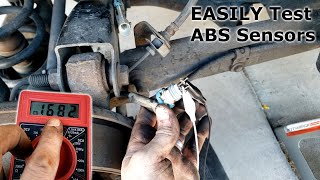
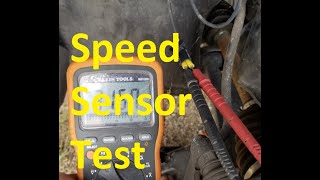
Disconnect the passive wheel speed sensor and set a multimeter to AC Volts. Connect the probes to the sensor's two pins. Spin the wheel hub by hand at one revolution per second. A healthy passive sensor generates at least 100mV (0.1V) AC. Next, switch to Ohms. A good passive sensor has a resistance between 800 and 2,500 Ohms. An open loop (OL) reading indicates a failed sensor. Do NOT perform a resistance test on an active sensor.
Tools: Multimeter with AC Volts and Ohms settings (Advanced) - Pro Tip: Testing Active (Digital) Sensors
Active sensors receive a reference voltage (5V or 12V) from the ABS module. With the key on, back-probe the sensor connector to confirm this voltage is present. While monitoring the signal wire, spin the wheel. A healthy active sensor produces a digital square wave signal that toggles between two voltage levels (e.g., 0.8V and 1.6V).
Tools: Multimeter, Back-probe kit (Advanced) - Pro Tip: Definitive Diagnosis with an Oscilloscope
For intermittent faults, back-probe the sensor connector while connected. Spin the wheel. A clean, consistent sine wave (passive) or square wave (active) must appear. A cracked reluctor ring shows a distorted or missing peak in the waveform. Electrical interference shows as 'hash' or noise. Stop DIY and take the vehicle to a shop equipped with an oscilloscope if multimeter tests pass but the code persists.
Tools: Automotive Oscilloscope (PicoScope or similar), Back-probe kit (Professional) - Isolate the Control Module
If all external components (bulbs, wiring, sensors, rings, fuses) test good, the fault is internal to the BCM or ABS module. Stop DIY and take the vehicle to a shop equipped with dealer-level programming tools, as replacing these modules requires VIN-specific software initialization.
Tools: Multimeter, Vehicle-specific wiring diagram (Advanced)
When This Code Triggers (Freeze-Frame Conditions)
- Vehicle Speed: 15-45 mph (The code sets when the vehicle exceeds a low-speed threshold (e.g., 5-10 mph), at which point the ABS module expects a clean signal from all sensors. It also triggers during steady-state driving if the signal becomes erratic.)
- System Voltage: 13.5-14.5 V (Normal operating voltage with the engine running. The fault logs during a key-on self-test or while driving, not during cranking.)
- Brake Pedal: Off (A wheel speed performance fault is detected during coasting or steady throttle, as the module compares the rotational speed of all four wheels. Inconsistent readings without brake application trigger the code.)
- ABS/TCS Status: Active/Monitoring (The fault logs the moment the ABS control unit detects an implausible or missing signal during continuous monitoring, immediately disabling the system.)
Related Codes
- C1225 — The direct companion to C1226 on GM vehicles, pointing to the Left Front wheel speed sensor. Swapping sensors side-to-side and seeing the code change from C1226 to C1225 confirms the sensor is faulty.
- C1233 — Indicates 'RF Wheel Speed Sensor Circuit Open or Shorted'. While C1226 indicates an erratic signal, C1233 points to a hard electrical failure, strengthening the diagnosis of broken wiring or a dead sensor.
- B1342 — A generic Body Control Module (BCM) code for an internal ECU fault. Seeing this alongside the 'Brake Lamp Circuit' version of C1226 strongly suggests the BCM itself has failed and is the source of the short circuit.
- U0121 — Indicates 'Lost Communication With ABS Control Module'. Seeing this with C1226 points toward a deeper network problem or a complete failure of the ABS module itself, rather than a single sensor circuit.
Climate & Environmental Factors
- Road Salt & Brine: Saltwater accelerates the rusting of steel components like reluctor rings. It penetrates electrical connectors, causing pin corrosion and leading to high resistance or short circuits in sensor harnesses.
- High Humidity: Humid climates promote moisture intrusion into connectors and sensors with failing seals, leading to corrosion and electrical faults even without road salt.
- Extreme Cold: Wiring harnesses become brittle and crack if disturbed in freezing temperatures. Water inside a connector freezes, expands, and destroys internal components.
How to Talk to a Mechanic About This Code
Say this: "I have an ABS light on and a C1226 code. I need a diagnostic to determine if it's a wheel speed sensor issue or a brake lamp circuit fault, as I know this code means different things depending on the manufacturer. Can you check the specific definition and then inspect the right front wheel sensor/reluctor ring or the brake lamp circuit accordingly?"
This signals you are informed about the code's ambiguity, preventing a shop from making assumptions. It directs them to the two most likely diagnostic paths and shows you won't be easily upsold on unrelated repairs.
Avoid saying:
- 'My ABS light is on, can you fix it?'
- 'Just replace the C1226 sensor.'
- 'Do whatever you think is necessary.'
Questions to ask before authorizing the repair:
- What was the specific definition of the C1226 code on my vehicle?
- If it's a wheel speed sensor issue, did you see the failure in the live data? Was the reluctor ring inspected for cracks?
- If it's a lamp circuit short, where was the short found?
- Can I get a written estimate that breaks down parts and labor?
- What is the warranty on the parts and the labor for this repair?
Where to Take It: Dealer vs Independent vs Chain
- Dealer:
Recommended for Toyota/Lexus or if the fault is the main ABS module, which requires programming. Otherwise, an independent shop is more cost-effective.
Best for: Vehicles under warranty., Complex manufacturer-specific versions of the code (e.g., Toyota module faults)., When an independent shop has failed to diagnose it correctly.
Downsides: Highest labor rates., Prefers replacing entire assemblies (like a hub) instead of smaller components (like a reluctor ring). (Typical cost: +50% vs. baseline) - Independent Shop:
Best overall fit. An experienced independent technician efficiently diagnoses both the wheel speed and lamp circuit versions of this code and performs granular, cost-saving repairs.
Best for: Most C1226 scenarios on common makes (GM, Ford, BMW, Hyundai)., Out-of-warranty vehicles where cost is a factor., Diagnosing common failures like sensors, wiring, and reluctor rings.
Downsides: Shop quality and diagnostic skill vary; look for ASE certification and good reviews., Lacks expensive, dealer-level programming equipment for module replacement. (Typical cost: +0% vs. baseline) - Chain Shop:
Use with caution. Acceptable for a straightforward, pre-diagnosed sensor swap, but AVOID for initial diagnosis due to the code's complexity.
Best for: If the problem has already been diagnosed as a simple wheel speed sensor replacement.
Downsides: Technician skill varies dramatically., Lacks advanced diagnostic tools (oscilloscopes, bi-directional scanners) needed for tricky wiring or intermittent faults., High pressure to upsell leads to unnecessary repairs. (Typical cost: -10% vs. baseline)
When to Walk Away From the Repair
If the estimated repair cost exceeds 40-50% of the car's private-party value, seriously consider selling or trading it in.
- Car worth $4000, fix is $1800: Walk away. The repair cost is 45% of the car's value and is for a safety system on an older vehicle. Other age-related repairs are likely.
- Car worth $15000, fix is $450: Fix it. This repair is only 3% of the vehicle's value and restores a critical safety system.
- Car worth $2500, fix is $1500: Walk away. A $1500 repair for an ABS module on a $2500 car is not economically viable. The repair is 60% of the car's value.
What Scan Tool You Need for This Code
Minimum: A scanner that reads and clears ABS/Chassis (C-prefix) codes and views live wheel speed sensor data. A basic engine-only code reader will NOT see C1226.
A $20 generic scanner only reads engine and emissions codes (P-codes). It cannot access the ABS module, reporting 'No Codes Found' even with the ABS light on. You need a tool that specifically lists ABS diagnostic capability.
Budget: BlueDriver Pro (~$99) — Reads and clears ABS codes, provides manufacturer-specific definitions, and graphs live data from all four wheel speed sensors on your smartphone. Excellent for confirming a sensor failure.
Mid-range: Foxwell NT510 Elite / NT630 Plus (~$150) — Offers all features of the budget pick plus bi-directional controls. This allows you to command the ABS module to cycle the pump and valves, useful for advanced diagnostics and brake bleeding.
Professional: Autel MaxiCOM MK808 / MX808 (~$450) — A full-featured diagnostic tablet. Provides OE-level diagnostics for all systems, extensive live data, and includes service functions like ABS brake bleeding, SAS calibration, and module programming for some vehicles.
Rent vs buy: AutoZone's free 'Fix Finder' service reads ABS codes, which is a great starting point to get the specific code definition. However, you cannot view live data or clear the code with their tool. If you plan to diagnose and repair it yourself, buying at least a budget pick is necessary.
How to Clear the Code After You Fix It
- Perform the physical repair (e.g., replace sensor, repair wiring).
- Reconnect any disconnected components and the vehicle's battery.
- Use an OBD-II scan tool capable of accessing the ABS module to clear the C1226 fault code.
- Perform the drive cycle to validate the repair.
Drive cycle (~10 minutes): Start the vehicle and drive forward in a straight line, accelerating to at least 15-20 mph. This allows the ABS module to receive and compare signals from all four wheel speed sensors. Driving for 5-10 minutes with some turning confirms the fix if the ABS light remains off.
Readiness monitors affected: None directly. ABS faults do not affect emissions-related readiness monitors.
Watch out for:
- Disconnecting the battery does not clear an ABS fault code on modern vehicles; a scan tool is required.
- The code returns immediately upon driving if the underlying mechanical or electrical fault remains.
- Generic OBD-II scanners that only read powertrain codes cannot clear an ABS code.
Will This Fail Emissions / State Inspection?
Yes — this code typically fails an OBD-II emissions inspection.
- California: An illuminated ABS light is NOT a cause for smog check failure. However, if the red 'BRAKE' warning light is also on, that is a reason for failure.
- New York: An illuminated ABS warning light IS grounds for failing the annual safety inspection. Recent regulations explicitly include the ABS light as a failure item.
- Texas: An illuminated amber ABS light will NOT cause a vehicle to fail the state safety inspection. However, if the C1226 code illuminates the red 'BRAKE' warning light, the vehicle WILL fail.
Most Commonly Affected Vehicles
- Chevrolet Corvette (C5), Volt (1997-2004, 2011-2015) — On the C5 Corvette, C1226 is definitively 'RF Excessive Wheel Speed Variation'. Often caused by a bad sensor pigtail harness or loose female pins. Aftermarket stainless steel brake lines introduce electrical interference triggering this code.
- Ford F-Series/E-Series Vans (1997-2006) — Almost always means 'Brake Warning Lamp Output Circuit Short to Ground'. Common failures are melted trailer light adapters, corrosion in main harness connectors, or a melted center high-mount stop lamp (CHMSL) socket.
- BMW 1-Series, 3-Series, X3 (E90, E83, E46 chassis) (2002-2014) — Rust develops under the ABS reluctor ring on the driveshaft or axle. The rust expands and cracks the ring, providing an erratic signal or damaging the wheel speed sensor.
- Hyundai / Kia Sonata, Santa Fe, Sportage, Elantra (2007-2015) — Frequently experience wheel speed sensor codes due to cracked ABS tone rings caused by rust. TSB-15-SC-002 addresses water intrusion into the rear hub assembly causing sensor failure.
- Dodge Ram 1500/2500 (2002-2008) — A faulty rear wheel speed sensor on the differential causes ABS and Brake lights, and causes the speedometer to work intermittently or fail entirely.
- Cadillac CTS, Escalade (2003-2014) — C1226 reliably points to a 'Right Front Wheel Speed Sensor Circuit Performance' issue, mirroring other GM vehicles.
- Subaru Forester, Legacy, Outback (2010-2018) — Experience intermittent wheel speed sensor codes due to faulty sensors or issues with aftermarket wheel bearings. Bent pins in harness connectors cause hard-to-diagnose intermittent faults.
- Toyota Camry, Avalon, RAV4 (2005-2015) — Toyota uses C1226 for complex internal ABS solenoid circuit faults, communication failures ('Bus Off'), or 'EEPROM Malfunctions' within the ABS module, requiring professional module replacement.
Manufacturer-Specific Notes
- General Motors (Chevrolet, Cadillac): C1226 means 'Right Front Excessive Wheel Speed Variation'. The most common fixes are the sensor pigtail harness or the hub bearing assembly. On C5 Corvettes, aftermarket stainless steel brake lines cause electrical noise that triggers this code.
- Ford: On trucks and vans, C1226 is the 'Brake Warning Lamp Output Circuit Short to Ground'. Inspect the trailer wiring harness adapter and the center high-mount stop light (CHMSL) socket immediately, as these are the primary failure points.
- Toyota: C1226 indicates a serious internal module fault. Definitions like 'SMC Solenoid Circuit' or 'EEPROM Malfunction' point to a failed ABS modulator, requiring a new or remanufactured ABS unit.
- BMW: The root cause of wheel speed sensor codes is often the reluctor ring, not the sensor. Inspect the ring on the axle shaft for cracks or rust swelling before replacing a sensor.
- Dodge: On 3rd Generation Ram trucks, the rear wheel speed sensor on the differential controls the speedometer signal. A failure illuminates the ABS and Brake lights and causes the speedometer to fail.
Real Owner Stories
2001 Chevrolet Corvette Z06
ABS and Traction Control lights illuminated only at speeds above 100 MPH, disabling safety systems during high-speed driving events.
What they tried:
- Verified sensor resistance (1126-1223 Ohms) and AC voltage output (>100mV), which were normal.
- Cleaned all related sensor and harness connectors.
- Swapped the short jumper harnesses from left to right to see if the code would change from C1226 (RF) to C1225 (LF).
Outcome: The issue was traced to electrical noise. On C5 Corvettes, wheel speed sensor wiring picks up interference from high-energy ignition components or aftermarket stainless steel brake lines. Adding a dedicated ground resolved the issue.
Lesson: For high-speed or intermittent faults where sensors test good, consider sources of electrical interference, especially if aftermarket parts (ignition, brake lines) are installed.
2000 Ford E-Series Van
ABS and red 'BRAKE' light came on. Scanner showed C1226: 'Brake Lamp Indicator Short Circuit to Ground'.
What they tried:
- Checked brake fluid level and the brake light switch.
- Inspected all brake light bulbs and sockets.
Outcome: The owner found a melted brake light socket causing the electrical contacts to short together. Replacing the melted socket resolved the code and extinguished the warning lights.
Lesson: On Ford vehicles where C1226 means a lamp circuit short, visually inspect all brake light bulbs and sockets (including the center high-mount light) before assuming a wiring or module fault.
2008 BMW 3-Series (E90)
ABS, DSC, and Brake warning lights illuminated. Code pointed to a right front wheel speed sensor fault.
What they tried:
- Replaced the right front wheel speed sensor, but the fault returned immediately.
- Replaced the entire wheel hub/bearing assembly. The fault persisted.
Outcome: A technician visually inspected the CV axle and discovered the ABS reluctor ring was cracked and swollen with rust. Replacing just the inexpensive reluctor ring fixed the problem.
Lesson: On BMW, Hyundai, and Kia models, the reluctor ring is the primary failure point. Visually inspect the ring for cracks or rust swelling before replacing expensive sensors or hub assemblies.
1999 Ford F-250
ABS light came on suddenly while stopped. A code reader showed C1226 'Brake Warning Indicator Output Short Circuit to Ground'.
What they tried:
- Checked the fuse box.
Outcome: A fuse filament had come loose from one side, creating an intermittent open/short in the circuit. Replacing the faulty fuse cleared the code.
Lesson: Start with the simplest checks. Before tearing into wiring harnesses or replacing modules, inspect all related fuses for internal fractures.
How to Prevent This Code From Triggering
- Apply Dielectric Grease to Connectors (During any brake or suspension work) — Applying non-conductive dielectric grease to the wheel speed sensor connector seals out moisture and road salt, preventing pin corrosion.
- Regular Underbody Washes (Monthly, especially in winter (Rust Belt)) — Washing the undercarriage removes road salt and brine, slowing rust formation on the CV axle that leads to reluctor ring cracking.
- Inspect and Secure Wiring Harnesses (During every oil change or tire rotation) — A visual inspection for proper routing, secure clips, and chafing prevents wires from breaking due to suspension movement or road debris.
- Clean Sensor Mounting Surface (When replacing a wheel bearing or sensor) — Cleaning the mounting pad on the knuckle removes rust buildup that increases the air gap between the sensor and the reluctor ring, preventing weak signals.
Frequently Asked Questions
Can I drive my car with a C1226 code?
You can, but drive only to a repair shop. Your primary brakes function, but ABS and traction control are disabled. This increases stopping distance and the risk of losing control during a panic stop.
What's the most common mistake when fixing C1226?
The biggest mistake is replacing parts without confirming the manufacturer-specific definition. A technician might replace a wheel speed sensor on a Ford when the actual code indicates a melted trailer light adapter. Always verify the exact definition first.
Why did the code appear only after I installed aftermarket parts?
Aftermarket stainless steel brake lines on C5 Corvettes lack the electrical grounding properties of OEM lines. This introduces electrical noise that confuses the ABS module. Adding a dedicated ground wire often resolves the false code.
Can I just clear the code to fix it?
No, clearing the code only extinguishes the light temporarily. The control module detects the hard fault again during its next self-test, usually within seconds of driving. You must repair the underlying mechanical or electrical issue.
Why are my ABS and Traction Control lights on?
The ABS and Traction Control systems require accurate speed data from all four wheels to function. If one sensor provides an erratic or missing signal, the system disables itself as a safety measure. This triggers the dashboard warning lights.
Why does my brake pedal pulse when I'm stopping slowly?
This is a classic symptom of a cracked ABS reluctor ring or rust pushing the sensor out of alignment. The erratic signal fools the ABS computer into thinking a wheel is skidding at low speeds. The system unnecessarily activates the ABS pump, causing the pedal pulsation.
How do I know if the problem is the sensor or the reluctor ring?
A visual inspection easily reveals a cracked or swollen reluctor ring. For definitive proof, an oscilloscope shows a distinct 'missing tooth' waveform pattern for a cracked ring. A bad sensor typically shows a weak, flat, or noisy signal.
Key Takeaways
- Scan the vehicle with a manufacturer-specific OBD-II tool immediately, as C1226 means 'Brake Lamp Circuit Short' on Fords but 'Right Front Wheel Speed Sensor' on GM and BMWs.
- Inspect the trailer wiring adapter and center high-mount brake light socket first on 1997-2006 Ford trucks, as melted plastic in these 2 locations causes 80% of Ford C1226 codes.
- Visually inspect the right front ABS reluctor ring for rust-induced cracks before buying parts for BMW and Hyundai vehicles, as a $20 broken ring mimics a $150 failed sensor.
- Swap the right front and left front wheel speed sensors on GM vehicles to definitively isolate the fault; if the code changes to C1225, the sensor is dead.
- Remove aftermarket stainless steel brake lines or add a dedicated chassis ground wire on 1997-2004 C5 Corvettes to eliminate electrical noise triggering false C1226 codes.
Helpful Videos
Shop the Parts Behind C1226
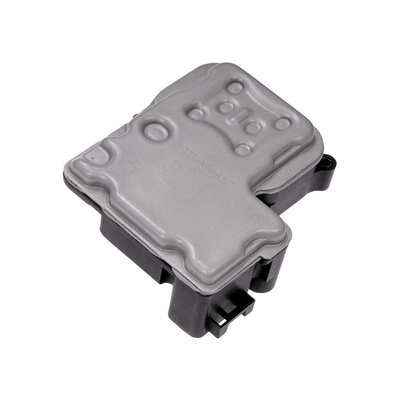
Below are the parts most often responsible for code C1226, ranked by how frequently each one is the actual culprit (per the diagnosis above). Tap any to see what we have for your vehicle.



The information in this article is provided for general reference and educational purposes only. Vehicle specifications, procedures, and part compatibility can vary by production date, trim level, and region. Always consult your vehicle's factory service manual and verify part numbers before purchasing or performing repairs. Safety-critical components such as airbags, seat belts, and braking systems should be installed by a qualified professional.
- 🧭 Diagnostic Flowchart
- 🎬 Helpful Videos
- 🛍️ Shop This Part
- What Does C1226 Mean?
- Can I Drive With C1226?
- Common Causes
- Symptoms
- Common Fixes & Costs
- DIY vs Professional
- Used vs. New Parts: Buying Guide
- What Happens If You Wait — Timeline
- Cost of Not Fixing It
- Diagnosis Steps
- When This Code Triggers (Freeze-Frame Conditions)
- Related Codes
- Climate & Environmental Factors
- How to Talk to a Mechanic About This Code
- Where to Take It: Dealer vs Independent vs Chain
- When to Walk Away From the Repair
- What Scan Tool You Need for This Code
- How to Clear the Code After You Fix It
- Will This Fail Emissions / State Inspection?
- Most Commonly Affected Vehicles
- Manufacturer-Specific Notes
- Real Owner Stories
- 2001 Chevrolet Corvette Z06
- 2000 Ford E-Series Van
- 2008 BMW 3-Series (E90)
- 1999 Ford F-250
- How to Prevent This Code From Triggering
- Frequently Asked Questions
- Can I drive my car with a C1226 code?
- What's the most common mistake when fixing C1226?
- Why did the code appear only after I installed aftermarket parts?
- Can I just clear the code to fix it?
- Why are my ABS and Traction Control lights on?
- Why does my brake pedal pulse when I'm stopping slowly?
- How do I know if the problem is the sensor or the reluctor ring?
- Key Takeaways
- 🎟️ Get 5% Off