

OBD-II Code C1235: Wheel Speed Sensor Signal Issue
What C1235 means, why it triggers, and how to fix it
- Code C1235 indicates a missing wheel speed sensor signal, instantly disabling ABS, traction control, and stability control.
- Start diagnosis by viewing live ABS scanner data at 10-15 mph to pinpoint exactly which of the four wheels is reporting 0 mph.
- Cleaning metallic brake dust off the magnetic sensor tip fixes the issue in 20% of cases, especially on Toyota and Lexus models.
- Never replace a sensor without performing a wiring 'wiggle test'; corroded harness connectors cause over 30% of C1235 faults in Rust Belt states.
- On Hyundai and Kia models, C1235 often indicates a failed internal ABS pump pressure sensor requiring a $500+ module replacement, not a wheel sensor.
What Does C1235 Mean?

Code C1235 indicates the ABS control module lost the signal from a wheel speed sensor (typically the right rear or right front). These sensors report individual wheel speeds. Without this data, the Anti-lock Braking System (ABS), Traction Control, and Electronic Stability Control (ESC) shut down.
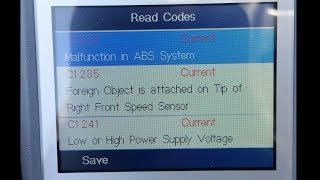
Technical definition: The SAE/ISO definition for C1235 is manufacturer-specific but generally translates to "Wheel Speed Sensor Input Signal Missing" or "Wheel Speed Circuit Open or Shorted." Ford defines it as "Right Rear Wheel Speed Sensor Input Signal Missing," while Toyota defines it as "Foreign Object is Attached on Tip of Front Speed Sensor RH." On certain Hyundai models, C1235 refers to a "Primary Pressure Sensor - Electrical" fault inside the ABS hydraulic unit.
Can I Drive With C1235?
Yes, But With Caution. Yes, but your Anti-lock Braking System (ABS) and Traction Control are disabled. Wheels lock up during hard braking, increasing stopping distances by up to 25% and causing steering loss on slippery surfaces. Driving with this fault significantly increases crash risk in emergencies.
Common Causes

- Failed Wheel Speed Sensor (Very Common) — Sensors fail internally due to thermal cycling, age, and moisture intrusion. This is the most frequent cause of a dead signal.
- Damaged or Corroded Wiring/Connectors (Very Common) — The wheel speed sensor wiring harness endures constant vibration, moisture, and suspension movement. Wires break internally, chafe against the chassis, or connector pins corrode, causing intermittent signal loss.
- Metallic Debris on the Sensor Tip (Common) — Wheel speed sensors are magnetic. Metallic debris from brake pad wear or road grime sticks to the tip, blocking it from reading the tone ring. This is the primary cause on Toyota and Lexus vehicles. 🎬 Watch: Diagnosing a C1235 fault on a Toyota RAV4.
- Damaged Tone Ring or Failing Wheel Bearing (Common) — The sensor reads a toothed magnetic ring (tone ring) on the axle or wheel hub. A cracked ring, missing teeth, or a worn wheel bearing creating hub wobble alters the critical air gap, destroying the signal.
- Incorrect Part Installed (Less Common) — Cheap aftermarket sensors or incorrect part numbers cause persistent codes. Incompatible internal electronics or incorrect tip lengths produce signals the ABS module cannot read at higher speeds.
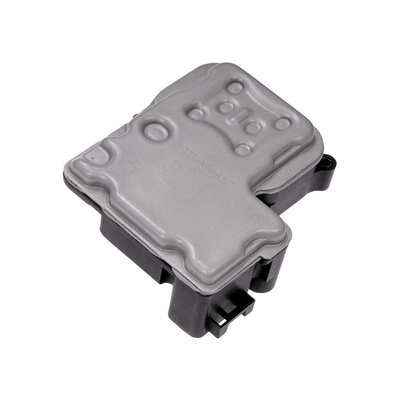
- Faulty ABS Control Module (Rare) — The ABS computer itself fails to process the incoming signal. This is the last component to suspect and is usually accompanied by a complete loss of communication with the diagnostic scanner.
Symptoms

- ABS Warning Light On — The primary indicator. The ABS light illuminates immediately upon detecting the fault.
- Traction/Stability Control Light On — TCS, ESC, and VSC systems rely on wheel speed data and disable simultaneously with the ABS.
- All-Wheel Drive (AWD) System Disabled — AWD systems rely on wheel speed data to proportion torque. A missing signal disables AWD and triggers a dashboard warning light.
- Brake Pedal Pulsation at Low Speeds — A failing sensor sends erratic signals, tricking the ABS computer into activating unnecessarily and causing brake pedal pulsation during normal, dry stops.
- Erratic Speedometer or Odometer Behavior — The speedometer drops to zero, bounces erratically, or stops recording mileage, particularly on vehicles using a single rear differential speed sensor.
Diagnostic Flowchart

Tap your situation to follow the diagnostic path that matches what you're seeing on this code.
Common Fixes & Costs
- Replace Wheel Speed Sensor — Parts: $40-$150, Labor: $100-$150, ~1.0 hr book time (DIY)
- Clean Sensor Tip and Tone Ring — Parts: $10 (Brake cleaner), Labor: $50-$100, ~0.8 hr book time (DIY)
- Repair or Replace ABS Wiring Harness/Connector — Parts: $20-$100, Labor: $150-$300, ~2.0 hr book time (Intermediate)
- Replace Wheel Hub Assembly — Parts: $150-$400, Labor: $150-$300, ~1.8 hr book time (Intermediate)
- Replace ABS Control Module — Parts: $500-$1200, Labor: $150-$300, ~1.5 hr book time (Professional)
Used vs. New Parts: Buying Guide
When a used part is worth it: Never buy a used wheel speed sensor; the labor to install it negates the $20 savings. Used parts only make sense for expensive ABS control modules.
Donor-vehicle mileage cap: roughly under 60000 miles for the part to have meaningful remaining life.
Donor quality checklist:
- Verify the part number matches exactly.
- Ensure the donor vehicle is not from a Rust Belt state.
- Require a minimum 30-day warranty.
Decision logic:
- If The part is a wheel speed sensor or wiring pigtail → Buy new OEM or premium aftermarket. Used sensors fail too quickly.
- If The part is an ABS control module costing over $800 new → Purchase a used module from a reputable salvage yard or a refurbished unit.
Warranty tradeoff: Used parts carry 30-90 day warranties covering only the part. New OEM parts carry 12-month warranties. You pay labor costs twice if a used part fails.
Worst-case if a used part fails: $300 (Paying labor twice for a failed used sensor installation)
What Happens If You Wait — Timeline
- 0-1 month: ABS and Traction Control systems disable. Conventional brakes function normally, but wheels lock up in panic stops. (MPG impact: 0%% · Added cost: $0)
- 1-6 months: Erratic sensor signals trigger unnecessary ABS activation during dry stops, causing premature brake pad wear. Automatic transmissions may shift harshly. (MPG impact: 0-2%% · Added cost: $100-$250 (Premature brake pad wear))
- 6-12 months: If the root cause is a failing wheel bearing, it degrades into severe grinding and excessive play, eventually damaging the steering knuckle. (MPG impact: 0-2%% · Added cost: $500-$1000 (Hub and knuckle replacement))
- 12+ months: The vehicle fails state safety inspections. The cumulative risk of driving without stability control in adverse weather leads to a higher probability of an accident.
Cost of Not Fixing It
- Immediate: Total loss of ABS, traction control, and stability control. Increased risk of skidding during emergency braking. (Added cost: N/A (Safety risk))
- 1-6 months: Erratic transmission shifting or limp mode activation, increasing wear on transmission clutches. (Added cost: $200-$500)
- 6+ months: If caused by a failing wheel bearing, the hub separates from the vehicle while driving. (Added cost: $1500+)
Diagnosis Steps
- Read Codes with an ABS-Capable Scanner
Use an OBD-II scanner to confirm C1235. Note the specific definition provided by the scanner (e.g., 'Signal Missing' vs. 'Foreign Object') to guide your next steps.
Tools: OBD-II Scanner (with ABS capability) (Beginner) - Analyze Live Data
View live data for all four wheel speed sensors while driving straight at 10-15 mph. The faulty sensor will show 0 mph, read erratically, or lag behind the others. All functional sensors must read within 1 mph of each other.
Tools: Advanced OBD-II Scanner with Live Data (Intermediate) - Visually Inspect the Sensor, Wiring, and Tone Ring
Safely raise the vehicle. Inspect the suspect wheel's sensor for physical damage. Trace the wiring harness looking for chafing, broken insulation, or green corrosion at the connector. Check the tone ring for rust, cracks, or missing teeth.
Tools: Jack, Jack Stands, Flashlight (Beginner) - Perform a Harness 'Wiggle Test'
While monitoring live scanner data, have a helper aggressively wiggle and flex the wiring harness from the sensor connector up into the wheel well. If the speed reading jumps or drops out, you have located an internal wire break.
Tools: Advanced OBD-II Scanner, Helper (Intermediate) - Clean the Wheel Speed Sensor and Tone Ring
Remove the sensor mounting bolt and pull the sensor out. Wipe the magnetic tip clean of all metallic fuzz. Spray brake cleaner on the tone ring and scrub with a non-magnetic brush.
Tools: Socket Set, Brake Cleaner, Nylon Brush (Intermediate) - Check for Wheel Bearing Play
Grasp the tire at the 12 and 6 o'clock positions and push/pull forcefully. Any clunking, play, or grinding noise indicates a worn wheel bearing altering the sensor air gap.
Tools: Jack, Jack Stands (Intermediate) - Test Sensor Resistance/Voltage (Multimeter)
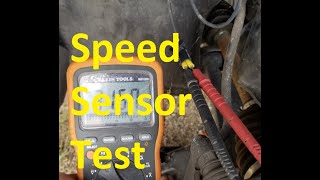
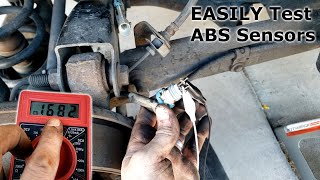
Disconnect the sensor. For passive (2-wire) sensors, measure resistance; 800-2000 ohms is typical. An open circuit (OL) means a dead sensor. For active (2 or 3-wire) sensors, turn the key ON and verify 5V or 12V reference voltage and ground at the harness connector.
Tools: Multimeter, Vehicle-specific wiring diagram (Advanced) - Perform a Dynamic Sensor Test
For passive sensors, set the multimeter to AC Volts, backprobe the connected sensor, and spin the wheel 1 revolution per second. It should generate 100-700mV AC. For active sensors, set to DC Volts; voltage should toggle between low (<0.5V) and high (>4.5V) as the wheel turns.
Tools: Multimeter with backprobes, Jack, Jack Stands (Advanced) - Analyze the Signal with an Oscilloscope
For high-speed dropouts, backprobe the signal wire with an oscilloscope. Passive sensors produce an AC sine wave; active sensors produce a DC square wave. Gaps, noise, or distorted amplitude confirm a cracked tone ring or failing sensor electronics.
Tools: Oscilloscope, Backprobe pins (Professional)
When This Code Triggers (Freeze-Frame Conditions)
- Vehicle Speed: 15-70 mph (The fault logs at various speeds. It often occurs at low speeds after startup, but frequently sets only after reaching a specific speed (e.g., 40 mph or 65 mph) where signal dropout becomes apparent.)
- System Voltage: 11.5-14.5V (The code sets under normal operating voltage. While low batteries trigger random electrical faults, C1235 points directly to a localized circuit issue.)
- Brake Pedal Status: Off (The ABS module continuously monitors sensors. Signal loss flags a code during steady-state driving, regardless of brake application.)
- Engine RPM: 1200-3000 RPM (Triggered during normal driving conditions, from city cruising to highway speeds, rather than at idle.)
Related Codes
- C1236 — Indicates a fault on the opposite wheel of the same axle. Seeing C1235 and C1236 together on early Ford SUVs points to a single rear differential sensor failure.
- C1233 / C1234 — Front wheel speed sensor codes. Seeing these alongside C1235 indicates a systemic issue like a faulty ABS module, widespread wiring corrosion, or severely mismatched tire sizes.
- C1145 / C1155 / C1165 / C1175 — Manufacturer-specific codes for wheel speed sensor circuit failures. Diagnostically identical to C1235, pointing to the sensor, wiring, or tone ring.
- C0200 / C0205 / C0210 / C0215 — Generic codes for wheel speed sensor circuit malfunctions. Their presence reinforces a hard electrical fault in the specific wheel's circuit.
Climate & Environmental Factors
- Road Salt and High Humidity: Saltwater acts as an electrolyte, accelerating corrosion on the sensor body, harness connectors, and tone ring. Moisture wicks into microscopic wire cracks, corroding copper from the inside out.
- Extreme Cold: Wiring insulation becomes brittle and cracks where the harness flexes with suspension travel. Freezing water pushes connectors apart.
- Potholes and Rough Roads: Severe impacts sever heavily corroded wires instantly or cause worn wheel bearings to shift, creating an air gap variation that triggers the code.
How to Talk to a Mechanic About This Code
Say this: "I have an ABS light on and my scanner shows code C1235. I'd like to book a diagnostic. Could you please check the live wheel speed data for the suspect corner and perform a visual inspection of the sensor, wiring, and tone ring?"
This guides the technician toward a specific, efficient diagnostic process. It prevents a costly 'shotgun approach' of replacing parts without confirming the failure.
Avoid saying:
- 'My ABS light is on, can you just fix it?'
- 'I think I need a new wheel speed sensor.'
- 'Just do whatever it takes to turn the light off.'
Questions to ask before authorizing the repair:
- What did the live data from the wheel speed sensors show? Was the faulty sensor reading zero, or was it erratic?
- Did you inspect the wiring harness and connector for corrosion?
- If you recommend a hub assembly replacement, is the tone ring damaged or has the bearing failed?
Where to Take It: Dealer vs Independent vs Chain
- Dealer:
Best for: Vehicles under warranty., Complex cases involving manufacturer-specific quirks (e.g., Hyundai ABS pump failures)., When independent shops fail to resolve the issue.
Downsides: Highest labor rates and parts costs., Defaults to replacing entire assemblies rather than repairing wiring. (Typical cost: +50% vs. baseline) - Independent Shop:
Best fit for most situations. C1235 is a common code that any competent independent shop diagnoses and repairs effectively.
Best for: Most out-of-warranty C1235 repairs., Diagnosing common failures like bad sensors, wiring damage, or failed hub bearings., Cost-conscious owners.
Downsides: Diagnostic capabilities vary. Ensure the shop uses modern scan tools capable of reading ABS live data. (Typical cost: +0% vs. baseline) - Chain Shop:
Acceptable for a straightforward sensor replacement. If the problem involves wiring, tone rings, or the ABS module, use an independent shop.
Best for: Simple, obvious fixes like replacing an easily accessible sensor you already diagnosed.
Downsides: Technician skill is inconsistent., Lacks advanced diagnostic tools (oscilloscopes) for intermittent electrical faults., Refuses to perform wiring repairs. (Typical cost: -10% vs. baseline)
When to Walk Away From the Repair
If the estimated repair cost exceeds 40-50% of the car's private-party value, sell or trade it in rather than repairing it.
- Car worth $4000, fix is $2000: Walk away. The repair cost is 50% of the car's value. Use this money as a down payment on a reliable vehicle.
- Car worth $12000, fix is $400: Fix it. This is a minor cost compared to the vehicle's value and is necessary for safety.
- Car worth $2500, fix is $1500: Walk away. The repair cost is 60% of the car's value and is not a sound investment.
What Scan Tool You Need for This Code
Minimum: An OBD-II scanner that reads and clears ABS/Chassis ('C') codes and displays live sensor data.
A basic $20 engine code reader cannot communicate with the ABS module. It will not see the C1235 code or clear the ABS light. You must view live speed data from all four wheels simultaneously to pinpoint the failure.
Budget: BlueDriver Pro (~$100) — Connects to a smartphone app to read/clear ABS codes. Displays live data for all wheel speed sensors, allowing you to drive and identify the failing sensor.
Mid-range: Foxwell NT604 Elite (~$130) — A dedicated handheld scanner providing live data graphing for wheel speed sensors. Offers bi-directional controls to perform active tests on the ABS module.
Professional: Autel MaxiCOM MK808BT (~$450) — Offers dealer-level diagnostics. Provides fast live data graphing, bi-directional controls, and special functions like ABS brake bleeding for complex diagnostics.
Rent vs buy: Auto parts stores scan codes for free, but their tools rarely read ABS codes. Buying a budget scanner with ABS live data capability is a mandatory investment for this repair.
How to Clear the Code After You Fix It
- Use an ABS-capable OBD-II scanner to clear the fault codes from the ABS module.
- Turn the ignition off, then start the engine.
- Perform a test drive exceeding 20 mph, including several turns, to allow the ABS module to verify the repair.
Drive cycle (~10 minutes): A 10-minute test drive under normal conditions is sufficient. If the ABS light does not return after hitting 20 mph, the repair is successful.
Readiness monitors affected: None. Chassis codes do not affect emissions readiness monitors.
Watch out for:
- Using a basic $20 engine code reader that cannot access or clear ABS module memory.
- Disconnecting the battery. This rarely clears hard ABS codes on modern vehicles.
- Assuming the repair failed if the light stays on at 0 mph; many systems require the vehicle to move before turning the light off.
Will This Fail Emissions / State Inspection?
No — by itself this code doesn't fail OBD inspection (but it can keep readiness monitors from setting, which causes a separate fail).
- California: An ABS light does not fail the emissions-only Smog Check. It will fail a separate Brake and Lamp Inspection required for salvage titles.
- New York: The NYS safety inspection requires the ABS light to illuminate with the key ON and extinguish when running. An active ABS light is an automatic failure.
- Texas: Vehicles fail the mandatory Texas safety inspection if the ABS warning light remains illuminated.
Most Commonly Affected Vehicles
- Ford Explorer, Mountaineer (2002-2005) — These models use a single differential-mounted rear speed sensor. A failure logs both C1235 and C1236 simultaneously (TSB 03-26-3).
- Toyota Prius, Corolla, RAV4 (2003-2013) — Highly sensitive to metallic debris sticking to the magnetic sensor tip. Faults frequently appear only at speeds above 65 mph.
- Hyundai / Kia Elantra, Santa Fe, Genesis (2007-2016) — On premium models, C1235 indicates an internal pressure sensor fault in the ABS hydraulic unit, not a wheel sensor. This requires replacing the entire ABS module.
- Honda Accord, Civic, CR-V (2005-2015) — These models use indirect TPMS relying on wheel speed sensors. A C1235 code simultaneously triggers the low tire pressure warning light.
- Chevrolet / GMC Impala, Silverado, Tahoe (2000-2010) — Wiring harness failures are frequent where the harness flexes inside the front fender liners.
Manufacturer-Specific Notes
- Ford / Lincoln / Mercury: Early 2000s SUVs utilize a single sensor on the rear differential for both rear wheels. One failed $40 sensor triggers both left and right rear codes.
- Toyota / Lexus: Scanners define the code as "Foreign Object is Attached on Tip." The system flags microscopic metallic brake dust on the sensor tip before the sensor actually fails.
- Jaguar: The metal tone ring on the rear CV axle rusts underneath, expanding and cracking the ring until it physically strikes and destroys the sensor.
- Hyundai / Kia: On models like the Genesis and Azera, C1235 means "Primary Pressure Sensor - Electrical." This is a critical internal ABS pump failure, not a wheel sensor issue.
Real Owner Stories
2007 Toyota Prius - High-Speed Only Fault
ABS and VSC lights illuminated only after exceeding 65 mph. Slowing down turned the lights off.
What they tried:
- Cleaned metallic debris from the sensor tip.
- Replaced rear hub assemblies and sensors.
Outcome: The problem persisted. An oscilloscope revealed the aftermarket hub's tone ring produced a distorted signal frequency at high speeds. Replacing it with an OEM hub resolved the issue.
Lesson: Faults appearing only at specific high speeds indicate signal degradation, not a dead sensor. Cheap aftermarket hubs with integrated tone rings frequently cause high-speed signal dropouts.
2003 Ford Explorer - The Misleading Double Code
Scanner revealed C1235 (Right Rear) and C1236 (Left Rear) simultaneously.
What they tried:
- Attempted to locate individual rear wheel sensors.
Outcome: Research revealed this model uses a single sensor mounted on the rear differential to monitor both wheels. Replacing the $40 differential sensor cleared both codes.
Lesson: Always check manufacturer-specific designs. On early 2000s Ford SUVs, C1235 and C1236 together point to a single differential sensor failure per TSB 03-26-3.
2010 Mitsubishi Outlander - Transmission Shifting Issues
The transmission shifted erratically, but normalized immediately after the ABS/Traction Control light illuminated.
What they tried:
- Diagnosed the ABS system instead of the transmission.
Outcome: The transmission control module (TCM) uses wheel speed data for shift points. The bad sensor corrupted the shift logic. Once the ABS module flagged the C1235 code and disabled the system, the TCM reverted to a safe default shift schedule. Replacing the wheel speed sensor fixed the transmission.
Lesson: A bad wheel speed sensor directly causes transmission problems like hard or delayed shifts. Never rebuild a transmission if an ABS light is present.
How to Prevent This Code From Triggering
- Apply dielectric grease to sensor connectors. (Anytime a wheel speed sensor connector is disconnected.) — Dielectric grease seals out moisture and road salt, preventing the connector pin corrosion responsible for intermittent signal loss in Rust Belt regions.
- Wash the undercarriage and wheel wells. (Seasonally, especially after winter.) — Removing salt and grime stops the corrosive environment that destroys wire insulation and tone rings.
- Inspect sensor wiring routing. (During tire rotations or brake service.) — Securing loose harnesses prevents wires from rubbing against suspension components and chafing through the insulation.
- Check wheel bearings for play. (Annually or every 30,000 miles.) — Detecting bearing wobble early prevents the tone ring from physically striking and destroying the wheel speed sensor.
Frequently Asked Questions
Is it safe to drive with code C1235?
While the car drives normally, ABS and traction control are disabled. This increases stopping distances by up to 25% and causes wheel lock-up during hard braking. Driving is not recommended due to the severe safety risk in emergencies.
My mechanic replaced the sensor, but the light came back on. What now?
If a new sensor fails to clear the code, the wiring harness or tone ring is the culprit. Corroded connector pins or broken wires inside the insulation are extremely common. Perform a continuity test on the harness while wiggling it to locate the break.
Can mismatched tires cause a C1235 code?
Yes, significantly mismatched tire diameters force wheels to rotate at different speeds. The ABS module interprets a speed variance greater than 3-5 mph as a sensor fault and triggers C1235. Always ensure tires on the same axle match in size and wear.
Why did the code only appear after hitting a pothole or driving at high speed?
Impacts from potholes momentarily sever connections in heavily corroded wiring harnesses. Alternatively, high speeds expose hairline cracks in the tone ring that only flex and distort the magnetic signal above 60 mph. Both scenarios require live data monitoring to catch the intermittent dropout.
Will a C1235 code cause my check engine light to come on?
No, C1235 is a Chassis ('C') code that only illuminates the ABS, Traction Control, or Stability Control warning lights. It does not trigger the primary Check Engine Light (Malfunction Indicator Lamp).
Can I fix code C1235 myself?
Yes, replacing a wheel speed sensor is a beginner-friendly DIY repair requiring only basic hand tools and a jack. However, diagnosing whether the fault lies in the sensor, wiring, or hub requires an advanced scanner and multimeter. Do not attempt to replace a seized wheel hub without heavy-duty tools.
Can I pass a state inspection with the ABS light on?
In states with safety inspections like New York, Texas, and Virginia, an illuminated ABS light results in an automatic failure. In emissions-only testing states like California, an ABS light will not fail the OBD-II plug-in test.
Key Takeaways
- Code C1235 indicates a missing wheel speed sensor signal, instantly disabling ABS, traction control, and stability control.
- Start diagnosis by viewing live ABS scanner data at 10-15 mph to pinpoint exactly which of the four wheels is reporting 0 mph.
- Cleaning metallic brake dust off the magnetic sensor tip fixes the issue in 20% of cases, especially on Toyota and Lexus models.
- Never replace a sensor without performing a wiring 'wiggle test'; corroded harness connectors cause over 30% of C1235 faults in Rust Belt states.
- On Hyundai and Kia models, C1235 often indicates a failed internal ABS pump pressure sensor requiring a $500+ module replacement, not a wheel sensor.
Helpful Videos
Shop the Parts Behind C1235
Below are the parts most often responsible for code C1235, ranked by how frequently each one is the actual culprit (per the diagnosis above). Tap any to see what we have for your vehicle.



The information in this article is provided for general reference and educational purposes only. Vehicle specifications, procedures, and part compatibility can vary by production date, trim level, and region. Always consult your vehicle's factory service manual and verify part numbers before purchasing or performing repairs. Safety-critical components such as airbags, seat belts, and braking systems should be installed by a qualified professional.
- 🧭 Diagnostic Flowchart
- 🎬 Helpful Videos
- 🛍️ Shop This Part
- What Does C1235 Mean?
- Can I Drive With C1235?
- Common Causes
- Symptoms
- Common Fixes & Costs
- Used vs. New Parts: Buying Guide
- What Happens If You Wait — Timeline
- Cost of Not Fixing It
- Diagnosis Steps
- When This Code Triggers (Freeze-Frame Conditions)
- Related Codes
- Climate & Environmental Factors
- How to Talk to a Mechanic About This Code
- Where to Take It: Dealer vs Independent vs Chain
- When to Walk Away From the Repair
- What Scan Tool You Need for This Code
- How to Clear the Code After You Fix It
- Will This Fail Emissions / State Inspection?
- Most Commonly Affected Vehicles
- Manufacturer-Specific Notes
- Real Owner Stories
- 2007 Toyota Prius - High-Speed Only Fault
- 2003 Ford Explorer - The Misleading Double Code
- 2010 Mitsubishi Outlander - Transmission Shifting Issues
- How to Prevent This Code From Triggering
- Frequently Asked Questions
- Is it safe to drive with code C1235?
- My mechanic replaced the sensor, but the light came back on. What now?
- Can mismatched tires cause a C1235 code?
- Why did the code only appear after hitting a pothole or driving at high speed?
- Will a C1235 code cause my check engine light to come on?
- Can I fix code C1235 myself?
- Can I pass a state inspection with the ABS light on?
- Key Takeaways
- 🎟️ Get 5% Off