

OBD-II Code C1239: A Comprehensive Professional Guide
What C1239 means, why it triggers, and how to diagnose and fix it like a pro
- Code C1239 indicates an erratic signal from a wheel speed sensor—typically the left rear—caused by metallic debris blocking the magnetic tip in 70% of cases.
- You can drive with a C1239 code, but your ABS and Traction Control are completely disabled, increasing stopping distances by up to 20% on wet surfaces.
- Always verify your manufacturer's specific definition; while Toyota defines C1239 as debris on the rear sensor, GM defines it as a hydraulic pressure switch failure.
- Cleaning the affected wheel speed sensor with a $5 can of brake cleaner resolves the code for most Toyota and Lexus owners in under 30 minutes.
What Does C1239 Mean?
Code C1239 indicates the ABS control module detects an erratic, noisy, or illogical signal from a wheel speed sensor (typically the left rear). The computer interprets this signal disruption as a foreign object or metallic debris blocking the sensor tip, disabling safety features that rely on accurate wheel speed data.
Technical definition: The SAE/ISO definition of C1239 varies by manufacturer. For Toyota and Lexus, it means 'Foreign Object is Attached on Tip of Left Rear Speed Sensor'. For GM, it means 'Hydraulic Pressure Differential Switch Open Circuit'. For Dodge/Chrysler, it indicates 'Emission Rolls Test Active'. This guide focuses on the dominant wheel speed sensor definition.
Can I Drive With C1239?
Yes, But With Caution. Yes, but your Anti-lock Braking System (ABS), Traction Control (TCS), and Vehicle Stability Control (VSC) are completely disabled. Conventional hydraulic brakes still function normally. Stopping distances increase significantly on wet or gravel surfaces due to wheel lock-up. Without ABS, you lose steering control during panic stops. Drive cautiously and inspect the vehicle immediately.
Common Causes
- Metallic Debris on Wheel Speed Sensor (Very Common) — Metal shavings from brake wear magnetically attach to the wheel speed sensor tip. This blocks the sensor from reading the reluctor ring teeth, triggering the code.
- Damaged or Corroded Wiring and Connectors (Common) — Road salt and moisture corrode the exposed wiring harness and metal connector pins. A frayed wire or broken terminal completely interrupts the signal to the ABS module.
- Faulty Wheel Speed Sensor (Common) — Internal sensor components break down from heat, vibration, and moisture, causing a complete loss of signal or erratic readings.
- Rust Jacking of the Sensor (Less Common) — Rust builds up in the sensor mounting hole on the steering knuckle, physically pushing the sensor away from the reluctor ring. This increased air gap weakens the signal.
- Damaged Reluctor Ring or Hub Assembly (Less Common) — The toothed or magnetic reluctor ring inside the wheel hub cracks, loses teeth, or rusts heavily. Low-quality aftermarket hub assemblies also cause premature sensor failures.
- Failing ABS Control Module (Rare) — An internal failure in the ABS computer causes it to misinterpret signals from a perfectly good sensor. This typically triggers multiple ABS codes simultaneously.
Symptoms
- ABS and Traction Control Lights On — The Anti-lock Braking System (ABS) and Traction Control/Stability Control warning lights illuminate and remain permanently on.
- Safety Systems Disabled — Wheels lock up during hard braking, and traction control fails to activate when a wheel slips.
- Erratic Braking Sensation — You feel a brief shudder, click, or pulse in the brake pedal at low speeds just before the warning lights illuminate.
- Brake Warning Light On — The red general brake system warning light illuminates or flashes during braking.
Diagnostic Flowchart
Tap your situation to follow the diagnostic path that matches what you're seeing on this code.
Common Fixes & Costs
- Clean Wheel Speed Sensor — Parts: $5-$10, Labor: $75-$150, ~0.5 hr book time (DIY)
- Replace Wheel Speed Sensor — Parts: $50-$250, Labor: $100-$200, ~1.2 hr book time (Intermediate)
- Repair Wiring Harness or Connector — Parts: $20-$70, Labor: $150-$300, ~1.5 hr book time (Intermediate)
- Replace Wheel Hub/Bearing Assembly — Parts: $150-$400, Labor: $200-$350, ~2.0 hr book time (Professional)
- Replace ABS Control Module — Parts: $800-$2500, Labor: $200-$400, ~1.8 hr book time (Professional)
DIY vs Professional
- Clean/Replace Wheel Speed Sensor 🟢 Beginner
Tools: Jack, jack stands, socket set, brake cleaner, rags. - Repair Wiring Harness 🟢 Beginner
Tools: Soldering iron, heat shrink tubing, wire strippers, multimeter, replacement pigtail connector. - Replace Wheel Hub/Bearing Assembly 🟢 Beginner
Tools: Socket set, breaker bar, torque wrench, large axle nut socket, hydraulic press. - Replace ABS Control Module 🟢 Beginner
Tools: Advanced scan tool, socket set.
Used vs. New Parts: Buying Guide
When a used part is worth it: Never buy a used wheel speed sensor; new aftermarket sensors are too cheap to justify the risk. Only consider a used complete wheel hub assembly if you are on a strict budget and the donor vehicle has under 30,000 miles.
Donor-vehicle mileage cap: roughly under 30000 miles for the part to have meaningful remaining life.
Donor quality checklist:
- Verify exact part numbers.
- Reject parts from rust-belt vehicles.
- Ensure the hub bearing spins smoothly with zero play.
Decision logic:
- If The part is a standalone wheel speed sensor → Buy a new aftermarket or OEM part.
- If The part is a complete wheel hub assembly and budget is the top priority → Buy a used OEM assembly from a donor with less than 30k miles.
- If Reliability and warranty are paramount → Buy a new premium aftermarket (Timken, SKF) or OEM hub assembly.
Warranty tradeoff: Used parts offer 30-day warranties. New aftermarket parts offer 1-year to lifetime warranties.
Worst-case if a used part fails: 500
What Happens If You Wait — Timeline
- 0-1 month: ABS/VSC lights illuminate. Safety systems disable. Conventional braking remains normal. (MPG impact: 0%% · Added cost: 0)
- 1-6 months: Vehicle fails safety inspections. Speedometer may fail on certain trucks. (MPG impact: 0%% · Added cost: 150)
- 6-12 months: Increased statistical risk of losing control on slick surfaces. No secondary mechanical damage occurs. (MPG impact: 0%% · Added cost: 0)
- 12+ months: Minor corrosion at the connector spreads deep into the wiring harness, tripling the eventual repair cost. (MPG impact: 0%% · Added cost: 200)
Cost of Not Fixing It
- Immediate: Loss of ABS, traction control, and stability control. Increases risk of skidding during panic braking. (Added cost: 0)
- 1-6 months: Vehicle fails state safety inspections. Speedometer drops to zero and transmission shifts harshly on trucks that use rear sensors for speed data. (Added cost: 150)
- 6+ months: Permanent operation in a degraded safety state. Minor corrosion evolves into severe wiring harness damage. (Added cost: 350)
Diagnosis Steps
- Read Codes and Analyze Live Data
Use an ABS-capable OBD-II scanner to confirm C1239. View live data PIDs for all four wheel speed sensors while driving 5-10 mph. The faulty sensor shows an erratic reading, drops to 0 mph, or lags behind the others.
Tools: Advanced Scan Tool with Live Data (Beginner) - Visually Inspect and Clean the Sensor
Safely raise the vehicle and locate the left rear wheel speed sensor. Remove the single 10mm bolt, pull the sensor, and clean the magnetic tip with brake cleaner and a rag. Inspect the wiring for obvious chafing.
Tools: Jack, Jack Stands, Socket Set, Brake Cleaner, Rag (Beginner) - Inspect the Reluctor Ring
With the sensor removed, shine a flashlight into the mounting hole. Slowly rotate the wheel hub and check the reluctor ring for missing teeth, cracks, or heavy rust buildup.
Tools: Flashlight (Intermediate) - Test Sensor Resistance and Voltage (Passive Sensors)
For 2-wire passive sensors, disconnect the connector and measure resistance with a multimeter (typically 800-2,500 Ohms). Switch to AC Volts and spin the wheel by hand; a good sensor generates over 100mV AC. An 'OL' reading or zero voltage indicates a dead sensor.
Tools: Multimeter, Back-probe Kit (Advanced) - Check Power and Ground (Active Sensors)
Active 3-wire sensors require a reference voltage. Turn the ignition on, disconnect the sensor, and check the harness connector for 5V or 12V and a solid ground. Missing power indicates a wiring or ABS module fault.
Tools: Multimeter (Advanced) - Perform a Zero Point Calibration
After replacing a sensor or hub, calibrate the steering angle and yaw rate sensors so the ABS system knows the vehicle's straight-ahead position. Use a high-end scan tool or the manufacturer's specific OBD-II jumper pin procedure.
Tools: Scan Tool or Jumper Wire (Professional)
When This Code Triggers (Freeze-Frame Conditions)
- Vehicle Speed: 12-25 mph (Triggers at lower speeds when signal dropouts are most apparent to the ABS module.)
- Braking Status: Not braking (The fault is detected during steady driving as the module continuously monitors wheel speeds.)
- Time Since Code Set: 5+ seconds (The ECU requires the signal to be abnormal for a continuous 5-second period before setting the code.)
- Engine State: Running (The engine must be running and the vehicle in motion for the ABS module to compare wheel speeds.)
Related Codes
- C0215 — Left Rear Wheel Speed Sensor Signal Failure. C1239 indicates an erratic signal, while C0215 indicates total signal loss. If both are present, the left rear circuit is definitively the culprit.
- C1241 — Low Power Supply Voltage. Always diagnose this first. Low voltage causes the ABS module to generate false sensor codes.
- C1467 — Rear Speed Sensor LH Circuit. Often seen with C1239 on Toyotas. If C1467 persists after cleaning the sensor, you have a hard electrical fault requiring a new sensor or wiring repair.
- P0500 — Vehicle Speed Sensor 'A' Malfunction. On trucks like the Tacoma, the rear ABS sensors drive the speedometer. Fixing the C1239 sensor fault resolves the P0500.
Climate & Environmental Factors
- Road Salt and High Humidity: Salt and moisture accelerate corrosion of wiring harnesses and connector pins. This causes 'rust jacking,' where rust physically pushes the sensor away from the tone ring, weakening the signal.
- Snow and Ice Accumulation: Slush and ice pack around the wheel hub, physically blocking the sensor's view of the reluctor ring. The ABS light often turns off once the buildup melts.
- Extreme Cold: Freezing temperatures drop the 12V battery's voltage output during startup, triggering false ABS codes like C1239 alongside low-voltage codes.
How to Talk to a Mechanic About This Code
Say this: "My scanner shows code C1239 for the left rear wheel speed sensor. Please inspect the sensor for debris and test the wiring connector before quoting a full hub replacement."
Directs the mechanic to perform the cheapest diagnostic steps first, preventing an immediate upsell to an expensive wheel hub.
Avoid saying:
- 'Just fix whatever's wrong'
- 'My ABS light is on'
- 'I think I need a new wheel bearing.'
Questions to ask before authorizing the repair:
- Was there metal debris on the sensor?
- What were the electrical test results?
- Can you show me the live data?
- Are you replacing the pigtail or the whole harness?
Where to Take It: Dealer vs Independent vs Chain
- Dealer:
Avoid unless the vehicle is under warranty.
Best for: Vehicles still under warranty, Complex electrical issues where a Technical Service Bulletin (TSB) applies
Downsides: Highest labor rates., Defaults to replacing full assemblies rather than smaller components. (Typical cost: +50% vs. baseline) - Independent Shop:
Best fit for this common repair.
Best for: Out-of-warranty vehicles., Common, well-understood codes like C1239.
Downsides: Diagnostic capabilities vary widely. (Typical cost: +0% vs. baseline) - Chain Shop:
Use with caution.
Best for: Simple part swaps when you already have a confident diagnosis.
Downsides: High pressure for upselling., Less likely to perform nuanced diagnostics like wiring repairs. (Typical cost: -10% vs. baseline)
When to Walk Away From the Repair
If the repair estimate exceeds 40% of the car's market value, consider selling it as-is.
- Car worth $8000, fix is $450: Fix it. This is a standard repair cost.
- Car worth $4000, fix is $750: Borderline, but likely worth fixing. Get a second opinion.
- Car worth $3000, fix is $2200: Walk away. The repair cost is over 70% of the car's value.
What Scan Tool You Need for This Code
Minimum: An OBD-II scanner capable of reading ABS codes and displaying live wheel speed data.
Basic $20 engine readers cannot communicate with the ABS module to read or clear C1239.
Budget: Autel AutoLink AL619 (~$70) — Reads ABS codes and displays live data to confirm the faulty wheel.
Mid-range: Innova 5610 (~$320) — Offers bidirectional controls for ABS bleed procedures and Zero Point Calibrations.
Professional: Autel MaxiCOM MK808 (~$500-700) — Provides dealership-level diagnostics and programming.
Rent vs buy: Borrow a free ABS scanner from an auto parts store for a one-time fix.
How to Clear the Code After You Fix It
- Use an ABS-capable OBD-II scan tool to clear the code.
- Turn the ignition off, wait 10 seconds, then turn it back on.
- Perform a drive cycle to allow the ABS module to confirm the repair.
Drive cycle (~15 minutes): Drive the vehicle above 15 mph for at least 15 minutes. Include stop-and-go traffic and steady cruising to force the ABS system to re-run its self-test.
Watch out for:
- Basic $20 OBD-II scanners cannot access the ABS module to clear the code.
- Disconnecting the battery rarely clears ABS memory.
- The code returns immediately if the root cause (debris, bad sensor, wiring fault) remains unfixed.
Will This Fail Emissions / State Inspection?
No — by itself this code doesn't fail OBD inspection (but it can keep readiness monitors from setting, which causes a separate fail).
- California: An illuminated ABS light passes the emissions smog check but fails the separate Brake and Lamp safety inspection.
- New York: An illuminated ABS warning light causes an automatic failure for the annual safety inspection.
- Texas: An illuminated ABS light passes the safety inspection, but an illuminated RED brake warning light causes an automatic failure.
Most Commonly Affected Vehicles
- Toyota Prius (2004-2015) — Extremely common on Gen 2 and Gen 3 models due to debris on the rear sensors. Often appears with C0215 and C1467.
- Toyota Yaris (2006-2018) — Prone to debris accumulation on the rear hub assembly. The entire rear hub often requires removal to clean the magnetic encoder ring.
- Toyota Tacoma (2005-2015) — The speedometer relies on the rear wheel speed sensors. A C1239 failure causes the speedometer to drop to zero and sets a P0500 code.
- Lexus IS250/IS350 (2006-2013) — Sensors seize in the knuckle due to rust, breaking upon removal and requiring the plastic shell to be drilled out.
- Ford F-Series Trucks (2005-2010) — Ford defines this code as 'Left Front Wheel Speed Sensor Input Signal Failure'. Diagnosis focuses on the front left wheel and its splash shield connector.
- Honda/Acura Various Models (2001-2015) — Diagnosed via blink codes (e.g., code 17 for rear left sensor). Sensors frequently seize in the knuckle.
- Nissan Armada (2004-2015) — Causes uncommanded ABS activation on a single wheel, resulting in a hot brake smell and erratic pulling.
- Chevrolet/GM Various Trucks and SUVs (1999-2007) — GM defines C1239 as 'Hydraulic Pressure Differential Switch Open Circuit', requiring a completely different diagnostic path focused on the brake master cylinder.
Manufacturer-Specific Notes
- Toyota/Lexus: Defines C1239 specifically as 'Foreign Object Attached on Tip of Left Rear Sensor'. Cleaning the sensor fixes the issue 70% of the time.
- General Motors (GM): Defines C1239 as 'Hydraulic Pressure Differential Switch Open Circuit', entirely unrelated to wheel speed sensors.
- Ford: Defines C1239 as 'Left Front Wheel Speed Sensor Input Signal Failure', shifting the focus to the front axle.
- Dodge/Chrysler/Jeep: Defines C1239 as 'Emission Rolls Test Active', a dynamometer testing mode. Clear this by cycling the ignition or disabling test mode via a scan tool.
Real Owner Stories
2013 Toyota Prius at 126k miles - The Easy Fix
ABS, VSC, and BRAKE lights came on intermittently. Codes C0215, C1239, and C1377 were present.
Outcome: Cleaning and reconnecting the sensor resolved the issue without requiring new parts.
Lesson: Always start with the simplest fix. A thorough visual inspection and cleaning of the sensor and connector solves many C1239 codes.
2010 Toyota Prius - The Misleading Repair
ABS lights came on after replacing a rear wheel bearing with an aftermarket hub assembly. Codes C1239 and C0215 appeared.
Outcome: Swapping the generic sensor for an OEM sensor fixed the C1239 code.
Lesson: Aftermarket hub assemblies often include low-quality integrated sensors that are dead on arrival. If C1239 appears immediately after a hub replacement, suspect the new part.
Gen 3 Toyota Prius - The Corrosion Story
Intermittent ABS lights became permanent. A scan revealed codes C1239 and C1467.
Outcome: The owner replaced both the rear wheel hub assembly and the short wiring harness pigtail to solve the codes.
Lesson: In rust-belt areas, the problem is often the wiring and connectors. Disconnect the harness and check the integrity of the metal pins inside.
2014 Honda CR-V - The Post-Repair Nightmare
ABS and VSC lights appeared a few days after a shop replaced a rear wheel bearing.
Outcome: The shop pressed the old bearing out and installed a new one with the correct orientation, resolving the lights.
Lesson: If the light appears immediately after a wheel bearing replacement, suspect an installation error like a backwards-installed bearing.
How to Prevent This Code From Triggering
- Periodic Undercarriage Washing (Monthly in winter) — Removes road salt and grime that corrodes sensor wiring and connectors.
- Apply Dielectric Grease to Connectors (During brake or wheel work) — Apply to the connector weather seal to block moisture and prevent terminal corrosion.
- Inspect Wiring During Tire Rotations (Every 5,000 miles) — Check the ABS wire for chafing or loose clips to prevent damage from suspension movement.
- Use Premium Replacement Hubs (When replacing wheel bearings) — Avoid cheap aftermarket hubs with low-quality integrated sensors that fail prematurely.
Frequently Asked Questions
What are the most common misdiagnosis mistakes for C1239?
A top mistake is immediately assuming the ABS control module is bad and replacing it, which is very expensive. Always test the sensor, wiring, and power supply first. Another common error is replacing the wheel bearing assembly without first testing the wiring harness.
My scanner shows C1239, C1241, and C1467. Where do I start?
Always start with the power supply code, C1241. A low voltage issue causes the ABS module to generate false codes. Test your 12V battery and charging system before diagnosing the C1239 sensor code.
The ABS light came on right after I bought a used car. Did the seller hide the problem?
A seller likely cleared the codes, temporarily hiding the warning lights until the system ran its self-checks during your drive. Private used car sales are almost always 'as-is', making recourse difficult. Focus on diagnosis, as the issue is often a simple fix like cleaning the sensor.
Can I just clear the C1239 code?
You can clear the code, but it returns immediately upon driving if the underlying problem remains unfixed. The warning lights indicate a disabled safety system, not a mere suggestion.
Is it safe to drive with the ABS light on due to code C1239?
Your normal brakes function, but you lose anti-lock braking, traction control, and stability control. Drive cautiously, allow for longer stopping distances, and avoid aggressive maneuvers in wet or icy weather.
Why did the light come on after I replaced my wheel bearing?
The wheel speed sensor was likely damaged during the repair, or the connector is not fully seated. Alternatively, the new wheel bearing has a faulty or incompatible reluctor ring, a common issue with cheap aftermarket parts.
The code says 'foreign object', but I cleaned the sensor and the light is still on. What's next?
If cleaning fails, the sensor has failed electronically or the wiring harness has a break. Test the sensor's signal with a multimeter and check the wiring for continuity, power, and ground.
Can a low car battery cause code C1239?
Yes, a weak 12-volt battery supplies low voltage to the ABS module, triggering false codes. This usually triggers code C1241 ('Low Voltage') alongside C1239. Always test and replace a failing battery before diagnosing wheel speed sensors.
Key Takeaways
- Code C1239 indicates an erratic signal from a wheel speed sensor—typically the left rear—caused by metallic debris blocking the magnetic tip in 70% of cases.
- You can drive with a C1239 code, but your ABS and Traction Control are completely disabled, increasing stopping distances by up to 20% on wet surfaces.
- Always verify your manufacturer's specific definition; while Toyota defines C1239 as debris on the rear sensor, GM defines it as a hydraulic pressure switch failure.
- Cleaning the affected wheel speed sensor with a $5 can of brake cleaner resolves the code for most Toyota and Lexus owners in under 30 minutes.
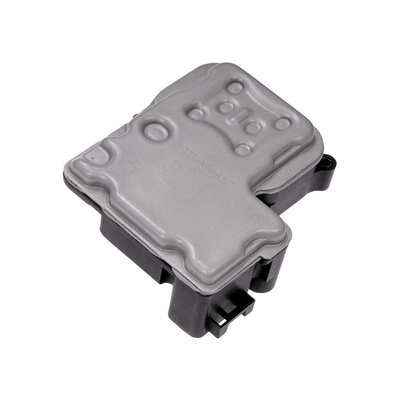
Shop the Parts Behind C1239
Below are the parts most often responsible for code C1239, ranked by how frequently each one is the actual culprit (per the diagnosis above). Tap any to see what we have for your vehicle.



The information in this article is provided for general reference and educational purposes only. Vehicle specifications, procedures, and part compatibility can vary by production date, trim level, and region. Always consult your vehicle's factory service manual and verify part numbers before purchasing or performing repairs. Safety-critical components such as airbags, seat belts, and braking systems should be installed by a qualified professional.
- 🧭 Diagnostic Flowchart
- 🛍️ Shop This Part
- What Does C1239 Mean?
- Can I Drive With C1239?
- Common Causes
- Symptoms
- Common Fixes & Costs
- DIY vs Professional
- Used vs. New Parts: Buying Guide
- What Happens If You Wait — Timeline
- Cost of Not Fixing It
- Diagnosis Steps
- When This Code Triggers (Freeze-Frame Conditions)
- Related Codes
- Climate & Environmental Factors
- How to Talk to a Mechanic About This Code
- Where to Take It: Dealer vs Independent vs Chain
- When to Walk Away From the Repair
- What Scan Tool You Need for This Code
- How to Clear the Code After You Fix It
- Will This Fail Emissions / State Inspection?
- Most Commonly Affected Vehicles
- Manufacturer-Specific Notes
- Real Owner Stories
- 2013 Toyota Prius at 126k miles - The Easy Fix
- 2010 Toyota Prius - The Misleading Repair
- Gen 3 Toyota Prius - The Corrosion Story
- 2014 Honda CR-V - The Post-Repair Nightmare
- How to Prevent This Code From Triggering
- Frequently Asked Questions
- What are the most common misdiagnosis mistakes for C1239?
- My scanner shows C1239, C1241, and C1467. Where do I start?
- The ABS light came on right after I bought a used car. Did the seller hide the problem?
- Can I just clear the C1239 code?
- Is it safe to drive with the ABS light on due to code C1239?
- Why did the light come on after I replaced my wheel bearing?
- The code says 'foreign object', but I cleaned the sensor and the light is still on. What's next?
- Can a low car battery cause code C1239?
- Key Takeaways
- 🎟️ Get 5% Off