

OBD-II Code C1243: ABS Pump Motor Stalled
What C1243 means, why it triggers, and how to fix it
- Code C1243 disables your Anti-lock Brake and Traction Control systems due to a detected fault in the ABS pump motor or its circuits.
- On 1999-2007 GM trucks, a corroded frame ground connection under the driver's door is the most frequent cause and costs under $10 to fix.
- Manufacturer definitions vary wildly: C1243 means a stalled pump motor on GM vehicles, but indicates a faulty deceleration sensor on Toyota models.
- Driving without ABS increases wet-surface stopping distances by up to 37%, making immediate repair critical for emergency handling.
What Does C1243 Mean?

Code C1243 means the Electronic Brake Control Module (EBCM) detected a problem with the Anti-lock Brake System (ABS) pump motor. Housed in the Brake Pressure Modulator Valve (BPMV), this motor rapidly pumps brake fluid to prevent wheel lockup during hard stops. During a startup or low-speed self-test, the computer detected the motor failed to run, ran too slowly, or drew excessive electrical current, indicating a 'stalled' state.
Technical definition: The official SAE/OBD-II definition for C1243 varies significantly by manufacturer. For most General Motors vehicles, it is defined as "BPMV Pump Motor Stalled". For many Toyota vehicles, it is defined as "Deceleration Sensor Stuck Malfunction". For modern Honda models, it indicates "Brake Booster Pressure Sensor 2 Signal High/Low Voltage". For certain Hyundai models, it points to a "Front Left Height Sensor" fault. In all cases, the primary control module detected a malfunction that disables the ABS and related safety systems.
Can I Drive With C1243?
Yes, But With Caution. Yes, but your Anti-lock Braking System (ABS), Traction Control (TCS), and stability control systems are disabled. Your conventional brakes still function, but the wheels will lock up during hard braking. This increases the risk of skidding and loss of steering control in an emergency stop. Loss of ABS increases stopping distances by up to 37% on wet surfaces. Address this safety risk promptly.
Common Causes

- Poor electrical connections or wiring issues (Very Common) — Corroded or loose ground wires are a major cause, particularly on GM trucks. The EBCM and pump motor require a solid ground; high resistance mimics a stalled motor. Damaged wiring or corroded connector pins also interrupt power supply or control signals.
- Seized or shorted ABS pump motor (Very Common) — The electric motor inside the ABS pump assembly (BPMV) seizes from internal wear or lack of use. Alternatively, the motor develops an internal short circuit, drawing excessive current (10+ amps vs. a healthy 4-5 amps). The EBCM detects this high current draw as a 'stalled' condition.
- Faulty Electronic Brake Control Module (EBCM) (Common) — The EBCM controls the ABS pump. Internal components, like the pump motor relay or its solder joints, fail over time. This prevents power from reaching the pump motor or causes the module to incorrectly sense a fault.
- Faulty Deceleration Sensor (Mainly Toyota) (Common) — On certain Toyota vehicles, this code points to a stuck deceleration sensor, which measures braking force. The ABS computer receives an unchanging signal from the sensor when it should fluctuate during deceleration.
- Low battery voltage or charging system issues (Less Common) — The ABS self-test runs at startup and requires full battery voltage. A weak battery, failing alternator, or faulty ignition switch provides insufficient power to the EBCM, causing the self-test to fail and trigger C1243.
- Blown ABS fuse (Less Common) — A failing or seized ABS pump motor draws too much electrical current and blows its dedicated high-amperage (40-60A) fuse. Replacing the fuse is a necessary first step, but it usually blows again until the pump is replaced.
- Contaminated or old brake fluid (Rare) — Old brake fluid absorbs moisture, corroding internal ABS modulator components and creating sludge. This contamination clogs the fine passages within the ABS modulator and causes the pump motor to bind.
Symptoms

- ABS warning light is on — The dashboard ABS light illuminates immediately, indicating the system is offline.
- Traction Control (TCS) or Stability Control (ESC) light is on — The TCS or ESC light illuminates because these systems rely on the ABS hardware to function.
- "Service Active Handling" or similar message — Vehicles like the Chevrolet Corvette display a specific text message on the driver information center instructing you to service the stability system.
- Wheels lock up during hard braking — In an emergency stop, the wheels lock up and skid. You lose the rapid pulsing in the brake pedal characteristic of a functioning ABS.
- Brake pedal feels different or unresponsive — Some drivers report a spongy or harder-to-press brake pedal when the ABS module fails.
Diagnostic Flowchart
Tap your situation to follow the diagnostic path that matches what you're seeing on this code.
Common Fixes & Costs
- Cleaning or Repairing Ground Connections — Parts: $0-$10, Labor: $50-$150, ~0.8 hr book time (DIY)
- Repairing the Electronic Brake Control Module (EBCM) — Parts: $0, Labor: $150-$300, ~1.5 hr book time (Intermediate)
- Replacing the ABS Pump / Brake Pressure Modulator Valve (BPMV) — Parts: $300-$1400, Labor: $300-$450, ~2.5 hr book time (Professional)
- Replacing the Deceleration Sensor (Toyota) — Parts: $150-$400, Labor: $100-$200, ~1.2 hr book time (Intermediate)
- Flushing the Brake System — Parts: $20-$40, Labor: $100-$150, ~1 hr book time (Intermediate)
Used vs. New Parts: Buying Guide
When a used part is worth it: A used ABS pump (BPMV) or a remanufactured EBCM is a cost-effective repair. Given the high cost of new OEM units ($1000+), a used or rebuilt part for $150-$400 makes financial sense.
Donor-vehicle mileage cap: roughly under 100000 miles for the part to have meaningful remaining life.
Donor quality checklist:
- Match part numbers exactly; many modules look identical but are not interchangeable.
- Buy from a reputable seller that offers a warranty (90 days or more).
- For EBCMs, using a mail-in repair service for your original module guarantees compatibility and requires no reprogramming.
- Avoid parts from vehicles in flood-damaged areas.
Decision logic:
- If The issue is a common internal EBCM failure (e.g., GM C1214) → Use a mail-in EBCM repair service. It is the most reliable and cost-effective solution.
- If The ABS pump motor is seized on a high-value or newer vehicle → Purchase a new or low-mileage used OEM part to ensure longevity.
- If The vehicle is over 10 years old and the budget is tight → A warrantied used ABS pump/module assembly from a reputable salvage yard is a practical choice.
Warranty tradeoff: Used parts typically come with a 30-90 day warranty. Remanufactured modules often have a 1-year or lifetime warranty. New OEM parts carry a manufacturer's warranty, typically 12 months.
Worst-case if a used part fails: $300-$600 if a used part fails after the warranty period, requiring repeat labor costs plus the cost of another replacement part.
What Happens If You Wait — Timeline
- Immediate: ABS, Traction Control, and Stability Control warning lights illuminate. The systems are disabled. The C1243 code is stored as a current fault. (MPG impact: 0%% · Added cost: $0)
- Ongoing: The vehicle operates with only base hydraulic brakes. In a panic stop, the wheels lock up, leading to a loss of steering control and significantly increased stopping distances. (MPG impact: 0%% · Added cost: Potential cost of an accident is unquantifiable.)
- 1-6+ months: In rare cases where the failure causes the ABS pump to run continuously, the pump motor burns out. This creates a parasitic battery drain that leaves you stranded. (MPG impact: 0%% · Added cost: $300-$1400 if the pump motor burns out, plus the cost of a new battery.)
- Long Term: The initial fault does not cause progressive damage to unrelated components. The primary cost remains the significant safety risk of driving without ABS. (MPG impact: 0%% · Added cost: $0)
Cost of Not Fixing It
- Immediate and Ongoing: Significantly increased risk of accident. Without ABS, wheels lock during a panic stop, causing a loss of steering control and longer stopping distances. (Added cost: Unquantifiable. The potential cost of an accident is the major risk.)
- 0-6 months: No direct progressive damage to other components. C1243 does not cause a chain reaction of failures in other parts of the vehicle. (Added cost: $0)
- 6+ months: Potential for secondary issues if the root cause is a widespread electrical problem, which affects other modules over time. However, the C1243 fault itself is contained within the brake system. (Added cost: Variable)
Diagnosis Steps

- Check the ABS Fuses
Locate the fuse box under the hood. Find the large 40-60 amp fuse for the ABS pump motor and smaller fuses for the control module. Visually inspect them and use a multimeter to test for continuity. Replace any blown fuses.
Tools: Fuse puller, multimeter (Beginner) - Inspect and Clean Ground Connections
Find the main ground wire for the EBCM/ABS pump. On many GM trucks, it is a black wire bolted to the frame rail under the driver's door. Unbolt the connection, clean the wire terminal and the frame contact point with a wire brush until shiny, and securely re-fasten it.
Tools: Socket set, wire brush (Beginner) - Attempt to 'Exercise' the ABS Pump
In a safe, empty, wet parking lot, accelerate to 15 mph and brake hard to force the ABS to activate. Repeat several times. This frees up a sticky pump motor that seized from inactivity.
Tools: None (Intermediate) - Inspect the EBCM Connector
Disconnect the vehicle's battery. Unplug the large electrical connector from the EBCM. Inspect the pins on both the module and the connector for green corrosion, moisture, or bent pins. Clean any corrosion with electrical contact cleaner and a small brush.
Tools: Socket set, electrical contact cleaner, small brush (Intermediate) - Use a Bi-Directional Scan Tool
Connect a professional scan tool to command the ABS pump motor and individual solenoids to activate. This safely 'exercises' the pump and reads manufacturer-specific data streams to view pump motor current draw. This definitively isolates a bad EBCM from a bad pump motor.
Tools: Bi-directional scan tool (Professional) - Manually Test the ABS Pump Motor
With the EBCM connector unplugged, use fused jumper wires to briefly apply 12V directly from the car battery to the power and ground pins for the pump motor in the harness connector. Apply power in 1-2 second bursts. If it doesn't run, the pump motor failed.
Tools: Fused jumper wires, wiring diagram (Advanced) - PRO TIP: Test Pump Motor Resistance and Current Draw
Use an in-line ammeter or a DC amp clamp while manually powering the motor. A healthy motor draws 4-5 amps. A seized or shorted motor draws over 10 amps, often blowing the fuse on your jumper wire.
Tools: DC amp clamp or ammeter, fused jumper wires (Advanced) - PRO TIP: Test EBCM Ground Circuit Resistance
Using a multimeter set to Ohms, measure the resistance between the EBCM ground pin on the harness connector and the negative battery terminal. The reading must be less than 1.0 Ohm. Higher readings indicate excessive resistance, a common cause of C1243 on GM trucks.
Tools: Multimeter, wiring diagram (Advanced) - PRO TIP: Test Deceleration Sensor (Toyota)
Locate the deceleration sensor under the center console. Remove it and apply 4.5V from three series-connected 1.5V batteries. Measure the voltage at the signal pin (GL1). It should be 2.25V when level, and fluctuate when tilted. A stuck voltage indicates a faulty sensor.
Tools: Multimeter, 3x 1.5V batteries, wiring diagram (Advanced)
When This Code Triggers (Freeze-Frame Conditions)
- Vehicle Speed: 5-15 mph (The code is set during the ABS self-test, which occurs at initial vehicle startup and low-speed movement.)
- System Voltage: 11.5-14.5V (The EBCM commands the pump motor ON and expects to see a specific current draw and motor speed.)
- Brake Pedal: Not Applied (The initial self-test that triggers C1243 runs without any driver input, just after starting the car and beginning to move.)
- Ignition Cycles: 0-50 (The code is stored as a current DTC. It clears on its own after 50 ignition cycles without the fault reoccurring, but this is unlikely without a repair.)
Related Codes
- C1214 — This code for "Solenoid Valve Relay Contact or Coil Circuit Open" is extremely common on GM vehicles with Delphi ABS modules. It often appears alongside C1243 and points strongly to an internal failure of the EBCM itself.
- C1242 — Indicates a pump motor circuit fault detected when the EBCM commands the pump motor OFF. C1243 is a mechanical/performance fault detected when the EBCM commands the pump motor ON.
- C0265 or C0267 — These codes point to an "EBCM Relay Circuit" or "Pump Motor Circuit Open/Shorted" on GM vehicles. They are often caused by the same ground issue on GM trucks that triggers C1243.
- U1016 / U1064 — Communication codes indicating a loss of connection with other vehicle modules. If you have U-codes along with C1243, the EBCM itself is the primary suspect.
Climate & Environmental Factors
- Humidity and Moisture: High humidity or direct water intrusion causes corrosion on the EBCM's circuit board and connector pins, creating high resistance or short circuits.
- Heat Cycles: The EBCM is exposed to constant engine bay heating and cooling cycles. This thermal stress cracks solder joints on the internal circuit board, particularly the power relay joints.
- Road Salt and Grime: Road salt severely corrodes external components, especially the main EBCM ground connection on the vehicle's frame. This increases electrical resistance and triggers C1243 on GM trucks.
- Inactivity: The ABS pump motor seizes from lack of use. Vehicles that sit for long periods or are driven gently without activating the ABS are highly susceptible.
How to Talk to a Mechanic About This Code
Say this: "I have an ABS and traction control light on, and my scanner shows a C1243 code. I'd like to schedule a diagnostic. Based on my vehicle's make, I suspect it is a bad ground, a seized pump, or the EBCM. Can you start by checking the specific ground connection and testing the pump motor's current draw before recommending a full module replacement?"
This signals you are an informed consumer. It directs the mechanic to the most likely and cheapest fixes first and requests specific tests to prevent them from immediately defaulting to replacing the entire ABS assembly.
Avoid saying:
- 'My ABS light is on, can you fix it?' (This is too vague and invites a shop to replace the most expensive part first.)
- 'Just do whatever it takes to get the light off.'
- 'I think I need a new ABS module.' (Don't diagnose for them; guide their diagnosis.)
Questions to ask before authorizing the repair:
- What were the results of the ground resistance test?
- What was the amperage draw when you manually tested the pump motor?
- If you are recommending a full ABS module replacement, can you confirm the pump motor is seized and not just the control module (EBCM)?
- Does the recommended repair require an automated ABS bleed procedure with a scan tool, and is that included in the labor cost?
- What is the warranty on the replacement part and your labor?
Where to Take It: Dealer vs Independent vs Chain
- Dealer:
Recommended for newer, complex, or warranty cases. For most out-of-warranty C1243 issues, they are the most expensive option.
Best for: Vehicles still under warranty., Newer vehicles where manufacturer-specific scan tools and procedures are critical., Complex cases involving multiple control modules or communication errors.
Downsides: Highest labor rates., More likely to replace an entire assembly ($1500+) rather than performing a component-level repair. (Typical cost: +50% vs. baseline) - Independent Shop:
Best fit for most common C1243 scenarios. Ask if they have experience with ABS module issues and possess a scanner with an ABS bleed function.
Best for: Out-of-warranty vehicles, especially common models with well-known C1243 fixes., Shops specializing in a specific make., Cost-conscious owners open to using remanufactured or used parts.
Downsides: Quality and diagnostic capabilities vary widely. Ensure the shop has a modern, bi-directional scan tool capable of ABS diagnostics and bleeding., May lack experience with specific quirks (e.g., knowing C1243 on a Toyota is a deceleration sensor). (Typical cost: +0% vs. baseline) - Chain Shop:
AVOID for C1243 diagnosis and repair. They are generally not equipped for the in-depth electrical and module-specific diagnostics this code requires.
Best for: Simple, related maintenance like a brake fluid flush or checking fuses.
Downsides: Technician skill varies dramatically., Often lack the advanced bi-directional scan tools required for proper ABS diagnosis and bleeding procedures., High pressure to upsell leads to incorrect diagnosis and unnecessary parts replacement. (Typical cost: -10% vs. baseline)
When to Walk Away From the Repair
If the estimated repair cost for the C1243 fault exceeds 40-50% of your car's private-party value, reconsider. This is a major safety system and cannot be ignored if you plan to keep driving the car.
- Car worth $4000, fix is $1800: Borderline. The repair is 45% of the car's value. Get a second opinion, and explore cost-saving options like a used part or mail-in EBCM repair before proceeding.
- Car worth $15000, fix is $1200: Fix it. The repair cost is well below the threshold and restores a critical safety feature.
- Car worth $3000, fix is $1800: Walk away. The repair cost is 60% of the car's value. It is not economically sensible to proceed.
What Scan Tool You Need for This Code
Minimum: An OBD-II scanner that reads and clears codes from the ABS/SRS system. A basic engine-only code reader will NOT see C1243.
A $20 engine code reader is blind to the ABS module. You need a tool that communicates with the brake control computer to know this code is present.
Budget: Autel AutoLink AL619 / Foxwell NT630 Plus (~$90) — Reads and clears ABS trouble codes, allowing you to see the C1243 code and confirm if it returns after a repair. It displays live data for wheel speed sensors.
Mid-range: Innova 5610 / XTOOL A30M / Foxwell NT809 (~$350) — Full bi-directional control. This allows you to command the ABS pump motor to turn on, helping to free a stuck motor or confirm it is dead. It is required for the 'Automated Bleed' function necessary after replacing an ABS pump.
How to Clear the Code After You Fix It
- Perform the necessary mechanical or electrical repair.
- Use an OBD-II scan tool to clear the code from the ABS module.
- Start the vehicle and drive it past the self-test speed (typically 5-15 mph).
Drive cycle (~5 minutes): After clearing the code, start the engine and drive the vehicle. The ABS self-test runs automatically when the vehicle exceeds 10 mph. If the repair was successful, the ABS light extinguishes and does not return. Forcing an ABS stop in a safe area confirms functionality.
Readiness monitors affected: None
Watch out for:
- Clearing the code without fixing the underlying issue results in the code returning immediately during the next self-test.
- Disconnecting the battery clears the code but does not fix the problem.
- Forgetting to use a scan tool to perform the automated ABS bleed procedure after replacing a pump leaves air in the system.
Will This Fail Emissions / State Inspection?
No — by itself this code doesn't fail OBD inspection (but it can keep readiness monitors from setting, which causes a separate fail).
- California: An illuminated ABS light does NOT cause a failure of the California Smog Check. The emissions inspection is separate from the safety inspection.
- New York: New York requires an annual safety inspection. An illuminated ABS warning light is a cause for failure in NYS.
- Texas: For vehicles that still require a safety inspection, an illuminated ABS light is NOT a cause for rejection, though a lit primary 'Brake' warning light is.
Most Commonly Affected Vehicles
- Chevrolet Corvette (C5) (1997-2004) — Extremely common. The code almost always points to a seized BPMV pump motor or a failed EBCM. The pump motor often seizes from lack of use.
- Chevrolet / GMC Silverado, Sierra, Tahoe, Yukon, Suburban (1999-2007) — Highly susceptible to poor EBCM ground connections. Locate and repair the ground connection on the frame rail beneath the driver-side door, as specified in GM TSB #04-05-25-002E.
- Toyota Hilux, Matrix, Land Cruiser (2005-2015) — C1243 often means "Deceleration Sensor Stuck," pointing to a faulty sensor rather than the ABS pump motor. Diagnosis must start with the sensor.
- Honda Civic (2022-Present) — C1243-12 or C1243-14 indicates a fault with the "Brake Booster Pressure Sensor 2," related to the electronic brake booster system, requiring a completely different diagnostic path.
- Hyundai Genesis (2008-2016) — For the first generation Genesis sedan with Electronic Control Suspension, code C1243 points to a "Front Left Height Sensor" malfunction and is unrelated to the braking system.
- Ford F-150 (1999-2004) — These trucks use a Kelsey-Hayes ABS module prone to failure, commonly with the ABS pump running constantly. Repair services for these specific modules are available.
- Cadillac Deville, Seville (2000-2005) — Shares Delphi ABS hardware with other GM vehicles, making it susceptible to EBCM and pump motor failures. Common codes include C1214 and C1243.
- Pontiac Grand Prix, Bonneville (2000-2008) — These models use a Delphi DBC-7 ABS system. EBCM failure is common, leading to various ABS codes including C1214 and C1243.
- Buick LeSabre, Rendezvous (2000-2007) — Commonly uses the Delphi ABS 5.3 or DBC-7 module prone to internal failures that trigger this code. EBCM repair is a very common fix.
Manufacturer-Specific Notes
- General Motors (especially Chevrolet Corvette): The code is almost synonymous with a seized ABS pump motor due to the car sitting for long periods. A common DIY fix involves manually 'exercising' the pump to un-stick it.
- General Motors (Trucks/SUVs): A widespread issue with a poor EBCM ground connection causes C1243. TSB #04-05-25-002E provides a specific procedure for cleaning the ground on the frame under the driver's side door. This must be the first check.
- Toyota: C1243 is defined as "Deceleration Sensor Stuck Malfunction." The diagnostic process must focus first on testing the deceleration sensor and its wiring, not the ABS pump.
- Honda: On newer models (2022+), C1243 refers to a "Brake Booster Pressure Sensor" fault related to the electronic brake booster and vacuum pump system.
- Hyundai: On vehicles with electronic suspension, C1243 indicates a "Front Left Height Sensor" fault and has no connection to the braking system.
- Suzuki: On some Suzuki models, C1243 refers to a "Left Actuator" failure related to the electronic parking brake system.
Real Owner Stories
2000 Chevrolet Corvette C5 with intermittent C1243
Owner of a low-mileage Corvette experienced intermittent 'Service ABS' and 'Service Active Handling' lights. Code C1243 appeared after hard braking or activating traction control.
Outcome: The owner replaced the entire ABS pump/motor assembly (BPMV) with a new unit. This permanently fixed the code and restored ABS/TCS function.
Lesson: A spinning pump motor is not necessarily healthy. An internally shorted motor runs but draws excessive current, which the EBCM correctly flags as a 'stalled' condition.
2004 Chevrolet Silverado with ABS light on
Owner experienced an ABS light and found codes C0265 and C1243, a common issue on 1999-2007 GM trucks.
Outcome: The owner cleaned the main EBCM ground wire on the frame rail under the driver's side door to bare metal. This simple, no-cost repair permanently cleared the codes.
Lesson: On GM trucks and SUVs, always inspect and clean the EBCM ground connection on the frame rail before replacing any parts. It is the most common and cheapest fix.
2010 Toyota Hilux with ABS and VSC lights on
The ABS and Vehicle Stability Control (VSC) warning lights illuminated. A scan revealed code C1243, meaning 'Deceleration Sensor Stuck Malfunction'.
Outcome: The faulty deceleration sensor was replaced. After clearing the codes, the ABS and VSC lights went out and normal system function was restored.
Lesson: The same code means different things on different brands. For a Toyota, C1243 points directly to the deceleration sensor, not the ABS pump motor.
How to Prevent This Code From Triggering
- Perform an ABS 'Exercise' Stop (Every 3-6 months) — In a safe, empty parking lot, brake hard enough to activate the ABS for a few seconds. This spins the pump motor and cycles the valves, preventing them from seizing due to inactivity.
- Flush Brake Fluid (Every 2-3 years, regardless of mileage) — Brake fluid absorbs moisture from the air, leading to internal corrosion of the delicate ABS modulator valves and pump. Fresh fluid keeps the boiling point high and corrosion low.
- Inspect and Protect Frame Ground Connections (Annually, especially in rust-prone climates) — The main EBCM ground on the vehicle frame is highly susceptible to corrosion from road salt. Cleaning this connection and applying dielectric grease prevents high resistance that triggers false C1243 codes.
- Maintain a Healthy Battery and Charging System (Ongoing) — The ABS self-test requires strong, stable voltage. A weak battery causes voltage to drop during the test, leading the EBCM to misinterpret the pump's performance and set a false code.
Frequently Asked Questions
Can I just clear the C1243 code?
You can clear the code with a scan tool, but it will return during the next ABS self-test at startup or around 10 mph. Clearing the code does not fix the underlying mechanical or electrical problem.
Will I fail a state inspection with the C1243 code and ABS light on?
This depends on your local jurisdiction. In states like Texas and Pennsylvania, an ABS light does not cause an inspection failure if the primary brakes work. In states with strict safety inspections like New York, an illuminated ABS light is an automatic failure.
Why did the C1243 code appear on my low-mileage car?
This code frequently triggers on cars driven infrequently. The ABS pump motor seizes from inactivity. Regularly driving the car and occasionally braking hard on a safe surface prevents this.
My ABS pump runs when I apply 12V directly, so the pump is good, right?
Not necessarily. The EBCM monitors the pump motor's speed and current draw. A shorted motor spins when jumped but draws over 10 amps, which the EBCM flags as a stall.
What is the difference between repairing the EBCM and replacing the BPMV?
The EBCM is the electronic control module, while the BPMV is the aluminum hydraulic block containing the motor and valves. They bolt together into one assembly. Replacing the EBCM will not fix a seized motor inside the BPMV.
Why does the C1243 code sometimes appear after hitting a bump?
Intermittent codes triggered by bumps strongly suggest a poor electrical connection. The most likely culprits are a loose frame ground wire, a loose EBCM connector, or internally broken wiring.
Is it hard to replace an ABS module?
Replacing just the electronic EBCM is a DIY-friendly job requiring basic hand tools. Replacing the entire ABS pump assembly requires opening hydraulic brake lines and performing a specialized automated bleed procedure with a bi-directional scan tool.
Can a weak or new battery cause a C1243 code?
Yes. The ABS self-test draws significant current. If battery voltage drops too low during this test, the EBCM misinterprets the pump's performance and sets a false C1243 code.
Key Takeaways
- Code C1243 disables your Anti-lock Brake and Traction Control systems due to a detected fault in the ABS pump motor or its circuits.
- On 1999-2007 GM trucks, a corroded frame ground connection under the driver's door is the most frequent cause and costs under $10 to fix.
- Manufacturer definitions vary wildly: C1243 means a stalled pump motor on GM vehicles, but indicates a faulty deceleration sensor on Toyota models.
- Driving without ABS increases wet-surface stopping distances by up to 37%, making immediate repair critical for emergency handling.
Helpful Videos
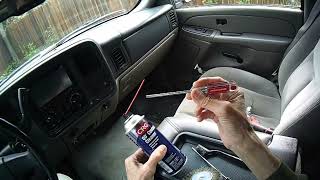
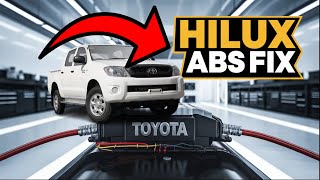
Shop the Parts Behind C1243
Below are the parts most often responsible for code C1243, ranked by how frequently each one is the actual culprit (per the diagnosis above). Tap any to see what we have for your vehicle.
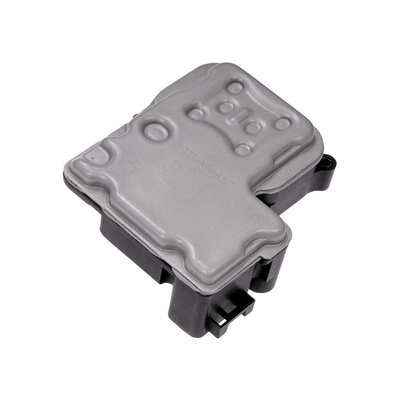
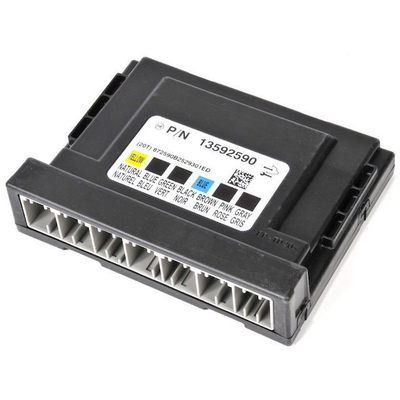


The information in this article is provided for general reference and educational purposes only. Vehicle specifications, procedures, and part compatibility can vary by production date, trim level, and region. Always consult your vehicle's factory service manual and verify part numbers before purchasing or performing repairs. Safety-critical components such as airbags, seat belts, and braking systems should be installed by a qualified professional.
- 🧭 Diagnostic Flowchart
- 🎬 Helpful Videos
- 🛍️ Shop This Part
- What Does C1243 Mean?
- Can I Drive With C1243?
- Common Causes
- Symptoms
- Common Fixes & Costs
- Used vs. New Parts: Buying Guide
- What Happens If You Wait — Timeline
- Cost of Not Fixing It
- Diagnosis Steps
- When This Code Triggers (Freeze-Frame Conditions)
- Related Codes
- Climate & Environmental Factors
- How to Talk to a Mechanic About This Code
- Where to Take It: Dealer vs Independent vs Chain
- When to Walk Away From the Repair
- What Scan Tool You Need for This Code
- How to Clear the Code After You Fix It
- Will This Fail Emissions / State Inspection?
- Most Commonly Affected Vehicles
- Manufacturer-Specific Notes
- Real Owner Stories
- 2000 Chevrolet Corvette C5 with intermittent C1243
- 2004 Chevrolet Silverado with ABS light on
- 2010 Toyota Hilux with ABS and VSC lights on
- How to Prevent This Code From Triggering
- Frequently Asked Questions
- Can I just clear the C1243 code?
- Will I fail a state inspection with the C1243 code and ABS light on?
- Why did the C1243 code appear on my low-mileage car?
- My ABS pump runs when I apply 12V directly, so the pump is good, right?
- What is the difference between repairing the EBCM and replacing the BPMV?
- Why does the C1243 code sometimes appear after hitting a bump?
- Is it hard to replace an ABS module?
- Can a weak or new battery cause a C1243 code?
- Key Takeaways
- 🎟️ Get 5% Off