

OBD-II Code C1246: Master Cylinder Pressure Sensor Failure
The Ultimate Guide to Diagnosing and Fixing C1246
- Code C1246 disables your Anti-lock Braking (ABS) and Stability Control (VSC) systems due to a master cylinder pressure sensor failure, significantly increasing emergency stopping distances.
- On 2004-2015 Toyota and Lexus models, this code almost always requires replacing the entire $1,200+ ABS actuator assembly because the sensor is permanently integrated inside it.
- Diagnose the fault by monitoring the 'Master Cylinder Pressure Sensor' live data on an advanced OBD-II scanner; a voltage stuck at 0.49V or unresponsive to pedal presses confirms a dead sensor.
- Never authorize a standard master cylinder replacement for this code without verifying live sensor data, as this is a common $500+ misdiagnosis.
- After replacing the ABS actuator, you must perform a 'Zero Point Calibration' using a bi-directional scan tool, or the C1246 code will immediately return.
What Does C1246 Mean?

Code C1246 indicates the Skid Control ECU detected a critical malfunction in the master cylinder pressure sensor circuit. This sensor converts hydraulic brake pressure into a voltage signal. When this signal is lost, illogical, or conflicts with the stop light switch, the system disables the ABS and VSC as a fail-safe.
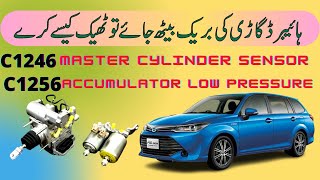
Technical definition: The SAE/ISO definition is "Master Cylinder Pressure Sensor Circuit Malfunction 🎬 See a real-world diagnosis of the C1246 circuit fault.". The ECU triggers this fault when the sensor's voltage signal is missing, erratic, or stuck. For example, the code sets if the voltage shows a change of less than 0.005V for 30 seconds while driving above 4 mph, indicating a frozen sensor.
Can I Drive With C1246?

Yes, but not recommended Driving is not recommended. Your Anti-lock Braking (ABS) and Vehicle Stability Control (VSC) systems are completely disabled, drastically increasing the risk of skidding in an emergency. Some failure modes cause the brakes to drag, leading to severe overheating and component damage. Drive cautiously only to a nearby repair facility.
Common Causes
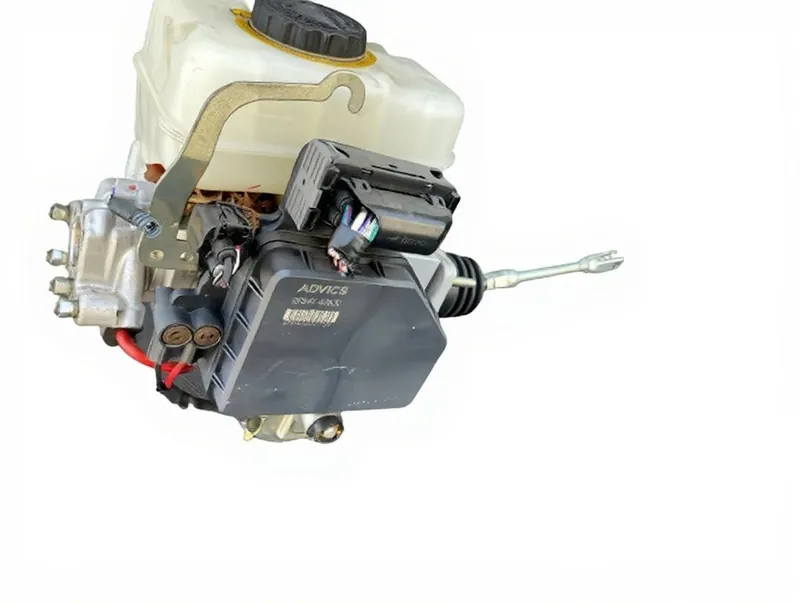
- Faulty ABS Actuator / Control Module (Very Common) — On most affected vehicles (especially Toyota and Lexus), the pressure sensor is a non-serviceable part permanently integrated into the ABS actuator assembly. An internal electronic or hydraulic failure within this sealed unit is the root cause, requiring replacement of the entire assembly.
- Failed Master Cylinder Pressure Sensor (Common) — On vehicles where the sensor is a separate, external component, it fails due to an internal short or a ruptured diaphragm preventing it from reading pressure correctly.
- Internal Master Cylinder Fluid Bypass (Less Common) — An internal failure allows brake fluid to bypass the primary seals, causing the brake pedal to slowly sink to the floor under steady pressure. This internal leak creates pressure readings inconsistent with pedal position, triggering the code.
- Contaminated or Incorrect Brake Fluid (Less Common) — Old, moisture-contaminated brake fluid degrades internal seals and destroys the highly sensitive electronic components of the ABS actuator and pressure sensor.
- Wiring or Connector Damage (Less Common) — The wiring harness leading to the ABS module suffers from corrosion at the connector pins, fraying from vibration, or rodent damage. A poor ground connection causes erratic sensor readings.
- ECU Logic or Calibration Issue (Rare) — After replacing brake components or disconnecting the battery, the Skid Control ECU requires a 'Zero Point Calibration' to re-learn baseline sensor values. Missing this procedure causes the ECU to misinterpret normal readings as a fault.
- Faulty Stop Light Switch (Rare) — The ECU compares the pressure sensor reading with the stop light switch signal. If the switch fails and reports the pedal is released while the pressure sensor reads high pressure, the ECU flags a C1246 conflict.
- Binding ABS Motor Pack Gear (Older GM) (Rare) — On 1993-1998 GM vehicles, high humidity causes the ABS motor pack gear to bind. GM released an updated pinion with a Teflon insert to fix this specific mechanical issue.
Symptoms

- ABS, TRAC, and VSC Warning Lights On — The Anti-lock Braking System, Traction Control, and Vehicle Stability Control warning lights illuminate simultaneously and stay on, confirming these safety systems are disabled.
- Spongy, Sinking, or Inconsistent Brake Pedal — The brake pedal feels unusually soft, slowly sinks to the floorboard when held at a stoplight, or becomes unpredictably hard to press.
- Brakes Feel Like They Are Dragging — The fault traps hydraulic pressure, partially applying the brakes even after releasing the pedal. The vehicle feels sluggish, as if driving with the parking brake engaged, leading to rapid brake overheating.
- Brake Pedal Pushes Back — After pressing the brake pedal, it is slow to return to its resting position. On hybrid models, drivers often feel the pedal actively push back against their foot.
- Audible Buzzing from ABS Pump — An internal failure causes the ABS pump motor to run continuously or cycle rapidly, creating a loud buzzing sound from the engine bay.
Diagnostic Flowchart
Tap your situation to follow the diagnostic path that matches what you're seeing on this code.
Common Fixes & Costs
- Replace ABS Actuator Assembly — Parts: $1200-$2500, Labor: $300-$600, ~3.0 hr book time (Professional)
- Repair/Remanufacture ABS Module — Parts: $250-$800, Labor: $300-$600, ~3.0 hr book time (Intermediate)
- Replace Master Cylinder Pressure Sensor — Parts: $150-$400, Labor: $100-$200, ~1.5 hr book time (Intermediate)
- Replace Master Cylinder — Parts: $300-$500, Labor: $400-$600, ~2.5 hr book time (Professional)
- Perform Full Brake Fluid Flush — Parts: $20-$50, Labor: $100-$180, ~1.0 hr book time (Beginner)
Used vs. New Parts: Buying Guide
When a used part is worth it: A used ABS actuator makes sense for older vehicles (>150k miles) where a new $2,000 part exceeds the car's value.
Donor-vehicle mileage cap: roughly under 100000 miles for the part to have meaningful remaining life.
Donor quality checklist:
- Match the part number exactly; superseded numbers rarely interchange.
- Buy from a salvage yard offering a 30-90 day warranty.
- Ensure the donor vehicle was salvaged for accident damage, not electronic failure.
Decision logic:
- If Vehicle is newer or has low mileage → Buy a new OEM or remanufactured part for reliability and warranty.
- If Budget is the primary concern on an older vehicle → A tested, used part is viable, but carries the risk of premature failure and repeat labor costs.
- If The part is for a Toyota hybrid (like a Prius) → Strongly favor a new or remanufactured part. Used hybrid actuators have an exceptionally high failure rate.
Warranty tradeoff: Used parts have a 30-90 day warranty. New OEM parts have a 1-year warranty. Remanufactured units often include a lifetime warranty.
Worst-case if a used part fails: $400-$800 if a used part fails after the warranty period, requiring repeat labor costs.
What Happens If You Wait — Timeline
- Immediate: Code C1246 sets. ABS, VSC, and TRAC warning lights illuminate. Primary safety systems for emergency braking are disabled. (MPG impact: 0%% · Added cost: $0)
- 0-1 month (if brake drag occurs): The failed module traps hydraulic pressure, causing brake pads to constantly rub against the rotors. The car feels sluggish. (MPG impact: 5-15%% · Added cost: $50-$150 in wasted fuel.)
- 1-3 months (with continuous brake drag): Constant friction overheats the brake rotors, warping them and glazing the brake pads. This permanently ruins the brakes on the affected wheels. (MPG impact: 10-20%% · Added cost: $300-$800 to replace destroyed pads and rotors.)
- 3+ months (with severe brake drag): Extreme heat transfers to the wheel hub, cooking the grease inside the wheel bearing and destroying the brake caliper. (MPG impact: 15-25%% · Added cost: $800-$1800+ to replace pads, rotors, wheel bearings, and calipers.)
Cost of Not Fixing It
- Immediate: No ABS or Vehicle Stability Control (VSC). This is a major safety risk, significantly increasing the chance of skidding in an emergency stop. (Added cost: N/A)
- 0-1 month: If brake drag occurs, expect accelerated wear of brake pads and rotors. Fuel economy decreases due to the engine working against the brakes. (Added cost: $400-$900)
- 1-6 months: Continuous brake drag destroys the brake pads and rotors. Excessive heat damages wheel bearings and hubs, requiring extensive repairs. (Added cost: $800-$1800+)
Diagnosis Steps

- Read and Document All Fault Codes
Use an OBD-II scanner capable of reading ABS/Chassis codes. Confirm C1246 is present and document any companion codes (e.g., C1223, C1256, C1241). Do not clear the codes yet.
Tools: OBD-II Scanner (with ABS capability) (Beginner) - Analyze Live Data - The Decisive Step
Access the ABS live data stream on your scanner. Monitor the 'Master Cylinder Pressure Sensor' voltage. With the pedal released, voltage should be stable between 0.3V and 0.9V. As you press the pedal, voltage must increase smoothly to 3.0V+. A reading stuck at 0V, 5V, or unresponsive to pressure confirms a dead sensor circuit.
Tools: Advanced OBD-II Scanner (Intermediate) - Correlate Pressure Sensor with Stop Light Switch
Monitor both the 'Pressure Sensor' voltage and 'Stop Light Switch' status in live data. The switch must change to 'ON' the instant you touch the pedal, before significant pressure voltage builds. A mismatch points to a faulty stop light switch triggering the C1246 code.
Tools: Advanced OBD-II Scanner (Intermediate) - Inspect Brake Fluid Level and Condition
Check the master cylinder reservoir. The fluid should be clear or light amber. Dark, murky fluid with debris indicates severe contamination requiring a full system flush.
Tools: Flashlight (Beginner) - Visually Inspect Wiring and Connectors
Unplug the main connector at the ABS actuator module. Check for green corrosion, bent pins, or moisture intrusion. Inspect the harness for chafing or rodent damage.
Tools: Flashlight, Inspection Mirror (Beginner) - Advanced: Check for Specific Voltage Fault Triggers
Verify if the sensor voltage is outside the factory range (e.g., below 0.14V or above 4.85V). A reading above 0.86V for 5 seconds with the brake pedal released is a definitive trigger for internal failure.
Tools: Advanced OBD-II Scanner (Advanced) - Advanced: Verify Sensor Reference Voltage
Check the sensor's reference voltage (often labeled 'VCM') in live data. It should be a stable 4.4V to 5.6V. If it fluctuates wildly, the ECU or wiring is failing, not the sensor.
Tools: Advanced OBD-II Scanner (Advanced) - Advanced: Pressure-to-Voltage Correlation Check
Attach a mechanical brake pressure gauge. Compare actual hydraulic pressure to the scanner's voltage reading. At 853 PSI, voltage should be 1.57V - 1.83V. Significant deviation confirms a faulty sensor.
Tools: Advanced OBD-II Scanner, Brake Pressure Gauge (Advanced) - Test Sensor Circuit Integrity
If the sensor is a separate external component, disconnect it. Use a multimeter to check for continuity, short-to-ground, and short-to-power on the signal, power, and ground wires between the sensor and ABS module.
Tools: Digital Multimeter, Vehicle-specific Wiring Diagram (Advanced) - Perform Zero Point Calibration
If live data is normal but the code persists, use a bi-directional scanner to perform a Zero Point Calibration. This resets the learned baseline values for the pressure and yaw sensors.
Tools: Bi-directional Scan Tool (Advanced)
When This Code Triggers (Freeze-Frame Conditions)
- Vehicle Speed: > 4 mph (The code sets when voltage is stuck for 30 seconds while driving above 4 mph (7 km/h).)
- Brake Pedal Status: Released (The fault logs if sensor voltage exceeds 0.86V for 5 seconds while the stop light switch is OFF.)
- Brake Pedal Action: Hard, long press (The fault frequently triggers after a long, steady, and hard press on the brake pedal at a traffic light.)
- System Voltage: 9.5V - 17.2V (The ECU only monitors the sensor circuit when main ignition voltage is within normal operating range.)
Related Codes
- C1223 — 'ABS Control System Malfunction'. When paired with C1246, it confirms the fault is internal to the ABS control module, requiring full replacement.
- C1256 — 'Accumulator Low Pressure'. A frequent companion on hybrids. C1256 means the system cannot store pressure; C1246 means it cannot read pressure. Together, they definitively condemn the brake actuator unit.
- C1281 — 'Master Cylinder Pressure Sensor Output Malfunction'. This is a Test Mode DTC triggered only during a specific scan tool diagnostic test. It serves as 100% validation of the C1246 fault.
- C1201 — 'Engine Control System Malfunction'. A secondary code indicating the ABS module has notified the engine computer of a critical fault. It clears once the primary ABS issue is fixed.
Climate & Environmental Factors
- Humidity: On 1993-1998 GM vehicles, high humidity aggravates the binding of the ABS motor pack gear. For modern Toyota/Lexus failures, climate has no documented effect; failures stem from age and internal wear.
How to Talk to a Mechanic About This Code
Say this: "I have a C1246 code with the ABS and VSC lights on. Please make sure the technician checks the live data from the master cylinder pressure sensor to see if its voltage is stuck before recommending any parts."
This directs the mechanic to the key diagnostic test and prevents the common misdiagnosis of replacing a standard master cylinder instead of the integrated ABS actuator.
Avoid saying:
- 'My ABS light is on, can you fix it?'
- 'I think I need a new master cylinder.'
- 'Just do whatever it takes to fix the light.'
Questions to ask before authorizing the repair:
- What did the live data from the pressure sensor show when you pressed the brake pedal? Was the voltage stuck?
- If you recommend replacing the ABS actuator, can you confirm the pressure sensor isn't sold separately for my vehicle?
- Does your estimate include a full brake system bleed and the electronic Zero Point Calibration?
- What is the warranty on the new or remanufactured actuator and your labor?
Where to Take It: Dealer vs Independent vs Chain
- Dealer:
A safe but very expensive option. Choose the dealer ONLY if you suspect your vehicle is covered by an active warranty extension.
Best for: Vehicles covered by a manufacturer's warranty extension program (like Toyota's 20TE07 or 24TE01)., Complex diagnostics requiring factory Techstream tools.
Downsides: Highest cost, often 1.5-2x the labor rate of an independent shop., Will only install expensive new OEM parts. (Typical cost: +75% vs. baseline) - Independent Shop:
Best overall fit. A qualified independent shop provides cost-effective remanufactured options and has the scan tools for the required calibration.
Best for: Out-of-warranty vehicles where cost is a major factor., Brand-specific specialists (e.g., a Toyota/Lexus shop).
Downsides: Quality varies; you must vet the shop's reviews., May lack the specific scan tool required for the Zero Point Calibration. (Typical cost: +0% vs. baseline) - Chain Shop:
AVOID. This is a complex electronic and hydraulic repair beyond the scope of most chain shops.
Best for: Simple, routine maintenance like oil changes or basic brake pads.
Downsides: Technician skill is highly variable., Lacks the advanced, bi-directional scan tools required for ABS bleeding and calibration., High risk of misdiagnosis. (Typical cost: -10% vs. baseline)
When to Walk Away From the Repair
If the total estimated repair cost for the ABS actuator exceeds 40-50% of your car's current private-party market value, seriously consider selling the car as-is.
- Car worth $4000, fix is $2200: Walk away. The repair cost is over 50% of the car's value. It is not economically sensible to proceed.
- Car worth $12000, fix is $2500: Fix it. The repair cost is 20% of the vehicle's value, which is reasonable for a critical safety system.
- Car worth $2500, fix is $1800: Walk away. The repair cost is nearly 75% of the car's value. Put the money towards a replacement vehicle.
What Scan Tool You Need for This Code
Minimum: A scanner that reads ABS codes AND displays LIVE DATA from the ABS control module.
A basic $20 engine code reader cannot access the ABS module. It will not see the C1246 code or the live pressure sensor voltage, making diagnosis impossible.
Budget: Topdon Elite, Zurich ZR13S (~$99) — Reads and clears C1246 and displays live voltage data from the pressure sensor to confirm the diagnosis.
Mid-range: Foxwell NT510 Elite, BlueDriver Pro (~$120) — Offers full ABS live data streaming and includes bi-directional controls needed for the post-repair 'ABS Bleed' function.
Professional: Autel MaxiCOM MK808, LAUNCH X431 (~$500-1200) — Provides OEM-level bidirectional control. Essential for performing the mandatory 'Zero Point Calibration' required after actuator replacement.
Rent vs buy: Buy. Auto parts stores only lend basic engine code readers. A DIY repair requires a bi-directional tool with ABS bleed and calibration functions. If you only want a diagnosis, paying a shop's one-hour fee is cheaper than buying a pro scanner.
How to Clear the Code After You Fix It
- Use an ABS-capable OBD-II scan tool to clear the fault codes.
- Perform a 'Zero Point Calibration' if the ABS actuator was replaced.
- Perform a thorough brake bleed procedure using a scan tool.
- Conduct a test drive to confirm the warning lights remain off.
Drive cycle (~15 minutes): Drive the vehicle above 20 mph and perform several normal braking events. ABS systems verify the repair and turn off the warning light immediately if the underlying fault is resolved.
Readiness monitors affected: Not applicable for ABS codes
Watch out for:
- Using a basic $20 code reader that cannot access or clear ABS-specific 'C' codes.
- Forgetting to perform the mandatory 'Zero Point Calibration' after replacing the ABS actuator.
- Disconnecting the battery to clear the light; it will return immediately once the ECU re-detects the fault.
Will This Fail Emissions / State Inspection?
Yes — this code typically fails an OBD-II emissions inspection.
- California: An illuminated ABS light is a safety inspection failure. Many shops will refuse to perform a smog check with safety-related warning lights on.
- New York: An illuminated ABS warning light guarantees failure of the annual safety inspection.
- Texas: Any active DTC that turns on a malfunction indicator light leads to an inspection failure in emissions-testing counties.
Most Commonly Affected Vehicles
- Toyota Prius (2004-2015) — Extremely common. The sensor is integrated into the expensive brake actuator. Often appears with C1256 (Accumulator Low Pressure).
- Toyota RAV4 (2004-2012) — Frequently appears with C1223 (ABS Control System Malfunction). Severe brake drag is a common symptom on these models.
- Toyota Tacoma (2005-2015) — A known issue on 2nd generation Tacomas requiring replacement of the main ABS unit.
- Toyota Land Cruiser (2002-2007) — On the 100-Series, the sensor is part of the master cylinder solenoid assembly.
- Lexus GS Series (GS430, GS460) (2006-2011) — The integrated pressure sensor fails, causing inconsistent pedal feel and requiring full accumulator/master cylinder replacement.
- Toyota Aqua / Prius C (2012-2017) — Suffers from the same integrated master cylinder pressure faults as the standard Prius.
- Lexus SC430 (2002-2010) — While often an integrated unit failure, wiring issues should be carefully ruled out first on this specific chassis.
- Chevrolet Lumina, Beretta (1993-1998) — Legacy DTC 46 corresponds to C1246. Caused by a binding ABS motor pack gear requiring an updated Teflon pinion.
Manufacturer-Specific Notes
- Toyota/Lexus: The pressure sensor is permanently integrated into the brake actuator assembly. Replacement requires a mandatory 'Zero Point Calibration' using a scan tool to sync the new module with the vehicle.
- Toyota/Lexus: Customer Support Programs (20TE07, 24TE01) cover the Brake Booster & Pump Assembly on many 2010-2015 hybrids. If C1246 is accompanied by C1391, C1252, or C1256, the dealer repair may be free.
- Chevrolet/GM: On 1993-1998 vehicles, C1246 (DTC 46) is fixed by installing an updated pinion with a Teflon insert (P/N 18029776) rather than replacing the expensive motor pack.
- Honda/Acura: Honda uses code VSA 66-1 for the exact same failure. The diagnosis and replacement of the integrated VSA modulator-control unit are identical to the Toyota C1246 process.
Real Owner Stories
2010 Toyota Prius at 180K miles - The Classic Failure
After a hard braking event, the ABS, Brake, and Traction Control lights illuminated. Codes pulled were C1246 and C1256 (Accumulator Low Pressure). The pedal occasionally pushed back against the driver's foot.
Outcome: The combination of C1246 and C1256 on a Prius definitively condemns the ABS actuator assembly. The owner replaced the $1,600 unit, bled the system, and performed a calibration to permanently fix the issue.
Lesson: On a Toyota hybrid, codes C1246 and C1256 together mean the ABS actuator has failed internally. Do not waste money replacing external switches or sensors.
2001 Toyota Prius at 153K miles - A Misdiagnosis Story
The ABS light came on intermittently, accompanied by a brake pedal that slowly sank to the floor. A dealership diagnosed C1246 and recommended replacing the entire ABS actuator.
Outcome: The owner wasted money on a misdiagnosis. While a sinking pedal traditionally means a bad master cylinder, on modern integrated systems with C1246, the internal bypass happens inside the complex ABS actuator.
Lesson: A sinking brake pedal combined with code C1246 points to an internal failure in the ABS actuator. Replacing a standard master cylinder on these integrated systems is a costly misdiagnosis.
2003 Lexus SC430 - Intermittent Lights and an Easy Fix
The owner experienced intermittent VSC and Check Engine lights with code C1246. The lights often turned off on their own, and the brake pedal felt perfectly firm with no dragging.
Outcome: The intermittent nature of the code without physical symptoms pointed to a logic glitch rather than a mechanical failure. The calibration reset the system's baseline, and the code did not return.
Lesson: If C1246 appears without any change in pedal feel or brake drag, check electrical connections and perform a Zero Point Calibration before buying a $2,000 ABS actuator.
How to Prevent This Code From Triggering
- Change brake fluid every 2-3 years, regardless of mileage. (Every 2-3 years or 30,000 miles.) — Brake fluid absorbs moisture from the air. This moisture causes internal corrosion on the delicate valves and sensors inside the ABS actuator, leading to premature failure.
- Use the exact manufacturer-specified brake fluid. (Every brake fluid change.) — Using DOT 3 in a system requiring DOT 4 degrades internal seals and destroys the ABS actuator.
- Periodically engage the ABS system. (Once every 3-6 months.) — Performing a hard stop in a safe, wet parking lot cycles the valves and pump motor within the actuator, preventing them from seizing due to inactivity.
Frequently Asked Questions
Can I just replace the sensor instead of the whole ABS module?
Almost certainly not. On most affected vehicles (especially Toyota/Lexus), the sensor is an integral part of the sealed ABS actuator assembly. You must replace or remanufacture the entire unit.
What is a 'Zero Point Calibration' and is it required?
It is a mandatory scan tool procedure required after replacing the ABS actuator. It teaches the ECU the baseline 'zero' position for the steering angle, yaw rate, and pressure sensors. Without it, the C1246 code remains active.
A shop wants to replace my master cylinder for C1246. Is this correct?
This is a frequent misdiagnosis. While a failing master cylinder causes similar symptoms, C1246 almost always points to the pressure sensor inside the ABS actuator. Insist the shop verifies the sensor's live voltage data before authorizing a master cylinder replacement.
Why does my car feel sluggish with this brake code?
This is 'brake drag' caused by the failed ABS module trapping hydraulic pressure. It partially applies the brakes even when your foot is off the pedal. This forces the engine to work harder and severely overheats the brake rotors.
Will a brake fluid flush fix code C1246?
It is highly unlikely. If the sensor has already suffered permanent electronic or mechanical damage from contaminated fluid, a flush will not fix it. The component requires replacement or professional repair.
What is the difference between replacing and repairing an ABS module?
Replacing swaps your failed unit with a new or used part, often requiring expensive dealer programming. Repairing involves sending your specific module to a specialist who rebuilds its internal components. Repairing is significantly cheaper and avoids vehicle-specific reprogramming issues.
What does the 'Check ECB' message mean on my dashboard?
'ECB' stands for Electronically Controlled Braking, common on Lexus and Toyota hybrids. This message illuminates alongside ABS and VSC lights when a critical fault like C1246 occurs. It confirms the computer-controlled braking system is disabled.
Key Takeaways
- Code C1246 disables your Anti-lock Braking (ABS) and Stability Control (VSC) systems due to a master cylinder pressure sensor failure, significantly increasing emergency stopping distances.
- On 2004-2015 Toyota and Lexus models, this code almost always requires replacing the entire $1,200+ ABS actuator assembly because the sensor is permanently integrated inside it.
- Diagnose the fault by monitoring the 'Master Cylinder Pressure Sensor' live data on an advanced OBD-II scanner; a voltage stuck at 0.49V or unresponsive to pedal presses confirms a dead sensor.
- Never authorize a standard master cylinder replacement for this code without verifying live sensor data, as this is a common $500+ misdiagnosis.
- After replacing the ABS actuator, you must perform a 'Zero Point Calibration' using a bi-directional scan tool, or the C1246 code will immediately return.
Helpful Videos

Shop the Parts Behind C1246
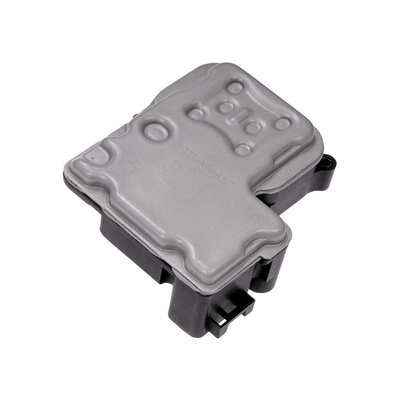
Below are the parts most often responsible for code C1246, ranked by how frequently each one is the actual culprit (per the diagnosis above). Tap any to see what we have for your vehicle.


The information in this article is provided for general reference and educational purposes only. Vehicle specifications, procedures, and part compatibility can vary by production date, trim level, and region. Always consult your vehicle's factory service manual and verify part numbers before purchasing or performing repairs. Safety-critical components such as airbags, seat belts, and braking systems should be installed by a qualified professional.
- 🧭 Diagnostic Flowchart
- 🎬 Helpful Videos
- 🛍️ Shop This Part
- What Does C1246 Mean?
- Can I Drive With C1246?
- Common Causes
- Symptoms
- Common Fixes & Costs
- Used vs. New Parts: Buying Guide
- What Happens If You Wait — Timeline
- Cost of Not Fixing It
- Diagnosis Steps
- When This Code Triggers (Freeze-Frame Conditions)
- Related Codes
- Climate & Environmental Factors
- How to Talk to a Mechanic About This Code
- Where to Take It: Dealer vs Independent vs Chain
- When to Walk Away From the Repair
- What Scan Tool You Need for This Code
- How to Clear the Code After You Fix It
- Will This Fail Emissions / State Inspection?
- Most Commonly Affected Vehicles
- Manufacturer-Specific Notes
- Real Owner Stories
- 2010 Toyota Prius at 180K miles - The Classic Failure
- 2001 Toyota Prius at 153K miles - A Misdiagnosis Story
- 2003 Lexus SC430 - Intermittent Lights and an Easy Fix
- How to Prevent This Code From Triggering
- Frequently Asked Questions
- Can I just replace the sensor instead of the whole ABS module?
- What is a 'Zero Point Calibration' and is it required?
- A shop wants to replace my master cylinder for C1246. Is this correct?
- Why does my car feel sluggish with this brake code?
- Will a brake fluid flush fix code C1246?
- What is the difference between replacing and repairing an ABS module?
- What does the 'Check ECB' message mean on my dashboard?
- Key Takeaways
- 🎟️ Get 5% Off