

C1253 on 2011-2015 Lexus RX HYBRID: Brake Booster Pump Failure Guide
Code C1253 on a 2011-2015 Lexus RX Hybrid almost always indicates a failure within the brake booster and actuator assembly, often due to an internal leak. This is a known issue confirmed by Lexus TSBs and a Customer Support Program (20LE03). Expect a costly repair to replace the entire brake booster and actuator assembly, typically ranging from $2,500 to over $4,500. For some 2010-2012 models, a warranty extension may cover the repair.
- Code C1253 on your RX Hybrid is a critical safety issue and means the vehicle should not be driven.
- The problem is almost certainly a failed brake booster/actuator assembly, which is a known issue for this vehicle.
- This is not a DIY-friendly repair. It requires expensive parts and specialized procedures and should be handled by a qualified professional.
- Expect the repair to be expensive, often costing between $2,500 and $4,500.
- Ensure the replacement part is a new, OEM-quality unit, as cheaper alternatives are known to fail prematurely.
What's Unique About the 2011-2015 Lexus RX HYBRID
The Lexus RX Hybrid uses a sophisticated electronically controlled brake (ECB) system instead of a traditional vacuum booster. This system integrates regenerative braking and requires an electric pump to generate hydraulic pressure for the accumulator. The C1253 code is common across many Toyota and Lexus hybrid platforms of this era and is the subject of multiple Technical Service Bulletins (TSBs) and a Customer Support Program (20LE03). The issue is almost always a failure of the integrated brake booster and actuator assembly, not a simple relay or sensor.
Diagnostic Flowchart
Tap your situation to follow the diagnostic path that matches what you're seeing on this vehicle.
Symptoms You May Notice
- Multiple warning lights on the dashboard, including ABS, Brake, and TRAC (Traction Control).
- "Check VSC System" message displayed on the instrument cluster.
- An electric pump/motor noise that runs frequently or continuously (every 10-30 seconds) from the engine bay, even when not braking.
- A change in brake pedal feel, which may become stiff or require more effort.
- A buzzing or 'honking' sound from the brake actuator when the driver's door is opened or when applying the brakes. 🎬 See and hear the 'honking' noise caused by a failing actuator.
- Replacing only the ABS motor relays. While a relay can fail, it's rarely the root cause. The constant cycling from the leaking actuator is what usually damages the relay, so replacing only the relay will not solve the underlying problem.
- Replacing the 12V auxiliary battery. While a failing battery can cause various electrical issues, it is not a direct cause of the C1253 code, which points to a specific hydraulic/mechanical fault in the brake system.
- Not performing the computerized brake bleed procedure. After replacing the actuator, the system must be bled using a scan tool like Toyota Techstream. Failure to do this will result in a soft pedal, warning lights, and persistent codes.
Most Likely Causes
- Internal Failure of the Brake Booster / Actuator Assembly 🔴 High Probability → Shop Power Brake Booster Lexus has issued multiple Technical Service Bulletins (TSBs) and a Customer Support Program (20LE03) for this exact issue, acknowledging that a small internal brake fluid leak inside the assembly is the root cause. The seals inside the actuator can degrade, or the pump motor's brushes can wear out, causing a loss of pressure and forcing the pump to run constantly.
How to confirm: Diagnosis with a professional scan tool (like Techstream) is required. The presence of codes C1253, C1252, C1256, or C1391 strongly points to this failure, as outlined in TSBs #L-SB-0033-20 and CSP #20LE03. A technician can also monitor the accumulator pressure sensor data; a rapid voltage drop without brake application confirms an internal leak.
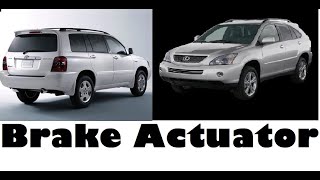
Typical fix: Replacement of the entire brake booster and actuator assembly with a new, updated part. The system must 🎬 Watch: A complete walkthrough of the brake actuator replacement process. then be professionally bled using a scan tool and calibrated. TSB L-SB-0033-20 specifies replacing both the Brake Actuator Assembly and the Brake Booster Pump Assembly.
Est. part cost: $1500-$3000
Rare But Worth Checking
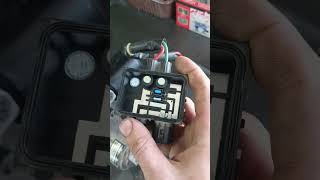
- Failed ABS Motor Relay or Junction Block: While the actuator is the most common culprit, a stuck or failed relay can cause the pump motor to run continuously or not at all. In some Lexus models, if C1253 persists after replacing the actuator and pump, the final step is to replace the Engine Room Junction Block No. 2, which contains a non-serviceable internal relay. This is considered a last resort.
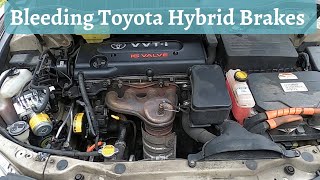
- Air in the Brake Actuator: If the brake system was recently serviced or opened, air trapped in the complex actuator assembly can prevent it from building pressure correctly, triggering this code. A professional brake bleed procedure using a scan tool is required to purge the air. 🎬 Watch: How to properly bleed brakes on a Lexus hybrid. A ClubLexus user noted this as a potential cause to rule out before expensive replacement.
- Wiring Harness or Connector Issue: Damage or corrosion in the wiring between the Skid Control ECU and the brake booster pump assembly can interrupt the signal or power supply, leading to a fault code. This is an uncommon cause, typically investigated only after a new actuator fails to resolve the issue.
Diagnosis Steps
- Verify the code(s) with a professional-grade scanner capable of reading Lexus-specific chassis codes, such as Toyota Techstream.
- Check for the presence of related codes like C1252, C1256, and C1391. The combination of these codes makes a failed actuator highly likely.
- Listen for the brake pump motor. If it runs every few seconds even without brake application, it's a strong sign of a pressure leak.
- Using a scan tool like Techstream, monitor the 'Accumulator Pressure Sensor' live data. A voltage drop of more than 0.55V over 30 seconds with no brake application indicates an internal leak.
- Follow the diagnostic procedure in the factory service manual, which may include using the scan tool to perform active tests on the ABS motor relays.
- Inspect the 'ABS MTR1' and 'ABS MTR2' fuses in the engine room fuse block.
- Given the high probability established by TSBs and CSPs, if multiple related codes are present and the pump runs excessively, the diagnosis is almost certainly a failed brake booster/actuator assembly.
Parts You'll Likely Need
- Brake Booster and Actuator Assembly
(OEM #04008-26448 (Kit, replaces 44050-48320))— This is the component that fails internally, causing the code. Lexus TSB #L-SB-0033-20 and CSP #20LE03 confirm this is the required repair. The assembly includes the pump, motor, accumulator, and actuator valve body.
Trusted brands: Lexus (OEM), Aisin
OEM price range: $1700-$3000
Aftermarket price range: $1200-$2000 - Pump Kit, Brake Booster W/ Accumulator
(OEM #04008-51148 (Kit, replaces 47070-48020 for 2010) or 04008-51248 (Kit, replaces 47070-48060 for 2010-2012))— TSB L-SB-0033-20 recommends replacing the booster pump assembly along with the actuator assembly to ensure a complete repair.
Trusted brands: Lexus (OEM)
OEM price range: $600-$950
Aftermarket price range: N/A
Related Codes That Often Appear With This One
- C1252 — This code also indicates 'Brake Booster Pump Motor on Time Abnormally Long' and is often stored alongside C1253. Both point to the same failure in the brake booster assembly.
- C1256 — This code indicates 'Accumulator Low Pressure'. The internal leak in the actuator prevents the accumulator from holding pressure, directly causing this code to appear with C1253.
- C1391 — This code indicates 'Abnormal Leak in Accumulator'. It is a direct indicator of the internal leak that causes the pump to run excessively (C1253). All these codes are listed together in Lexus TSBs as pointing to the same root cause.
Technical Service Bulletins (TSBs) & Recalls
- Bulletin #20LE03: This is a Customer Support Program, not just a TSB. It extends warranty coverage for the Brake Booster and Pump Assemblies on certain 2010-2012 RX450H vehicles that store codes C1253, C1252, C1256, or C1391.
- Bulletin #L-SB-0033-20: States that DTC C1253 may be caused by a small internal brake fluid leak inside the brake booster assembly with master cylinder on 2010-2012 RX450H models and provides the repair procedure.
Platform-Specific Known Issues
- Customer Support Program 20LE03: Lexus initiated a CSP for certain 2010–2012 RX450H vehicles experiencing this failure. The program provided a Primary Coverage until Dec 31, 2021, and a Secondary Coverage for 10 years or 150,000 miles from the date of first use, whichever came first. Owners of affected vehicles within this range should contact a Lexus dealer with their VIN to check for eligibility, although most vehicles will have aged out of the coverage period by now.
- TSB L-SB-0033-20: This Technical Service Bulletin specifically addresses the 2010-2012 RX450H. It confirms that codes C1391, C1252, C1256, or C1253 are likely caused by a small internal brake fluid leak in the brake booster assembly and instructs technicians to replace both the actuator and the pump assemblies.
Mechanic-Grade Diagnostic Values
- Brake Booster Pump Motor Circuit Resistance — expected: 33 ± 3 Ω. Failure: A reading outside this range indicates a fault in the pump motor or wiring.
- Accumulator Pressure Sensor Voltage (Live Data) — expected: Stable voltage when brakes are not applied.. Failure: A steady drop in voltage when the pump is not running and the pedal is not depressed indicates an internal pressure leak, which is the root cause of the C1253 code.
Hidden / Shadow Codes Worth Checking
- INF 134 / 138: These detail codes specify which motor relay circuit is faulting. INF 134 points to the Motor Relay 1 circuit, while INF 138 points to the Motor Relay 2 circuit. This helps pinpoint whether the issue is with the primary or secondary motor power supply. (see via Toyota Techstream or a compatible advanced scan tool capable of reading manufacturer-specific detail codes.)
- INF 322: Indicates a short is detected in the motor relay drive circuit. (see via Toyota Techstream or a compatible advanced scan tool capable of reading manufacturer-specific detail codes.)
- INF 321 / 327 / 328: Indicates an open is detected in the motor relay drive circuit. (see via Toyota Techstream or a compatible advanced scan tool capable of reading manufacturer-specific detail codes.)
Scan Tool Commands That Help
- Toyota Techstream: Air Bleeding Utility — This is mandatory after replacing the brake actuator or opening the hydraulic system. It has specific sub-routines, including 'Actuator has been removed,' to properly purge air from the complex internal passages.
- Toyota Techstream: Active Test: ABS MOTOR RELAY — This command allows the technician to manually trigger the ABS motor relays (MTR1 and MTR2) to confirm if they click and if the pump motor runs. It helps isolate a failed relay or motor from a wiring or ECU issue.
- Toyota Techstream: Utility: Reset Memory / Zero Point Calibration — After replacing the Skid Control ECU or brake actuator assembly, the memory must be reset and the yaw rate and acceleration sensors must be calibrated. This procedure is critical for the VSC system to function correctly.
- Toyota Techstream: Active Test: Perform Actuator Pattern — Used during the advanced stages of the air bleeding process to forcefully cycle the internal valves of the actuator, dislodging any trapped air bubbles that standard bleeding might miss.
- Toyota Techstream: Utility: Zero Down Accumulator Pressure — This function safely depressurizes the accumulator. It is a required preliminary step before performing any manual service on the front brakes to prevent the system from unexpectedly activating.
Wiring & Ground Locations
- Skid Control ECU — Located behind the glove compartment assembly, on the right side of the cabin. Access requires removing the glove box and passenger knee airbag assembly.. This is the computer that controls the entire brake system, logs the C1253 code, and sends commands to the pump motor relays. All diagnostic wiring checks originate or terminate at its connectors.
- Ground Points F2 / F5 — Wiring diagrams for the 2010 RX450h show ground distribution points at F2 (left end of dash) and F5 (right kick panel).. A poor ground connection for the Skid Control ECU or related components can cause erratic behavior and fault codes. Verifying these grounds are clean and secure is a fundamental electrical diagnostic step.
- Brake Actuator Connector — On the brake actuator assembly in the engine compartment.. This is the main electrical interface for the pump motor and accumulator pressure sensor. Service manuals specify checking for continuity and resistance between pins on this connector and the Skid Control ECU connector to rule out wiring faults.
Real Owner Repair Stories
- ClubLexus Forum User (Lexus LS (similar platform with same failure mode)) — ABS, VSC, and Brake warning lights with code C1253 and related codes (C1256).
❌ Tried (didn't work) Initial diagnosis pointed to the common brake actuator failure.
✅ What actually fixed it The constant cycling of the failing brake actuator had caused the non-serviceable ABS relay inside the Engine Room Junction Block #2 to fail as well. The complete repair required replacing the brake actuator, the brake booster pump, AND the Engine Room Junction Block #2. Replacing only the actuator did not clear the C1253 code.
When the Usual Fixes Don't Work
- While the overwhelming cause of C1253 is the brake actuator assembly, it is not always the only part that needs replacement. In cases of prolonged failure, the constant demand on the pump motor can cause the integrated, non-serviceable relay within the engine room junction block to fail from overuse. A forum user reported that after replacing both the actuator and pump, the C1253 code remained until the junction block was also replaced. Therefore, if C1253 persists after the primary repair, the junction block should be the next component to be investigated, rather than assuming the new actuator is faulty.
OEM Part Supersession History
44050-48320→04008-26448 (Kit)— This is the updated Brake Actuator Assembly kit specified in TSB L-SB-0033-20 to resolve the internal leak causing codes C1253/C1252/C1256/C1391.47070-48060→04008-51248 (Kit)— This is the updated Brake Booster Pump Kit for 2010-2012 models, recommended for replacement along with the actuator per TSB L-SB-0033-20.47070-48020→04008-51148 (Kit)— This is the updated Brake Booster Pump Kit specifically for 2010 models, per TSB L-SB-0033-20.
Heads up: Specific to 2010 model year.
Model Year Variations Within This Range
- 2010-2012: These model years are specifically called out in Customer Support Program 20LE03 and TSB L-SB-0033-20 for the brake actuator internal leak. While the issue can affect all years in the generation, these early years have official acknowledgment and specific replacement part kits.
- 2010 vs 2011-2012: There are different part numbers for the Brake Booster Pump Kit. 2010 models use kit 04008-51148, while 2011-2012 models use kit 04008-51248, indicating an internal change after the first model year of the generation.
Helpful Videos
We Have This Part in Stock

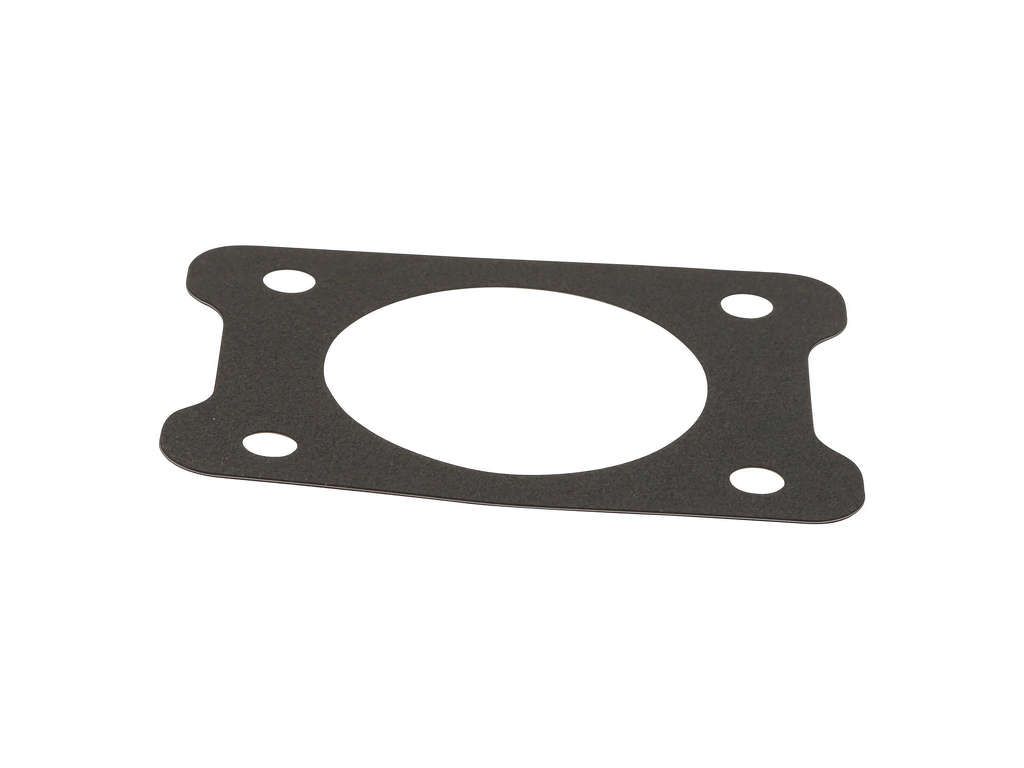
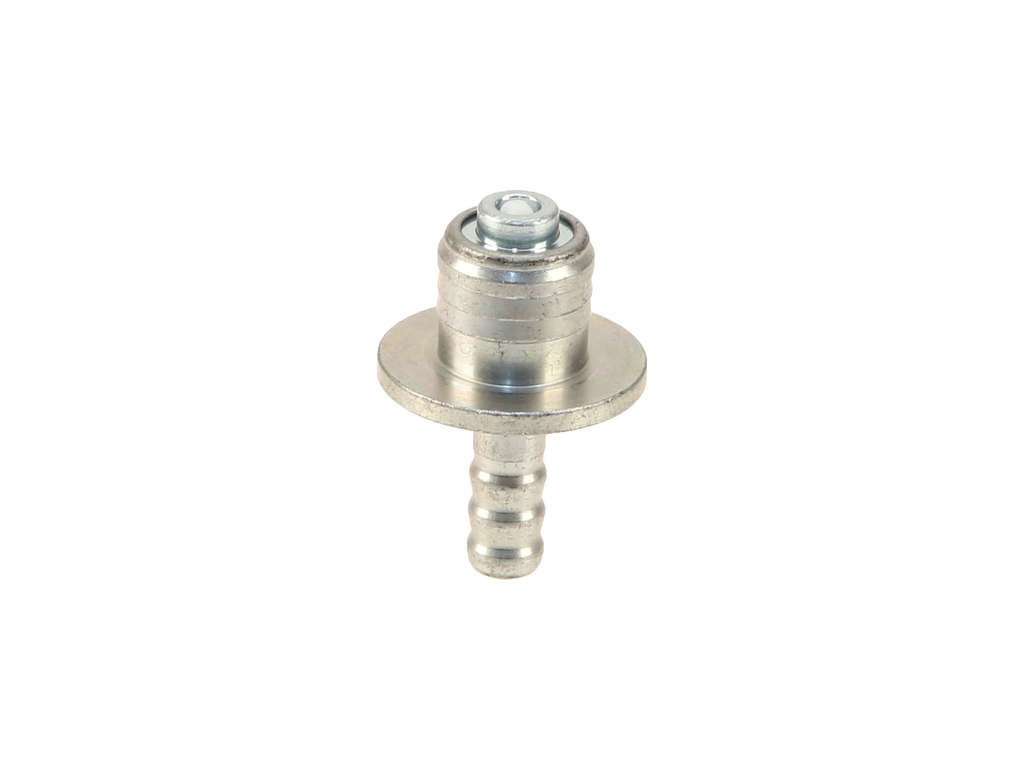

The information in this article is provided for general reference and educational purposes only. Vehicle specifications, procedures, and part compatibility can vary by production date, trim level, and region. Always consult your vehicle's factory service manual and verify part numbers before purchasing or performing repairs. Safety-critical components such as airbags, seat belts, and braking systems should be installed by a qualified professional.
- Lexus RX HYBRID:
- 🧭 Diagnostic Flowchart
- 🎬 Helpful Videos
- 🛍️ Shop This Part
- What's Unique About the 2011-2015 Lexus RX HYBRID
- Symptoms You May Notice
- Most Likely Causes
- Rare But Worth Checking
- Diagnosis Steps
- Parts You'll Likely Need
- Related Codes That Often Appear With This One
- Technical Service Bulletins (TSBs) & Recalls
- Platform-Specific Known Issues
- Mechanic-Grade Diagnostic Values
- Hidden / Shadow Codes Worth Checking
- Scan Tool Commands That Help
- Wiring & Ground Locations
- Real Owner Repair Stories
- When the Usual Fixes Don't Work
- OEM Part Supersession History
- Model Year Variations Within This Range
- 🎟️ Get 5% Off