

C1253 on 2016-2019 Lexus RX Hybrid: Brake Actuator Failure Explained
Code C1253 on a 2016-2019 Lexus RX Hybrid almost always indicates a critical failure of the brake actuator assembly due to an internal leak, as confirmed by Lexus Technical Service Bulletin L-SB-0011-23 and a Customer Support Program (23LE04). This is a non-DIY, high-cost repair, often exceeding $3,500, that requires immediate professional attention as it can lead to a loss of braking assistance.
- Code C1253 on a 2016-2019 RX Hybrid is a critical safety issue related to the braking system and should be addressed immediately.
- The cause is almost certainly a failed brake actuator assembly, a known issue documented by Lexus in TSB L-SB-0011-23 and covered under an extended Customer Support Program (23LE04).
- Do not drive the vehicle. Have it towed to a qualified repair shop, preferably a Lexus dealer or a specialist familiar with Toyota/Lexus hybrid systems.
- This is a very expensive repair, often costing between $3,000 and $4,800 at a dealership. Check eligibility for the warranty extension before paying for repairs.
- The fix involves replacing the entire brake actuator and booster pump assemblies and requires a specialized scan tool to bleed the system correctly.
What's Unique About the 2016-2019 Lexus RX HYBRID
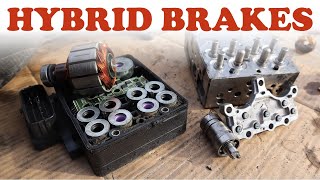
Lexus hybrids use a sophisticated and complex electro-hydraulic braking system (ECB) instead of a traditional vacuum brake booster. 🎬 Watch: A helpful overview of how hybrid car brakes work. This system integrates the master cylinder, booster pump, accumulator, and actuator into a single, expensive unit. While highly effective, this integrated design means that a failure of one internal component—a common occurrence noted in TSB L-SB-0011-23 where internal valves leak—requires the replacement of the entire assembly. Disassembly of the unit is not recommended as it is not designed to be serviced internally.
Diagnostic Flowchart
Tap your situation to follow the diagnostic path that matches what you're seeing on this vehicle.
Symptoms You May Notice
- Multiple warning lights on the dashboard, including ABS, Brake, and TRAC.
- "Check VSC" message displayed on the multi-information display.
- A buzzing or groaning noise from the engine bay as the pump motor runs excessively to try and build pressure.
- A change in brake pedal feel, which may feel soft or require more effort.
- A squawking or knocking noise from the engine compartment when depressing or releasing the brake pedal, which may be due to air in the actuator assembly as described in TSB L-SB-0035-21. 🎬 See this video to hear the brake squawk noise in action.
- Replacing only the ABS motor relays. While a relay can fail, it's often a symptom of the actuator forcing it to work too hard. For the 2016-2019 models, TSB L-SB-0011-23 points directly to the actuator as the root cause.
- Attempting to bleed the brakes conventionally without a scan tool, which can introduce more air into the system and fail to resolve the issue or make it worse.
- Mistaking a noisy pump for a simple relay issue. The noise is the pump overworking due to an internal leak, not typically a primary electrical fault.
Most Likely Causes
- Failing Brake Actuator Assembly (Internal Leak) 🔴 High Probability → Shop ABS Control Module Lexus issued Technical Service Bulletin (TSB) L-SB-0011-23 and Customer Support Program 23LE04 for this issue on 2016-2019 RX Hybrids. Both state that an internal brake fluid leak within the actuator is the direct cause for codes like C1253. This issue was prevalent enough for Lexus to extend the warranty coverage for this specific failure.
How to confirm: A professional technician will use a scan tool like Techstream to confirm code C1253 and check for related DTCs (C1252, C1256, C1391). The presence of these codes strongly indicates actuator failure as per the TSB. An active test of the ABS motor relay can also be performed.
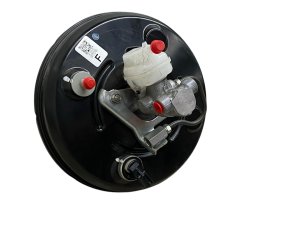
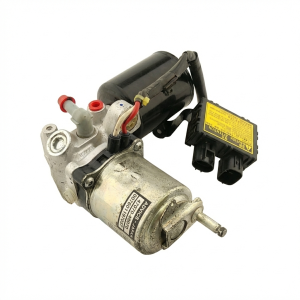
Typical fix: Replace the entire brake actuator and booster pump assembly with the updated part numbers specified by Lexus. The TSB specifies replacing both the Brake Actuator Assembly (old P/N 44050-48320, new P/N 04007-59148) and the Brake Booster with Accumulator (old P/N 47070-48080, new P/N 04006-22147). The system must then be bled using the specialized scan tool procedure.
Est. part cost: $1500-$2500
Rare But Worth Checking
- Faulty ABS Motor Relay or Wiring: While the actuator is the most common culprit, the code C1253 technically points to a motor relay circuit issue. In a rare case documented on a ClubLexus forum for a different model, a faulty junction box preventing power to the relay was the root cause, not the actuator itself. A technician will typically rule out simple electrical faults before condemning the expensive actuator.
- Failed Skid Control ECU: In very rare instances, the computer that controls the brake system could fail and falsely report a problem with the actuator. This is usually the last item to be considered after all other possibilities have been exhausted.
- Damaged Actuator O-Ring (Early 2016 Models): NHTSA recall 16V198000 was issued for some 2016 RX450h vehicles manufactured between November 2015 and February 2016 for a damaged O-ring in the ABS actuator. This could lead to improper brake fluid pressure control. While this is a specific manufacturing defect, it highlights the sensitivity of the actuator assembly.
Diagnosis Steps
- Verify the presence of code C1253 and any other related codes (C1252, C1256, C1391) using a professional scan tool capable of reading ABS/chassis codes, such as Toyota Techstream. A basic OBD-II reader may not see these codes.
- Reference TSB L-SB-0011-23 and check for eligibility under Customer Support Program 23LE04, which states that these codes are caused by an internal leak in the brake actuator.
- Using a bi-directional scan tool (like Techstream), perform an active test on the ABS motor relays and pump motor to check for proper operation and listen for sounds.
- Inspect the wiring harness and connectors for the brake actuator assembly for any visible damage or corrosion. Check fuses for the ABS motor (ABS MTR1, ABS MTR2).
- If the TSB conditions are met (codes are present on an eligible vehicle), the standard procedure is to replace the brake actuator and booster pump assemblies with the updated parts.
- Following replacement, perform the manufacturer-specified brake bleeding procedure using the scan tool. This is a multi-step process that electronically cycles the valves and pump to remove all air. 🎬 Watch: How to bleed ABS brakes using the Techstream software.
- Clear all DTCs and perform a test drive to confirm the repair and ensure no warning lights return.
Parts You'll Likely Need
- Brake Actuator Assembly
(OEM #04007-59148 (Supersedes 44050-48320))— This is the primary component identified by Lexus TSB L-SB-0011-23 as having an internal leak that causes code C1253 and related faults.
Trusted brands: Lexus (OEM)
OEM price range: $1200-$1800
Aftermarket price range: $700-$1200 - Brake Booster Pump with Accumulator
(OEM #04006-22147 (Supersedes 47070-48080))— TSB L-SB-0011-23 calls for the replacement of this assembly along with the actuator as part of the official repair procedure. It contains the motor that runs excessively when a leak is present.
Trusted brands: Lexus (OEM)
OEM price range: $500-$700
Aftermarket price range: Not commonly available
Related Codes That Often Appear With This One
- C1252 — This code indicates the brake booster pump motor has been running for an abnormally long time, which is a direct consequence of the internal leak identified by the TSB.
- C1256 — This code points to low accumulator pressure, another direct result of the system being unable to hold pressure due to an internal leak.
- C1391 — This code indicates an abnormal leak in the accumulator. All four codes (C1253, C1252, C1256, C1391) are listed in TSB L-SB-0011-23 and Customer Support Program 23LE04 as pointing to the same root cause: a failing brake actuator.
Technical Service Bulletins (TSBs) & Recalls
- L-SB-0011-23: The primary TSB for this issue. It confirms that codes C1391, C1252, C1256, or C1253 are caused by an internal brake actuator leak and require replacement of the actuator and booster pump assemblies.
- L-SB-0005-21: Addresses a squawk/knock noise from the brake actuator due to small amounts of air inside, recommending a specialized bleed procedure or replacement. This can be a symptom of the overall failure.
- Customer Support Program 23LE04: An official Lexus program extending the warranty for this specific brake actuator failure on 2016-2019 RX450h models, confirming the prevalence of the issue.
Platform-Specific Known Issues
- TSB L-SB-0011-23 & Customer Support Program 23LE04: Lexus explicitly addresses this failure in TSB L-SB-0011-23 for 2016-2019 RX Hybrids. It states that warning lights with codes C1391, C1252, C1256, or C1253 are caused by an internal brake fluid leak inside the brake actuator, requiring replacement. Subsequently, Lexus launched Customer Support Program 23LE04, extending warranty coverage for this specific issue. Primary coverage ended in May 2024, but secondary coverage lasts for 10 years or 150,000 miles from the vehicle's first use.
- Real-World Repair Story: On the ClubLexus forums, owners frequently discuss this failure. One user noted their dealer quoted $4,800 for the repair. Another user, considering a non-dealer repair, found new OEM actuators on eBay for around $1,200 and noted that independent shops who can perform the work exist, but the key is finding one with access to and knowledge of the Techstream software for the critical post-replacement bleeding procedure.
Mechanic-Grade Diagnostic Values
- Skid Control ECU Power Source Voltage (at connector) — expected: 11 to 14 V. Failure: Voltage below 11V indicates a power supply issue to the ECU.
- Skid Control ECU Ground Circuit Resistance — expected: Below 1 Ω. Failure: Resistance above 1 Ω indicates a poor ground connection.
- CAN Bus Line Resistance at Skid Control ECU Connector — expected: 54 to 69 Ω. Failure: Readings outside this range suggest a problem with the CAN communication wiring.
Hidden / Shadow Codes Worth Checking
- INF 322: This is a manufacturer-specific information code that can be stored alongside C1253. It indicates a short has been detected in the motor relay drive circuit, providing a more specific electrical fault location. (see via Toyota Techstream or a compatible advanced scan tool that can read manufacturer detail codes.)
Scan Tool Commands That Help
- Techstream: Active Test: ABS Motor Relay — Used to manually command the ABS motor relay ON and OFF. The technician can listen for the relay's click and the pump motor's operation to verify the electrical circuit's integrity, helping to distinguish between a relay/wiring fault and a seized pump motor.
- Techstream: Utility: Air Bleeding — This is a mandatory procedure after replacing the brake actuator or opening the hydraulic system. It electronically cycles the solenoids and pump in a specific sequence to purge all air from the complex actuator assembly. Failure to use this utility will result in a spongy pedal and persistent faults.
- Techstream: Utility: Zero Down — This function is used before removing the brake actuator. It releases all stored hydraulic pressure from the accumulator, making it safe to disconnect hydraulic lines.
- Techstream: Data List: Accumulator Sensor — Allows for monitoring the accumulator pressure sensor voltage in real-time. A rapid drop in voltage when the pump is not running confirms an internal or external leak in the system.
Wiring & Ground Locations
- Skid Control ECU (Brake Actuator) Connector — On the brake actuator assembly itself, located in the engine compartment.. This is the main connector for all power, ground, and communication signals to the brake system's computer. Technicians test for voltage, ground, and CAN bus resistance at specific pins (e.g., +BS, GND1, GND2, CANH, CANL) on this connector to diagnose electrical faults.
- Ground Points (GND1, GND2) — The specific body ground points for the Skid Control ECU are located on the chassis near the actuator assembly.. A corroded or loose ground connection can cause erratic behavior and false codes, including C1253. Verifying a resistance of less than 1 Ω from the ECU connector's ground pins to the chassis is a critical diagnostic step.
- ABS MTR1 and ABS MTR2 Fuses — Located in the engine room relay and fuse block.. These are the main high-amperage fuses for the pump motor. A blown fuse would indicate a severe over-current condition, possibly from a seized motor, and must be checked before condemning the entire actuator.
Real Owner Repair Stories
- ClubLexus user SENSAY813 (2007 Lexus LS 460 (similar ECB system)) — ABS/VSC lights on the dash with only code C1253 present.
❌ Tried (didn't work) Initial diagnosis pointed towards the common brake actuator failure.
✅ What actually fixed it The technician performed further electrical checks and found there was no power being supplied to the ABS relay from the engine bay junction box. Replacing the faulty junction box resolved the code without needing to replace the expensive brake actuator. - ClubLexus user 'clydo' (2011 RX450h (similar ECB system)) — Warning lights on, code C1391 (Abnormal Leak in Accumulator).
❌ Tried (didn't work) Mechanic replaced only the accumulator. The codes returned after one day.
✅ What actually fixed it The mechanic concluded that the entire ABS Actuator module needed to be replaced, as the accumulator-only replacement did not solve the underlying internal leak issue. This highlights that replacing individual components of the assembly is often insufficient.
OEM Part Supersession History
44050-48320→04007-59148— The new part number is an updated assembly with countermeasures implemented to address the internal leak failure mode described in TSB L-SB-0011-23.47070-48080→04006-22147— This is the updated Brake Booster Pump with Accumulator, which is recommended to be replaced along with the actuator per TSB L-SB-0011-23.
Model Year Variations Within This Range
- 2016-2018: Some related service bulletins for brake noise on these earlier models also call for a Skid Control ECU software update (reprogramming) and replacement of the master cylinder reservoir, in addition to the actuator replacement. This is not typically required for the C1253 fault alone but may be performed if other symptoms like brake noise are present.
Helpful Videos
Used OEM Parts in Stock
New Aftermarket Parts Available


The information in this article is provided for general reference and educational purposes only. Vehicle specifications, procedures, and part compatibility can vary by production date, trim level, and region. Always consult your vehicle's factory service manual and verify part numbers before purchasing or performing repairs. Safety-critical components such as airbags, seat belts, and braking systems should be installed by a qualified professional.
- Lexus RX HYBRID:
- 🧭 Diagnostic Flowchart
- 🎬 Helpful Videos
- 🛍️ Shop This Part
- What's Unique About the 2016-2019 Lexus RX HYBRID
- Symptoms You May Notice
- Most Likely Causes
- Rare But Worth Checking
- Diagnosis Steps
- Parts You'll Likely Need
- Related Codes That Often Appear With This One
- Technical Service Bulletins (TSBs) & Recalls
- Platform-Specific Known Issues
- Mechanic-Grade Diagnostic Values
- Hidden / Shadow Codes Worth Checking
- Scan Tool Commands That Help
- Wiring & Ground Locations
- Real Owner Repair Stories
- OEM Part Supersession History
- Model Year Variations Within This Range
- 🎟️ Get 5% Off