

OBD-II Code C1255: Electronic Brake Control Module (EBCM) Internal Failure
What C1255 means, why it triggers, and how to fix it
- Code C1255 indicates a fatal internal failure of the Electronic Brake Control Module (EBCM), completely disabling your ABS and Traction Control systems.
- Normal hydraulic braking remains functional, but stopping distances increase by up to 20% on wet or icy roads without ABS active.
- Always load-test your battery and clean the EBCM chassis ground to bare metal before replacing the module, as voltage drops trigger up to 30% of false C1255 codes.
- Sending your original EBCM to a rebuild service costs $150-$250 and avoids the $150-$400 dealer VIN programming fee required for new or used replacements.
What Does C1255 Mean?
Code C1255 means the Electronic Brake Control Module (EBCM) detected a non-recoverable internal error during its power-on self-test. The module shuts down the ABS and traction control systems to prevent unpredictable braking behavior.
Technical definition: The official SAE/OBD-II definition is "EBCM/EBTCM Internal Malfunction". This indicates the Electronic Brake Control Module (EBCM) identified a fatal internal hardware or software fault during its diagnostic routine.
Can I Drive With C1255?
Yes, But With Caution. Yes, but with extreme caution. Normal hydraulic brakes function, but primary safety systems (ABS and Traction/Stability Control) are disabled. This significantly increases the risk of losing control in a panic stop or on slippery surfaces. Without ABS, wheels lock up, increasing stopping distances and eliminating steering control during hard braking. Inspect the vehicle immediately and avoid highway speeds.
Common Causes
- Internal EBCM Component Failure (Very Common) — This is the primary cause. Internal power relays, microprocessors, or solder joints fail from age, heat cycles, and vibration. This design flaw in many GM vehicles is the root of a true C1255.
- Poor EBCM Ground Connection (Common) — The EBCM requires a perfect chassis ground. A loose or corroded ground point causes erratic voltage, triggering a false internal fault code.
- Low Battery Voltage or Charging System Issues (Common) — A weak battery or failing alternator provides insufficient voltage during the startup self-test, causing the EBCM to fail the check and log a false internal fault.
- Corroded or Damaged EBCM Connector (Less Common) — Water intrusion or debris causes corrosion on the main harness pins, interrupting power and data signals.
- Faulty Ignition Switch (Less Common) — A worn ignition switch causes momentary voltage drops to the EBCM during startup, misinterpreted as an internal failure.
- Software Glitch After Battery Change (Rare) — Disconnecting the battery or improper jump-starting causes a voltage surge that locks a persistent C1255 in older Cadillacs, requiring a dealer-level scan tool to clear.
Symptoms
- ABS and Traction Control Lights Illuminated — The 'ABS' and 'TCS/ESC' dashboard lights stay on permanently, often accompanied by a 'Service ABS System' message.
- No ABS or Traction Control Function — Wheels lock up and skid during hard stops. On slippery surfaces, wheels spin freely when accelerating.
- Brake Pedal Feels Different (Rare) — A failing EBCM causes a pulsating 'ABS feel' in the brake pedal during normal braking on C5 Corvettes, or a spongy pedal on Buick models.
- Transmission Starts in 2nd Gear (Vehicle Specific) — On older Cadillac STS models, an active C1255 code forces the automatic transmission to default to 2nd gear as a fail-safe.
Diagnostic Flowchart
Tap your situation to follow the diagnostic path that matches what you're seeing on this code.
Common Fixes & Costs
- Clean EBCM Grounds and Connector — Parts: $5-$20, Labor: $100-$150, ~0.8 hr book time (DIY)
- Replace Battery — Parts: $150-$300, Labor: $0-$50, ~0.4 hr book time (DIY)
- Send EBCM for Repair/Rebuild — Parts: $150-$250, Labor: $50-$150, ~1.5 hr book time (Intermediate)
- Replace EBCM with a Used Unit
— Parts: $250-$900, Labor: $150-$300, ~2.5 hr book time
(Advanced)
Chevrolet Corvette C5 (2001-2004): OEM ['12216561', '10343433']
Chevrolet Equinox (2012-2017): OEM ['23231817', '23231813'] - Replace EBCM with a New Unit
— Parts: $900-$2,500+, Labor: $150-$300, ~2.5 hr book time
(Professional)
Chevrolet Corvette C5 (2001-2004): OEM ['12216561', '10343433'] (Alt: Dorman (Remanufactured), Cardone (Remanufactured))
Toyota Prius (2004-2009): OEM ['44500-47141'] (Alt: Cardone (Remanufactured Actuator))
Used vs. New Parts: Buying Guide
When a used part is worth it: A used EBCM is a budget-friendly option for older, high-mileage vehicles where a new unit is cost-prohibitive. It requires access to a professional scan tool for mandatory VIN programming on modern vehicles.
Donor-vehicle mileage cap: roughly under 100000 miles for the part to have meaningful remaining life.
Donor quality checklist:
- Match the part number exactly. Do not rely on year/make/model alone.
- Avoid modules from flood-damaged cars.
- Prefer sellers offering at least a 30-90 day warranty.
- Confirm a local shop can program the used module to your vehicle's VIN.
Decision logic:
- If Your original module is a repairable model → Send it for rebuild. This is the best value, avoids programming, and often includes upgraded components.
- If Vehicle is newer or low-mileage and budget allows → Buy new from the dealer. This offers the longest warranty and peace of mind.
- If Budget is the primary concern and programming is accessible → A used part is a viable option, but carries the risk of a shorter lifespan.
- If Your original module is a non-repairable model (e.g., 1997-2000 Corvette) → A used part is your only option; source carefully.
Warranty tradeoff: Used parts typically have a 30-90 day warranty covering the part only. Rebuilt units often include a 1-year to lifetime warranty. New OEM parts carry a 1-2 year warranty.
Worst-case if a used part fails: $300-600 if a used part fails shortly after installation, covering repeat labor and programming fees.
What Happens If You Wait — Timeline
- Immediate: ABS and Traction Control warning lights illuminate. The EBCM fails its self-test and disables all related safety systems. Code C1255 is stored. (MPG impact: 0%% · Added cost: $0 (but immediate safety risk is high))
- 0-6 months: The vehicle operates with a high risk of an accident in a panic stop or on slippery surfaces. The vehicle automatically fails annual safety inspections in strict states. (MPG impact: 0%% · Added cost: $20-$50 (cost of a failed inspection and re-test fee).)
- 6-12 months: Insurance providers can argue negligence and deny claims for at-fault accidents if the vehicle was knowingly operated with disabled primary safety systems. (MPG impact: 0%% · Added cost: Potentially thousands in uncovered accident damages or increased premiums.)
- 12+ months: The root cause (e.g., bad solder joint, corrosion) worsens. The vehicle's resale value is significantly reduced due to persistent warning lights. (MPG impact: 0%% · Added cost: Severe reduction in private-party resale value.)
Cost of Not Fixing It
- Immediate: ABS and Traction/Stability Control systems are disabled. Wheels can lock in a panic stop, causing loss of steering control and increased stopping distance. (Added cost: Potential for accident costs, insurance claim denial.)
- 0-6 months: Continued high risk of collision in emergency situations. The vehicle fails safety inspections in states that check for an active ABS light. (Added cost: Cost of a failed inspection and re-test.)
- 6+ months: Insurance providers can deny claims for accidents if they determine the vehicle was knowingly operated with a disabled safety system. (Added cost: Potentially thousands in uncovered accident damages.)
Diagnosis Steps
- Check and Load-Test the Battery
A weak battery is the primary cause of false module codes. Fully charge the battery and load-test it at an auto parts store. It must read above 12.5 volts at rest and hold voltage under load.
Tools: Multimeter, Battery Charger, Professional Battery Tester (Beginner) - Inspect and Clean the EBCM Chassis Ground
Locate the main EBCM ground wire on the vehicle's frame. Disconnect it and use a wire brush to clean the terminal, frame contact point, and bolt to shiny bare metal. Re-secure tightly.
Tools: Socket Set, Wire Brush, Sandpaper (Intermediate) - Perform a Full System Scan
Use an ABS-capable OBD-II scanner to check for other codes. If wheel speed sensor (C1221-C1235), steering sensor (C1288), or communication (U-codes) are present, diagnose them first. C1255 is often a secondary code.
Tools: ABS-capable OBD-II Scanner (Beginner) - Perform the 'Tap Test'
With the ignition on and warning lights displayed, lightly tap the EBCM body with a plastic screwdriver handle. If the lights flicker or turn off, it confirms a failing internal relay or bad solder joint.
Tools: Screwdriver (Beginner) - Inspect the EBCM Connector and Wiring
Disconnect the negative battery terminal. Unplug the main EBCM connector. Inspect pins for green/white corrosion, bent pins, or pushed-out terminals. Clean with contact cleaner.
Tools: Socket Set, Flashlight, Electrical Contact Cleaner, Small Brush (Intermediate) - [PRO TIP] Perform a Voltage Drop Test on the Ground Circuit
Set a multimeter to a low DC Volts scale (2V). With the key on, place the red probe on the negative battery terminal and the black probe on the EBCM ground wire pin. A reading above 30 millivolts (0.03V) indicates excessive resistance requiring repair.
Tools: High-Quality Multimeter (with mV scale) (Advanced) - Confirm Power and Ground at the Module Connector
Using a vehicle-specific wiring diagram, test for battery voltage (12.0-12.6V) at the main power feed pins and near-zero resistance (<1.0 ohm) at the ground pins. If power and ground are perfect but C1255 persists, the EBCM is definitively faulty.
Tools: Multimeter, Vehicle-Specific Wiring Diagram (Advanced) - [PRO TIP] Check for Voltage Drop from the Ignition Switch
Measure voltage across the battery terminals with the ignition on (engine off). Measure voltage from the EBCM's ignition-fed power fuse to the negative battery terminal. A difference greater than 0.5 volts indicates a worn ignition switch causing a voltage drop.
Tools: Multimeter, Vehicle-Specific Fuse Diagram (Advanced)
When This Code Triggers (Freeze-Frame Conditions)
- System Voltage: 10.5-15.0V (Voltage must be within the normal operating range during the self-test. Low voltage at startup is a primary false trigger.)
- Vehicle Speed: 0-10 mph (The primary internal self-test occurs at ignition key-on and during initial low-speed movement.)
- Ignition Cycle Status: Key-On, Engine-Running (The code sets immediately after the vehicle starts when the EBCM performs its power-on self-test (POST).)
- Command State: Internal Self-Test (Triggered by the EBCM's internal diagnostic routine detecting a failure, not a specific driving event.)
Related Codes
- C1214 — Indicates 'Solenoid Valve Relay Contact/Coil Circuit Open'. A direct companion to C1255 on GM vehicles, confirming the internal power relay failed. The EBCM must be repaired or replaced.
- C0265 — Indicates 'EBCM Relay Circuit' failure, common on GM trucks. Causes the ABS pump to run continuously. Paired with C1255, it confirms a bad EBCM.
- C1288 — Indicates 'Steering Wheel Position Sensor Circuit' failure. The EBCM shuts down and logs a secondary C1255 if this signal is lost. Diagnose C1288 before replacing the EBCM.
- U-codes (e.g., U1000, U1041) — Indicates a loss of communication between the EBCM and other modules. Check the communication network wiring and EBCM connector for corrosion before replacing the module.
Climate & Environmental Factors
- Humidity and Moisture: High humidity or direct water intrusion causes corrosion on the circuit board and connector pins, leading to short circuits or high resistance.
- Road Salt (Winter Climates): Road salt accelerates corrosion of the module's aluminum housing, electrical connectors, and the main chassis ground point.
- High Heat: Thermal stress from engine bay heat cycles causes internal solder joints on the circuit board to crack and fail over time.
How to Talk to a Mechanic About This Code
Say this: "I have an ABS light on and a C1255 code. Before assuming the module is bad, please load-test the battery and perform a voltage drop test on the EBCM's main power and ground circuits."
This directs the shop to check the most common and inexpensive causes of a false C1255 code (bad battery/grounds) before quoting an expensive module replacement.
Avoid saying:
- My ABS light is on, can you fix it?
- Just replace the ABS module.
- Tell me what's wrong and I'll approve it.
Questions to ask before authorizing the repair:
- What were the results of the battery load test and the voltage drop test on the ground wire?
- Did you check for any other related trouble codes, like wheel speed sensors or communication faults?
- What are the price differences between a new OEM part, a used part, and sending my original module for a rebuild?
- Does the replacement module require VIN programming, and is that cost included in your quote?
- What is the warranty on the parts and labor for this repair?
Where to Take It: Dealer vs Independent vs Chain
- Dealer:
A necessary option if a new or used module requiring VIN programming is chosen. Otherwise, it is the most expensive route.
Best for: Vehicles under warranty, Complex cases requiring manufacturer-specific software (e.g., VIN programming a new module), Diagnosing known manufacturer quirks on newer cars
Downsides: Highest labor rates and part costs, often 1.5-2x an independent shop., Defaults to expensive module replacement without exploring rebuild options. (Typical cost: +75% vs. baseline) - Independent Shop:
Best fit for most customers. Provides the best balance of diagnostic skill and value, especially if opting for a module rebuild.
Best for: Out-of-warranty vehicles where cost is a major factor., Diagnosing common codes with well-known external causes (grounds/battery)., Facilitating a module rebuild service.
Downsides: Diagnostic capabilities vary; ensure they have an ABS-capable scanner and understand voltage drop testing., May not have in-house tools for VIN programming. (Typical cost: +0% vs. baseline) - Chain Shop:
AVOID for diagnosing a C1255 code. Their expertise lies in high-volume, simple repairs, not nuanced electronic troubleshooting.
Best for: Simple, unrelated maintenance like oil changes or tire rotations.
Downsides: Technician skill varies widely and is not suited for complex electronic diagnostics., Business model incentivizes quick part replacement over thorough diagnosis., Unlikely to have advanced diagnostic or programming tools. (Typical cost: -10% vs. baseline)
When to Walk Away From the Repair
If the total estimated repair cost for the C1255 code exceeds 50% of your car's current private-party market value, consider selling the car as-is or trading it in.
- Car worth $3000, fix is $1800: Walk away. A repair costing 60% of the car's value is not a sound investment. Put the money towards a replacement vehicle.
- Car worth $8000, fix is $1500: Fix it. At less than 20% of the vehicle's value, this repair is well worth it to restore critical safety features and maintain resale value.
- Car worth $4500, fix is $400: Fix it immediately. This low cost suggests a rebuild or an external issue like a ground wire, representing huge value for restoring safety.
What Scan Tool You Need for This Code
Minimum: A scan tool that reads and clears Anti-lock Brake System (ABS) / Chassis (C) trouble codes. Basic engine-only code readers cannot access the C1255 code.
A standard $20 OBD-II reader only communicates with the engine control unit (ECU). The C1255 code is stored in the Electronic Brake Control Module (EBCM), requiring an advanced scanner.
Budget: BlueDriver Pro (~$100) — Connects to your smartphone via Bluetooth. Reads and clears ABS codes like C1255, views live data from wheel speed sensors, and provides repair reports.
Mid-range: Foxwell NT630 Plus / Autel AL619 (~$150) — Dedicated handheld units that read/clear ABS codes. The Foxwell offers bidirectional control to cycle ABS solenoids, useful for diagnostics.
Professional: Autel MaxiCOM MK808 / MaxiCheck MX808S (~$480) — Offers full-system diagnostics and powerful bidirectional controls. Performs the mandatory 'Automated Bleed' function required after replacing the ABS hydraulic unit.
Rent vs buy: For a one-time diagnosis, auto parts stores offer free ABS scans. If DIYing the repair, buying the BlueDriver Pro is a worthwhile investment. If replacing the hydraulic unit, a mid-range or pro-level tool with an ABS bleed function is essential.
How to Clear the Code After You Fix It
- Ensure the underlying fault (e.g., bad module, poor ground) is corrected.
- Reconnect the battery if disconnected.
- Use an ABS-capable OBD-II scan tool to access the Chassis/ABS controller and clear the C1255 code.
- Perform a drive cycle to ensure the system self-tests and the light remains off.
Drive cycle (~20 minutes): Start with a cold engine. Idle for 2-3 minutes with electrical loads on. Accelerate to 55 mph and hold for 5 minutes. Decelerate without braking to 20 mph. Accelerate to 55 mph and hold for 3 minutes. Decelerate to a stop. This allows the EBCM to run internal diagnostics.
Readiness monitors affected: This Chassis (C) code does not directly affect emissions readiness monitors., If the battery was disconnected, all emissions monitors reset and require a full drive cycle before an emissions test.
Before emissions retest: drive at least 50 miles to fully set monitors.
Watch out for:
- Clearing the code without fixing the root cause results in the code returning immediately upon the next key cycle.
- Basic engine-only code readers cannot communicate with the ABS module to clear C1255.
- If the battery was disconnected, you must complete the full drive cycle to set emissions monitors.
Will This Fail Emissions / State Inspection?
No — by itself this code doesn't fail OBD inspection (but it can keep readiness monitors from setting, which causes a separate fail).
- California: An illuminated ABS light does not cause a standard smog inspection failure. However, salvage vehicles require a 'Brake and Lamp Inspection' where a non-functional ABS system causes failure.
- New York: An illuminated ABS warning light IS grounds for failure of the annual safety inspection based on current regulations.
- Texas: An illuminated ABS warning light will NOT cause a failure of the Texas state safety inspection, provided standard service brakes work correctly.
Most Commonly Affected Vehicles
- Chevrolet Corvette (C5) (1997-2004) — Extremely common failure. 1997-2000 modules are non-repairable. Used parts must match the car's Active Handling option (RPO JL4).
- Chevrolet / GMC Equinox, Terrain (2010-2022) — Replacement modules require mandatory VIN programming by a dealer or qualified shop with GM's Techline Connect software.
- Buick LeSabre, Park Avenue, Century, Regal (2000-2005) — Delphi or Kelsey-Hayes ABS modules are prone to internal solder joint failure on the power relay, leading to C1255 and C1214.
- Pontiac Bonneville, Grand Prix, Aztek (2000-2005) — Shares the failure-prone Kelsey-Hayes ABS module design with contemporary Buick models. These can typically be rebuilt.
- Cadillac DeVille, Seville, STS (1997-2005) — Prone to EBCM failure, sometimes triggered by electrical events like jump-starting. Can cause the transmission to start in 2nd gear.
- GMC / Chevrolet Trucks and SUVs (Sierra, Silverado, Yukon, Tahoe) (1999-2007) — The Kelsey-Hayes 325 module is notorious for failures, often setting C0265 (pump running constantly) alongside C1255.
- Ford Escape, Explorer, F-150 (2006-2012) — C1255 points to an internal failure of the ABS module. Diagnosis must include checking power, grounds, and other codes before replacement.
- Toyota Prius (2004-2009) — C1255 indicates a failure within the complex brake actuator assembly. Repair costs are very high, often exceeding $1,900.
Manufacturer-Specific Notes
- General Motors (Chevrolet, Buick, Cadillac, etc.): C1255 is famously known as the 'kiss of death' for the EBCM. The failure is widespread and well-documented, almost always requiring module repair or replacement.
- Hyundai / Kia: CRITICAL: On Hyundai and Kia models, C1255 refers to a 'Rear Height Sensor' malfunction or an 'Intake Valve Control Solenoid Circuit' issue, NOT the ABS module. Use a manufacturer-specific scanner.
- Cadillac: On older models, C1255 is triggered by voltage fluctuations from disconnecting the battery or jump-starting. Attempt clearing the code with a professional scan tool before replacement.
- Toyota: On the Prius, C1255 points to the entire brake actuator assembly, a highly integrated and expensive component requiring specialized brake bleeding procedures to replace.
Real Owner Stories
2002 Corvette C5 with 75K miles - The 'Easy' Fix
Owner reported intermittent ABS/Traction Control lights that eventually stayed on. Pulled code C1255. Quoted over $1,400 by a dealer for a new EBCM.
What they tried:
- Researched forums after the light became permanent.
- Located the EBCM ground on the frame rail, disconnected it, and cleaned the contact point, bolt, and wire terminal with a wire brush until shiny.
Outcome: Cleaning and re-securing the ground connection cleared the C1255 code permanently. Total cost was under $10 for cleaning supplies and 30 minutes of labor.
Lesson: Always check and clean the main EBCM ground connection before condemning the module. It is the most common cause of a 'false' C1255.
2014 Chevy Equinox at 110K miles - The Misdiagnosis Story
ABS and Stabilitrak lights appeared. A local shop scanned code C1255 and recommended replacing the EBCM with a used unit to save money.
What they tried:
- Shop sourced and installed a used EBCM from a salvage yard for $800.
- The lights remained on after installation.
- The shop realized the used module required VIN programming.
Outcome: The shop lacked GM-specific software (Techline Connect). The owner paid an additional $200 to tow the car to a dealership for programming. Final cost exceeded $1,000.
Lesson: On post-2006 vehicles, a used or new EBCM requires VIN programming with dealer-level software. Factor in the $150-$400 programming cost when buying a used module.
1999 Cadillac STS at 58K miles - The Unusual Electrical Cause
Immediately after replacing a dead battery, the ABS and Traction Control lights illuminated with a persistent C1255 code.
What they tried:
- Tried clearing the code with a standard OBD-II scanner.
- Disconnected the new battery for an hour to reset modules.
- Inspected all related fuses and the EBCM connector.
Outcome: The code could not be cleared with standard tools. A Cadillac technician used a GM Tech II scan tool to clear the 'latched' fault from the EBCM's memory. The module was not physically faulty.
Lesson: On older luxury models, a C1255 appearing after a battery event is often a software glitch. Have a professional clear the code with a manufacturer-specific scan tool before replacing parts.
How to Prevent This Code From Triggering
- Perform a full brake fluid flush every 2-3 years (Every 2-3 years or 30,000 miles) — Brake fluid absorbs moisture, leading to internal corrosion of the delicate valves and electronic components within the ABS hydraulic unit and EBCM.
- Periodically clean chassis ground connections (Every 2-4 years, or when working in the area) — The EBCM relies on a clean, low-resistance ground. Proactively cleaning main chassis grounds prevents voltage issues that trigger false module fault codes.
- Use a battery tender for long-term storage (Any time the vehicle sits for more than 2-3 weeks) — A dying battery causes low voltage conditions that stress electronic modules. A battery tender ensures the EBCM receives stable voltage during startup self-tests.
- Activate the ABS system intentionally a few times per year (2-3 times per year) — Performing a few hard stops in a safe, empty parking lot engages the ABS, circulating fluid and keeping mechanical components free from seizing.
Frequently Asked Questions
What is the most common misdiagnosis for a C1255 code?
The most common misdiagnosis is replacing the EBCM without checking the battery, ground connections, and scanning for other codes. A C1255 is often a secondary code triggered by low voltage or steering sensor faults. Always rule out these simple, cheap fixes first.
Why did my C1255 code appear right after changing the battery?
Control modules are highly sensitive to voltage fluctuations. Disconnecting an old battery or jump-starting the vehicle causes voltage spikes that the EBCM interprets as an internal fault. On some vehicles, this sets a persistent code requiring a dealer-level tool to clear.
My car is a 1999 C5 Corvette. Can my ABS module be repaired?
Generally, no. The EBCM used in 1997-2000 C5 Corvettes is a unique design considered non-repairable by specialty electronic services. Owners must source a good used or rare remanufactured unit, which is difficult and costly.
Where is the EBCM located on my C5 Corvette?
On 1997 and early 1998 models, the EBCM is located in the rear of the car on the driver's side frame rail near the differential. On 1998-2004 models, it mounts to the front of the ABS hydraulic block in the engine bay.
Do I need to program a new or used ABS module?
For most vehicles built after 2006, yes. Programming the module to your car's Vehicle Identification Number (VIN) is mandatory for it to communicate with other computers. Without programming, the ABS and Traction Control systems remain inoperative.
Is it cheaper to repair my ABS module or buy a new one?
It is significantly cheaper to send your existing module to a specialty repair service. A rebuild typically costs $150-$250, while a new dealer module easily exceeds $1,000 and requires additional programming fees.
Will a C1255 code cause my car to fail a safety inspection?
Yes, in many regions. An illuminated ABS warning light on the dashboard is an automatic failure for a vehicle safety inspection in states like New York. You must resolve the issue and clear the light to pass.
The shop quoted me $2,000 to fix this. Is that a fair price?
That price likely includes a brand new OEM module, labor, and mandatory VIN programming. For vehicles like a Toyota Prius needing a full brake actuator, this is standard. However, ask the shop about using a remanufactured module or rebuilding your original unit to save over $1,000.
What are the C1255 sub-codes a mechanic mentioned?
On GM vehicles, a professional scan tool reads two additional characters after the C1255 (e.g., C1255 M5). These engineering aids pinpoint the exact circuit that triggered the internal fault. For example, a sub-code might direct the technician to investigate a specific wheel speed sensor circuit first.
Key Takeaways
- Code C1255 indicates a fatal internal failure of the Electronic Brake Control Module (EBCM), completely disabling your ABS and Traction Control systems.
- Normal hydraulic braking remains functional, but stopping distances increase by up to 20% on wet or icy roads without ABS active.
- Always load-test your battery and clean the EBCM chassis ground to bare metal before replacing the module, as voltage drops trigger up to 30% of false C1255 codes.
- Sending your original EBCM to a rebuild service costs $150-$250 and avoids the $150-$400 dealer VIN programming fee required for new or used replacements.
Helpful Videos
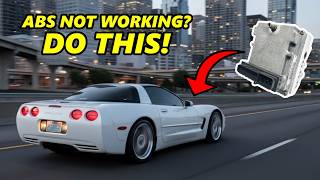
Shop the Parts Behind C1255
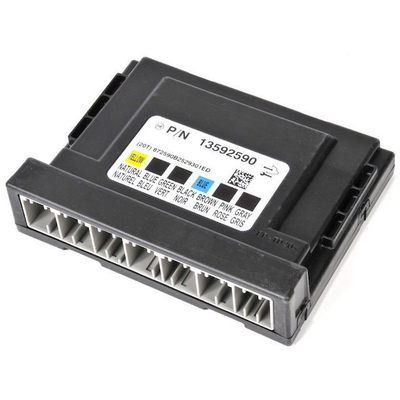
Below are the parts most often responsible for code C1255, ranked by how frequently each one is the actual culprit (per the diagnosis above). Tap any to see what we have for your vehicle.


The information in this article is provided for general reference and educational purposes only. Vehicle specifications, procedures, and part compatibility can vary by production date, trim level, and region. Always consult your vehicle's factory service manual and verify part numbers before purchasing or performing repairs. Safety-critical components such as airbags, seat belts, and braking systems should be installed by a qualified professional.
- 🧭 Diagnostic Flowchart
- 🎬 Helpful Videos
- 🛍️ Shop This Part
- What Does C1255 Mean?
- Can I Drive With C1255?
- Common Causes
- Symptoms
- Common Fixes & Costs
- Used vs. New Parts: Buying Guide
- What Happens If You Wait — Timeline
- Cost of Not Fixing It
- Diagnosis Steps
- When This Code Triggers (Freeze-Frame Conditions)
- Related Codes
- Climate & Environmental Factors
- How to Talk to a Mechanic About This Code
- Where to Take It: Dealer vs Independent vs Chain
- When to Walk Away From the Repair
- What Scan Tool You Need for This Code
- How to Clear the Code After You Fix It
- Will This Fail Emissions / State Inspection?
- Most Commonly Affected Vehicles
- Manufacturer-Specific Notes
- Real Owner Stories
- 2002 Corvette C5 with 75K miles - The 'Easy' Fix
- 2014 Chevy Equinox at 110K miles - The Misdiagnosis Story
- 1999 Cadillac STS at 58K miles - The Unusual Electrical Cause
- How to Prevent This Code From Triggering
- Frequently Asked Questions
- What is the most common misdiagnosis for a C1255 code?
- Why did my C1255 code appear right after changing the battery?
- My car is a 1999 C5 Corvette. Can my ABS module be repaired?
- Where is the EBCM located on my C5 Corvette?
- Do I need to program a new or used ABS module?
- Is it cheaper to repair my ABS module or buy a new one?
- Will a C1255 code cause my car to fail a safety inspection?
- The shop quoted me $2,000 to fix this. Is that a fair price?
- What are the C1255 sub-codes a mechanic mentioned?
- Key Takeaways
- 🎟️ Get 5% Off