

OBD-II Code C1266: ABS Valve Power Relay Circuit Failure
What C1266 means, why it triggers, and how to fix it
- Code C1266 indicates a power failure to the ABS control valves, disabling your anti-lock brakes and increasing stopping distances by over 20% on wet surfaces.
- Always check the 20A to 40A ABS fuses in the engine bay before replacing parts, as a blown fuse is the most common and cheapest fix.
- If the ABS pump motor runs continuously while the vehicle is off, disconnect the battery immediately to prevent a dead battery and a burned-out $500 pump motor.
- Choose a $150-$300 mail-in rebuild service for your original ABS module instead of a $1,200+ new replacement to avoid expensive dealership VIN programming.
What Does C1266 Mean?
Code C1266 means the vehicle's main computer or ABS module detected a fault in the power supply circuit for the ABS solenoid valves. The ABS module requires a stable 10 to 17 volts to operate the internal relay powering these valves. The code triggers when voltage is low, high, intermittent, or missing, deactivating the system that prevents wheel lockup during hard stops.
Technical definition: The SAE/ISO definition for C1266 is "ABS Valve Power Relay Circuit Failure." The ABS control module (EBCM) detected an open circuit, short to ground, or electrical fault in the power feed supplying voltage to the ABS solenoid valves. The module self-tests this circuit during every ignition cycle; if voltage falls outside the 10V-17V range, it sets the code and disables ABS and traction control.
Can I Drive With C1266?
Yes, But With Caution. Yes, you can drive, but with extreme caution. Your regular hydraulic brakes function normally, but the Anti-lock Braking System (ABS), traction control, and stability control are disabled. Braking distance without ABS increases by 15-20% on dry pavement and over 20% on wet or gravel surfaces. The primary danger is losing steering control during a panic stop. Have the vehicle repaired immediately.
Common Causes
- Blown ABS System Fuse (Very Common) — The ABS system uses high-amperage fuses (typically 20A, 30A, or 40A) to protect the valve circuit and pump motor. These blow from age, vibration, or a short circuit, instantly cutting power to the ABS module and triggering the code.
- Faulty ABS Control Module (EBCM) (Very Common) — Internal components like solder joints on the main power pins, transistors, or the integrated power relay fail from heat, vibration, and age. This widely reported failure often causes the ABS pump to run constantly and drain the battery.
- Damaged Wiring Harness or Corroded Connectors (Common) — Wires supplying power and ground to the ABS module chafe against the chassis, suffer rodent damage, or corrode from road salt. Additionally, the main electrical connector at the module corrodes from moisture, creating high resistance that interrupts power flow.
- Unstable System Voltage (Low Battery/Alternator) (Less Common) — A weak battery, a failing alternator, or voltage spikes cause the ABS module to detect an invalid voltage. Low voltage during engine cranking frequently triggers EBCM diagnostic failures.
- Faulty Totally Integrated Power Module (TIPM) (Less Common) — On Chrysler, Dodge, and Jeep vehicles, the TIPM acts as the central fuse and relay box. Internal TIPM failures disrupt power to the ABS module, mimicking a direct wiring or module fault.
- Faulty Brake Light Switch (Rare) — On some Hyundai and Kia vehicles, a failing brake light switch sends conflicting signals to the control modules. The system sees brake application without a corresponding signal, triggering ABS faults as a precaution.
Symptoms
- ABS, Traction, and Stability Control lights illuminated — The dashboard displays a steady amber ABS light alongside the traction and stability control warning lights, as these systems rely entirely on the ABS to function.
- ABS pump motor runs continuously — An internal module failure forces the ABS hydraulic pump to run constantly, even with the key off. This drains the battery completely within hours.
- Wheels lock up during hard braking — Without ABS, the wheels lock and skid during a panic stop or on a slippery surface, drastically altering vehicle handling.
- Red Brake warning light is on — The main red brake warning light illuminates, indicating a severe system fault or the deactivation of the Electronic Brake Distribution (EBD) function.
Diagnostic Flowchart
Tap your situation to follow the diagnostic path that matches what you're seeing on this code.
Common Fixes & Costs
- Replace blown ABS fuse(s) — Parts: $1-$10, Labor: $0, ~0.1 hr book time (DIY)
- Repair/rebuild original ABS control module — Parts: $150-$300, Labor: $100-$300, ~1.5 hr book time (Intermediate)
- Replace ABS control module with new unit — Parts: $600-$1200, Labor: $150-$400, ~2.0 hr book time (Professional)
- Repair damaged ABS wiring harness/connector — Parts: $10-$100, Labor: $150-$500, ~3.5 hr book time (Professional)
- Dealer Software Reprogram (GM Specific) — Parts: $0, Labor: $100-$200, ~1.0 hr book time (Professional)
Used vs. New Parts: Buying Guide
When a used part is worth it: A used ABS module is a budget-friendly option for older vehicles where a new part is cost-prohibitive. It makes sense only if you have a mechanic with the specialized tools to program a used module to your car's VIN.
Donor-vehicle mileage cap: roughly under 100000 miles for the part to have meaningful remaining life.
Donor quality checklist:
- Verify the donor vehicle's VIN to ensure compatibility.
- Source from a vehicle with lower mileage and no signs of flood or heavy front-end damage.
- Buy from a reputable salvage yard offering at least a 30-day warranty.
Decision logic:
- If The original module can be repaired (e.g., mail-in service) → Repair the original module. This is the best value and avoids programming issues.
- If Vehicle is newer and budget allows → Buy a new OEM module. This is the most reliable option and comes with the best warranty.
- If Budget is the primary concern and programming can be sourced affordably → A used module is a viable option, but accept the risk of a shorter lifespan and potential programming headaches.
Warranty tradeoff: Used parts typically have a 30-90 day warranty. Remanufactured/repaired modules offer a 1-year to lifetime warranty. New OEM parts carry a 1-2 year warranty.
Worst-case if a used part fails: $300-$600 if a used part is faulty or incompatible, covering repeat labor and reprogramming.
What Happens If You Wait — Timeline
- Immediate: Code C1266 is set. The ABS, Traction Control, and Stability Control warning lights illuminate. These safety systems are completely disabled. (MPG impact: 0%% · Added cost: $0)
- 1 day - 2 weeks (if pump runs): If an internal module short causes the ABS pump to run constantly, the battery drains overnight. Repeatedly jump-starting and draining the battery destroys it. (MPG impact: 0%% · Added cost: $150-$300 for a new battery.)
- 2 weeks - 3 months: Driving without ABS becomes normalized, increasing the risk of an accident during a panic stop. A continuously running pump motor burns out from overheating. (MPG impact: 0%% · Added cost: $200-$500 for a new ABS pump motor.)
- 3+ months: The vehicle automatically fails state safety inspections. For Hyundai/Kia vehicles with the HECU leak recall, the risk of an electrical short causing an engine compartment fire increases daily. (MPG impact: 0%% · Added cost: $500+ for an insurance deductible in case of an accident or fire.)
Cost of Not Fixing It
- Immediate: Loss of ABS, traction control, and stability control. Increased risk of skidding and loss of control in a panic stop. Fails state safety inspections. (Added cost: Negligible, but massive safety risk.)
- 1-3 Months: If an internal module fault causes the pump to run constantly, the battery repeatedly drains, shortening its life. The pump motor burns out from continuous operation. (Added cost: $150-$300 for a new battery, $200-$500 for a pump motor.)
- 6+ Months: Continued driving without ABS normalizes dangerous braking behavior. On Hyundai/Kia vehicles with HECU leak issues, ignoring the warning light leads to an engine compartment fire. (Added cost: $500+ for insurance deductible, potential for total vehicle loss.)
Diagnosis Steps
- Read Trouble Codes
Use an OBD-II scanner capable of reading ABS/Chassis codes to confirm C1266. Note any other codes. A U0121 code points to a total communication loss, while a C1300 points specifically to the pump motor circuit.
Tools: OBD-II Scanner (with ABS capability) (Beginner) - Inspect ABS Fuses
Locate all ABS fuses in the engine bay and interior fuse boxes using the owner's manual. Test the fuses (labeled ABS, EBCM, ABS MTR, or ABS VAL) with a multimeter. A blown fuse is the most common fix.
Tools: Owner's manual, fuse puller, multimeter (Beginner) - Check Battery and Charging Voltage
Verify the battery is fully charged (above 12.4V engine off, 13.7-14.7V engine running). Low system voltage triggers electrical fault codes. Clean and tighten the main chassis ground wires for the ABS module.
Tools: Multimeter (Beginner) - Inspect Wiring and Connectors
Disconnect the battery and unplug the large electrical connector from the ABS module. Inspect for green or white corrosion, bent pins, or moisture. Trace the wiring harness for chafing, melting, or rodent damage.
Tools: Flashlight, electronic contact cleaner (Intermediate) - Test Power and Ground at ABS Module
With the ignition on, use a multimeter to check for battery voltage at the power supply pin on the harness-side of the ABS connector. A reading below 10 volts indicates an upstream wiring fault. Next, with the ignition off, check for continuity between the ground pin and a known good chassis ground. Resistance must be less than 1 ohm.
Tools: Multimeter, vehicle-specific wiring diagram (Advanced) - Perform a Voltage Drop Test
Connect the positive multimeter lead to the battery's positive terminal and the negative lead to the power pin on the ABS connector (back-probing with the module connected and ignition on). A reading over 0.5 volts indicates excessive resistance. Repeat for the ground side; a reading over 0.3 volts indicates a poor ground.
Tools: Multimeter with back-probe pins (Professional) - Perform a 'Tap Test' on the Module
If wiring checks out, the fault is an intermittent internal connection. With the ignition on and scanner monitoring fault status, gently tap the electronic part of the ABS module with a screwdriver handle. If the fault code appears or disappears, the module has a broken internal solder joint and requires replacement.
Tools: OBD-II Scanner, rubber mallet or screwdriver (Professional) - Check Signal Quality with an Oscilloscope
Probe the power and ground pins at the ABS module. The power line must be a clean, flat line at battery voltage, and the ground line a flat line near zero. Excessive noise indicates electrical interference from a failing alternator confusing the module.
Tools: Oscilloscope (Professional)
When This Code Triggers (Freeze-Frame Conditions)
- System Voltage: < 10.5V or > 17V (During ignition-on self-test or engine cranking)
- Vehicle Speed: 0-10 mph (The ABS module performs a self-test upon initial key-on and when the vehicle first starts moving.)
- Engine RPM: 0 or 500-800 RPM (Code is set immediately at key-on (0 RPM) or just after starting (idle RPM).)
- Time Since Engine Start: < 15 seconds (Fault is detected during the module's power-up and initialization sequence.)
Related Codes
- C1267 — This code means "ABS Functions Temporarily Disabled." It is a status code set as a direct result of the power failure (C1266). Fixing C1266 resolves C1267.
- B1596 — On Ford vehicles, this indicates the ABS module has a persistent fault stored. It is a flag telling you to fix the active codes, like C1266.
- U0121 — This means "Lost Communication with ABS Module." With C1266, the module has enough power to report a fault. With U0121, the module is completely offline due to a severe power failure or broken communication wire.
- C1300 — This code points to an "ABS Pump Motor Circuit Malfunction." C1266 is for the valve power relay circuit, while C1300 is for the separate high-current circuit running the pump motor. They appear together if a main power fuse blows.
Climate & Environmental Factors
- Road Salt / High Humidity: Regions with heavy road salt use or high humidity see a higher incidence of C1266 faults. Salt and moisture accelerate the corrosion of wiring harnesses, connector pins, and chassis grounds, leading to high resistance or open circuits.
- Extreme Cold: Cold weather lowers a battery's effective voltage. During engine cranking in freezing temperatures, system voltage momentarily drops below the ABS module's minimum threshold (10 volts), causing it to set a C1266 code even if no permanent fault exists.
How to Talk to a Mechanic About This Code
Say this: "I have an ABS light and a C1266 code, indicating an ABS valve power relay circuit failure. Please start by checking the ABS fuses, battery voltage, and performing a voltage drop test on the power and ground wires at the module connector before assuming the ABS module has failed."
This signals you are an informed customer. It directs the shop to perform a thorough electrical diagnosis first, preventing them from immediately recommending a costly and potentially unnecessary ABS module replacement.
Avoid saying:
- 'My ABS light is on, can you fix it?' (Too vague, invites replacing the most expensive part.)
- 'I think I need a new ABS module.' (Anchors the mechanic to the most expensive fix.)
- 'Just do whatever it takes to get the light off.' (A blank check for unnecessary repairs.)
Questions to ask before authorizing the repair:
- Did you find a blown fuse or a bad relay?
- What was the voltage reading at the ABS module's main power pin and what was the resistance on the ground pin?
- If recommending a module replacement, did you find good power and ground at the connector, and rule out a wiring harness issue?
- Is the replacement module new, used, or remanufactured, and what is the warranty?
- Does the replacement module require programming, and is that included in the quote?
Where to Take It: Dealer vs Independent vs Chain
- Dealer:
Necessary for recall-related work. A good, but expensive, option for a definitive diagnosis and repair, especially if a new, programmed module is required.
Best for: Vehicles under warranty or subject to a recall (e.g., Hyundai/Kia fire risk, GM software update)., Complex programming needs for new modules on newer cars.
Downsides: Highest labor rates and parts costs., Unwilling to install customer-supplied or remanufactured parts., Defaults to replacement over repair of the module. (Typical cost: +50% vs. baseline) - Independent Shop:
Best fit for most scenarios. Look for a shop with strong electrical diagnostic skills and ASE certifications. They offer the best balance of cost and expertise.
Best for: Out-of-warranty vehicles where cost is a factor., Diagnosing and repairing common wiring or ground faults., Removing and reinstalling a module to be sent out for a mail-in repair service.
Downsides: Quality and diagnostic capabilities vary widely., May lack the specialized scan tools needed for programming or ABS bleeding. (Typical cost: +0% vs. baseline) - Chain Shop:
AVOID for diagnosing a C1266 code. They are generally not equipped for the methodical electrical testing required.
Best for: Very simple fixes like a battery or fuse replacement.
Downsides: Technicians lack the deep electrical diagnostic skills needed for C1266., High pressure to upsell and quickly recommend an expensive module replacement., Unlikely to handle module programming or complex wiring repairs. (Typical cost: -10% vs. baseline)
When to Walk Away From the Repair
If the estimated repair cost for the ABS system exceeds 40-50% of your car's private-party value, seriously consider selling the car as-is or trading it in.
- Car worth $4000, fix is $1800: Walk away. The repair cost is 45% of the vehicle's value. It is not economical to sink this much money into an older car for this fault.
- Car worth $15000, fix is $2200: Fix it. The repair cost is less than 15% of the car's value. Restoring a critical safety feature is a wise investment.
- Car worth $2500, fix is $300: Fix it. If the fix is a simple mail-in module repair or a wiring issue, the low cost makes it an easy decision.
What Scan Tool You Need for This Code
Minimum: A scanner that reads and clears ABS (Anti-lock Brake System) codes. Basic engine-only code readers will not see or clear C1266.
A standard $20 OBD-II reader only communicates with the Engine Control Unit (ECU). C1266 is stored in the ABS module. You need a tool specifically advertised with ABS capabilities.
Budget: BlueDriver Pro or similar Bluetooth dongle (~$99) — Connects to your smartphone to read and clear ABS trouble codes. It allows you to confirm C1266 is the active code before going to a shop.
Mid-range: Foxwell NT510 Elite / NT630 Plus (~$150) — A dedicated handheld unit that reads/clears ABS codes, shows live data, and offers bi-directional control to perform the 'ABS bleed' function required after replacing a hydraulic module.
Professional: Autel MaxiCOM MK808 / MaxiCheck MX808 (~$450-600) — Offers full bi-directional control, including the critical ABS bleed function, actuation tests for relays, and the ability to perform programming/coding for a new module on many vehicles.
Rent vs buy: Auto parts stores offer free code reading, but loaner tools often cannot read ABS codes. If replacing the module yourself, you MUST buy a bi-directional scanner. For a one-time diagnosis, paying a shop for one hour of diagnostic time is more economical.
How to Clear the Code After You Fix It
- Reconnect battery if it was disconnected for the repair.
- Use an ABS-capable OBD-II scan tool to erase the C1266 fault code from the ABS module.
- Perform a short test drive, accelerating above 15 mph to allow the ABS module to complete its self-test and confirm the light stays off.
Drive cycle (~20 minutes): The ABS self-test is simple. Start the engine and drive forward, reaching a speed of at least 15 mph. This allows the module to verify all systems are operational. If the repair was successful, the ABS light remains off.
Readiness monitors affected: None. ABS faults do not affect emissions readiness monitors.
Watch out for:
- Using a basic code reader that only sees engine codes cannot clear an ABS code.
- Disconnecting the battery does not reliably clear a C1266 code from the ABS module's memory.
- If the underlying electrical fault is not fixed, the code returns instantly during the next self-test.
Will This Fail Emissions / State Inspection?
Yes — this code typically fails an OBD-II emissions inspection.
- California: An illuminated ABS light is a safety issue and causes a vehicle to fail the safety portion of the inspection.
- New York: The NYS Vehicle Safety Inspection explicitly checks for the proper function of the ABS lamp. If the light is on, the vehicle fails.
- Texas: As part of the annual safety inspection, the ABS warning lamp is checked. If illuminated, the vehicle does not pass.
Most Commonly Affected Vehicles
- Ford F-150 (2007-2014) — Extremely common failure of the ABS control module due to internal electronic component breakdown, often causing the pump to run constantly.
- Ford Transit (2005-2019) — Prone to issues with the ABS wiring harness, particularly chafing or corrosion on the wiring running along the frame rails.
- Chevrolet / GMC Silverado / Sierra (2014-2019) — Subject to recall N192261050 for Electronic Brake Control Module (EBCM) software errors that disable ABS. The fix is a free dealer reprogram.
- Toyota Camry / Camry Hybrid (2007-2014) — Known for failures of the entire brake actuator assembly, which includes the ABS module and is very expensive to replace.
- Kia / Hyundai Optima / Sonata, Sorento (2010-2019) — Subject of massive recalls where brake fluid leaks into the ABS module (HECU), causing an electrical short and engine compartment fire. Park outside until repaired.
- BMW 3-Series (E90/E91/E92) (2006-2013) — Famous for the 'trifecta' of ABS, DSC, and Brake lights. Internal ABS/DSC module failure is a common culprit.
- Ford Crown Victoria / Mercury Grand Marquis (2005-2011) — Often cited for C1266 due to wiring issues or ABS module failure, a well-documented weak point on the Panther platform.
- Chevrolet Corvette (C5) (1997-2004) — The Electronic Brake Control Module (EBCM) is a well-known failure point, leading to power-related codes.
Manufacturer-Specific Notes
- Ford: On F-150 and Transit models, C1266 is a classic sign of a failed ABS module (pump running constantly) or a chafed wiring harness along the frame. Inspect the harness thoroughly before condemning the module.
- General Motors (Chevrolet/GMC): GM issued recall N192261050 for millions of trucks. A software error in the EBCM disables ABS. The fix is a free software update at the dealership, not a part replacement.
- Toyota: On models like the Camry Hybrid, a failure of the brake actuator assembly is common and extremely expensive. It presents with similar lights but sets different codes (C1252, C1256).
- Hyundai / Kia: A major safety recall affects millions of vehicles where brake fluid leaks inside the Hydraulic Electronic Control Unit (HECU), causing a fire risk even when turned off. Owners must park outside until the dealer installs a lower-rated fuse.
Real Owner Stories
2005 Ford Crown Victoria at 165K miles
Purchased the vehicle with ABS and Traction Control lights already on. No other symptoms were immediately obvious.
What they tried:
- Disconnected the battery for 20 minutes to reset the system, but the lights returned.
- Scanned at an auto parts store, revealing code C1266.
- Visually inspected the wiring loom, connectors, and wheel sensors, finding no obvious damage.
- Checked all related fuses, which were intact.
Outcome: The owner posted on a forum seeking advice. The solution required using a wiring diagram to test for power and ground at the ABS relay and module connector, ultimately finding a hidden break in the power feed circuit.
Lesson: A visual inspection fails to catch hidden electrical faults. C1266 requires using a multimeter and wiring diagram to test for voltage and continuity at specific pins.
2008 Ford F-150 with ABS/Brake lights on
The red 'BRAKE' and amber 'ABS' lights illuminated. The owner suspected a bad ABS module, a notorious issue for this model.
What they tried:
- Replaced fuses related to the ABS system.
- Checked for voltage and resistance at the ABS module plug, which appeared normal (12.04V, 1.2 Ohms).
- Scanned the vehicle, returning C1266 and B1596.
Outcome: A forum member noted that the combination of codes points towards a charging system issue or a shorted PCV heater on the driver's side, which blows a shared fuse and triggers the ABS light.
Lesson: Do not immediately condemn the expensive ABS module. C1266 is a power circuit code triggered by upstream issues like a failing alternator or a short in an unrelated component on a shared circuit.
Ford Transit with intermittent ABS light
The ABS warning light illuminated intermittently, and a diagnostic scan showed code C1266.
What they tried:
- The owner checked the fuses first, as suggested on a forum.
Outcome: The issue was a simple blown fuse. Replacing the fuse resolved the code and extinguished the warning light permanently.
Lesson: Always start with the simplest fix. Before spending time on complex wiring diagnosis or ordering parts, check the ABS fuses.
How to Prevent This Code From Triggering
- Flush brake fluid every 2-3 years. (Every 24-36 months or 30,000 miles.) — Brake fluid absorbs moisture over time. This moisture corrodes the delicate internal valves and electronic components of the ABS module from the inside out, leading to expensive failures.
- Apply dielectric grease to the ABS connector. (Whenever the connector is disconnected for service.) — Applying a thin layer of dielectric grease to the connector's weather seal creates a moisture-proof barrier, preventing water intrusion and corrosion of the electrical pins.
- Clean and inspect battery terminals and ground connections. (Annually, especially before winter.) — Corrosion on battery terminals or main chassis grounds creates resistance, causing voltage drops. The sensitive ABS module interprets this as a fault and sets a C1266 code.
- Protect undercarriage wiring in salt-prone regions. (Once before winter.) — Road salt spray accelerates corrosion of the ABS wiring harness. Rinsing the undercarriage and applying a corrosion inhibitor spray protects the wiring insulation and connectors from salt damage.
Frequently Asked Questions
What is the most common misdiagnosis for C1266?
The most common mistake is replacing wheel speed sensors. Faulty wheel speed sensors set different codes (e.g., C1101-C1108). Code C1266 specifically points to a power circuit issue for the entire module, not an individual sensor.
Can I install a used ABS module from a junkyard?
This is not recommended for a DIY repair. A used ABS module requires VIN-specific programming using specialized dealer-level scan tools. If the programming doesn't match, the module will not function.
Can I just pull the ABS fuse to clear the light?
No. Pulling the fuse de-powers the system and stops a constantly running pump, but it does not fix the underlying problem. The code remains stored, and the ABS light stays on.
Is it safe to drive with the ABS and brake light on?
If both the amber ABS light and the red BRAKE warning light are on, stop driving immediately and tow the vehicle. This combination indicates a severe failure of the base braking system or Electronic Brake Distribution (EBD). Driving in this condition risks rear-wheel lockup and total loss of control.
What is an ABS valve power relay?
It is an electrical switch controlling main power to the solenoid valves inside the ABS hydraulic unit. The car's computer uses this relay to activate the ABS system. In modern cars, this relay is integrated inside the electronic ABS control module and cannot be replaced separately.
Should I repair my ABS module or buy a new one?
Repairing your original module is the most cost-effective option, typically saving $500 to $1,000 over a new unit. It also avoids expensive dealership reprogramming since it retains its original VIN coding. Buy a new module only if the original is unrepairable or you require a new part warranty.
Will a bad ABS module drain my battery?
Yes. An internal failure in the ABS module often causes the hydraulic pump motor to run continuously, even with the key off. This parasitic draw drains a healthy battery overnight.
Can a bad ABS module prevent the car from starting?
A C1266 fault does not directly prevent the engine from starting. However, if the module failure causes the ABS pump to run constantly, it drains the battery. A dead battery will then prevent the car from starting.
How long can I drive with the ABS light on?
While you can technically drive, it poses a significant safety risk. You lose anti-lock brakes, traction control, and stability control, increasing stopping distances by over 20% on wet roads. Repair the vehicle immediately to restore these critical safety features.
Can I bleed the brakes without a scan tool after replacing the module?
No. Replacing the ABS module introduces air into the hydraulic block that manual bleeding cannot remove. You must use a bi-directional scan tool to perform an 'ABS bleed' procedure, which cycles the internal valves and pump to purge the air.
Key Takeaways
- Code C1266 indicates a power failure to the ABS control valves, disabling your anti-lock brakes and increasing stopping distances by over 20% on wet surfaces.
- Always check the 20A to 40A ABS fuses in the engine bay before replacing parts, as a blown fuse is the most common and cheapest fix.
- If the ABS pump motor runs continuously while the vehicle is off, disconnect the battery immediately to prevent a dead battery and a burned-out $500 pump motor.
- Choose a $150-$300 mail-in rebuild service for your original ABS module instead of a $1,200+ new replacement to avoid expensive dealership VIN programming.
Shop the Parts Behind C1266
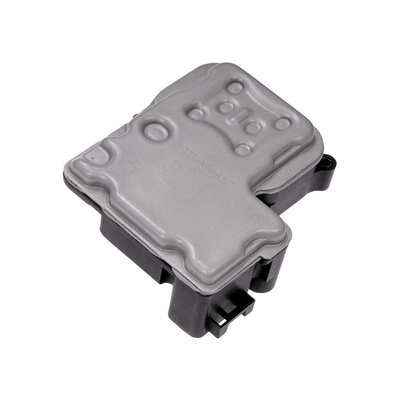
Below are the parts most often responsible for code C1266, ranked by how frequently each one is the actual culprit (per the diagnosis above). Tap any to see what we have for your vehicle.


The information in this article is provided for general reference and educational purposes only. Vehicle specifications, procedures, and part compatibility can vary by production date, trim level, and region. Always consult your vehicle's factory service manual and verify part numbers before purchasing or performing repairs. Safety-critical components such as airbags, seat belts, and braking systems should be installed by a qualified professional.
- 🧭 Diagnostic Flowchart
- 🛍️ Shop This Part
- What Does C1266 Mean?
- Can I Drive With C1266?
- Common Causes
- Symptoms
- Common Fixes & Costs
- Used vs. New Parts: Buying Guide
- What Happens If You Wait — Timeline
- Cost of Not Fixing It
- Diagnosis Steps
- When This Code Triggers (Freeze-Frame Conditions)
- Related Codes
- Climate & Environmental Factors
- How to Talk to a Mechanic About This Code
- Where to Take It: Dealer vs Independent vs Chain
- When to Walk Away From the Repair
- What Scan Tool You Need for This Code
- How to Clear the Code After You Fix It
- Will This Fail Emissions / State Inspection?
- Most Commonly Affected Vehicles
- Manufacturer-Specific Notes
- Real Owner Stories
- 2005 Ford Crown Victoria at 165K miles
- 2008 Ford F-150 with ABS/Brake lights on
- Ford Transit with intermittent ABS light
- How to Prevent This Code From Triggering
- Frequently Asked Questions
- What is the most common misdiagnosis for C1266?
- Can I install a used ABS module from a junkyard?
- Can I just pull the ABS fuse to clear the light?
- Is it safe to drive with the ABS and brake light on?
- What is an ABS valve power relay?
- Should I repair my ABS module or buy a new one?
- Will a bad ABS module drain my battery?
- Can a bad ABS module prevent the car from starting?
- How long can I drive with the ABS light on?
- Can I bleed the brakes without a scan tool after replacing the module?
- Key Takeaways
- 🎟️ Get 5% Off