

OBD-II Code C1267: Distorted Signal / ABS Malfunction
What C1267 means, why it triggers, and how to fix it
- Code C1267 has no universal definition; it means a failed brake pedal load sensing switch on Toyotas, but indicates an internal ABS module failure on Fords and Chevrolets.
- On Toyota and Lexus models, fix this code by replacing the entire brake pedal support assembly, which costs between $400 and $700 for parts and labor.
- For 2001-2004 Chevrolet Corvettes, C1267 points to cracked solder joints inside the Electronic Brake Control Module (EBCM), best fixed by a $150-$300 mail-in repair service.
- Before replacing any expensive modules on Ford vehicles, test the battery; a resting voltage below 12.4V causes the ABS module to fail its startup self-test and trigger this code.
- Do not ignore this code; while standard brakes still work, the lack of ABS increases stopping distances by up to 20% on wet roads and causes steering loss during panic stops.
What Does C1267 Mean?
Code C1267 indicates the brake control module detected a problem within the ABS or stability control system. The specific meaning varies significantly by car manufacturer, pointing to a brake pedal sensor on a Toyota, an ABS module fault on a Ford, or a specific solenoid issue on a Chevrolet.
Technical definition: The official SAE/ISO definition for C1267 is not standardized. For Toyota/Lexus, it triggers when the Skid Control ECU detects illogical signals, such as an open or short in the brake pedal load sensing switch circuit for over 0.3 seconds. For Chevrolet/GM, it indicates a 'RR Inlet Valve Solenoid Malfunction' or a generic AWD system fault. For Ford, it is a generic 'ABS Functions Temporarily Disabled' code pointing to an internal module issue.
Can I Drive With C1267?
Yes, But With Caution. Yes, but with significant caution. Your standard hydraulic brakes function normally, but the Anti-lock Braking System (ABS), Traction Control, and Stability Control are disabled. This causes wheels to lock up and skid during hard braking, increases stopping distances on wet or icy surfaces, and causes a loss of steering control in emergencies. In regions with safety inspections, an active ABS warning light causes an automatic failure.
Common Causes
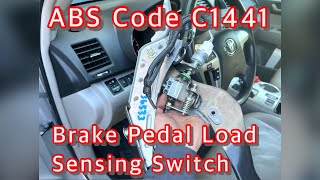
- Defective Brake Pedal Load Sensing Switch (Toyota/Lexus) (Very Common) — This is the most frequent cause on Toyota and Lexus models. The switch, which tells the computer how hard you press the brake pedal, fails internally or sends irrational signals. This switch is integrated into the brake pedal assembly 🎬 Watch: How to replace the Toyota brake pedal load sensing switch. and is not sold separately.
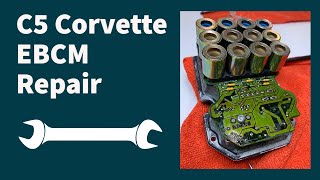
- Internal EBCM Relay/Solder Joint Failure (Chevrolet) (Very Common) — On GM vehicles, especially 2001-2004 C5 Corvettes, this code points directly to an internal failure of the Electronic Brake Control Module (EBCM). Cracked solder joints for a specific solenoid valve relay are the primary failure point.
- Low Battery Voltage on Startup (Common) — A weak battery causes a significant voltage drop when starting the engine. This causes the sensitive ABS module to fail its initial self-test and log a generic fault code like C1267. Rule this out first on Ford vehicles. 🎬 See these expert tips for troubleshooting Ford ABS module issues.
- Failed ABS Control Module (Ford) (Common) — For Ford vehicles, C1267 indicates a general ABS system failure traced back to a faulty ABS control module. This is an internal electronic fault or a failure in the pump motor.
- Damaged Wiring or Loose Connectors (Common) — Corrosion, chafing, or loose connections in the wiring harness leading to the brake pedal switch, ABS module, or EBCM interrupt the signal and trigger the code. Road salt corrosion is a primary culprit.
- Electromagnetic Interference (GM) (Less Common) — On 2018 Traverse and Enclave models, electromagnetic interference from adjacent wiring disrupts signals to the brake or AWD control module, setting a C1267. A specific wiring harness jumper fixes this per TSB 17-NA-313.
- Cracked or Corroded ABS Tone Ring (Uncommon) — Severe rust buildup or a crack on a CV axle tone ring creates highly erratic signals. This confuses the ABS module, causing it to log a general internal fault like C1267 before a more specific wheel speed sensor code appears.
Symptoms
- ABS and Traction Control Lights Illuminated — The ABS and Traction/Stability Control dashboard lights illuminate simultaneously, as these systems rely on the same sensors and disable together.
- ABS and Traction Control Inoperative — The physical systems disable entirely. Wheels lock up during hard braking, and traction control fails to prevent wheel spin on slippery surfaces.
- Brake Warning Light On — The general red brake system warning light illuminates alongside the ABS light, indicating a severe system fault.
- Service AWD Message (GM) — On certain GM models, C1267 triggers a 'Service AWD' message on the Driver Information Center.
- Battery Drains Overnight (GM Specific) — A faulty EBCM on C5 Corvettes causes a parasitic battery drain, leading to a dead battery if the vehicle sits for 24 to 48 hours.
Diagnostic Flowchart
Tap your situation to follow the diagnostic path that matches what you're seeing on this code.
Common Fixes & Costs
- Replace Brake Pedal Assembly (Toyota/Lexus) — Parts: $250-$450, Labor: $150-$250, ~2 hr book time (Intermediate)
- Repair or Replace ABS/EBCM Module (Ford/Chevrolet) — Parts: $150-$450 (Repair Service) / $800-$1600 (New), Labor: $150-$300, ~1.5 hr book time (Professional)
- Replace Battery / Correct Low Voltage — Parts: $120-$350, Labor: $0-$50, ~0.3 hr book time (DIY)
- Replace Brake Light Switch — Parts: $30-$140, Labor: $85-$125, ~0.8 hr book time (DIY)
- Repair Wiring or Connector — Parts: $10-$50, Labor: $100-$300, ~1.5 hr book time (Intermediate)
Used vs. New Parts: Buying Guide
When a used part is worth it: For a Toyota brake pedal assembly, a used part from a low-mileage vehicle saves significant money. For an ABS/EBCM module, buying used is risky; sending your original module to a repair service is superior.
Donor-vehicle mileage cap: roughly under 100000 miles for the part to have meaningful remaining life.
Donor quality checklist:
- Verify the exact part number matches; modules are VIN-specific.
- Ask about the donor vehicle's reason for being scrapped (avoid electrical fire or flood cars).
- For repair services, verify lifetime warranties and positive reviews on model-specific forums.
Decision logic:
- If The fault is a GM EBCM (C5 Corvette) or common Ford ABS module → Use a mail-in repair service. It is cheaper than new, avoids VIN programming, and provides a better warranty.
- If The fault is a Toyota brake pedal assembly and the new OEM part is over $300 → Purchase a used assembly from a reputable salvage yard.
- If The part is a new OEM module and costs over $1000 → Purchase a remanufactured unit from a major brand or use a repair service.
Warranty tradeoff: Used parts carry a 30-90 day warranty. Aftermarket remanufactured parts offer 1 year. Repair services frequently provide a lifetime warranty on the repair.
Worst-case if a used part fails: $300-$600 if a used module fails, covering repeat labor and shipping.
What Happens If You Wait — Timeline
- Immediate: ABS, Traction Control, and Stability Control warning lights illuminate. The safety systems disable. Conventional hydraulic brakes remain functional. (MPG impact: 0%% · Added cost: $0)
- Weeks to Months: The ongoing safety risk continues. The vehicle fails mandatory state safety inspections due to the illuminated ABS warning light. (MPG impact: 0%% · Added cost: $0)
- 1-6 Months (GM Specific): A faulty GM EBCM with a parasitic draw causes the battery to fail to start the car after sitting. Repeated deep cycling reduces battery lifespan. (MPG impact: 0%% · Added cost: $0-50)
- 6+ Months (GM Specific): The constant parasitic drain degrades the battery's health entirely, requiring premature replacement. (MPG impact: 0%% · Added cost: $120-$350)
Cost of Not Fixing It
- Immediate: Loss of anti-lock braking (ABS), traction control, and stability control. Increased risk of skidding and loss of steering control during emergency braking. (Added cost: $0)
- 0-6 Months: The vehicle fails mandatory state safety inspections due to the illuminated ABS warning light. (Added cost: $0)
- 6+ Months: On GM models with a faulty EBCM, a parasitic drain develops, leading to a dead battery and requiring premature battery replacement. (Added cost: $120-$350)
Diagnosis Steps
- Read the Code and Note Manufacturer
Use an OBD-II scanner capable of reading 'C' (Chassis) codes to confirm C1267 is present. The vehicle's make dictates the diagnostic path.
Tools: OBD-II Scanner (with ABS capability) (Beginner) - Check Battery and Charging System
Test the battery voltage (must be >12.4V at rest) and check the alternator output when running (13.7V-14.7V). A weak battery causes spurious ABS codes on Fords during startup.
Tools: Multimeter (Beginner) - Check Fuses
Locate the fuse box and check all fuses related to the ABS, EBCM, and stability control systems. Replace any blown fuses with one of the exact same amperage.
Tools: Fuse puller or needle-nose pliers (Beginner) - Visual Inspection of Wiring and Connectors
Inspect the wiring harness and connector related to the suspected component (brake pedal switch for Toyota, ABS module for Ford/Chevy). Look for green corrosion, bent pins, or loose chassis grounds.
Tools: Flashlight (Beginner) - Test the Brake Pedal Load Sensing Switch (Toyota/Lexus)
Disconnect the switch and measure its resistance. Specifications are 202-223 Ω when the pedal is released and 950-1050 Ω when fully depressed. Incorrect or open values confirm a faulty switch.
Tools: Multimeter, Basic hand tools (Intermediate) - Advanced Live Data Analysis (Toyota)
Use a scan tool to view live data PIDs. Slowly depress the brake pedal. The 'Stop Light Switch' must turn 'ON' first, followed by the 'Brake Pedal Load Sensing Switch'. If the load switch activates first or not at all, the assembly is faulty.
Tools: Advanced OBD-II Scanner (Intermediate) - Check for Power and Ground at the ABS/EBCM Module (Ford/Chevy)
Check for proper battery voltage (12V+) and a solid ground connection (less than 1 Ω resistance) at the main connector for the ABS/EBCM module. Loss of power or ground causes module communication failures.
Tools: Multimeter, Vehicle-specific wiring diagram (Advanced) - Perform Parasitic Draw Test (GM)
If a C5 Corvette battery dies overnight, perform a parasitic draw test. Wait 30 minutes for modules to sleep. If the draw exceeds 50mA, pull the ABS fuses. A significant drop in amperage confirms the EBCM is failing to shut down.
Tools: Multimeter with Amperage function (10A capacity) (Advanced) - Check Signal Waveform with Oscilloscope (Advanced)
Connect an oscilloscope to the Toyota brake pedal switch signal and ground wires. Pressing the pedal must produce a clean square wave or distinct voltage step. A noisy or flat-line signal confirms internal failure.
Tools: Oscilloscope (Professional)
When This Code Triggers (Freeze-Frame Conditions)
- Vehicle Speed: 0 mph (The code sets during the ignition-on self-test before the vehicle moves.)
- System Voltage: <11.5V (On Ford vehicles, low voltage during engine cranking causes the ABS module to fail its self-test.)
- Brake Pedal Switch: ON / OFF (Mismatch) (On Toyota/Lexus, freeze frame shows the 'Load Sensing Switch' as ON while the 'Stop Light Switch' is OFF for an implausible duration.)
- Engine Run Time: < 30 seconds (The fault is detected immediately after startup when the ABS/VSC system performs diagnostic checks.)
Related Codes
- C1249 — On Toyota/Lexus, this code for the stop light switch circuit appears with C1267. A fault in the C1249 stop light switch causes the ECU to incorrectly flag the C1267 switch. Diagnose and fix C1249 first.
- C1223 — A general ABS control system malfunction code. It is a companion code indicating the system is offline due to the critical C1267 fault. Resolving C1267 clears C1223.
- U1040 — On GM vehicles, indicates a 'Loss of Communication with TCS'. It sets alongside C1267 when the EBCM has an internal fault and stops communicating with other modules.
- C1214 — On C5 Corvettes, this code for 'Solenoid Valve Relay Contact Circuit Open' is a common companion to C1267. Both point to the same internal EBCM failure.
Climate & Environmental Factors
- Road Salt / Humidity: Moisture and salt penetrate wiring harness connectors and module seals, causing corrosion. This leads to high resistance or short circuits, triggering C1267.
- Extreme Cold: Low temperatures make aging wire insulation brittle, allowing moisture intrusion. It also causes temporary voltage drops that trigger a fault code upon startup.
- Temperature Cycling (Hot/Cold): Repeated expansion and contraction stresses electronic components, leading to cracked solder joints and internal circuit failures within the GM EBCM.
- Snow/Ice Buildup: Packed snow and ice around wheel hubs interfere with wheel speed sensor signals, confusing the ABS module enough to set a general internal fault code.
How to Talk to a Mechanic About This Code
Say this: "I have an ABS and traction control light on, and my scanner is showing code C1267. Based on my vehicle, I suspect it's the {brake pedal switch/ABS module}. Can you please confirm the diagnosis before replacing any parts?"
This shows you've done your research and points the mechanic to the most likely cause, saving diagnostic time. It establishes that you expect a specific diagnosis rather than agreeing to have parts replaced blindly.
Avoid saying:
- 'My ABS light is on, can you fix it?' (Too vague, leads to unnecessary diagnostics.)
- 'Just replace the ABS module.' (Don't authorize an expensive repair without professional confirmation.)
- 'Do whatever you think is best.'
Questions to ask before authorizing the repair:
- What specific tests did you perform to confirm the {ABS module/pedal assembly} is the point of failure?
- Have you checked for power, ground, and corrosion at the module's electrical connector?
- If you are recommending a new module, will it require programming to my vehicle's VIN, and is that included in the quote?
- What is the warranty on the part and the labor for this repair?
Where to Take It: Dealer vs Independent vs Chain
- Dealer:
Recommended only if the issue is a known TSB or requires complex programming. For common failures like a Corvette EBCM or Toyota pedal switch, they are not cost-effective.
Best for: Vehicles under warranty, Complex cases involving manufacturer-specific TSBs (like the GM wiring issue), Repairs requiring VIN-specific module programming
Downsides: Highest cost for parts and labor, often 1.5x to 2x an independent shop., Replaces full, expensive assemblies rather than performing smaller component repairs. (Typical cost: +75% vs. baseline) - Independent Shop:
Best fit for most scenarios. An experienced independent mechanic diagnoses the specific cause and works with you on cost-saving measures like using a remanufactured part.
Best for: Most out-of-warranty C1267 repairs., Diagnosing and replacing a Toyota brake pedal assembly or a Ford ABS module., Shops with ASE-certified technicians specializing in diagnostics.
Downsides: Quality and diagnostic capabilities vary widely., Lacks access to the latest manufacturer-specific software for programming new modules. (Typical cost: +0% vs. baseline)
When to Walk Away From the Repair
If the estimated repair cost exceeds 50% of the car's private-party value, sell or trade in the vehicle.
- Car worth $5000, fix is $2800: Walk away. The repair cost is over half the car's value.
- Car worth $15000, fix is $1500: Fix it. The repair is a small fraction of the car's value and restores a critical safety feature.
- Car worth $3000, fix is $1200: Borderline. This is a significant percentage of the car's value. Get a second opinion and explore module repair services before proceeding.
What Scan Tool You Need for This Code
Minimum: A scanner that reads and clears 'C' (Chassis/ABS) codes. A basic engine-only code reader will not see code C1267.
A standard $20 OBD-II reader only communicates with the engine control module. It cannot access the ABS control module where chassis codes are stored, resulting in a 'No Codes Found' message.
Budget: BlueDriver Pro (~$100) — Connects to a smartphone via Bluetooth. Reads and clears ABS codes, views live data from brake sensors, and generates repair reports.
Mid-range: Foxwell NT510 Elite (~$180) — A handheld scanner offering manufacturer-specific diagnostics. Provides bidirectional control to perform active tests on ABS components and run automated ABS bleed functions.
Professional: Autel MaxiCOM MK808 / MK808BT (~$500-600) — A professional tablet scanner with comprehensive all-system diagnostics, extensive service functions including ABS bleeding, and bidirectional control to test ABS pumps directly.
Rent vs buy: For a one-time diagnosis, auto parts stores scan ABS codes for free. To view live data or clear the code after repair, buying a budget-friendly ABS-capable scanner is required.
How to Clear the Code After You Fix It
- Perform the physical repair.
- Reconnect the battery if disconnected.
- Use an OBD-II scan tool with ABS capability to erase the C1267 fault code.
- Start the vehicle. The ABS light turns off after the initial system self-check.
Drive cycle (~20 minutes): A specific ABS drive cycle is not required; the system self-tests upon startup. To reset general OBD-II emissions monitors after a battery disconnect, idle for 3 minutes, then drive a mix of city (25-45 mph) and highway (55-60 mph) speeds for 20 minutes.
Readiness monitors affected: C1267 is a Chassis code and does not affect emissions readiness monitors., Disconnecting the battery during repair resets all emissions monitors to 'Not Ready'.
Watch out for:
- Using a basic code reader that cannot access or clear 'C' (Chassis) codes.
- Assuming disconnecting the battery clears the code from the ABS module's memory.
- Ignoring an ABS light that returns immediately, which indicates the repair failed.
Will This Fail Emissions / State Inspection?
No — by itself this code doesn't fail OBD inspection (but it can keep readiness monitors from setting, which causes a separate fail).
- California: An illuminated ABS warning light is a safety system failure and causes the vehicle to fail the safety portion of the inspection.
- New York: An illuminated ABS light is an advisory and not grounds for rejection on its own, provided standard brakes work. However, strict inspectors fail it.
- Texas: An ABS light alone does not cause a failure. If the red 'BRAKE' warning light is also on, the vehicle fails the inspection.
Most Commonly Affected Vehicles
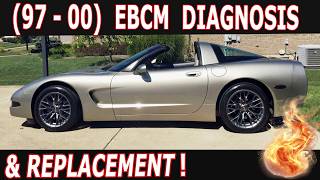
- Chevrolet Corvette (C5) (2001-2004) — C1267 indicates a 'RR Inlet Valve Solenoid Malfunction' due to internal EBCM failure. The 1997-2000 models use a different, non-repairable EBCM.
- Toyota Tundra (2012-2014) — Prone to C1267 due to failure of the brake pedal load sensing switch integrated into the brake booster or pedal assembly.
- Toyota Highlander (2003-2019) — Commonly reports this code relating to the brake pedal load sensing switch.
- Ford Focus (2005-2008) — Appears as a general ABS function failure traced to a faulty ABS pump or control module.
- Lexus RX 350 (2007-2009) — Experiences failures of the 'Pedal Force Switch', triggering C1267 along with ABS and VSC lights.
- Lexus GS 350 (2013-2013) — Subject to Safety Recall NTC-14140 for a manufacturing defect in the brake pedal load sensing switch.
- Chevrolet Traverse (2018-2018) — Sets C1267 due to electromagnetic interference, addressed by GM TSB 17-NA-313.
- Buick Enclave (2018-2018) — Shares the wiring interference issue with the Traverse, addressed by TSB 17-NA-313.
Manufacturer-Specific Notes
- Toyota / Lexus: The 'Brake Pedal Load Sensing Switch' is not available separately. The official repair requires replacing the entire brake pedal support assembly, increasing parts and labor costs.
- Chevrolet (Corvette): C1267 on a 2001-2004 C5 Corvette points to cracked internal relay solder points inside the EBCM. Specialty shops repair the module by re-soldering these connections for a fraction of replacement cost.
- Ford: The definition 'ABS Functions Temporarily Disabled' is vague. Always test the battery and charging system thoroughly before condemning the expensive ABS module, as low voltage triggers the code.
- Chevrolet / Buick: On 2018 Traverse and Enclave models, C1267 is caused by electromagnetic interference. TSB #17-NA-313 requires installing a twisted 3-jumper wiring harness (P/N 84329223) to shield the circuit.
- Lexus: Safety recall Campaign DSC (NHTSA ID 14V-144) covers some 2013 GS 350 models for a faulty brake pedal load sensing switch that causes unexpected braking.
Real Owner Stories
2014 Toyota Tundra with intermittent traction control light
The traction control light stayed on constantly. The truck drove normally, but traction control was inoperative in the rain.
Outcome: The owner sought a more reasonable solution. The issue was the brake pedal load sensing switch, integrated into the booster/pedal assembly.
Lesson: For Toyota/Lexus, C1267 points to the load sensing switch. Dealers quote replacing the entire actuator assembly when only the pedal/booster assembly is required. Always get a second opinion on $4,000+ quotes.
2003 Ford Focus with ABS lights after battery change
After jump-starting the car and replacing a bad battery, the ABS, traction control, and brake warning lights illuminated.
Outcome: The owner suspected the ABS module was damaged by the voltage fluctuation during the jump-start.
Lesson: On Ford vehicles, C1267 is triggered by low voltage events. Address battery health first. If a new battery fails to solve it, use a professional repair service for the original module.
2003 C5 Corvette with a battery dying overnight
The battery drained to 9.2V overnight. A parasitic draw test revealed a 1.3 amp draw.
Outcome: The high residual draw pointed to a module failing to sleep. On C5 Corvettes, a faulty EBCM causes this parasitic drain alongside C1267.
Lesson: If a C5 Corvette has a parasitic drain and ABS codes, the EBCM is the primary suspect. Pulling the ABS fuses during a draw test confirms the diagnosis.
2008 Lexus RX 350 with multiple ABS lights after a minor fender-bender
After a low-speed bump in traffic, the ABS, VSC, and brake warning lights illuminated.
Outcome: The impact damaged the sensitive switch inside the brake pedal assembly.
Lesson: Physical shocks damage sensitive electronic sensors. On a Toyota/Lexus, if C1267 appears after an impact, replace the pedal force/load sensing switch assembly.
How to Prevent This Code From Triggering
- Perform regular brake fluid flushes (Every 2-3 years or 30,000 miles) — Brake fluid absorbs moisture over time. This moisture corrodes the sensitive internal valves and electronic components of the ABS/EBCM module, leading to failure.
- Maintain a healthy battery and clean terminals (Ongoing / Every oil change) — Low voltage during startup is a primary cause of spurious C1267 codes on Fords. Using a battery tender prevents deep discharge, which damages electronic modules.
- Protect electrical connectors in harsh climates (As needed or during service) — Applying dielectric grease to the weather pack seal of the main ABS/EBCM connector prevents moisture intrusion and corrosion, stopping signal dropouts.
- Periodically activate the ABS system (Once or twice a year) — Braking hard enough to engage the ABS on a safe, wet road cycles the internal valves and pump motor, preventing them from seizing due to long-term inactivity.
Frequently Asked Questions
Can I fix code C1267 myself?
It depends on the vehicle and your skill level. Replacing a Toyota brake pedal assembly is an intermediate job requiring under-dash work. Removing a Ford or Chevy ABS module to send to a repair service is highly cost-effective and manageable for a skilled DIYer.
Will my brakes fail if I have code C1267?
Your primary hydraulic brakes function normally. However, your Anti-lock Brakes (ABS) and Traction/Stability Control are disabled. This causes your wheels to lock up and skid during a panic stop, increasing stopping distance on wet or icy roads.
Is there a recall for code C1267?
There is no universal recall, but specific manufacturer recalls exist for the underlying causes. For example, Lexus issued Safety Recall Campaign DSC (NHTSA ID 14V-144) for 2013 GS 350 models due to a faulty brake pedal load sensing switch. Always check your VIN on the NHTSA database.
What are the most common mistakes when diagnosing C1267?
A frequent error on Fords is replacing the ABS module without testing the battery, as low voltage triggers the code. On Toyotas, mechanics often replace the pedal assembly for C1267 without first fixing companion code C1249. Always inspect wiring harnesses and ground connections before condemning expensive modules.
Why did my ABS and Traction Control lights turn on at the same time?
The ABS and Traction Control systems share the same wheel speed sensors and control modules. When a critical fault like C1267 disables the ABS, the Traction Control system automatically shuts down as a safety precaution because it lacks reliable braking data.
How do I clear the C1267 code?
After completing the repair, use an OBD-II scanner with ABS capabilities to erase the code. The ABS light usually turns off after the system passes its self-test during the next startup. If the light returns immediately, the underlying problem remains.
A mechanic quoted me over $4,000 for a C1267 on my Toyota Tundra. Is that reasonable?
No, a quote that high typically means the shop is replacing the entire brake booster and pump actuator assembly unnecessarily. The fix for C1267 alone usually requires only the pedal assembly, costing $400 to $700. Always request a detailed estimate breakdown and get a second opinion.
What happens if I just keep driving with a bad ABS module?
While the car drives and stops conventionally, you lose critical emergency safety features. You will not have anti-lock braking to prevent skids, nor traction control to maintain grip on slippery surfaces. Repair the system promptly to ensure vehicle safety and pass state inspections.
Key Takeaways
- Code C1267 has no universal definition; it means a failed brake pedal load sensing switch on Toyotas, but indicates an internal ABS module failure on Fords and Chevrolets.
- On Toyota and Lexus models, fix this code by replacing the entire brake pedal support assembly, which costs between $400 and $700 for parts and labor.
- For 2001-2004 Chevrolet Corvettes, C1267 points to cracked solder joints inside the Electronic Brake Control Module (EBCM), best fixed by a $150-$300 mail-in repair service.
- Before replacing any expensive modules on Ford vehicles, test the battery; a resting voltage below 12.4V causes the ABS module to fail its startup self-test and trigger this code.
- Do not ignore this code; while standard brakes still work, the lack of ABS increases stopping distances by up to 20% on wet roads and causes steering loss during panic stops.
Helpful Videos
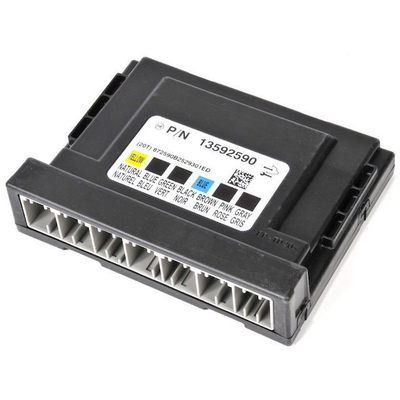
Shop the Parts Behind C1267
Below are the parts most often responsible for code C1267, ranked by how frequently each one is the actual culprit (per the diagnosis above). Tap any to see what we have for your vehicle.



The information in this article is provided for general reference and educational purposes only. Vehicle specifications, procedures, and part compatibility can vary by production date, trim level, and region. Always consult your vehicle's factory service manual and verify part numbers before purchasing or performing repairs. Safety-critical components such as airbags, seat belts, and braking systems should be installed by a qualified professional.
- 🧭 Diagnostic Flowchart
- 🎬 Helpful Videos
- 🛍️ Shop This Part
- What Does C1267 Mean?
- Can I Drive With C1267?
- Common Causes
- Symptoms
- Common Fixes & Costs
- Used vs. New Parts: Buying Guide
- What Happens If You Wait — Timeline
- Cost of Not Fixing It
- Diagnosis Steps
- When This Code Triggers (Freeze-Frame Conditions)
- Related Codes
- Climate & Environmental Factors
- How to Talk to a Mechanic About This Code
- Where to Take It: Dealer vs Independent vs Chain
- When to Walk Away From the Repair
- What Scan Tool You Need for This Code
- How to Clear the Code After You Fix It
- Will This Fail Emissions / State Inspection?
- Most Commonly Affected Vehicles
- Manufacturer-Specific Notes
- Real Owner Stories
- 2014 Toyota Tundra with intermittent traction control light
- 2003 Ford Focus with ABS lights after battery change
- 2003 C5 Corvette with a battery dying overnight
- 2008 Lexus RX 350 with multiple ABS lights after a minor fender-bender
- How to Prevent This Code From Triggering
- Frequently Asked Questions
- Can I fix code C1267 myself?
- Will my brakes fail if I have code C1267?
- Is there a recall for code C1267?
- What are the most common mistakes when diagnosing C1267?
- Why did my ABS and Traction Control lights turn on at the same time?
- How do I clear the C1267 code?
- A mechanic quoted me over $4,000 for a C1267 on my Toyota Tundra. Is that reasonable?
- What happens if I just keep driving with a bad ABS module?
- Key Takeaways
- 🎟️ Get 5% Off