

OBD-II Code C1274: Comprehensive Diagnostic and Repair Guide
The Ultimate Resource for Understanding, Diagnosing, and Fixing C1274
- Code C1274 disables your ABS and traction control systems, increasing stopping distances and skid risk on slippery roads.
- On Toyota vehicles, C1274 almost always points to a failed left rear wheel speed sensor requiring a $150 to $300 replacement.
- On Hyundai and Kia models, C1274 indicates a G-Sensor fault, but is frequently triggered by a cracked $30 ABS tone ring.
- Never replace a $400 G-Sensor or Yaw Rate sensor without first performing a visual inspection of the wheel hubs and verifying live scanner data.
What Does C1274 Mean?
Code C1274 is a manufacturer-specific chassis code indicating a fault in the vehicle dynamics control system. For Toyota and Lexus, it flags a 'Low Output Signal' from the Left Rear Wheel Speed Sensor. For Hyundai and Kia, it indicates a 'G-Sensor Signal Fail' measuring forward and backward acceleration. Regardless of the manufacturer, the vehicle disables ABS and Stability/Traction Control as a fail-safe.
Technical definition: The SAE/ISO definition for C1274 depends on the manufacturer: - **Toyota/Lexus:** 'Low Output Signal of Rear Speed Sensor LH'. The left rear wheel speed sensor signal is weak or absent. - **Hyundai/Kia:** 'G-Sensor Signal Fail' or 'Longitudinal G Sensor-Electrical'. The sensor's output voltage is outside the normal 0.6V to 4.5V operating range. - **Nissan:** 'Solenoid Relay #1 Circuit Failure' in the ABS actuator. - **Mitsubishi:** 'Motor Relay (Stuck On)' in the ABS pump. All definitions result in the immediate deactivation of ABS, TCS, and ESC systems.
Can I Drive With C1274?
Yes, But With Caution. Yes, but drive cautiously. Code C1274 disables your Anti-lock Braking System (ABS) and Electronic Stability Control (ESC). Your base brakes still function, but stopping distances on slippery surfaces increase, and the vehicle will not assist in preventing skids during panic stops. Repair this immediately to restore critical safety functions.
Common Causes
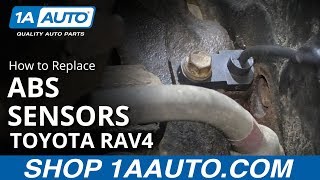
- Faulty Wheel Speed Sensor (Very Common) — On Toyota and Lexus models, this code points directly to a failed left rear wheel speed sensor. 🎬 Watch: Step-by-step guide to replacing a Toyota wheel speed sensor. These sensors fail internally from age or become blinded by heavy brake dust and road grime.
- Faulty Yaw Rate / G-Sensor (Very Common) — On Hyundai and Kia models, this code flags the G-sensor. These sensitive electronic gyroscopes fail internally from age, moisture intrusion, or physical shock from severe potholes.
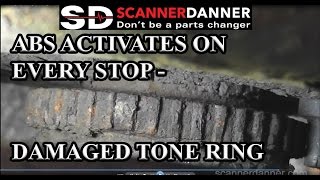
- Damaged or Fouled ABS Tone Ring (Common) — The wheel speed sensor reads a notched magnetic ring on the axle. Rust causes these rings to swell and crack, sending an erratic signal. 🎬 See how to replace a damaged or cracked ABS reluctor ring. Hyundai control modules frequently misinterpret this cracked ring signal as a G-sensor failure.
- Corroded Wiring or Connectors (Common) — Wiring in the wheel wells and under the chassis is exposed to water and road salt. Corroded connector pins or chafed wires sever the sensor's communication with the control module.
- Failing Wheel Hub Bearing (Less Common) — Modern vehicles integrate the ABS tone ring into the wheel bearing. If the bearing develops excessive play, it damages the tone ring or pushes it too far from the sensor, dropping the signal.
- Faulty ABS/ESC Control Module (Rare) — The main computer for the stability system fails internally. Consider this only after thoroughly testing all sensors, wiring, and tone rings.
Symptoms
- ABS and Traction/Stability Lights Illuminated — The 'ABS' and traction control (car with squiggly lines) dashboard lights illuminate steadily, confirming the systems are offline.
- Loss of Active Safety Systems — Tires spin easily on acceleration, and the vehicle is highly prone to skidding during sharp turns or on wet surfaces.
- Intermittent Flashing of Stability Light — The stability control light flickers while driving over bumps or during turns, indicating a loose wire or a cracked tone ring.
- Cruise Control Disabled — The vehicle disables cruise control as a mandatory safety measure when ABS or stability faults are active.
Diagnostic Flowchart
Tap your situation to follow the diagnostic path that matches what you're seeing on this code.
Common Fixes & Costs
- Replace Wheel Speed Sensor
— Parts: $50-$150, Labor: $100-$150, ~1.0 hr book time
(DIY)
Toyota Corolla (2003-2013): OEM 89546-02040 (Rear Left) (Alt: {"brand": "Denso", "part_number": "ABS2419", "price_comparison": "~60-75% of OEM"}) - Replace Yaw Rate / G-Sensor
— Parts: $200-$600, Labor: $150-$225, ~1.5 hr book time
(Intermediate)
Hyundai Santa Fe (2002-2006): OEM 95690-3A000 - Replace ABS Tone Ring or CV Axle — Parts: $30-$150, Labor: $150-$225, ~1.5 hr book time (Intermediate)
- Repair Wiring or Clean Connector — Parts: $10-$30, Labor: $150-$225, ~1.5 hr book time (Intermediate)
- Replace Wheel Hub Bearing Assembly — Parts: $150-$300, Labor: $200-$300, ~2.0 hr book time (Intermediate)
Used vs. New Parts: Buying Guide
When a used part is worth it: For an expensive Yaw Rate / G-Sensor, a used part from a reputable salvage yard with a warranty is a cost-effective option. For inexpensive Wheel Speed Sensors, new aftermarket or OEM parts are mandatory due to their exposure to harsh conditions.
Donor-vehicle mileage cap: roughly under 100000 miles for the part to have meaningful remaining life.
Donor quality checklist:
- Verify the part number on the used sensor exactly matches the original.
- Ensure the donor vehicle was not a flood vehicle, as moisture ruins these electronics.
- Purchase from a seller offering at least a 90-day warranty.
Decision logic:
- If The part is a Wheel Speed Sensor → Buy new. The cost savings for a used part are minimal and not worth the risk of premature failure.
- If The part is a Yaw Rate / G-Sensor and the vehicle is over 10 years old → A warrantied used part is a reasonable choice to save significant money.
- If The part is an ABS Control Module → Use a professional rebuild service for your original module to avoid dealership VIN programming fees.
Warranty tradeoff: Used parts typically have a 30-90 day warranty. New aftermarket parts offer 1-year to limited lifetime warranties. New OEM parts carry a 1-year warranty.
Worst-case if a used part fails: $250-$500 if a used sensor fails after installation, primarily due to repeated diagnostic and labor costs.
What Happens If You Wait — Timeline
- Immediate: Code C1274 is set. ABS, Traction Control, and Electronic Stability Control warning lights illuminate. All three systems are disabled. (MPG impact: 0%% · Added cost: $0)
- 1 week - 3 months: Continued operation without active safety systems. The vehicle fails annual safety inspections in strict states. (MPG impact: 0%% · Added cost: $50-$150)
- 3-12 months: An erratic wheel speed sensor sends false signals to the ABS module, causing momentary, unwanted ABS activation at low speeds. (MPG impact: 0-1%% · Added cost: $100-$400)
- 12+ months: Corroded connectors rot completely, or a loose tone ring contacts and destroys the wheel speed sensor. (MPG impact: 0%% · Added cost: $250-$700)
Cost of Not Fixing It
- Immediate: Loss of ABS, traction control, and stability control. Increased risk of skidding and longer stopping distances on slippery surfaces. (Added cost: Potential cost of an insurance deductible or total loss of vehicle.)
- 1-6 months: An erratic wheel speed sensor signal causes unwanted ABS activation, leading to uneven brake pad and tire wear. (Added cost: $200-$600 for premature replacement of tires or brake pads.)
- 6+ months: The vehicle remains unsafe to operate in emergency situations. In states with safety inspections, the vehicle fails immediately. (Added cost: Negligible direct mechanical cost, but immense and ongoing safety liability.)
Diagnosis Steps
- Read Codes and Freeze Frame Data
Use an ABS-capable OBD-II scanner to confirm C1274. Note the specific manufacturer definition provided by the scanner (e.g., 'G-Sensor' vs. 'Rear Speed Sensor') to direct your troubleshooting.
Tools: OBD-II Scanner (with ABS capability) (Beginner) - View Live Data with an Advanced Scanner
Monitor live data from all four wheel speed sensors and the G-sensor. Wheel speed sensors must read 0 mph when stopped and increase smoothly with vehicle speed. The Longitudinal G-sensor must read near 0 G when stationary on level ground. Identify which sensor is unresponsive or erratic.
Tools: Advanced OBD-II Scanner (Intermediate) - Visual Inspection of Wheel-End Components
Inspect the suspect wheel speed sensor, wiring, and ABS tone ring. Look for cut wires, green corrosion inside the connector, and cracks or heavy rust on the tone ring. A cracked tone ring is the primary cause of misdiagnosed G-sensor codes on Hyundai models.
Tools: Flashlight, Jack, Jack Stands (Beginner) - Locate and Inspect the Yaw Rate / G-Sensor
If diagnosing a Hyundai/Kia, locate the G-Sensor under the center console or front seats. Inspect its wiring connector for corrosion or damage, and ensure the sensor is bolted tightly to the floorpan.
Tools: Trim removal tools, Flashlight (Intermediate) - Test Wheel Speed Sensor Resistance (Toyota)
Disconnect the left rear wheel speed sensor. Measure the resistance between its two pins. A healthy Toyota sensor reads between 1.4 and 1.8 kΩ. Readings outside this range confirm internal sensor failure.
Tools: Multimeter, Jack, Jack Stands (Advanced) - Test G-Sensor Voltage (Hyundai/Kia)
Back-probe the signal wire at the G-Sensor connector. With the ignition on and the vehicle level, voltage must be stable around 2.5V. A voltage stuck below 0.6V or above 4.5V indicates a failed sensor or a wiring short.
Tools: Multimeter, Vehicle-specific wiring diagram (Advanced) - Check Sensor Power and Ground
Verify the suspect sensor receives the correct reference voltage (5V or 12V) and has a solid ground connection. Missing power or ground indicates a wiring harness failure, not a bad sensor.
Tools: Multimeter, Vehicle-specific wiring diagram (Advanced) - Analyze Signal with an Oscilloscope
Connect an oscilloscope to the wheel speed sensor signal wire and spin the wheel. A missing, noisy, or erratic waveform confirms a bad sensor, damaged tone ring, or excessive air gap.
Tools: Oscilloscope, Jack, Jack Stands (Professional)
When This Code Triggers (Freeze-Frame Conditions)
- Vehicle Speed: 10-30 mph (Low-speed driving, often during turns or braking when the system performs self-checks.)
- Engine RPM: 800-2000 RPM (Varies from idle to light acceleration.)
- System Voltage: 12.5-14.5V (Normal operating voltage; fault is not typically power-supply related.)
- Brake Pedal Status: On or Off (The fault triggers during both braking and non-braking events.)
Related Codes
- C1273 — The direct counterpart to C1274 on Toyota vehicles, indicating a 'Low Output Signal' for the Right Rear sensor. If both are present, suspect a damaged wiring harness or failed ABS module.
- C1404 / C0215 — General malfunction codes for the Left Rear Wheel Speed Sensor circuit. C1274 is the specific 'Test Mode' version of these exact faults on Toyota models.
- C1234 — Indicates a Yaw Rate Sensor Malfunction. On Hyundai/Kia vehicles, seeing C1234 alongside C1274 confirms the entire combined sensor cluster unit has failed.
- C1219 — Indicates a Steering Angle Sensor (SAS) circuit malfunction. A fault here forces the ECU to disable the entire stability system, occasionally triggering secondary codes.
Climate & Environmental Factors
- Road Salt & Humidity: Salt spray accelerates corrosion, causing ABS tone rings to swell and crack, seizing wheel speed sensors in their bores, and rotting wiring connectors.
- Debris Contamination: Metallic brake dust packs into the teeth of the tone ring or coats the magnetic tip of the wheel speed sensor, blinding the sensor and triggering a low output fault.
- Extreme Cold: Freezing temperatures make plastic wiring insulation brittle and cause metal connector pins to contract, exposing intermittent electrical faults.
How to Talk to a Mechanic About This Code
Say this: "I have an ABS and traction control light on, and my scanner shows code C1274. I'd like to schedule a diagnostic appointment. My vehicle is a [Make/Model], so the code likely points to either a G-Sensor or a wheel speed sensor circuit. I'd like you to start by inspecting the relevant sensors, wiring, and especially the ABS tone rings before recommending a part replacement."
This signals you understand the specific nuances of code C1274. It directs the technician toward a logical diagnostic process and prevents costly misdiagnoses, like replacing a G-Sensor when the real problem is a cracked tone ring.
Avoid saying:
- 'Just fix whatever's wrong'
- 'My ABS light is on, can you look at it?'
- 'I think I need a new G-Sensor.'
Questions to ask before authorizing the repair:
- Did you find a cracked ABS tone ring?
- Can you show me the live data from the wheel speed sensors to confirm they are reading correctly?
- If you are recommending a G-Sensor replacement, does the estimate include the mandatory 'Zero Point Calibration'?
- What is the warranty on the recommended parts and labor?
Where to Take It: Dealer vs Independent vs Chain
- Dealer:
Best for: Vehicles still under warranty, Complex electrical issues requiring a factory-level scan tool, When a 'Zero Point Calibration' is needed and independent shops lack the tool
Downsides: Highest labor rates and part costs., Inclined to replace entire assemblies rather than perform component repairs. (Typical cost: +40% vs. baseline) - Independent Shop:
Best fit. A well-vetted independent shop with an ABS-capable scanner offers the best balance of expertise and value.
Best for: Out-of-warranty vehicles where cost is a factor., Diagnosing common failure patterns like cracked tone rings or bad wheel speed sensors.
Downsides: Quality varies; you must find an ASE-certified shop., May lack the advanced scanner needed for calibration on specific models. (Typical cost: +0% vs. baseline) - Chain Shop:
Use with caution. Acceptable for a straightforward wheel speed sensor replacement, but avoid for initial diagnosis.
Best for: Simple, clear-cut repairs like replacing an accessible wheel speed sensor.
Downsides: Technician skill is inconsistent., Lacks the diagnostic depth to handle G-Sensor vs. tone ring misdiagnoses., High pressure to upsell services. (Typical cost: -10% vs. baseline)
When to Walk Away From the Repair
If the estimated repair cost for the C1274 fault exceeds 40-50% of your car's private-party value, consider selling or trading in the vehicle.
- Car worth $4000, fix is $850: Fix it. This repair cost is well below the threshold.
- Car worth $3000, fix is $1800: Walk away. A high quote like this likely involves a failed ABS control module, and the cost is over 50% of the car's value.
- Car worth $15000, fix is $1200: Fix it. The repair cost is a small fraction of the vehicle's value.
What Scan Tool You Need for This Code
Minimum: A scanner that reads and clears ABS/Chassis (C-prefix) codes. A basic engine-only code reader will NOT see code C1274.
A standard $20 scanner only communicates with the Engine Control Unit. C1274 is stored in the ABS control module. Without an ABS scanner, you cannot pull the code, view live data, or clear the light.
Budget: Autel AutoLink AL619 / Foxwell NT604 Elite (~$90) — Reads and clears ABS codes. Provides live data from wheel speed sensors to identify unresponsive units.
Mid-range: Foxwell NT510 Elite / Innova 5610 (~$180) — Includes special service functions like 'Zero Point Calibration' for the Yaw Rate/G-Sensor, which is mandatory after replacement.
Professional: Autel MaxiCOM MK808 / Launch X431 Series (~$450) — Full bidirectional control. Performs ABS Auto Bleed, offers comprehensive calibration functions, and provides detailed live data graphing.
Rent vs buy: Auto parts stores lend scanners, but they are often basic engine readers. Call ahead to confirm they have an ABS-capable scanner. Buying a budget scanner is cheaper than one hour of shop diagnostic labor.
How to Clear the Code After You Fix It
- Use an ABS-capable OBD-II scan tool to clear the chassis fault codes.
- Perform a 'Zero Point Calibration' if a Yaw Rate/G-Sensor was replaced.
- Perform a test drive to allow the system to run its self-checks.
Drive cycle (~15 minutes): Start the engine and idle for 2 minutes. Drive straight above 20 mph for several minutes to allow the system to test the wheel speed sensors. Make several slow left and right turns. The warning lights extinguish immediately if the repair is successful.
Readiness monitors affected: Not applicable for emissions readiness, ABS/ESC system has its own internal readiness status
Watch out for:
- Forgetting to perform Zero Point Calibration for a Yaw/G-Sensor prevents the code from clearing.
- Using a basic engine code reader that cannot access or clear Chassis (C-prefix) codes.
- Clearing the code without fixing the underlying fault causes the lights to return immediately.
Will This Fail Emissions / State Inspection?
No — by itself this code doesn't fail OBD inspection (but it can keep readiness monitors from setting, which causes a separate fail).
- California: An ABS light does NOT cause a failure of the California Smog Check, which only tests emissions.
- New York: An illuminated ABS warning light causes an immediate failure of the annual safety inspection.
- Texas: The ABS light is checked during the state safety inspection. An illuminated ABS light results in an inspection failure.
Most Commonly Affected Vehicles
- Toyota Corolla (2003-2013) — C1274 almost exclusively indicates a fault with the left rear wheel speed sensor or its circuit.
- Hyundai Santa Fe (2002-2006) — Frequently misdiagnosed as a G-Sensor failure. The root cause is almost always a cracked ABS tone ring on a rear CV axle (TSB 04-50-002).
- Kia Sorento (2011-2020) — Points to a G-Sensor Error or a failure of the wheel speed sensor integrated into the rear hub bearing assembly.
- Toyota 4Runner (2003-2009) — Prone to rear wheel speed sensor circuit failures caused by damaged wiring harnesses in the wheel wells.
- Hyundai Genesis (2009-2014) — Refers to the Longitudinal G Sensor. Failure disables the Automatic Vehicle Hold (AVH) and Electronic Parking Brake systems.
- Volkswagen Golf / Jetta (2006-2018) — Commonly exhibits identical symptoms caused by a failed rear wheel speed sensor or a rotted ABS tone ring.
- Subaru Outback / Forester (2010-2017) — Intermittent ABS faults are frequently traced to broken plastic connectors at the electronic parking brake module.
- Toyota Sequoia (2001-2007) — Known to set yaw rate sensor codes requiring VSC calibration procedures (TSB BR001-02) after sensor replacement.
Manufacturer-Specific Notes
- Toyota / Lexus: C1274 is a 'Test Mode DTC' for the Left Rear Speed Sensor. The fault is detected during a diagnostic self-check and points directly to the left rear wheel speed sensor circuit. Diagnosis must focus on the sensor, wiring, and tone ring.
- Hyundai / Kia: C1274 relates to the G-Sensor. However, the control module frequently misinterprets a nonsensical signal from a cracked ABS tone ring as a G-Sensor failure. Always inspect the tone rings visually before replacing the expensive G-Sensor.
- Ford: While C1274 is not a standard Ford code, identical symptoms (ABS, AdvanceTrac, and Hill Start Assist lights) are almost always caused by a faulty ABS wheel speed sensor or a cracked tone ring.
- Mitsubishi: C1274 means 'Motor Relay (Stuck On)', pointing to a fault in the ABS pump motor's relay integrated into the hydraulic unit. Diagnosis focuses on testing the relay and motor circuit, not wheel sensors.
Real Owner Stories
2005 Hyundai Santa Fe (~110k miles) - The Classic Misdiagnosis
ABS and TCS lights illuminated steadily. Code reader showed C1274 for G-Sensor Signal Failure.
What they tried:
- Mechanic quoted $700 to replace the G-Sensor located under the center console.
- Owner researched online and found Hyundai TSB 04-50-002 regarding misdiagnosis.
- Visually inspected the rear axle shafts.
Outcome: Found a cracked and rusted ABS tone ring on the rear driver's side CV axle. The owner purchased a new tone ring for $25 and paid a shop $120 to press it on. Cleared the codes, and the problem was solved.
Lesson: On Hyundai/Kia vehicles, ALWAYS visually inspect the ABS tone rings for cracks before replacing the expensive G-Sensor.
2008 Toyota 4Runner at 155K miles - The Simple Fix
ABS, VSC, and TRAC OFF lights illuminated. Scanned at an auto parts store and retrieved code C1274, pointing to the left rear wheel speed sensor.
What they tried:
- Purchased an aftermarket wheel speed sensor for $65.
- Attempted DIY replacement but the old sensor was seized with rust in the steering knuckle.
Outcome: The owner took it to a mechanic who drilled out the old sensor and installed the new one for $180 in labor. The lights extinguished permanently.
Lesson: Replacing a wheel speed sensor is straightforward, but rust makes removal extremely difficult. Be prepared to drill out the old sensor or pay a shop for extra labor.
2012 Kia Sorento at 85K miles - The Wiring Gremlin
ABS/ESC lights on, code C1274 for G-Sensor Error. The lights toggled on and off when hitting bumps.
What they tried:
- Replaced the G-Sensor with a used part for $150. The problem persisted.
- Took the vehicle to a dealership for diagnosis.
Outcome: The technician traced the wiring and found a harness under the passenger seat rubbing against a bracket, causing an intermittent short to ground. They repaired the wire for $350 in diagnostic time and labor.
Lesson: Intermittent symptoms that change with bumps point to a wiring issue. A thorough visual inspection of the wiring harness saves the cost of replacing perfectly good parts.
How to Prevent This Code From Triggering
- Clean wheel speed sensors and tone rings. (Whenever brakes are serviced or tires are rotated.) — Metallic brake dust builds up on the sensor's magnetic tip and in the tone ring teeth, weakening the signal and causing a 'low output' fault.
- Apply a rust inhibitor to exposed tone rings. (When installing new axles or tone rings.) — Applying a light coat of rust-inhibiting paint prevents untreated steel tone rings from rusting, swelling, and cracking.
- Apply dielectric grease to sensor connectors. (Anytime a sensor connector is disconnected.) — Dielectric grease seals out moisture and oxygen, preventing the corrosion that leads to poor connections and signal loss.
- Inspect and secure wiring harnesses in wheel wells. (During oil changes or tire rotations.) — Securing loose harnesses with zip ties prevents wires from chafing against suspension components and severing the sensor signal.
Frequently Asked Questions
Can I just replace the sensor to fix code C1274?
Sometimes, but it is a gamble. The code indicates a circuit fault, which includes wiring, connectors, and tone rings. Replacing the sensor without diagnosis wastes money if the true cause is a $10 wiring break.
My scanner says 'G-Sensor', but could it be a wheel issue?
Yes. Hyundai control modules frequently misinterpret a nonsensical signal from a cracked ABS tone ring as a G-Sensor fault. Always inspect tone rings before replacing a G-Sensor.
What is a Yaw Rate or G-Sensor?
It is a small electronic gyroscope that measures the car's turning rate and G-forces. The stability control system uses this data to detect skids and intervene.
Will clearing the code fix the problem?
No. Clearing the code turns the lights off temporarily, but the module detects the hard fault during its next self-test and triggers the code again.
Is Zero Point Calibration required after replacing a sensor?
Yes. Replacing a Yaw Rate or G-Sensor requires calibration with an advanced scan tool to establish the sensor's baseline for 'straight and level'.
Why did my ABS, Traction, and Brake lights all illuminate?
These systems share the same sensors. When one sensor fails, the main computer disables all related safety systems as a fail-safe, illuminating all warning lights.
Can a bad alignment cause code C1274?
No. C1274 is an electrical or signal-integrity fault. While severe suspension damage could sever a sensor wire, the alignment itself does not trigger this code.
Key Takeaways
- Code C1274 disables your ABS and traction control systems, increasing stopping distances and skid risk on slippery roads.
- On Toyota vehicles, C1274 almost always points to a failed left rear wheel speed sensor requiring a $150 to $300 replacement.
- On Hyundai and Kia models, C1274 indicates a G-Sensor fault, but is frequently triggered by a cracked $30 ABS tone ring.
- Never replace a $400 G-Sensor or Yaw Rate sensor without first performing a visual inspection of the wheel hubs and verifying live scanner data.
Helpful Videos

Shop the Parts Behind C1274
Below are the parts most often responsible for code C1274, ranked by how frequently each one is the actual culprit (per the diagnosis above). Tap any to see what we have for your vehicle.



The information in this article is provided for general reference and educational purposes only. Vehicle specifications, procedures, and part compatibility can vary by production date, trim level, and region. Always consult your vehicle's factory service manual and verify part numbers before purchasing or performing repairs. Safety-critical components such as airbags, seat belts, and braking systems should be installed by a qualified professional.
- 🧭 Diagnostic Flowchart
- 🎬 Helpful Videos
- 🛍️ Shop This Part
- What Does C1274 Mean?
- Can I Drive With C1274?
- Common Causes
- Symptoms
- Common Fixes & Costs
- Used vs. New Parts: Buying Guide
- What Happens If You Wait — Timeline
- Cost of Not Fixing It
- Diagnosis Steps
- When This Code Triggers (Freeze-Frame Conditions)
- Related Codes
- Climate & Environmental Factors
- How to Talk to a Mechanic About This Code
- Where to Take It: Dealer vs Independent vs Chain
- When to Walk Away From the Repair
- What Scan Tool You Need for This Code
- How to Clear the Code After You Fix It
- Will This Fail Emissions / State Inspection?
- Most Commonly Affected Vehicles
- Manufacturer-Specific Notes
- Real Owner Stories
- 2005 Hyundai Santa Fe (~110k miles) - The Classic Misdiagnosis
- 2008 Toyota 4Runner at 155K miles - The Simple Fix
- 2012 Kia Sorento at 85K miles - The Wiring Gremlin
- How to Prevent This Code From Triggering
- Frequently Asked Questions
- Can I just replace the sensor to fix code C1274?
- My scanner says 'G-Sensor', but could it be a wheel issue?
- What is a Yaw Rate or G-Sensor?
- Will clearing the code fix the problem?
- Is Zero Point Calibration required after replacing a sensor?
- Why did my ABS, Traction, and Brake lights all illuminate?
- Can a bad alignment cause code C1274?
- Key Takeaways
- 🎟️ Get 5% Off