

OBD-II Code C1278: Steering Angle Sensor Signal Fault
What C1278 means, why it triggers, and how to fix it
- Code C1278 indicates a Steering Angle Sensor signal fault, but always check manufacturer definitions—on a C5 Corvette, it means traction control was disabled by an engine fault, not a bad steering sensor.
- Never replace the steering angle sensor without first attempting a zero-point calibration using a bidirectional scan tool, which fixes the code 30% of the time after alignments or battery changes.
- On 2007-2017 Ford and Lincoln SUVs, a C1278 code causes the AdvanceTrac system to unexpectedly lock a single brake at low speeds, creating an immediate collision hazard.
- Expect to pay between $250 and $600 to replace and calibrate a faulty steering angle sensor at an independent shop, with the part itself costing $100 to $400.
What Does C1278 Mean?
Code C1278 means the Anti-lock Brake System (ABS) module detects an invalid or untrustworthy signal from the Steering Angle Sensor (SAS). This sensor tells the computer the precise direction, rate of turn, and position of the steering wheel. This data is critical for Electronic Stability Control (ESC) and traction control systems to function.
Technical definition: The SAE definition for C1278 is 'Steering Wheel Angle 1 and 2 Signal Faulted'. This indicates the ABS module is receiving an irrational or erratic signal from the SAS that conflicts with data from wheel speed or yaw rate sensors. A signal is present, but it is incorrect.
Can I Drive With C1278?
Yes, But With Caution. You can drive, but your vehicle's stability and traction control systems are disabled, reducing safety in slippery conditions or emergency maneuvers. On Ford and Lincoln models, this code causes the AdvanceTrac system to apply the brakes unexpectedly. Minimize driving until repaired.
Common Causes
- Steering Angle Sensor Needs Calibration (Very Common) — After a wheel alignment, battery replacement, or suspension repair, the sensor loses its 'zero point' calibration. The system sets a code because the sensor's reported angle no longer matches the vehicle's actual straight-ahead trajectory.
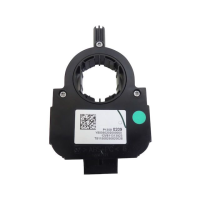
- Faulty Steering Angle Sensor (SAS) (Very Common) — Internal electronic components degrade or mechanical parts break over time, causing the sensor to send an erratic or frozen signal to the ABS module.
- Wiring or Connector Issues (Common) — Wires running to the sensor become damaged, frayed, or corroded. On 2007-2008 Ford Expeditions and Lincoln Navigators, the harness chafes against the brake pedal bracket, causing a direct short. 🎬 Watch: Fix sudden braking and wiring shorts on Ford Expeditions.
- Software Glitch / Outdated Module Calibration (Common) — On 2009-2012 Ford F-150s, the ABS module's factory software is overly sensitive, especially when larger tires are installed or when towing. TSB 11-02-05 requires reprogramming the ABS module to fix this. 🎬 Watch this walkthrough for fixing Service AdvanceTrac on Ford F-150s.
- Low System Voltage (Uncommon) — Control modules are highly sensitive to voltage drops. A weak battery or failing alternator interrupts CAN bus messages from the steering module, triggering false C1278 codes.
- Clock Spring Failure (Uncommon) — Many vehicles integrate the steering angle sensor into the clock spring assembly. A broken ribbon cable inside the clock spring disrupts the electrical signals passing to the sensor.
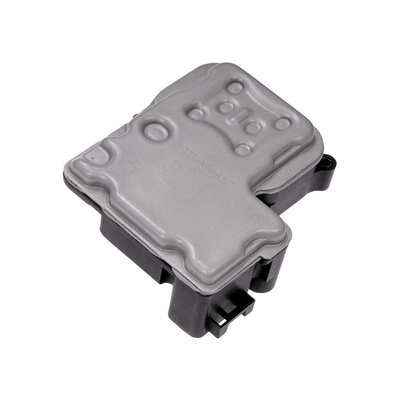
- Faulty Anti-lock Brake System (ABS) Module (Rare) — If the ABS module itself fails, it misinterprets a perfectly good signal from the steering angle sensor, triggering the code.
Symptoms
- Traction Control or Stability Control Warning Light — The dashboard illuminates a 'Service AdvanceTrac', 'ESC', or 'VSC' message, or an icon of a car with squiggly lines.
- Unexpected Braking or Shuddering — On Ford vehicles, a faulty sensor causes the stability system to falsely detect a skid. It applies the brakes on one or more wheels unexpectedly, often felt as a shudder at low speeds.
- ABS Warning Light — The ABS light illuminates because steering angle data is a crucial input for anti-lock braking calculations.
- Incorrect Steering Feel — On vehicles with electric power steering (EPAS), the steering feels heavier or fails to return to center because the system lacks accurate data to calculate steering effort.
- 'Service Active Handling' Message — On Chevrolet Corvettes, this message appears when the performance stability system disables itself due to untrustworthy sensor data.
- Live Data Reading is Erratic or Frozen (scan-tool only — no driver-felt sign) — On a scan tool, the steering angle PID jumps erratically, freezes, or fails to change when the steering wheel turns.
Diagnostic Flowchart
Tap your situation to follow the diagnostic path that matches what you're seeing on this code.
Common Fixes & Costs
- Calibrate Steering Angle Sensor — Parts: $0, Labor: $100-$150, ~1.0 hr book time (Professional)
- Replace Steering Angle Sensor — Parts: $100-$400, Labor: $150-$300, ~1.5 hr book time (Intermediate)
- Repair Wiring Harness or Connector — Parts: $10-$50, Labor: $150-$300, ~2.0 hr book time (Intermediate)
- Reprogram ABS Module — Parts: $0, Labor: $150-$250, ~1.0 hr book time (Professional)
- Replace ABS Module — Parts: $250-$800, Labor: $200-$350, ~2.0 hr book time (Professional)
Used vs. New Parts: Buying Guide
When a used part is worth it: A used OEM sensor from a low-mileage, accident-free vehicle is a cost-effective option for older vehicles where a new OEM part is expensive. It is generally better than a cheap, unbranded aftermarket part.
Donor-vehicle mileage cap: roughly under 60000 miles for the part to have meaningful remaining life.
Donor quality checklist:
- Verify the donor vehicle was not scrapped due to electrical or flood damage.
- Match the part number exactly. Non-interchangeable numbers will not work.
- Inspect the connector pins for corrosion or damage.
Decision logic:
- If The part is for a vehicle less than 5 years old or has low mileage → Buy a new OEM part to ensure longevity and compatibility.
- If Budget is the primary concern and the vehicle is older → A used OEM part is a viable risk. A new, reputable aftermarket part (e.g., Standard, Dorman) is also good, but avoid the cheapest online parts.
- If The sensor is integrated with the clock spring → Favor a new assembly as both components are subject to wear.
Warranty tradeoff: Used parts typically have a 30-90 day warranty. New aftermarket parts offer a 1-year to limited lifetime warranty. New OEM parts carry a 1-2 year manufacturer warranty.
Worst-case if a used part fails: $250-$600 if a used part fails shortly after installation, requiring repeat labor costs for diagnosis, replacement, and calibration.
What Happens If You Wait — Timeline
- Immediate: Code sets, and the ABS and/or Traction/Stability Control warning light illuminates. The vehicle's primary safety systems (ESC/TCS) are disabled. (MPG impact: 0%% · Added cost: $0)
- 1 week - 2 months: On affected Ford models, the 'sudden braking' symptom occurs intermittently during low-speed turns, putting abnormal stress on brake assemblies. (MPG impact: 0-1%% · Added cost: $250-$500 (Premature wear on pads/rotors of one wheel).)
- 2-6 months: The risk of a loss-of-control incident in slippery conditions increases significantly. Unexpected braking becomes more frequent, increasing the danger of a collision. (MPG impact: 0-1%% · Added cost: $500+ (Increased brake wear and high risk of accident-related costs).)
- 6+ months: A loss-of-control accident occurs due to the lack of stability control, or unexpected braking causes a collision. The initial repair cost is dwarfed by insurance deductibles and body repair. (MPG impact: N/A% · Added cost: $2500 - $15000+ (Cost of accident repairs and insurance increases).)
Cost of Not Fixing It
- Immediate: Loss of traction and stability control systems, increasing the risk of losing control in slippery conditions or during an emergency maneuver. (Added cost: N/A)
- 0-3 months: On affected Ford models, the vehicle brakes unexpectedly, causing a dangerous driving situation and premature wear of brake pads and rotors. (Added cost: $200 - $500 for brake repairs)
- 3+ months: Continued driving with disabled safety systems significantly increases the risk of an accident. A loss-of-control accident results in major vehicle damage or injury. (Added cost: $2500+)
Diagnosis Steps
- Read All Trouble Codes from All Modules
Use a bidirectional OBD-II scanner to read codes from the ABS, PSCM, and BCM modules. Communication codes (U-codes like U0428) take priority and must be diagnosed first, as they cause false C1278 codes.
Tools: Bidirectional OBD-II Scanner (Beginner) - Check Live Data with a Scan Tool
Monitor the 'Steering Wheel Angle' PID in the ABS module. Turn the steering wheel lock-to-lock. The angle must change smoothly and return to 0 degrees when straight. Jumps or freezes confirm a sensor or circuit fault.
Tools: Bidirectional OBD-II Scanner (Intermediate) - Attempt Sensor Recalibration
If the live data is smooth but offset (e.g., reads 15 degrees when straight), the sensor is out of calibration. Use the scanner to perform the 'Steering Angle Sensor Calibration' or 'IVD Initialization' procedure to reset the zero position.
Tools: Bidirectional OBD-II Scanner (Intermediate) - Visually Inspect the Sensor and Wiring
Locate the sensor on the steering column. Inspect the connector and wiring harness for loose connections, corrosion, or frayed wires. On 2007-2008 Ford Expeditions, check for harness chafing on the brake pedal bracket.
Tools: Flashlight (Beginner) - Test Sensor Power and Ground
Disconnect the sensor. Using a multimeter and wiring diagram, verify proper voltage (either 12V battery voltage or a 5V reference, depending on the vehicle) on the power pin, and less than 1 ohm of resistance on the ground pin.
Tools: Multimeter, Vehicle-specific wiring diagram (Advanced) - Test Signal Wires for Continuity and Shorts
With the battery disconnected and both the SAS and ABS module unplugged, measure resistance end-to-end on each signal wire (must be <5 ohms). Then, check for shorts by measuring resistance between the signal wires themselves, and from each wire to ground (both must read OL or >10,000 ohms).
Tools: Multimeter, Vehicle-specific wiring diagram (Advanced) - [PRO TIP] Scope Test the Sensor Signal
Back-probe the sensor's signal wires with an oscilloscope. Turn the steering wheel and look for a clean, consistent digital square wave pattern. A noisy or missing waveform confirms a faulty sensor.
Tools: Oscilloscope, Wiring diagram (Professional)
When This Code Triggers (Freeze-Frame Conditions)
- Vehicle Speed: 15-45 mph (During or immediately after a turn)
- Steering Wheel Angle: > 90 degrees (Making a significant turn, like in a parking lot or a sharp corner)
- Engine RPM: 1200-2500 (Normal driving, not at idle or high acceleration)
- ABS/TCS System Status: Active/Monitoring (The code sets when the ABS module actively compares the SAS signal to wheel speed and yaw rate data.)
Related Codes
- C1277 — C1277 ('Circuit Failure') points to a hard electrical fault like an open wire or short. C1278 ('Signal Faulted') means a signal is present but irrational. If you have C1277, focus on multimeter tests. If you only have C1278, the sensor's internal logic or calibration is suspect.
- C1280 — C1280 ('Yaw Rate Sensor') frequently accompanies C1278 on Fords. The ABS module compares steering angle to vehicle rotation. If the steering sensor reports a turn but the yaw sensor reports no rotation, the computer sets both codes.
- C1963 — 'Stability Assist Inhibit Warning' is a direct result of C1278. When the ABS module sets C1278, it sets C1963 to confirm the stability control system is shut down as a safety precaution.
- U0428 — 'Invalid Data Received From Steering Angle Sensor Module' is a communication code. It means the ABS module recognizes the data packet as corrupt, pointing to a failing sensor module or a CAN bus wiring issue.
Climate & Environmental Factors
- Humidity and Moisture: High humidity or cabin water leaks cause corrosion on the steering angle sensor's connector pins or internal circuit board, interrupting the signal.
- Extreme Cold: Extreme cold causes plastics and wiring insulation to become brittle, leading to cracks in the wiring harness if flexed. It also exacerbates failing solder joints on the sensor's circuit board.
How to Talk to a Mechanic About This Code
Say this: "I have an ABS/Traction Control light on and my scanner shows code C1278 for a steering angle sensor signal fault. I need a diagnostic appointment. Can you confirm your scan tool can read ABS live data and perform a steering angle sensor calibration for my specific vehicle?"
This signals you understand the code requires specific capability (SAS calibration). It filters out shops lacking the right equipment, saving you an inconclusive diagnostic fee.
Avoid saying:
- 'My traction control light is on, can you fix it?'
- 'My car is braking on its own.'
- 'Just replace the steering angle sensor.'
Questions to ask before authorizing the repair:
- Did you check the steering angle sensor live data? Was it frozen, erratic, or just offset?
- Did you check for any Technical Service Bulletins (TSBs) related to this code for my vehicle?
- If the sensor needs to be replaced, does the quoted price include the mandatory calibration after installation?
- What is the warranty on the part and the labor for this repair?
Where to Take It: Dealer vs Independent vs Chain
- Dealer:
Recommended if you suspect a software/TSB issue or if your vehicle has known manufacturer quirks for this code.
Best for: Vehicles under warranty, Complex cases involving module reprogramming (like the F-150 TSB), When manufacturer-specific definitions cause confusion (e.g., Hyundai, Nissan, Mazda quirks)
Downsides: Highest labor rates, Defaults to replacing expensive assemblies (like the entire steering column) instead of smaller components. (Typical cost: +50% vs. baseline) - Independent Shop:
Best fit for most common scenarios, provided you confirm they have a scan tool capable of performing the SAS calibration for your specific make and model.
Best for: Out-of-warranty vehicles with common failures (like a Ford Expedition sensor replacement), Straightforward diagnosis and part replacement
Downsides: Quality and equipment vary greatly. You must vet them first., Lacks access to the very latest software updates or TSBs. (Typical cost: +0% vs. baseline) - Chain Shop:
AVOID for diagnosing a C1278. They perform wheel alignments but often lack the tool to do the required follow-up SAS calibration, causing the light to stay on.
Best for: Simple services like wheel alignments or battery changes that might *cause* the code.
Downsides: Technician skill is highly variable., Lacks advanced diagnostic tools for anything beyond reading the code., High pressure to upsell services. (Typical cost: -10% vs. baseline)
When to Walk Away From the Repair
If the total estimated repair cost for the C1278 fault exceeds 50% of your car's private-party value, consider selling or trading it in, especially if the vehicle has other pending repair needs.
- Car worth $8000, fix is $750: Fix it. This is a routine repair cost for a vehicle of this value and is critical for safety.
- Car worth $4000, fix is $2200: Walk away. The repair cost is over half the car's value, and likely involves an expensive steering rack or ABS module replacement.
- Car worth $15000, fix is $1200: Fix it. This is well below the threshold and protects the value and safety of a more expensive vehicle.
What Scan Tool You Need for This Code
Minimum: A scanner that reads and clears Anti-lock Brake System (ABS) codes. A basic engine-only code reader will not see C-codes.
A basic OBD-II reader only accesses the Powertrain Control Module. It cannot communicate with the ABS module where the C1278 code is stored. You see 'No Codes Found' while the ABS light is clearly on.
Budget: BlueDriver Pro, XTOOL A30D (~$90-120) — Reads and clears ABS codes and views live data for the steering angle sensor PID. This confirms if the sensor signal is frozen or erratic. However, these tools CANNOT perform the mandatory SAS calibration.
Mid-range: Innova 5610, Foxwell NT630 Plus, Autel MaxiCOM MK808S (~$200-400) — These bidirectional tools read/clear ABS codes, view live data, AND perform the 'Steering Angle Sensor Calibration' required after replacement or alignment. This is the minimum level required for a complete DIY repair.
Professional: Autel MaxiSys Series (MS906 Pro), Launch X431 Series (~$500-1200+) — Offers full, dealer-level functionality. Performs SAS calibration, ABS module programming (for TSBs), VIN programming for replacement modules, and advanced topology mapping to diagnose complex communication issues.
Rent vs buy: You cannot rent the bidirectional scanner needed to calibrate the sensor. If you plan to do the repair yourself, you must buy a mid-range scanner that explicitly lists 'SAS Reset/Calibration'. For a one-time fix, it is more cost-effective to have a shop perform the repair.
How to Clear the Code After You Fix It
- Use a compatible OBD-II scan tool to clear the C1278 code from the ABS module.
- Perform the Steering Angle Sensor calibration/initialization procedure with the scan tool.
- Perform a drive cycle to confirm the fix and allow system monitors to run.
Drive cycle (~15 minutes): Start the engine and idle for 2 minutes. Drive straight above 30 mph. Perform several slow, full lock-to-lock turns in a safe area. Drive for 5 minutes, including steady-speed cruising and normal turns.
Readiness monitors affected: This is a chassis code (C-code) and does not directly affect emissions readiness monitors.
Watch out for:
- Clearing the code with a basic scanner fails; the code returns immediately if the sensor is not calibrated.
- Forgetting to perform the lock-to-lock turning part of the drive cycle prevents the system from verifying the sensor's full range of motion.
Will This Fail Emissions / State Inspection?
No — by itself this code doesn't fail OBD inspection (but it can keep readiness monitors from setting, which causes a separate fail).
- California: C1278 does not cause a failure of the emissions smog check. However, the illuminated ABS/Traction Control light is a safety issue and fails a separate safety inspection, though California lacks a statewide mandatory safety inspection for private vehicles.
- New York: An illuminated ABS warning light is grounds for failure of the annual safety inspection. A C1278 code results in an inspection failure.
- Texas: For non-commercial vehicles, the annual safety inspection is eliminated as of 2025. The emissions inspection only fails for P-codes that turn on the Check Engine Light. C1278 does not cause an emissions failure.
Most Commonly Affected Vehicles
- Ford Expedition / Lincoln Navigator (2007-2017) — Extremely common failure of the steering angle sensor (part 9L1Z-3F818-A), causing 'Service AdvanceTrac' warnings and unexpected braking. TSB 08-20-8 addresses a wiring harness chafing issue on 2007-2008 models.
- Ford F-150 (2009-2014) — TSB 11-02-05 requires reprogramming the ABS module to fix nuisance ESC activation and code C1278, especially when larger tires are installed or while towing.
- Ford Edge (2007-2014) — Prone to steering angle sensor failures located in the steering column, requiring replacement and recalibration.
- Ford Escape (2008-2012) — The steering torque sensor (part CL8Z-3F818-A) inside the steering column fails and sends bad data to the ABS module over the CAN bus, triggering C1278.
- Chevrolet Corvette (1998-2004) — On C5 Corvettes, C1278 is an informational code meaning 'TCS Temporarily Inhibited By PCM'. It indicates an engine fault (like a bad throttle position sensor) forced the PCM to disable traction control.
- Hyundai Genesis / GV80 (2009-2021) — On these models, C1278 refers to 'Acceleration Sensor Front-LH Malfunction' for the electronic suspension system, not the steering angle sensor.
- Subaru Outback / Forester (2010-2014) — The sensor frequently loses calibration after steering or suspension work. It is integrated into the clock spring assembly, requiring replacement of the entire unit if it fails.
- Nissan Murano / Rogue (2007-2015) — C1278 points to an issue with the 'ICC Brake Switch' in the intelligent cruise control system, completely unrelated to the steering angle.
Manufacturer-Specific Notes
- Ford / Lincoln / Mercury: A common and dangerous symptom is sudden, unintended brake application by the AdvanceTrac system. TSB 08-20-8 covers a wiring harness rub-through on 2007-2008 Expedition/Navigators.
- General Motors (Chevrolet): On the C5 Corvette, C1278 is an informational code meaning 'TCS Temporarily Inhibited By PCM'. The traction control system was shut down due to a fault detected by the engine computer, not the traction system itself.
- Hyundai: On the Genesis and GV80, C1278 refers to a fault with the 'Acceleration Sensor Front-LH' for the electronic suspension, not the steering system.
- Nissan: C1278 means 'ICC Brake Switch Circuit', related to the intelligent cruise control system, requiring a manufacturer-specific scan to avoid misdiagnosis.
- Mazda: C1278 translates to 'Wireless Communication Antenna Circuit (Bluetooth)', emphasizing the critical need for a scan tool with manufacturer-specific definitions.
Real Owner Stories
2012 Ford Expedition with 'Service AdvanceTrac' and sudden braking
The 'Service AdvanceTrac' warning light came on, accompanied by the ABS and traction control lights. The vehicle occasionally and unexpectedly applied the brakes on its own.
What they tried:
- The owner scanned the codes and found C1278 and C1280 (Yaw Rate Sensor).
Outcome: The owner replaced the steering angle sensor on the steering column. After replacement and calibration, the codes cleared, and the dangerous sudden braking issue resolved.
Lesson: On Ford trucks and SUVs, a C1278 code and unexpected braking almost always points to a faulty steering angle sensor. It is a critical safety issue.
2012 Ford F-150 with multiple codes and steering issues after a shop visit
The 'Service AdvanceTrac' warning appeared, and the steering wheel failed to return to center. The steering angle displayed on the dash froze after a non-Ford shop attempted a repair.
What they tried:
- The owner replaced the steering sensor module fuse.
- The shop reprogrammed the steering according to a TSB, but the problem persisted.
Outcome: The owner was left with persistent codes C1278 and U0428 ('Invalid Data From Steering Angle Sensor Module'). The issue pointed to a deeper wiring fault or a failed EPAS rack, an $800-$1000 repair.
Lesson: A C1278 accompanied by a U0428 communication code suggests corrupt data, pointing to a wiring or module-level fault. Reprogramming does not fix bad hardware.
2008 Ford Escape with power steering failure (Code B2278 leading to C1278)
The owner experienced a violent shake in the steering wheel, followed by a complete loss of power steering and a warning message.
What they tried:
- The owner attempted to replace the steering torque sensor inside the steering column five times before getting it right.
Outcome: The fix required replacing the internal steering torque sensor (which sets a B2278 code, causing the ABS module to log C1278). Meticulous alignment of the new sensor was key.
Lesson: On the Ford Escape, the root cause is often the internal torque sensor, not the main steering angle sensor. The repair requires precise alignment but avoids a full steering column replacement.
1999 Chevrolet Corvette C5 with 'Reduced Power' and 'Service Traction System'
The car suddenly went into 'Reduced Engine Power' mode and displayed a 'Service Traction System' message. Restarting resolved the issue but left a Check Engine Light.
What they tried:
- The owner pulled the codes and found C1278 H (History).
Outcome: On a C5 Corvette, C1278 means 'TCS Temporarily Inhibited By PCM'. The Powertrain Control Module detected an engine problem (like a faulty throttle position sensor) and disabled traction control as a precaution.
Lesson: Always check manufacturer-specific code definitions. On a C5 Corvette, C1278 is a secondary code; diagnose the primary PCM codes to find the real problem.
How to Prevent This Code From Triggering
- Insist on SAS Calibration After Every Wheel Alignment (After any alignment service) — Minor toe adjustments change the steering's 'center' point. Failing to recalibrate forces the stability control system to work with incorrect data, causing warning lights.
- Maintain a Healthy Battery and Clean Terminals (Every 6 months) — Control modules are sensitive to low voltage. A weak battery causes random communication glitches, setting false codes like C1278.
- Address Cabin Water Leaks Immediately (As needed) — Water leaking from a bad windshield seal or clogged sunroof drain drips onto under-dash electronics, causing corrosion and short circuits.
- Periodically Inspect Known Wiring Chafe Points (Every 2 years on affected models) — On the 2007-2008 Ford Expedition, TSB 08-20-8 points to the SAS harness rubbing against the brake pedal bracket. A visual inspection catches this before wires short out.
Frequently Asked Questions
I replaced the Steering Angle Sensor, but the C1278 code is still on. What now?
You must verify the new sensor was calibrated using a compatible bidirectional scan tool. If calibrated, re-check the wiring harness for intermittent opens or shorts. Finally, the replacement sensor itself may be faulty, especially if it is a cheap aftermarket part.
What are the most common misdiagnosis mistakes for a C1278?
The biggest mistake is replacing the sensor without checking for TSBs, testing power/ground, or scanning for U-codes first. Technicians also frequently forget to calibrate the new sensor after installation. Without calibration, the code returns immediately.
Can I fix a C1278 code myself?
You can replace the sensor yourself if you have basic hand tools and a multimeter. However, the mandatory final step of calibration requires a bidirectional scan tool costing $200+. If you don't own one, you must take the vehicle to a shop for the final reset.
Will a wheel alignment fix a C1278 code?
No, an alignment alone will not fix the code. In fact, C1278 often appears after an alignment if the technician forgot to recalibrate the steering angle sensor. Return to the shop and request they perform the SAS calibration.
Why does my car brake by itself with code C1278?
This dangerous symptom happens when the stability control system receives an irrational signal from the steering angle sensor. If the sensor falsely reports a sharp turn, the system assumes the car is skidding. It then applies a single brake to 'correct' the non-existent slide.
How do I perform an 'IVD Initialization' or reset the steering angle sensor?
A proper reset requires a bidirectional diagnostic scan tool to command the sensor to recognize the current straight-ahead position as 'zero'. While some older vehicles allow manual resets like turning the wheel lock-to-lock, this is unreliable on modern cars. A scan tool is the only guaranteed method.
Why did the C1278 code appear after I replaced my battery?
Disconnecting the battery causes volatile memory loss in control modules, erasing the steering angle sensor's calibration data. The sensor is fine, but it forgot its 'zero' position. A simple recalibration with a scan tool resolves the issue without replacing parts.
My truck has larger tires and now I have a C1278 code. Are these related?
Yes. On trucks like the 2009-2014 Ford F-150, larger tires change vehicle dynamics, causing the factory ABS software to falsely detect a fault during turns. Ford released TSB 11-02-05 to update the ABS module software to be less sensitive to these changes.
Key Takeaways
- Code C1278 indicates a Steering Angle Sensor signal fault, but always check manufacturer definitions—on a C5 Corvette, it means traction control was disabled by an engine fault, not a bad steering sensor.
- Never replace the steering angle sensor without first attempting a zero-point calibration using a bidirectional scan tool, which fixes the code 30% of the time after alignments or battery changes.
- On 2007-2017 Ford and Lincoln SUVs, a C1278 code causes the AdvanceTrac system to unexpectedly lock a single brake at low speeds, creating an immediate collision hazard.
- Expect to pay between $250 and $600 to replace and calibrate a faulty steering angle sensor at an independent shop, with the part itself costing $100 to $400.
Helpful Videos
Shop the Parts Behind C1278
Below are the parts most often responsible for code C1278, ranked by how frequently each one is the actual culprit (per the diagnosis above). Tap any to see what we have for your vehicle.

The information in this article is provided for general reference and educational purposes only. Vehicle specifications, procedures, and part compatibility can vary by production date, trim level, and region. Always consult your vehicle's factory service manual and verify part numbers before purchasing or performing repairs. Safety-critical components such as airbags, seat belts, and braking systems should be installed by a qualified professional.
- 🧭 Diagnostic Flowchart
- 🎬 Helpful Videos
- 🛍️ Shop This Part
- What Does C1278 Mean?
- Can I Drive With C1278?
- Common Causes
- Symptoms
- Common Fixes & Costs
- Used vs. New Parts: Buying Guide
- What Happens If You Wait — Timeline
- Cost of Not Fixing It
- Diagnosis Steps
- When This Code Triggers (Freeze-Frame Conditions)
- Related Codes
- Climate & Environmental Factors
- How to Talk to a Mechanic About This Code
- Where to Take It: Dealer vs Independent vs Chain
- When to Walk Away From the Repair
- What Scan Tool You Need for This Code
- How to Clear the Code After You Fix It
- Will This Fail Emissions / State Inspection?
- Most Commonly Affected Vehicles
- Manufacturer-Specific Notes
- Real Owner Stories
- 2012 Ford Expedition with 'Service AdvanceTrac' and sudden braking
- 2012 Ford F-150 with multiple codes and steering issues after a shop visit
- 2008 Ford Escape with power steering failure (Code B2278 leading to C1278)
- 1999 Chevrolet Corvette C5 with 'Reduced Power' and 'Service Traction System'
- How to Prevent This Code From Triggering
- Frequently Asked Questions
- I replaced the Steering Angle Sensor, but the C1278 code is still on. What now?
- What are the most common misdiagnosis mistakes for a C1278?
- Can I fix a C1278 code myself?
- Will a wheel alignment fix a C1278 code?
- Why does my car brake by itself with code C1278?
- How do I perform an 'IVD Initialization' or reset the steering angle sensor?
- Why did the C1278 code appear after I replaced my battery?
- My truck has larger tires and now I have a C1278 code. Are these related?
- Key Takeaways
- 🎟️ Get 5% Off