

C1280 on 2020-2024 Ford TRANSIT: Is It a Trouble Code or a Connector?
For the 2020-2024 Ford Transit, C1280 is not a Diagnostic Trouble Code (DTC). It is the designation for an electrical connector, as referenced in Ford Technical Service Bulletin (TSB) SSM 49510. If you see 'C1280' in repair documents for a Transit, it refers to a physical plug to inspect, not a fault code from a scanner.
- C1280 is NOT a trouble code on a 2020-2024 Ford Transit; it is a connector name.
- Do not buy a Yaw Rate Sensor for your Transit based on a 'C1280' reference; that part corresponds to the code on different Ford models.
- If a repair guide mentions C1280, it is directing you to a physical wiring plug for inspection, likely related to a group of transmission codes outlined in TSB SSM 49510.
- The actual problem is indicated by the real DTC that was retrieved with a scan tool, which may point to a simple connector fault or a more complex internal transmission issue.
What's Unique About the 2020-2024 Ford TRANSIT
The confusion arises because on other Ford vehicles, such as the Escape and F-150, C1280 is a valid and common DTC for a 'Yaw Rate Sensor Signal Fault'. This sensor is crucial for the ABS and Electronic Stability Control systems. However, for the 2020-2024 Transit, Ford's documentation uses this number to label a connector. It is critical not to misapply the definition from other models to the Transit, as it would lead to incorrect diagnosis and unnecessary parts replacement. The reference to C1280 on a Transit is almost always secondary to other codes being present, particularly the group of transmission codes listed in TSB SSM 49510.
Diagnostic Flowchart
Tap your situation to follow the diagnostic path that matches what you're seeing on this vehicle.
Symptoms You May Notice
- No symptoms are directly associated with 'C1280' itself.
- Symptoms will be related to the actual trouble code that is present (e.g., codes P2803, P2804, P0713, P0710, P0709, and P0708 as mentioned in TSB SSM 49510).
- Illuminated Malfunction Indicator Lamp (MIL) or Check Engine Light.
- Erratic or harsh shifting, particularly in 3rd, 5th, or 8th gear.
- Delayed engagement when shifting into Drive or Reverse.
- Transmission may enter a 'limp mode' with limited gear availability.
- Replacing the Yaw Rate Sensor. This would be the correct path for a C1280 DTC on a Ford Escape or F-150, but is incorrect for a 2020-2024 Transit where C1280 is a connector.
Most Likely Causes
- Misinterpretation of Service Documents 🔴 High Probability Ford reuses the 'C1280' designator, which is a known DTC on other models, as a connector name on the Transit, leading to confusion.
How to confirm: Verify if 'C1280' was read from a scan tool (unlikely on this vehicle) or found in a repair manual or TSB instructing an inspection of the physical connector.
Typical fix: Understand that C1280 is a location for inspection, not a fault itself. Proceed with diagnosing the actual trouble code that was pulled from the vehicle's computer.
Est. part cost: $0 - Damaged or Corroded Connector C1280 🟡 Medium Probability TSB SSM 49510 specifically calls for the inspection of this and other connectors for damage, partial connections, or pushed-out pins, indicating it's a known failure point for a cluster of transmission codes.
How to confirm: Visually inspect connector C1280 on the transmission wiring harness for signs of corrosion, moisture intrusion, bent or pushed-out pins, and physical damage to the housing or wires.
Typical fix: Clean the connector terminals, apply dielectric grease, and ensure it is fully seated. If pins are damaged, they may need to be re-pinned or the connector pigtail may need to be replaced.
Est. part cost: $15-$70
Diagnosis Steps
- Confirm that 'C1280' was not read by a scan tool. If it was, double-check the vehicle model and year, as this code does not apply to the 2020-2024 Transit.
- Identify the actual DTC(s) stored in the Powertrain Control Module (PCM) or ABS module. Note if the full set of codes from TSB SSM 49510 is present.
- If instructed by a TSB or service manual to check connector C1280, locate the connector using official wiring diagrams. It is part of the main transmission harness, likely near the transmission case itself.
- Safely access the connector. This may require raising the vehicle and removing splash shields.
- Inspect connector C1280 for partial connections, pushed-out pins, corrosion, moisture, or physical damage to the wires or housing.
- Test for continuity and proper voltage at the relevant pins according to the wiring diagram for the specific DTC you are diagnosing. For example, when testing the Transmission Range Sensor (TRS) circuit, 🎬 See how to diagnose and fix the P2804 circuit code check for the 5V or 12V reference voltage from the PCM at the connector with the key on.
- Repair any wiring or connector issues found. This may involve cleaning terminals, repairing wires, or splicing in a new pigtail connector.
- Clear the original DTCs and perform a drive cycle to see if the fault returns.
Parts You'll Likely Need
- Wiring Harness Pigtail Connector
(OEM #WPT-1280 (Verification Recommended))— If the C1280 connector itself is damaged (corroded, broken lock tab, melted), a new pigtail may be needed to splice into the harness. The part number WPT-1280 is listed for a Park Assist Camera Connector on other Ford models, and Ford often reuses pigtails. It is critical to visually match the connector before ordering.
Trusted brands: Motorcraft
OEM price range: $45-$70
Aftermarket price range: $15-$40 - Dielectric Grease — To protect the cleaned or repaired connector terminals from future moisture and corrosion.
Trusted brands: Permatex, Motorcraft
OEM price range: $5-$15
Aftermarket price range: $3-$10
Related Codes That Often Appear With This One
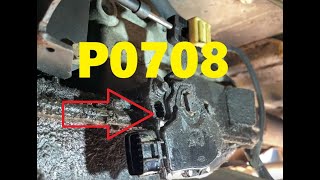
- P2803, P2804, P0713, P0710, P0709, P0708 — TSB SSM 49510 explicitly links the inspection of connector C1280 to the diagnosis of this group of transmission-related codes when they are all present simultaneously. These codes relate to the Transmission Range Sensor and other transmission components. 🎬 Watch: Common causes and fixes for the P0708 sensor code
Technical Service Bulletins (TSBs) & Recalls
- SSM 49510: Instructs technicians to inspect connector C1280 (among others) when specific powertrain DTCs (P2804, P2803, P0713, P0710, P0709, and P0708) are present on 2020-2021 Ford Transit models.
Platform-Specific Known Issues
- TSB SSM 49510 - Group of Transmission DTCs: This TSB is the primary source identifying C1280 as a connector. It applies to 2020-2021 Transit vehicles that exhibit an illuminated MIL with ALL of the following DTCs stored: P2804, P2803, P0713, P0710, P0709, and P0708. The prescribed first step is to inspect connectors C1551, C1280, C1281, and C1520 for damage or pushed-out pins before proceeding with any other diagnostics.
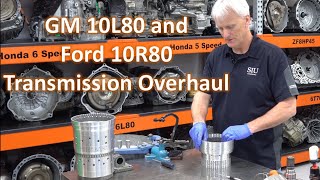
- 10R80 Transmission Weaknesses: The 10R80 transmission used in the Transit has known issues, including CDF drum bushing failure and valve body problems, which can cause erratic shifting. While a connector issue is a simpler fix, the symptoms that lead to inspecting C1280 can also be caused by these more significant internal transmission failures. 🎬 Watch: Expert breakdown of Ford's 10-speed harsh shifting TSB
Mechanic-Grade Diagnostic Values
- Transmission Range (TR) Sensor Reference Voltage — expected: 5V or 12V, depending on manufacturer specification.. Failure: If the voltage is incorrect or absent, there is a fault in the wiring or the PCM.
- TR Sensor Circuit to Ground Resistance — expected: Greater than 10,000 ohms.. Failure: A resistance reading less than 10,000 ohms indicates a short to ground in the vehicle harness.
Scan Tool Commands That Help
- Ford IDS (Integrated Diagnostic System): TCM > Reset KAM (Keep Alive Memory) — This command should be used after repairing a wiring issue or replacing a transmission component to clear the transmission's adaptive learning tables. Unhooking the battery will not clear the TCM KAM; it must be done with a scan tool. Several days of normal driving are required for the transmission to fully re-adapt after the reset.
- FORScan: Reset TCM Adaptive Tables — This is an aftermarket software alternative to the dealer tool (IDS) that can perform the same function. It is used to clear learned shift parameters after a repair to resolve rough or incorrect shifting.
Wiring & Ground Locations
- C1280 — Main transmission case connector on the 10R80 transmission.. This is the main electrical interface for the entire transmission, including the Transmission Range Sensor (TRS) and solenoids. TSB SSM 49510 directs inspection here because a poor connection can cause multiple simultaneous communication faults, such as the group of codes P0708, P0709, P0713 etc.
- C167 — Connector for the Transmission Range (TR) Sensor itself, located inside the transmission on the main control valve body.. While C1280 is the external connector, C167 is the internal connector for the TR sensor. Diagnostic pinpoint tests may require checking this connector if an external wiring fault is not found.
- General Harness Chafe Points — The transmission wiring harness is routed over the top of the transmission. Pay close attention to areas where the harness may rub against the transmission case, bell housing, or nearby exhaust components.. Vibrations can cause the harness to chafe through, leading to intermittent shorts or open circuits that can trigger the range sensor and other transmission codes. These spots can be hard to see and may require feeling the harness for 'mushy' spots.
- BCM Connectors — The Body Control Module (BCM) is located inside the cabin. Some Transit models are prone to water ingress into the BCM due to poor seals at the cowl or windshield.. While not directly related to the transmission connector, a water-damaged BCM can cause a wide range of bizarre electrical faults, including communication issues with the powertrain. If multiple, seemingly unrelated electrical codes are present with the transmission faults, inspecting the BCM for water damage is a valid next step.
OEM Part Supersession History
WPT-1280 / CU2Z-14S411-AEA→
Heads up: The pigtail connector WPT-1280 is officially listed for Park Assist Camera applications on vehicles like the F-150 and Escape. While Ford often reuses connector designs, its use for the C1280 transmission connector on a Transit is not officially documented. Visual confirmation by matching the old connector to the new pigtail is absolutely essential before purchasing or splicing.
Model Year Variations Within This Range
- 2020 - Mid-2022: Vehicles built on or before August 15, 2022, may be susceptible to a CDF clutch cylinder sleeve moving axially, causing internal hydraulic leaks. This can cause harsh/delayed shifts and a host of DTCs. A revised CDF drum with a lipped bushing was reportedly implemented in production in late 2022 or early 2023 to prevent this failure.
- 2020-2021: TSB SSM 49510, which specifically calls out inspecting connector C1280, is only written for the 2020-2021 model years. While the wiring and connectors are likely identical on later models, the specific combination of DTCs that trigger this inspection may have been addressed by a software update or other change after 2021.
Helpful Videos

The information in this article is provided for general reference and educational purposes only. Vehicle specifications, procedures, and part compatibility can vary by production date, trim level, and region. Always consult your vehicle's factory service manual and verify part numbers before purchasing or performing repairs. Safety-critical components such as airbags, seat belts, and braking systems should be installed by a qualified professional.
- Ford TRANSIT:
- 🧭 Diagnostic Flowchart
- 🎬 Helpful Videos
- What's Unique About the 2020-2024 Ford TRANSIT
- Symptoms You May Notice
- Most Likely Causes
- Diagnosis Steps
- Parts You'll Likely Need
- Related Codes That Often Appear With This One
- Technical Service Bulletins (TSBs) & Recalls
- Platform-Specific Known Issues
- Mechanic-Grade Diagnostic Values
- Scan Tool Commands That Help
- Wiring & Ground Locations
- OEM Part Supersession History
- Model Year Variations Within This Range
- 🎟️ Get 5% Off