

OBD-II Code C1283: Stability Control & Steering Sensor Fault
What C1283 means, why it triggers, and how to fix it
- Code C1283 disables your Electronic Stability Control (ESC), increasing the risk of a fatal single-vehicle crash by up to 56% in SUVs.
- The #1 cause is a failed Yaw Rate Sensor, particularly on 2011-2012 Hyundai Elantras covered under Recall Campaign 137.
- On GM vehicles, C1283 usually means 'Excessive Time to Center Steering', requiring a $120-$250 four-wheel alignment or steering angle sensor replacement.
- Never replace a sensor without first using an advanced OBD-II scanner to view live data and attempt a zero-point calibration.
- Replacing a Yaw or Steering Angle sensor requires a mandatory software calibration using a professional scan tool; it is not a plug-and-play DIY repair.
What Does C1283 Mean?

Code C1283 indicates a failure in the Electronic Stability Control (ESC) system. Depending on the manufacturer, it points to either a faulty Yaw Rate and Lateral G-Sensor (which measures vehicle rotation) or a Steering Angle Sensor that fails to report the wheels are centered.
Technical definition: The SAE/ISO definition for C1283 varies by manufacturer. The two most common definitions are 'Yaw Rate & Lateral G Sensor Signal Fault' and 'Excessive Time to Center Steering'. In the first, the Electronic Brake Control Module (EBCM) loses the yaw rate signal or receives implausible data (e.g., >3 deg/s while stationary). In the second, the EBCM fails to receive a centered steering signal within a specific timeframe or distance, typically after driving over 25 mph for several minutes.
Can I Drive With C1283?
Yes, But With Caution. Yes, but drive with extreme caution. Your vehicle's Electronic Stability Control (ESC) is disabled, removing a critical safety feature that prevents skids and rollovers. NHTSA data shows ESC reduces fatal single-vehicle crashes by up to 56% in SUVs. Driving without it during adverse weather or emergency maneuvers dramatically increases accident risk. Schedule a repair immediately.
Common Causes
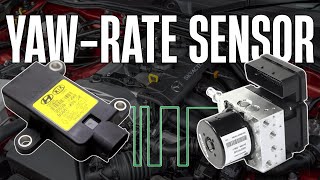
- Faulty Yaw Rate / Lateral Acceleration Sensor (Very Common) — This is the most frequent cause, especially on Hyundai and Kia vehicles. 🎬 Watch this diagnostic on a Hyundai with a faulty yaw sensor. The sensor, which measures the car's rotation and side-to-side G-forces, fails internally and sends bad data, no data, or a stuck signal.
- Poor Wheel Alignment (Common) — If your wheels are misaligned, you must hold the steering wheel off-center to drive straight. The computer sees a persistent mismatch between the steering angle and the car's actual direction of travel, triggering the code.
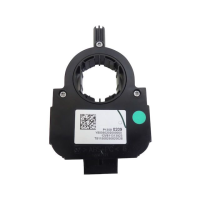
- Faulty Steering Angle Sensor (SAS) (Common) — The sensor reading the exact position of the steering wheel fails or shorts internally. It stops sending accurate data, preventing the stability control system from knowing your intended steering direction.
- Software Glitch / Missing Calibration (Common) — The issue is often a software anomaly rather than a failed part. A zero-point calibration is required after a battery replacement, alignment, or suspension repair to reset the sensor's baseline.
- Incorrect Steering Shaft Installation (Less Common) — After major front-end work, the steering shaft is sometimes reconnected one full rotation (360 degrees) off-center. The steering wheel looks straight, but the sensor sends a 'full turn' signal, confusing the EBCM.
- Damaged Wiring or Corroded Connectors (Less Common) — Wires leading to the yaw rate sensor, steering angle sensor, or ABS module fray or corrode. This interrupts the 5V reference signal or ground, causing the computer to log a fault.
- Low Battery Voltage (Less Common) — A weak battery or a corroded ground wire causes intermittent signal faults. Sensitive ESC modules require stable voltage to operate correctly.
- Faulty ABS/EBCM Module (Rare) — The main computer for the anti-lock brakes and stability control fails internally, losing communication with the chassis sensors.
Symptoms

- ESC / Traction Control Light Illuminated — The primary symptom is the ESC light (a car with squiggly lines) staying on, often accompanied by a 'Service Active Handling' or 'Service ESC' message on the dashboard.
- Unwanted or Unexpected Braking — A faulty yaw sensor causes the ESC system to activate inappropriately, suddenly applying the brakes to one or more wheels and reducing engine power without warning.
- ABS Light is On — The ABS light illuminates alongside the ESC light, as both systems share the same sensors and control module.
- Car Feels Unstable or 'Loose' — Without stability control, the vehicle feels less planted during aggressive turns or on slippery surfaces.
Diagnostic Flowchart
Tap your situation to follow the diagnostic path that matches what you're seeing on this code.
Common Fixes & Costs
- Replace Yaw Rate / Lateral G Sensor
— Parts: $250-$800, Labor: $100-$200, ~1.5 hr book time
(Intermediate)
Hyundai Elantra (2011-2012): OEM 95690-3V100QQH (Alt: Standard Motor Products YRS135) - Four-Wheel Alignment — Parts: $0, Labor: $120-$250, ~1.5 hr book time (Professional)
- Replace Steering Angle Sensor
— Parts: $80-$300, Labor: $150-$300, ~2 hr book time
(Professional)
Chevrolet Corvette C5 (1997-2004): OEM 88965543 (Alt: Dorman 601-004) - Perform Zero-Point Calibration / Software Update — Parts: $0, Labor: $100-$200, ~0.8 hr book time (Professional)
- Repair Wiring or Connectors — Parts: $10-$50, Labor: $100-$250, ~1.5 hr book time (Intermediate)
DIY vs Professional
- Replace Yaw Rate / Lateral G Sensor — Beginner:
- Four-Wheel Alignment — Beginner:
- Replace Steering Angle Sensor — Beginner:
- Perform Zero-Point Calibration / Software Update — Beginner:
Used vs. New Parts: Buying Guide
When a used part is worth it: Buying used electronic sensors is generally not recommended due to high failure rates. It only makes sense if the vehicle is over 10 years old, OEM parts are discontinued, and the seller offers a warranty.
Donor-vehicle mileage cap: roughly under 60000 miles for the part to have meaningful remaining life.
Donor quality checklist:
- Match the part number exactly; superseded numbers are often incompatible.
- Ensure a functional warranty of at least 90 days.
- Avoid parts from vehicles involved in major collisions or floods.
Decision logic:
- If The part is a complex electronic sensor requiring calibration → Strongly favor buying a new OEM or high-quality aftermarket part.
- If Vehicle is over 10 years old and a new OEM part is unavailable → A tested, warrantied used part from a low-mileage donor is acceptable.
- If The cost of a new aftermarket part is less than 50% more than a used part → Buy new for the warranty and peace of mind.
Warranty tradeoff: Used parts typically have a 30-day warranty covering only the part. New aftermarket parts offer 1-year to lifetime warranties. New OEM parts guarantee compatibility.
Worst-case if a used part fails: $300-$600 if a used sensor fails, requiring repeat labor for diagnosis and installation.
What Happens If You Wait — Timeline
- 0-1 month: The ESC warning light is constantly on. Stability control is disabled. Safety is significantly reduced in emergency maneuvers. (MPG impact: 0%% · Added cost: $0)
- 1-6 months: If caused by a bad alignment, uneven tire wear begins. If caused by a faulty Hyundai yaw sensor, intermittent unwanted braking events occur. (MPG impact: 1-3%% · Added cost: $50-$200)
- 6-12 months: If caused by a bad alignment, tire wear becomes severe, ruining one or more tires. Suspension components experience increased stress. (MPG impact: 3-5%% · Added cost: $400-$1000)
- 12+ months: Severe alignment issues lead to premature failure of tie rods and ball joints. Unaddressed electrical shorts damage the expensive ABS/EBCM control module. (MPG impact: 5-10%% · Added cost: $800-$2500+)
Cost of Not Fixing It
- Immediate: Disabled Electronic Stability Control (ESC) and ABS. Dramatically increases the chance of losing control in an emergency maneuver or adverse weather. (Added cost: N/A)
- 0-6 months: Potential for unwanted ESC activation (Hyundai models). The system incorrectly applies brakes to one wheel, causing sudden pulling and premature brake wear. (Added cost: $200-$500)
- 6+ months: Accelerated and uneven tire wear if the root cause is a bad wheel alignment. Ruins a set of tires within thousands of miles. (Added cost: $400-$1500)
Diagnosis Steps

- Check for Other Codes
Use an OBD-II scanner capable of reading Chassis (C) codes. Codes for the steering angle sensor (C1260) or the yaw sensor circuit (C1282) pinpoint the exact failing component.
Tools: OBD-II Scanner (with ABS/ESC capability) (Beginner) - Check Technical Service Bulletins (TSBs)
Search for TSBs or recalls related to C1283 for your specific VIN. Manufacturers frequently release software updates or revised parts to fix known logic errors, such as Hyundai's Campaign 137.
Tools: Smartphone or Computer (Beginner) - Verify Wheel Alignment and Steering Position
Drive straight on a level road. If the steering wheel is crooked by more than 5 degrees, a bad alignment is the root cause of the 'Excessive Time to Center Steering' variation of this code.
Tools: Visual Inspection (Beginner) - Analyze Live Sensor Data
Use an advanced scan tool to view live data. With the wheels straight, the Steering Angle Sensor must read 0 degrees (±5°). With the vehicle parked on level ground, the Yaw Rate and Lateral G-Sensors must read 0. Stuck or erratic values indicate a failed sensor.
Tools: Advanced OBD-II Scanner (Intermediate) - Perform a Zero-Point Calibration
Use a professional scan tool to perform a zero-point calibration for the Yaw and Steering Angle sensors. This software reset often clears the code permanently without requiring new parts.
Tools: Advanced OBD-II Scanner (Advanced) - Inspect Wiring and Connectors
Visually inspect the wiring harnesses for the yaw rate sensor (under the center console) and steering angle sensor (in the steering column). Look for water intrusion, corrosion, or loose pins.
Tools: Flashlight (Intermediate) - [PRO TIP] Test Sensor Power, Ground, and Signal
Disconnect the suspected sensor. With the ignition on, use a multimeter to verify 5V reference voltage and less than 1 ohm of resistance to ground. For GM vehicles, back-probe the steering position sensor; it should read approximately 2.5V when the wheels are straight.
Tools: Multimeter, Back-probe pins, Service Manual (Advanced)
When This Code Triggers (Freeze-Frame Conditions)
- Vehicle Speed: > 25 mph (Steady highway driving for several minutes triggers the steering center logic.)
- Steering Angle: Not 0° (e.g., > 5°) (Steering wheel is held off-center to maintain straight travel, indicating an alignment issue.)
- Yaw Rate: > 3 deg/s (Vehicle is at a standstill, but the sensor incorrectly reports rotation.)
- Lateral G Sensor: Not 0 G (Vehicle is on a level surface at rest, but the sensor reports side-to-side force.)
Related Codes
- C1282 — Indicates a Yaw Rate Sensor circuit malfunction. If present with C1283, the problem is definitively the yaw sensor or its wiring.
- C1260 — Points directly to a Steering Angle Sensor (SAS) signal fault. Confirms the problem is in the steering system or alignment, not the yaw sensor.
- C1288 — A direct fault for the Steering Wheel Position Sensor failing its internal self-test. Often appears alongside C1283 on GM vehicles.
- C1285 — Means 'G-Sensor Not Calibrated'. Appears after replacing a sensor, indicating a zero-point calibration is the final required step.
Climate & Environmental Factors
- Humidity and Moisture: Water intrusion from leaks or deep puddles accelerates corrosion on sensor connectors, increasing electrical resistance and causing intermittent signal loss.
- Road Salt: In cold climates, road salt creates a highly corrosive environment underneath the vehicle, destroying exposed sensor connectors and ground points.
- Heat: Prolonged exposure to high cabin heat degrades the internal electronic components of the yaw rate and steering angle sensors over time.
How to Talk to a Mechanic About This Code
Say this: "I have a C1283 chassis code and the ESC light is on. Please check the live data from the yaw rate and steering angle sensors, and check for any related TSBs. I want to confirm if the cause is a wheel alignment issue or requires a zero-point calibration before replacing sensors."
Directs the technician to use an advanced scan tool for live data rather than guessing. It prevents them from immediately replacing an expensive sensor without checking cheaper causes like alignment or software updates.
Avoid saying:
- My 'car with squiggly lines' light is on.
- My traction control is broken, can you fix it?
- Just do whatever it takes to turn the light off.
Questions to ask before authorizing the repair:
- What did the live data for the yaw rate and steering angle sensors show when stationary?
- Does the estimate include the cost of the mandatory zero-point calibration?
- Did you confirm my wheel alignment is correct?
- Are there any open recalls or TSBs for this code on my vehicle?
Where to Take It: Dealer vs Independent vs Chain
- Dealer:
A safe but expensive choice. Best if your car has a known recall or if an independent shop cannot perform the software update.
Best for: Vehicles under warranty., Confirmed software updates or recalls (e.g., Hyundai yaw sensor recall)., Complex electrical issues requiring manufacturer-specific diagnostic tools.
Downsides: Highest labor rates., Defaults to replacing entire assemblies instead of smaller components. (Typical cost: +50% vs. baseline) - Independent Shop:
Best fit for most situations. Ensure the shop confirms they can perform electronic calibrations before authorizing work.
Best for: Out-of-warranty vehicles., Diagnosing common failures like a bad yaw sensor, steering angle sensor, or wheel alignment.
Downsides: You must verify they have an advanced scanner capable of ABS/ESC live data and calibration functions. (Typical cost: +0% vs. baseline) - Chain Shop:
AVOID for initial diagnosis. Only use for a wheel alignment if you are certain that is the problem.
Best for: Performing a four-wheel alignment after it has been diagnosed as the specific cause.
Downsides: Technicians lack advanced training for complex electronic codes., High risk of misdiagnosis., Unable to perform required zero-point calibrations. (Typical cost: -10% vs. baseline)
When to Walk Away From the Repair
If the estimated repair cost exceeds 50% of the car's private-party value, consider selling or trading in the vehicle.
- Car worth $4000, fix is $2200: Walk away. The repair cost is over 50% of the car's value.
- Car worth $15000, fix is $900: Fix it. The repair cost is a small fraction of the vehicle's value and restores a critical safety feature.
- Car worth $6000, fix is $2500: Borderline. Get a second opinion. If the car has other pending issues, walk away.
What Scan Tool You Need for This Code
Minimum: A scanner that reads Chassis (C) codes and displays LIVE DATA for the Steering Angle Sensor and Yaw Rate Sensor.
A $20 engine code reader cannot see Chassis codes. Without live sensor data, you cannot differentiate between a bad sensor, an alignment issue, or a calibration need.
Budget: BlueDriver Pro (~$100) — Reads and clears enhanced ABS/ESC codes and displays live data for some sensors. It cannot perform the mandatory zero-point calibration.
Mid-range: Foxwell NT630 Plus (~$150) — Designed for ABS and SAS diagnostics. Reads codes, views live data, and performs SAS calibration on many models.
Professional: Autel MaxiCOM MK808S (~$500) — Offers full-system diagnostics and reliably performs both Steering Angle Sensor and G-Sensor zero-point calibrations.
Rent vs buy: Auto parts store loaner tools are basic readers and will not work. Pay a shop for a 1-hour diagnostic fee unless you plan to do advanced DIY repairs in the future.
How to Clear the Code After You Fix It
- Use an advanced OBD-II scan tool to clear the Chassis (C) trouble codes.
- Perform a Zero-Point Calibration for the affected sensor (Yaw Rate or Steering Angle).
- Perform a test drive driving straight at speeds over 25 mph to initiate the system's self-test.
Drive cycle (~20 minutes): Cold start and idle for 2 minutes. Accelerate to 45 MPH and hold a steady speed for 10 minutes. Perform several gentle lane changes. Come to a complete stop, idle for 20 seconds, and turn off the ignition to power down the modules.
Readiness monitors affected: Chassis codes do not affect emissions readiness monitors.
Watch out for:
- Clearing the code with a basic scanner will not fix the issue; the light returns immediately upon driving.
- Forgetting the mandatory Zero-Point Calibration after replacing a sensor guarantees the code will return.
- Disconnecting the battery clears the code temporarily but does not reset the module's learned values.
Will This Fail Emissions / State Inspection?
Yes — this code typically fails an OBD-II emissions inspection.
- California: An illuminated ABS or Stability Control warning light is grounds for an immediate safety inspection failure.
- New York: The NYS vehicle safety inspection checks for proper ABS and ESC function. An illuminated warning light results in a failed inspection.
- Texas: An illuminated ABS or ESC light is cause for failure in counties requiring safety inspections, and an automatic failure for commercial vehicles.
Most Commonly Affected Vehicles
- Hyundai Elantra (2011-2012) — Subject to Recall Campaign 137 (NHTSA #15V-871) for Yaw Rate Sensor failure causing unwanted ESC activation. Fix involves replacing the sensor and updating HECU software.
- Chevrolet Corvette (C5) (1997-2004) — Prone to the 'Excessive Time to Center Steering' variation, often caused by a bad steering position sensor, wheel misalignment, or incorrect steering shaft reinstallation.
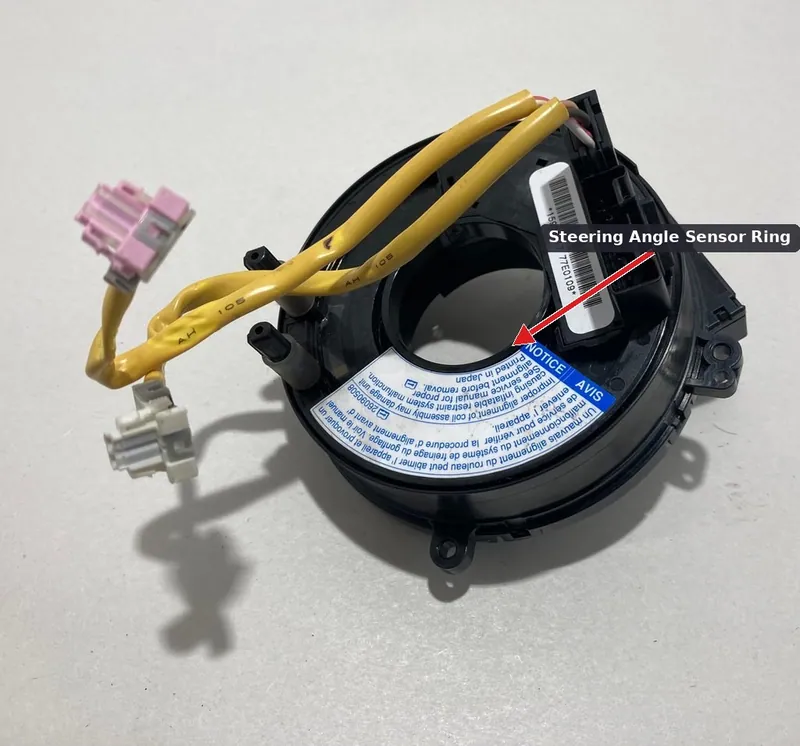
- Ford Explorer (2011-2015) — C1283 is frequently triggered by a fault in the Steering Angle Sensor, which is integrated into the clock spring assembly.
- Hyundai Santa Fe (2009-2012) — Frequently logs C1283 due to internal failures of the combined Yaw Rate and Lateral G Sensor.
- Kia Niro (Hybrid) (2017-2022) — On Kia hybrids, C1283 means 'Drive Motor A Inverter Performance'. This is a serious high-voltage powertrain fault, completely unrelated to stability control.
Manufacturer-Specific Notes
- Hyundai/Kia: Widespread issues with Yaw Rate Sensor failures. Always check for Recall 137 on 2011-2012 Elantras. On other models, a simple G-sensor calibration using a scan tool often resolves the code without parts.
- Chevrolet: On C5 Corvettes, C1283 almost always means 'Excessive Time to Center Steering'. If it appears after front-end work, the steering shaft was likely reinstalled 360 degrees off-center.
- Kia (Hybrid): Code C1283 points to a 'Drive Motor A Inverter Performance' issue. This is a critical high-voltage powertrain problem requiring a specialized hybrid technician.
Real Owner Stories
2000 C5 Corvette with 'Service Active Handling' message
Owner bought the car with C1283. The 'Service Active Handling' message appeared after 20 miles of driving.
What they tried:
- Suspected a steering shaft installation error from a prior repair.
- Disconnected the steering coupler, turned the wheel two full turns to the left, and reconnected it.
- Cleared codes and test-drove.
Outcome: Turning the steering wheel correctly re-centered the steering angle sensor. The C1283 code was resolved permanently without buying parts.
Lesson: On GM vehicles, if C1283 appears after front-end work, the steering shaft was likely reinstalled 360 degrees off-center. Fix the mechanical alignment before replacing sensors.
2014 Hyundai i30 with ESC light on
ESC light illuminated with a current C1283 code (Yaw/G-Sensor Signal Error).
What they tried:
- Checked live data; yaw rate and G-sensors responded correctly when driving.
- Performed a 'G-Sensor Calibration' using a professional scan tool on flat ground.
- Test-drove the vehicle.
Outcome: The calibration fixed the problem without replacing any parts. The code moved to history and the light turned off.
Lesson: A sensor calibration is a powerful first step that fixes signal plausibility issues. Do not assume the sensor is bad just because the code is present.
2011 Hyundai Elantra with intermittent ESC activation
ESC light illuminated, and the car braked by itself on one wheel, reducing engine power. Scan showed C1282 and C1283.
What they tried:
- Took the vehicle to a dealer, referencing Hyundai Recall Campaign 137.
Outcome: Dealer confirmed the codes and performed the recall, replacing the Yaw Rate sensor and updating the HECU software for free.
Lesson: Always check for recalls. This specific Hyundai issue causes dangerous unintended braking and is covered by the manufacturer.
How to Prevent This Code From Triggering
- Perform regular four-wheel alignments (Every 1-2 years or 15,000 miles) — Ensures the steering wheel is centered when driving straight, avoiding conflicts between the steering angle sensor and wheel speed sensors.
- Apply dielectric grease to sensor connectors (During any related service) — Seals electrical connectors from moisture and road salt, preventing corrosion that causes high resistance and signal faults.
- Maintain a healthy battery and clean terminals (Annually) — Sensitive ESC modules require stable voltage. Low voltage causes transient signal faults that trigger C1283.
Frequently Asked Questions
What is a Yaw Rate Sensor?
It is a small gyroscope that measures how fast your car rotates on its vertical axis. It is a critical component of the Electronic Stability Control (ESC) system, helping prevent skids by comparing your intended direction with the car's actual rotation.
What is the most common mistake when diagnosing C1283?
Replacing expensive sensors when the root cause is a poor wheel alignment or a software glitch. Always check live data and attempt a zero-point calibration before buying parts.
My steering wheel was removed for a repair, and now I have this code. Why?
The steering shaft was likely reinstalled 360 degrees off-center. Even if the wheel looks straight, the sensor underneath reads a full turn, triggering the 'Excessive Time to Center Steering' fault.
Can I replace the Yaw Rate Sensor myself?
It is not recommended for beginners. While physical installation is straightforward, the new sensor requires a mandatory zero-point calibration using an advanced scan tool to function.
Will a wheel alignment fix code C1283?
Yes, if your steering wheel is crooked when driving straight. The computer triggers the code when it sees a conflict between the steering angle and the car's actual direction.
Is it dangerous to drive with code C1283?
Normal driving is possible, but your primary safety system for preventing skids is disabled. Drive with extreme caution in rain, snow, or during sharp turns until the system is repaired.
Can a bad battery cause C1283?
Yes. Failing batteries or corroded terminals cause voltage drops that disrupt sensitive ESC control modules, triggering false sensor codes.
Why does the code have different meanings for different cars?
Chassis codes (starting with 'C') are not strictly standardized across the industry. Manufacturers assign them to proprietary systems, which is why C1283 means a stability fault on a Chevy but an inverter fault on a Kia Hybrid.
Key Takeaways
- Code C1283 disables your Electronic Stability Control (ESC), increasing the risk of a fatal single-vehicle crash by up to 56% in SUVs.
- The #1 cause is a failed Yaw Rate Sensor, particularly on 2011-2012 Hyundai Elantras covered under Recall Campaign 137.
- On GM vehicles, C1283 usually means 'Excessive Time to Center Steering', requiring a $120-$250 four-wheel alignment or steering angle sensor replacement.
- Never replace a sensor without first using an advanced OBD-II scanner to view live data and attempt a zero-point calibration.
- Replacing a Yaw or Steering Angle sensor requires a mandatory software calibration using a professional scan tool; it is not a plug-and-play DIY repair.
Helpful Videos

Shop the Parts Behind C1283
Below are the parts most often responsible for code C1283, ranked by how frequently each one is the actual culprit (per the diagnosis above). Tap any to see what we have for your vehicle.


The information in this article is provided for general reference and educational purposes only. Vehicle specifications, procedures, and part compatibility can vary by production date, trim level, and region. Always consult your vehicle's factory service manual and verify part numbers before purchasing or performing repairs. Safety-critical components such as airbags, seat belts, and braking systems should be installed by a qualified professional.
- 🧭 Diagnostic Flowchart
- 🎬 Helpful Videos
- 🛍️ Shop This Part
- What Does C1283 Mean?
- Can I Drive With C1283?
- Common Causes
- Symptoms
- Common Fixes & Costs
- DIY vs Professional
- Used vs. New Parts: Buying Guide
- What Happens If You Wait — Timeline
- Cost of Not Fixing It
- Diagnosis Steps
- When This Code Triggers (Freeze-Frame Conditions)
- Related Codes
- Climate & Environmental Factors
- How to Talk to a Mechanic About This Code
- Where to Take It: Dealer vs Independent vs Chain
- When to Walk Away From the Repair
- What Scan Tool You Need for This Code
- How to Clear the Code After You Fix It
- Will This Fail Emissions / State Inspection?
- Most Commonly Affected Vehicles
- Manufacturer-Specific Notes
- Real Owner Stories
- 2000 C5 Corvette with 'Service Active Handling' message
- 2014 Hyundai i30 with ESC light on
- 2011 Hyundai Elantra with intermittent ESC activation
- How to Prevent This Code From Triggering
- Frequently Asked Questions
- What is a Yaw Rate Sensor?
- What is the most common mistake when diagnosing C1283?
- My steering wheel was removed for a repair, and now I have this code. Why?
- Can I replace the Yaw Rate Sensor myself?
- Will a wheel alignment fix code C1283?
- Is it dangerous to drive with code C1283?
- Can a bad battery cause C1283?
- Why does the code have different meanings for different cars?
- Key Takeaways
- 🎟️ Get 5% Off