

OBD-II Code C1312: Master Cylinder Pressure Sensor Circuit / TPMS Malfunction / ABS Relay Short
What C1312 means, why it triggers, and how to fix it
- Code C1312 has entirely different meanings based on the manufacturer: a brake system fault for Toyota and Ford, or a TPMS communication failure for Hyundai and Kia.
- Brake-related C1312 faults disable your ABS and stability control, increasing stopping distances by up to 50% and causing steering loss during panic stops.
- On Hyundai and Kia vehicles, C1312 indicates a dead front-left TPMS sensor battery or radio frequency interference from aftermarket dash cams.
- Toyota and Lexus models with C1312 require a complete ABS actuator replacement costing $1,500 to $3,000, as the internal shorted relay cannot be serviced separately.
What Does C1312 Mean?
C1312 is a manufacturer-specific chassis code with drastically different meanings depending on your vehicle. For Toyota and Lexus, it indicates a 'Short Circuit in Main Relay 1' inside the brake actuator assembly. For Hyundai and Kia, it means 'Front Left Sensor RF Channel Failure,' pointing to a TPMS communication issue. For Ford, it flags a 'Master Cylinder Pressure Transducer Circuit Failure.' You must verify your vehicle's specific definition before attempting any diagnosis.
Technical definition: The SAE/OBD-II definition for C1312 is set by the manufacturer. Toyota/Lexus: 'Short Circuit in Main Relay 1' (ECU commands relay OFF but detects voltage). Hyundai/Kia: 'Front Left Sensor RF Channel Failure' (TPMS module loses signal from the front left wheel for over 9 minutes at speed). Ford: 'Master Cylinder Pressure Transducer Circuit Failure'. Subaru: 'FR Outlet Solenoid Valve System'. Allison Transmissions: 'Retarder Request Sensor Circuit Low'.
Can I Drive With C1312?
Yes, But With Caution. Yes, but with extreme caution. If the code is brake-related, your primary hydraulic brakes function, but your Anti-lock Braking System (ABS) and Vehicle Stability Control (VSC) are disabled. Your wheels will lock during a panic stop, eliminating steering control and increasing stopping distance by over 50%. If the code is for your Tire Pressure Monitoring System (TPMS), driving on a tire underinflated by 25% or more triples your risk of a crash.
Common Causes
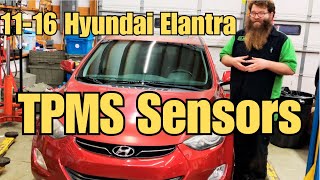
- Dead TPMS Sensor Battery (Very Common) — For Hyundai, Kia, and Chevrolet, the internal battery of the front-left TPMS sensor dies (typically after 5-10 years), preventing it from transmitting pressure data.
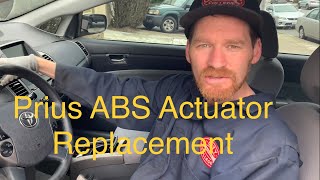
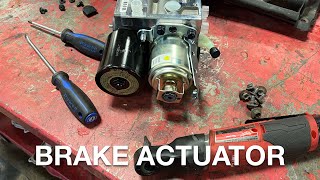
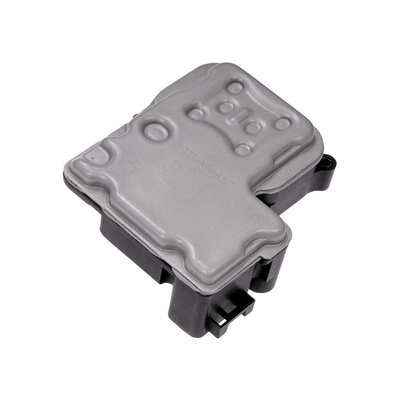
- Internal ABS Actuator Relay Failure (Very Common) — On Toyota and Lexus models, this code points to a shorted relay inside the sealed ABS actuator assembly. This requires replacing the entire unit. 🎬 Watch: Step-by-step guide to replacing the Toyota ABS actuator.
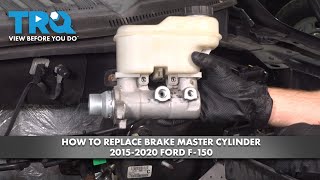
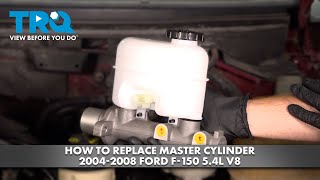
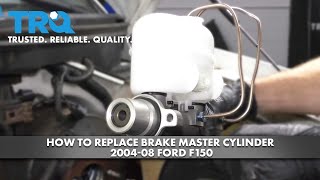
- Faulty Master Cylinder Pressure Sensor (Common) — Common on Ford vehicles and ATE MK60 ABS systems. The sensor fails and sends incorrect voltage signals. On some vehicles, this sensor is integrated into the ABS module and cannot be replaced separately. 🎬 Watch: How to replace the master cylinder on a Ford.
- Radio Frequency (RF) Interference (Common) — Strong RF signals from aftermarket dash cams, phone chargers, or camera wiring disrupt the TPMS signal. Hyundai issued a TSB for 2019+ Santa Fe/Palisade models regarding interference from Surround View Monitor wiring.
- Corroded Wiring or Connectors (Less Common) — Electrical wiring for the brake pressure sensor or TPMS receiver corrodes or breaks due to road debris and moisture, causing an open or short circuit.
- Low or Contaminated Brake Fluid (Rare) — Old, moisture-contaminated brake fluid corrodes internal ABS components and skews hydraulic pressure readings.
- Failing ABS or TPMS Control Module (Rare) — The computer module interpreting the sensor data fails internally. This is diagnosed only after ruling out the sensors and wiring.
Symptoms
- ABS and Stability Control Lights On — The ABS and Traction/VSC lights illuminate simultaneously, indicating these safety systems are disabled.
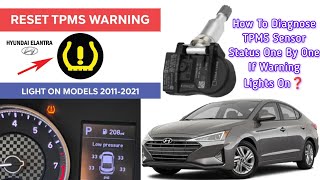
- TPMS Warning Light Flashing or Solid — For Hyundai/Kia, the TPMS light flashes for 60-90 seconds on startup before staying solid, indicating a system malfunction rather than just low pressure.
- Red Brake Warning Light On — Illuminates alongside the ABS light, warning of a critical hydraulic failure or disabled brake proportioning.
- Changes in Brake Pedal Feel — The brake pedal feels spongy, excessively hard, or sinks to the floor if the master cylinder or actuator fails.
- Loss of Steering Control During Hard Braking — Without ABS, wheels lock up during panic stops, causing the vehicle to skid regardless of steering input.
Diagnostic Flowchart
Tap your situation to follow the diagnostic path that matches what you're seeing on this code.
Common Fixes & Costs
- Replace TPMS Sensor — Parts: $40-$155, Labor: $50-$100, ~0.8 hr book time (Intermediate)
- Replace ABS Actuator Assembly — Parts: $1200-$2500, Labor: $400-$800, ~3.5 hr book time (Professional)
- Replace External Brake Pressure Sensor — Parts: $60-$250, Labor: $100-$200, ~1.2 hr book time (Intermediate)
- Repair Wiring Harness — Parts: $10-$50, Labor: $150-$300, ~1.5 hr book time (DIY)
- Replace ABS Control Module — Parts: $800-$1500, Labor: $150-$300, ~2.0 hr book time (Professional)
DIY vs Professional
- Replace TPMS Sensor — Beginner: False
Tools: Tire changing machine, TPMS programming tool, torque wrench. - Replace ABS Actuator Assembly — Beginner: False
Tools: Bi-directional scan tool, flare nut wrenches, pressure bleeder. - Replace External Brake Pressure Sensor — Beginner: True
Tools: Open-end wrenches, clean rags, brake fluid. - Repair Wiring Harness — Beginner: True
Tools: Multimeter, wire strippers, soldering iron, heat shrink tubing.
Used vs. New Parts: Buying Guide
When a used part is worth it: Used or remanufactured ABS actuators save thousands on older Toyota/Lexus models where a new OEM part exceeds the car's value. Never buy used TPMS sensors, as their internal batteries are wear items.
Donor-vehicle mileage cap: roughly under 80000 miles for the part to have meaningful remaining life.
Donor quality checklist:
- Match the ABS actuator part number exactly.
- Purchase from a seller offering at least a 90-day warranty.
- Check the donor car's VIN to ensure it wasn't in a flood or severe front-end collision.
- Professionally remanufactured units are safer than raw salvage yard pulls.
Decision logic:
- If The part is a TPMS sensor → Buy new. The battery has a finite lifespan.
- If The vehicle is less than 10 years old or has low mileage → Buy a new OEM ABS actuator for maximum reliability.
- If The vehicle is older and the repair cost exceeds 30% of its value → Buy a remanufactured or warranted used ABS actuator.
Warranty tradeoff: Used parts offer 30-90 day warranties. Remanufactured parts offer 1-year to lifetime warranties. New OEM parts carry a 1-year/12,000-mile warranty.
Worst-case if a used part fails: $800 to pay for labor a second time if a used ABS actuator fails after installation.
What Happens If You Wait — Timeline
- Immediate: For a brake fault, ABS and stability control are disabled. For a TPMS fault, the TPMS light flashes, then stays solid. (MPG impact: 0%% · Added cost: $0)
- 1-3 months: For a TPMS fault, a slow leak goes unnoticed, causing the tire to run underinflated. This reduces fuel economy and causes uneven tire wear. (MPG impact: 0-3% (TPMS only)% · Added cost: $20-$50 in wasted fuel and accelerated tire wear.)
- 3-12 months: For a TPMS fault, prolonged driving on a low tire destroys the sidewall. For a brake fault, contaminated fluid causes further internal corrosion in the ABS actuator. (MPG impact: Up to 5% (TPMS only)% · Added cost: $250+ for a new tire.)
- 12+ months: An ignored internal leak in the ABS actuator leads to a soft pedal or total loss of hydraulic pressure. A severely underinflated tire causes a high-speed blowout. (MPG impact: N/A% · Added cost: $500+ (collision deductible) to total vehicle loss.)
Cost of Not Fixing It
- Immediate: Brake-related faults disable ABS and Stability Control, drastically increasing the risk of skidding and losing steering control during panic stops. (Added cost: Collision deductible ($500+) to total loss of vehicle.)
- 0-6 months: TPMS faults leave you unaware of underinflated tires, causing accelerated tire wear and reducing fuel economy by up to 3%. (Added cost: $200-$400 for a premature replacement tire.)
- 6+ months: Driving on a severely underinflated tire generates excessive heat, leading to a high-speed blowout. Ignored ABS leaks lead to complete hydraulic brake failure. (Added cost: Cost of major accident repairs or total vehicle loss.)
Diagnosis Steps
- Confirm Vehicle-Specific Definition
Use a professional scan tool or service manual to confirm what C1312 means for your exact Year, Make, and Model. Guessing between a TPMS fault and an ABS fault wastes time and money.
Tools: Vehicle Service Manual or Online Database (Beginner) - Check for TSBs and RF Interference (TPMS)
Unplug all aftermarket electronic devices (dash cams, chargers) to rule out radio frequency interference. Check online databases for Technical Service Bulletins, like Hyundai TSB 23-BE-001H regarding camera wiring interference.
Tools: Online TSB Database (Beginner) - Swap Wheels to Confirm TPMS Fault
Swap the front-left wheel with the rear-left wheel. Clear the codes and drive. If the code changes to C1314 (Left Rear), the TPMS sensor is dead. If C1312 returns, the vehicle's receiver or wiring is faulty.
Tools: Lug Wrench, Jack, Jack Stands (Intermediate) - Test TPMS Sensor Signal
Use a TPMS activation tool to trigger the front-left sensor. If the tool receives no response, the sensor battery is dead and requires replacement.
Tools: TPMS Activation Tool (Intermediate) - Analyze Live Brake Pressure Data
Using an advanced scan tool, view the 'Brake Pressure Sensor' live data. With your foot off the pedal, it must read 0 psi. If it shows high pressure at rest, the sensor or its circuit is faulty.
Tools: Advanced OBD-II Scanner (Intermediate) - Perform ABS Active Test (Toyota/Lexus)
Navigate to the ABS/VSC system on a bi-directional scanner and select 'Active Test'. Command the 'ABS Main Relay' ON and OFF. If you do not hear a click from the actuator, or the code immediately returns, the internal relay is shorted.
Tools: Advanced Bi-Directional Scan Tool (Advanced) - Test Sensor Circuit Voltage
Disconnect the brake pressure sensor. Check for a 5-volt reference signal and a solid ground. On Ford vehicles, test the 3-pin connector with the key on; the reading between ground and reference must be exactly 5.0 volts. Wiggle the harness to spot intermittent wire breaks.
Tools: Digital Multimeter, Wiring Diagram (Advanced)
When This Code Triggers (Freeze-Frame Conditions)
- Vehicle Speed: 15-55 mph (25-90 km/h) (For TPMS faults, the vehicle must move consistently for a set time (e.g., 9 minutes) for the ECU to flag a missing sensor signal.)
- Brake Pedal Status: Not Applied (Brake pressure sensor faults trigger when the ECU reads high hydraulic pressure while the brake pedal is released.)
- System Voltage: 11-14 Volts (C1312 typically sets under normal operating voltage, ruling out a dying alternator or battery as the root cause.)
- Time Since Ignition On: > 10 minutes (The control unit monitors the system over time and distance to confirm a persistent failure before setting the code.)
Related Codes
- C1311 — The partner code to C1312 on Toyota/Lexus. C1311 means 'Open Circuit in Main Relay 1'. Both require replacing the ABS actuator.
- C1313, C1314, C1315 — Hyundai/Kia TPMS codes for the Right Front, Left Rear, and Right Rear sensors. Seeing these alongside C1312 suggests a failed receiver module or severe RF interference.
- C1246 — Toyota code for 'Master Cylinder Pressure Sensor Malfunction.' If present with C1312, it confirms the ABS actuator assembly is dead.
- U0121 — Means 'Lost Communication With ABS Control Module.' If present, diagnose U0121 first, as the entire ABS module lacks power or ground.
Climate & Environmental Factors
- Cold Weather: Cold temperatures drop tire pressure (1 PSI per 10°F) and strain aging TPMS sensor batteries, frequently triggering C1312 in winter.
- Hot Weather: High ambient heat accelerates the depletion of TPMS sensor batteries, shortening their lifespan.
- Humidity and Road Salt: Moisture and de-icing salt corrode TPMS valve stems and brake pressure sensor wiring, causing signal loss and short circuits.
How to Talk to a Mechanic About This Code
Say this: "I have a C1312 chassis code on my [Year, Make, Model]. I know this code has different meanings, so please confirm the definition for my VIN first. Then, perform the specific tests for that system—whether it's the ABS relay, brake sensor, or TPMS—before recommending parts."
This signals you are an informed customer. It forces the shop to diagnose the correct system and prevents them from guessing or replacing the wrong, expensive parts.
Avoid saying:
- 'My ABS light is on, can you fix it?' (Too vague, invites guessing)
- 'I think I need a new ABS module.' (Don't diagnose it for them)
- 'Just do whatever it takes to turn the light off.' (Leads to unnecessary repairs)
Questions to ask before authorizing the repair:
- For Toyota/Lexus: Did you perform an active test on the ABS main relay? Is my VIN eligible for the ZLG warranty program?
- For Hyundai/Kia: Did you confirm the TPMS sensor is dead with an activation tool? Did you rule out RF interference?
- For Ford: What was the brake pressure sensor reading with the pedal at rest?
- Can you provide a written estimate separating parts and labor?
Where to Take It: Dealer vs Independent vs Chain
- Dealer:
Recommended for warranty claims and complex programming. For out-of-warranty ABS actuator replacements, compare their quote with an independent shop.
Best for: Vehicles under warranty or eligible for the Lexus ZLG program., Complex issues like the Hyundai RF interference TSB., Repairs requiring proprietary software to program a new ABS module.
Downsides: Highest labor rates., Will default to replacing the entire expensive ABS assembly rather than offering remanufactured options. (Typical cost: +75% vs. baseline) - Independent Shop:
Best overall fit for most out-of-warranty C1312 repairs. A Toyota/Lexus specialist is ideal for the ABS actuator replacement.
Best for: Out-of-warranty repairs where cost is a major factor., Common C1312 variants like Ford brake sensors or Hyundai TPMS sensors., Installing customer-supplied or remanufactured ABS actuators.
Downsides: Diagnostic tool capability varies; ensure they have a bi-directional scanner capable of ABS bleeding. (Typical cost: +0% vs. baseline) - Chain Shop:
Acceptable for a straightforward TPMS sensor replacement. Avoid for any brake-related C1312 diagnosis.
Best for: Simple TPMS sensor replacements, provided they have the correct programming tools.
Downsides: High risk of misdiagnosing brake-related C1312 variants., Lack specialized tools for complex ABS bleeding procedures. (Typical cost: -10% vs. baseline)
When to Walk Away From the Repair
If the estimated repair cost for the C1312 fault exceeds 50% of your car's current private-party value, seriously consider selling the vehicle as-is.
- Car worth $4000, fix is $2800: Walk away. The repair cost is 70% of the car's value.
- Car worth $12000, fix is $350: Fix it. This is a minor repair and only 3% of the vehicle's value.
- Car worth $6000, fix is $3000: Borderline. Get a second opinion. If a remanufactured part brings the cost down to $1,500, fix it. Otherwise, sell.
What Scan Tool You Need for This Code
Minimum: A scanner that reads and clears manufacturer-specific Chassis (C) codes from the ABS and TPMS modules.
A basic $20 engine code reader cannot communicate with ABS or TPMS modules and will not see the C1312 code at all.
Budget: Autel AutoLink AL619 / Foxwell NT301+ (~$80) — Confirms the presence of code C1312 and clears it. It cannot view live data or perform active tests.
Mid-range: Foxwell NT510 Elite / XTOOL D7 (~$180) — Reads/clears ABS and TPMS codes, graphs live sensor data (for Ford brake sensors), and performs bidirectional active tests (for Toyota ABS relays).
Professional: Autel MaxiCOM MK808S / Launch X431 (~$450) — Offers full bidirectional control, electronic ABS brake bleeding for Toyota/Lexus, and TPMS sensor ID programming.
Rent vs buy: Auto parts store loaner tools are usually basic engine readers and cannot read ABS/TPMS codes. You must buy at least a budget-level scanner.
How to Clear the Code After You Fix It
- Use an advanced OBD-II scan tool to clear the C-code from the ABS or TPMS module.
- For TPMS replacement, perform a relearn procedure using a specialized tool to register the new sensor ID.
- For ABS repairs, perform the vehicle-specific drive cycle to allow the system to self-test.
Drive cycle (~20 minutes): For TPMS, drive for 15 minutes above 20 mph to allow the system to recognize all sensors. For ABS, perform mixed city/highway driving with several normal stops to verify actuator function.
Readiness monitors affected: Chassis codes do not affect emissions readiness monitors.
Watch out for:
- Clearing the code without fixing the hardware fault causes the light to return immediately.
- Skipping the TPMS relearn procedure prevents the new sensor from communicating with the car.
- Disconnecting the battery will not clear C-codes from modern ABS/TPMS memory.
Will This Fail Emissions / State Inspection?
No — by itself this code doesn't fail OBD inspection (but it can keep readiness monitors from setting, which causes a separate fail).
- California: An ABS or TPMS light will not fail a smog check, which only monitors emissions systems.
- New York: An illuminated ABS light causes an automatic failure of the annual safety inspection. A TPMS light is an advisory only.
- Texas: ABS or TPMS lights do not fail the safety inspection, but an illuminated red 'BRAKE' warning light will.
Most Commonly Affected Vehicles
- Toyota Prius (2004-2015) — C1312 indicates a shorted internal relay in the brake booster/actuator assembly. Repair costs frequently exceed $2,000.
- Hyundai Santa Fe, Palisade, Elantra (2011-2023) — C1312 flags a 'Front Left Sensor RF Channel Failure' (TPMS). Check TSB 23-BE-001H for camera wiring interference on 2019+ models.
- Kia Sorento, Optima, Forte (2011-2023) — Identical to Hyundai; C1312 indicates a TPMS RF signal failure from the front-left wheel sensor.
- Lexus RX350, RX450h, ES, GS, LS (2006-2015) — Shares the Toyota brake actuator design. Check for VIN eligibility in the ZLG Warranty Enhancement Program before paying out of pocket.
- Ford F-150, F-250, Explorer (2002-2014) — Defined as 'Master Cylinder Pressure Transducer Circuit Failure.' The sensor is often externally mounted and cheaper to replace.
- Subaru Legacy, Outback, Forester (2012-2024) — Indicates a fault in the 'FR Outlet Solenoid Valve System' within the ABS hydraulic control module.
- Chevrolet Silverado, Equinox, Cruze (2010-2018) — Inconsistent definition; indicates either a TPMS communication failure or a brake pressure sensor fault depending on the exact year.
- Allison Transmission 3000 & 4000 Series (2013-2024) — Indicates a 'Retarder Request Sensor Circuit Low' voltage fault related to the heavy-duty auxiliary braking system.
Manufacturer-Specific Notes
- Toyota/Lexus: The shorted relay triggering C1312 is permanently sealed inside the ABS actuator. Lexus issued Warranty Enhancement Program ZLG (10 years/150,000 miles) to cover this massive expense for eligible VINs.
- Hyundai/Kia: C1312 is almost exclusively a TPMS code. Dealerships frequently fix this on 2019+ SUVs by wrapping the Surround View Monitor camera wiring in Faraday tape to block RF interference.
- Ford: Ford uses an external 'Brake Pressure Transducer' on many trucks. This allows for a $150 sensor replacement rather than a $2,000 module replacement.
- Subaru: Do not confuse chassis code C1312 (ABS solenoid valve) with powertrain code P1312, which flags an Exhaust Gas Temperature sensor on older WRX models.
Real Owner Stories
2013 Hyundai Elantra at 110K miles with flashing TPMS light
The TPMS warning light flashed on startup. A scan revealed code C1314 (Left Rear sensor). Because the car was 8 years old, the owner opted to replace all four sensors preventively.
What they tried:
- Purchased four new OEM TPMS sensors.
- A tire shop dismounted the tires, installed the sensors, and balanced the wheels.
- The mechanic used a TPMS tool to write the new sensor IDs to the vehicle's ECU.
Outcome: The TPMS light stayed off. Replacing all sensors at once saved future labor costs, as the other 8-year-old batteries were near death.
Lesson: On Hyundai/Kia, C1312 and related codes point to dead TPMS batteries. Replacing them requires tire dismounting and a digital relearn procedure.
2010 Toyota Prius with ABS, Brake, and VSC lights on
Multiple brake warning lights illuminated. A scan showed C1312, indicating a shorted main relay inside the ABS actuator.
What they tried:
- The dealership quoted over $2,000 for a new ABS actuator assembly.
- The owner sourced a warranted used ABS actuator from a salvage yard for $400.
- An independent mechanic installed the used part and performed the required computerized brake bleed.
Outcome: The used part resolved the codes for a total cost of $800, saving the owner $1,200.
Lesson: For the notorious Toyota C1312 fault, a warranted used or remanufactured ABS actuator is a cost-effective alternative to a new OEM part on older vehicles.
2020 Hyundai Palisade with intermittent C1312 TPMS code
The TPMS light triggered intermittently with code C1312 (Front Left Sensor RF Channel Failure), despite correct tire pressure.
What they tried:
- The owner found Hyundai TSB 23-BE-001H regarding RF interference from the Surround View Monitor cameras.
- The dealership inspected the camera wiring and applied Faraday shielding tape to the harness.
Outcome: The shielding tape resolved the interference, fixing the C1312 code without replacing the TPMS sensor. Covered under warranty.
Lesson: Always check TSBs. RF interference from vehicle electronics or aftermarket accessories is a common, overlooked cause of TPMS communication codes.
How to Prevent This Code From Triggering
- Flush brake fluid every 2-3 years (Every 2-3 years or 30,000 miles) — Brake fluid absorbs moisture. Flushing it removes water that corrodes the delicate internal valves and sensors of the ABS module.
- Replace all TPMS sensors at once (Every 5-10 years (when one fails)) — TPMS batteries have a finite lifespan. When one dies, the others will follow shortly. Replacing all four during a tire change saves repeat labor costs.
- Avoid harsh, repeated braking (Daily driving habit) — Frequent panic stops put excessive heat and stress on the ABS pump and solenoids, shortening their lifespan.
- Clean the ABS module area (During routine washing) — Keeping the ABS module free of spilled fluids and road salt prevents corrosion of its electrical connectors.
Frequently Asked Questions
What is the most common mistake when diagnosing C1312?
The biggest mistake is assuming the code's meaning without verifying it for your specific vehicle. A mechanic wastes hours inspecting brakes on a Kia when C1312 is actually a TPMS code. Always look up the manufacturer-specific definition first.
Why is the repair for a Toyota Prius so expensive?
On Toyota and Lexus models, the brake pressure sensor, relays, and pump are integrated into a single sealed ABS actuator assembly. When the internal main relay fails, you must replace the entire unit. This requires a complex electronic bleeding procedure, driving costs over $1,500.
Can I just replace the battery in the TPMS sensor?
No. TPMS sensor batteries are permanently sealed inside the unit to protect them from moisture and vibration. You must replace the entire sensor when the battery dies, which typically happens after 5 to 10 years.
What is the difference between a basic code reader and an advanced scanner?
Basic $20 code readers only read engine 'P' codes and cannot see ABS or TPMS faults like C1312. Advanced scanners access manufacturer-specific chassis ('C') codes, view live sensor data, and perform active tests. You need an advanced scanner to properly diagnose C1312.
Can I replace the brake pressure sensor myself?
This depends entirely on the vehicle design. On a Ford F-150 with an external transducer, a skilled DIYer can replace it easily. On vehicles where the sensor is internal to the ABS module, you must replace the entire module and perform a computerized brake bleed.
Will clearing the C1312 code fix the warning light?
Only temporarily. The control module re-runs its self-tests the next time you drive. If the underlying hardware or circuit fault remains, the code sets again and the warning lights reappear immediately.
Can a bad alignment cause a C1312 code?
No. Alignment issues affect tire wear and handling but do not trigger ABS or TPMS sensor faults. However, driving with a disabled stability control system (caused by C1312) makes a poorly aligned car much more dangerous to handle.
Key Takeaways
- Code C1312 has entirely different meanings based on the manufacturer: a brake system fault for Toyota and Ford, or a TPMS communication failure for Hyundai and Kia.
- Brake-related C1312 faults disable your ABS and stability control, increasing stopping distances by up to 50% and causing steering loss during panic stops.
- On Hyundai and Kia vehicles, C1312 indicates a dead front-left TPMS sensor battery or radio frequency interference from aftermarket dash cams.
- Toyota and Lexus models with C1312 require a complete ABS actuator replacement costing $1,500 to $3,000, as the internal shorted relay cannot be serviced separately.
Helpful Videos
Shop the Parts Behind C1312
Below are the parts most often responsible for code C1312, ranked by how frequently each one is the actual culprit (per the diagnosis above). Tap any to see what we have for your vehicle.



The information in this article is provided for general reference and educational purposes only. Vehicle specifications, procedures, and part compatibility can vary by production date, trim level, and region. Always consult your vehicle's factory service manual and verify part numbers before purchasing or performing repairs. Safety-critical components such as airbags, seat belts, and braking systems should be installed by a qualified professional.
- 🧭 Diagnostic Flowchart
- 🎬 Helpful Videos
- 🛍️ Shop This Part
- What Does C1312 Mean?
- Can I Drive With C1312?
- Common Causes
- Symptoms
- Common Fixes & Costs
- DIY vs Professional
- Used vs. New Parts: Buying Guide
- What Happens If You Wait — Timeline
- Cost of Not Fixing It
- Diagnosis Steps
- When This Code Triggers (Freeze-Frame Conditions)
- Related Codes
- Climate & Environmental Factors
- How to Talk to a Mechanic About This Code
- Where to Take It: Dealer vs Independent vs Chain
- When to Walk Away From the Repair
- What Scan Tool You Need for This Code
- How to Clear the Code After You Fix It
- Will This Fail Emissions / State Inspection?
- Most Commonly Affected Vehicles
- Manufacturer-Specific Notes
- Real Owner Stories
- 2013 Hyundai Elantra at 110K miles with flashing TPMS light
- 2010 Toyota Prius with ABS, Brake, and VSC lights on
- 2020 Hyundai Palisade with intermittent C1312 TPMS code
- How to Prevent This Code From Triggering
- Frequently Asked Questions
- What is the most common mistake when diagnosing C1312?
- Why is the repair for a Toyota Prius so expensive?
- Can I just replace the battery in the TPMS sensor?
- What is the difference between a basic code reader and an advanced scanner?
- Can I replace the brake pressure sensor myself?
- Will clearing the C1312 code fix the warning light?
- Can a bad alignment cause a C1312 code?
- Key Takeaways
- 🎟️ Get 5% Off