

OBD-II Code C1320: ABS Wheel Speed Sensor Signal Fault
What C1320 means, why it triggers, and how to fix it
- Code C1320 disables your ABS and stability control by flagging a fault in the front left wheel speed sensor circuit.
- Verify the C1320 definition for your specific vehicle, as it means a front left sensor fault on a Peugeot but indicates a catastrophic $2,000+ hybrid braking failure on a Ford Escape.
- Inspect the wiring harness and clean rust from the sensor mounting surface before spending $30-$150 on a new sensor, as physical damage causes 50% of these faults.
- Use a scanner with live data capabilities to monitor all 4 wheel speeds simultaneously; a front left reading of 0 mph confirms an open circuit or dead sensor.
- Limit driving to essential trips under 40 mph, as the disabled ABS increases stopping distances by up to 20% on wet or icy roads.
What Does C1320 Mean?
Code C1320 indicates the vehicle's main computer lost the signal from the front left wheel speed sensor. This sensor measures how fast the wheel turns. When the signal drops or becomes erratic, the computer shuts down the ABS and stability control systems to prevent unpredictable braking.
Technical definition: The SAE/ISO definition for C1320 varies by manufacturer. European vehicles (Peugeot, Citroën) define it as 'Front Left Wheel Speed Sensor Signal Fault; Coherence' or an electrical short/open. Ford hybrids define it as a 'Brake Hydraulic Accumulator Travel Sensor' fault, while Hyundai uses it for 'Wrong Type TPMS Sensor Installed'.
Can I Drive With C1320?
Yes, But With Caution. Yes, but with extreme caution. Your Anti-lock Braking System (ABS) and Electronic Stability Program (ESP) are disabled. This causes wheels to lock during a hard stop, increasing stopping distances and causing a loss of steering control. Limit driving to essential trips and repair immediately to avoid accidents.
Common Causes
- Faulty Front Left Wheel Speed Sensor (Very Common) — The sensor fails internally due to age, heat cycles, or moisture intrusion. This is the primary cause on vehicles defining C1320 as a wheel speed fault.
- Damaged Sensor Wiring or Connector (Common) — Exposed wiring breaks from road debris, suspension flexing, or corrosion. Loose female pins inside the harness connector also cause intermittent signal drops.
- Rust Buildup Under Sensor Mount (Common) — Rust and scale build up on the steering knuckle where the sensor bolts down. This pushes the sensor outward, increasing the air gap and weakening the magnetic signal. 🎬 Watch: How corrosion and rust buildup affect your ABS sensors.
- Damaged ABS Reluctor Ring (Common) — The toothed or magnetic ring on the wheel hub cracks, rusts, or collects metallic debris, preventing the sensor from reading a clean signal.
- Incorrect Wheel Bearing Installation (Common) — Modern wheel bearings integrate the magnetic encoder into the dust seal. Installing the bearing backward leaves the sensor with nothing to read, triggering the code instantly.
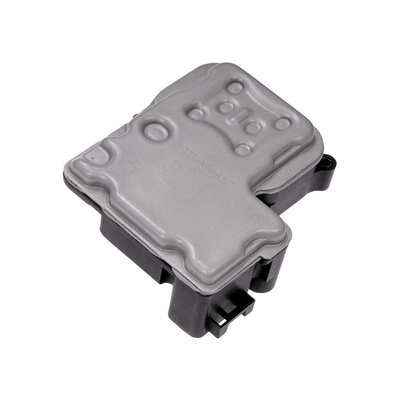
- Failing ABS Control Module (Rare) — The ABS computer develops a broken solder joint or failed internal component, preventing it from processing the wheel speed signal.
- Low Battery Voltage (Rare) — A failing battery prevents control modules from initializing correctly during startup, triggering false electrical codes.
Symptoms
- ABS Warning Light On — The primary indicator is an illuminated 'ABS' light on the dashboard.
- Traction/Stability Control Light On — The ESP, ESC, or VSC light illuminates because these systems cannot function without wheel speed data.
- Speedometer Malfunction — If the front left sensor provides primary speed data, the speedometer reads incorrectly, behaves erratically, or drops to zero.
- Transmission or Power Steering Limp Mode — Automatic transmissions and electric power steering systems enter a limited-functionality safety mode when deprived of wheel speed data.
- Brake Warning Light On — A general red 'BRAKE' or 'STOP' light illuminates if the ABS module detects a critical internal failure.
Diagnostic Flowchart
Tap your situation to follow the diagnostic path that matches what you're seeing on this code.
Common Fixes & Costs
- Replace Front Left Wheel Speed Sensor — Parts: $30-$150, Labor: $100-$180, ~0.8 hr book time (DIY)
- Repair Damaged Wiring or Connector — Parts: $10-$50, Labor: $130-$250, ~1.5 hr book time (Intermediate)
- Clean Sensor Mounting Surface and Reluctor Ring — Parts: $5-$15, Labor: $65-$130, ~0.6 hr book time (DIY)
- Replace Wheel Bearing/Hub Assembly — Parts: $150-$500, Labor: $150-$300, ~2.0 hr book time (Professional)
- Repair or Replace ABS Control Module — Parts: $200-$2000, Labor: $150-$400, ~2.5 hr book time (Professional)
Used vs. New Parts: Buying Guide
When a used part is worth it: Buying a used wheel speed sensor rarely makes sense. It is an inexpensive wear item exposed to harsh elements. Buy a new aftermarket sensor. Only buy used if replacing the entire ABS module.
Donor-vehicle mileage cap: roughly under 40000 miles for the part to have meaningful remaining life.
Donor quality checklist:
- Avoid parts from rust-belt vehicles due to corrosion.
- Verify the part number matches exactly; visually identical sensors have different internal electronics.
- Test the resistance of a used passive sensor (800-2000 ohms) before purchasing.
Decision logic:
- If The part is a wheel speed sensor → Buy a new OEM or reputable aftermarket brand (Bosch, Delphi). The reliability is worth the cost.
- If The fix requires a complete ABS module → Buy a used module from a low-mileage donor or use a mail-in repair service to save thousands.
Warranty tradeoff: Used parts carry a 30-day warranty. New aftermarket parts offer 1-year to lifetime warranties.
Worst-case if a used part fails: $150 in repeat labor if a used sensor fails immediately.
What Happens If You Wait — Timeline
- 0-2 weeks: ABS and Stability Control lights illuminate. Systems are fully disabled. Normal braking functions. (MPG impact: 0% · Added cost: 0)
- 2 weeks - 3 months: Speedometer may work erratically. Cruise control disables. Risk of an accident in slippery conditions remains high. (MPG impact: 0% · Added cost: 0)
- 3-12 months: Automatic transmission may shift harshly or enter limp mode due to missing speed data. (MPG impact: 2-5%% · Added cost: $150 for transmission diagnostics if misdiagnosed.)
- 12+ months: No direct mechanical damage occurs, but the persistent lack of ABS/ESC remains a severe safety hazard. (MPG impact: 0% · Added cost: 0)
Cost of Not Fixing It
- Immediate: Total loss of ABS and Electronic Stability Control. Wheels lock up during emergency braking, causing skids and loss of steering. (Added cost: Cost of an accident.)
- 0-6 months: Erratic transmission shifting or disabled cruise control as secondary systems lose speed data. (Added cost: $150 for unnecessary transmission diagnostics.)
- 6+ months: Persistent safety hazard. The systems fail safely by shutting down, so no direct mechanical damage occurs to other parts. (Added cost: 0)
Diagnosis Steps
- Read All Fault Codes
Use an ABS-capable scanner to confirm C1320. Check for related codes (C1321, C0031, U0415) to determine if the fault is an electrical open circuit or a mechanical coherence issue.
Tools: OBD-II Scanner (ABS capable) (Beginner) - Analyze Live Data
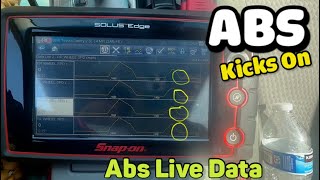
Monitor all four wheel speeds simultaneously on your scanner while driving straight. A front left reading of 0 mph confirms an open circuit or dead sensor. Erratic jumps (e.g., spiking to 150 mph) confirm a short circuit or damaged reluctor ring.
Tools: OBD-II Scanner with Live Data (Intermediate) - Visually Inspect Sensor and Wiring
Raise the front left wheel. Inspect the sensor wiring for chafing, melting, or breaks. Unplug the connector and check for green corrosion or loose pins.
Tools: Jack, Jack Stands, Flashlight (Beginner) - Inspect Reluctor Ring and Mount
Examine the toothed or magnetic ring on the axle/hub for cracks, missing teeth, or debris. Check the sensor's mounting surface on the knuckle for rust buildup that pushes the sensor away from the ring.
Tools: Flashlight, Wire Brush (Intermediate) - Perform a Swap Test
If the left and right sensors are identical, swap them. Clear the codes and drive. If the fault code moves to the right side (e.g., C0034), the sensor is definitively dead. If C1320 remains, the issue is in the wiring or reluctor ring.
Tools: Basic Hand Tools (Intermediate) - Test Sensor Resistance and Voltage
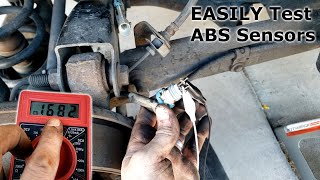
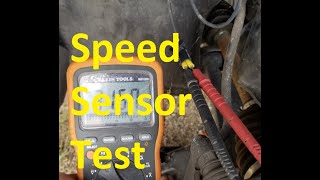
For 2-wire passive sensors, measure resistance across the pins (typically 800-2000 Ohms). 'OL' means internal failure. Turn the ignition ON and test the harness connector for reference voltage (5V/12V) and ground to rule out wiring breaks.
Tools: Multimeter, Service Manual (Advanced) - Analyze Signal with Oscilloscope
Back-probe the signal wire while spinning the wheel. A healthy passive sensor produces a clean sine wave; an active sensor produces a square wave. A distorted waveform pinpoints a damaged reluctor ring.
Tools: Oscilloscope, Back-probe pins (Advanced)
When This Code Triggers (Freeze-Frame Conditions)
- Vehicle Speed: 15-45 mph (The fault logs during initial acceleration or steady-state driving when the ABS module compares signals from all four wheels.)
- Braking Status: Not Braking (Electrical faults (open/short circuits) trigger immediately. Coherence faults trigger while driving when one wheel speed mismatches the others.)
- Steering Angle: Near 0° (Straight) (The ABS module expects identical wheel speeds when driving straight. A discrepancy instantly triggers the code.)
- System Voltage: 12.0V - 14.8V (The code sets reliably under stable voltage. Low voltage during cold starts triggers spurious codes.)
Related Codes
- C1321 — Indicates a 'Coherence' fault. The sensor sends a signal, but it contradicts the other wheels. Points to a cracked reluctor ring rather than a broken wire.
- C0031 — The generic SAE code for 'Left Front Wheel Speed Sensor Circuit'. Basic scanners show C0031, while advanced tools show the manufacturer-specific C1320.
- U0415 — Means 'Invalid Data Received From ABS Module'. The ABS module detects C1320, stops trusting its data, and broadcasts this U-code to the engine and transmission. Fix C1320 to clear U0415.
Climate & Environmental Factors
- Road Salt & Humidity: Saltwater acts as an electrolyte, accelerating wiring decay. It seeps past weather seals, causing shorts that trigger permanent C1320 codes.
- Cold Weather / Snow & Ice: Packed snow physically obstructs the sensor signal. Extreme cold makes wiring insulation brittle and prone to cracking.
How to Talk to a Mechanic About This Code
Say this: "I have an ABS light on and my scanner shows code C1320 for the front left wheel speed circuit. Please check the live data from all four wheels, and visually inspect the sensor wiring, connector, and reluctor ring for damage before recommending a repair."
Directs the technician to perform a thorough diagnosis rather than blindly replacing the sensor, saving you money on repeat repairs.
Avoid saying:
- 'My ABS light is on, can you fix it?'
- 'Just replace the front left speed sensor.'
- 'Do whatever you think is best.'
Questions to ask before authorizing the repair:
- What did the live data show for the front left wheel speed compared to the others?
- Did you find any visible damage to the wiring, connector, or reluctor ring?
- Did you test the old sensor's resistance or check for voltage at the harness connector to confirm it failed?
Where to Take It: Dealer vs Independent vs Chain
- Dealer:
Recommended only if under warranty or dealing with a complex hybrid braking system.
Best for: Vehicles under warranty., Ford Escape Hybrids requiring HCU diagnostics.
Downsides: Significantly higher labor and parts costs., Often recommends replacing large assemblies instead of repairing wiring. (Typical cost: +50% vs. baseline) - Independent Shop:
Best fit for most C1320 repairs. Easily diagnoses common causes at a fair price.
Best for: Out-of-warranty vehicles., Diagnosing wiring, sensors, and wheel bearings.
Downsides: Diagnostic skill varies; choose an ASE-certified shop. (Typical cost: +0% vs. baseline) - Chain Shop:
Avoid for initial diagnosis. Acceptable only if you have already confirmed the sensor is dead.
Best for: Simple, pre-diagnosed sensor replacements.
Downsides: Lacks advanced diagnostic tools., Defaults to replacing parts unnecessarily. (Typical cost: -10% vs. baseline)
When to Walk Away From the Repair
If the estimated repair cost exceeds 40-50% of your car's current private-party value, consider your options.
- Car worth $4000, fix is $250: Fix it. This is an inexpensive safety repair well below the threshold.
- Car worth $4000, fix is $2200: Walk away. The repair cost is over 50% of the car's value (e.g., ABS module or HCU failure).
- Car worth $15000, fix is $2200: Fix it. The repair is less than 15% of the vehicle's value and restores a critical safety system.
What Scan Tool You Need for This Code
Minimum: A scanner that reads ABS/Chassis (C-codes) and displays live data for all four wheel speed sensors.
A basic $20 engine code reader cannot communicate with the ABS module. It will not see C1320 or display live wheel speed data.
Budget: Foxwell NT604 Elite or Innova 3040RS (~$99) — Reads ABS codes and displays live data streams for all four wheel speed sensors to identify the faulty one.
Mid-range: Autel AutoLink AL619 or BlueDriver Pro (~$120) — Provides robust ABS code reading, clearing, and live data graphing on your smartphone or handheld unit.
Professional: Autel MaxiCOM MK808 or Innova 5610 (~$450-600) — Offers full bidirectional control to activate the ABS pump for bleeding procedures and OEM-level diagnostics.
Rent vs buy: Buy a budget pick for $100. Auto parts store loaners often cannot read ABS codes or display live data.
How to Clear the Code After You Fix It
- Use an ABS-capable OBD-II scan tool to erase the fault codes.
- Cycle the ignition off, then back on, and verify the ABS light turns off.
- Test drive the vehicle above 20 mph to allow the ABS module to complete its self-test.
Drive cycle (~15 minutes): Drive normally for 10-15 minutes, including stop-and-go traffic and steady cruising above 20 mph. If the ABS light stays off, the repair was successful.
Readiness monitors affected: ABS faults do not affect engine emissions readiness monitors.
Watch out for:
- Using a basic $20 code reader that cannot access or clear ABS modules.
- Disconnecting the battery. This turns the light off temporarily, but the code remains stored and returns immediately upon driving.
- Replacing the sensor without fixing the underlying damaged wiring or rusted mounting surface.
Will This Fail Emissions / State Inspection?
No — by itself this code doesn't fail OBD inspection (but it can keep readiness monitors from setting, which causes a separate fail).
- California: An ABS light passes the emissions-only Smog Check but fails a 'Brake and Lamp Inspection' required for salvage titles.
- New York: An illuminated ABS warning light is a safety defect and causes an automatic failure of the annual safety inspection.
- Texas: An ABS light passes the safety inspection, but an illuminated primary red 'BRAKE' warning light causes a failure.
Most Commonly Affected Vehicles
- Peugeot 206, 407, 5008 (1998-2015) — Extremely common. Almost always indicates a fault with the front left ABS sensor or its wiring.
- Citroën C4, DS3, C5 (2004-2016) — Frequently caused by sensor failure, wiring breaks, or a damaged ABS ring integrated into the wheel bearing.
- Renault Clio, Megane (2005-2015) — Prone to front left wheel speed sensor faults and wiring harness chafing near the suspension.
- Honda Civic, Accord (2006-2016) — Rust buildup on the steering knuckle under the sensor mount increases the air gap, causing a bad signal. Cleaning fixes it.
- Kia / Hyundai Sorento, Santa Fe, Elantra (2011-2017) — C1320 often refers to a TPMS fault ('Wrong Type Sensor Installed') rather than a wheel speed sensor. Verify with a pro scanner.
- Ford Escape Hybrid (2005-2008) — CRITICAL: C1320 indicates a 'Brake Hydraulic Accumulator Travel Sensor' failure within the hybrid HCU, NOT a wheel speed sensor. This is a $2,000+ repair.
- Mercedes-Benz C-Class (W203) (2001-2005) — Prone to ESP/ABS light illumination from faulty wheel speed sensors and cracked reluctor rings on the axles.
Manufacturer-Specific Notes
- Peugeot/Citroën: The ABS reluctor ring is integrated into the wheel bearing seal. Installing a cheap aftermarket bearing backward triggers C1320 instantly.
- Ford: On 2005-2008 Escape Hybrids, C1320 is NOT a wheel speed sensor code. It indicates a catastrophic failure in the regenerative braking system's Hydraulic Control Unit (HCU).
- Honda: Excessive rust on the steering knuckle pushes the sensor away from the magnetic ring. Removing the sensor and wire-brushing the mount fixes the code without new parts.
- Hyundai/Kia: C1320 often indicates 'Wrong Type TPMS Sensor Installed'. Use an advanced scanner to get the exact definition for your VIN.
Real Owner Stories
2008 Peugeot 407 2.7 HDi with recurring C1320
Owner reported persistent ABS/ESP warning lights. Diagnostic scan showed C1320 (front left) and C1325 (rear left).
What they tried:
- Replaced all four wheel speed sensors.
- Replaced the brake pedal switch.
Outcome: The faults returned immediately. The owner sent the ABS control module for professional repair. Reinstalling the repaired module cleared all codes permanently.
Lesson: If replacing sensors and checking wiring fails, the ABS module itself is likely faulty. Mail-in repair services save hundreds over buying new.
2012 Honda Civic with intermittent ABS light
ABS light illuminated during low-speed braking. The brake pedal pulsed as if ABS activated on dry pavement.
What they tried:
- Visually inspected the front wheel speed sensor area.
Outcome: Found severe rust buildup on the steering knuckle under the sensor mount. Wire-brushing the surface restored the correct air gap, permanently fixing the code.
Lesson: Always clean the sensor mounting surface. Rust pushes the sensor away from the magnetic ring, causing a weak signal that mimics a dead sensor.
Citroën C4 after DIY wheel bearing replacement
ABS light and C1320 appeared immediately after replacing a front wheel bearing.
What they tried:
- Replaced the front left wheel speed sensor.
Outcome: The code remained. The owner realized the new wheel bearing was pressed in backward. The sensor had no magnetic ring to read. A new bearing had to be purchased and installed correctly.
Lesson: Verify the orientation of wheel bearings with integrated magnetic encoders before pressing them in. Installing them backward guarantees an ABS fault.
2006 Ford Escape Hybrid with C1320
ABS, brake, and wrench lights illuminated. Scanner showed C1320.
What they tried:
- Researched the code specifically for the Escape Hybrid.
Outcome: Discovered C1320 points to a 'Brake Hydraulic Accumulator Travel Sensor Circuit Failure' within the Hydraulic Control Unit (HCU), not a wheel speed sensor. Faced a $2,500 repair.
Lesson: Always verify manufacturer-specific codes. Assuming C1320 is a wheel speed sensor on a Ford Hybrid leads to massive misdiagnosis.
How to Prevent This Code From Triggering
- Clean wheel wells and suspension components (Quarterly) — Washing away road salt prevents corrosive buildup on sensor wiring and keeps the reluctor ring clean for a clear signal.
- Apply dielectric grease to ABS connectors (Whenever disconnected) — Seals out moisture and oxygen, preventing pin corrosion without interfering with the electrical signal.
- Inspect sensor wiring during tire rotations (Every 6-12 months) — Catches chafing or brittle insulation before the wire breaks completely.
Frequently Asked Questions
Can I just clear the C1320 code to make the light go away?
You can clear it, but the ABS module detects the physical fault during its next self-test at 15 mph. The light will return immediately. Fix the underlying issue first.
I replaced the sensor but the code came back. What did I miss?
Check the wiring harness for hidden breaks and the connector for corrosion. Inspect the reluctor ring for cracks and clean rust from the sensor mounting surface to fix the air gap.
Can a bad wheel bearing cause a C1320 code?
Yes. Modern cars integrate the magnetic encoder ring into the wheel bearing seal. A damaged ring or a bearing installed backward generates a faulty signal, triggering C1320.
Is it safe to drive in the rain or snow with a C1320 code?
No. Your ABS and stability control are disabled. Wheels will lock up during hard braking, causing skids and complete loss of steering control on slippery roads.
Why did my speedometer and cruise control stop working?
The speedometer, cruise control, and transmission rely on wheel speed data. When the ABS module flags invalid data, these systems disable themselves to prevent erratic behavior.
What's the difference between C1320 and C0031?
Both indicate a front left wheel speed sensor circuit fault. C0031 is the generic SAE code, while C1320 is manufacturer-specific and provides extra detail like 'coherence fault' on advanced scanners.
What does 'coherence fault' mean?
A coherence fault means the sensor sends a signal, but it contradicts the other wheels (e.g., reporting 5 mph while others report 30 mph). This usually indicates a cracked reluctor ring or rust buildup, not a broken wire.
Key Takeaways
- Code C1320 disables your ABS and stability control by flagging a fault in the front left wheel speed sensor circuit.
- Verify the C1320 definition for your specific vehicle, as it means a front left sensor fault on a Peugeot but indicates a catastrophic $2,000+ hybrid braking failure on a Ford Escape.
- Inspect the wiring harness and clean rust from the sensor mounting surface before spending $30-$150 on a new sensor, as physical damage causes 50% of these faults.
- Use a scanner with live data capabilities to monitor all 4 wheel speeds simultaneously; a front left reading of 0 mph confirms an open circuit or dead sensor.
- Limit driving to essential trips under 40 mph, as the disabled ABS increases stopping distances by up to 20% on wet or icy roads.
Helpful Videos


Shop the Parts Behind C1320
Below are the parts most often responsible for code C1320, ranked by how frequently each one is the actual culprit (per the diagnosis above). Tap any to see what we have for your vehicle.



The information in this article is provided for general reference and educational purposes only. Vehicle specifications, procedures, and part compatibility can vary by production date, trim level, and region. Always consult your vehicle's factory service manual and verify part numbers before purchasing or performing repairs. Safety-critical components such as airbags, seat belts, and braking systems should be installed by a qualified professional.
- 🧭 Diagnostic Flowchart
- 🎬 Helpful Videos
- 🛍️ Shop This Part
- What Does C1320 Mean?
- Can I Drive With C1320?
- Common Causes
- Symptoms
- Common Fixes & Costs
- Used vs. New Parts: Buying Guide
- What Happens If You Wait — Timeline
- Cost of Not Fixing It
- Diagnosis Steps
- When This Code Triggers (Freeze-Frame Conditions)
- Related Codes
- Climate & Environmental Factors
- How to Talk to a Mechanic About This Code
- Where to Take It: Dealer vs Independent vs Chain
- When to Walk Away From the Repair
- What Scan Tool You Need for This Code
- How to Clear the Code After You Fix It
- Will This Fail Emissions / State Inspection?
- Most Commonly Affected Vehicles
- Manufacturer-Specific Notes
- Real Owner Stories
- 2008 Peugeot 407 2.7 HDi with recurring C1320
- 2012 Honda Civic with intermittent ABS light
- Citroën C4 after DIY wheel bearing replacement
- 2006 Ford Escape Hybrid with C1320
- How to Prevent This Code From Triggering
- Frequently Asked Questions
- Can I just clear the C1320 code to make the light go away?
- I replaced the sensor but the code came back. What did I miss?
- Can a bad wheel bearing cause a C1320 code?
- Is it safe to drive in the rain or snow with a C1320 code?
- Why did my speedometer and cruise control stop working?
- What's the difference between C1320 and C0031?
- What does 'coherence fault' mean?
- Key Takeaways
- 🎟️ Get 5% Off