

OBD-II Code C1322: Air Suspension Damping Valve Fault
The Ultimate Guide to What C1322 Means, Why It Triggers, and How to Fix It on European Vehicles
- Code C1322 indicates an electrical failure in the right front damping solenoid, primarily affecting 2000-2013 Mercedes-Benz and 2002-2012 Land Rover models.
- Inspect the right front wheel well electrical connector for green corrosion before spending $1,500 on a replacement air strut.
- Expect a rock-hard, bouncy ride on the front right corner and a locked suspension mode selector until the electrical circuit is restored.
- Test the strut connector with a multimeter; a healthy solenoid reads 8-12 Ohms, while an 'OL' reading confirms the strut must be replaced.
- Limit driving to emergency shop trips; ignoring this code overworks the air compressor, risking an additional $1,000 failure within months.
What Does C1322 Mean?
Code C1322 indicates the vehicle's computer detects an electrical circuit fault with the primary damping solenoid valve (Y52y1) inside the right front air suspension strut. This solenoid controls hydraulic fluid flow to adjust ride firmness. When active, the computer loses damping control, locking the strut into a rock-hard, bouncy failsafe mode.
Technical definition: SAE/OBD-II defines this manufacturer-specific code as "Fault In Component Y52y1 (Right Front Solenoid Valve 1) In Assembly Y52 (Right Front Axle Damping Valve Unit)". It signifies an open circuit, short to ground, or short to positive in the right front air strut's primary damping solenoid.
Can I Drive With C1322?
Yes, But With Caution. Drive only for short, low-speed trips to a repair facility. The failed damping valve defaults the right-front suspension to its stiffest setting, severely compromising handling, stability, and braking performance. Continuing to drive overworks the air suspension compressor (a $1,000+ repair) and destroys control arm bushings and ball joints.
Common Causes
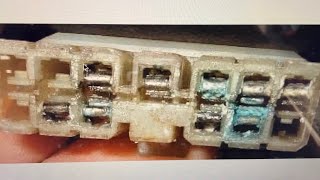
- Damaged Electrical Connector or Wiring Harness (Very Common) — The main strut connector in the wheel well is highly susceptible to moisture and road salt. Corrosion, bent pins, or frayed wiring interrupt the electrical signal. This is the most frequent misdiagnosis for a bad strut. 🎬 See how connector corrosion impacts signal integrity and causes faults.
- Faulty Right Front Air Strut Assembly (Very Common) — The solenoid valve (Y52y1) is a non-serviceable internal component of the air strut. An internal short or open circuit in the solenoid's coil winding requires replacing the entire strut assembly.
- Contaminated Air System / Sticking Valve Block (Less Common) — On Land Rover and Audi systems, degrading desiccant beads from the compressor dryer travel through the air lines. This debris contaminates the central valve block, sticking solenoids and triggering electrical faults.
- Failing Air Suspension Compressor Relay (Less Common) — A stuck compressor relay causes the compressor to run continuously or not at all. The resulting system voltage fluctuations trigger ancillary electrical codes like C1322.
- Malfunctioning Control Module or Ground (Rare) — A corroded ground strap or internal failure in the air suspension control module (N51) introduces electrical resistance. This causes erratic behavior and isolated corner faults, though it usually triggers system-wide codes.
Symptoms
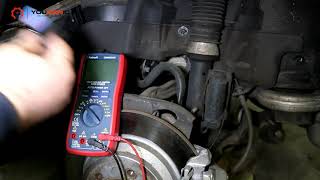
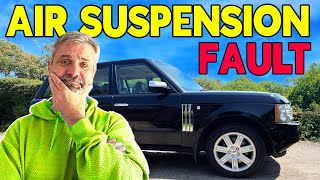
- 'Suspension Fault' Warning Light — A specific warning message appears on the instrument cluster. Land Rovers display 'SUSPENSION INACTIVE' 🎬 Watch: How to diagnose and fix common Land Rover suspension faults., while Mercedes shows 'Airmatic Visit Workshop'. 🎬 Watch: Troubleshooting electrical faults in Mercedes air suspension systems.
- Extremely Harsh or Bouncy Ride — The front right corner becomes rock-hard. The failed damping valve defaults to its firmest setting, making bumps feel severe.
- Suspension Mode Selection Disabled — The system locks out 'Comfort' or 'Sport' modes. Land Rovers lock into 'Normal Height Only'.
- Uneven Ride Height — The front right corner sits slightly higher or lower than the left side. The damping failure interferes with accurate vehicle leveling.
- Audible 'Clunking' Noise — Ineffective damping causes the strut to extend or compress too quickly over bumps, loudly hitting its internal bump stops.
Diagnostic Flowchart
Tap your situation to follow the diagnostic path that matches what you're seeing on this code.
Common Fixes & Costs
- Clean or Repair Strut Electrical Connector/Wiring — Parts: $10-$60, Labor: $150-$300, ~1.5 hr book time (Intermediate)
- Replace Right Front Air Strut Assembly — Parts: $550-$1,800, Labor: $300-$500, ~2.5 hr book time (Professional)
- Replace Air Suspension Valve Block — Parts: $250-$450, Labor: $200-$350, ~2 hr book time (Intermediate)
- Replace Air Suspension Control Module — Parts: $800-$1,400, Labor: $150-$250, ~1.2 hr book time (Professional)
Used vs. New Parts: Buying Guide
When a used part is worth it: A used OEM air strut from a low-mileage donor vehicle is a cost-effective option for older, high-mileage cars where the owner accepts the risk of a shorter lifespan.
Donor-vehicle mileage cap: roughly under 60000 miles for the part to have meaningful remaining life.
Donor quality checklist:
- Verify the donor vehicle was not scrapped due to suspension issues.
- Inspect the part for leaking hydraulic fluid, physical damage, or connector corrosion.
- Match the part number exactly, accounting for drivetrains (4Matic/RWD) and trim levels.
- Remember that internal rubber components degrade with age; a 15-year-old strut with low miles is still a 15-year-old part.
Decision logic:
- If Vehicle has under 80k miles → Buy a new OEM or high-quality aftermarket part (e.g., Bilstein, Arnott) to maintain ride quality and secure a warranty.
- If Budget is the primary concern on a vehicle over 120k miles → A used part is a viable gamble, but prepare for the possibility of early failure and repeat labor costs.
- If You want a lifetime warranty and cost savings over OEM → Purchase a new aftermarket strut from a reputable brand like Arnott.
Warranty tradeoff: Used parts offer a 30-90 day warranty covering only the part. New aftermarket parts offer one-year to lifetime warranties. New OEM parts carry a 1-2 year warranty.
Worst-case if a used part fails: $500-$900 if a used strut fails prematurely, requiring repeat labor and another replacement part.
What Happens If You Wait — Timeline
- 0-1 month: Code sets, suspension warning illuminates. The front-right ride is extremely harsh. Handling and emergency braking are compromised, but no secondary damage occurs yet. (MPG impact: 0-1%% · Added cost: $0)
- 1-4 months: Constant harsh impacts cause accelerated, uneven wear on the front-right tire. Stress on ball joints and control arm bushings increases significantly. (MPG impact: 1-2%% · Added cost: $300-$700)
- 4-9 months: If the failed strut also leaks air, the compressor runs constantly to compensate. The compressor motor overheats and wears out. The 'Vehicle Lifting Slowly' message appears. (MPG impact: 1-3%% · Added cost: $700-$1500)
- 9+ months: The compressor fails completely. The vehicle drops to the bump stops and is undrivable. Repair requires a new strut, compressor, relay, and potentially a valve block. (MPG impact: N/A% · Added cost: $1500-$2800+)
Cost of Not Fixing It
- Immediate: Severely compromised vehicle handling during emergency maneuvers. Extremely harsh ride quality. (Added cost: Negligible)
- 1-6 months: Accelerated wear on the front-right tire, control arm bushings, and ball joints due to excessive vibration. (Added cost: $400-$800)
- 3-12+ months: If an air leak is present, the air suspension compressor runs excessively, leading to overheating and premature failure. (Added cost: $700-$1800)
Diagnosis Steps
- Read Fault Codes
Use an advanced OBD-II scanner capable of reading chassis ('C') codes. Confirm C1322 is present and document any other suspension codes.
Tools: Advanced OBD-II Scanner (Beginner) - Perform a 'Bounce Test'
Push down firmly on the right front fender, then the left. The left side should compress smoothly. If the right side feels rock solid, it confirms a damping issue on that corner.
Tools: None (Beginner) - Inspect the Strut's Electrical Connector
Disconnect the battery. Unplug the strut's main electrical connector in the right front wheel well. Inspect for green/white corrosion, moisture, or recessed pins. This is the most common cause of the code.
Tools: Flashlight, Pick Tool (Beginner) - Measure Solenoid Resistance at the Strut
Set a multimeter to Ohms (Ω). Measure resistance across the two pins for the Y52y1 solenoid at the strut's connector. A good solenoid reads 8-12 Ohms. 'OL' (open circuit) or 0 Ohms (short) confirms the strut failed.
Tools: Multimeter (Intermediate) - Perform a Voltage Drop Test on the Harness
If resistance is normal, test the wiring. With the harness connected and system active, connect one multimeter lead to the power pin at the control module and the other to the power pin at the strut connector. A drop above 0.5V indicates excessive resistance from a corroded wire.
Tools: Multimeter with long leads (Advanced) - Analyze Live Data for Suspension PIDs
Monitor live data PIDs for 'System Pressure' (145-200 PSI) and 'Solenoid Activation Status'. A status that doesn't change for the right front solenoid when commanded points to a circuit fault.
Tools: Advanced OBD-II Scanner (Advanced) - Analyze Solenoid Waveform
Connect an oscilloscope to the solenoid signal wire. When deactivated, look for a sharp vertical 'inductive kick' over 60V. The absence of this kick indicates a shorted solenoid coil inside the strut.
Tools: Automotive Oscilloscope (Professional)
When This Code Triggers (Freeze-Frame Conditions)
- Vehicle Speed: 40-60 mph (Steady state highway driving, when the system actively makes small damping adjustments.)
- Suspension Mode: Comfort or Auto (The fault triggers when the system attempts to change damping characteristics.)
- Battery Voltage: 13.5-14.5 V (Normal operating voltage with the engine running.)
- Ambient Temperature: 30-80°F (Fault is not temperature-dependent, but moisture aggravates corrosion-related issues in any climate.)
Related Codes
- C1323 — Indicates a fault in 'Right Front Solenoid Valve 2'. If C1322 and C1323 appear together, the fault is in a shared component like the main electrical connector or the strut's internal ground, requiring strut replacement.
- C1517 — Means 'Critical Vehicle Level At Front'. This is a result of C1322. The damping fault prevents accurate ride height adjustment. Fix C1322 first; C1517 clears automatically.
- C1A20-64 — On Land Rovers, this means 'Pressure Increases Too Slowly'. It points to a weak compressor or air leak. Address the leak and C1322 first, then assess compressor performance.
- C153113 — A specific version of the damping valve malfunction noting an 'open circuit'. It points directly to a wiring break, disconnected plug, or failed internal solenoid coil.
Climate & Environmental Factors
- Cold Weather: Low temperatures harden rubber seals, worsening pre-existing leaks. Moisture in the air system freezes inside valves or the compressor, causing blockages and blown fuses.
- Road Salt & Humidity: Heavy road salt use or high humidity rapidly corrodes the strut's electrical connector. This creates high resistance or open circuits, directly triggering code C1322.
How to Talk to a Mechanic About This Code
Say this: "I have a suspension fault light and a C1322 code, and the ride on the front right is very hard. Please start by inspecting the strut's electrical connector and wiring for corrosion before testing the strut itself."
This directs the technician to the cheapest and most likely problem first, preventing them from immediately quoting a full strut replacement without proper diagnosis.
Avoid saying:
- 'My suspension is broken, how much to fix it?'
- 'The car is bouncy, can you check it out?'
- 'Just replace the front strut.'
Questions to ask before authorizing the repair:
- What were the specific resistance (Ohm) readings at the strut connector pins?
- Did you find any corrosion or damaged pins in the connector or harness? Can you send me a picture?
- If the strut needs replacement, is the new part OEM or aftermarket, and what is the warranty?
- Are you recommending replacing the struts in pairs, and if so, why?
Where to Take It: Dealer vs Independent vs Chain
- Dealer:
A safe but expensive option. Best if you suspect a control module failure.
Best for: Vehicles still under warranty., Complex electrical issues requiring manufacturer-specific diagnostic tools (like Mercedes STAR/XENTRY).
Downsides: Highest labor rates and part costs., Defaults to replacing the entire strut assembly without investigating cheaper wiring issues. (Typical cost: +50% vs. baseline) - Independent Shop:
Best fit. An independent European specialist combines dealer-level expertise with reasonable labor rates and aftermarket part options.
Best for: Out-of-warranty European vehicles (Mercedes, Land Rover, Audi)., Cost-conscious owners wanting expert service.
Downsides: Quality varies; must find a shop with the correct diagnostic tools for your specific brand. (Typical cost: +0% vs. baseline) - Chain Shop:
AVOID. The complexity of the Airmatic system requires specialized knowledge.
Best for: Simple maintenance like oil changes or tires.
Downsides: Technicians lack training for complex European air suspension systems., High risk of misdiagnosis and unnecessary part replacements., Lacks manufacturer-specific scanners to read the C1322 code. (Typical cost: -10% vs. baseline)
When to Walk Away From the Repair
If the total estimated repair cost exceeds 50% of the car's current private-party market value, seriously consider selling the car as-is.
- Car worth $8000, fix is $2500: Fix it. The repair cost is ~31% of the vehicle's value, a reasonable investment to keep a desirable European car on the road.
- Car worth $4500, fix is $2800: Walk away. The repair cost is over 60% of the car's value. It is not economically sensible to proceed.
- Car worth $15000, fix is $750: Fix it immediately. This is likely a connector repair, representing a small fraction of the vehicle's value.
What Scan Tool You Need for This Code
Minimum: A scanner that reads manufacturer-specific Chassis (C-prefix) codes for your vehicle brand. A basic $20 engine code reader will NOT see this fault.
C1322 is a chassis system code. Standard OBD-II readers only communicate with engine and emissions systems. You need a tool that accesses the suspension control module.
Budget: BlueDriver Pro (~$100) — Reads and clears enhanced chassis codes for specific brands, but lacks deep diagnostics like live data or actuations on suspension modules.
Mid-range: Foxwell NT510 Elite (~$180) — Excellent choice. Provides OE-level access to Airmatic systems. Reads/clears codes, views live sensor data, and performs active tests.
Professional: Autel MaxiPRO MP808S / GAP IIDTool (~$500-900) — Autel offers full bidirectional control to activate solenoids and the compressor. The GAP IIDTool is the gold standard for Land Rover suspension calibration and live data.
Rent vs buy: Buy. Parts stores' free loaner tools are basic engine code readers. A mid-range scanner like the Foxwell NT510 Elite is required for DIY diagnosis.
How to Clear the Code After You Fix It
- Ensure all connectors are secure and the battery is reconnected.
- Use a compatible OBD-II scan tool to navigate to the chassis or suspension control module.
- Select the option to clear Diagnostic Trouble Codes (DTCs).
- Perform a system re-initialization or calibration if required by the manufacturer.
- Conduct a drive cycle to allow the system's readiness monitors to reset.
Drive cycle (~20 minutes): Start the engine and idle for 3 minutes. Drive for 15 minutes in mixed conditions, including stop-and-go city driving and steady cruising above 50 mph. Let the vehicle sit with the engine off for 10 minutes.
Readiness monitors affected: This chassis code does not directly affect emissions readiness monitors.
Before emissions retest: drive at least 50 miles to fully set monitors.
Watch out for:
- Basic code readers cannot clear chassis codes like C1322.
- Disconnecting the battery clears the code but resets all emissions readiness monitors, causing an automatic emissions test failure.
- The code returns immediately if the underlying electrical fault is not fixed.
Will This Fail Emissions / State Inspection?
No — by itself this code doesn't fail OBD inspection (but it can keep readiness monitors from setting, which causes a separate fail).
- General: C1322 illuminates a suspension warning light, not the Check Engine Light (MIL). The code itself does not cause an emissions failure. However, clearing codes resets emissions readiness monitors.
- California: BAR OBD inspections fail vehicles for an illuminated MIL. C1322 does not trigger the MIL, but all required readiness monitors must be set to 'Ready'.
- New York: NYVIP3 fails a vehicle if the MIL is on or if too many readiness monitors are 'Not Ready'. For 2001+ vehicles, only one monitor can be 'Not Ready'.
- Texas: An illuminated Check Engine Light results in an automatic failure. Texas enforces limits on how many readiness monitors can be 'Not Ready'.
Most Commonly Affected Vehicles
- Mercedes-Benz S-Class (W220/W221) (2000-2013) — Airmatic struts are notorious for internal solenoid failure, and top-mount electrical connectors are highly prone to corrosion.
- Mercedes-Benz E-Class (W211/W212) (2003-2016) — Models equipped with Airmatic experience identical strut, wiring, and compressor relay issues as the S-Class.
- Mercedes-Benz GL/ML-Class (X164/W164) (2007-2012) — These heavy SUVs put immense strain on the Airmatic system. C1322 is frequent, often caused by a failed strut solenoid.
- Land Rover Range Rover (L322) (2002-2012) — The 2006-2009 models with the Hitachi compressor are particularly prone to failure; owners often upgrade to the AMK compressor.
- Audi A8 (D3), Q7 (2004-2011) — Audi uses different codes (e.g., 01767) but experiences identical failures. The compressor relay and contaminated valve blocks are common.
Manufacturer-Specific Notes
- Mercedes-Benz: The damping solenoid valve (Y52y1) is not sold separately. A small internal valve failure requires a full strut replacement costing over $1,500 at a dealership.
- Land Rover: Dust from a failing air compressor dryer travels through the system and contaminates valve blocks. A slow-building compressor (Code C1A20-64) indicates degraded desiccant requiring immediate service.
- Audi: The air suspension compressor relay (labeled '645' or '373') under the dashboard is a frequent failure point. A stuck relay burns out the compressor, causing a cascade of suspension faults.
- General: After disconnecting the battery, the steering angle sensor requires re-initialization by turning the steering wheel fully lock-to-lock with the engine running to clear ancillary suspension warnings.
Real Owner Stories
2008 Mercedes-Benz GL550 at 110K miles - The 'Easy Fix'
Airmatic malfunction light appeared, and the ride became extremely stiff on the front right. Suspension mode selection was disabled.
What they tried:
- Read codes, showing 5220 (Y52y1) and 5230 (Y52y2) - faults for both right front strut solenoid valves.
- Measured resistance at the strut's 3-pin connector and got an open circuit (no reading).
- Inspected the wiring at the connector and found two wires broken internally under the insulation.
Outcome: Soldered the broken wires and sealed with heat shrink. Resistance readings returned to specification (~12 Ohms). Cleared codes, resolving the fault without replacing the $1,500 strut.
Lesson: An open circuit reading points to a wiring break. Always inspect the first few inches of the wiring harness attached to the connector before condemning an expensive strut.
2007 Range Rover L322 at 125K miles - The Misdiagnosis Cascade
Vehicle sat low on the front right corner overnight with a 'SUSPENSION FAULT' message. The ride was harsh.
What they tried:
- A local garage diagnosed a bad front right air strut and replaced it with an aftermarket unit.
- The fault message returned within a day, accompanied by a 'Vehicle Lifting Slowly' message.
- Owner used a GAP IID tool, found code C1A20 ('Pressure increases too slowly'), and discovered a massive air leak from the main reservoir tank using soapy water.
Outcome: Replaced the leaking air reservoir tank ($300). The system held pressure, and the compressor ran normally. The original strut replacement was likely unnecessary; the primary issue was the leak overworking the compressor.
Lesson: Electrical faults (C1322) and pressure faults (C1A20) are related. A major leak causes system-wide low pressure warnings. Perform a full soapy water leak test before replacing expensive components.
2009 Land Rover Discovery 3 at 95K miles - The Unusual Cause
Intermittent 'SUSPENSION FAULT - NORMAL HEIGHT ONLY' message. The compressor ran constantly, and the ride felt harsh.
What they tried:
- Diagnostic tool showed code C1A20-64 ('Pressure increases too slowly').
- Removed the compressor cover, finding it packed with mud.
- A soapy water test revealed a hairline crack in the compressor's air dryer plastic end-cap, causing a constant leak.
Outcome: Replaced the air dryer end cap with an upgraded aluminum version and installed a new compressor relay ($15). The system built pressure correctly, clearing all suspension faults.
Lesson: The compressor dryer is a known failure point on Land Rovers and Audis. A cracked dryer causes pressure loss mimicking a failing compressor. Check the dryer and replace the relay before buying a new compressor unit.
How to Prevent This Code From Triggering
- Wash undercarriage and wheel wells regularly (Monthly, especially in winter) — Removes road salt and grime that cause corrosion on the strut's electrical connector, the primary cause of the C1322 fault.
- Replace the air suspension compressor relay (Every 3-4 years or 50,000 miles) — This $15 component sticks over time, causing the compressor to run continuously until it burns out. Replacement saves a $1,000 compressor job.
- Inspect air lines and springs for leaks (Every oil change or tire rotation) — Catching a small air leak prevents the compressor from overworking, which leads to premature failure and expensive system-wide repairs.
- Service the compressor's air dryer (Every 60,000-80,000 miles) — Desiccant material breaks down over time. Abrasive dust circulates through the system, destroying the valve block and strut solenoids.
Frequently Asked Questions
Can I just replace the bad solenoid instead of the whole strut?
No. The solenoid is integrated into the strut assembly and is not available as a separate part. The entire air strut must be replaced.
I replaced the strut and the code is still there. What's next?
If a new strut did not fix the issue, the problem is in the wiring or the electrical connector. Re-inspect the connector pins for hidden corrosion or pushed-back pins. Perform a voltage drop test on the harness to find hidden resistance.
What is the most common misdiagnosis for C1322?
The most common misdiagnosis is replacing the expensive air strut without inspecting the electrical connector. A single corroded pin mimics the symptoms of a failed strut solenoid perfectly. Always clean and test the connector before condemning the strut.
Is it better to replace air struts in pairs?
Yes, replacing air struts in pairs is highly recommended. If the right strut fails due to age or mileage (typically around 100,000 miles), the left one is near the end of its service life. Paired replacement ensures balanced handling and prevents repeat labor costs.
What happens if I ignore code C1322?
Ignoring the code creates a dangerously poor handling vehicle and accelerates wear on ball joints and tires. It also forces the air suspension compressor to overwork and burn out. This turns a single-corner problem into a $2,000+ full system failure.
Could a low battery cause this code?
While a low battery causes random electrical faults, C1322 specifically points to a hard circuit failure in the right front strut. It is almost always a component or wiring failure. However, always ensure a fully charged battery before beginning complex electrical diagnostics.
The code appeared right after hitting a large pothole. Is the strut definitely bad?
Not necessarily. A sharp impact jolts the electrical connector, creating a poor connection or breaking a brittle wire. Follow the diagnostic steps to inspect the connector and wiring before assuming the strut is destroyed.
Key Takeaways
- Code C1322 indicates an electrical failure in the right front damping solenoid, primarily affecting 2000-2013 Mercedes-Benz and 2002-2012 Land Rover models.
- Inspect the right front wheel well electrical connector for green corrosion before spending $1,500 on a replacement air strut.
- Expect a rock-hard, bouncy ride on the front right corner and a locked suspension mode selector until the electrical circuit is restored.
- Test the strut connector with a multimeter; a healthy solenoid reads 8-12 Ohms, while an 'OL' reading confirms the strut must be replaced.
- Limit driving to emergency shop trips; ignoring this code overworks the air compressor, risking an additional $1,000 failure within months.
Helpful Videos
Shop the Parts Behind C1322
Below are the parts most often responsible for code C1322, ranked by how frequently each one is the actual culprit (per the diagnosis above). Tap any to see what we have for your vehicle.


The information in this article is provided for general reference and educational purposes only. Vehicle specifications, procedures, and part compatibility can vary by production date, trim level, and region. Always consult your vehicle's factory service manual and verify part numbers before purchasing or performing repairs. Safety-critical components such as airbags, seat belts, and braking systems should be installed by a qualified professional.
- 🧭 Diagnostic Flowchart
- 🎬 Helpful Videos
- 🛍️ Shop This Part
- What Does C1322 Mean?
- Can I Drive With C1322?
- Common Causes
- Symptoms
- Common Fixes & Costs
- Used vs. New Parts: Buying Guide
- What Happens If You Wait — Timeline
- Cost of Not Fixing It
- Diagnosis Steps
- When This Code Triggers (Freeze-Frame Conditions)
- Related Codes
- Climate & Environmental Factors
- How to Talk to a Mechanic About This Code
- Where to Take It: Dealer vs Independent vs Chain
- When to Walk Away From the Repair
- What Scan Tool You Need for This Code
- How to Clear the Code After You Fix It
- Will This Fail Emissions / State Inspection?
- Most Commonly Affected Vehicles
- Manufacturer-Specific Notes
- Real Owner Stories
- 2008 Mercedes-Benz GL550 at 110K miles - The 'Easy Fix'
- 2007 Range Rover L322 at 125K miles - The Misdiagnosis Cascade
- 2009 Land Rover Discovery 3 at 95K miles - The Unusual Cause
- How to Prevent This Code From Triggering
- Frequently Asked Questions
- Can I just replace the bad solenoid instead of the whole strut?
- I replaced the strut and the code is still there. What's next?
- What is the most common misdiagnosis for C1322?
- Is it better to replace air struts in pairs?
- What happens if I ignore code C1322?
- Could a low battery cause this code?
- The code appeared right after hitting a large pothole. Is the strut definitely bad?
- Key Takeaways
- 🎟️ Get 5% Off