

OBD-II Code C1344: Rear Left Hydraulic Brake System Malfunction
What C1344 means, why it triggers, and how to fix it
- Code C1344 disables your ABS and stability control systems, increasing emergency stopping distances by over 20%.
- Always perform a scan-tool-assisted brake bleed to remove trapped air before replacing the $2,000+ ABS actuator assembly.
- On 2004-2009 Toyota Prius and 2006-2009 Lexus RX models, this code almost always points to a failed ABS brake actuator requiring replacement.
- Verify your vehicle's code definition, as C1344 indicates a Tire Pressure Monitoring System (TPMS) fault on Hyundai models and a 4WD network error on Kias.
- Check rear drum brake self-adjusters immediately if this code appears after a brake job, as excessive piston travel triggers a false hydraulic failure.
What Does C1344 Mean?
Code C1344 signifies your car's Skid Control ECU detected a malfunction in the rear left wheel's hydraulic brake circuit. This points to a brake fluid pressure issue at that wheel, critically affecting safe braking and skid control. On certain Hyundai and Kia models, this code relates to the Tire Pressure Monitoring System (TPMS) or 4-Wheel Drive (4WD) system, not the brakes.
Technical definition: The SAE/OBD-II definition for C1344 is "Rear Hydraulic System LH Malfunction". The Skid Control ECU continuously monitors brake fluid pressure at each wheel using dedicated sensors. This code sets when the ECU detects an incorrect pressure reading, significant pressure drop, leak, or general performance issue within the rear left hydraulic circuit. The ECU also triggers this code if foreign matter enters a solenoid valve, a caliper piston retracts improperly during a brake job, or significant pressure drops occur during air bleeding.
Can I Drive With C1344?
Yes, But With Caution. You can drive, but only for short, necessary trips to a repair shop. Your vehicle's anti-lock braking (ABS) and stability control (VSC) systems are disabled. This means wheels lock up during hard braking, increasing stopping distances by 20% or more, especially on loose or wet surfaces, and severely compromising steering during an emergency stop. Continued driving is unsafe.
Common Causes
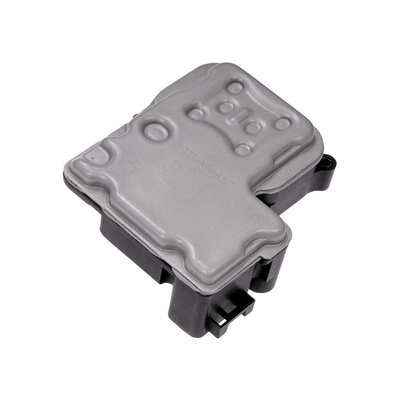
- Faulty ABS / Brake Actuator Assembly (Common) — This complex component controls brake fluid pressure for the ABS and stability systems. Internal leaks or failed solenoid valves inside the actuator are a known, expensive failure point, especially on Toyota and Lexus hybrid vehicles.
- Air in the brake lines (Very Common) — Air enters the brake fluid if the system was recently opened for repairs and not bled correctly. Trapped air compresses, leading to a drop in hydraulic line pressure that the ECU detects as a fault.
- Improperly adjusted or assembled rear drum brakes (Very Common) — On vehicles with rear drum brakes, if the self-adjusting mechanism (star wheel) and lever are not engaged correctly after service, it creates excessive clearance. This forces the wheel cylinder piston to travel too far, which the ECU interprets as a hydraulic fault.
- Brake fluid leak (Less Common) — A leak anywhere in the brake line to the rear left wheel, at the caliper/wheel cylinder fittings, or from the ABS actuator itself causes a direct loss of pressure and sets this code.
- Failing rear left wheel cylinder or caliper (Less Common) — Internal seals degrade, causing fluid to bypass the piston, or the piston itself seizes, preventing proper pressure application at the wheel.
- Boiled or contaminated brake fluid (Less Common) — If brake fluid overheats from excessive use, such as driving with the parking brake engaged, it boils and creates vapor pockets. These vapor pockets behave like trapped air, causing a loss of hydraulic pressure.
- Damaged wiring or connectors (Rare) — A damaged, corroded, or loose wire in the circuit for the ABS wheel speed sensor or main ABS actuator harness causes the computer to receive incorrect data and set a hydraulic fault code.
- Bad master cylinder (Rare) — An internal failure in the master cylinder sometimes causes pressure issues in one of the brake circuits, leading to a C1344 code.
- Warped or severely worn brake rotor/drum (Rare) — A badly warped brake rotor or out-of-round drum causes the caliper or wheel cylinder piston to vibrate excessively. The ECU misinterprets this hydraulic fluctuation as a system fault.
Symptoms
- ABS, VSC, and Brake warning lights on — A fault in the hydraulic system causes the main red 'BRAKE' warning light to illuminate, along with the amber ABS and Vehicle Stability Control (VSC) lights, as these systems are automatically disabled.
- Spongy or soft brake pedal — The brake pedal feels soft, travels further to the floor than usual, or has a mushy consistency. This is a classic sign of air in the brake lines or a lack of hydraulic pressure.
- Audible pump or buzzing noise — A failing ABS actuator pump motor runs excessively, creating an audible buzzing or whirring sound from the engine bay that cycles on and off every few seconds, even when brakes are not applied.
- Brake pedal kicks back or vibrates — You feel a slight kickback or vibration from the brake pedal as the ABS pump runs frequently, attempting to build or maintain pressure.
- Noticeable change in braking performance — The vehicle takes longer to stop, pulls to one side, or the rear of the car does not brake as effectively as the front.
- Brake pedal feels hard or requires more effort — A failing actuator or seized caliper sometimes results in a brake pedal that feels unusually firm and requires significantly more leg strength to stop the vehicle.
Diagnostic Flowchart
Tap your situation to follow the diagnostic path that matches what you're seeing on this code.
Common Fixes & Costs
- Replace ABS Actuator Assembly
— Parts: $500-$900 (Used/Reman), $1900-$2500 (New OEM), Labor: $450-$700, ~4.5 hr book time
(Professional)
Toyota Prius (2004-2009): OEM 44050-47080 (Alt: Cardone 12-1114 (Reman))
Lexus RX400h (2006-2008): OEM 44050-48191 (Alt: Cardone 12-4512 (Reman)) - Bleed the brake system (professional) — Parts: $15-$30, Labor: $120-$250, ~1.2 hr book time (DIY)
- Re-assemble and adjust rear drum brakes — Parts: $0, Labor: $80-$160, ~1.5 hr book time (Intermediate)
- Replace rear brake caliper
— Parts: $60-$150, Labor: $200-$350, ~1.5 hr book time
(Intermediate)
Lexus RX350 (2007-2009): OEM 47850-48070 (Left) (Alt: Cardone 19-B2954) - Replace rear wheel cylinder
— Parts: $25-$60, Labor: $180-$300, ~1.8 hr book time
(Intermediate)
Toyota Prius (2004-2009): OEM 47570-02020 (Left) (Alt: Dorman W610155)
DIY vs Professional
- Re-assemble and adjust rear drum brakes — Beginner: No
- Bleed the brake system — Beginner: Yes (Standard Bleed), No (ABS Bleed)
- Replace rear wheel cylinder / caliper — Beginner: No
- Replace ABS Actuator Assembly — Beginner: No
Used vs. New Parts: Buying Guide
When a used part is worth it: A used actuator from a low-mileage, rear-ended donor vehicle is a cost-effective option for older, high-mileage vehicles where a new OEM part exceeds a reasonable percentage of the car's value.
Donor-vehicle mileage cap: roughly under 80000 miles for the part to have meaningful remaining life.
Donor quality checklist:
- Verify the exact part number matches your original unit; slight variations cause compatibility issues.
- Purchase from a reputable salvage yard offering at least a 90-day warranty.
- Avoid parts from flood-damaged or front-end collision vehicles.
Decision logic:
- If Vehicle is under 100,000 miles and you plan to keep it long-term → Buy a new OEM or high-quality remanufactured part. The peace of mind and longer warranty are worth the cost.
- If Vehicle is over 150,000 miles and budget is the primary concern → A warrantied used part is a reasonable gamble, provided you can afford the potential risk of repeat labor costs if it fails.
- If The cost of a new OEM part is more than 50% of the vehicle's market value → A used or remanufactured part is the most logical financial choice.
Warranty tradeoff: Used parts typically offer a 30-90 day part-only warranty. Remanufactured units come with a 1-year to limited lifetime warranty. New OEM parts carry a 12-month/12,000-mile warranty.
Worst-case if a used part fails: $500-$900 for repeat labor if a used or faulty remanufactured part fails after the warranty period.
What Happens If You Wait — Timeline
- Immediate (0-1 week): ABS, VSC, and BRAKE warning lights illuminate. ABS and stability control are disabled. The driver may not notice any change in normal braking, but emergency stopping is compromised. (MPG impact: 0%% · Added cost: $0, but accident risk is significantly elevated.)
- Weeks to months: If the cause is an internal actuator leak, the ABS pump motor begins to run more frequently to maintain pressure, creating an audible buzz. If the cause is a slow fluid leak, the brake pedal starts to feel slightly spongy. (MPG impact: 0-5% (on hybrids, due to disabled regenerative braking)% · Added cost: $0-$50 (Cost of topping off leaking brake fluid. The primary cost is the increasing certainty of needing a major repair).)
- 2-6 months: The ABS pump motor burns out from excessive running. The buzzing noise stops, but the system is completely inoperative. If the cause is a fluid leak, the master cylinder reservoir runs dry, leading to a complete loss of pressure in the rear-left brake circuit. (MPG impact: 0-5%% · Added cost: $1500-$3200 (The cost becomes fixed, as the ABS actuator is guaranteed to need replacement. A master cylinder replacement adds $300-$500).)
- 6+ months (Collision): Continued driving with disabled safety systems culminates in an accident. During a panic stop, the wheels lock, the vehicle skids, and the driver loses steering control. (MPG impact: N/A% · Added cost: $500 to Total Loss of Vehicle (Cost of collision repair, insurance deductible, potential injuries, and liability).)
Cost of Not Fixing It
- Immediate: Significantly increased risk of an accident. The ABS and Vehicle Stability Control (VSC) systems are disabled, leading to longer stopping distances and potential loss of control during emergency braking. (Added cost: Potential for vehicle collision, injury, or worse.)
- Weeks to Months: If the cause is a faulty ABS actuator pump, the pump motor runs excessively trying to build pressure, leading to it burning out completely. (Added cost: $0 (The cost of the eventual repair does not increase, but the safety risk remains high).)
- Long-Term: Continued operation with a brake fluid leak eventually leads to a complete loss of braking pressure in that circuit. Driving with a spongy pedal causes premature wear on other brake components. (Added cost: $200-$500 in additional brake repairs (e.g., master cylinder, pads/rotors).)
Diagnosis Steps
- Scan for Sub-Codes
Use an advanced OBD-II scanner capable of reading ABS/Chassis codes. Look for specific "INF" or sub-codes. For example, INF 581 indicates a pressure increase malfunction, while INF 582 points to a pressure decrease malfunction, narrowing the fault within the rear-left hydraulic circuit.
Tools: Advanced OBD-II Scanner (e.g., Techstream, Autel) (Intermediate) - Visually Inspect the Brake System
Examine the brake fluid level in the master cylinder reservoir. Using a flashlight, inspect for signs of fluid leaks at the rear left wheel, along the brake lines running the length of the car, and around the ABS actuator assembly in the engine bay.
Tools: Flashlight, Jack and Jack Stands (Beginner) - Check Rear Brake Assembly (Especially Drums)
For cars with rear drum brakes, remove the wheel and drum. Carefully inspect the self-adjuster star wheel and its engagement lever. An incorrectly assembled adjuster is a common cause of this code after a brake job, allowing excessive piston travel.
Tools: Jack, Jack Stands, Lug Wrench, Basic Hand Tools, Brake Spoon (Intermediate) - Bleed the Brake System
Perform a thorough brake bleed, starting with the rear left wheel. Many modern vehicles, especially hybrids, require a specific scan tool procedure to cycle the ABS pump and solenoids to remove all trapped air effectively.
Tools: Brake Bleeder Kit, Wrench, Correct Brake Fluid, Advanced OBD-II Scanner (Intermediate) - Test the Wheel Cylinder / Caliper
With the wheel removed, have a helper press the brake pedal while you observe the wheel cylinder or caliper. Check for fluid seeping from the piston boots. If there are no leaks but piston movement is sluggish, it is seized internally.
Tools: Jack, Jack Stands, Lug Wrench, Helper (Intermediate) - Advanced: Live Data Analysis
Using a bi-directional scanner, access the ABS module's live data stream. Monitor the PID for 'RL W/C Sensor'. While a helper presses the brake pedal, observe the pressure reading. The value must increase smoothly and hold steady. An erratic or dropping reading indicates a problem with the sensor, wiring, or hydraulic circuit.
Tools: Advanced Bi-Directional Scanner (Advanced) - Advanced: Test Actuator Solenoid Resistance
Disconnect the main ABS actuator connector. Using an ohmmeter, measure the resistance across the terminals for the individual valve solenoids as specified in your repair manual. A reading outside the specified range (typically 4-8 ohms for Toyota) indicates a faulty solenoid within the actuator.
Tools: Ohmmeter, Vehicle-Specific Repair Manual (Advanced) - Advanced: Skid Control ECU Power and Ground Check
Disconnect the ECU connector. Use a multimeter to check for continuity between the ECU's ground terminals and the chassis ground. Resistance must be below 1 Ω. With the ignition ON, check for battery voltage (10-14V) at the IG1 power supply pin.
Tools: Multimeter, Vehicle-Specific Wiring Diagram (Advanced) - Professional: Active Test with Scan Tool
If previous steps do not reveal the fault, a professional shop uses a high-level scan tool to perform an "Active Test," commanding individual solenoids to open and close while monitoring live pressure data. This definitively proves if the actuator responds correctly to ECU commands.
Tools: Advanced OBD-II Scanner with Active Test capability (Professional)
When This Code Triggers (Freeze-Frame Conditions)
- Vehicle Speed: 20-50 mph (The code sets during normal driving, not necessarily during a hard braking event, as the system performs continuous self-checks.)
- Brake Pedal: Not Pressed (The fault is detected when the ABS pump cycles for a routine pressure check or self-test without driver input.)
- System Voltage: 11-14V (The fault occurs under normal battery and charging system voltage.)
- Time After Ignition On: Varies (seconds to minutes) (The code sets shortly after starting the car as the ABS module completes its initialization sequence, or during a subsequent drive cycle.)
Related Codes
- C1343 — This is the identical fault for the rear RIGHT wheel. Seeing C1343 and C1344 together strongly points to a problem affecting both rear wheels, such as boiled brake fluid from a dragging parking brake.
- C1341 / C1342 — These are the corresponding codes for the front right (C1341) and front left (C1342) wheels. Having one of these alongside C1344 suggests a widespread system failure.
- C1256 / C1391 — These codes point directly to a failure in the ABS actuator's pump motor or accumulator low pressure. Seeing these alongside C1344 is a strong indicator the entire ABS actuator assembly requires replacement.
- C1364 — This is a Wheel Cylinder Pressure Sensor malfunction. Toyota/Lexus service procedures state you must diagnose and repair C1364 first, as a bad sensor causes the system to misinterpret hydraulic pressures.
Climate & Environmental Factors
- High Humidity: Glycol-based brake fluids absorb moisture from the atmosphere. In humid climates, this lowers the fluid's boiling point more quickly, increasing the risk of fluid boiling during heavy braking and triggering C1344.
- Cold Weather / Snow and Ice: In freezing temperatures, moisture in wiring harnesses freezes, expands, and causes intermittent electrical connections. Packed snow and ice around wheel speed sensors causes erratic readings the ABS module misinterprets as a hydraulic fault.
- Road Salt / Corrosion: Road salt corrosion degrades brake lines, fittings, and electrical connectors. A corroded ground wire or connector pin on the Skid Control ECU creates high resistance and triggers fault codes.
How to Talk to a Mechanic About This Code
Say this: "I have a C1344 code and the associated ABS and brake lights are on. I'd like a diagnostic appointment. Based on my research, before concluding it's a failed ABS actuator, I want to ensure the simpler causes are ruled out first. Please start by inspecting the rear brake mechanicals and performing a full, scan-tool-assisted ABS bleed."
This signals to the shop that you're an informed customer. It directs them to follow a logical diagnostic path, starting with the cheapest and most common fixes (improper adjustment, air in lines) before jumping to the most expensive one (actuator replacement).
Avoid saying:
- 'Just fix whatever's wrong'
- 'My ABS light is on, can you look at it?' (This is too vague and invites a shop to start with the most expensive guess)
- 'Whatever you recommend'
Questions to ask before authorizing the repair:
- Did you find any issues with the rear brake adjustment or see any fluid leaks?
- After bleeding the brakes with a scan tool, did the code return immediately?
- If you are recommending an actuator replacement, what specific test (e.g., live pressure data, active test) confirmed the actuator itself has failed?
- Have you checked with a dealer to see if my vehicle's VIN has any open recalls or warranty extensions for the ABS actuator?
- What is the warranty on the proposed parts and labor?
Where to Take It: Dealer vs Independent vs Chain
- Dealer:
Best for: Vehicles under warranty or known to have a Warranty Enhancement Program (like Toyota/Lexus models), Complex actuator replacements on hybrid vehicles requiring manufacturer-specific tools (e.g., Techstream) and procedures., Confirming TSBs and recall information.
Downsides: Highest labor rates, typically 20-50% more than independent shops., May default to replacing the entire expensive actuator assembly rather than exploring simpler fixes first. (Typical cost: +40% vs. baseline) - Independent Shop:
Best choice for initial diagnosis. A good independent shop provides the best balance of cost and expertise for this code, but you must ensure they have the right diagnostic tools. If an actuator replacement is confirmed, getting a quote from both an independent and a dealer is wise.
Best for: Out-of-warranty vehicles where cost is a major factor., Diagnosing common issues like air in lines or improper drum brake adjustment., Shops that specialize in your vehicle's make (e.g., a Toyota specialist).
Downsides: Quality and equipment vary greatly. You must verify the shop has a bi-directional scan tool capable of performing an ABS bleed on your specific vehicle., May not be aware of manufacturer-specific warranty extensions. (Typical cost: +0% vs. baseline) - Chain Shop:
AVOID for diagnosing C1344. While they perform basic brake jobs, they are generally not equipped to properly diagnose or repair the root cause of this specific and complex hydraulic fault code.
Best for: Simple, unrelated services like oil changes or tire sales.
Downsides: Technicians often lack the specialized training and diagnostic tools (bi-directional scanners) for complex ABS faults., High risk of misdiagnosis, leading to unnecessary and expensive part replacements., Business model incentivizes selling parts over performing detailed diagnostics. (Typical cost: -10% vs. baseline)
When to Walk Away From the Repair
If the estimated repair cost exceeds 40-50% of the car's current private-party market value, you should pause and seriously consider alternatives to fixing it.
- Car worth $4000, fix is $2800: Walk away. The repair cost is 70% of the car's value. It is not economically sensible to proceed.
- Car worth $12000, fix is $2800: Fix it. The repair cost is ~23% of the car's value, which is well below the threshold. Fixing it preserves the value and safety of the vehicle.
- Car worth $5000, fix is $700: Fix it. If the fix is a simpler issue like a wheel cylinder or brake bleed, the cost is low compared to the vehicle's value.
What Scan Tool You Need for This Code
Minimum: A scanner that can read and clear ABS/Chassis (C-prefix) trouble codes and display live data from the ABS sensors.
A basic $20 engine-only code reader cannot see ABS codes like C1344. For proper diagnosis and repair, you need a bi-directional scanner that commands the ABS pump and solenoids to perform an automated bleed. Without this, you cannot properly purge trapped air.
Budget: Autel AutoLink AL619 / TOPDON ArtiLink 400 (~$80) — Reads and clears ABS codes and views some live data. It allows you to identify the code but CANNOT perform the bi-directional ABS bleed procedure. Useful for initial diagnosis only.
Mid-range: Innova 5610 / Foxwell NT630 Plus / XTOOL D7 (~$350) — This is the sweet spot for a serious DIYer. These scanners offer bi-directional control, which is CRITICAL for C1344. They command the ABS pump to perform the automated bleed procedure required on most modern vehicles after a hydraulic repair. They also provide robust live data streaming to analyze wheel cylinder pressure.
Professional: Autel MaxiCOM MK808S / Toyota Techstream (~$500-1200) — Provides full, dealership-level functionality. For Toyota/Lexus, Techstream is the OEM software and is the definitive tool. These tools offer comprehensive active tests, detailed sub-code information, and guided diagnostics that pinpoint the exact failure within the hydraulic circuit.
Rent vs buy: For this code, renting is NOT a viable option for the full repair. While a parts store's free scanner might read the C-code, it will not have the bi-directional ABS bleed function. If you plan to do the repair yourself, you must buy a mid-range or better scanner with this capability.
How to Clear the Code After You Fix It
- Use an OBD-II scan tool capable of accessing the ABS module to clear the C1344 code.
- Perform a scan-tool-assisted brake bleed if any hydraulic components were replaced.
- Perform a short test drive, including several stops from over 20 mph, to allow the system to self-test.
Drive cycle (~15 minutes): Drive the vehicle for 10-15 minutes, ensuring you reach speeds above 25 mph. The ABS module performs self-tests upon startup and during the initial part of a drive. If the fault is corrected, the lights remain off.
Readiness monitors affected: This is a chassis (C) code and does not affect emissions readiness monitors.
Watch out for:
- Disconnecting the battery does not reliably clear this code from the ABS module's memory; a scanner is required.
- If the code returns immediately, it indicates a 'hard fault' that was not properly repaired.
- Failing to use a scan tool to bleed the brakes on hybrid systems leaves air trapped, causing the code to return.
Will This Fail Emissions / State Inspection?
No — by itself this code doesn't fail OBD inspection (but it can keep readiness monitors from setting, which causes a separate fail).
- California: While an ABS light itself does not fail the OBD-II portion of the smog check, inspectors refuse to test the vehicle on a dynamometer for safety reasons.
- New York: An illuminated ABS or main 'BRAKE' warning light is grounds for failure of the annual safety inspection, performed alongside the emissions test.
- Texas: The red 'BRAKE' warning light being illuminated causes a failure of the state safety inspection. An amber 'ABS' light alone does not, but C1344 illuminates both.
Most Commonly Affected Vehicles
- Toyota Prius (Gen 2) (2004-2009) — Extremely common. The brake actuator is a well-documented failure point. TSB BR012-06 notes this code sets after a brake job and may just need to be cleared.
- Toyota Highlander (Hybrid) (2006-2007) — Prone to the same ABS actuator failures as the Prius. TSB BR012-06 also applies, indicating the code appears after brake pad replacement and should be cleared first.
- Lexus RX (Hybrid and Non-Hybrid) (2006-2009) — Shares a similar electronically controlled brake system with the Highlander. Actuator and hydraulic faults are common. TSB BR006-06 applies to the RX 400h.
- Toyota Camry (Hybrid) (2007-2011) — Uses a similar brake-by-wire system where actuator failures lead to this code. Customer Support Program ZJB may apply to related brake components.
- Lexus GS (2006-2011) — Service manuals for the GS series list C1344 with similar diagnostic procedures. Warranty Enhancement Program ZLG extended coverage for the brake actuator on these models.
- Nissan Altima (2007-2012) — Nissan issued a voluntary service campaign (PC125) and safety recall (R1801) for potential master cylinder leaks, which causes brake system warnings including this code.
- Hyundai Santa Fe, i30 (2010-2016) — IMPORTANT: On many Hyundai models, C1344 is defined as 'Sensor 4 LFI Channel Failure', a fault in the Tire Pressure Monitoring System (TPMS), not the hydraulic brakes.
- Kia Sorento, Sportage (2011-2015) — IMPORTANT: For some Kia vehicles, C1344 is defined as 'Lost communication with 4WD control module', an unrelated network communication issue between the ABS and 4WD computers.
Manufacturer-Specific Notes
- Toyota/Lexus: On hybrid models, this code appears after a simple brake job if the system is not bled using the manufacturer's specific procedure, requiring a diagnostic scan tool to cycle the ABS pump and solenoids.
- Toyota: TSB BR012-06 notes that simply retracting caliper pistons during a brake pad replacement causes this DTC to set on the next drive. The official procedure is to clear the code and test drive; if it doesn't return, no further action is needed.
- Toyota/Lexus: Due to high failure rates, Warranty Enhancement Programs (WEP) like ZJB and ZLG extended coverage for brake actuator assemblies, sometimes up to 10 years/150,000 miles. Always check with a dealer using your VIN.
- Hyundai/Kia: For many models from these brands, C1344 is NOT a brake code. It relates to the TPMS initiator (Hyundai) or 4WD communication (Kia). Diagnosing it as a brake problem leads to wasted time and money.
Real Owner Stories
2006 Toyota Prius with 220k miles
ABS, Brake, and VSC lights came on. The owner had recently performed a 'poor man's brake flush'. The ABS pump was cycling frequently when parked.
What they tried:
- Scanned the code, which was C1344 with sub-code 581.
- Planned to perform a full, scan-tool assisted brake bleed.
Outcome: The likely cause was air introduced into the system during the improper flush. The frequent pump cycling is a classic symptom of the system struggling to maintain pressure.
Lesson: On hybrid vehicles, a simple 'gravity' or 'pump-and-hold' brake bleed is insufficient. Air gets trapped in the ABS actuator and requires a scan tool to cycle the pump and valves to be properly purged.
2008 Toyota Prius, mileage not specified
During a DIY rear shoe and drum replacement, the owner accidentally pulled the piston out of the rear-left wheel cylinder, spilling fluid and introducing air. The C1344 code appeared immediately after, but only during hard braking.
What they tried:
- Initially did not bleed the brakes.
- The car drove normally with light braking, but hard stops triggered the lights.
- Clearing the code worked temporarily until the next hard stop.
Outcome: The owner performed a proper brake bleed for the rear-left wheel to remove the air. The air in the line was compressing under heavy pressure, causing the pressure drop detected by the ECU.
Lesson: If the brake hydraulic system is opened for any reason, it is mandatory to bleed the brakes afterward. A small amount of trapped air triggers a hydraulic fault code under specific conditions like hard braking.
2006 Toyota Prius, mileage not specified
After getting a C1344 code, a technician replaced the expensive ABS actuator, but the code returned.
What they tried:
- The shop replaced the ABS actuator assembly for approximately $700, but the fault persisted.
- The technician then bled about 100mL of brake fluid from the affected wheel's brake line.
Outcome: Bleeding a small amount of fluid from the line resolved the issue, and the C1344 code disappeared. The initial, expensive actuator replacement was unnecessary.
Lesson: Always start with the simplest and cheapest potential fixes. Air in the lines perfectly mimics the symptoms of a failed actuator. Insist on a thorough brake bleed before agreeing to an actuator replacement.
2007 Prius, mileage not specified
A family member drove the car for 12 miles at speeds up to 55mph with the parking brake engaged. The next day, the dash lit up with ABS/VSC lights and codes C1343 and C1344.
What they tried:
- The owner visually inspected the rear drums and found a lot of brake dust but no seized parts.
- Posted on a forum seeking advice, suspecting a damaged ABS actuator.
Outcome: The community advised that driving with the parking brake on boiled the brake fluid in the rear circuits. The recommended fix was to flush the brake fluid, readjust the rear brakes, and clear the codes.
Lesson: Extreme heat from dragging brakes boils brake fluid, causing a loss of hydraulic integrity and triggering fault codes. If C1343 and C1344 appear together, suspect an event that affected both rear brakes simultaneously.
How to Prevent This Code From Triggering
- Flush brake fluid every 2-3 years or 30,000 miles. (Every 2-3 years) — Brake fluid absorbs moisture from the air, which lowers its boiling point and causes internal corrosion of sensitive ABS components like solenoid valves and the pump motor. Fresh fluid prevents this degradation.
- Use the correct specification of brake fluid (e.g., DOT 3 vs DOT 4). (Every fluid change) — Using a fluid with a lower boiling point than specified leads to fluid boiling under heavy use, creating vapor and triggering pressure-related codes.
- Ensure proper bleeding procedures are used, especially on hybrid/advanced systems. (During any hydraulic service) — Modern ABS systems trap air that a manual bleed won't remove. Using a scan tool to cycle the ABS pump and valves during a bleed ensures all air is purged, preventing intermittent pressure faults.
- Periodically inspect brake lines and connectors for corrosion. (Annually, especially in rust belt regions) — Corrosion weakens brake lines leading to leaks, or degrades electrical connectors and grounds for the ABS module, causing false codes.
Frequently Asked Questions
My mechanic immediately said I need a new ABS actuator. Could it be something else?
Yes. While a failed actuator is common, it is the most expensive fix. Insist the shop confirms they performed a scan-tool-assisted brake bleed and inspected the rear brakes for mechanical issues before authorizing a replacement.
Can driving with the parking brake on cause the C1344 code?
Yes. Driving with the parking brake partially engaged generates extreme heat that boils brake fluid. This creates vapor pockets, causing a loss of hydraulic pressure that triggers C1344 and C1343.
Can I just clear the code and keep driving?
You can clear the code, but if the underlying hydraulic problem remains, it returns immediately upon driving. Ignoring it is a serious safety risk because your ABS and stability control will not function in an emergency. This significantly increases the chance of a skid and collision.
Why are so many warning lights on for just one code?
Modern vehicles use integrated safety systems managed by the Skid Control ECU. When it detects a critical hydraulic fault like C1344, it automatically disables dependent systems as a failsafe. This illuminates the ABS, Vehicle Stability Control (VSC), and main BRAKE warning lights simultaneously.
Can a bad wheel bearing cause code C1344?
It is highly unlikely to be a direct cause. A severely worn wheel bearing causes excessive rotor wobble, but this typically sets a wheel speed sensor code first. The sensitive brake control system rarely misinterprets this as a hydraulic fluctuation.
Is replacing the ABS actuator a DIY job?
This is not a recommended DIY job. The replacement involves opening multiple hydraulic lines and requires a manufacturer-specific, computer-assisted bleeding procedure to purge air from the new unit. Stop DIY efforts and take it to a professional with a bi-directional scan tool.
The code appeared right after an oil change. Could they have caused it?
A standard oil change does not involve the brake system, making a direct connection unlikely. However, a technician may have inadvertently interfered with wiring or attempted to clear maintenance lights improperly. It is most likely a coincidence.
Key Takeaways
- Code C1344 disables your ABS and stability control systems, increasing emergency stopping distances by over 20%.
- Always perform a scan-tool-assisted brake bleed to remove trapped air before replacing the $2,000+ ABS actuator assembly.
- On 2004-2009 Toyota Prius and 2006-2009 Lexus RX models, this code almost always points to a failed ABS brake actuator requiring replacement.
- Verify your vehicle's code definition, as C1344 indicates a Tire Pressure Monitoring System (TPMS) fault on Hyundai models and a 4WD network error on Kias.
- Check rear drum brake self-adjusters immediately if this code appears after a brake job, as excessive piston travel triggers a false hydraulic failure.
Shop the Parts Behind C1344
Below are the parts most often responsible for code C1344, ranked by how frequently each one is the actual culprit (per the diagnosis above). Tap any to see what we have for your vehicle.


The information in this article is provided for general reference and educational purposes only. Vehicle specifications, procedures, and part compatibility can vary by production date, trim level, and region. Always consult your vehicle's factory service manual and verify part numbers before purchasing or performing repairs. Safety-critical components such as airbags, seat belts, and braking systems should be installed by a qualified professional.
- 🧭 Diagnostic Flowchart
- 🛍️ Shop This Part
- What Does C1344 Mean?
- Can I Drive With C1344?
- Common Causes
- Symptoms
- Common Fixes & Costs
- DIY vs Professional
- Used vs. New Parts: Buying Guide
- What Happens If You Wait — Timeline
- Cost of Not Fixing It
- Diagnosis Steps
- When This Code Triggers (Freeze-Frame Conditions)
- Related Codes
- Climate & Environmental Factors
- How to Talk to a Mechanic About This Code
- Where to Take It: Dealer vs Independent vs Chain
- When to Walk Away From the Repair
- What Scan Tool You Need for This Code
- How to Clear the Code After You Fix It
- Will This Fail Emissions / State Inspection?
- Most Commonly Affected Vehicles
- Manufacturer-Specific Notes
- Real Owner Stories
- 2006 Toyota Prius with 220k miles
- 2008 Toyota Prius, mileage not specified
- 2006 Toyota Prius, mileage not specified
- 2007 Prius, mileage not specified
- How to Prevent This Code From Triggering
- Frequently Asked Questions
- My mechanic immediately said I need a new ABS actuator. Could it be something else?
- Can driving with the parking brake on cause the C1344 code?
- Can I just clear the code and keep driving?
- Why are so many warning lights on for just one code?
- Can a bad wheel bearing cause code C1344?
- Is replacing the ABS actuator a DIY job?
- The code appeared right after an oil change. Could they have caused it?
- Key Takeaways
- 🎟️ Get 5% Off