

OBD-II Code C1355: Manufacturer-Specific Chassis Fault
What C1355 means, why it triggers, and how to fix it on different vehicles
- Code C1355 requires a manufacturer-specific scan tool, as it means 'ABS Solenoid Failure' on a Toyota but 'Lost Communication' on a Nissan.
- Replacing a failed ABS actuator or HECU is the most common fix, typically costing between $1,200 and $2,300 for parts and labor.
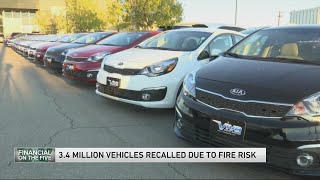
- Owners of 2010-2022 Hyundai and Kia models must immediately check for NHTSA recalls, as this code frequently flags a leaking HECU that poses a severe fire risk.
- You can drive with code C1355, but your ABS and stability control are completely disabled, increasing stopping distances by up to 30% on wet roads.
What Does C1355 Mean?
C1355 is a manufacturer-specific trouble code with different definitions depending on your vehicle's make. It points to a problem in the chassis system, most often the Anti-lock Braking System (ABS). Your car's main computer detected a fault in a specific sensor, solenoid, or communication circuit within this system.
Technical definition: The official SAE/ISO definition for C1355 is 'Manufacturer Controlled DTC'. Each automaker assigns their own specific meaning. Common definitions include ABS solenoid failure (Toyota), ABS pressure sensor failure (Hyundai), or ABS module communication loss (Nissan). A professional-grade scan tool is required to read the exact definition.
Can I Drive With C1355?
Yes, But With Caution. You can drive, but your Anti-lock Braking System (ABS) and Traction/Stability Control are disabled. This causes your wheels to lock up during hard braking, significantly increasing stopping distances on wet or slippery surfaces. Have the vehicle inspected immediately and leave extra following distance.
Common Causes
- Faulty ABS Actuator / Hydraulic Control Unit (HECU) (Very Common) — The most frequent cause across Toyota and Hyundai vehicles. Internal solenoids or pressure sensors fail, requiring the entire hydraulic unit to be replaced or rebuilt.
- Wiring Harness or Connector Damage (Common) — Wires leading to the ABS module or wheel speed sensors corrode, break, or suffer rodent damage. On GM trucks, the rear wheel speed sensor harness along the frame rail is highly susceptible to moisture and physical damage.
- Low Battery Voltage or Charging System Problems (Less Common) — A weak battery causes communication errors between vehicle modules, triggering the 'Lost Communication' variant of C1355 on Nissan vehicles.
- Failed Brake Pad Wear Sensor (BMW) (Less Common) — On BMWs, a worn-out or disconnected brake pad wear sensor illuminates the ABS, DSC, and Brake warning lights, frequently leading to an expensive misdiagnosis of the DSC module.
- Failed Brake Light Switch (Rare) — A failing brake light switch sends incorrect data to the ABS module, triggering chassis codes on specific Hyundai and Kia models.
Symptoms
- ABS Light On — The ABS warning light on your dashboard illuminates and stays on.
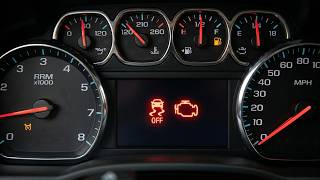
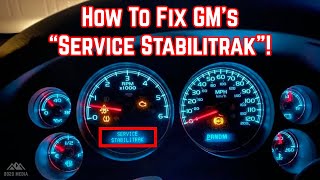
- Traction/Stability Control Light On — The light for traction control (TCS), VSC, or ESP comes on alongside the ABS light. GM vehicles display a 'Service StabiliTrak' message.
- Brakes Lock Up During Hard Stops — During emergency braking, the wheels lock up and skid because the ABS is offline.
- Spongy or Stiff Brake Pedal — The brake pedal feels different, requiring more effort to press or sinking closer to the floor on Toyota models with a failing actuator.
- Red Brake Warning Light On — The primary red brake system warning light illuminates, indicating a critical hydraulic or electronic fault.
Diagnostic Flowchart
Tap your situation to follow the diagnostic path that matches what you're seeing on this code.
Common Fixes & Costs
- Replace ABS Actuator / HECU Assembly (New) — Parts: $800-$1500, Labor: $400-$800, ~4.5 hr book time (Professional)
- Install Remanufactured or Used ABS Actuator — Parts: $250-$600, Labor: $400-$800, ~4.5 hr book time (Professional)
- Repair Damaged Wiring or Connectors — Parts: $10-$50, Labor: $150-$400, ~2.5 hr book time (Intermediate)
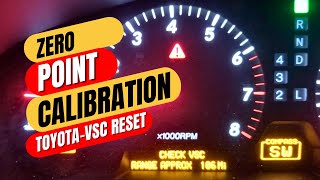
- Perform Zero Point Calibration — Parts: $0, Labor: $100-$200, ~0.8 hr book time (DIY)
- Replace Blown ABS Fuse — Parts: $1-$5, Labor: $0-$50, ~0.2 hr book time (DIY)
Used vs. New Parts: Buying Guide
When a used part is worth it: A used ABS actuator makes sense for older, high-mileage vehicles where a new part exceeds a large fraction of the vehicle's value. It is a budget-conscious choice if sourced from a low-mileage, non-corroded donor.
Donor-vehicle mileage cap: roughly under 100000 miles for the part to have meaningful remaining life.
Donor quality checklist:
- Match the part number exactly.
- Source from a reputable seller offering a 30-90 day warranty.
- Visually inspect for corrosion around brake line fittings and electrical connectors.
- Avoid parts from 'Salt Belt' regions.
Decision logic:
- If The vehicle is under 10 years old and the new part is under $1000 → Buy new or professionally remanufactured for the longer warranty.
- If The vehicle is over 10 years old and the repair cost is a major concern → A warrantied used part from a low-mileage vehicle is a reasonable risk.
- If The part requires complex vehicle-specific programming (VIN-locking) → Favor a new part or a 'repair and return' service for your original module.
Warranty tradeoff: Used parts offer a 30-90 day warranty. Remanufactured parts offer a 1-year warranty. New OEM parts carry a 12-month/12,000-mile warranty.
Worst-case if a used part fails: $500-$1000 if a used part fails, as you pay for the labor a second time.
What Happens If You Wait — Timeline
- 0-1 month: Code sets and ABS/Traction Control warning lights illuminate. Systems are disabled. Normal power braking is functional. (MPG impact: 0%% · Added cost: $0)
- 1-6 months: For Hyundai/Kia: Risk of internal brake fluid leak increases, posing a fire risk. For others: Moisture seeps into the module connector, causing pin corrosion. (MPG impact: 0%% · Added cost: $0 - $500)
- 6-12 months: Corrosion migrates from the connector pins into the ABS control module, damaging the circuit board. (MPG impact: 0%% · Added cost: $1500-$3000)
- 12+ months: Catastrophic failure. For Hyundai/Kia, a fire occurs. For other makes, the internally corroded module fails completely. (MPG impact: 0%% · Added cost: $20,000+)
Cost of Not Fixing It
- Immediate: Loss of ABS and Electronic Stability Control (ESC). Increased risk of skidding and longer stopping distances. (Added cost: 0)
- 1-6 months: For Hyundai/Kia vehicles, continued driving increases the risk of an electrical short leading to an engine compartment fire. (Added cost: Total vehicle loss)
- 6+ months: A minor wiring fault allows moisture to penetrate the ABS module, turning a simple repair into a complete module replacement. (Added cost: $1500-$3000)
Diagnosis Steps
- Read the Full Code Definition
Use an advanced OBD-II scanner to read chassis codes ('C' codes) and get the manufacturer-specific definition. Note any sub-codes (e.g., C1355-44 on a Nissan), as they are mandatory for accurate diagnosis.
Tools: Advanced OBD-II Scanner (Beginner) - Check Battery Voltage and Fuses
Verify your battery voltage is at least 12.4V with the engine off. Locate the fuse box and inspect all fuses related to the ABS and stability control systems.
Tools: Multimeter, Fuse Puller (Beginner) - Visually Inspect Wiring and Connectors
Locate the ABS module in the engine bay. Inspect the wiring harness and connectors for damage, corrosion, or loose connections. On trucks, trace the harness along the frame to the rear wheels.
Tools: Flashlight (Beginner) - Manufacturer-Specific: Test Solenoid Resistance (Toyota)
Disconnect the brake actuator connector. Using a multimeter set to ohms, measure the resistance between the specified pins for the 'Rear Increasing Pressure Solenoid LH'. The expected value is 3.6 to 4.2 Ω. Infinite resistance (OL) indicates an open circuit, confirming a failed actuator.
Tools: Multimeter, Vehicle-Specific Pinout Diagram (Intermediate) - Manufacturer-Specific: Check for HECU Leaks (Hyundai/Kia)
Inspect the Hydraulic Electronic Control Unit (HECU) for brake fluid leakage around the electrical connector. Fluid intrusion is a known fire hazard. If fluid is present, do not drive the vehicle and contact a dealer immediately.
Tools: Flashlight (Intermediate) - Perform a Voltage Drop Test on Power and Ground
With the circuit active, connect your multimeter in parallel between the battery positive post and the ABS module's power pin. A reading above 0.5V indicates excessive resistance. Repeat for the ground side. This proves the integrity of the power supply under load.
Tools: Multimeter, Wiring Diagram (Advanced) - Manufacturer-Specific: Test CAN Bus Network (Nissan)
For 'Lost Communication' codes, check for proper resistance across the CAN High and CAN Low pins at the DLC or ABS module connector. A healthy network reads 60 ohms. A reading of 120 ohms indicates a break in the circuit.
Tools: Multimeter, Wiring Diagram (Advanced) - Scope Wheel Speed Sensors (GM)
Connect an oscilloscope to the wheel speed sensor's signal and ground wires. Safely raise the wheel and spin it by hand. Look for a clean, consistent square wave. A missing or noisy signal points to a faulty sensor or hidden wiring damage.
Tools: Oscilloscope, Jack and Jack Stands (Professional)
When This Code Triggers (Freeze-Frame Conditions)
- System State: Self-Test Active (The code sets during the ABS module's initial self-test immediately after ignition-on or reaching ~10 mph.)
- Vehicle Speed: 0-15 mph (Fault is detected when the ABS module performs its dynamic self-check as the vehicle begins to move.)
- Battery Voltage: 11.5-14.5V (Low voltage (<11.5V) during startup triggers communication-related variants of C1355.)
- Brake Pedal: Not Applied (The internal solenoid or communication fault is detected during a system self-check, not necessarily during a braking event.)
Related Codes
- C1354 — On Toyota vehicles, indicates a fault with the 'Rear Increasing Pressure Solenoid RH'. Seeing this alongside C1355 strongly points to a completely failed actuator.
- C1352, C1353, C1356, C1357 — Part of a family of codes on Toyota vehicles pointing to specific solenoid malfunctions within the ABS actuator. Multiple codes from this group confirm the entire actuator failed.
- U0121 — Means 'Lost Communication With ABS Module'. On Nissan vehicles, C1355 is a manufacturer-specific version of this fault. Diagnosis involves checking the CAN bus wiring.
- C1345 — On Toyota models, indicates 'Linear Solenoid Valve Offset Learning Not Performed'. Appears after a repair, meaning a critical scan-tool calibration procedure is missing.
Climate & Environmental Factors
- High Humidity / Road Salt: Accelerates corrosion of wiring harnesses and electrical connectors in 'Salt Belt' regions. This corrosion introduces high resistance into circuits, triggering communication and sensor faults.
- Brake Fluid Moisture Absorption: Brake fluid absorbs moisture from the air. High moisture content contributes to internal corrosion of the ABS actuator or HECU, leading to mechanical or electrical failure.
- Extreme Cold: Low temperatures make wiring insulation brittle and cause marginally weak batteries to fail, triggering communication-related C1355 codes on makes like Nissan.
How to Talk to a Mechanic About This Code
Say this: "I have an ABS light on and my scanner shows a manufacturer-specific code, C1355. I need a diagnostic with a scan tool that reads the specific definition for my vehicle and tests the related components. For my Hyundai/Kia, please also check for open recalls related to the HECU fire risk."
Signals you are an informed customer. It specifies the exact code, acknowledges it is manufacturer-specific, and directs the technician to the correct diagnostic path. Mentioning the recall on a Hyundai/Kia makes it a top priority.
Avoid saying:
- 'My ABS light is on, can you just fix it?'
- 'I think I need a new ABS module.'
- 'Just do whatever it takes to turn the light off.'
Questions to ask before authorizing the repair:
- Can you show me the specific fault definition and any sub-codes from the professional scanner?
- What specific diagnostic test confirmed the failure?
- What are the price differences between a new OEM, a remanufactured, and a used part?
- What is the warranty on the recommended part and the labor?
- Does your estimate include the cost of computerized ABS bleeding and necessary calibrations?
Where to Take It: Dealer vs Independent vs Chain
- Dealer:
Mandatory for a Hyundai/Kia to address the fire risk recall. Recommended for in-warranty vehicles.
Best for: Hyundai/Kia vehicles, to check for and perform safety recalls related to the HECU fire risk., Vehicles still under warranty., Complex repairs requiring VIN-specific module programming.
Downsides: Highest labor rates and parts costs., Defaults to replacing an entire expensive assembly rather than attempting a targeted repair. (Typical cost: +50% vs. baseline) - Independent Shop:
Excellent choice for most out-of-warranty repairs, provided you choose a reputable shop with ASE-certified technicians.
Best for: Out-of-warranty vehicles where C1355 failure patterns are well-known., Cost-conscious owners open to using remanufactured or used parts.
Downsides: Shop quality varies. Ensure they have an advanced scanner for chassis codes and ABS functions., May not be able to perform manufacturer-specific software updates. (Typical cost: +0% vs. baseline) - Chain Shop:
AVOID for initial diagnosis. The risk of misdiagnosis is high for a code as complex as C1355.
Best for: Simple jobs like replacing a fuse if the diagnosis is already certain.
Downsides: Technicians lack advanced diagnostic training for complex chassis codes., High pressure to upsell and resort to 'parts-swapping'. (Typical cost: -10% vs. baseline)
When to Walk Away From the Repair
If the estimated repair cost exceeds 40-50% of the car's private-party value, seriously consider selling the vehicle as-is or trading it in.
- Car worth $6000, fix is $2800: Walk away or get a second opinion. Explore using a warrantied used part to bring the cost below $1500 before proceeding.
- Car worth $15000, fix is $2200: Fix it. The repair cost is well below the 40% threshold and restores a critical safety feature.
- Car worth $3500, fix is $2500: Walk away. The repair cost is not economically viable.
What Scan Tool You Need for This Code
Minimum: A scanner that reads and clears manufacturer-specific Chassis ('C') codes. For DIY repair, it MUST have special functions like 'Automated Bleed' and 'Zero Point Calibration'.
A basic $20 engine code reader cannot see 'C' codes. It shows 'No Codes Found', which is dangerously misleading. Replacing an ABS actuator requires a scan tool to cycle the internal pump to bleed air out of the system.
Budget: BlueDriver Pro (~$100) — Reads and clears enhanced codes and provides the specific C1355 definition. Lacks advanced bidirectional functions like ABS bleed. Good for initial diagnosis only.
Mid-range: Foxwell NT630 Plus / Autel MaxiCOM MK808 (~$150-450) — Reads and clears ABS codes, shows live data, and includes the bidirectional 'ABS Bleed' function. Performs calibrations like the Zero Point Calibration required for Toyota/Lexus.
Professional: Autel MaxiSys MS906 / Launch X431 Series (~$900-1500) — Provides full, dealer-level functionality. Reads sub-codes (essential for Nissan), performs module programming, and accesses all special service functions.
Rent vs buy: Most auto parts store loaner tools are basic engine code readers that CANNOT diagnose C1355 or perform the ABS bleed procedure. You must buy a capable mid-range scanner or pay for a professional diagnosis.
How to Clear the Code After You Fix It
- Use an advanced OBD-II scan tool to clear the chassis fault codes.
- Perform any manufacturer-specific relearn or calibration procedures (e.g., Zero Point Calibration for Toyota).
- Perform a system self-test or drive cycle to confirm the light does not return.
Drive cycle (~15 minutes): Start the vehicle and drive straight, exceeding 15 mph to allow the ABS module to complete its dynamic self-test. Drive for 15 minutes, including several stops and turns, to ensure all systems are functioning. For Toyota, a Zero Point Calibration is required on a level surface.
Readiness monitors affected: Not applicable. ABS codes do not affect engine emissions readiness monitors.
Watch out for:
- Using a basic OBD-II scanner that cannot access or clear chassis ('C') codes.
- Forgetting to perform required post-repair calibrations, causing the light to stay on.
- Simply clearing the code without fixing the root cause.
Will This Fail Emissions / State Inspection?
No — by itself this code doesn't fail OBD inspection (but it can keep readiness monitors from setting, which causes a separate fail).
- California: An illuminated ABS light will NOT cause a vehicle to fail its smog check.
- New York: An illuminated ABS light WILL cause a vehicle to fail the annual safety inspection.
- Texas: An illuminated ABS light will NOT cause a vehicle to fail the safety inspection, but a red brake warning light will.
Most Commonly Affected Vehicles
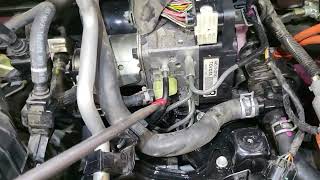
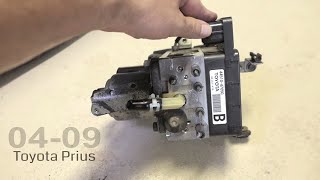
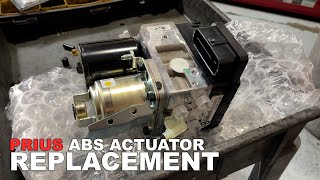
- Toyota Prius (2004-2015) — Prone to ABS actuator failure, which contains the solenoids that trigger codes like C1355. Previous warranty extension programs (ZG1, ZJB) have expired for most vehicles.
- Toyota Highlander (2008-2013) — The ABS actuator assembly is a known failure point, leading to various solenoid-related codes. Repair costs are comparable to the Prius.
- Hyundai Sonata, Elantra, Santa Fe (2011-2022) — Subject to recalls and a class-action lawsuit for faulty HECU modules that leak fluid, short circuit, and cause fires.
- Kia Optima, Sorento, Sportage (2010-2021) — Shares the same faulty HECU module design as Hyundai, leading to widespread recalls for fire risk. Owners are advised to park outside until repaired.
- Hyundai Genesis (2009-2012) — C1355 points to an electrical fault with the pressure sensor inside the HECU. The sensor is not serviceable, requiring full HECU replacement.
- Nissan Altima, Rogue (2013-2020) — Logs C1355 as a 'Lost Communication' fault, caused by anything from a weak battery to a wiring issue.
- Chevrolet / GMC Silverado, Sierra, Tahoe, Suburban (2007-2018) — Known for 'Service StabiliTrak' warnings caused by a corroded rear wheel speed sensor wiring harness or a bad ground connection (G218).
- BMW 3-Series, 5-Series, X3, X5 (F-chassis) (2011-2018) — Identical symptoms (ABS/DSC/Brake lights) are frequently caused by a simple failed brake pad wear sensor, not a failure of the expensive DSC module.
Manufacturer-Specific Notes
- Toyota: C1355 almost always means 'Rear Increasing Pressure Solenoid LH Malfunction'. The fix is replacing the entire ABS actuator assembly, as individual solenoids are not sold separately.
- Hyundai / Kia: This code is linked to a dangerous defect in the Hydraulic Electronic Control Unit (HECU). The unit leaks brake fluid internally, causing an electrical short and a severe fire risk. Check your VIN for open recalls immediately.
- Nissan: C1355 has several unrelated meanings, including 'Lost Communications With ABS'. Diagnosis is impossible without a high-end scanner that reads the specific two-digit sub-code (e.g., C1355-44).
- Ford: Ford uses a similar powertrain code, P1355, meaning 'Ignition Coil D Primary Circuit Malfunction', which is completely unrelated. Ensure your scanner is reading the Chassis (C) module.
Real Owner Stories
2015 Hyundai Elantra with burning smell
Owner smelled something burning through air vents. Checked for recalls and found their VIN was on the list for the ABS/HECU fire risk.
Outcome: The proposed fix from Hyundai was to replace a fuse with a lower-rated one to prevent a fire, not to fix the underlying leak.
Lesson: For Hyundai/Kia owners, a C1355 is a serious safety issue. Immediately check your VIN on the manufacturer's recall website and demand action from the dealer.
2014 Chevy Silverado with 'Service StabiliTrak' message
Owner experienced intermittent 'Service StabiliTrak' warnings, flickering dash lights, and occasional loss of power steering.
Outcome: The owner cut away the interfering insulation material and re-tightened the ground nut. This completely resolved all electrical issues.
Lesson: On GM trucks, intermittent electrical warnings are often caused by a poor ground connection. The G218 ground is a cheap, DIY-friendly place to start.
2010 Toyota Prius with ABS, VSC, and Brake lights on
At 150,000 miles, the brake warning lights came on. The owner scanned the codes and found C1355, pointing to the left rear ABS solenoid.
Outcome: Replaced the actuator, performed a computerized brake bleed, and completed a Zero Point Calibration. Total cost was under $600, saving over $2,000.
Lesson: On an older Toyota, a used ABS actuator is a massive cost-saver. Confirm the failure with a multimeter test first.
How to Prevent This Code From Triggering
- Flush brake fluid every 2-3 years (Every 24-36 months or 30,000 miles) — Brake fluid absorbs moisture, leading to internal corrosion of the ABS module's delicate solenoids. Regular flushing prolongs the life of the hydraulic unit.
- Clean and protect battery terminals (Annually) — Corroded terminals increase electrical resistance, lowering system voltage and triggering communication faults like C1355 on Nissan vehicles.
- Apply dielectric grease to critical connectors (Whenever connectors are disconnected for service) — Prevents moisture intrusion, which is a primary cause of pin corrosion and signal failure.
- Periodically inspect wiring harnesses (During every oil change) — Catches physical damage from road debris or rodents before it leads to a circuit failure.
- Wash the vehicle's undercarriage regularly in winter (Monthly in 'Salt Belt' regions) — Road salt is extremely corrosive to wiring, connectors, and ground points. Rinsing prevents buildup.
Frequently Asked Questions
Is it safe to drive with code C1355?
You can drive, but do so with extreme caution. Your normal brakes work, but the ABS and stability control systems are offline. Your wheels will lock during a panic stop, increasing stopping distance.
What are common misdiagnosis mistakes for C1355?
Replacing expensive components unnecessarily. On a Nissan, a technician might replace the ABS module when the real fault is a bad ground wire or low battery.
My Nissan scanner shows C1355 but has multiple definitions. What do I do?
This is a Nissan quirk requiring an advanced scanner to read the two-digit sub-code (e.g., -41, -44). 'Lost Communication' points to a network problem, while other definitions indicate sensor failures. Without the sub-code, accurate diagnosis is impossible.
Can a bad battery cause a C1355 code?
Yes, especially on Nissans where the code indicates 'Lost Communication'. Low voltage disrupts module communication, so always verify your battery has at least 12.4 volts before starting expensive repairs.
Why is the repair for C1355 so expensive on a Toyota Prius?
The most common cause is a failed ABS actuator, which combines complex electronics and high-pressure hydraulic valves. The part is costly, and replacing it requires a specialized computerized brake bleeding procedure.
My Hyundai has a C1355, should I be worried about a fire?
Yes. Many Hyundai and Kia models were recalled because a faulty HECU leaks brake fluid and causes a fire, even when parked. Park your vehicle outside and contact a dealer immediately to check your VIN.
Can I just clear the code and keep driving?
You can clear the code, but it will return immediately. C1355 indicates a 'hard fault' detected during the ABS module's self-check. Clearing it provides a false sense of security.
Key Takeaways
- Code C1355 requires a manufacturer-specific scan tool, as it means 'ABS Solenoid Failure' on a Toyota but 'Lost Communication' on a Nissan.
- Replacing a failed ABS actuator or HECU is the most common fix, typically costing between $1,200 and $2,300 for parts and labor.
- Owners of 2010-2022 Hyundai and Kia models must immediately check for NHTSA recalls, as this code frequently flags a leaking HECU that poses a severe fire risk.
- You can drive with code C1355, but your ABS and stability control are completely disabled, increasing stopping distances by up to 30% on wet roads.
Helpful Videos



Shop the Parts Behind C1355
Below are the parts most often responsible for code C1355, ranked by how frequently each one is the actual culprit (per the diagnosis above). Tap any to see what we have for your vehicle.


The information in this article is provided for general reference and educational purposes only. Vehicle specifications, procedures, and part compatibility can vary by production date, trim level, and region. Always consult your vehicle's factory service manual and verify part numbers before purchasing or performing repairs. Safety-critical components such as airbags, seat belts, and braking systems should be installed by a qualified professional.
- 🧭 Diagnostic Flowchart
- 🎬 Helpful Videos
- 🛍️ Shop This Part
- What Does C1355 Mean?
- Can I Drive With C1355?
- Common Causes
- Symptoms
- Common Fixes & Costs
- Used vs. New Parts: Buying Guide
- What Happens If You Wait — Timeline
- Cost of Not Fixing It
- Diagnosis Steps
- When This Code Triggers (Freeze-Frame Conditions)
- Related Codes
- Climate & Environmental Factors
- How to Talk to a Mechanic About This Code
- Where to Take It: Dealer vs Independent vs Chain
- When to Walk Away From the Repair
- What Scan Tool You Need for This Code
- How to Clear the Code After You Fix It
- Will This Fail Emissions / State Inspection?
- Most Commonly Affected Vehicles
- Manufacturer-Specific Notes
- Real Owner Stories
- 2015 Hyundai Elantra with burning smell
- 2014 Chevy Silverado with 'Service StabiliTrak' message
- 2010 Toyota Prius with ABS, VSC, and Brake lights on
- How to Prevent This Code From Triggering
- Frequently Asked Questions
- Is it safe to drive with code C1355?
- What are common misdiagnosis mistakes for C1355?
- My Nissan scanner shows C1355 but has multiple definitions. What do I do?
- Can a bad battery cause a C1355 code?
- Why is the repair for C1355 so expensive on a Toyota Prius?
- My Hyundai has a C1355, should I be worried about a fire?
- Can I just clear the code and keep driving?
- Key Takeaways
- 🎟️ Get 5% Off