

OBD-II Code C1356: Comprehensive Guide to Brake System Malfunctions
What C1356 means, its urgency, and exactly how to fix it on your vehicle
- Code C1356 disables the anti-lock braking system and increases stopping distances, requiring immediate vehicle grounding.
- For 2014-2016 Kia and Hyundai hybrids, resolve this code by requesting a ~$200 dealer software update per TSB CHA067, not by replacing parts.
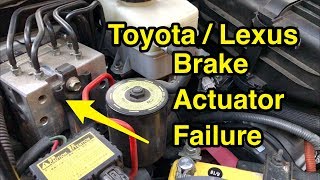
- On Toyota and Lexus models, C1356 indicates a failed ABS actuator assembly requiring a $1,800 to $3,000 complete unit replacement.
- Never attempt a DIY actuator replacement without a bidirectional scan tool capable of performing the mandatory computerized brake bleed and Zero Point Calibration.
What Does C1356 Mean?
C1356 is a manufacturer-specific diagnostic trouble code (DTC) indicating a fault within the chassis control system, almost exclusively related to the anti-lock brake (ABS) or electronic stability control (ESC) system. For Toyota and Lexus, it signals a severe internal hardware failure in the brake actuator assembly. For 2014-2016 Kia and Hyundai hybrids, it points to a documented software error requiring a dealer update rather than a hardware replacement.
Technical definition: There is no universal SAE/ISO definition for C1356. For Toyota/Lexus, it is defined as "Decreasing Pressure Solenoid Malfunction (Front Right)", indicating a fault in the SLRFR solenoid within the ABS actuator. For Kia/Hyundai, a Technical Service Bulletin (TSB) identifies it as a "Pressure Sensor (Wh2)" fault triggered by a software logic error in the Integrated Brake Actuation Unit (IBAU).
Can I Drive With C1356?
No — Do Not Drive. Driving is unsafe. For Toyota and Lexus, this code signifies a critical anti-lock braking system failure causing a rock-hard brake pedal and severely increased stopping distances. While Kia's TSB notes 'no drivability concerns' for their specific software bug, an active brake warning light means safety systems are compromised and the vehicle requires immediate inspection.
Common Causes
- Outdated Brake Control Module Software (Kia/Hyundai Hybrids) (Very Common) — On 2014-2016 Kia Optima Hybrids and 2014-2015 Hyundai Sonata Hybrids, this code is caused by a software bug. TSB CHA067 and TSB 16-BR-003 require a dealer software update on the Integrated Brake Actuation Unit (IBAU).
- Failed ABS Actuator Assembly (Toyota/Lexus) (Very Common) — C1356 points to a terminal internal failure of the ABS actuator assembly, specifically a faulty pressure-reducing solenoid or an internal accumulator leak. The entire complex unit requires replacement.
- Internal HECU Corrosion (Hyundai Genesis) (Common) — On 2009-2012 Hyundai Genesis models, factory recall NHTSA #114 addresses brake fluid causing corrosion inside the Hydraulic Electronic Control Unit (HECU), triggering this fault.
- Wiring Harness or Connector Damage (Less Common) — Corroded, loose, or damaged wiring between the Skid Control ECU and the ABS actuator assembly interrupts the signal from the front right decreasing pressure solenoid.
- Low 12V Battery Voltage (Rare) — A weak 12-volt auxiliary battery causes a cascade of electronic faults. Low system voltage triggers spurious codes in sensitive modules like the ABS controller.
Symptoms
- Multiple Brake Warning Lights Illuminated — The ABS, red BRAKE, and Vehicle Stability Control (VSC) warning lights illuminate simultaneously on the dashboard.
- Hard, Unresponsive Brake Pedal — The brake pedal suddenly becomes extremely firm and difficult to press, resulting in a significant loss of braking power.
- Loud, Repetitive Buzzing or Grinding Noise — A loud buzzing or grinding noise from the engine bay, cycling every 15-30 seconds even when brakes are not applied 🎬 Listen: What a failing ABS pump motor sounds like, indicates the ABS pump motor is running continuously.
- Disabled Cruise Control — The Smart Cruise Control (SCC) function is inhibited as a safety precaution.
Diagnostic Flowchart
Tap your situation to follow the diagnostic path that matches what you're seeing on this code.
Common Fixes & Costs
- Reprogram Brake Control Module (Kia/Hyundai) — Parts: $0, Labor: $150-$250, ~1 hr book time (Professional)
- Replace ABS Actuator Assembly (New OEM) — Parts: $1200-$1800, Labor: $600-$1000, ~5 hr book time (Professional)
- Replace ABS Actuator Assembly (Remanufactured) — Parts: $300-$800, Labor: $600-$1000, ~5 hr book time (Professional)
- Repair Wiring or Connectors — Parts: $20-$60, Labor: $200-$500, ~3 hr book time (Intermediate)
Used vs. New Parts: Buying Guide
When a used part is worth it: A used ABS actuator makes sense only when the budget is extremely tight and the owner accepts the high risk of premature failure. Source from a reputable specialist offering a 90+ day warranty.
Donor-vehicle mileage cap: roughly under 80000 miles for the part to have meaningful remaining life.
Donor quality checklist:
- Verify the exact part number matches; superseded numbers are often incompatible.
- Ensure the unit was removed carefully, with all ports immediately capped to prevent contamination.
- Avoid parts from regions with high humidity or road salt usage to prevent internal corrosion.
Decision logic:
- If Vehicle is a keeper and budget allows → Buy a new OEM part. It offers the longest life and a 12-month warranty.
- If A balance of cost and reliability is needed → Buy a professionally remanufactured unit offering new wear components and a 1-year warranty.
- If Budget is the primary concern and you accept the risk → Buy a used part from a low-mileage donor car, expecting a significantly shorter lifespan.
Warranty tradeoff: Used parts typically have a 30-90 day parts-only warranty. Remanufactured units carry a 1-year warranty. New OEM parts have a 12-month/12,000-mile warranty.
Worst-case if a used part fails: $600-$1000 for repeated labor and diagnosis if a used part fails after installation.
What Happens If You Wait — Timeline
- Immediate (First Occurrence): ABS, VSC, and red 'BRAKE' warning lights illuminate. The brake pedal becomes hard and unresponsive without warning. (MPG impact: 0%% · Added cost: $0 (The component has already failed internally).)
- 0-2 Days (If pump motor runs continuously): The ABS pump motor runs constantly trying to build pressure, draining the 12V battery and burning out the pump motor. (MPG impact: 0%% · Added cost: $150-$300 (Cost to replace a 12V battery killed by the continuous drain).)
- 1-4 Weeks (Continued Driving): The vehicle fails state safety inspections. The risk of an at-fault accident in a panic stop remains constant. (MPG impact: 0%% · Added cost: $50-$200 (Cost of a failed inspection and potential traffic citation).)
- 1+ Month (Total Inaction): The vehicle becomes a permanent safety hazard requiring full repair or scrapping. (MPG impact: 0%% · Added cost: $1800-$3000 (The unavoidable full cost of the necessary hardware replacement).)
Cost of Not Fixing It
- Immediate: Sudden and severe loss of braking power. The brake pedal becomes hard and unresponsive, dramatically increasing stopping distance. (Added cost: Potentially infinite (cost of an at-fault accident, injury, or fatality).)
- Short-Term (Days to Weeks): Complete failure of the ABS pump motor. An internal leak causes the pump to run continuously, burning out the motor. (Added cost: $0 (The unit already requires full replacement).)
- Long-Term: Loss of vehicle control. Without ABS and VSC, the wheels lock up during a panic stop or on a slippery surface, leading to an uncontrollable skid. (Added cost: N/A (The primary cost is the immediate safety risk).)
Diagnosis Steps
- Verify Code and Check for TSBs
Use an advanced OBD-II scanner to confirm C1356. Immediately search for Technical Service Bulletins (TSBs) for your vehicle's make and year to differentiate a Kia/Hyundai software issue from a Toyota/Lexus hardware failure.
Tools: Advanced OBD-II Scanner, Internet Access (Beginner) - Inspect Brake Fluid and 12V Battery
Ensure the brake fluid level is correct and uncontaminated. Test the 12V auxiliary battery; a healthy battery reads above 12.4V at rest and maintains above 10V during cranking.
Tools: Multimeter (Beginner) - Listen to the ABS Pump Motor (Toyota/Lexus)
With the ignition on, listen in the engine bay. A pump that runs continuously, grinds, or cycles every 15-30 seconds with no brakes applied points directly to a failed ABS actuator assembly.
Tools: None (Beginner) - Check ROM ID (Kia/Hyundai Hybrids)
For affected Kia/Hyundai models, connect a dealer diagnostic tool to check the software ROM ID of the IBAU. If it matches the outdated IDs in the TSB, perform the software update.
Tools: Kia GDS/KDS Diagnostic Tool (Professional) - Monitor Accumulator Pressure Voltage (Toyota/Lexus)
Using a bidirectional scan tool, monitor the 'Accumulator Pressure Sensor' live data. Voltage steadily decreasing without applying the brakes confirms an internal pressure leak, condemning the actuator.
Tools: Bidirectional Scan Tool (Advanced) - Inspect Wiring Harness and Connectors
Visually inspect the wiring harness leading to the ABS actuator assembly. Look for corrosion, frayed wires, or rodent damage at the large connector.
Tools: Flashlight (Intermediate) - Perform Zero Point Calibration (Post-Repair)
After replacing an ABS actuator on a Toyota/Lexus, perform a 'Zero Point Calibration' using a bidirectional scan tool to calibrate the yaw rate and deceleration sensors.
Tools: Bidirectional Scan Tool (Professional)
When This Code Triggers (Freeze-Frame Conditions)
- System Voltage: 11.5V - 14.0V (The code sets during the system's power-on self-test, requiring normal battery voltage to run diagnostics.)
- Vehicle Speed: 0 mph (The fault is detected immediately upon vehicle startup before the vehicle is in motion.)
- Brake Pedal Status: Off (Internal solenoid and sensor checks trigger this code when the brakes are not applied.)
- Time Since Start: < 10 seconds (The ABS module performs a self-check shortly after ignition; immediate fault detection points to a hard failure.)
Related Codes
- C1256 — Indicates 'Accumulator Low Pressure' and is a common companion to C1356 on Toyota/Lexus models. Seeing both codes confirms the entire actuator assembly has failed mechanically and electrically.
- C1391 — Indicates 'Abnormal Leak Of Accumulator Pressure' on Toyota/Lexus vehicles. When seen with C1356, it confirms an internal hydraulic leak requiring full unit replacement.
- C1345 — Means 'Not Learning Linear Valve Offset' on Toyota vehicles. It confirms the electronic control side of the actuator cannot calibrate, reinforcing the need for complete unit replacement.
- C1357 — The mirror-image code of C1356, indicating a 'Decreasing pressure solenoid malfunction(FL)' for the Front Left wheel. Both point to a failed solenoid block within the ABS actuator.
Climate & Environmental Factors
- High Humidity and Moisture: Brake fluid absorbs moisture from the air, causing internal corrosion of the precise valves and solenoids within the ABS actuator.
- Cold Weather: Initial symptoms of ABS actuator failure, such as the buzzing pump, often occur in temperatures below 10°F (-12°C) due to fluid thickening and metal contraction.
- Road Salt (Winter Climates): Salt spray corrodes the ABS unit's housing, electrical connectors, and wiring, leading to high resistance or open circuits.
How to Talk to a Mechanic About This Code
Say this: "{'kia_hyundai': "I have a C1356 code on my [Year/Model] Hybrid. I'm aware of TSB CHA067 and believe it needs a software update for the Integrated Brake Actuation Unit. Can you confirm you can perform this reflash and provide a quote for the labor?", 'toyota_lexus': "I have a C1356 code on my [Year/Model], and the ABS pump is running continuously. I'd like to schedule a diagnostic to confirm a failed ABS actuator assembly and get a quote for full replacement, including the computerized brake bleed and zero-point calibration."}"
Directs the dealer to the correct fix and prevents unnecessary hardware replacement quotes. Shows you understand the complexity of the repair, ensuring an accurate quote.
Avoid saying:
- 'My ABS light is on, can you fix it?' (Invites a costly, unnecessary diagnostic path)
- 'I think I just need a brake bleed.' (Incorrect, this fault is electronic or mechanical)
- 'Just replace whatever is broken.' (Gives the shop a blank check)
Questions to ask before authorizing the repair:
- For Kia/Hyundai: 'Can you confirm the current ROM ID on my brake module matches the 'previous' version listed in the TSB before performing the update?'
- For Toyota/Lexus: 'Does your quote include the mandatory computerized ABS bleed procedure using a bidirectional scan tool?'
- For Toyota/Lexus: 'Does the quote include performing the Zero Point Calibration after the actuator is installed?'
- What is the warranty on the new/remanufactured actuator and the labor?
Where to Take It: Dealer vs Independent vs Chain
- Dealer:
REQUIRED for the Kia/Hyundai software fix. A safe, but expensive, choice for the Toyota/Lexus hardware replacement.
Best for: Kia/Hyundai Hybrids needing the mandatory software update., Vehicles under a warranty or extended service campaign.
Downsides: Highest labor rates and part costs, often 1.5-2x an independent shop. (Typical cost: +75% vs. baseline) - Independent Shop:
Best fit for Toyota/Lexus hardware replacement, provided the shop is properly equipped.
Best for: Out-of-warranty Toyota/Lexus vehicles., Owners looking for a balance of cost and expertise.
Downsides: MUST verify the shop has bidirectional scan tools and experience with ABS actuator replacement and computerized bleeding., Cannot perform the Kia/Hyundai software update. (Typical cost: +0% vs. baseline) - Chain Shop:
AVOID. This repair is far too complex and specialized for a typical chain shop.
Best for: Simple maintenance like oil changes or tire rotations.
Downsides: Lack the required manufacturer-specific diagnostic tools for the software flash or computerized brake bleed., High risk of misdiagnosis. (Typical cost: -10% vs. baseline)
When to Walk Away From the Repair
If the estimated repair cost exceeds 50% of the car's current private-party value, consider selling or trading in the vehicle.
- Car worth $5000, fix is $3000: Walk away. The repair cost is over 50% of the car's value. The money is better put toward a replacement vehicle.
- Car worth $10000, fix is $2500: Fix it if the rest of the car is in excellent condition and you plan to keep it for several more years.
- Car worth $7000, fix is $200: Fix it immediately. This applies to the Kia/Hyundai software update.
What Scan Tool You Need for This Code
Minimum: A bidirectional scan tool that reads enhanced ABS codes and performs the 'ABS Bleed' function for your specific vehicle make.
A basic $20-$50 code reader cannot communicate with the ABS module, read ABS live data, or command the ABS pump to perform the mandatory computerized bleed.
Budget: BlueDriver Pro (~$99) — Reads and clears enhanced ABS fault codes. Lacks the critical bidirectional 'ABS Bleed' function needed for post-repair procedures.
Mid-range: Foxwell NT510 Elite / NT530 (~$180) — Provides manufacturer-specific diagnostics to read ABS live data. Includes the 'ABS Bleed' special function required to properly bleed the system after replacing the actuator.
Professional: Autel MaxiCOM MK808S (~$479) — Offers full bidirectional control. Reads live data, performs the automated ABS bleed function, and performs the Zero Point Calibration required for Toyota/Lexus vehicles.
Rent vs buy: You cannot rent the professional-level tools needed for this job. Buying a mid-range or pro-level scanner is a good investment for serious DIYers. Otherwise, leave this repair to a professional shop.
How to Clear the Code After You Fix It
- For Toyota/Lexus, perform a computerized brake bleed using a bidirectional scan tool.
- For Toyota/Lexus, perform a Zero Point Calibration after actuator replacement.
- For Kia/Hyundai, confirm the software ROM ID is updated.
- Use an OBD-II scan tool to clear the fault code from the ABS module.
Drive cycle (~15 minutes): Start the vehicle and idle for 1 minute. Drive the vehicle, including several moderate stops from speeds above 20 mph, to confirm warning lights remain off. The fault detects immediately at the next self-test if the repair fails.
Readiness monitors affected: This chassis code does not directly affect emissions readiness monitors. However, an illuminated Malfunction Indicator Lamp (MIL) prevents emissions testing.
Before emissions retest: drive at least 50 miles to fully set monitors.
Watch out for:
- Clearing the code without fixing the underlying hardware or software fault causes the code to return immediately.
- Skipping the mandatory Zero Point Calibration on Toyota/Lexus vehicles leaves the VSC light on.
- Failing to use a scan tool for the brake bleed procedure on Toyota/Lexus leaves air in the system, causing complete brake failure.
Will This Fail Emissions / State Inspection?
Yes — this code typically fails an OBD-II emissions inspection.
- California: An illuminated primary red 'BRAKE' warning light is an automatic failure for the state's safety inspection.
- Texas: An illuminated 'ABS' light does not cause a failure, but a red 'BRAKE' warning light results in an automatic failure.
- New York: An illuminated 'ABS' light is an advisory, but an active red 'BRAKE' warning light causes a safety inspection failure.
Most Commonly Affected Vehicles
- Kia Optima Hybrid (2014-2016) — Extremely prone to C1356 due to a software glitch. The fix is a software update per TSB CHA067, not parts replacement.
- Hyundai Sonata Hybrid (2014-2015) — Shares the same braking system as the Optima Hybrid and requires the software update addressed by TSB 16-BR-003.
- Toyota Prius (2004-2009) — Notoriously common failure of the entire ABS actuator assembly requiring expensive replacement.
- Lexus LS460 (2007-2017) — Known for costly ABS actuator failures triggering C1356 and related brake system codes.
- Hyundai Genesis (2009-2012) — C1356 points to a 'Pressure sensor (Wh2)' fault within the HECU, subject to recall NHTSA #13V-489 for internal corrosion.
- Subaru Outback (2015-2016) — A loose electrical connector at the brake module causes similar symptoms, highlighting the sensitivity of electronic brake systems.
- Volkswagen Golf (MK6) (2009-2013) — Presents with a hard brake pedal, often caused by a failed brake booster vacuum hose rather than the ABS module.
Manufacturer-Specific Notes
- Kia / Hyundai: For 2014-2016 Optima and 2014-2015 Sonata Hybrids, C1356 is a software error fixed by a dealer reflash per TSB CHA067 or 16-BR-003. Replacing the brake actuator does not fix the issue.
- Toyota / Lexus: C1356 is a red flag for a critical internal failure of the ABS actuator assembly. The repair often costs over $2,500 at a dealership for a new part and mandatory programming.
- Hyundai (Genesis): On the 2009-2012 Genesis sedan, C1356 is caused by brake fluid causing internal corrosion of the HECU, subject to safety recall NHTSA #13V-489.
Real Owner Stories
2015 Kia Optima Hybrid with C1356
Owner experienced multiple dashboard warning lights. A local shop quoted a high price for replacing the entire brake actuator unit.
What they tried:
- Researched online and found information about TSB CHA067.
- Took the vehicle to a Kia dealership and specifically requested the software update.
Outcome: The dealership performed the IBAU software reflash for a one-hour labor charge. The code was resolved without replacing any hardware.
Lesson: For 2014-2016 Kia/Hyundai hybrids, always check for the software update TSB to save thousands of dollars on unnecessary hardware replacement.
2005 Toyota Prius at 180K+ miles with multiple brake codes
All brake warning lights illuminated, accompanied by a loud pump noise cycling every 15 seconds. Codes C1256, C1357, and C1391 were present.
What they tried:
- Sourced a new OEM part for $1,200 and attempted a DIY replacement.
- Failed to complete the computerized brake bleed procedure because their consumer-grade scan tool lacked the function.
Outcome: The DIY repair required professional-level tools to complete the mandatory post-repair bleeding and calibration. The owner noted it was better to pay a mechanic the labor charge.
Lesson: Replacing the Prius ABS actuator requires mandatory, tool-specific electronic procedures (brake bleed, calibration) that basic scanners cannot perform.
2007 Lexus LS460 with C1356 and other electrical faults
Dashboard lit up with ABS warnings, and the ABS pump made a continuous buzzing noise.
What they tried:
- Initial scan showed C1356-related codes pointing to the ABS actuator.
- A deeper diagnosis revealed additional codes for a 'Short Circuit in Main Relay 1'.
- Visual inspection found an improperly bypassed circuit causing corrosion in the main fuse box.
Outcome: After replacing the damaged main fuse box, all fault codes, including those related to the ABS system, cleared.
Lesson: Always check foundational electrical issues like main power and ground circuits before replacing an expensive ABS actuator.
How to Prevent This Code From Triggering
- Perform a brake fluid flush every 2-3 years or 30,000 miles. (Every 2-3 years) — Brake fluid absorbs moisture over time. Water contamination leads to internal corrosion of the delicate solenoids and valves inside the ABS actuator.
- Use the correct type of brake fluid specified by the manufacturer. (At every fluid change) — Using the wrong fluid damages seals and fails to provide the required hydraulic pressure for sensitive ABS/VSC systems.
- Regularly test and maintain the 12V auxiliary battery. (Annually) — Low system voltage causes spurious electronic fault codes in sensitive control modules, including the ABS computer.
Frequently Asked Questions
Can I just clear the C1356 code and keep driving?
You can clear the code, but it returns immediately because it indicates a hard fault. Attempting to drive with an unresponsive brake pedal is a severe safety risk. Tow the vehicle to a repair facility.
Why is the repair for my Toyota Prius so expensive?
The code points to a failure of the entire Brake Actuator Assembly, a complex unit integrating a hydraulic pump, accumulator, and ECU. Replacement is labor-intensive and requires a specialized, computerized brake bleeding procedure.
My car is a 2015 Kia Optima Hybrid. Should I replace the ABS actuator?
No. For 2014-2016 Optima and 2014-2015 Sonata Hybrids, the cause is a known software bug. Request the software update specified in TSB CHA067 at a dealership.
Can I replace the ABS actuator myself to save money?
This is not a recommended DIY job. Replacing the ABS actuator requires a bidirectional scan tool to perform a mandatory computerized brake bleed. Failing to bleed the system correctly leaves air trapped, causing complete brake failure.
What is the difference between C1356 and C1256 on a Prius?
C1256 means 'Accumulator Low Pressure', indicating the pump fails to hold pressure. C1356 points to a specific solenoid fault. Seeing both confirms the entire actuator unit has failed mechanically and electrically.
Could a bad wheel speed sensor cause code C1356?
No. A bad wheel speed sensor triggers specific C0200-series codes. Code C1356 points exclusively to an internal component of the ABS actuator module.
What is a 'Zero Point Calibration' and is it necessary?
Zero Point Calibration is a mandatory scan tool procedure after replacing the ABS actuator on Toyota and Lexus vehicles. It teaches the new module the 'zero' position of the yaw rate and deceleration sensors. Skipping this leaves the stability control system disabled.
My mechanic replaced the ABS pump but the code came back. Why?
On a Prius, the 'ABS pump' is just one sub-component of the Brake Actuator Assembly. Code C1356 points to a solenoid fault inside the main block. You must replace the complete actuator assembly to resolve the issue.
Key Takeaways
- Code C1356 disables the anti-lock braking system and increases stopping distances, requiring immediate vehicle grounding.
- For 2014-2016 Kia and Hyundai hybrids, resolve this code by requesting a ~$200 dealer software update per TSB CHA067, not by replacing parts.
- On Toyota and Lexus models, C1356 indicates a failed ABS actuator assembly requiring a $1,800 to $3,000 complete unit replacement.
- Never attempt a DIY actuator replacement without a bidirectional scan tool capable of performing the mandatory computerized brake bleed and Zero Point Calibration.
Helpful Videos
Shop the Parts Behind C1356
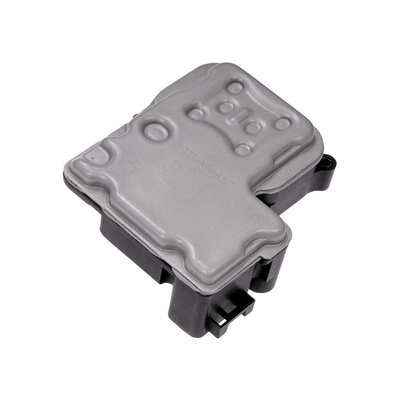
Below are the parts most often responsible for code C1356, ranked by how frequently each one is the actual culprit (per the diagnosis above). Tap any to see what we have for your vehicle.

The information in this article is provided for general reference and educational purposes only. Vehicle specifications, procedures, and part compatibility can vary by production date, trim level, and region. Always consult your vehicle's factory service manual and verify part numbers before purchasing or performing repairs. Safety-critical components such as airbags, seat belts, and braking systems should be installed by a qualified professional.
- 🧭 Diagnostic Flowchart
- 🎬 Helpful Videos
- 🛍️ Shop This Part
- What Does C1356 Mean?
- Can I Drive With C1356?
- Common Causes
- Symptoms
- Common Fixes & Costs
- Used vs. New Parts: Buying Guide
- What Happens If You Wait — Timeline
- Cost of Not Fixing It
- Diagnosis Steps
- When This Code Triggers (Freeze-Frame Conditions)
- Related Codes
- Climate & Environmental Factors
- How to Talk to a Mechanic About This Code
- Where to Take It: Dealer vs Independent vs Chain
- When to Walk Away From the Repair
- What Scan Tool You Need for This Code
- How to Clear the Code After You Fix It
- Will This Fail Emissions / State Inspection?
- Most Commonly Affected Vehicles
- Manufacturer-Specific Notes
- Real Owner Stories
- 2015 Kia Optima Hybrid with C1356
- 2005 Toyota Prius at 180K+ miles with multiple brake codes
- 2007 Lexus LS460 with C1356 and other electrical faults
- How to Prevent This Code From Triggering
- Frequently Asked Questions
- Can I just clear the C1356 code and keep driving?
- Why is the repair for my Toyota Prius so expensive?
- My car is a 2015 Kia Optima Hybrid. Should I replace the ABS actuator?
- Can I replace the ABS actuator myself to save money?
- What is the difference between C1356 and C1256 on a Prius?
- Could a bad wheel speed sensor cause code C1356?
- What is a 'Zero Point Calibration' and is it necessary?
- My mechanic replaced the ABS pump but the code came back. Why?
- Key Takeaways
- 🎟️ Get 5% Off