

C1391 on 2007-2014 Toyota Camry: Brake Actuator Internal Leak Causes and Fixes
Code C1391 on a 2007-2014 Toyota Camry, especially the Hybrid model, almost always means the brake actuator assembly is failing due to an internal leak. This is a critical safety issue that requires replacing the entire brake actuator assembly. It is a well-documented pattern failure confirmed by Toyota TSBs. Expect repair costs of $2,100 at an independent shop to over $3,600 at a dealership.
- C1391 on a 2007-2014 Camry is a critical safety code indicating a failure in the brake actuator assembly.
- The most common symptoms are a combination of ABS, VSC, and Brake warning lights, and a frequent buzzing/pumping noise from the engine bay.
- The cause is almost always an internal, non-repairable leak within the brake actuator, a known issue confirmed by Toyota TSBs.
- The only correct repair is to replace the entire brake actuator assembly, which is an expensive part.
- This repair is not DIY-friendly. It is a major safety system that requires specialized tools for bleeding and calibration after part replacement.
What's Unique About the 2007-2014 Toyota CAMRY

The 2007-2014 Toyota Camry, particularly the Hybrid (HV) models, is known for this issue due to its Electronically Controlled Braking (ECB) system. Unlike conventional brake systems, the ECB system uses a pump and accumulator to generate and store brake pressure. Toyota has issued multiple Technical Service Bulletins (TSBs) acknowledging that a small internal brake fluid leak inside the brake actuator or brake booster assembly is the root cause. This isn't a simple fluid leak you'd see on the garage floor; it's an internal failure within a complex, expensive, and sealed component, making it a well-documented pattern failure for this vehicle generation and its platform mates like the Prius and Avalon Hybrid.
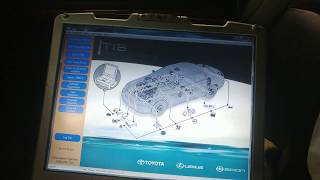
🎬 Watch: A real-world example of the dreaded C1391 failure.Diagnostic Flowchart

Tap your situation to follow the diagnostic path that matches what you're seeing on this vehicle.
Generation note: This guide covers the XV40 (2007-2011) and XV50 (2012-2014) generations of the Toyota Camry. The issue is well-documented across both generations, particularly for Hybrid models. Toyota issued separate TSBs for each generation range (T-SB-0041-14 Rev for 2007-2011 and T-SB-0130-19 for 2012-2014), both pointing to the same fundamental failure of the brake actuator/booster assembly.
Symptoms You May Notice

- Multiple dashboard warning lights are on simultaneously, including ABS, Brake (often both a red and yellow light), VSC, and TRAC.
- A 'Check VSC System' message appears on the multi-information display.
- A buzzing, clicking, or groaning noise from the engine bay (the brake actuator pump running frequently, e.g., every 15-30 seconds) even when the brake pedal is not being pressed.
- A soft, spongy, or weak brake pedal that requires more effort to stop the car.
- In severe cases, a sudden and complete loss of braking power with the pedal going to the floor.
- Replacing only the ABS pump motor. The C1391 code is typically caused by a leak in the accumulator/actuator body, not the motor itself. The motor running frequently is a symptom of the leak, not the cause.
- Replacing individual wheel speed sensors. Wheel speed sensor faults would trigger different ABS codes and would not cause a loss of hydraulic pressure.
Most Likely Causes

- Internal Leak in Brake Actuator / Booster Assembly 🔴 High Probability As documented in Toyota Technical Service Bulletins T-SB-0041-14 Rev and T-SB-0130-19, the internal seals within the brake actuator assembly degrade over time. This causes a small internal brake fluid leak that prevents the accumulator from holding the required hydraulic pressure.
How to confirm: A technician can use a professional scan tool like Toyota Techstream to monitor the accumulator pressure sensor data ('ACC PRESS SENS'). If the pressure value drops steadily without the brake pedal being applied, it confirms an internal leak. An audible sign is the pump motor cycling on and off frequently (every 15-30 seconds) while the car is in the 'Ready' state to rebuild the lost pressure.
Typical fix: The entire brake actuator assembly (which may be called a brake booster assembly with master cylinder on some models) must be replaced. The part is a single, non-serviceable unit. After installation, the system must be bled and calibrated using a compatible scan tool to ensure all air is removed and the system is initialized correctly.
Est. part cost: $900-$1900
Rare But Worth Checking
- Low Brake Fluid: → Shop Brake Fluid While less common for this specific code, a very low brake fluid level due to an external leak (e.g., from a brake line or caliper) could theoretically cause pressure issues. However, the TSBs and overwhelming owner experiences point to an *internal* leak as the primary cause for C1391.
- Failing Skid Control ECU: In very rare instances, if the actuator itself is confirmed to be holding pressure, the Skid Control ECU (which is often integrated into the actuator assembly) could be at fault. Diagnostic procedures in the service manual suggest this as a final step if the actuator passes pressure tests.
Diagnosis Steps
- Confirm the presence of code C1391 and any other related codes (C1252, C1253, C1256) using an OBD-II scanner capable of reading ABS/Chassis codes.
- Visually inspect the brake fluid level in the reservoir. Top off if low, but proceed with diagnosis as an internal leak is still the most likely cause.
- Inspect all brake lines and calipers for any signs of external fluid leaks. If a leak is found, address it first. However, if no external leaks are present, the issue is almost certainly internal to the actuator.
- Listen for the ABS pump motor in the engine bay with the car ON ('Ready' mode). If it runs for a few seconds every 15-30 seconds while the car is stationary and the brakes are not being used, this is a strong indicator of an internal pressure leak.
- Connect a professional scan tool (like Toyota Techstream) and navigate to the ABS/VSC/TRAC data list to monitor the 'ACC PRESS SENS' value.
- With the vehicle on and in park, observe the pressure reading. It should hold steady. If the pressure value drops steadily without the brake pedal being applied, it confirms an internal leak in the actuator assembly.
- If the pressure drops, the brake actuator assembly needs to be replaced.
Parts You'll Likely Need
- Brake Actuator Assembly
(OEM #44050-30660 (for 2007-2011 models per TSB-0041-14 Rev) or 04003-44830 (for 2012-2014 models per TSB-0130-19))— This is the component that fails internally, causing the pressure leak that triggers code C1391. The TSBs for both generations specify replacing this entire assembly.
Trusted brands: Toyota (OEM)
OEM price range: $1000-$1900
Aftermarket price range: $900-$1500 - Brake Fluid
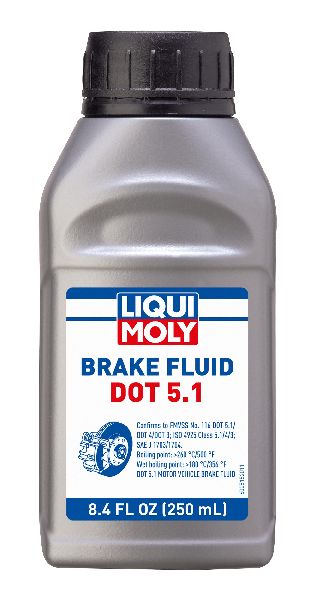
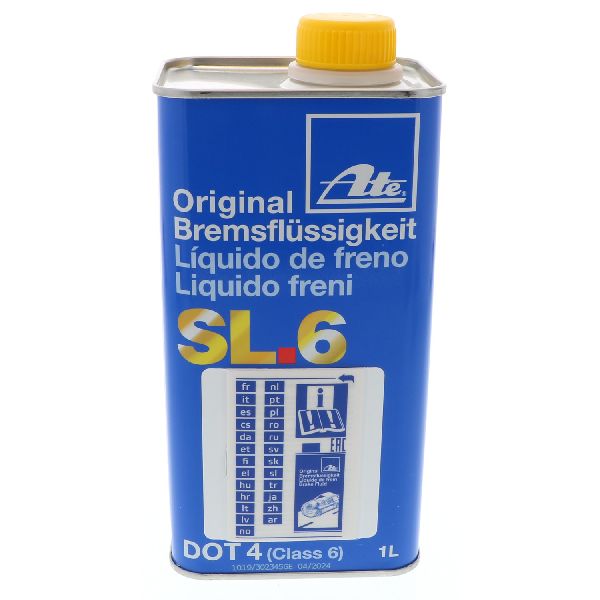
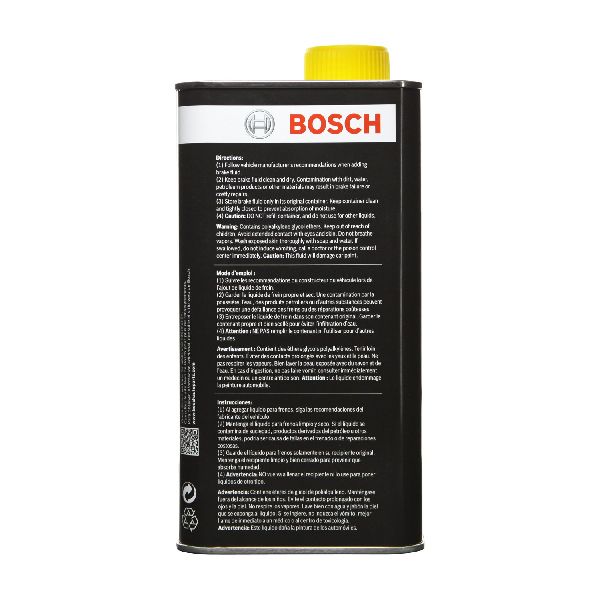
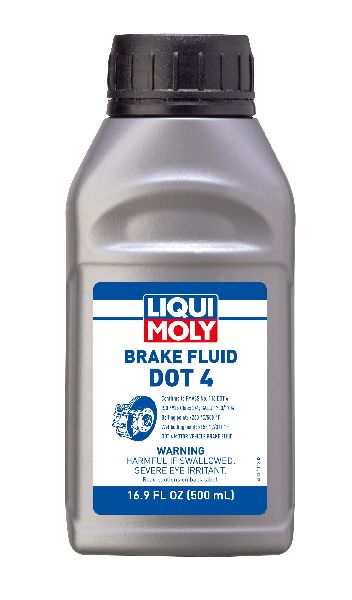
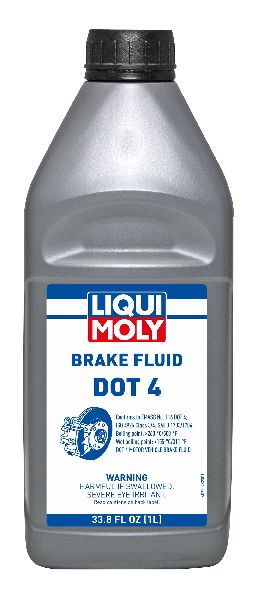
(OEM #N/A)— The system must be completely flushed and bled after replacing the actuator. Use DOT 3 brake fluid as specified by the manufacturer.
Trusted brands: Toyota OEM DOT 3, Bosch, ATE
OEM price range: $15-$25
Aftermarket price range: $10-$20
Related Codes That Often Appear With This One
- C1252 — This code for 'Brake Booster Pump Motor On Time Abnormally Long' is often stored with C1391 because the pump has to run excessively to compensate for the pressure leak.
- C1253 — This code for 'Brake Booster Pump Motor Relay Malfunction' can appear as the relay is overworked from the pump running constantly.
- C1256 — This code for 'Accumulator Low Pressure' is a direct result of the leak indicated by C1391. The two codes are very commonly found together.
Technical Service Bulletins (TSBs) & Recalls

- T-SB-0130-19: For 2012-2014 Camry Hybrids and 2013-2015 Avalon Hybrids, points to an internal brake fluid leak in the brake booster assembly as the cause for C1391, C1252, C1256, or C1253.
- T-SB-0041-14 Rev: For 2007-2011 Camry Hybrids, points to an internal brake fluid leak inside the brake actuator as the cause for the same set of DTCs and specifies replacement part number 44050-30660.
Platform-Specific Known Issues
- Toyota issued TSB T-SB-0041-14 Rev for 2007-2011 Camry Hybrid models, identifying an internal brake fluid leak in the brake actuator as the cause for C1391 and related codes.
- Toyota issued TSB T-SB-0130-19 for 2012-2014 Camry Hybrid and 2013-2015 Avalon Hybrid models, identifying an internal brake fluid leak in the brake booster assembly with master cylinder as the cause.
- NHTSA Complaint ODI #10510557 for a 2009 Camry reported 'NO BRAKING ACTION. THEY HAD COMPLETELY FAILED' in conjunction with codes C1256 and C1391, highlighting the critical safety nature of this fault.
- NHTSA Complaint ODI #10563195 for a 2007 Camry documented a dealer quote of '$3642.00 INC. TAX' to replace the accumulator for code C1391.
- Despite numerous complaints and TSBs, Toyota has not issued a full recall for this specific failure on the Camry Hybrid, though it has for similar issues on other models.
Mechanic-Grade Diagnostic Values
- Accumulator Pressure Sensor Voltage (ACC PRESS SENS) — expected: Should hold steady when brake is not applied. When the brake is pressed, the pressure drops. The pump motor should restart when pressure drops to approximately 3.15V to re-pressurize the system.. Failure: A steady drop in voltage/pressure in less than 30 seconds without the brake pedal being applied indicates an internal leak.
- Skid Control ECU Power and Ground Resistance — expected: Resistance between ground pins (e.g., A78-13, A78-26) and body ground should be below 1 Ω.. Failure: Resistance higher than 1 Ω indicates a poor ground connection, which can cause various ECU faults.
- Skid Control ECU Power and Ground Voltage — expected: Voltage between power pins (e.g., A78-1, A78-14, A78-20) and body ground should be 11 to 14 V.. Failure: Voltage below 11V indicates a power supply issue to the control unit.
Hidden / Shadow Codes Worth Checking
- INF 591: This is a detailed or sub-code that can be stored along with C1391. It specifically points to deteriorated accumulation performance, improper sealing inside the actuator, or a gas pressure drop inside the accumulator. (see via This detailed code is typically only visible using a dealer-level scan tool like Toyota Techstream.)
Scan Tool Commands That Help
- Toyota Techstream: Air Bleeding Utility (under ABS/VSC/TRAC) — This is a mandatory procedure after replacing the brake actuator assembly. The utility electronically cycles the ABS pump and solenoids to purge all air from the complex hydraulic circuits, which cannot be done with a manual bleed.
- Toyota Techstream: ECB Invalid (ECB Utility) — This function is used to disable the electronic brake control system to allow for safe depressurization and service of the hydraulic components.
- Toyota Techstream: Accumulator Zero Down — This procedure safely depressurizes the accumulator before removing the brake actuator assembly. Failure to perform this step can result in high-pressure brake fluid spray and potential injury.
- Toyota Techstream: Linear Valve Offset Calibration — After the actuator is replaced and the system is bled, this calibration procedure must be performed. It learns the characteristics of the new unit and is required to clear the warning lights and restore normal brake function.
Wiring & Ground Locations
- Skid Control ECU Connector (A19/A78/A79) — The main electrical connector on the brake actuator assembly itself, located in the engine bay.. Poor connection or corrosion at this connector can interrupt power, ground, or CAN bus signals to the integrated ECU, causing communication errors or false codes. Wiggling the harness while checking for faults can help identify intermittent connection issues.
- ECU Ground Points — On the 2GR-FE V6 engine, primary harness grounds are located on the valve covers, attaching to the chassis near the strut towers. The Skid Control ECU itself has dedicated ground pins in its main connector (e.g., GND1, GND2) that must have continuity to the chassis ground.. A missing or corroded ground is a common cause of ECU-related problems. Without a solid ground reference, sensor readings and actuator commands can become erratic, potentially mimicking an internal fault.
Real Owner Repair Stories
- YouTube user 'Fix It Angel' (2008 Toyota Camry Hybrid) — VSC light was on and a grunting/clicking noise came from the ABS accumulator assembly. Scan tool showed code C1391.
❌ Tried (didn't work) The user immediately identified the likely cause as the actuator and did not report trying other fixes first.
✅ What actually fixed it The owner replaced the entire ABS accumulator assembly with a used unit purchased from Facebook Marketplace for $50. After installation and bleeding the brakes, the noise and warning lights were gone. - PriusChat forum user (High-mileage (240k miles) Toyota Prius with similar brake system) — Code C1391, constant pumping and hissing from actuator.
❌ Tried (didn't work) The user went straight to replacing the actuator.
✅ What actually fixed it Replaced the actuator with a used part from a 2011 Prius. The user noted that the bleeding process using Techstream was more difficult than the physical part replacement, but after successfully completing the bleed, all codes were cleared and the brake system functioned normally.
OEM Part Supersession History
44050-30300→44050-30660— Part revision or update by the manufacturer.
Heads up: 44050-30660 is the direct replacement for 44050-30300 for the 2007-2011 Camry Hybrid.44050-30660→04003-44830— This appears to be a remanufactured or service part number designation provided by Toyota for the same assembly.
Heads up: Part listings show 04003-44830 as an interchange for 44050-30660, covering 2007-2011 Camry Hybrid models.
Model Year Variations Within This Range
- 2007-2011: These models were subject to Warranty Enhancement Program ZJB, which extended coverage for internal malfunctions of the Brake Actuator Assembly. The specified replacement part is 44050-30660 (or its supersessions).
- 2012-2014: These models were subject to a different Warranty Enhancement Program, ZKK, which covered internal malfunctions of the Brake Booster Assembly. The TSB for these years (T-SB-0130-19) specifies a different part number, 04003-44830, for the assembly.
Helpful Videos


We Have This Part in Stock

The information in this article is provided for general reference and educational purposes only. Vehicle specifications, procedures, and part compatibility can vary by production date, trim level, and region. Always consult your vehicle's factory service manual and verify part numbers before purchasing or performing repairs. Safety-critical components such as airbags, seat belts, and braking systems should be installed by a qualified professional.
- Toyota CAMRY:
- 🧭 Diagnostic Flowchart
- 🎬 Helpful Videos
- 🛍️ Shop This Part
- What's Unique About the 2007-2014 Toyota CAMRY
- Symptoms You May Notice
- Most Likely Causes
- Rare But Worth Checking
- Diagnosis Steps
- Parts You'll Likely Need
- Related Codes That Often Appear With This One
- Technical Service Bulletins (TSBs) & Recalls
- Platform-Specific Known Issues
- Mechanic-Grade Diagnostic Values
- Hidden / Shadow Codes Worth Checking
- Scan Tool Commands That Help
- Wiring & Ground Locations
- Real Owner Repair Stories
- OEM Part Supersession History
- Model Year Variations Within This Range
- 🎟️ Get 5% Off