

Ultimate Guide to OBD-II Code C1409: Beyond the Basics
What C1409 means, why it triggers, and how to fix it for good. NOTE: This code has distinct meanings depending on your manufacturer, ranging from wheel speed sensors to electronic parking brakes.
- Code C1409 has at least 3 distinct manufacturer definitions, so you must verify if it points to a right-front wheel speed sensor (Toyota), an electronic parking brake (Ford), or a radar sensor (Jeep) before buying parts.
- Inspect the wiring harness before replacing any $150+ sensors or motors, as damaged wires near the suspension or rear calipers cause over 50% of C1409 faults.
- Driving with C1409 disables your ABS and traction control, increasing your 60-0 mph emergency stopping distance by up to 40% on wet roads.
- A worn wheel bearing directly triggers this code by altering the critical 1-2mm air gap between the speed sensor and the magnetic tone ring.
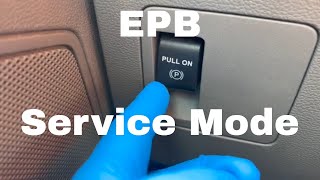
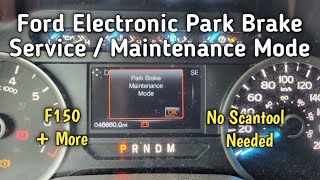
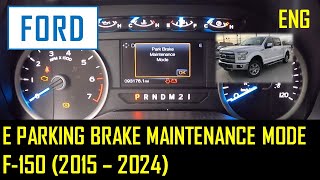
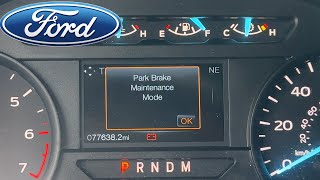
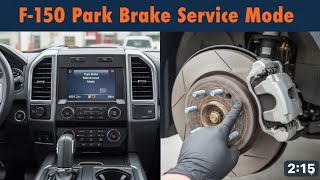
- Use a bi-directional scan tool to put the Electronic Parking Brake into 'Service Mode' before replacing rear brake pads to prevent destroying the $300 EPB actuator.
What Does C1409 Mean?
C1409 signals a critical failure in a chassis control system, but the exact component depends entirely on your vehicle's brand. For Toyota/Lexus, it indicates an illogical signal from the right front wheel speed sensor. For Ford/Alfa Romeo, it means an open electrical circuit in the electronic parking brake motor. For Jeep/Nissan, it points to a blocked front radar sensor used for adaptive cruise control.
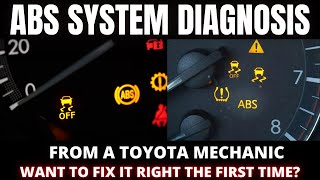
Technical definition: The SAE/OBD-II definition is manufacturer-dependent. Toyota/Lexus: 'Front Speed Sensor RH Performance'. 🎬 Watch: A Toyota mechanic’s tips for diagnosing ABS sensor faults. Alfa Romeo/Ford: 'Electric Park Brake motor left/right - circuit open'. Chrysler/Jeep: 'Radar Sensor Blind Component or System Obstructed or Blocked'.
Can I Drive With C1409?
Yes, But With Caution. Yes, but with significant caution. Your Anti-lock Braking System (ABS) and traction control are disabled. On wet or loose surfaces, this increases your 60-0 mph emergency stopping distance by 30-40%. If the fault relates to an Electronic Parking Brake (EPB), the vehicle might fail to hold on an incline or get stuck immobile, requiring a tow.
Common Causes
- Damaged or Corroded Wiring Harness (Very Common) — This is the top cause across all vehicle makes. Wires break, chafe, or corrode near the suspension or rear brake calipers. This is especially common on Ford F-150s (rear axle harness) and lifted Jeep Wranglers (stretched sensor wires rubbing on U-joints). 🎬 Watch: Diagnosing and repairing sensor wiring on a Jeep Wrangler.
- Failed Wheel Speed Sensor (Common) — Applies primarily to Toyota/Lexus. The sensor fails internally from heat cycles, age, and vibration, sending erratic or zero-speed data to the ABS module.
- Failed Electronic Parking Brake (EPB) Actuator (Common) — Applies primarily to Ford/Alfa Romeo. The small electric motor bolted to the rear brake caliper burns out electrically or strips its internal mechanical gears.
- Worn or Damaged Wheel Bearing (Common) — Excessive hub wobble alters the critical 1-2mm air gap between the speed sensor and the magnetic tone ring. On modern vehicles, the magnetic encoder is built directly into the bearing seal, requiring a full hub replacement if damaged.
- Tone Ring Damage or Rust Jacking (Common) — Rust builds up on the wheel hub underneath the sensor mount, physically pushing the sensor away from the tone ring (rust jacking). Alternatively, the metal tone ring on the axle corrodes and swells, physically striking and destroying the sensor tip.
- Low Battery Voltage (Less Common) — A weak battery dropping below 10.5V during engine crank causes sensitive ABS and EPB control modules to fail their initial self-tests, logging spurious fault codes.
- Faulty Brake Light Switch (Less Common) — A failing brake pedal switch sends conflicting braking data to the main computer, triggering a cascade of ABS, traction control, and EPB warning lights.
- Faulty ABS or EPB Control Module (Rare) — The computer module controlling the brakes fails internally. This is the most expensive cause and requires professional diagnosis to rule out wiring issues first.
Symptoms
- ABS and Traction Control Lights Illuminated — The ABS and traction control systems disable themselves and illuminate dashboard warning lights due to missing wheel speed data.
- Parking Brake Warning Message — Vehicles with EPB faults display messages like 'Park Brake Limited Function' or a flashing red 'BRAKE' light.
- Parking Brake Stuck On or Off — The electronic parking brake refuses to release, immobilizing the car, or refuses to engage, preventing safe parking on hills.
- Pulsating Brake Pedal at Low Speeds — Erroneous signals from a failing wheel speed sensor trick the ABS into activating unnecessarily during normal, low-speed stops, causing a grinding noise and pedal pulsation.
- Adaptive Cruise Control Unavailable — On vehicles where C1409 relates to the front radar, features like Automatic Emergency Braking (AEB) and cruise control are disabled.
Diagnostic Flowchart
Tap your situation to follow the diagnostic path that matches what you're seeing on this code.
Common Fixes & Costs
- Repair Damaged Wiring Harness
— Parts: $15-$50, Labor: $125-$250, ~1.5 hr book time
(Intermediate)
Ford F-150 (EPB): OEM - Replace Front Wheel Speed Sensor
— Parts: $40-$150, Labor: $100-$150, ~1.0 hr book time
(DIY)
Toyota 4Runner/Tacoma: OEM - Replace Electronic Parking Brake Motor
— Parts: $150-$350, Labor: $150-$250, ~1.5 hr book time
(Intermediate)
Ford F-150: OEM - Replace Wheel Hub Bearing Assembly
— Parts: $200-$450, Labor: $250-$400, ~2.0 hr book time
(Professional)
Lexus IS250: OEM - Replace Brake Light Switch — Parts: $20-$50, Labor: $50-$100, ~0.5 hr book time (DIY)
DIY vs Professional
- Replace Front Wheel Speed Sensor — Beginner: Yes
- Repair Damaged Wiring Harness — Beginner: No
- Replace Electronic Parking Brake Motor — Beginner: No
- Replace Wheel Hub Bearing Assembly — Beginner: No
Used vs. New Parts: Buying Guide
When a used part is worth it: Buy used for expensive EPB control modules on vehicles over 10 years old. Never buy used wheel speed sensors or wiring pigtails, as they are cheap wear items.
Donor-vehicle mileage cap: roughly under 80000 miles for the part to have meaningful remaining life.
Donor quality checklist:
- Verify the part number matches exactly; electronic modules are rarely interchangeable between different trim levels.
- Ensure the salvage yard offers at least a 30-day warranty.
Decision logic:
- If The part is a wheel speed sensor or wiring pigtail → Buy new. The cost savings are minimal and not worth the risk of installing a brittle, aged component.
- If The part is an EPB motor or control module → A used part from a low-mileage donor saves hundreds of dollars, provided you have the scan tool to program it.
Warranty tradeoff: Used parts carry a 30-90 day warranty covering the part only. New aftermarket parts offer 1-year to lifetime warranties.
Worst-case if a used part fails: $500 if a used electronic module fails, requiring repeat labor and a second part purchase.
What Happens If You Wait — Timeline
- 0-2 weeks: Warning lights illuminate and safety systems disable. For EPB faults, the brake may fail to engage or disengage. (MPG impact: 0%% · Added cost: $0)
- 2 weeks - 3 months: If the fault is a dragging EPB, the rear brake pads and rotor on one side wear rapidly. You may notice a burning smell. (MPG impact: 5-10%% · Added cost: $150 in wasted fuel and accelerated pad wear.)
- 3-6 months: A dragging EPB destroys the brake pads and deeply scores the rotor, requiring a full rear brake job. The constant strain overheats the EPB motor. (MPG impact: 10-15%% · Added cost: $500 for a new set of rear brakes.)
- 6+ months: Catastrophic failure. An ignored bad wheel bearing fails completely, potentially detaching the wheel. A burned-out EPB motor damages the control module. (MPG impact: N/A% · Added cost: $1500-$3500 for major hub or electronic module replacement.)
Cost of Not Fixing It
- 0-1 month: Safety risk. ABS and traction control are disabled, increasing emergency stopping distances by 30-40%. For EPB faults, the vehicle may roll away on a hill. (Added cost: $0)
- 1-6 months: A stuck EPB drags the brake pads against the rotor while driving, destroying the friction material and overheating the caliper. (Added cost: $300-$600 for a premature rear brake job.)
- 6+ months: An ignored bad wheel bearing fails catastrophically, potentially detaching the wheel. A continuously burned-out EPB motor destroys the main control module. (Added cost: $1500-$3500 for major hub, suspension, or electronic module replacement.)
Diagnosis Steps
- Confirm the Code's Meaning for Your Specific Vehicle
Search your car's make, model, year, and 'C1409' online. You must determine if your vehicle uses this code for a wheel speed sensor, the electronic parking brake, or a radar sensor before touching any tools.
Tools: OBD-II Scanner, Internet Access (Beginner) - Perform a Targeted Visual Inspection
Safely raise the vehicle. For a wheel speed sensor code, inspect the wiring to the right-front wheel hub for chafing or breaks. For an EPB code, inspect the wiring harness connecting to the rear brake calipers. Look for stretched wires or broken connector tabs.
Tools: Jack, Jack Stands, Flashlight (Beginner) - Check Related Fuses
Locate the fuse box and test the fuses dedicated to the ABS or Electronic Parking Brake systems. A blown 30A or 40A fuse immediately points to a dead short in the motor or wiring.
Tools: Owner's Manual, Multimeter or Test Light (Beginner) - Analyze Scan Tool Live Data
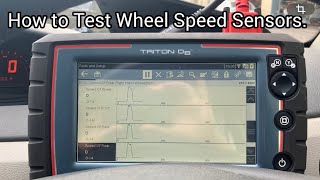
Connect a scan tool capable of reading ABS data. Graph the outputs from all four wheel speed sensors while driving straight at 15 mph. The right-front sensor should perfectly match the others. An erratic signal or a flatline at 0 mph confirms a circuit failure.
Tools: Advanced Bi-directional Scan Tool (Intermediate) - Test the Wheel Speed Sensor Circuit
Unplug the suspect wheel speed sensor. Set a multimeter to AC Volts, probe the sensor pins, and spin the wheel by hand. You should see a fluctuating voltage (100-500mV AC). No voltage indicates a dead sensor or a damaged tone ring.
Tools: Multimeter, Jack (Intermediate) - Test the EPB Motor Circuit
Unplug the connector at the suspect rear EPB motor. Have a helper toggle the parking brake switch while you measure voltage at the harness connector. You should see a brief 12V pulse. If voltage is present but the motor doesn't run, the motor is dead. If there is no voltage, the wiring is broken.
Tools: Multimeter, Helper (Intermediate) - ADVANCED: Active Sensor Voltage Test
For modern 2-wire active sensors, back-probe the connected sensor with the ignition ON. You should find a power wire (12V) and a signal wire. As you slowly spin the wheel, the signal voltage should toggle cleanly between two values (e.g., 0.7V and 1.4V).
Tools: Multimeter, Back-probe Kit (Advanced) - PRO TIP: EPB Motor Current Ramping
Clamp a DC current probe around the EPB motor power wire. Activate the brake. A healthy motor draws 2-5 amps while moving, spiking to 15-20 amps when it stalls at full application. Zero amps means an open circuit; immediate high amperage means a seized caliper.
Tools: DC Current Clamp, Oscilloscope or Graphing Multimeter (Advanced) - PRO TIP: Oscilloscope Signature Analysis
Back-probe the wheel speed sensor signal wire at the ABS module. A healthy digital sensor produces a clean square wave. Dropouts, noise, or malformed waves definitively prove a failing sensor, wiring damage, or a cracked tone ring.
Tools: Oscilloscope, Wiring Diagram (Advanced)
When This Code Triggers (Freeze-Frame Conditions)
- Vehicle Speed: 15-45 mph (The ABS module continuously compares wheel speeds. A discrepancy is most obvious during steady cruising when all wheels should report identical speeds.)
- Steering Angle: 0 degrees (Straight) (Faults are easier for the system to detect when driving straight. A speed discrepancy during a sharp turn is normal and might be ignored by the computer.)
- System Voltage: 13.5-14.5V (If the freeze frame shows voltage below 11V, the root cause is likely a failing battery or alternator causing the module to shut down, not a bad sensor.)
Related Codes
- C1410 — The exact same fault, but located on the left-front wheel speed sensor instead of the right.
- C1223 — A general ABS malfunction code. It indicates the C1409 fault is severe enough that the main ABS module has shut down entirely as a safety precaution.
- C2007 / C2008 — Ford-specific codes for the Right (C2007) and Left (C2008) Rear Parking Brake Motor Circuit. Confirms the C1409 is an electrical fault in the EPB.
- U1409 — The Jeep/Chrysler equivalent code for 'Implausible Right Front Wheel Speed Signal'. Diagnosed identically to a C1409 sensor fault.
Climate & Environmental Factors
- Rust Belt / Road Salt: Salt accelerates wiring corrosion and causes 'rust jacking,' where rust builds up under the speed sensor mount, pushing it away from the tone ring and killing the signal.
- Extreme Cold: Moisture inside the EPB actuator housing freezes below 0°F, preventing the motor from moving. The fault often clears automatically once the vehicle thaws.
- Deep Water Intrusion: Driving through flooded streets forces water into poorly sealed wiring connectors, shorting the electrical pins and triggering immediate circuit faults.
How to Talk to a Mechanic About This Code
Say this: "I have a C1409 code and the ABS light is on. I know this code means different things depending on the brand. Can you please start by inspecting the wiring harness for the wheel speed sensors and EPB, and check the live data before recommending any expensive part replacements?"
This signals you understand the code's ambiguity. It directs the technician to the most common, cheapest failure points first (wiring), preventing them from immediately quoting a $500 module.
Avoid saying:
- 'My ABS light is on, can you fix it?' (Too vague, invites a costly diagnosis).
- 'Just replace whatever is broken.' (Gives the shop a blank check).
- 'I think it's the sensor, just change it.' (Don't guess. The problem is often the wiring, not the sensor).
Questions to ask before authorizing the repair:
- Did you find the specific cause? Was it the sensor, the wiring, or a bad wheel bearing?
- If it's a wiring issue, are you replacing the pigtail connector or repairing the existing wire?
- Will this repair require putting the EPB in service mode or re-calibrating a sensor with a scan tool?
Where to Take It: Dealer vs Independent vs Chain
- Dealer:
Best for: Vehicles under warranty., Known manufacturer issues covered by a TSB or recall (e.g., Ford F-150 EPB wiring)., Complex module issues requiring proprietary software calibration.
Downsides: Significantly higher labor rates and parts costs., May default to replacing an entire assembly (full hub) when only a smaller component failed. (Typical cost: +45% vs. baseline) - Independent Shop:
Best fit for most scenarios. A reputable independent shop easily handles common C1409 causes at a much lower cost than a dealer.
Best for: Out-of-warranty vehicles., Common causes like a failed wheel speed sensor or broken wire.
Downsides: Diagnostic capabilities vary; ensure they have modern bi-directional scan tools. (Typical cost: +0% vs. baseline) - Chain Shop:
Avoid for initial diagnosis. Their process is often limited to reading the code and replacing the most obvious part, missing the root cause.
Best for: Simple part replacement if you've already diagnosed it yourself.
Downsides: Often lack the advanced diagnostic tools needed for complex wiring or EPB module faults., High pressure to upsell services. (Typical cost: -10% vs. baseline)
When to Walk Away From the Repair
If the estimated repair cost exceeds 40-50% of the car's private-party value, consider selling or trading it in.
- Car worth $5000, fix is $2200: Walk away. The repair cost is approaching half the car's value.
- Car worth $15000, fix is $850: Fix it. The repair cost is a small fraction of the vehicle's value and addresses a critical safety system.
What Scan Tool You Need for This Code
Minimum: A scanner that reads ABS (Chassis) codes and displays live sensor data.
A basic $20 engine code reader cannot see 'C' codes. You must view live data to see if the wheel speed sensor reports correctly while spinning.
Budget: Foxwell NT301 (~$70) — Offers basic ABS code reading and live data graphing. Verify ABS compatibility for your specific vehicle before buying.
Mid-range: Innova 5610 / Autel MaxiCheck PRO (~$150-250) — The sweet spot for DIY. These offer bi-directional control, which is absolutely essential for putting the EPB into service mode during repairs.
Professional: Autel MaxiCOM MK808BT (~$500-900) — Provides full bi-directional control, EPB calibration, and advanced diagnostics. Overkill for a one-time fix but invaluable for serious DIYers.
How to Clear the Code After You Fix It
- Use an OBD-II scan tool to clear the C1409 code and any related ABS/EPB faults.
- For EPB repairs, use the scan tool to exit 'Service Mode' and command the system to re-calibrate the caliper piston position.
- Perform a test drive to allow the control module to verify the repair.
Drive cycle (~15 minutes): Start the engine and idle for 1 minute. Drive in a mix of city and highway conditions, exceeding 25 mph for at least 5 minutes. Include several gentle stops. For EPB faults, operate the parking brake switch 3 times while parked to confirm function.
Readiness monitors affected: Chassis codes do not affect emissions readiness monitors. However, an active ABS light will fail a state safety inspection.
Before emissions retest: drive at least 10 miles to fully set monitors.
Watch out for:
- Disconnecting the battery will not clear hard chassis codes on modern vehicles; a scan tool is mandatory.
- Forgetting to take an EPB system out of service mode after a repair prevents it from working and immediately sets a new fault code.
Will This Fail Emissions / State Inspection?
Yes — this code typically fails an OBD-II emissions inspection.
- California: Fails inspection automatically due to the illuminated ABS warning light.
- New York: Fails inspection under updated safety regulations that strictly prohibit illuminated ABS or brake warning lights.
- Texas: Passes safety inspection with an ABS light, but fails automatically if the red 'BRAKE' light (triggered by EPB faults) is illuminated.
Most Commonly Affected Vehicles
- Toyota 4Runner, Tacoma, Tundra (2005-2015) — Prone to right-front wheel speed sensor failures. The code sets if the sensor reports a reverse direction while other wheels report forward motion.
- Ford F-150, Expedition (2015-2023) — Notorious for EPB wiring harness failures near the rear axle. Ford issued recall 23S35 for 2021-2023 models due to harness chafing.
- Lexus IS250, IS350 (2006-2013) — The front wheel bearing and sensor are often replaced as a complete hub assembly, as a failing bearing damages the integrated magnetic encoder.
- Jeep Wrangler (JK) (2007-2018) — Often displays as U1409. Almost always caused by installing a suspension lift kit that stretches the sensor wire until it rubs through on the axle U-joint.
- Subaru Outback, Legacy (2015-2019) — Subaru extended the warranty (TSB 06-87-22R) for broken EPB connector lock tabs that cause loose connections and trigger this fault.
- BMW 3-Series (E90), 1-Series (E82) (2006-2013) — The rear ABS reluctor ring corrodes and swells, physically striking and destroying the wheel speed sensor tip.
Manufacturer-Specific Notes
- Ford: Recall 23S35 (2021-2023 F-150s) addresses the rear axle wiring harness chafing against the axle housing, causing a short that unexpectedly engages the parking brake while driving.
- Honda: Rust jacking under the sensor mount is the primary cause. You must aggressively clean the mounting surface with a wire brush or file before installing a new sensor.
- Mazda: Requires a specific pedal and button sequence to enter EPB maintenance mode. Skipping this step destroys the caliper motor during a routine brake pad replacement.
- Jeep/Chrysler: Code C1409-97 means 'Radar Sensor Blocked'. Clean the front grille radar dome of snow, ice, or heavy bug splatter before diagnosing electrical issues.
- BMW: Low battery voltage triggers false ABS codes. If the battery is healthy, clear the code by starting the engine and turning the steering wheel fully lock-to-lock to reset the steering angle sensor.
Real Owner Stories
2015 Ford F-150 EPB Fault
Owner replaced a non-working driver's side EPB actuator motor to fix a 'parking brake fault' message.
What they tried:
- Bolted on the new motor and disconnected the battery to clear the code.
Outcome: The warning light remained on and the truck stalled when attempting a manual reset. The system required a bi-directional scan tool to clear the stored 'hard' fault and exit service mode before the new motor would function.
Lesson: Replacing an EPB component is not plug-and-play. You must use a capable scan tool to re-initialize the system.
2012 Jeep Wrangler JKU Lift Kit
ABS and ESP warning lights appeared 40 miles after installing a 3-inch suspension lift kit.
What they tried:
- Visually inspected the front axle wiring.
Outcome: The lift kit stretched the wheel speed sensor wire, causing it to rub against the axle U-joint. The rubbing wore through the insulation, causing a short. Rerouting and replacing the wire fixed the U1409 code.
Lesson: If a chassis code appears immediately after suspension work, meticulously inspect the wiring harness for stretching or physical damage.
2021 Ford F-150 Uneven Brakes
Right rear brake pads wore down to metal, while the left rear pads still had 4mm remaining.
What they tried:
- Dealership attempted to just replace the pads and rotors.
Outcome: The owner demanded further diagnosis. The root cause was a faulty EPB actuator dragging the right brake. Replacing the pads without replacing the faulty EPB motor would have destroyed the new brakes in months.
Lesson: Extreme, uneven brake pad wear is a major red flag for a malfunctioning EPB motor. Diagnose why they wore out quickly; don't just replace the friction material.
How to Prevent This Code From Triggering
- Clean wheel speed sensor mounting surfaces (During every brake job) — Removing rust buildup from the knuckle prevents 'rust jacking,' which pushes the sensor away from the tone ring and weakens the signal.
- Apply dielectric grease to electrical connectors (When replacing a sensor or repairing a harness) — Seals out moisture and road salt, preventing corrosion on the delicate electrical pins.
- Secure wiring harnesses away from moving parts (After any suspension work) — Prevents the harness from rubbing against suspension components or axle shafts, which quickly wears through the insulation.
- Wash the vehicle's undercarriage regularly (Monthly in winter) — Washing away road salt reduces the rate of corrosion on wiring harnesses and EPB motor housings.
Frequently Asked Questions
What is the most common misdiagnosis for a C1409 code?
Replacing expensive parts instead of checking the wiring is the most common mistake. Mechanics often replace a $300 EPB motor or ABS module when a $20 wiring pigtail is the actual fix. Always verify circuit integrity first.
Can a suspension lift cause this code?
Yes. Installing a lift kit often stretches the factory wheel speed sensor wiring too tight. The wire then rubs against moving parts like the axle U-joint, wearing through the insulation and causing a short circuit.
Can a bad wheel bearing cause a C1409 code?
Yes. A worn bearing creates excessive hub movement, altering the precise air gap between the speed sensor and its tone ring. This generates an erratic signal that triggers the code.
Can I just clear the C1409 code with a scanner?
You can clear it, but it returns immediately once the control module runs its self-test. Clearing the code does not fix the underlying mechanical or electrical failure.
Why did this code appear right after I replaced my brake pads?
If the EPB was not put into 'service mode' before compressing the caliper, the internal motor gears likely broke. For wheel speed sensors, the delicate wire was likely stretched or damaged during the repair.
The code is for the right side, but my mechanic wants to replace both sides. Why?
Sensors and EPB motors endure identical harsh conditions on both sides of the vehicle. If one fails from age or corrosion, the other is usually near the end of its lifespan. Replacing them in pairs prevents a second breakdown.
Key Takeaways
- Code C1409 has at least 3 distinct manufacturer definitions, so you must verify if it points to a right-front wheel speed sensor (Toyota), an electronic parking brake (Ford), or a radar sensor (Jeep) before buying parts.
- Inspect the wiring harness before replacing any $150+ sensors or motors, as damaged wires near the suspension or rear calipers cause over 50% of C1409 faults.
- Driving with C1409 disables your ABS and traction control, increasing your 60-0 mph emergency stopping distance by up to 40% on wet roads.
- A worn wheel bearing directly triggers this code by altering the critical 1-2mm air gap between the speed sensor and the magnetic tone ring.
- Use a bi-directional scan tool to put the Electronic Parking Brake into 'Service Mode' before replacing rear brake pads to prevent destroying the $300 EPB actuator.
Helpful Videos
Shop the Parts Behind C1409
Below are the parts most often responsible for code C1409, ranked by how frequently each one is the actual culprit (per the diagnosis above). Tap any to see what we have for your vehicle.





The information in this article is provided for general reference and educational purposes only. Vehicle specifications, procedures, and part compatibility can vary by production date, trim level, and region. Always consult your vehicle's factory service manual and verify part numbers before purchasing or performing repairs. Safety-critical components such as airbags, seat belts, and braking systems should be installed by a qualified professional.
- 🧭 Diagnostic Flowchart
- 🎬 Helpful Videos
- 🛍️ Shop This Part
- What Does C1409 Mean?
- Can I Drive With C1409?
- Common Causes
- Symptoms
- Common Fixes & Costs
- DIY vs Professional
- Used vs. New Parts: Buying Guide
- What Happens If You Wait — Timeline
- Cost of Not Fixing It
- Diagnosis Steps
- When This Code Triggers (Freeze-Frame Conditions)
- Related Codes
- Climate & Environmental Factors
- How to Talk to a Mechanic About This Code
- Where to Take It: Dealer vs Independent vs Chain
- When to Walk Away From the Repair
- What Scan Tool You Need for This Code
- How to Clear the Code After You Fix It
- Will This Fail Emissions / State Inspection?
- Most Commonly Affected Vehicles
- Manufacturer-Specific Notes
- Real Owner Stories
- 2015 Ford F-150 EPB Fault
- 2012 Jeep Wrangler JKU Lift Kit
- 2021 Ford F-150 Uneven Brakes
- How to Prevent This Code From Triggering
- Frequently Asked Questions
- What is the most common misdiagnosis for a C1409 code?
- Can a suspension lift cause this code?
- Can a bad wheel bearing cause a C1409 code?
- Can I just clear the C1409 code with a scanner?
- Why did this code appear right after I replaced my brake pads?
- The code is for the right side, but my mechanic wants to replace both sides. Why?
- Key Takeaways
- 🎟️ Get 5% Off