

OBD-II Code C1410: Left Front Wheel Speed Sensor Performance
What C1410 means, why it triggers, and how to fix it
- Code C1410 indicates a signal failure from the front driver's side wheel speed sensor, immediately disabling your ABS and traction control.
- Inspect the wiring harness and connector for corrosion or breaks before spending $130-$350 on a replacement sensor.
- A failing wheel bearing causes this code by introducing excessive play that alters the 1-2mm air gap between the sensor and the tone ring.
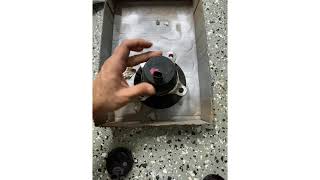
- On trucks like the Chevy Silverado and AWD cars like the Lexus IS, the sensor is integrated into the wheel hub, requiring a $300-$700 full hub replacement.
What Does C1410 Mean?
C1410 means the engine control unit (ECU) detects an illogical or erratic signal from the front driver's side wheel speed sensor. This sensor provides critical data for the Anti-lock Braking System (ABS) and Vehicle Stability Control (VSC). When the signal drops out or contradicts the other wheels, the computer disables these safety systems and illuminates dashboard warning lights.
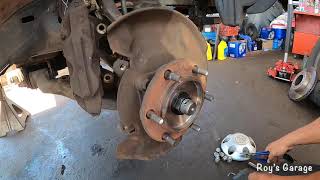
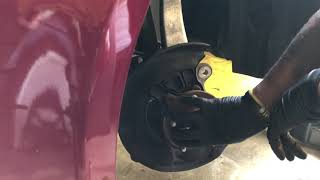
Technical definition: The SAE defines C1410 as "Traction Control Valve LF Circuit Failure," but most manufacturers (like Toyota and Lexus) specify it as "Front Speed Sensor LH Performance." 🎬 See this walkthrough for replacing a Lexus front speed sensor The ECU triggers this fault when the left front wheel speed sensor signal is intermittent, shows an incorrect frequency, or indicates reverse movement while other wheels show forward movement (common during low-speed parking).
Can I Drive With C1410?
Yes, But With Caution. Yes, but with caution. Your Anti-lock Braking System (ABS) and Traction/Stability Control are disabled. This increases stopping distance by up to 20% in emergency situations, adding 45-60 feet when stopping from 60 mph. Maintain extra following distance and drive cautiously, especially in wet conditions, until repaired.
Common Causes
- Faulty Left Front Wheel Speed Sensor (Very Common) — The sensor is the most frequent culprit. Exposed to extreme heat, water, and road debris, its internal components degrade over time. Failure rates spike after 80,000 miles.
- Damaged Wiring Harness or Connector (Common) — The wiring harness is vulnerable to road debris, chafing, rodent damage, or stretching from suspension lift kits. Corrosion from water and road salt inside the connector also creates high resistance, disrupting the signal.
- Failing Wheel Hub/Bearing Assembly (Common) — A failing wheel bearing introduces excessive play or 'wobble'. This movement alters the critical air gap between the sensor and the tone ring, causing the signal to drop out and trigger the code.
- Damaged or Debris-Covered Tone Ring (Common) — The sensor reads a toothed or magnetic tone ring on the axle or hub. Cracked rings, broken teeth, or heavy buildup of metallic brake dust and rust prevent a clean reading.
- Incorrect Sensor Installation or Air Gap (Uncommon) — An improperly installed replacement sensor or rust buildup under the mounting flange increases the air gap, distorting the signal.
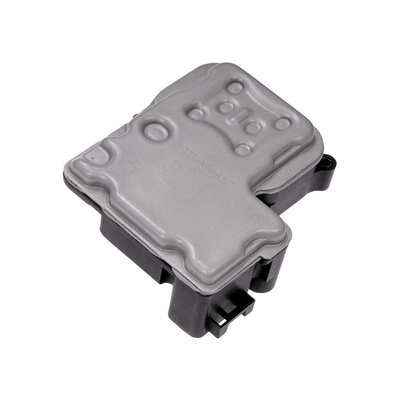
- Faulty ABS/VSC Control Module (Rare) — The ABS control module itself rarely fails. Test the sensor, tone ring, and entire wiring harness before considering a $500+ module replacement.
Symptoms
- ABS Light On — The ABS warning light on your dashboard illuminates and stays on.
- Traction Control (VSC/ESC) Light On — The traction or vehicle stability control light turns on, indicating the system is disabled due to the lost wheel speed signal.
- ABS and Traction Control Inoperative — Anti-lock brakes will not function in a panic stop (wheels lock and skid), and traction control will not intervene on slippery surfaces.
- Brake Pedal Pulsates at Low Speeds — Erratic sensor signals trick the ABS module into thinking a wheel is locking up during low-speed braking, causing the ABS pump to activate and the pedal to pulsate unnecessarily.
- Incorrect Live Data on Scanner (scan-tool only — no driver-felt sign) — When viewing live data, the speed reading for the left front wheel shows zero, fluctuates wildly, or displays a nonsensical default value (like 158 mph) while the other wheels report accurately.
Diagnostic Flowchart
Tap your situation to follow the diagnostic path that matches what you're seeing on this code.
Common Fixes & Costs
- Replace Left Front Wheel Speed Sensor — Parts: $30-$150, Labor: $100-$200, ~1.5 hr book time (DIY)
- Repair Damaged Wiring or Connector — Parts: $10-$60, Labor: $100-$250, ~2.0 hr book time (Intermediate)
- Replace Left Front Wheel Hub Assembly — Parts: $150-$400, Labor: $150-$300, ~2.5 hr book time (Intermediate)
- Clean or Replace ABS Tone Ring — Parts: $30-$100, Labor: $150-$250, ~2.5 hr book time (Intermediate)
- Replace ABS Control Module — Parts: $500-$1200, Labor: $100-$200, ~1.5 hr book time (Professional)
Used vs. New Parts: Buying Guide
When a used part is worth it: Buying used wheel speed sensors or hub assemblies is strongly discouraged. These are wear-and-tear items exposed to harsh conditions. The small cost savings do not justify the risk of premature failure and paying for labor twice.
Donor-vehicle mileage cap: roughly under 10000 miles for the part to have meaningful remaining life.
Donor quality checklist:
- Avoid used sensors and hub assemblies from salvage yards.
- If buying a used ABS Control Module, ensure the part number is an exact match and inquire about the donor vehicle's mileage.
Decision logic:
- If The required part is a wheel speed sensor or wheel hub assembly → Buy a new part from a reputable OEM or aftermarket brand (e.g., Bosch, Timken, MOOG, SKF).
- If The required part is an expensive ABS control module and the vehicle has high mileage → A used module from a low-mileage, accident-damaged vehicle is a cost-effective option, but carries risk and requires programming.
Warranty tradeoff: Used parts from salvage yards offer a 30-90 day warranty. New aftermarket parts come with a 1-year to limited lifetime warranty. The extra cost buys significant peace of mind.
Worst-case if a used part fails: $250-$500 if a used sensor or hub fails shortly after installation, requiring a second labor charge plus a new part.
What Happens If You Wait — Timeline
- 0-2 weeks: ABS and traction control lights are on. Systems are disabled. In a panic stop, wheels lock, increasing stopping distance and causing loss of steering control. No physical damage occurs yet. (MPG impact: 0%% · Added cost: $0 (but significant safety risk))
- 1-3 months (if cause is a bad bearing): If a failing wheel bearing is the root cause, a humming or grinding noise begins. Excessive play starts causing minor, uneven wear on the tire. (MPG impact: 0-1%% · Added cost: $50-$100 (uneven tire wear))
- 3-6 months (if cause is a bad bearing): Continued driving generates extreme heat and vibration, damaging the wheel hub and steering knuckle. The grinding noise becomes very loud. (MPG impact: 1-3%% · Added cost: $300-$800 (cost to replace a damaged hub or knuckle))
- 6+ months (worst-case bearing failure): Catastrophic wheel bearing failure. The wheel wobbles violently, separates from the axle, and causes complete loss of control, destroying the hub, knuckle, brake caliper, and axle. (MPG impact: N/A% · Added cost: $1500-$3000+)
Cost of Not Fixing It
- Immediate: ABS and Traction/Stability Control are disabled. Increased risk of wheel lock-up and skidding in a panic stop, significantly increasing stopping distance and accident risk. (Added cost: $1000+ (potential insurance deductible, traffic fines, or liability in a crash))
- 1-6 months: If the underlying cause is a bad wheel bearing, continued driving causes further damage to the hub and steering knuckle, leading to a much more expensive repair and uneven tire wear. (Added cost: $500-$1500)
- 6+ months: If the cause is a damaged wiring harness, moisture travels up the exposed wire (wicking) and corrodes the pins inside the expensive ABS control module. (Added cost: $800-$2500)
Diagnosis Steps
- Read Fault Codes and Live Data
Use an OBD-II scanner to confirm C1410. Check live data to view the speed reading from all four sensors while driving slowly. The left front sensor will show an erratic, zero, or nonsensical value. A healthy system shows all four sensors reading within 1 mph of each other.
Tools: OBD-II Scanner (with ABS Live Data) (Beginner) - Thorough Visual Inspection
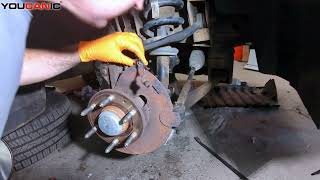
Safely raise the front driver's side. Inspect the entire wheel speed sensor wire for cuts, chafing, or stretched sections. Check the connector for green corrosion, bent pins, or a loose fit. Inspect the tone ring for cracks, missing teeth, and heavy rust.
Tools: Jack, Jack Stands, Flashlight (Beginner) - Inspect the Wheel Hub and Bearing
With the wheel off the ground, grasp the tire at 12 and 6 o'clock and attempt to wiggle it. Any perceptible play indicates a worn wheel bearing. Spin the wheel by hand and listen for grinding noises. A bad bearing alters the sensor air gap and causes this code.
Tools: Jack, Jack Stands (Intermediate) - Clean the Sensor and Tone Ring
Metallic brake dust and road grime disrupt the magnetic signal. Remove the sensor bolt and clean both the sensor tip and the tone ring with brake cleaner and a wire brush. Clear the codes and test drive.
Tools: Socket Set, Brake Cleaner, Rags, Wire Brush (Intermediate) - Check Harness Voltage and Ground
With the sensor disconnected and the key ON, use a multimeter to check the vehicle-side wiring harness connector. For active sensors, one pin must have reference voltage (5V or 12V) and the other must show good ground. Lack of voltage points to a wiring break.
Tools: Multimeter, Service Manual (Intermediate) - [PRO TIP] Test a Passive Sensor (Multimeter)
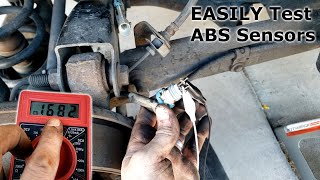
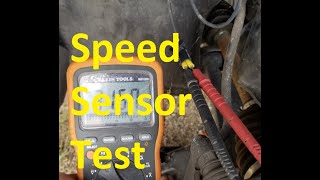
For a 2-wire passive sensor, set a multimeter to Ohms. Disconnect the sensor and measure resistance across its pins (typically 800-2,500 Ohms). An 'Open' (OL) reading means it failed. Next, switch to AC Volts, reconnect, back-probe the wires, spin the wheel, and look for at least 100-500mV AC.
Tools: Multimeter, Back-probe Kit (Advanced) - [PRO TIP] Test an Active Sensor (Oscilloscope)
Never use a resistance test on an active sensor. Back-probe the signal wire with the sensor connected and key ON. Spin the wheel. A healthy active sensor produces a clean DC square wave on an oscilloscope that toggles between low (<1V) and high (>7V) voltage, increasing in frequency with speed.
Tools: Oscilloscope, Back-probe Kit (Advanced)
When This Code Triggers (Freeze-Frame Conditions)
- Vehicle Speed: > 10 mph (The ABS module continuously compares wheel speeds once the vehicle is moving. The fault sets when the vehicle is in motion and one sensor's reading deviates significantly.)
- Wheel Speed Mismatch: > 2-3 mph difference (Triggers when the left front wheel speed signal is illogical compared to the other three wheels for a set period (e.g., front left reads 5 mph while others read 20 mph).)
- Time Since Key On: 10-30 seconds (The ABS module performs a self-test upon startup. A hard electrical fault triggers the code immediately, while a performance fault sets after driving begins.)
- Steering Angle: > 90 degrees (in turns) (During turns, the ECU expects a predictable difference in speed between inner and outer wheels. An erratic signal from the LF sensor during a turn triggers the code.)
Related Codes
- C1409 — The identical fault for the opposite side: 'Front Speed Sensor RH Performance'. Diagnostic and repair procedures are exactly the same, just performed on the passenger side.
- C1223 — A general 'ABS Control System Malfunction' code. C1223 indicates the ABS module detected a fault but doesn't specify where. C1410 pinpoints the problem area. C1223 is often stored as a secondary code.
- C1411 — Indicates a specific 'Open Circuit' in the left front wheel speed sensor circuit. While C1410 means the signal is erratic, C1411 points directly to a broken wire, unplugged connector, or internally failed sensor.
- C1235 — Translates to 'Foreign Object Attached to Tip of Left Front Sensor'. Indicates the ABS module sees signal distortion consistent with metallic debris stuck to the magnetic sensor tip, directly causing the C1410 performance issue.
Climate & Environmental Factors
- Road Salt / Rust Belt Climates: Saltwater spray penetrates connectors, causing green corrosion that creates high resistance. It also causes rust buildup under the sensor's mounting flange, pushing the sensor away from the tone ring and weakening the signal.
- Cold Weather / Freeze-Thaw Cycles: Temperature cycles allow moisture to seep into connectors or cracks in the sensor housing. When this moisture freezes, it expands and breaks electrical connections, temporarily interrupting the signal until the vehicle warms up.
- Snow and Ice Buildup: Driving in deep snow packs ice into the wheel hub area, physically obstructing the sensor's line-of-sight to the tone ring. This blocks the signal but usually resolves once the ice melts.
How to Talk to a Mechanic About This Code
Say this: "I have an ABS light on and my scanner shows a C1410 code for the left front wheel speed sensor. I'd like to schedule a diagnostic to determine the root cause. Please check the sensor, the wiring harness, the tone ring, and for any play in the wheel bearing before recommending a part replacement."
This signals that you understand C1410 is caused by more than just a bad sensor. It directs the technician to perform a complete diagnosis, preventing them from replacing the sensor without confirming it's the actual point of failure.
Avoid saying:
- 'My ABS light is on, can you fix it?'
- 'I think I need a new speed sensor.'
- 'Just replace the front sensor.'
Questions to ask before authorizing the repair:
- What was the specific point of failure? Was it the sensor, wiring, tone ring, or the bearing?
- If it was the sensor, did you test its signal with a multimeter or oscilloscope?
- If it's the wheel bearing, can you show me the play in the wheel?
- If it's the wiring, can you show me where the damage is?
- What is the warranty on the recommended parts and labor?
Where to Take It: Dealer vs Independent vs Chain
- Dealer:
Recommended for in-warranty vehicles or German brands with complex post-repair procedures. Otherwise, an independent shop is more cost-effective.
Best for: Vehicles under warranty, Complex electronic issues or manufacturer-specific recalibrations (e.g., Mercedes-Benz ESP), When you want an OEM part guarantee
Downsides: Highest labor rates, May default to replacing a full assembly (like a hub) when a smaller component is at fault (Typical cost: +50% vs. baseline) - Independent Shop:
Best overall fit. C1410 is a routine diagnosis for a competent independent shop. They are more likely to perform a component-level repair rather than replacing a whole assembly.
Best for: Most out-of-warranty C1410 repairs, Vehicles where the cause is likely a common failure (sensor, bearing, wiring), Building a long-term relationship with a trusted mechanic
Downsides: Quality and diagnostic capabilities vary widely; vet shops based on reviews and ASE certifications. (Typical cost: +0% vs. baseline) - Chain Shop:
Use with caution. Acceptable for a simple bolt-on sensor replacement, but avoid for intermittent electrical issues or suspected wheel bearing failures due to high misdiagnosis rates.
Best for: Simple, clear-cut brake jobs or tire services
Downsides: Technician skill varies greatly., High pressure to upsell services., May lack advanced diagnostic tools (oscilloscopes) to trace complex wiring faults. (Typical cost: -10% vs. baseline)
When to Walk Away From the Repair
If the repair cost exceeds 50% of the car's private-party value, consider selling it.
- Car worth $4000, fix is $800: Fix it. This repair is well below the 50% threshold and restores a critical safety system.
- Car worth $3000, fix is $1500: Walk away. The repair cost is 50% of the car's value. It's likely not a wise investment on an older vehicle.
- Car worth $1500, fix is $1000: Walk away. The repair cost is two-thirds of the car's value. Consider selling it to a junkyard or for scrap.
What Scan Tool You Need for This Code
Minimum: A scanner that reads and clears Anti-lock Brake System (ABS) fault codes and displays live data for all four wheel speed sensors.
A standard $20 engine code reader cannot access the ABS module. It shows 'No Codes Found' even when the ABS light is on. You need a tool specifically advertised with ABS capabilities to see C1410 and view live wheel speed data.
Budget: BlueDriver Pro (~$99) — This Bluetooth dongle pairs with a smartphone app to read and clear ABS codes. Its key feature is graphing live data from all four wheel speed sensors, allowing you to drive and see which sensor drops out.
Mid-range: Foxwell NT510 Elite (~$180) — A powerful handheld tool providing manufacturer-specific ABS diagnostics. It reads live wheel speed data and performs bi-directional controls, allowing you to manually activate the ABS pump to test its function.
Professional: Autel MaxiCOM MK808 / MK808BT (~$450-600) — A professional tablet scanner offering comprehensive diagnostics. It provides fast live data graphing, reads manufacturer-specific codes, and includes a database of guided diagnostics and common fixes.
Rent vs buy: For a one-time fix, AutoZone scans ABS codes for free or offers a capable scanner through their loan-a-tool program. If you do regular maintenance, buying a tool like the BlueDriver Pro pays for itself quickly.
How to Clear the Code After You Fix It
- Use an OBD-II scan tool capable of reading ABS codes to clear the fault from the Chassis Control Module.
- Perform a short test drive that includes speeds above 15 mph and at least two turns.
- For some vehicles (e.g., Mercedes-Benz), a steering angle sensor reset (turning the wheel lock-to-lock) is required.
Drive cycle (~10 minutes): Drive the vehicle for 5-10 minutes. The ABS light remains off if the repair was successful. The ABS module performs a self-test upon startup and continuously monitors sensors while driving. No complex drive cycle is needed.
Readiness monitors affected: None
Watch out for:
- Disconnecting the battery will not clear a C1410 code from the ABS module's memory.
- If the code returns immediately upon driving, the root cause was not fixed (e.g., replacing a good sensor when the wiring was broken).
- Forgetting to clear the code with a scanner after the repair; the light stays on until manually cleared.
Will This Fail Emissions / State Inspection?
No — by itself this code doesn't fail OBD inspection (but it can keep readiness monitors from setting, which causes a separate fail).
- California: An illuminated ABS light is not an automatic failure for the smog check, which focuses on emissions. However, it fails a separate safety inspection if performed.
- New York: An illuminated ABS warning light is grounds for failure of the annual safety inspection.
- Texas: An illuminated ABS warning light will NOT cause a failure of the state safety inspection. The inspector checks the main red brake warning light, but not the ABS light.
Most Commonly Affected Vehicles
- Lexus IS250 / IS350 (2006-2015) — Extremely common. On RWD models, the sensor is a separate bolt-in part. On AWD models, the sensor and magnetic encoder are integrated into the front wheel hub assembly, requiring full hub replacement.
- Toyota Tacoma (2005-2023) — Prone to this code due to a damaged wiring harness. This is especially common on trucks with suspension lifts or those used off-road, which stretches and breaks the wires.
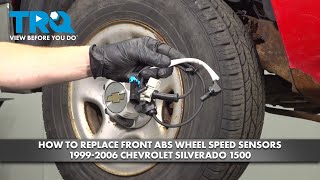
- Chevrolet / GMC Silverado 1500 / Sierra 1500 (2007-2018) — The front wheel speed sensor is integrated with the hub and bearing assembly. Wheel bearing failure introduces play, damaging the sensor and requiring replacement of the entire hub assembly.
- Hyundai Sonata (2015-2019) — A point of major confusion exists here. The DTC C1410 refers to the wheel speed sensor, but an unrelated part (Rear Door Latch Assembly) has a part number of 81410-C1000. Always confirm the code was read from the ABS module.
- Volkswagen Jetta (2011-2018) — Typically caused by the failure of the bolt-in wheel speed sensor. On some models, a damaged reluctor ring integrated into the wheel bearing is the actual cause.
- Mercedes-Benz C-Class (W204), E-Class (W212), GLK-Class (X204) (2008-2015) — Often related to the Electronic Stability Program (ESP). After replacing a sensor, a specific road test procedure (driving in a slow circle or S-pattern) is required to recalibrate the system.
- Ford Explorer (2011-2019) — When the ABS module detects a circuit fault, it reports a default, nonsensical speed (like 158 mph) for that wheel in the live data stream, indicating a circuit integrity problem rather than a dirty tone ring.
- Toyota 4Runner (2003-2022) — Shares platforms with the Tacoma. Off-road use leads to wiring damage from debris or suspension articulation, and lifted vehicles experience stretched harnesses.
Manufacturer-Specific Notes
- Toyota / Lexus: Defined as 'Front Speed Sensor LH Performance'. It often triggers during low-speed, high-steering-angle maneuvers like parking, where the signal difference between the inner and outer wheel becomes most apparent to the ECU.
- Mercedes-Benz: Described as 'ESP Driving Test Failure'. After replacing a component, a specific road test procedure is necessary to clear the code. This involves turning the steering wheel lock-to-lock or performing a specific driving pattern.
- Ford: When the ABS module detects an open or short circuit, the live data stream displays a default, impossible speed (like 158.5 mph) for the affected wheel. This clearly indicates an electrical fault, not a mechanical issue.
- Hyundai / Kia: Be cautious of confusing part numbers with trouble codes. On a 2015-2019 Sonata, the rear door lock actuator part number is 81410-C1000, easily mistaken for this DTC. Verify the code was read from the ABS module.
- General: No widespread recalls are active for C1410. However, manufacturers issue Technical Service Bulletins (TSBs) addressing known issues with wiring harness routing or connector problems. Check with a dealership for applicable TSBs.
Real Owner Stories
2014 Lexus IS250 AWD at 110K miles
ABS, traction control, and brake warning lights came on simultaneously. No other symptoms were noticed during normal driving.
What they tried:
- Owner suspected a simple sensor failure. A scan confirmed C1410.
- Upon inspection, it was determined that on the AWD model, the sensor is integrated into the front wheel hub assembly.
Outcome: The entire left front wheel hub assembly was replaced. This is a more expensive repair than a simple bolt-in sensor, costing $600. The repair successfully cleared the code and restored ABS functionality.
Lesson: For AWD models like the Lexus IS250, be aware that 'sensor' replacement is actually a full hub replacement, significantly impacting repair cost.
2016 Toyota Tacoma w/ Lift Kit at 75K miles
C1410 code appeared intermittently, usually after driving on bumpy roads or off-road. The ABS and traction lights turned off after restarting, only to return later.
What they tried:
- Initially replaced the left front wheel speed sensor, but the code returned within a week.
- Shop then inspected the wiring harness closely.
Outcome: The technician found the ABS wiring was stretched too tightly due to a 3-inch suspension lift. Constant tension caused an internal break in the wire. Replacing the damaged section with a longer aftermarket harness (Dorman 645-940) permanently solved the issue.
Lesson: If your vehicle is modified with a suspension lift, always suspect stretched wiring as a primary cause before repeatedly replacing the sensor.
2012 Chevy Silverado at 130K miles
ABS light (C1410) came on, accompanied by a faint grinding noise from the front driver's side wheel that got louder with speed and when turning right.
What they tried:
- Owner thought it was a bad sensor and considered replacing only that.
- A mechanic performed a physical inspection by jacking up the wheel.
Outcome: The mechanic demonstrated significant 'play' in the wheel when wiggling it at 12 and 6 o'clock, confirming a failed wheel bearing. On this truck, the sensor is integrated into the hub. Replacing the entire left front wheel hub assembly fixed both the noise and the C1410 code.
Lesson: Don't ignore accompanying symptoms. A grinding noise points directly to a mechanical failure (wheel bearing) as the root cause. A simple 'shake test' saves you from misdiagnosis.
How to Prevent This Code From Triggering
- Clean sensors and tone rings during brake service (Every time you replace brake pads or rotors) — Metallic brake dust sticks to the magnetic sensor tip and clogs the tone ring teeth, disrupting the signal. Cleaning with brake cleaner and a wire brush prevents future codes.
- Apply dielectric grease to sensor connectors (Any time the connector is unplugged) — Dielectric grease is a non-conductive sealant. Applying it inside the connector housing seals out moisture and prevents pin corrosion, a common cause of intermittent signal loss.
- Periodically wash the vehicle's undercarriage (Monthly, especially in winter in rust-belt climates) — Washing away road salt and grime reduces corrosion on wiring harnesses and sensor mounting points. It prevents heavy ice or mud buildup that physically blocks the sensor.
- Address wheel bearing noise immediately (As needed) — A noisy wheel bearing indicates failure. The excessive play damages the integrated sensor or alters the air gap. Fixing a bearing early prevents secondary failure of the ABS system.
Frequently Asked Questions
Can I just replace the sensor myself?
Yes, if the sensor is a simple bolt-in unit, it's a straightforward DIY job. However, on many trucks and AWD vehicles, the sensor is integrated into the wheel hub assembly. Replacing a hub is a complex job requiring specialized tools and high torque specs.
I replaced the sensor, but the C1410 code came back. What now?
This indicates the sensor was not the root cause. Meticulously inspect the wiring harness for damage, check the tone ring for heavy rust, and verify the wheel bearing isn't failing. On lifted trucks, check if the wiring is stretched tight at full suspension droop.
What's the difference between an active and a passive wheel speed sensor?
Passive sensors are 2-wire magnetic pickups that generate AC voltage. Active sensors require a 5V or 12V power source and produce a digital DC square-wave signal. You must use the correct testing procedure, as a resistance test destroys an active sensor.
Can a bad wheel alignment cause the C1410 code?
A bad alignment rarely causes C1410 directly. However, the impact that ruined the alignment (like a pothole) likely damaged the wheel bearing, sensor, or wiring. An alignment technician might also accidentally disturb the wiring during service.
Is it safe to drive with code C1410?
You can drive, but your ABS and Traction/Stability Control are offline. Your wheels will lock up during a panic stop, increasing stopping distance by up to 20%. Drive with extreme caution and repair the issue promptly.
How much does it cost to diagnose this code?
Most repair shops charge a diagnostic fee ranging from $75 to $200. This covers reading codes, viewing live data, and performing visual inspections to pinpoint the cause.
Will clearing the code fix the problem?
No. C1410 indicates a hard fault in the system. The warning lights will reappear as soon as you start driving and the ABS module detects the ongoing signal problem.
My ABS light came on after I installed a lift kit, is it related?
Yes, lift kits often pull the factory ABS wiring harness too tight. Suspension articulation stretches and breaks the internal wires, causing an intermittent or permanent C1410 fault. You must install a longer aftermarket harness or reroute the existing one.
Key Takeaways
- Code C1410 indicates a signal failure from the front driver's side wheel speed sensor, immediately disabling your ABS and traction control.
- Inspect the wiring harness and connector for corrosion or breaks before spending $130-$350 on a replacement sensor.
- A failing wheel bearing causes this code by introducing excessive play that alters the 1-2mm air gap between the sensor and the tone ring.
- On trucks like the Chevy Silverado and AWD cars like the Lexus IS, the sensor is integrated into the wheel hub, requiring a $300-$700 full hub replacement.
Helpful Videos
Shop the Parts Behind C1410
Below are the parts most often responsible for code C1410, ranked by how frequently each one is the actual culprit (per the diagnosis above). Tap any to see what we have for your vehicle.



The information in this article is provided for general reference and educational purposes only. Vehicle specifications, procedures, and part compatibility can vary by production date, trim level, and region. Always consult your vehicle's factory service manual and verify part numbers before purchasing or performing repairs. Safety-critical components such as airbags, seat belts, and braking systems should be installed by a qualified professional.
- 🧭 Diagnostic Flowchart
- 🎬 Helpful Videos
- 🛍️ Shop This Part
- What Does C1410 Mean?
- Can I Drive With C1410?
- Common Causes
- Symptoms
- Common Fixes & Costs
- Used vs. New Parts: Buying Guide
- What Happens If You Wait — Timeline
- Cost of Not Fixing It
- Diagnosis Steps
- When This Code Triggers (Freeze-Frame Conditions)
- Related Codes
- Climate & Environmental Factors
- How to Talk to a Mechanic About This Code
- Where to Take It: Dealer vs Independent vs Chain
- When to Walk Away From the Repair
- What Scan Tool You Need for This Code
- How to Clear the Code After You Fix It
- Will This Fail Emissions / State Inspection?
- Most Commonly Affected Vehicles
- Manufacturer-Specific Notes
- Real Owner Stories
- 2014 Lexus IS250 AWD at 110K miles
- 2016 Toyota Tacoma w/ Lift Kit at 75K miles
- 2012 Chevy Silverado at 130K miles
- How to Prevent This Code From Triggering
- Frequently Asked Questions
- Can I just replace the sensor myself?
- I replaced the sensor, but the C1410 code came back. What now?
- What's the difference between an active and a passive wheel speed sensor?
- Can a bad wheel alignment cause the C1410 code?
- Is it safe to drive with code C1410?
- How much does it cost to diagnose this code?
- Will clearing the code fix the problem?
- My ABS light came on after I installed a lift kit, is it related?
- Key Takeaways
- 🎟️ Get 5% Off