

OBD-II Code C1413: Front Right Wheel Speed Sensor Malfunction
What C1413 means, why it triggers, and how to fix it
- Code C1413 disables your ABS and traction control because the computer lost the speed signal from the front right wheel.
- Inspect the wiring harness behind the front right wheel first; a broken wire or corroded connector causes over 40% of these faults.
- Do not blindly replace the $150 sensor without checking the wheel bearing for play, as a wobbling hub destroys the sensor's magnetic reading.
- Clear the code with an OBD-II scanner after repairs; the ABS light remains on until you drive above 15 mph for 60 seconds to verify the new signal.
What Does C1413 Mean?
Code C1413 indicates the vehicle's main computer lost the speed signal from the front right wheel speed sensor. When this signal drops out, becomes noisy, or contradicts the other three wheels, the computer immediately disables safety systems like ABS and traction control to prevent erratic braking behavior.
Technical definition: The Skid Control ECU detects an open circuit in the front right speed sensor 255 times or more, or detects signal noise 75 times within 5 seconds at speeds above 12 mph.
Can I Drive With C1413?
Yes, But With Caution. Yes, but your Anti-lock Braking System (ABS) and Traction Control are disabled. Your regular brakes function normally, but exercise extreme caution. Without ABS, your wheels lock during a hard stop, increasing stopping distances by over 20% on wet surfaces and causing a complete loss of steering control. Limit driving to essential trips to a repair location.
Common Causes
- Damaged or Corroded Wiring Harness (Very Common) — The sensor wiring sits exposed in the wheel well. Road debris, moisture, and constant suspension movement cause wire breaks or connector corrosion, making this the leading cause of C1413.
- Faulty Front Right Wheel Speed Sensor (Very Common) — The sensor fails internally from age, heat cycles, or manufacturing defects. A dead sensor outputs zero voltage, triggering an immediate hard fault.
- Failed Wheel Bearing / Hub Assembly (Common) — A worn wheel bearing creates excessive hub wobble. This movement alters the critical air gap between the sensor and the tone ring, corrupting the speed signal before the bearing even starts making noise.
- Contaminated or Damaged ABS Tone Ring (Common) — The sensor reads a notched or magnetic ring spinning with the wheel. Cracked rings, heavy rust buildup, or stuck metal shavings block the sensor from getting a clean reading.
- Improper Sensor Installation / Rust Jacking (Uncommon) — Rust builds up on the steering knuckle under the sensor mounting point. This 'rust jacking' pushes the sensor away from the tone ring, weakening the signal. This is a notorious failure point on Honda vehicles.
- Low System Voltage (Rare) — A dying battery or failing alternator drops system voltage below 11.5V, causing the ABS module to misinterpret sensor data. Subaru models frequently flag C1413 during power supply drops.
Symptoms
- ABS Warning Light Illuminated — The Anti-lock Braking System (ABS) warning light on the dashboard turns on immediately.
- Traction / Stability Control Light Illuminated — The Traction Control System (TCS) or Vehicle Stability Control (VSC) light turns on, as these systems require wheel speed data to function.
- Cruise Control Disabled — The cruise control system refuses to engage because it requires accurate speed data from all four wheels for safety.
- Erratic Speedometer Readings — The speedometer jumps erratically or drops to 0 mph intermittently, as many vehicles use the front wheel speed sensors to calculate vehicle speed.
- Wheel Speed Mismatch in Live Data (scan-tool only — no driver-felt sign) — On a scan tool, the Front Right (FR) wheel speed reads 0 mph or fluctuates wildly compared to the other three wheels while driving.
Diagnostic Flowchart
Tap your situation to follow the diagnostic path that matches what you're seeing on this code.
Common Fixes & Costs
- Wheel Speed Sensor Replacement — Parts: $50-$150, Labor: $100-$150, ~1.0 hr book time (DIY)
- Wiring Harness Pigtail Repair — Parts: $20-$40, Labor: $75-$150, ~1.0 hr book time (DIY)
- Wheel Bearing and Hub Assembly Replacement — Parts: $150-$350, Labor: $150-$300, ~1.5 hr book time (Intermediate)
- ABS Tone Ring Replacement — Parts: $30-$120, Labor: $150-$300, ~2.5 hr book time (Professional)
DIY vs Professional
- Wheel Speed Sensor Replacement 🟢 Beginner
Tools: Jack, jack stands, lug wrench, 10mm socket, torque wrench, wire brush. - Wiring Harness Pigtail Repair 🟢 Beginner
Tools: Wire strippers, wire cutters, heat-shrink butt connectors, heat gun. - Wheel Bearing and Hub Assembly Replacement 🟢 Beginner
Tools: 30mm/32mm axle nut socket, high-torque impact wrench, hub puller, torque wrench capable of 150+ ft-lbs. - ABS Tone Ring Replacement 🟢 Beginner
Tools: Axle nut socket, bearing press, CV axle removal tools.
Used vs. New Parts: Buying Guide
When a used part is worth it: Buying a used wheel speed sensor is never recommended. They are wear items exposed to harsh conditions, and the $50 savings does not justify the risk of premature failure.
Donor-vehicle mileage cap: roughly under 50000 miles for the part to have meaningful remaining life.
Donor quality checklist:
- Verify the part number matches exactly.
- Avoid parts from rust-belt vehicles.
- Inspect the wiring and connector for brittleness or cracking.
Decision logic:
- If The part is a standalone bolt-in sensor. → Buy a new, high-quality aftermarket (e.g., NTK, Delphi) or OEM sensor.
- If The sensor is integrated into the wheel hub assembly. → Buy a new, quality hub assembly. The labor to replace the hub is too high to risk a used part.
- If Budget is the absolute primary concern and the vehicle is old. → A used sensor from a salvage yard is a last resort, but expect it to fail again.
Warranty tradeoff: Used parts offer a 30-day warranty at best. New aftermarket sensors come with a 1-year to limited lifetime warranty.
Worst-case if a used part fails: $150 if a used sensor fails after install, requiring repeat labor and a new part.
What Happens If You Wait — Timeline
- Immediate: Code C1413 sets. ABS, Traction Control, and Stability Control warning lights illuminate, disabling these safety systems. (MPG impact: 0%% · Added cost: $0. The primary cost is the immediate loss of safety features.)
- 1-3 months (if cause is a bad bearing): A humming or grinding noise begins, getting louder with speed. Bearing wear accelerates, causing slight wheel wobble and uneven tire wear. (MPG impact: 1-3%% · Added cost: $50-$150 for premature tire wear.)
- 3-6 months (if cause is a bad bearing): The wheel bearing noise becomes a loud grinding. Excessive heat and play damage the wheel hub and steering knuckle. (MPG impact: 3-5%% · Added cost: $400-$1,200. Damage extends beyond the hub to the knuckle or brake components.)
- 6+ months (if cause is a bad bearing): Catastrophic failure of the wheel bearing occurs. The wheel seizes or separates from the vehicle, leading to a complete loss of control. (MPG impact: N/A% · Added cost: $1,500-$3,000+ for repairs to the axle, suspension, and body.)
Cost of Not Fixing It
- Immediate: Loss of Anti-lock Braking (ABS) and Traction/Stability Control. Increased risk of skidding and loss of control during emergency braking. (Added cost: Potential cost of an accident.)
- 1-6 months: If the root cause is a bad wheel bearing, continued driving destroys the hub and steering knuckle. (Added cost: $500-$1500+ for additional suspension and axle repairs.)
- 6+ months: Driving indefinitely without ABS and stability control remains a severe, ongoing safety hazard. (Added cost: Negligible direct component cost, but extreme safety risk.)
Diagnosis Steps
- Read Live Data on a Scanner
Use an ABS-capable OBD-II scanner to watch the 'FR Wheel Speed' PID while driving above 5 mph. A healthy sensor matches the other wheels. A reading of 0 mph or erratic dropouts confirms the fault location.
Tools: ABS-capable OBD-II Scanner (Beginner) - Perform an Immediate Fault Check
Clear the code. If C1413 returns immediately upon turning the ignition ON (before moving), you have a hard electrical fault (broken wire or dead sensor). If it returns only after driving, you have a mechanical issue (bad bearing or dirty tone ring).
Tools: ABS-capable OBD-II Scanner (Beginner) - Visually Inspect the Wiring and Connector
Safely raise the front right wheel. Trace the sensor wire from the hub into the engine bay. Look for chafing, melting, or stretched sections. Unplug the connector and check for green copper corrosion on the pins.
Tools: Jack, Jack Stands, Flashlight (Beginner) - Check for Wheel Bearing Play
Grab the raised tire at 12 and 6 o'clock and rock it vertically. Repeat at 9 and 3 o'clock. Any clunking or looseness indicates a failed wheel bearing, which destroys the sensor signal.
Tools: Jack, Jack Stands (Intermediate) - Inspect the Sensor and Tone Ring
Remove the 10mm sensor bolt and pull the sensor. Wipe metal shavings off the magnetic tip. Look into the mounting hole with a flashlight to verify the tone ring has no missing teeth or heavy rust.
Tools: 10mm Socket, Ratchet, Flashlight, Shop Towel (Intermediate) - Test Sensor Resistance
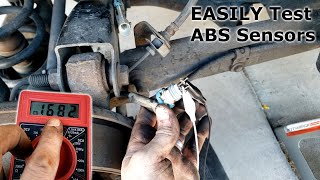
Set a multimeter to Ohms. Probe the two pins on the unplugged sensor. A healthy passive sensor reads between 800 and 1,700 Ohms. An 'OL' reading means the internal coil is broken, requiring replacement.
Tools: Multimeter (Intermediate) - Test Harness Voltage
Turn the ignition ON. Set the multimeter to DC Volts. Probe the harness-side connector's power wire against a chassis ground. You must see a 5V to 14V reference voltage. Zero volts confirms a broken wire, not a bad sensor.
Tools: Multimeter, T-Pins (Advanced)
When This Code Triggers (Freeze-Frame Conditions)
- Vehicle Speed: 15-55 mph (The code sets when the vehicle is in motion, as the ABS module actively compares wheel speeds. Faults trigger at speeds as low as 12 mph.)
- Braking Status: Not Braking (The wheel speed sensors are monitored continuously. Faults are detected during steady driving when one wheel's speed signal drops out.)
- System Voltage: 12.0-14.8V (Normal operating voltage. A freeze frame showing below 11.5V indicates a failing alternator caused the ABS module to glitch.)
- ABS/VSC Status: Active/Enabled (The code triggers while the system is operational. Once confirmed, the ABS and VSC systems disable entirely.)
Related Codes
- C1414 — Identical code but for the Front Left (LH) wheel speed sensor. The diagnostic process is exactly the same, performed on the driver's side.
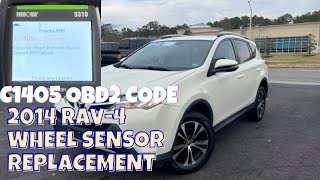
- C1405 — A specific Toyota/Lexus code for 'Open or Short in Front Speed Sensor RH Circuit'. This points directly to an electrical fault, ruling out mechanical issues like the tone ring.
- C1275 — Means 'Abnormal Change in Output Signal'. The signal is present but erratic, strongly suggesting a cracked tone ring or failing wheel bearing rather than a dead sensor.
- C1225 — A generic code for 'Front Speed Sensor RH Circuit Malfunction'. This is an older equivalent to C1413 pointing to the exact same components.
Climate & Environmental Factors
- Road Salt / Cold Climates: Salt and brine accelerate corrosion of the sensor wiring and connectors, causing open circuits. It also causes rust to build up on the steering knuckle under the sensor, increasing the air gap ('rust jacking').
- High Humidity / Heavy Rain: Moisture penetrates failing wire insulation or worn connector seals, causing intermittent shorts that trigger the code immediately after rain or car washes.
- Rough Road Conditions: Constant, harsh suspension movement stresses the sensor's wiring harness, snapping internal wires even when the outer plastic insulation looks perfectly intact.
How to Talk to a Mechanic About This Code
Say this: "I have an ABS light on and my scanner shows code C1413 for the front right wheel speed sensor circuit. I'd like to book a diagnostic appointment to confirm the cause. Can you please check the sensor, wiring, tone ring, and wheel bearing for issues?"
This shows you've done initial research and guides the technician toward a comprehensive diagnosis rather than just replacing the sensor. It sets the expectation that you want the root cause found.
Avoid saying:
- 'My ABS light is on, can you fix it?' (Too vague, invites the most expensive repair.)
- 'I'm pretty sure it just needs a new sensor, can you replace it?' (Authorizes a specific repair that fails to solve a wiring or bearing issue.)
- 'Just do whatever you think is necessary.' (Gives the shop a blank check.)
Questions to ask before authorizing the repair:
- What was the specific point of failure? Was it the sensor, the wiring, the tone ring, or the bearing?
- If it was the sensor, did you test it with a multimeter? What were the readings?
- If it's the wiring, can you show me the damaged section?
- Can you give me an itemized, out-the-door price for the repair?
- Can I have the old parts back when the job is done?
Where to Take It: Dealer vs Independent vs Chain
- Dealer:
Recommended only if the vehicle is under warranty. For most out-of-warranty C1413 codes, a dealer is an unnecessarily expensive option.
Best for: Vehicles still under warranty., Repairs related to a recall or Technical Service Bulletin (TSB)., Complex electrical issues where the ABS module itself failed.
Downsides: Significantly higher labor rates (often 50-100% more than independent shops)., More likely to replace entire assemblies (like a full hub) rather than smaller components., Service advisors act as intermediaries, preventing direct communication with the technician. (Typical cost: +50% vs. baseline) - Independent Shop:
Best fit for this code. A reputable independent shop has the tools and experience to diagnose and repair C1413 at a much lower cost than a dealership.
Best for: Out-of-warranty vehicles where cost is a factor., Common diagnostic tasks like tracing wiring, testing sensors, and inspecting bearings., Building a long-term relationship with a trusted mechanic.
Downsides: Quality varies greatly; you must vet the shop through reviews and ASE certifications., May lack the latest manufacturer-specific diagnostic tools for brand-new models. (Typical cost: +0% vs. baseline) - Chain Shop:
Use with caution. Acceptable for a straightforward sensor replacement if you are certain that is the problem. Avoid for initial diagnosis.
Best for: Simple, routine maintenance like oil changes or new tires.
Downsides: Technician skill and experience are highly inconsistent., High pressure to upsell services and meet sales quotas leads to unnecessary repairs., Often not equipped for in-depth electrical diagnostics beyond reading the initial code. (Typical cost: -10% vs. baseline)
When to Walk Away From the Repair
If the estimated repair cost exceeds 40-50% of your car's private-party value, seriously consider selling or trading in the vehicle instead of repairing it.
- Car worth $4000, fix is $2000: Walk away. The repair cost is 50% of the car's value. This money is better used as a down payment on a more reliable vehicle.
- Car worth $15000, fix is $600: Fix it. The repair cost is only 4% of the vehicle's value and is a necessary safety repair.
- Car worth $2500, fix is $1500: Walk away. The repair cost is 60% of the car's value. It is not financially sound to invest this much into an older, low-value car.
What Scan Tool You Need for This Code
Minimum: A scanner that reads and clears ABS/SRS trouble codes and displays live data for all four wheel speed sensors.
A basic $20 code reader only checks engine codes (P-codes) and cannot communicate with the ABS module. To diagnose C1413, you must see the live speed reading from the front right wheel.
Budget: BlueDriver Pro Scan Tool (~$100) — Connects to your smartphone via Bluetooth. It reads and clears ABS codes and graphs live data from all four wheel speed sensors so you visually confirm the fault.
Mid-range: Foxwell NT510 Elite / Autel MaxiCheck Pro (~$150-300) — These handheld units offer full system diagnostics, including ABS live data and code clearing. They provide bidirectional controls, such as the ABS 'auto bleed' function, necessary if you replace the ABS module.
Professional: Autel MaxiCOM MK808 / Launch X431 Series (~$500-1200) — Provides full bidirectional control, allowing you to command the ABS module to perform tests. These professional-grade tools offer dealership-level diagnostics, which is overkill for a simple sensor fault but essential for a failed ABS module.
How to Clear the Code After You Fix It
- Use an ABS-capable OBD-II scan tool to clear the diagnostic trouble code from the ABS control module.
- Perform a short test drive above 15 mph.
Drive cycle (~5 minutes): Drive the vehicle above 15 mph for at least 60 seconds. The ABS light turns off after the control module verifies the new sensor provides a plausible signal matching the other wheels.
Readiness monitors affected: None
Watch out for:
- Disconnecting the battery does not clear ABS codes; a specific scan tool command is mandatory.
- If the warning light returns immediately, the repair failed or the aftermarket sensor is incompatible.
- Failing to clear the code leaves the warning lights on, even if the physical fault is fixed.
Will This Fail Emissions / State Inspection?
No — by itself this code doesn't fail OBD inspection (but it can keep readiness monitors from setting, which causes a separate fail).
- California: An illuminated ABS light does not cause a smog test failure, but inspectors refuse to test the vehicle if they deem it unsafe to drive on the dynamometer.
- New York: An illuminated ABS warning light is an automatic failure during the annual safety inspection.
- Texas: An illuminated ABS light is not a cause for rejection in the annual safety inspection, though inspectors flag it as a safety concern.
Manufacturer-Specific Notes
- Subaru: C1413 defines an 'ABS/VDC module power supply fault'. Diagnosis must start by checking the 'SBF-5' fuse and the module's ground connection near the passenger front strut tower.
- Toyota / Lexus: These vehicles are notoriously sensitive to sensor quality. Using a cheap aftermarket sensor causes the code to return immediately. Always use an OEM or Denso sensor.
- Honda: Rust builds up on the steering knuckle underneath the sensor's mounting flange, pushing the sensor out of position. You must clean the mounting surface to bare metal before installing a new sensor.
- General Motors (Chevrolet/GMC): The wiring harness for the front wheel speed sensor is a known weak point. The wire breaks internally while the outer insulation looks intact. Wiggle the harness while watching live data to find the break.
Real Owner Stories
2008 Lexus IS250 RWD after heavy rain
ABS and Traction Control lights appeared on the dash after a period of heavy rain. The owner scanned the codes and found C1413 and C1405.
Outcome: Replacing the sensor resolved the codes. On Lexus models of this era, moisture frequently penetrates failing sensor seals, causing temporary shorts.
Lesson: For intermittent faults on Lexus/Toyota models that appear after rain, the sensor itself is the primary suspect. Live data looks normal when dry, but the fault returns when wet.
2011 Chevy Silverado with 150K miles
ABS and StabiliTrak lights came on. A scan showed a code for the front right wheel speed sensor. The owner replaced the sensor, but the code returned.
Outcome: The problem was a broken wire inside the insulation, 8 inches from the sensor connector, caused by chafing against the suspension. Splicing in a new pigtail permanently fixed the issue.
Lesson: Never assume the sensor or hub is bad. On GM trucks, the wiring harness is a notorious failure point. Wiggle the harness while watching live data to reveal hidden wire breaks.
2017 Subaru Outback with multiple warning lights
The owner experienced the power steering light turning on, making the wheel hard to turn, alongside the ABS light. A scan revealed code C1413.
Outcome: On Subarus, C1413 defines an 'ABS/VDC module power supply fault'. The culprit was a loose ground connection near the passenger front strut tower, not the wheel speed sensor.
Lesson: Always verify the specific definition of a code for your manufacturer. For Subarus showing C1413 alongside power steering warnings, check power and ground connections first.
2014 Honda CR-V with intermittent ABS light
The ABS light came on intermittently after hitting bumps. The owner replaced the front right wheel speed sensor, but the light returned days later.
Outcome: They found heavy rust on the steering knuckle's mounting surface. This 'rust jacking' created an excessive air gap. After wire-brushing the surface to bare metal and reinstalling the sensor, the code vanished.
Lesson: On Honda vehicles, meticulously clean the sensor's mounting surface on the knuckle to bare metal. Failing to remove rust guarantees the new sensor will fail to read the tone ring.
How to Prevent This Code From Triggering
- Apply dielectric grease to the sensor connector. (Whenever the connector is unplugged.) — Dielectric grease seals out moisture and oxygen, preventing the green copper corrosion that causes intermittent signal drops.
- Wash the vehicle's undercarriage. (Monthly during winter.) — Rinsing the wheel wells removes highly corrosive road salt, preventing wire degradation and 'rust jacking' on the steering knuckle.
- Secure the wiring harness away from moving parts. (During any suspension or brake maintenance.) — A loose harness rubs against the tire or CV axle, leading to chafing and internal wire breaks. Ensure all factory clips are engaged.
- Address noisy wheel bearings promptly. (As soon as humming or grinding noises occur.) — A failing wheel bearing creates excessive play that damages the integrated tone ring, turning a simple bearing swap into a complex ABS repair.
Frequently Asked Questions
Is it safe to drive with code C1413?
You can drive the vehicle, but do so with extreme caution. Your normal brakes function, but the anti-lock (ABS) and traction/stability control systems are disabled. This increases stopping distance and the risk of skidding on wet or icy roads.
Why did my traction control and stability lights also come on?
Traction and stability control systems require accurate wheel speed data to detect slipping. Because code C1413 indicates an unreliable signal from the front right wheel, the computer disables these systems as a precaution. This triggers their respective dashboard warning lights.
What are the most common mistakes when fixing C1413?
The biggest mistake is replacing the sensor without a full diagnosis. Mechanics frequently overlook broken wiring harnesses, rust buildup under the sensor mount (common on Hondas), or a failing wheel bearing. Always visually inspect the wiring and test the bearing before buying parts.
I replaced the sensor, but the ABS light is still on. What now?
First, ensure you used a high-quality OEM or equivalent sensor, as Toyotas and Lexuses often reject cheap aftermarket parts. Second, clear the code from the ABS module using a capable scanner. Finally, drive the vehicle above 15 mph for 60 seconds to allow the system to self-test and turn off the light.
Can I replace a wheel speed sensor myself?
Yes, replacing a wheel speed sensor is a beginner-friendly DIY job that takes about one hour. It requires removing the wheel, undoing a single 10mm bolt, and unplugging the electrical connector. However, if the sensor is seized by rust or the root cause is a bad wheel bearing, the job requires advanced tools.
How much should it cost to fix code C1413?
A simple wheel speed sensor replacement at a repair shop costs between $150 and $300 for parts and labor. Repairing a damaged wire connector is cheaper, averaging $75 to $150. If the entire wheel hub assembly requires replacement, expect to pay between $300 and $650 depending on the vehicle.
Can a bad alignment cause a C1413 code?
No, a bad wheel alignment does not cause a C1413 code. While severe alignment issues trigger steering angle sensor faults, C1413 specifically flags an electrical or magnetic signal failure at the front right wheel. You have a wiring, sensor, or tone ring problem, not an alignment issue.
Key Takeaways
- Code C1413 disables your ABS and traction control because the computer lost the speed signal from the front right wheel.
- Inspect the wiring harness behind the front right wheel first; a broken wire or corroded connector causes over 40% of these faults.
- Do not blindly replace the $150 sensor without checking the wheel bearing for play, as a wobbling hub destroys the sensor's magnetic reading.
- Clear the code with an OBD-II scanner after repairs; the ABS light remains on until you drive above 15 mph for 60 seconds to verify the new signal.
Helpful Videos

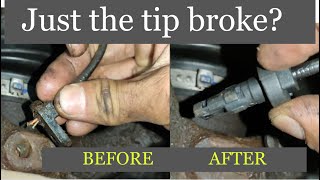
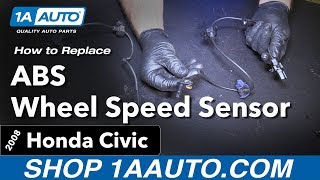
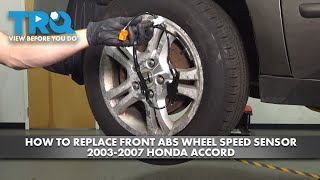

Shop the Parts Behind C1413
Below are the parts most often responsible for code C1413, ranked by how frequently each one is the actual culprit (per the diagnosis above). Tap any to see what we have for your vehicle.



The information in this article is provided for general reference and educational purposes only. Vehicle specifications, procedures, and part compatibility can vary by production date, trim level, and region. Always consult your vehicle's factory service manual and verify part numbers before purchasing or performing repairs. Safety-critical components such as airbags, seat belts, and braking systems should be installed by a qualified professional.
- 🧭 Diagnostic Flowchart
- 🎬 Helpful Videos
- 🛍️ Shop This Part
- What Does C1413 Mean?
- Can I Drive With C1413?
- Common Causes
- Symptoms
- Common Fixes & Costs
- DIY vs Professional
- Used vs. New Parts: Buying Guide
- What Happens If You Wait — Timeline
- Cost of Not Fixing It
- Diagnosis Steps
- When This Code Triggers (Freeze-Frame Conditions)
- Related Codes
- Climate & Environmental Factors
- How to Talk to a Mechanic About This Code
- Where to Take It: Dealer vs Independent vs Chain
- When to Walk Away From the Repair
- What Scan Tool You Need for This Code
- How to Clear the Code After You Fix It
- Will This Fail Emissions / State Inspection?
- Manufacturer-Specific Notes
- Real Owner Stories
- 2008 Lexus IS250 RWD after heavy rain
- 2011 Chevy Silverado with 150K miles
- 2017 Subaru Outback with multiple warning lights
- 2014 Honda CR-V with intermittent ABS light
- How to Prevent This Code From Triggering
- Frequently Asked Questions
- Is it safe to drive with code C1413?
- Why did my traction control and stability lights also come on?
- What are the most common mistakes when fixing C1413?
- I replaced the sensor, but the ABS light is still on. What now?
- Can I replace a wheel speed sensor myself?
- How much should it cost to fix code C1413?
- Can a bad alignment cause a C1413 code?
- Key Takeaways
- 🎟️ Get 5% Off