

OBD-II Code C1417: High Electrical Voltage in Brake System
What C1417 means, why it triggers, and how to fix it
- Diagnose code C1417 by testing the alternator's DC voltage and AC ripple first, as an overcharging alternator (producing over 15.0V) causes this issue in over 90% of cases.
- Stop driving the vehicle immediately; disabled ABS increases stopping distances by up to 35%, and sustained high voltage permanently fries expensive modules like the ECU.
- Verify your vehicle's manufacturer definition: on Toyota and Lexus, C1417 means high voltage, but on Jeep, Nissan, and Subaru, it indicates a 4WD front differential circuit failure.
- Never replace the $600+ ABS control module until you physically verify the battery, alternator output, and module ground connections are operating within normal limits.
What Does C1417 Mean?

The Skid Control ECU detected dangerously high electrical voltage. To protect its sensitive internal circuits from frying, the module shuts down the Anti-lock Braking System (ABS) and Vehicle Stability Control (VSC), triggering dashboard warning lights.
Technical definition: SAE/OBD-II defines C1417 as "High Power Supply Voltage Malfunction." The Skid Control ECU detects power supply voltage at its input terminal above a specific threshold (e.g., 17.4 volts for 0.8 seconds on Toyotas). Once voltage returns to the normal 11-14V range, the code clears, but the underlying overcharging problem remains.
🎬 Watch: 5 symptoms of an overcharging alternator and how to fix it.Can I Drive With C1417?
Yes, But With Caution. Yes, but only for a short trip to a repair shop. Your anti-lock brakes (ABS) and stability control (VSC/TRAC) are disabled, increasing stopping distances by 20-35% on slippery surfaces. Furthermore, the underlying high voltage (often over 15V) causes irreversible damage to expensive electronic modules like the ECU, potentially adding $1,000-$3,000 to the repair bill.
Common Causes

- Failing Alternator (Very Common) — The alternator's internal voltage regulator caps output at 14.7 volts. When it fails, the alternator produces excessive voltage (over 15V), flooding the electrical system and triggering C1417 in the sensitive ABS module.
- Bad or Defective Battery (Common) — A battery with an internal short fails to buffer the electrical system, leading to voltage spikes during charging.
- Corroded or Loose Battery Terminals (Common) — Poor battery connections create high resistance, preventing the battery from stabilizing system voltage and causing erratic spikes.
- Improper Jump-Starting (Less Common) — Connecting jumper cables incorrectly or using a high-voltage commercial jump pack introduces a sudden voltage spike that damages electronics.
- Damaged Wiring or Poor Grounds (Less Common) — A frayed power wire or corroded ABS module ground creates high resistance, causing the module to misread system voltage.
- Blown or Incorrect Fuse (Less Common) — A power surge blows the dedicated ABS/VSC fuse, or a previously installed incorrect amperage fuse disrupts the circuit.
- Faulty ABS/Skid Control Module (Rare) — The module's internal voltage-sensing circuit fails, falsely reporting a high voltage condition.
Symptoms

- ABS, VSC, and Brake Lights Illuminated — The Anti-lock Braking System, Vehicle Stability Control, and Electronic Brakeforce Distribution are disabled simultaneously, lighting up all related dash warnings.
- Flickering or Unusually Bright Headlights — Excess voltage from an overcharging alternator causes bulbs to burn brighter than designed or flicker rapidly.
- Whining Noise from Engine Bay — A failing alternator's bearings or internal components produce a distinct whining or grinding sound that increases with engine RPM.
- 4WD or 'Service 4WD' Light — On Jeep, Nissan, and Subaru models, C1417 indicates a completely different four-wheel-drive system fault, illuminating drivetrain warnings instead of ABS lights. 🎬 See how to address Jeep front differential issues mentioned here.
Diagnostic Flowchart
Tap your situation to follow the diagnostic path that matches what you're seeing on this code.
Common Fixes & Costs
- Replace Alternator
— Parts: $200-$500, Labor: $150-$350, ~1.5 hr book time
(Intermediate)
Toyota RAV4 (2013-2018): OEM 27060-0V140 (100A), 27060-25030 (130A) (Alt: Denso 210-1244 (Reman))
Toyota Highlander (2008-2013, 3.5L): OEM 27060-0P151-84 (Reman) (Alt: Bosch AL7547X (Reman)) - Replace Car Battery — Parts: $120-$350, Labor: $20-$50, ~0.3 hr book time (DIY)
- Clean or Replace Battery Terminals/Cables — Parts: $10-$120, Labor: $50-$150, ~0.8 hr book time (DIY)
- Repair Wiring or Ground Connection — Parts: $10-$50, Labor: $150-$500, ~2 hr book time (Professional)
- Replace Front Differential Actuator/Solenoid (Jeep/Nissan)
— Parts: $150-$600, Labor: $200-$450, ~3 hr book time
(Professional)
Jeep Grand Cherokee (2005-2010): OEM Mopar 68721226AA (Alt: Dorman 600-404) - Replace ABS Control Module — Parts: $600-$1500, Labor: $150-$400, ~2.5 hr book time (Professional)
DIY vs Professional
- Replace Alternator 🟢 Beginner
Tools: Socket/wrench set, serpentine belt tool, multimeter, safety glasses. - Replace Car Battery / Terminals 🟢 Beginner
Tools: Wrench set, battery terminal cleaner, safety glasses. - Replace ABS Control Module 🟢 Beginner
Tools: Scan tool with ABS programming/bleeding function, flare nut wrenches, torque wrench.
Used vs. New Parts: Buying Guide
When a used part is worth it: For an older vehicle (>10 years or 150k miles) where the owner has a tight budget. A quality remanufactured unit is often a better compromise than a used part.
Donor-vehicle mileage cap: roughly under 80000 miles for the part to have meaningful remaining life.
Donor quality checklist:
- Favor remanufactured units over used/rebuilt.
- For used parts, verify the donor vehicle's mileage was low (<80k miles).
- Match the part number exactly, as amperage ratings vary.
Decision logic:
- If Vehicle is < 8 years old OR has < 100K miles → Buy a new OEM or high-quality new aftermarket alternator for maximum reliability.
- If Vehicle is > 10 years old AND budget is the main concern → A quality remanufactured alternator with a good warranty is a viable option.
Warranty tradeoff: Used parts typically offer a 30-90 day warranty. Remanufactured parts offer 1-year to limited lifetime warranties. New OEM parts generally have the longest warranties (1-3 years).
Worst-case if a used part fails: $300-$600 if a used part fails prematurely, including repeat labor and a replacement part.
What Happens If You Wait — Timeline
- 0-2 weeks: Code C1417 triggers, disabling ABS/VSC. Headlights appear brighter. The battery begins to overcharge and heat up. (MPG impact: 0%% · Added cost: $0)
- 2 weeks - 3 months: Continuous high voltage causes battery electrolyte to boil and vent. Headlight bulbs burn out prematurely. (MPG impact: 0-1%% · Added cost: $20-$350)
- 3-6 months: Sustained over-voltage stresses all vehicle electronics. Sensitive components in the Body Control Module (BCM) and infotainment system fail intermittently. (MPG impact: 1-2%% · Added cost: $350-$1000)
- 6+ months: Catastrophic failure of a major electronic control unit. The ECU or ABS module is permanently damaged, leading to a no-start condition. (MPG impact: N/A% · Added cost: $1000-$3000)
Cost of Not Fixing It
- 0-1 month: Disabled ABS/VSC, increased risk of skidding. Battery begins to overcharge, causing electrolyte to boil. Headlight bulbs burn out. (Added cost: $20-$100)
- 1-6 months: Complete battery failure. Constant high voltage stresses the Engine Control Unit (ECU) and Body Control Module (BCM). (Added cost: $150-$350)
- 6+ months: Catastrophic failure of electronic control modules. Overvoltage permanently damages microprocessors, leading to a no-start condition. (Added cost: $800-$3000)
Diagnosis Steps
- Test Charging System Voltage (Engine Running)
Start the engine and let it idle. Measure the voltage across the battery terminals. A healthy charging system reads between 13.7 and 14.7 volts. A reading consistently above 15 volts confirms an overcharging condition, making the alternator the primary suspect.
Tools: Multimeter, safety glasses (Beginner) - Test Battery Voltage (Engine Off)
Use a multimeter set to DC volts to check the battery. A healthy, fully charged battery reads between 12.4 and 12.6 volts. A reading below 12.2V indicates a failing or discharged battery.
Tools: Multimeter (Beginner) - Inspect Battery Terminals and Connections
Visually inspect the battery terminals for corrosion. Ensure the cable clamps are tight and cannot be moved by hand. A poor connection here is a common and simple-to-fix cause.
Tools: Wrench set, battery terminal cleaning brush (Beginner) - Perform an Alternator Ripple Test
A failing diode produces excessive AC voltage (ripple) that disrupts electronics. Set your multimeter to AC volts. With the engine running and headlights on, place the red probe on the alternator's B+ output terminal and the black probe on the negative battery terminal. A reading higher than 0.5V AC (500mV AC) indicates failing diodes.
Tools: Multimeter with AC voltage function (Advanced) - Check Related Fuses
Consult your owner's manual to locate the fuse boxes. Inspect fuses labeled ABS, VSC, or ECU-IG. Remove each fuse and visually check for a broken filament.
Tools: Fuse puller, owner's manual (Intermediate) - Inspect Wiring and Grounds to the ABS Module
Trace the wiring harness leading to the ABS control module. Look for physical damage, melting, or corrosion. Ensure the module's main ground wire is clean and tight.
Tools: Flashlight, socket set (Intermediate) - Perform a Voltage Drop Test on the ABS Module Ground
Place your multimeter's red lead on the ABS module's ground pin and the black lead on the negative battery terminal. With the ignition on, the reading must be less than 0.1V (100mV). A higher reading indicates high resistance in the ground circuit.
Tools: Multimeter, vehicle-specific wiring diagram (Advanced) - Test Voltage at the ABS Module Connector
Disconnect the ABS module connector and test for voltage at the IG1 or +BS power supply pin. A normal reading here (11-14V) with the code still present points towards a rare internal module fault.
Tools: Multimeter, vehicle-specific wiring diagram (Advanced) - Advanced Test (Jeep/Nissan): Check Differential Solenoid Resistance
For Jeep or Nissan vehicles where C1417 indicates a 'Front Differential Control Circuit Low' fault, disconnect the Final Drive Control Module (FDCM) and the front differential solenoid connector. Measure the resistance of the control circuit wiring. Resistance must be less than 5.0 ohms.
Tools: Multimeter, vehicle-specific wiring diagram (Advanced)
When This Code Triggers (Freeze-Frame Conditions)
- System Voltage: > 16.5V (The direct trigger for the fault code.)
- RPM: 700-3000 RPM (Engine running, from idle to normal driving RPMs)
Related Codes
- C1241 — Means 'Low or High Power Supply Voltage'. Seeing this with C1417 strongly confirms an over-voltage condition.
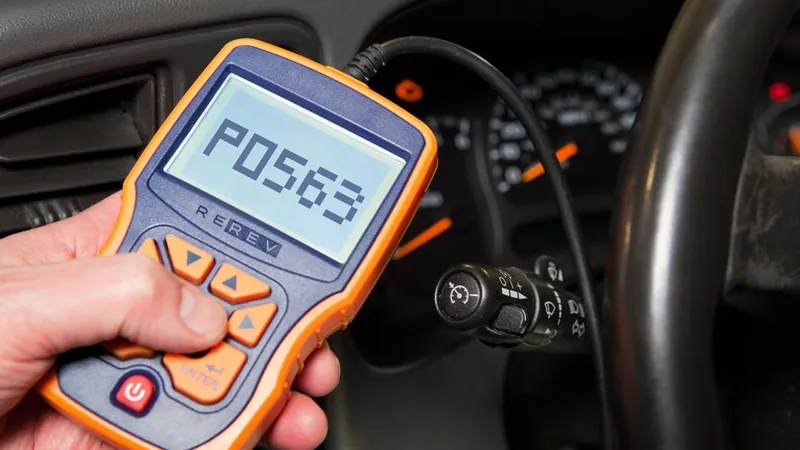
- P0563 — Generic powertrain code for 'System Voltage High'. Seeing P0563 and C1417 together proves the over-voltage problem is system-wide, confirming a bad alternator.
- P0562 — Means 'System Voltage Low'. Seeing this with C1417 indicates the alternator's voltage regulator is failing erratically, swinging from too low to too high.
Climate & Environmental Factors
- High Humidity: Accelerates corrosion on battery terminals and ground connections, increasing electrical resistance and causing erratic voltage.
- Extreme Temperatures: Cold weather reduces battery efficiency and thickens oil, forcing the alternator to work harder. Hot weather causes the alternator to overheat, accelerating wear on the voltage regulator.
How to Talk to a Mechanic About This Code
Say this: "I have an ABS light on and a C1417 code, indicating a high voltage condition. I'd like to schedule a diagnostic focused on the charging system. Please test the alternator's DC voltage and AC ripple output before checking anything else."
This signals you know the most likely cause is the alternator, not the expensive ABS module. It directs the technician to perform simple tests first and prevents them from quoting an unnecessary ABS module replacement.
Avoid saying:
- 'My ABS light is on, can you fix it?'
- 'I think I need a new ABS module.'
- 'Just do whatever it takes to fix the lights.'
Questions to ask before authorizing the repair:
- What was the exact DC voltage reading at the battery with the engine running?
- Did you perform an AC ripple test on the alternator? What was the millivolt reading?
- If you believe the ABS module is bad, can you show me proof that the charging system voltage and grounds are within spec?
Where to Take It: Dealer vs Independent vs Chain
- Dealer:
Recommended only if the vehicle is a Jeep/Nissan/Subaru where the code means a 4WD fault, or if you suspect a rare module failure requiring programming.
Best for: Vehicles still under warranty., Diagnosing manufacturer-specific quirks, such as the 4WD-related meaning of C1417 on a Jeep or Nissan., Repairs requiring module programming.
Downsides: Highest labor rates., May be quicker to replace an expensive module rather than diagnose a simpler wiring fault. (Typical cost: +50% vs. baseline) - Independent Shop:
Best fit for most vehicles. C1417 is a classic electrical code that any competent independent shop can diagnose cost-effectively.
Best for: Out-of-warranty vehicles., Diagnosing and replacing charging system components like alternators., General electrical troubleshooting.
Downsides: Quality varies widely. Look for ASE-certified technicians specializing in electrical systems. (Typical cost: +0% vs. baseline) - Chain Shop:
Acceptable for getting a free battery/alternator test to confirm a diagnosis, but avoid for complex repairs.
Best for: Simple parts replacement like a battery., Free battery and alternator testing.
Downsides: Technician skill is inconsistent., High pressure to upsell services., Lacks in-depth diagnostic skill for intermittent electrical issues. (Typical cost: -10% vs. baseline)
When to Walk Away From the Repair
If the total estimated repair cost exceeds 40-50% of your car's current private-party value, consider selling or trading in the vehicle instead of repairing it.
- Car worth $4000, fix is $2200: Walk away. A $2,200 repair is over 50% of the car's value. It's not a sound investment.
- Car worth $12000, fix is $750: Fix it. A $750 repair for a new alternator is only 6% of the car's value and keeps a reliable vehicle on the road.
What Scan Tool You Need for This Code
Minimum: A scanner that reads ABS codes and displays live data for 'Control Module Voltage'.
A basic $20 code reader only reads 'P' (Powertrain) codes and won't see the 'C' (Chassis) code C1417 stored in the ABS module. Without live system voltage data, you cannot confirm the overcharging condition.
Budget: BlueDriver Pro Scan Tool (~$100) — Connects to your smartphone via Bluetooth. Reads ABS codes like C1417 and displays live data, including the critical 'Control Module Voltage' PID.
Mid-range: Innova 5610 (~$350) — A handheld scanner that provides extensive live data. It graphs voltage over time, making it easier to spot spikes, and performs bidirectional tests.
Professional: Autel MaxiCOM MK808BT (~$450-900) — Professional-grade tool offering full bidirectional control. It reads live voltage, activates ABS solenoids, and performs system-level programming if a module needs replacement.
Rent vs buy: For a one-time diagnosis, auto parts stores read codes for free. If you plan to do your own repairs, buying a budget pick like the BlueDriver pays for itself after one use.
How to Clear the Code After You Fix It
- Reconnect battery (if disconnected for repair).
- Use an OBD-II scan tool to clear the code from the ABS module.
- Perform a complete drive cycle to ensure the fault does not return.
Drive cycle (~30 minutes): Cold start and idle for 3 minutes. Drive in mixed city traffic (25-40 mph) with full stops. Drive at a steady highway speed (55-60 mph) for 10 minutes. Idle for 2 minutes before shutting down.
Readiness monitors affected: Catalyst monitor, EVAP system monitor, O2 sensor monitor
Before emissions retest: drive at least 100 miles to fully set monitors.
Watch out for:
- Disconnecting the battery clears the code but resets all emissions readiness monitors, leading to a failed smog test.
- The code returns immediately if the overcharging alternator is not fixed.
Will This Fail Emissions / State Inspection?
Yes — this code typically fails an OBD-II emissions inspection.
- California: An illuminated ABS light itself will not fail the smog check. However, if the underlying high voltage issue triggers the Check Engine Light (e.g., code P0563), it is an automatic failure.
- New York: An illuminated ABS warning light is noted on the inspection report but is NOT a cause for failing the safety inspection.
- Texas: In the 17 counties requiring emissions testing, an illuminated Check Engine Light causes a failure. The ABS light itself does not cause a failure.
Most Commonly Affected Vehicles
- Toyota RAV4 (2006-2018) — Extremely common on this model, almost always caused by a failing alternator.
- Toyota Highlander (2008-2013) — Frequently logs C1417 due to alternator faults.
- Toyota Corolla (2009-2019) — Often points to charging system voltage problems.
- Jeep Grand Cherokee (2005-2010) — C1417 usually means 'Front Differential Control Circuit Low'. This is a 4WD system fault, not a high voltage issue.
- Nissan Titan, Frontier, Xterra (2004-2015) — Indicates 'Front Differential Control Circuit Low', a fault in the four-wheel-drive system.
- Subaru Outback, Forester (2005-2014) — Refers to a 'Front Differential Control Circuit Low' issue within the AWD system.
- Hyundai/Kia Sonata, Santa Fe, Optima (2011-2019) — Highly sensitive to voltage fluctuations; failing alternators cause a cascade of ABS warnings.
- Ford Various Models (1999-2015) — 'C1417' is sometimes mistakenly identified as a trouble code when it is actually part of a part number for an ignition coil.
Manufacturer-Specific Notes
- Toyota/Lexus: C1417 is the classic signature of a failed alternator voltage regulator. The Skid Control ECU shuts down ABS/VSC when voltage exceeds 17.4V for 0.8 seconds.
- Jeep/Dodge/Chrysler: C1417 almost always means 'Front Differential Control Circuit Low'. The problem is typically a broken wire in the harness near the front differential or a failed locking solenoid.
- Nissan/Subaru: Defines C1417 as 'Front Differential Control Circuit Low'. Requires a completely different diagnostic path focusing on the differential control solenoid.
Real Owner Stories
2010 Toyota RAV4 V6 at 135K miles
ABS, VSC, and Brake warning lights illuminated suddenly. Headlights seemed unusually bright.
What they tried:
- Scanned codes, returning C1417 and C1241.
- Tested the charging system with a multimeter.
- The multimeter showed 16.8V at idle, confirming severe overcharging.
Outcome: Replaced the alternator with a new Denso unit. Charging voltage returned to 14.2V, and codes cleared permanently.
Lesson: Bright headlights are a classic sign of overcharging. A 60-second multimeter test confirms a bad alternator and prevents unnecessarily replacing the expensive ABS module.
2008 Jeep Grand Cherokee Laredo at 118K miles
'Service 4WD System' light appeared. No braking-related symptoms were present.
What they tried:
- A general mechanic scanned C1417 but misdiagnosed it as an ABS fault.
- A dealership identified the code as 'Front Differential Control Circuit Low'.
- Diagnosed a broken wire in the harness leading to the front differential solenoid.
Outcome: Repaired the broken wire in the 4WD wiring harness. The warning light turned off.
Lesson: Code definitions vary drastically by manufacturer. For Jeep, Chrysler, and Nissan, C1417 is almost always a 4WD system fault, not a high-voltage issue.
How to Prevent This Code From Triggering
- Periodically Clean Battery Terminals (Every 6 months) — Corrosion creates high resistance, causing voltage spikes and straining the alternator. Clean with a wire brush and apply dielectric grease.
- Inspect Serpentine Belt Condition (Annually or every 15,000 miles) — A loose belt slips on the alternator pulley, causing inefficient charging and stressing internal components.
- Test Battery Health (Annually for batteries over 3 years old) — A weak battery forces the alternator to work continuously at maximum capacity, significantly shortening its lifespan.
Frequently Asked Questions
Is it safe to drive with code C1417?
You can drive a short distance to a shop, but it is highly risky. Disabled ABS and stability control increase skid risk and stopping distances. More importantly, the underlying high voltage permanently damages expensive electronics like the ECU.
What is the most common misdiagnosis for C1417?
The most costly mistake is replacing the ABS control module without testing the charging system. An overcharging alternator causes this code over 90% of the time. Always confirm charging voltage is between 13.7-14.7V before condemning the ABS module.
My battery is new but I still have a C1417 code. What's the problem?
Code C1417 indicates system voltage is too high, not low. A new battery holds a charge but cannot regulate voltage. If the alternator's internal regulator fails, it overcharges the system and triggers this code regardless of battery age.
Will clearing the code fix the problem?
No. Clearing the code only erases the error temporarily. The Skid Control ECU detects the high voltage condition again immediately upon starting the engine, returning the warning lights.
Can a jump start cause a C1417 code?
Yes. Connecting cables in reverse polarity or using a non-regulated, high-voltage booster pack creates a massive voltage spike. This spike triggers the code and frequently damages multiple electronic modules.
Why are my ABS, VSC, TRAC, and Brake lights all on at once?
A single computer, the Skid Control ECU, manages all these systems. When it detects critical high voltage, it enters fail-safe mode and shuts down all functions to prevent internal damage. This illuminates every related warning light simultaneously.
My Jeep has code C1417 and a 'Service 4WD' light. What does it mean?
On Jeeps, C1417 means 'Front Differential Control Circuit Low' and is unrelated to high voltage. The problem lies in the four-wheel-drive system. Expect a broken wire or a failed solenoid on the front differential.
Can a bad ground wire cause code C1417?
Yes. The ABS module measures voltage relative to its ground connection. High resistance in a poor ground causes the module to misinterpret a normal supply voltage as dangerously high, setting a false C1417 code.
Key Takeaways
- Diagnose code C1417 by testing the alternator's DC voltage and AC ripple first, as an overcharging alternator (producing over 15.0V) causes this issue in over 90% of cases.
- Stop driving the vehicle immediately; disabled ABS increases stopping distances by up to 35%, and sustained high voltage permanently fries expensive modules like the ECU.
- Verify your vehicle's manufacturer definition: on Toyota and Lexus, C1417 means high voltage, but on Jeep, Nissan, and Subaru, it indicates a 4WD front differential circuit failure.
- Never replace the $600+ ABS control module until you physically verify the battery, alternator output, and module ground connections are operating within normal limits.
Helpful Videos

Shop the Parts Behind C1417
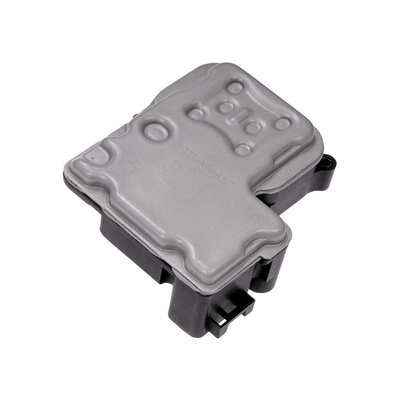
Below are the parts most often responsible for code C1417, ranked by how frequently each one is the actual culprit (per the diagnosis above). Tap any to see what we have for your vehicle.





The information in this article is provided for general reference and educational purposes only. Vehicle specifications, procedures, and part compatibility can vary by production date, trim level, and region. Always consult your vehicle's factory service manual and verify part numbers before purchasing or performing repairs. Safety-critical components such as airbags, seat belts, and braking systems should be installed by a qualified professional.
- 🧭 Diagnostic Flowchart
- 🎬 Helpful Videos
- 🛍️ Shop This Part
- What Does C1417 Mean?
- Can I Drive With C1417?
- Common Causes
- Symptoms
- Common Fixes & Costs
- DIY vs Professional
- Used vs. New Parts: Buying Guide
- What Happens If You Wait — Timeline
- Cost of Not Fixing It
- Diagnosis Steps
- When This Code Triggers (Freeze-Frame Conditions)
- Related Codes
- Climate & Environmental Factors
- How to Talk to a Mechanic About This Code
- Where to Take It: Dealer vs Independent vs Chain
- When to Walk Away From the Repair
- What Scan Tool You Need for This Code
- How to Clear the Code After You Fix It
- Will This Fail Emissions / State Inspection?
- Most Commonly Affected Vehicles
- Manufacturer-Specific Notes
- Real Owner Stories
- 2010 Toyota RAV4 V6 at 135K miles
- 2008 Jeep Grand Cherokee Laredo at 118K miles
- How to Prevent This Code From Triggering
- Frequently Asked Questions
- Is it safe to drive with code C1417?
- What is the most common misdiagnosis for C1417?
- My battery is new but I still have a C1417 code. What's the problem?
- Will clearing the code fix the problem?
- Can a jump start cause a C1417 code?
- Why are my ABS, VSC, TRAC, and Brake lights all on at once?
- My Jeep has code C1417 and a 'Service 4WD' light. What does it mean?
- Can a bad ground wire cause code C1417?
- Key Takeaways
- 🎟️ Get 5% Off