

OBD-II Code C1438: Transfer Case Clutch Worn
What C1438 means, why it triggers, and how to fix it
- Code C1438 indicates a severe internal mechanical failure of the transfer case clutch pack, primarily affecting 2011-2021 Jeep and Dodge vehicles.
- Running mismatched tires or tires with a tread depth difference greater than 2/32" is the leading cause of this failure.
- Replacing the entire transfer case assembly is the most common fix, costing between $2,200 and $4,500 for parts and labor.
- Perform voltage and resistance tests on the Transfer Case Control Module (TCCM) to rule out a $300 electrical fault before authorizing a $3,000 mechanical repair.
What Does C1438 Mean?
C1438 means the Final Drive Control Module (FDCM) or Drivetrain Control Module (DTCM) detects the clutch inside the four-wheel-drive transfer case is worn out. The transfer case sends power to the front and rear wheels. This code indicates it can no longer properly engage or disengage the clutch system to manage traction, evidenced by slippage when the module commands a lock.
Technical definition: C1438 is a manufacturer-specific code. For Chrysler, Dodge, Jeep, and Ram vehicles, it means "Transfer Case Differential Clutch Worn." The FDCM/DTCM sets this code when it attempts to lock the transfer case clutch but detects slippage or an incorrect response. The module concludes the mechanical clutch pack is worn beyond its operational limit and cannot achieve the requested lock-up.
Can I Drive With C1438?
No — Do Not Drive. Driving is strongly discouraged. Continuing to drive with a C1438 code causes catastrophic transfer case failure, resulting in a sudden loss of power to the wheels. The excessive strain and vibrations from the failing component damage the transmission, driveshafts, and axles, turning a $3,000 repair into a $7,000 drivetrain overhaul. The vehicle handles unpredictably during turns or acceleration.
Common Causes
- Mismatched or unevenly worn tires (Very Common) — Running tires with different diameters forces the 4WD system to constantly slip the transfer case clutch to compensate for different wheel speeds. This continuous action rapidly overheats and destroys the clutch pack.
- Worn internal transfer case clutch pack (Very Common) — Over time and with mileage, the friction discs inside the transfer case that control the four-wheel-drive system wear out, similar to a manual transmission clutch. 🎬 The Car Wizard explains why these Jeep transfer cases fail.
- Low or contaminated transfer case fluid (Common) — Low or degraded fluid leads to overheating and accelerated wear of the clutches and gears. Technicians consistently find burnt, dark fluid inside failed units.
- Stretched transfer case chain (Common) — The internal chain that transmits power stretches over time, causing slipping, grinding noises, and erratic 4WD engagement that the control module interprets as a clutch failure.
- Faulty Transfer Case Control Module (TCCM/FDCM) (Less Common) — The electronic module controlling the transfer case fails or experiences software glitches, wrongly reporting a clutch failure. Water intrusion under the driver's seat is a known cause on Grand Cherokees.
- Internal bearing failure (Less Common) — Bearings fail due to age or fluid contamination, creating excessive play and metal debris. This misaligns internal components and damages the clutch pack.
- Failed transfer case shift motor or position sensor (Rare) — The electric motor shifting the transfer case, or its position sensor, fails. This prevents correct clutch engagement, leading the module to assume the clutch is the problem.
Symptoms
- "Service 4WD System" or "SERV 4WD" warning light — The most common dashboard indicator that the control module detects a fault in the four-wheel-drive system.
- Grinding, clicking, or clunking noises — Loud mechanical noises emit from underneath the center of the vehicle, especially when shifting from Park to Reverse or during turns.
- Jerking or binding during turns — The vehicle feels like the brakes are applied or the wheels skip when making tight turns, as the transfer case cannot differentiate wheel speeds correctly.
- Vehicle stuck in a specific drive mode — The system becomes mechanically or electronically unable to shift between 2WD, 4-High, or 4-Low modes.
- ABS, Traction Control, and 4x4 lights illuminated together — A transfer case failure causes a cascade of warnings, lighting up the ABS, DSC, and 4x4/AWD lights simultaneously.
Diagnostic Flowchart
Tap your situation to follow the diagnostic path that matches what you're seeing on this code.
Common Fixes & Costs
- Complete Transfer Case Replacement — Parts: $1,500-$3,500, Labor: $700-$1,000, ~4.5 hr book time (Professional)
- Transfer Case Rebuild (Clutch Pack & Chain) — Parts: $400-$900, Labor: $1,000-$1,500, ~10 hr book time (Professional)
- Transfer Case Control Module (TCCM/FDCM) Replacement — Parts: $200-$500, Labor: $150-$250, ~1.5 hr book time (Intermediate)
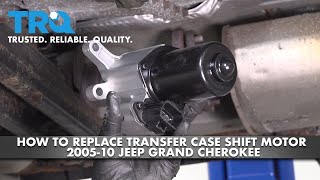
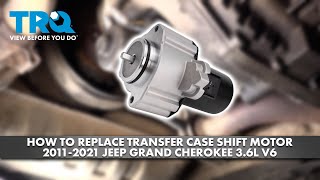
- Transfer Case Shift Motor / Actuator Replacement — Parts: $250-$500, Labor: $150-$250, ~1.2 hr book time (Intermediate)
- Transfer Case Fluid Change — Parts: $20-$50, Labor: $95-$150, ~0.8 hr book time (DIY)
Used vs. New Parts: Buying Guide
When a used part is worth it: A used transfer case is a budget-conscious option for an older, high-mileage vehicle where the owner accepts a higher risk. It makes sense only if the donor vehicle's mileage is low and its history is known (e.g., wrecked for non-drivetrain reasons).
Donor-vehicle mileage cap: roughly under 70000 miles for the part to have meaningful remaining life.
Donor quality checklist:
- Verify the part number exactly using the vehicle's VIN.
- Inspect the input/output splines for wear and ensure the case turns freely with some drag but no grinding.
- Check for external cracks, signs of leaks, or excessive rust.
- Avoid parts from vehicles with unknown history, as they likely suffered the same mismatched tire issues that caused your original failure.
Decision logic:
- If Vehicle is newer or has lower mileage and you plan to keep it long-term → Buy a remanufactured or new OEM unit for reliability and warranty coverage.
- If Budget is the primary constraint and the vehicle is near the end of its life → A used part from a reputable salvage yard with at least a 90-day warranty is an acceptable risk.
- If The goal is the most reliable, long-term repair → A remanufactured unit offers the best balance of cost and quality, as all wear items are replaced and it is tested to meet OEM specs.
Warranty tradeoff: Used parts typically offer a 30-90 day warranty for the part only. Remanufactured units usually come with a 1-3 year, unlimited mileage warranty that includes labor reimbursement. New OEM parts carry the manufacturer's standard warranty.
Worst-case if a used part fails: $800-$1500 if a used part fails after the warranty period, requiring repeat labor costs and another replacement unit.
What Happens If You Wait — Timeline
- 0-1 month: Code C1438 is set, and the 'Service 4WD' light illuminates. You notice occasional, subtle jerking or binding during tight turns. No significant noises yet. (MPG impact: 0-1%% · Added cost: $0)
- 1-4 months: Symptoms become consistent. Grinding or clunking noises are audible from under the vehicle when accelerating from a stop or during shifts. Binding in turns is pronounced. (MPG impact: 1-3%% · Added cost: $0-$250 (Accelerated wear on U-joints and driveshaft components))
- 4-8 months: The transfer case fails significantly. Loud grinding is common, and the vehicle gets stuck in one mode. Internal damage creates metal debris, contaminating the fluid and accelerating wear on all moving parts. Strain is placed on transmission output shaft seals. (MPG impact: 3-5%% · Added cost: $500-$1,500 (Risk of damage to driveshafts, axle seals, and transmission output seal))
- 8+ months: Catastrophic failure occurs. The transfer case seizes or breaks apart internally, locking the wheels, breaking a driveshaft, or leaving you stranded with no power. The shock of failure cracks the transmission housing or destroys the transmission's output shaft. (MPG impact: N/A (Vehicle likely undrivable)% · Added cost: $3,000-$8,000+ (Cost of a replacement transmission and potential driveshaft on top of the transfer case itself))
Cost of Not Fixing It
- 0-1 month: Intermittent grinding noises, jerking during turns, and 'Service 4WD' light. 4WD system becomes unreliable. (Added cost: $0)
- 1-6 months: Increased strain on related drivetrain components. The failing transfer case sends vibrations through the driveshafts and transmission, destroying seals, bearings, and gears. (Added cost: $500-$1,500)
- 6+ months: Catastrophic transfer case failure. This causes a sudden loss of vehicle control or leaves you stranded. The failure sends a shockwave into the transmission, causing severe internal damage requiring a full transmission replacement. (Added cost: $3,000-$7,000)
Diagnosis Steps
- Scan for All Trouble Codes
Use an advanced OBD-II scanner capable of reading manufacturer-specific codes from the Drivetrain Control Module (DTCM). Note any other codes, as C1438 is often accompanied by C1403 or C1476, which pinpoint the issue.
Tools: Advanced OBD-II Scanner (Beginner) - Inspect All Four Tires
Check the brand, model, size, and tread depth of all four tires. Mismatched tires are the primary cause of this failure. Ensure all tires are identical and have tread depths within 2/32nds of an inch of each other.
Tools: Tread depth gauge (Beginner) - Check Transfer Case Fluid
Safely raise the vehicle and check the transfer case fluid condition. The fluid must not be dark black, burnt-smelling, or contain metallic particles. Burnt or glittery fluid confirms internal mechanical failure.
Tools: Jack, jack stands, 3/8-inch ratchet, drain pan (Intermediate) - Check for Technical Service Bulletins (TSBs)
Check with a dealership or online service to see if TSBs related to the DTCM software exist for your specific year and model. A software reflash resolves erratic behavior in some models.
Tools: Online TSB Database or Dealer Access (Intermediate) - Inspect Wiring and Connectors
Visually inspect the wiring harness and connectors going to the transfer case shift motor and the control module. Look for damage, corrosion, or loose connections, particularly at the DTCM under the driver's seat.
Tools: Flashlight (Intermediate) - Live Data Scan Tool Analysis
Monitor live data PIDs from the DTCM. Watch 'Transfer Case Clutch Position', 'Transfer Case Range Position Sensor Voltage', and 'Drivetrain 5-volt Supply Voltage'. The 5-volt supply must be between 4.8 and 5.2 volts. Deviations indicate a sensor, wiring, or module fault.
Tools: Advanced OBD-II Scanner (Advanced) - Perform Transfer Case Position Sensor Voltage Test
Disconnect the transfer case motor harness connector. Use a jumper wire to connect the Mode Sensor Signal circuit to the Drivetrain Sensor Return circuit. The scan tool should read 0.0 volts. Move the jumper to connect the Mode Sensor Signal to the 5-Volt Supply. It should read 4.8 to 5.2 volts. Outside readings point to wiring or sensor issues.
Tools: Advanced OBD-II Scanner, jumper wires, multimeter (Advanced) - Measure Circuit Resistance at the DTCM Connector
Disconnect the DTCM harness connector and the transfer case motor connector. Measure the resistance of the Mode Sensor Signal circuit, the 5-Volt Supply circuit, and the Sensor Return circuit. Each must have a resistance below 5.0 ohms.
Tools: Digital Multimeter, service manual (Advanced) - Test Transfer Case Shift Motor Resistance
Measure the resistance of the transfer case shift motor at the motor connector between pins A and B. A normal reading is 0.5 to 35 ohms. Check resistance from each pin to ground; it must be open (infinite resistance).
Tools: Digital Multimeter, service manual (Advanced) - Internal Transfer Case Inspection
If all electrical tests pass, remove and disassemble the transfer case. This reveals the condition of the clutch pack, chain, and gears, confirming the mechanical failure.
Tools: Automotive lift, transmission jack, basic hand tools (Professional)
When This Code Triggers (Freeze-Frame Conditions)
- Vehicle Speed: 20-55 mph (Steady cruise or light acceleration)
- Engine RPM: 1200-2500 RPM (Normal driving range, not at idle or high RPM)
- System Voltage: 13.5-14.5 Volts (Normal charging system operation, no under/over-voltage faults present)
- Transfer Case Mode: 4-High or Auto (The fault is detected when the module commands a clutch lock-up during normal driving.)
Related Codes
- C1476 — Functionally identical to C1438, defined as 'Transfer Case Differential Clutch Worn.' Seeing both C1438 and C1476 simultaneously confirms an internal mechanical failure of the transfer case clutch pack.
- C1403 — Points to a 'Transfer Case Range Position Sensor' performance issue. A mechanical bind in the transfer case prevents the sensor from reaching its expected position, triggering this code alongside C1438.
- U0403 — Indicates 'Implausible Data Received From T-Case.' This communication error suggests the DTCM is getting erratic data due to mechanical failure, or the control module itself is failing.
- C1472 — Related to internal transfer case wear and frequently seen alongside C1438 in newer models. It confirms the control module detects a mechanical problem inside the transfer case.
Climate & Environmental Factors
- Cold/Hot Weather: Extreme cold thickens transfer case fluid, exacerbating pre-existing mechanical issues during startup. Extreme heat increases drivetrain operating temperatures, accelerating fluid breakdown and clutch wear if the system is stressed by mismatched tires.
- Humidity/Altitude: Humidity and altitude have no direct impact on the mechanical failure that causes code C1438. The primary causes are mechanical wear and fluid condition.
How to Talk to a Mechanic About This Code
Say this: "I have a C1438 code on my vehicle and the 'Service 4WD' light is on. I'd like to schedule a diagnostic. Before condemning the transfer case, please check for any software TSBs for the DTCM, inspect all four tires for matching brand, size, and tread depth, and check the condition of the transfer case fluid."
This signals to the shop that you understand the common causes and misdiagnoses for this code. It directs them to check for cheaper, external causes (tires, fluid, software) before quoting an expensive transfer case replacement, saving diagnostic time and preventing unnecessary repairs.
Avoid saying:
- 'Just fix whatever's wrong'
- 'My 4x4 is acting weird, can you look at it?'
- 'I think the transfer case is shot, just give me a price to replace it.'
Questions to ask before authorizing the repair:
- Did you find any metal shavings or a burnt smell in the transfer case fluid?
- What is the tread depth difference between the four tires?
- Did you check for any available software updates for the Drivetrain Control Module?
- If the transfer case needs replacement, is the quote for a new OEM, remanufactured, or used unit?
- What is the warranty on the replacement part and the labor for this repair?
Where to Take It: Dealer vs Independent vs Chain
- Dealer:
Recommended if the vehicle is under warranty or if you suspect a complex software or module issue that an independent shop struggles with.
Best for: Vehicles still under a powertrain warranty, Performing manufacturer-specific software updates (TSBs), Complex diagnostics where factory tools and information are essential.
Downsides: Highest labor rates and parts costs., Defaults to replacing the entire transfer case assembly rather than exploring rebuild options. (Typical cost: +50% vs. baseline) - Independent Shop:
Best fit for most out-of-warranty repairs. Seek a well-regarded independent shop that specializes in transmissions or Jeeps for the best results and value.
Best for: Out-of-warranty vehicles where cost is a major factor., Shops that specialize in drivetrain, transmission, or 4x4 repairs., Exploring cost-effective options like a transfer case rebuild or a warrantied used part.
Downsides: Quality and expertise vary widely; vetting the shop's reputation is crucial., Lacks access to the very latest manufacturer software updates. (Typical cost: +0% vs. baseline) - Chain Shop:
AVOID for diagnosing and repairing code C1438. This is a complex job requiring specialized expertise not found at general service chains.
Best for: Simple maintenance like oil changes and tire rotations.
Downsides: Technicians lack the specialized training for complex drivetrain diagnostics., High pressure to upsell and misdiagnose the issue, leading to unnecessary repairs., Lacks the capability to rebuild a transfer case. (Typical cost: -10% vs. baseline)
When to Walk Away From the Repair
If the estimated repair cost exceeds 50% of the car's private-party market value, sell or trade it in rather than repairing.
- Car worth $12000, fix is $4000: Borderline. The repair is 33% of the car's value. If the vehicle is otherwise in excellent condition with no other major issues, fixing it is reasonable. If it has other deferred maintenance, sell it.
- Car worth $18000, fix is $4500: Fix it. The repair cost is 25% of the vehicle's value and is a smart investment to maintain a reliable 4x4.
- Car worth $6000, fix is $3800: Walk away. The repair cost is over 60% of the vehicle's value. It is not economically sound to proceed with the repair.
What Scan Tool You Need for This Code
Minimum: A scanner that reads manufacturer-specific codes from the Drivetrain Control Module (DTCM), also known as the Transfer Case Control Module (TCCM). It must read 'C' (Chassis) codes, not just 'P' (Powertrain) codes.
A standard $20 code reader only scans the Engine Control Module for generic codes and does NOT see the C1438 code stored in the separate drivetrain module. You need a tool that accesses the Drivetrain/Transfer Case module.
Budget: Autel AP200 / BlueDriver Pro Scan Tool (~$60-100) — These Bluetooth dongles pair with a smartphone app and read manufacturer-specific codes from the DTCM, clear them, and view live data. This confirms the C1438 code and monitors sensor data before taking it to a shop.
Mid-range: Foxwell NT510 Elite / NT530 for Chrysler/Jeep (~$150-250) — Provides deep, dealer-level diagnostics for Jeep/Chrysler systems. It reads and clears codes from the DTCM, views live sensor data, and offers bidirectional controls to test components like the shift motor.
Professional: Autel MaxiCOM MK808 / Foxwell NT809 (~$450-600) — These are full-featured diagnostic tablets. They offer comprehensive, all-system scanning, advanced live data graphing, and bidirectional tests. They provide module programming functions required after replacing a control module.
Rent vs buy: Most auto parts store loaner tools are basic code readers and are NOT sufficient. You must verify that a loaner tool specifically reads 'Transfer Case' or 'Drivetrain' modules for your vehicle. Buying a budget pick like the Autel AP200 is a wise investment.
How to Clear the Code After You Fix It
- Use an advanced OBD-II scan tool to clear all DTCs from the DTCM/FDCM.
- Disconnect the negative battery terminal for 15 minutes to perform a hard reset of the control modules.
- Perform the Transfer Case Verification Test or a comprehensive drive cycle.
Drive cycle (~20 minutes): After clearing codes, start the engine and let it idle for 2 minutes. Drive the vehicle, shifting the transfer case selector switch through each position (e.g., 4-High, 4-Low, Auto) several times. Drive for at least 15 minutes, including steady-speed cruising, to allow the control module to verify the repair.
Readiness monitors affected: Comprehensive Component Monitor
Before emissions retest: drive at least 50 miles to fully set monitors.
Watch out for:
- Clearing the code with a basic scanner does not fix the issue; the code returns immediately if the mechanical fault remains.
- Failing to perform the drive cycle leaves the system in a 'not ready' state for an emissions test.
- Disconnecting the battery requires re-initializing other vehicle systems like radio presets and power windows.
Will This Fail Emissions / State Inspection?
Yes — this code typically fails an OBD-II emissions inspection.
- California: An illuminated 'Service 4WD' or Check Engine light results in an automatic smog check failure. All OBD-II readiness monitors must be in a 'Ready' state to pass.
- New York: Any illuminated malfunction indicator light on the dashboard related to the engine or drivetrain is an automatic failure.
- Texas: In the 17 counties requiring emissions testing, an illuminated Check Engine or drivetrain malfunction light results in an automatic failure.
Most Commonly Affected Vehicles
- Jeep Grand Cherokee (WK2) (2011-2021) — Extremely common issue. These models use the MP3023 two-speed active transfer case for Quadra-Trac II and Quadra-Drive II systems, which are highly sensitive to fluid and tire wear.
- Dodge Durango (2011-2021) — Shares the same WK2 platform and drivetrain components as the Grand Cherokee, making it equally susceptible.
- Jeep Commander (XK) (2006-2010) — These models use the NV245 transfer case as part of the Quadra-Drive II system, which logs this code as the internal clutches age.
- Jeep Grand Cherokee (WK) (2005-2010) — The predecessor to the WK2, these models also commonly log C1438. They frequently use the NV245 transfer case.
- Ram 1500 (2011-2018) — Ram 1500 trucks equipped with on-demand 4WD transfer cases experience this issue. TSBs for DTCM software updates are available for some model years.
Manufacturer-Specific Notes
- Jeep / Dodge / Ram (Stellantis): The drivetrain is hyper-sensitive to tire size. Replacing just one or two tires, or having tires with a tread depth difference greater than 2/32", causes the transfer case to fail prematurely and set this code.
- Jeep / Dodge / Ram (Stellantis): Several Technical Service Bulletins (TSBs) exist for software updates. Always check for available software updates for the Drivetrain Control Module (DTCM), as a reflash resolves erratic behavior.
- Jeep / Dodge / Ram (Stellantis): These vehicles use several different 4WD systems (Quadra-Trac I, Quadra-Trac II, Quadra-Drive II) with different transfer cases (e.g., MP3010, MP3023, NV245). You must correctly identify the system before ordering parts.
- General: This code is almost exclusively used by Stellantis. If you see this code on a Ford, GM, or Toyota, it has a completely different meaning (e.g., accelerometer circuit) and this guide does not apply.
Real Owner Stories
2018 Jeep Grand Cherokee at 78K miles with C1438 & C1403
Vehicle was stuck in 4-Low with 'Service 4WD' light on after the owner tried to test the system. It would not shift out.
What they tried:
- Replaced the Transfer Case Control Module (TCCM), but the problem persisted.
Outcome: A friend manually rotated the transfer case shift shaft with a hex bit to get it out of 4-Low, then performed a hard reset by disconnecting the battery for 15 minutes. This allowed the system to recalibrate and fixed the issue without replacing the transfer case.
Lesson: With a C1403 (position sensor) code alongside C1438, a mechanical or electrical bind is the root cause, not necessarily a worn clutch. A manual reset procedure saves thousands on an unnecessary transfer case replacement.
2015 Jeep Grand Cherokee V6 with binding on turns
Vehicle was binding and jerking on dry pavement during turns, and the transfer case motor actuated constantly.
What they tried:
- Replaced the transfer case with a used, lower-mileage unit, but the exact same issue remained.
- Tried an aftermarket TCCM from Amazon, which stopped the binding but disabled the 4WD system and threw a warning light.
Outcome: The issue was resolved by replacing the TCCM with a proper OEM part for around $350. The module was plug-and-play and fixed the binding problem.
Lesson: Symptoms like binding point to the electronic control module, not just the mechanical transfer case. Using cheap aftermarket modules creates new problems instead of fixing the original one.
2013 Jeep Grand Cherokee with 'Service 4WD' message
The 'Service 4WD' message appeared on the dash, accompanied by jerky operation during turns.
What they tried:
- The owner noted that a previous owner had recently replaced only two of the four tires.
Outcome: A mechanic confirmed the mismatched tires destroyed the transfer case clutch pack. The repair required replacing the entire transfer case, costing over $3,000.
Lesson: Mismatched tires are a known killer of these transfer cases. If you buy one of these vehicles used, check for matching brands and even tread wear on all four tires immediately.
2014 Jeep Grand Cherokee at 202k miles with loud clunk on acceleration
Vehicle made a loud clunking or snapping noise from the drivetrain, but only during hard acceleration from a complete stop.
What they tried:
- The owner diagnosed the issue by removing the transfer case fill plug and checking the internal chain for slack with a screwdriver.
Outcome: The diagnosis was a stretched transfer case chain. The owner replaced just the chain without removing the entire transfer case from the vehicle, resolving the noise.
Lesson: A loud clunk specifically on hard take-offs is a stretched transfer case chain, not a complete clutch failure. This is a much cheaper repair than a full transfer case replacement if caught early.
How to Prevent This Code From Triggering
- Replace all four tires at the same time, always. (Every tire change) — Prevents differences in wheel rotation speed between the front and rear axles, which is the number one cause of clutch pack overheating and failure in these 4WD systems.
- Change transfer case fluid with manufacturer-specified fluid. (Every 30,000 - 50,000 miles) — Removes worn-out fluid and suspended metal particles, ensuring proper lubrication and cooling of the internal clutches and gears, dramatically extending the life of the unit.
- Regularly rotate tires. (Every 5,000 - 7,500 miles) — Ensures all four tires wear down at an even rate, maintaining the same rolling diameter and preventing the transfer case from constantly slipping to compensate for differences.
- Periodically engage the 4WD system (4-High and 4-Low). (Once every few months) — Cycles the shift motor, sensors, and internal clutch mechanisms, keeping parts lubricated and preventing them from seizing due to lack of use.
- Check for Technical Service Bulletins (TSBs) during regular service. (Annually or when symptoms appear) — Manufacturers release software updates for the Drivetrain Control Module (DTCM) that improve shifting logic and reduce unnecessary wear on the transfer case clutches.
Frequently Asked Questions
What is the most common misdiagnosis for code C1438?
A common pitfall is incorrectly identifying which part has failed: the mechanical transfer case, the electronic control module (DTCM), or the shift motor. Because all three work together, one failing component triggers faults in the others. Technicians often recommend replacing both the transfer case and the control module to guarantee a fix.
What is the difference between Quadra-Trac II and Quadra-Drive II?
Quadra-Trac II uses the Brake Lock Differential System to apply brakes to a spinning wheel and send power to the wheel with traction. Quadra-Drive II adds Electronic Limited-Slip Differentials (ELSDs) in the axles. This allows the system to proactively transfer up to 100% of available torque to a single wheel.
Can I just unplug the transfer case motor to stop the grinding noise?
No. While it temporarily stops the noise by preventing the system from engaging, it does not fix the underlying mechanical failure. The vehicle's 4WD system is disabled, and critical safety systems like stability control are compromised.
Is a used or junkyard transfer case a good option for repair?
A used transfer case is cheaper but carries significant risk, as it may have hidden wear from mismatched tires on the donor vehicle. A remanufactured unit is the superior choice. It is fully disassembled, inspected, and rebuilt with new wearable parts like clutches and bearings, and includes a warranty.
Can I just replace two tires on my Jeep Grand Cherokee?
No, you must replace all four tires at once. The all-wheel-drive system is highly sensitive to wheel speed differences. Even small variations in tire diameter between the front and rear axles destroy the transfer case and trigger the C1438 code.
Is it worth fixing a C1438 code?
Yes, if you want to use the four-wheel-drive system or ensure the vehicle is safe. Ignoring it leads to a complete drivetrain failure, leaving you stranded. It also makes the vehicle handle unpredictably in adverse weather conditions.
How can I prevent code C1438 from happening?
Change the transfer case fluid every 30,000 to 50,000 miles using the manufacturer-specified fluid. Rotate your tires every 5,000 miles to ensure even wear. Always replace all four tires at the same time with the exact same make, model, and size.
Key Takeaways
- Code C1438 indicates a severe internal mechanical failure of the transfer case clutch pack, primarily affecting 2011-2021 Jeep and Dodge vehicles.
- Running mismatched tires or tires with a tread depth difference greater than 2/32" is the leading cause of this failure.
- Replacing the entire transfer case assembly is the most common fix, costing between $2,200 and $4,500 for parts and labor.
- Perform voltage and resistance tests on the Transfer Case Control Module (TCCM) to rule out a $300 electrical fault before authorizing a $3,000 mechanical repair.
Helpful Videos
Shop the Parts Behind C1438
Below are the parts most often responsible for code C1438, ranked by how frequently each one is the actual culprit (per the diagnosis above). Tap any to see what we have for your vehicle.


The information in this article is provided for general reference and educational purposes only. Vehicle specifications, procedures, and part compatibility can vary by production date, trim level, and region. Always consult your vehicle's factory service manual and verify part numbers before purchasing or performing repairs. Safety-critical components such as airbags, seat belts, and braking systems should be installed by a qualified professional.
- 🧭 Diagnostic Flowchart
- 🎬 Helpful Videos
- 🛍️ Shop This Part
- What Does C1438 Mean?
- Can I Drive With C1438?
- Common Causes
- Symptoms
- Common Fixes & Costs
- Used vs. New Parts: Buying Guide
- What Happens If You Wait — Timeline
- Cost of Not Fixing It
- Diagnosis Steps
- When This Code Triggers (Freeze-Frame Conditions)
- Related Codes
- Climate & Environmental Factors
- How to Talk to a Mechanic About This Code
- Where to Take It: Dealer vs Independent vs Chain
- When to Walk Away From the Repair
- What Scan Tool You Need for This Code
- How to Clear the Code After You Fix It
- Will This Fail Emissions / State Inspection?
- Most Commonly Affected Vehicles
- Manufacturer-Specific Notes
- Real Owner Stories
- 2018 Jeep Grand Cherokee at 78K miles with C1438 & C1403
- 2015 Jeep Grand Cherokee V6 with binding on turns
- 2013 Jeep Grand Cherokee with 'Service 4WD' message
- 2014 Jeep Grand Cherokee at 202k miles with loud clunk on acceleration
- How to Prevent This Code From Triggering
- Frequently Asked Questions
- What is the most common misdiagnosis for code C1438?
- What is the difference between Quadra-Trac II and Quadra-Drive II?
- Can I just unplug the transfer case motor to stop the grinding noise?
- Is a used or junkyard transfer case a good option for repair?
- Can I just replace two tires on my Jeep Grand Cherokee?
- Is it worth fixing a C1438 code?
- How can I prevent code C1438 from happening?
- Key Takeaways
- 🎟️ Get 5% Off