

OBD-II Code C1443: Yaw Rate Sensor Signal Failure
What C1443 means, why it triggers, and how to fix it
- Code C1443 disables your ABS and stability control due to a yaw rate sensor communication failure, creating a high risk of wheel lockup during hard braking.
- On Toyota and Lexus hybrids (like the 2004-2015 Prius), this code frequently points to a failing $2,000+ brake actuator assembly rather than the sensor itself.
- Always test the 12V auxiliary battery first; a voltage drop below 12.4V frequently triggers false C1443 communication errors.
- If the code appears immediately after a wheel alignment or suspension repair, a $150 Zero Point Calibration will usually fix the issue.
- Verify your code carefully: on Ford and Subaru vehicles, P1443 is an unrelated emissions (EVAP) code, not a C1443 chassis code.
What Does C1443 Mean?
The brake and stability computer lost communication with the yaw rate sensor, which detects if the car is spinning or sliding sideways. Without this data, the computer disables Vehicle Stability Control (VSC) and Traction Control (TRAC) as a safety precaution and illuminates your dashboard warning lights.
Technical definition: Invalid Data Received from Yaw Rate Sensor. The Skid Control ECU sets this code when it receives an invalid or unrecognized data signal from the yaw rate sensor via the CAN bus for 10 consecutive seconds.
Can I Drive With C1443?
Yes, But With Caution. Driving is possible, but your Vehicle Stability Control (VSC) and Anti-lock Braking System (ABS) are disabled. Drive with extreme caution and get the vehicle inspected immediately. The primary danger is wheel lockup during panic braking, which eliminates steering control. On wet or slippery surfaces, stopping distances increase and the risk of skidding is high. Continued driving will not cause further component damage, but the safety risk is substantial.
Common Causes
- Low 12V Auxiliary Battery Voltage (Very Common) — A weak 12-volt battery causes widespread communication errors between electronic modules, triggering this code without an actual component failure. Always check this first due to its low cost and high probability.
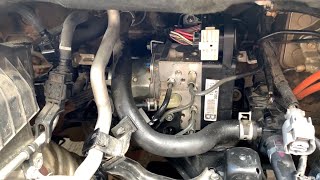
- Faulty Brake Actuator Assembly (Skid Control ECU) (Very Common) — The computer module that receives the sensor's signal has failed. This is an extremely common and expensive failure on Toyota and Lexus hybrid vehicles (especially the Prius), as the ECU is integrated into the hydraulic brake actuator.
- Faulty Yaw Rate Sensor (Common) — The sensor itself has failed internally. On many Toyota and Lexus models, this sensor is integrated into the Center Airbag Sensor Assembly.
- Needs Zero Point Calibration (Common) — After a wheel alignment, suspension repair, or battery replacement, the system requires recalibration to learn the new 'zero' position for straight-line driving. Without it, the ECU rejects valid data as incorrect.
- Wiring Harness or Connector Damage (Less Common) — Wires or connectors between the yaw rate sensor and the Skid Control ECU are broken, corroded, or loose. This frequently occurs due to moisture under the carpet or rodent damage.
- Faulty Steering Angle Sensor (Less Common) — The VSC system compares yaw rate data with steering angle data. If the steering angle sensor fails, the ECU misinterprets the yaw rate data as invalid. This is often accompanied by code C1433.
- Improper Sensor Mounting or Suspension Changes (Rare) — A loose sensor vibrates and sends invalid data. Similarly, extreme aftermarket suspension lifts or drops alter the vehicle's center of gravity, pushing sensor data outside expected parameters.
Symptoms
- Multiple Dashboard Warning Lights (VSC, ABS, TRAC, BRAKE) — The VSC, ABS, and Traction Control systems share the Skid Control ECU. When communication fails, all related warning lights illuminate simultaneously to indicate the systems are disabled.
- Frequent Buzzing/Clicking from Engine Bay — On Toyota/Lexus hybrids, a frequent (every 30-45 seconds) buzzing noise from the brake actuator indicates the unit is failing to hold pressure and requires replacement.
Diagnostic Flowchart
Tap your situation to follow the diagnostic path that matches what you're seeing on this code.
Common Fixes & Costs
- Replace 12V Auxiliary Battery — Parts: $200-$300, Labor: $50-$100, ~0.5 hr book time (Beginner)
- Perform Zero Point Calibration — Parts: $0, Labor: $100-$200, ~0.8 hr book time (DIY)
- Replace Brake Actuator Assembly — Parts: $1200-$2500, Labor: $500-$1000, ~4.5 hr book time (Professional)
- Replace Yaw Rate Sensor — Parts: $350-$800, Labor: $150-$300, ~1.5 hr book time (Intermediate)
- Repair Damaged Wiring or Connectors — Parts: $10-$50, Labor: $200-$500, ~2.5 hr book time (Intermediate)
DIY vs Professional
- Replace 12V Auxiliary Battery 🟢 Beginner
Tools: Socket set, wrench. - Perform Zero Point Calibration 🟢 Beginner
Tools: Advanced scan tool with bidirectional controls, or jumper wire. - Repair Damaged Wiring or Connectors 🟢 Beginner
Tools: Multimeter, wire strippers, soldering iron, heat shrink tubing, wiring diagrams. - Replace Yaw Rate Sensor 🟢 Beginner
Tools: Trim removal tools, socket set, advanced scan tool. - Replace Brake Actuator Assembly 🟢 Beginner
Tools: Professional scan tool, line wrenches, torque wrench, brake fluid.
Used vs. New Parts: Buying Guide
When a used part is worth it: For a high-mileage vehicle (>150k miles) where a new OEM part is prohibitive, a used Brake Actuator or Yaw Rate Sensor from a reputable salvage yard is a viable option.
Donor-vehicle mileage cap: roughly under 100000 miles for the part to have meaningful remaining life.
Donor quality checklist:
- Match the part number exactly. Brake actuators have different versions for different production years.
- Prefer donors from later model years of the same generation for improved reliability.
- Purchase from sellers offering at least a 90-day warranty.
- Avoid parts from vehicles with flood damage.
Decision logic:
- If Vehicle is under warranty or covered by a Warranty Enhancement Program. → Use a new OEM part installed by a dealer at no cost.
- If The part is a Brake Actuator and budget allows. → Favor a new OEM part. The labor is significant, and the risk of a used part failing prematurely is high.
- If Vehicle is > 150K miles and the part is a Yaw Rate Sensor. → A used sensor from a low-mileage donor is a reasonable risk, as solid-state electronics have a lower failure rate than mechanical actuators.
- If Budget is the primary constraint on a high-mileage car. → A used brake actuator is acceptable, but acknowledge the risk of repeating the labor if the part fails early.
Warranty tradeoff: Used parts typically include a 30-90 day warranty. Remanufactured parts offer a 1-year warranty. New OEM parts offer a 12-month/12,000-mile warranty.
Worst-case if a used part fails: $500-$1000 if a used part fails after the warranty period, primarily due to repeating the labor.
What Happens If You Wait — Timeline
- Immediate: ABS, VSC, and TRAC warning lights illuminate. Safety systems are disabled. The condition is stable if caused by a hard sensor failure. (MPG impact: 0%% · Added cost: $0 (Safety risk is the primary cost))
- 1-3 months (if caused by failing actuator): The electric pump runs frequently (every 30-60 seconds) to maintain pressure. A distinct buzzing is audible from the engine bay. (MPG impact: 0-1% (due to disabled regenerative braking)% · Added cost: $0 (Increased wear on the actuator pump motor))
- 3-9 months (if caused by failing actuator): The actuator pump runs almost constantly. Codes C1256 or C1391 join C1443. The actuator is definitively failing. (MPG impact: 1-2%% · Added cost: $0 (Replacement of the actuator is confirmed))
- 9+ months (actuator failure): The actuator pump motor burns out. This results in a sudden loss of braking assistance, leading to a hard brake pedal and dangerously long stopping distances. (MPG impact: 1-2%% · Added cost: $2000-$3500 (Full cost of replacing the brake actuator assembly))
Cost of Not Fixing It
- Immediate: ABS and Vehicle Stability Control (VSC) are disabled. Increased risk of skidding or loss of control. Wheels lock during hard braking, preventing steering. (Added cost: Potential cost of an accident and increased insurance rates.)
- 0-6 months: If the cause is a failing brake actuator, its internal leak will progressively worsen, forcing the pump motor to run constantly. (Added cost: Negligible, unless an accident occurs.)
- 6+ months: The brake actuator pump motor burns out completely, leading to a sudden and complete loss of braking assistance. (Added cost: No additional component cost, but the inevitable $2,500+ repair is forced.)
Diagnosis Steps
- Check the 12V Battery and Charging System
Use a multimeter to test the 12V auxiliary battery. A resting voltage below 12.4V indicates a weak battery. Start the car; charging voltage must be between 13.5V and 14.5V. Low voltage causes false communication errors.
Tools: Multimeter (Beginner) - Read Fault Codes
Use an OBD-II scanner capable of reading Chassis ('C') codes to confirm C1443. Note related codes like C1442, C1256, or C1433. Verify the manufacturer; P1443 on a Ford or Subaru is an unrelated EVAP emissions code.
Tools: OBD-II Scanner (with ABS/VSC capability) (Beginner) - Perform Zero Point Calibration
Reset the 'zero' values for the yaw rate and steering angle sensors using a professional scan tool. This is mandatory after an alignment, suspension work, or battery replacement.
Tools: Advanced Scan Tool or Jumper Wire (model dependent) (Intermediate) - Test Yaw Rate Sensor Live Data
Monitor the 'Yaw Rate' PID on a scan tool. When stationary, the value must be 0 deg/s. While making slow turns, the value must change smoothly. If the reading is stuck at zero or erratic, the sensor or wiring has failed.
Tools: Advanced OBD-II Scanner with Live Data (Advanced) - Inspect Brake Actuator Assembly
Listen for the brake actuator pump running excessively (every 30-60 seconds). Check for hydraulic codes like C1256 or C1391. If present, the actuator assembly has failed internally.
Tools: OBD-II Scanner, Mechanic's Stethoscope (Intermediate) - Inspect Wiring and Connectors
Visually inspect the wiring harness leading to the yaw rate sensor (usually under the center console or front seats). Look for green corrosion from moisture, rodent damage, or loose pins.
Tools: Flashlight, Trim Removal Tools (Intermediate) - Test CAN Bus Circuit Resistance
Disconnect the 12V battery. Measure resistance between Pin 6 (CAN-H) and Pin 14 (CAN-L) at the OBD-II port. A healthy network reads 60 ohms. 120 ohms indicates an open circuit; below 60 ohms indicates a short.
Tools: Multimeter, Wiring Diagram (Advanced) - Analyze CAN Signal with an Oscilloscope
Back-probe the CAN High and CAN Low wires at the yaw rate sensor. With ignition ON, verify a clean square wave pattern. CAN High toggles between 2.5V and 3.5V; CAN Low toggles between 2.5V and 1.5V. A flatlined signal condemns the sensor.
Tools: Oscilloscope, Back-Probes, Wiring Diagram (Professional)
When This Code Triggers (Freeze-Frame Conditions)
- System State: Ignition ON (The Skid Control ECU continuously monitors the sensor when the ignition is on.)
- Battery Voltage: 9.5V - 17.4V (Code sets if voltage is within this normal operating range and the fault persists.)
- Fault Duration: 10+ seconds (The ECU must receive an invalid or unrecognized signal continuously for this duration to set the code.)
- Vehicle Speed: Any (The code sets while stationary or moving, as the sensor must always communicate valid data.)
Related Codes
- C1442 — Invalid Data from Deceleration Sensor. This sensor is housed in the same physical assembly as the yaw rate sensor. If C1442 and C1443 appear together, the combined sensor assembly has failed.
- C1256 — Accumulator Low Pressure. Points directly to a hydraulic failure inside the brake actuator assembly. If seen with C1443 on a Toyota/Lexus hybrid, the entire brake actuator assembly is the root cause.
- C1391 — Abnormal Leak in Accumulator. Indicates a physical failure within the brake actuator assembly. C1443 is a secondary code resulting from this primary internal failure.
- C1433 — Steering Angle Sensor Internal Circuit. If the steering angle sensor fails, the ECU rejects data from the yaw rate sensor. This code frequently appears alongside VSC communication codes.
Climate & Environmental Factors
- Humidity: High humidity accelerates corrosion on wiring harness connectors. A corroded connector between the yaw rate sensor (often located under the carpet) and the ECU is a common cause of signal failure.
- Extreme Temperatures: Extreme temperature cycles contribute to solder joint failure or internal component degradation within the sensor or ECU over many years.
How to Talk to a Mechanic About This Code
Say this: "I have a C1443 code and the ABS/VSC lights are on. Please start by checking the 12V battery and for related codes like C1256 or C1442. If those are clear, check the live data from the yaw rate sensor before recommending part replacements."
This signals you understand the logical diagnostic steps, preventing a shop from immediately quoting a new brake actuator without proving the failure with data.
Avoid saying:
- 'My ABS light is on, can you fix it?'
- 'I hear a buzzing noise, just replace the part that's making it.'
- 'My friend said it's the yaw sensor, please replace it.'
Questions to ask before authorizing the repair:
- If recommending a brake actuator, did you find codes C1256 or C1391?
- If recommending a yaw rate sensor, was the live data stuck at zero while turning?
- Did you check for corrosion on the sensor connector?
- Have you tried performing a Zero Point Calibration to see if it clears the code?
- What is the warranty on the recommended part and labor?
Where to Take It: Dealer vs Independent vs Chain
- Dealer:
Recommended if cost is not a concern or if the vehicle is covered by a warranty program. They possess the proprietary Techstream software required for reliable brake bleeding.
Best for: Vehicles potentially covered by a warranty enhancement program., Complex diagnostics requiring guaranteed OEM parts and procedures.
Downsides: Highest labor rates and part costs., May replace an entire assembly rather than diagnose a simpler issue. (Typical cost: +50% vs. baseline) - Independent Shop:
Best Fit, provided the shop specializes in Toyota/Lexus or hybrid vehicles. Look for technicians with ASE L3 Hybrid/Electric Vehicle Specialist certification.
Best for: Out-of-warranty Toyota/Lexus hybrids., Owners seeking a balance between expertise and cost.
Downsides: Quality is highly variable. You MUST vet the shop for specific hybrid experience. (Typical cost: +0% vs. baseline) - Chain Shop:
AVOID. This repair is far outside the scope of a typical chain shop's expertise.
Best for: Simple maintenance like tire changes or oil services.
Downsides: Technicians lack specialized training for complex hybrid brake systems., Unlikely to have advanced scan tools for zero-point calibration or ABS bleeding., High risk of misdiagnosis. (Typical cost: -10% vs. baseline)
When to Walk Away From the Repair
If the estimated repair cost exceeds 50% of the car's private-party value, strongly consider selling the vehicle as-is.
- Car worth $3500, fix is $2800: Walk away. The repair cost is 80% of the car's value.
- Car worth $8000, fix is $2800: Fix it. The repair is 35% of the vehicle's value.
- Car worth $4000, fix is $800: Fix it. A yaw rate sensor or wiring repair is well under the threshold.
What Scan Tool You Need for This Code
Minimum: A scanner that reads and clears Chassis ('C') codes from the ABS/VSC control module.
A basic engine code reader cannot communicate with the ABS/VSC module. Diagnosing this issue requires viewing live data and performing bidirectional controls (like Zero Point Calibration).
Budget: BlueDriver Pro / Foxwell NT630 Plus (~$120) — Reads and clears ABS/VSC codes and views live sensor data to check if the yaw rate sensor is responding.
Mid-range: Launch C-Reader Elite (Toyota Specific) / Foxwell NT510 Elite (~$150) — Provides full bidirectional control. Crucially, it performs the Zero Point Calibration required for many fixes.
Professional: Autel MaxiCOM MK808 / Launch X431 Series (~$450-1000) — Offers dealer-level diagnostics. Performs all calibrations and the specialized ABS actuator bleeding procedure required on hybrid models.
Rent vs buy: Auto parts store loaner tools are basic engine code readers and CANNOT diagnose this code. If this is a one-time fix, pay a qualified independent shop the ~$150 diagnostic fee. Buy a midrange scanner only if you perform your own diagnostics regularly.
How to Clear the Code After You Fix It
- Reconnect the 12V battery if it was disconnected.
- Use a compatible OBD-II scan tool to access the ABS/VSC/TRAC module and clear the fault codes.
- If the yaw rate sensor or brake actuator was replaced, perform a Zero Point Calibration using a scan tool.
- Perform the drive cycle to confirm the fix.
Drive cycle (~10 minutes): Start the vehicle and drive in a straight line at a speed of 25 mph or more for at least 10 seconds. The VSC, ABS, and TRAC lights must remain off. If the lights do not return after several minutes of mixed driving, the repair is successful.
Readiness monitors affected: Not applicable. Readiness monitors are for emissions systems.
Watch out for:
- Disconnecting the battery will not clear this Chassis code on modern vehicles; a scan tool is required.
- Forgetting to perform the mandatory Zero Point Calibration after replacing a sensor causes the code to return immediately.
- Using a basic engine code reader will not clear 'C' (Chassis) codes.
Will This Fail Emissions / State Inspection?
Yes — this code typically fails an OBD-II emissions inspection.
- California: An illuminated ABS or Brake warning light prevents the vehicle from passing the safety portion of the smog check.
- New York: An illuminated ABS warning light is grounds for failing the annual safety inspection.
- Texas: An illuminated Malfunction Indicator Lamp (MIL) of any kind, including ABS/VSC, is cause for inspection failure.
Most Commonly Affected Vehicles
- Toyota Prius (2004-2015) — Extremely common failure of the brake actuator assembly. Early warning signs include a buzzing sound from the engine bay every 30-45 seconds. Often accompanied by codes C1252, C1256, or C1391.
- Lexus RX400h (2006-2008) — Prone to brake actuator assembly failure. The yaw rate sensor is located under the center console.
- Toyota Highlander Hybrid (2006-2010) — Shares a similar braking system with the Lexus RX400h and is susceptible to the same actuator failures.
- Toyota Camry Hybrid (2007-2011) — The brake actuator assembly is a known failure point. Check with a dealer for VIN-specific warranty enhancement applicability.
- Lexus ES350 / RX350 (2007-2012) — Frequently experiences issues with the steering angle sensor (C1433) or the yaw rate sensor itself.
- Subaru Impreza, Forester, Outback (1999-2007) — IMPORTANT: On Subaru models, code P1443 refers to the EVAP Control System, a completely different issue related to fuel vapor emissions.
- Ford Focus, Explorer, F-150 (1996-2015) — IMPORTANT: On Ford vehicles, code P1443 indicates a problem with the EVAP system's purge control valve, not the stability control system.
- Chevrolet / GM Cruze, Malibu, Equinox (2010-2020) — Displays a 'Service StabiliTrak' message. More commonly triggered by a failed steering angle sensor or wheel speed sensor than the yaw rate sensor.
- BMW 3-Series (E90), 5-Series (E60) (2004-2013) — Known for DSC faults caused by a dirty steering angle sensor in the steering column, causing the 'trifecta' of ABS, brake, and DSC warning lights.
Manufacturer-Specific Notes
- Toyota / Lexus: The yaw rate sensor is integrated into the Airbag Sensor Assembly under the console, but the Skid Control ECU that logs code C1443 is part of the brake actuator assembly in the engine bay. This two-part system causes frequent misdiagnosis.
- Toyota: Toyota issued Warranty Enhancement Programs (ZG1, ZEP) for the brake actuator assembly on specific Prius, Highlander, and Camry Hybrid models. Owners should contact a dealer with their VIN to check for eligibility.
- Subaru / Ford: These manufacturers use code P1443 (a Powertrain code) to indicate a fault in the Evaporative Emission (EVAP) Control System. This is unrelated to the C1443 Chassis code. Always verify the first letter.
- General Motors (GM): The 'Service StabiliTrak' warning is more frequently caused by a faulty steering angle sensor or a defective throttle body than the yaw rate sensor itself.
Real Owner Stories
2007 Lexus RX400h with ~150K miles
The 'Check VSC System' and 'Check Hybrid System' lights illuminated simultaneously. The car later refused to start.
What they tried:
- Disconnected and reconnected the 12V battery, which temporarily allowed the car to start.
- Tested the 12V battery and found it was failing.
Outcome: Replaced the 12V auxiliary battery. The warning lights did not return, and the starting issue was resolved.
Lesson: A weak 12V battery causes a cascade of unrelated electronic error messages. Always test the 12V battery before assuming a complex component has failed.
2008 Toyota Prius with 208K miles
ABS, VSC, and Brake warning lights illuminated. The brake actuator pump had been running constantly for a year.
What they tried:
- Replaced the brake actuator assembly, but the warning lights remained and the brake pedal was hard.
- Inspected the main fusible link in the engine bay fuse box and discovered it had blown.
Outcome: Replaced the blown fusible link. The new brake actuator began to function correctly, and the warning lights disappeared.
Lesson: A failing brake actuator pulls excess current over time, eventually blowing a primary fuse. Always check main fuses if replacing a major electronic part doesn't solve the issue.
2006 Toyota Highlander Hybrid
VSC and ABS lights appeared after the owner noticed damp carpets in the passenger footwell.
What they tried:
- Inspected the wiring under the carpet before ordering a new yaw rate sensor.
Outcome: Found green corrosion on the yaw rate sensor's electrical connector pins. Cleaned the corrosion and applied dielectric grease. The codes cleared and did not return.
Lesson: If there are signs of water intrusion, inspect related electrical connectors. The yaw rate sensor harness is susceptible to corrosion from wet carpets.
How to Prevent This Code From Triggering
- Perform a complete brake fluid flush every 2-3 years or 30,000 miles. (Every 2-3 years) — Brake fluid absorbs moisture, causing internal corrosion within the expensive brake actuator assembly. A full flush that cycles the ABS pump is the best preventative measure.
- Proactively replace the 12V auxiliary battery every 4-5 years. (Every 4-5 years) — Aging 12V batteries cause voltage instability, triggering false communication codes like C1443 between ECUs.
- Ensure Zero Point Calibration is performed after every alignment. (After any alignment or suspension work) — Alignments change the straight-ahead position. Failing to recalibrate makes the VSC system think the car is turning when going straight, triggering a fault.
- Address cabin water leaks immediately. (As needed) — Leaks saturate the carpet. The yaw rate sensor is located under the center console, and prolonged moisture leads to terminal corrosion and signal failure.
Frequently Asked Questions
What are the very first signs of a C1443 fault?
The first sign is the simultaneous illumination of the VSC, TRAC, and ABS warning lights. On Toyota hybrids, you will often hear a frequent buzzing noise from the failing brake actuator in the engine bay.
Is it safe to drive with a C1443 code active?
You can drive, but it is unsafe. Your ABS and VSC are offline, meaning your wheels can lock up during hard braking and prevent you from steering to avoid an obstacle.
How much does it cost to fix code C1443?
Costs range from $250 for a new 12V battery to $150 for a zero-point calibration. Replacing a hybrid brake actuator assembly costs between $2,000 and $3,500 at a shop.
Can a weak 12V battery cause code C1443?
Yes. Low voltage from a failing 12V battery causes communication errors between computers, falsely triggering C1443. Always test the battery first.
What's the difference between a flashing VSC light and a solid VSC light?
A flashing VSC light means the system is actively preventing wheel slip on a slippery surface. A solid VSC light indicates a hard fault like C1443 and means the system is disabled.
Can I reset the VSC light myself?
You can clear the code with an OBD-II scanner, but it returns immediately if the underlying problem remains. Disconnecting the battery rarely clears hard chassis codes.
Why did this code appear after I got an alignment or new tires?
Alignments change the vehicle's steering geometry. The VSC system requires a Zero Point Calibration to relearn the new straight-ahead baseline.
Key Takeaways
- Code C1443 disables your ABS and stability control due to a yaw rate sensor communication failure, creating a high risk of wheel lockup during hard braking.
- On Toyota and Lexus hybrids (like the 2004-2015 Prius), this code frequently points to a failing $2,000+ brake actuator assembly rather than the sensor itself.
- Always test the 12V auxiliary battery first; a voltage drop below 12.4V frequently triggers false C1443 communication errors.
- If the code appears immediately after a wheel alignment or suspension repair, a $150 Zero Point Calibration will usually fix the issue.
- Verify your code carefully: on Ford and Subaru vehicles, P1443 is an unrelated emissions (EVAP) code, not a C1443 chassis code.
Helpful Videos
Shop the Parts Behind C1443
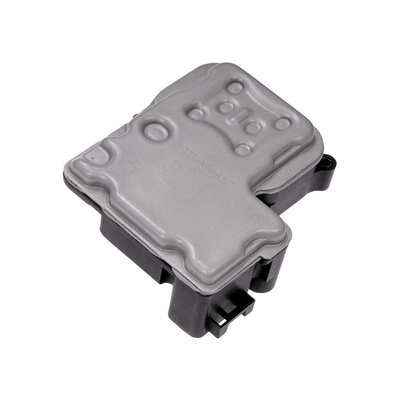
Below are the parts most often responsible for code C1443, ranked by how frequently each one is the actual culprit (per the diagnosis above). Tap any to see what we have for your vehicle.



The information in this article is provided for general reference and educational purposes only. Vehicle specifications, procedures, and part compatibility can vary by production date, trim level, and region. Always consult your vehicle's factory service manual and verify part numbers before purchasing or performing repairs. Safety-critical components such as airbags, seat belts, and braking systems should be installed by a qualified professional.
- 🧭 Diagnostic Flowchart
- 🎬 Helpful Videos
- 🛍️ Shop This Part
- What Does C1443 Mean?
- Can I Drive With C1443?
- Common Causes
- Symptoms
- Common Fixes & Costs
- DIY vs Professional
- Used vs. New Parts: Buying Guide
- What Happens If You Wait — Timeline
- Cost of Not Fixing It
- Diagnosis Steps
- When This Code Triggers (Freeze-Frame Conditions)
- Related Codes
- Climate & Environmental Factors
- How to Talk to a Mechanic About This Code
- Where to Take It: Dealer vs Independent vs Chain
- When to Walk Away From the Repair
- What Scan Tool You Need for This Code
- How to Clear the Code After You Fix It
- Will This Fail Emissions / State Inspection?
- Most Commonly Affected Vehicles
- Manufacturer-Specific Notes
- Real Owner Stories
- 2007 Lexus RX400h with ~150K miles
- 2008 Toyota Prius with 208K miles
- 2006 Toyota Highlander Hybrid
- How to Prevent This Code From Triggering
- Frequently Asked Questions
- What are the very first signs of a C1443 fault?
- Is it safe to drive with a C1443 code active?
- How much does it cost to fix code C1443?
- Can a weak 12V battery cause code C1443?
- What's the difference between a flashing VSC light and a solid VSC light?
- Can I reset the VSC light myself?
- Why did this code appear after I got an alignment or new tires?
- Key Takeaways
- 🎟️ Get 5% Off