

OBD-II Code C1446: Brake Switch Circuit Failure
What C1446 means, why it triggers, and how to fix it
- Code C1446 usually indicates a failed $20-$80 brake light switch located directly on the brake pedal arm.
- A C1446 failure disables your ABS and traction control, locks your shifter in 'Park', and causes your brake lights to stay stuck on or fail completely.
- Ford F-Series and E-Series owners must check the brake fluid reservoir and scan for code C1125 first, as low fluid triggers C1446 as a secondary ghost code.
- Hyundai and Kia owners should inspect the floorboard for broken plastic pieces; a shattered $5 brake pedal stopper pad is the most common cause for these makes.
What Does C1446 Mean?

Code C1446 means your vehicle's Anti-Lock Brake System (ABS) module detected a fault in the brake switch circuit. This circuit tells the ABS, traction control, cruise control, and engine control module (ECM) when you press the brakes. A failure disables cruise control, locks the shift lever in 'Park', and causes dangerous brake light malfunctions.
Technical definition: C1446 indicates a 'Brake Switch Circuit Failure'. The ABS module triggers this code when it receives an illogical signal from the brake switch. For example, the module sets the code if it sees the vehicle decelerating via wheel speed sensors but receives no 'ON' signal from the brake pedal switch, or if the switch signal remains 'ON' for an implausibly long time (e.g., six consecutive minutes while driving over 12 mph).
Can I Drive With C1446?
Yes, But With Caution. You can mechanically stop the vehicle, but driving poses a severe safety risk. Your brake lights either fail completely or stay on constantly, making you invisible or confusing to other drivers and drastically increasing rear-end collision risk. Critical safety systems like ABS and traction control are also disabled. Fix this immediately.
Common Causes

- Defective brake light switch (Very Common) — The brake light switch physically wears out from constant use. Its internal contacts fail, leading to a complete loss of signal or an intermittent connection.
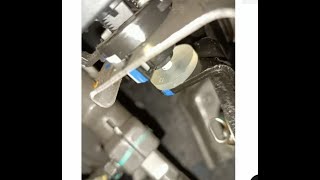
- Worn brake pedal stopper pad (Hyundai/Kia) (Common) — On Hyundai and Kia models, a small plastic pad on the brake pedal arm disintegrates over time. This creates a gap, preventing the switch from fully depressing when the pedal is released and causing the brake lights to stay on. 🎬 Watch: How to replace a disintegrated Kia brake stopper pad.
- Low brake fluid or faulty level sensor (Ford) (Common) — On Ford trucks and vans, low brake fluid or a malfunctioning fluid level sensor causes the ABS module to set a C1446 code as a secondary 'ghost' code to C1125. 🎬 Watch: Diagnosing the C1125 and C1446 codes on Ford trucks.
- Wiring or connector issues (Common) — The wiring harness and connectors between the brake switch and control modules corrode, fray, or loosen. This interrupts the signal, especially in areas exposed to moisture and road salt.
- Blown fuse (Less Common) — A blown fuse in the brake switch, ABS, or lighting control circuit triggers C1446. This indicates an underlying short circuit in the wiring.
- Improperly adjusted brake light switch (Less Common) — If a new switch is installed incorrectly or an existing one is knocked out of position, the brake pedal's movement fails to activate it properly.
- Aftermarket accessory interference (Rare) — Poorly installed remote start systems, alarms, or trailer brake controllers that tap into the brake switch wiring introduce electrical noise or shorts.
- Failing ABS, PCM, or BCM module (Very Rare) — Control modules rarely fail internally. Thoroughly rule out the switch, wiring, and fuses before considering module replacement.
Symptoms

- ABS and traction control warning lights illuminate — The ABS module is the primary system reporting this fault, automatically triggering dashboard warning lights and disabling the systems.
- Brake lights fail or stay on constantly — A failed switch either breaks the circuit (no lights) or shorts internally (lights always on), creating a major safety hazard.
- Inability to shift out of 'Park' — The shift interlock system requires a brake pedal signal to release the shifter. A faulty switch prevents this signal.
- Cruise control is inoperative — Cruise control relies on the brake switch signal to disengage safely. If the signal is compromised, the system disables itself.
- Engine won't start (Push-Button Start models) — Push-button start vehicles require a valid brake switch signal to crank the engine. A failed switch causes a no-start condition.
- Reduced engine power — If the brake switch sends a constant 'ON' signal, the ECU limits engine power via the brake-throttle override safety feature to prevent unintended acceleration.
Diagnostic Flowchart

Tap your situation to follow the diagnostic path that matches what you're seeing on this code.
Common Fixes & Costs
- Replace brake light switch
— Parts: $20-$80, Labor: $80-$150, ~0.7 hr book time
(DIY)
Ford F-250 Super Duty (2006-2011): OEM
Subaru Outback (2013-2018): OEM - Replace brake pedal stopper pad
— Parts: $5-$15, Labor: $0-$50, ~0.3 hr book time
(DIY)
Hyundai Sonata (2006-2014): OEM - Top off brake fluid — Parts: $5-$15, Labor: $0, ~0.1 hr book time (DIY)
- Replace blown fuse — Parts: $1-$5, Labor: $0, ~0.1 hr book time (DIY)
- Replace brake fluid level sensor — Parts: $30-$80, Labor: $75-$150, ~0.8 hr book time (Intermediate)
- Repair wiring or connector — Parts: $10-$30, Labor: $120-$250, ~1.5 hr book time (Advanced)
DIY vs Professional
- Replace brake light switch 🟢 Beginner
Tools: Flashlight, basic wrench set, or no tools for twist-and-lock switches. - Replace brake pedal stopper pad 🟢 Beginner
Tools: Pliers or a small pick to remove old brittle pieces. - Top off brake fluid 🟢 Beginner
Tools: Correct DOT brake fluid. - Replace blown fuse 🟢 Beginner
Tools: Fuse puller or needle-nose pliers. - Repair wiring or connector 🟢 Beginner
Tools: Multimeter, wire strippers, crimpers, heat shrink tubing, soldering iron.
Used vs. New Parts: Buying Guide
When a used part is worth it: Never buy a used brake light switch. It is a high-wear component with a limited lifespan, and a new part costs only $20-$80. The labor outweighs any parts savings.
Donor-vehicle mileage cap: roughly under 20000 miles for the part to have meaningful remaining life.
Donor quality checklist:
- Only consider used parts for expensive control modules, never switches.
- Ensure the module part number matches exactly.
- Avoid parts with corrosion, cracking, or heat stress on the connector.
Decision logic:
- If The part is a brake light switch or stopper pad. → Buy new. The risk of premature failure is high and cost savings are non-existent.
- If The required part is an ABS module and the budget is tight. → Buy a used module from a reputable salvage yard with a warranty, but only after confirming the module is the true cause.
Warranty tradeoff: Used parts carry a 30-90 day warranty. New aftermarket parts offer 1-year to limited lifetime warranties. New OEM parts carry a 12-month manufacturer warranty.
Worst-case if a used part fails: $150 if a used switch fails shortly after installation, requiring repeat labor costs.
What Happens If You Wait — Timeline
- Immediate: Code C1446 sets. ABS and Traction Control warning lights illuminate and disable. Brake lights stick on, fail completely, or work intermittently. (MPG impact: 0%% · Added cost: $0 (but severe immediate safety risk))
- 1-7 days: If brake lights stick on, the battery drains completely overnight, resulting in a no-start condition and permanent cell damage. (MPG impact: 0%% · Added cost: $150-$300 for a replacement battery)
- 1-4 weeks: The primary consequence remains the ongoing safety hazard. You risk a rear-end collision or receiving a traffic ticket for faulty equipment. (MPG impact: 0%% · Added cost: $100-$250 for a traffic ticket)
- 1+ month: Continued operation in a compromised safety state. The risk of an accident persists indefinitely until the fault is repaired. (MPG impact: 0%% · Added cost: Potentially thousands in accident-related damages)
Cost of Not Fixing It
- Immediate: Major safety risk. Brake lights fail or stick on, drastically increasing rear-end collision risk. ABS and traction control systems are disabled. (Added cost: Potential traffic ticket or cost of an accident.)
- 0-1 week: Stuck brake lights drain the battery overnight, causing a no-start condition and permanently damaging the battery cells. (Added cost: $150-$300 for a replacement battery.)
- 1-6 months: Driving without ABS causes premature tire wear during hard braking. The primary cost remains the severe, ongoing safety hazard. (Added cost: High indirect safety and convenience costs.)
Diagnosis Steps
- Scan All Modules for Related Codes
Scan all vehicle modules. On Ford trucks, diagnose C1125 (Brake Fluid Level Sensor) first, as it triggers C1446 as a secondary fault. Look for P0571, P0572, or P0703, which point to the same brake switch circuit reported by different modules.
Tools: OBD-II Scanner with ABS capability (Beginner) - Verify Brake Light Operation
Have an assistant observe the brake lights as you press and release the pedal. Note if they fail to illuminate, are delayed, flicker, or stay on continuously.
Tools: An assistant (Beginner) - Check Brake Pedal Stopper Pad (Hyundai/Kia)
Look at the floor mat under the brake pedal for broken blue or black plastic pieces. Inspect the brake pedal arm where it meets the switch plunger to ensure the rubber/plastic stopper pad is intact.
Tools: Flashlight (Beginner) - Inspect Brake Fluid Level (Ford)
Visually inspect the brake fluid reservoir. Fluid below the 'MIN' line triggers C1446 on many Ford vehicles. Top off with the correct DOT fluid and inspect for leaks.
Tools: None (Beginner) - Visually Inspect Switch and Connector
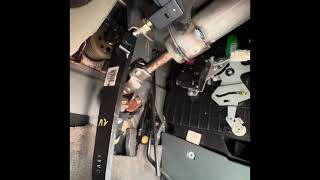
Look up at the top of the brake pedal arm. Verify the switch is securely mounted. Inspect the wiring connector for looseness, green corrosion, or melted plastic.
Tools: Flashlight (Beginner) - Check Stop Lamp Fuses
Locate the interior and engine bay fuse boxes. Inspect all fuses related to the brake lights, stop lamps, and ABS. A blown fuse confirms an underlying short circuit.
Tools: Fuse puller or needle-nose pliers (Beginner) - Monitor Live Data via Scan Tool
Monitor the Brake Pedal Position (BPP) or Brake On/Off (BOO_ABS) PID on your scanner. The status must change from 'Off' to 'On' the instant you touch the pedal. Any delay or flickering confirms a circuit problem.
Tools: OBD-II Scanner with live data capability (Intermediate) - Test Switch Input/Output Voltage
Disconnect the switch connector. Use a multimeter to verify constant 12V power on the input wire. Reconnect and back-probe the output wire: it should read 0V released and ~12V pressed (or vice versa for normally closed switches).
Tools: Multimeter, vehicle-specific wiring diagram (Advanced) - Test Circuit Resistance and Continuity
Disconnect the battery. Measure the resistance of the signal wire from the switch connector to the ABS module connector. It must be less than 5 ohms. A reading of 'OL' indicates a broken wire.
Tools: Multimeter with long leads (Advanced) - Inspect Harness for Shorts to Ground
With the switch and module disconnected, place one multimeter lead on the signal wire at the switch connector and the other on a bare metal chassis ground. The reading must be infinite ('OL'). Low resistance indicates a short to ground.
Tools: Multimeter (Advanced)
When This Code Triggers (Freeze-Frame Conditions)
- Vehicle Speed: > 10 MPH (Vehicle in motion)
- Brake Pedal Status (PCM): OFF (Brake pedal is not pressed)
- Wheel Speed Sensors: Decreasing (Vehicle is decelerating)
- System Voltage: 13.5 - 14.5 Volts (Engine running at normal operating voltage)
Related Codes
- C1125 — Brake Fluid Level Sensor Input Circuit Failure. On Ford trucks, this is the root cause, and C1446 is a secondary 'ghost' code. Diagnose C1125 first.
- P0703 — Brake Switch 'B' Circuit Malfunction. This is the generic powertrain equivalent to C1446. Both point to the brake switch but are reported by different modules.
- P0571 / P0572 / P0573 — Brake Switch 'A' Circuit Malfunction/Low/High. These generic powertrain codes frequently appear alongside C1446 and confirm a fault within the brake switch circuit.
- P0504 — Brake Switch A/B Correlation. Sets when the PCM sees conflicting signals from the two separate circuits within the brake switch, strongly indicating internal switch failure.
- U0415 — Invalid Data Received From ABS Control Module. This communication code stores when the PCM receives nonsensical data from the ABS module due to the C1446 fault.
Climate & Environmental Factors
- High Humidity and Road Salt: Humidity and winter road salt accelerate corrosion on the brake switch's electrical connector pins, increasing resistance and causing signal loss.
- Extreme Cold: Freezing temperatures make older plastic components, such as the brake switch housing and Hyundai/Kia pedal stoppers, brittle and susceptible to shattering under pedal pressure.
How to Talk to a Mechanic About This Code
Say this: "I have an ABS light on and a C1446 code, which points to the brake switch circuit. My brake lights are [describe symptom: 'not working', 'stuck on', or 'working intermittently']. I need a diagnostic to confirm if it's the switch or the wiring. Please check for related codes like C1125 on Fords or open recalls on Subarus."
This specifies the code and observable symptoms, guiding the technician away from expensive guesswork. Mentioning vehicle-specific quirks proves you are informed and prevents unnecessary upselling.
Avoid saying:
- 'My ABS light is on, can you fix it?' (Too vague, invites a costly, open-ended diagnostic process.)
- 'I think I need a new ABS module.' (Never suggest the most expensive fix first.)
- 'Just replace the brake light switch.' (Never authorize a repair without a proper diagnosis; it could be a wiring fault.)
Questions to ask before authorizing the repair:
- Did you confirm the brake switch is failing, or is it a wiring issue?
- Did you check the live data from the switch to see if it sends a signal?
- If it's a wiring repair, exactly where is the fault and how will you fix it?
- Are there any other related codes present?
- What is the warranty on the parts and labor for this repair?
Where to Take It: Dealer vs Independent vs Chain
- Dealer:
Recommended only for recall-related fixes or confirmed complex module issues. Otherwise, it is not cost-effective.
Best for: Vehicles under warranty., Subaru models (2008-2018) to check for free recall replacement., Complex electrical issues that an independent shop failed to diagnose.
Downsides: Highest labor rates., Defaults to replacing expensive modules rather than repairing wiring. (Typical cost: +50% vs. baseline) - Independent Shop:
Best fit for most C1446 scenarios. A certified independent mechanic diagnoses and repairs common switch or wiring issues efficiently.
Best for: Most out-of-warranty vehicles., Straightforward brake light switch replacement., Diagnosing common issues like the Hyundai/Kia stopper pad or Ford fluid level sensor.
Downsides: Diagnostic capabilities vary widely. Vet shops based on reviews and ASE certifications. (Typical cost: +0% vs. baseline) - Chain Shop:
Avoid for electrical diagnostics. Acceptable only if you already diagnosed a simple part swap like a brake light switch.
Best for: Simple, known fixes like replacing a fuse or topping off brake fluid.
Downsides: Technician skill varies dramatically., Lacks advanced diagnostic tools for electrical circuit testing., High pressure to upsell services. (Typical cost: -10% vs. baseline)
When to Walk Away From the Repair
If the repair cost exceeds 40% of the vehicle's private-party value, evaluate your options.
- Car worth $4000, fix is $350: Fix it. This repair is a small fraction of the car's value and critical for safety.
- Car worth $2500, fix is $1800: Walk away. If the diagnosis reveals a failed ABS module costing this much, the repair is uneconomical.
What Scan Tool You Need for This Code
Minimum: An OBD-II reader that reads Chassis (C-codes) from the ABS module. Basic engine-only code readers cannot see C1446.
Standard $20 scanners only read powertrain (P-codes) from the engine computer. C1446 requires a scanner with ABS access.
Budget: BlueDriver Pro, OBDLink MX+ (~$100-140) — Reads and clears ABS codes like C1446. Displays live data, allowing you to see the brake pedal switch status change in real-time to confirm switch operation.
Mid-range: Foxwell NT510 Elite, Autel AutoLink AL619 (~$150-250) — Provides dedicated ABS diagnostics, live data, and limited bidirectional control to test components for advanced diagnostics.
Professional: Autel MaxiCOM MK808, Launch CRP129X (~$450-600) — Offers full-system diagnostics, live data graphing, and bidirectional controls to perform an 'automated bleed' if air enters the ABS module during repair.
Rent vs buy: Auto parts stores offer free scanning, but their tools often miss ABS codes. Buy a budget pick like BlueDriver to read ABS live data.
How to Clear the Code After You Fix It
- Perform the repair (e.g., replace the brake light switch).
- Reconnect the battery if it was disconnected.
- Use an OBD-II scanner to clear the C1446 code from the ABS module memory.
- Start the car, press the brake pedal, and ensure the ABS light remains off and brake lights function correctly.
Drive cycle (~20 minutes): An ABS-specific drive cycle is not required. After clearing the code, drive for 15-20 minutes with several normal braking events. Include both city and highway driving to confirm the ABS module self-test passes.
Readiness monitors affected: This is a chassis code (C-code) and does not affect emissions-related readiness monitors.
Watch out for:
- Disconnecting the battery rarely clears codes from the ABS module; you must use a capable scanner.
- If you clear the code without fixing the underlying electrical fault, it returns immediately upon pressing the brake pedal.
Will This Fail Emissions / State Inspection?
No — by itself this code doesn't fail OBD inspection (but it can keep readiness monitors from setting, which causes a separate fail).
- California: An illuminated ABS light does not cause a smog check failure. However, non-functional brake lights fail separate safety inspections.
- New York: An illuminated ABS warning light is not a cause for rejection during the annual safety inspection, but inoperative brake lights cause an immediate failure.
- Texas: An illuminated ABS light is not a cause for rejection. Inoperative brake lights are a failing item for commercial vehicles or those still requiring safety inspections.
Most Commonly Affected Vehicles
- Ford F-250/F-350 Super Duty (2006-2011) — Commonly caused by a faulty brake fluid level switch or low fluid, setting C1446 as a secondary code to C1125. Always check for C1125 first.
- Ford Edge (2007-2010) — Presents with an ABS light and difficulty shifting from park. The C1446-20 variant is common, caused by the brake pedal switch or master cylinder sensor.
- Ford E-Series Van (2006-2009) — Sets this code due to failures in the brake pedal switch or a low brake fluid level condition.
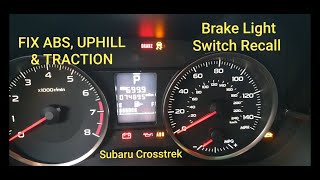
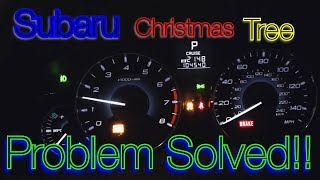
- Subaru Outback, Legacy, Forester, Crosstrek, Impreza (2008-2018) — A faulty brake light switch is a massive known issue subject to recall WUE-90. It causes a 'Christmas tree' effect on the dashboard.
- Hyundai Sonata, Elantra (2006-2014) — The most common cause is a disintegrated plastic stopper pad on the brake pedal arm. Always inspect this stopper before replacing the switch.
- Nissan Juke (2011-2017) — A faulty brake switch causes intermittent no-start conditions with the push-button ignition. These vehicles may have two switches on the pedal.
- Volkswagen Golf, Polo (2009-2014) — Caused by a standard brake switch failure or frayed wiring at the brake booster vacuum sensor connector, which mimics a switch fault.
- Mazda CX-9, Mazda3 (2007-2012) — Defined as 'Runnable Signal Malfunction,' indicating an inconsistency between the ECM and CAN bus signals due to a fuse, wiring, or module issue.
- Toyota Prius C (2012-2019) — Intermittent issues on Toyota hybrids are frequently traced to a failing wheel speed sensor or ABS actuator assembly rather than the switch.
Manufacturer-Specific Notes
- Ford: On F-Series trucks and E-Series vans, low brake fluid or a faulty fluid level sensor triggers C1446 as a secondary code to C1125. Always check fluid levels first.
- Subaru: A faulty brake light switch prompted a massive recall (WUE-90) covering over a million 2008-2018 vehicles. It illuminates the ABS, VDC, and Hill Start Assist lights simultaneously.
- Hyundai / Kia: The disintegration of a small plastic stopper pad on the brake pedal arm is the most common cause. Always inspect the floorboard for broken plastic before replacing the switch.
- Mazda: C1446 is specifically defined as 'Runnable Signal Malfunction,' pointing to a data mismatch between control modules regarding brake status, often caused by wiring rather than the switch.
Real Owner Stories
2007 Ford Edge with intermittent ABS light and shift lock issues.
The ABS light illuminated after a few minutes of driving, and the vehicle occasionally locked in Park. A scan revealed code C1446-20.
Outcome: Replacing the brake light switch solved the issue. However, another owner with identical symptoms found the fix only lasted an hour, indicating a deeper wiring connector issue.
Lesson: A cheap brake switch is a reasonable first step for intermittent issues. If the problem persists, the fault lies in the wiring harness or connector.
2010 Ford F-350 with C1446 and C1125 codes.
The 'Service Brake System' warning appeared intermittently. A scan showed C1125 (Brake Fluid Level Sensor) and C1446 as a secondary code.
Outcome: The issue was a chafed wire causing an intermittent open circuit, not a failed sensor or brake switch.
Lesson: On Ford trucks, always diagnose C1125 first. C1446 is a 'ghost code' in this scenario, and the true problem is the fluid level sensor or its wiring.
2013 Subaru Crosstrek with multiple dashboard warning lights.
The ABS, Vehicle Dynamics Control (VDC), and Hill Assist warning lights illuminated simultaneously. The brake lights were inoperative.
Outcome: The vehicle was taken to a Subaru dealer, who replaced the faulty brake light switch free of charge under the recall campaign.
Lesson: If you own a 2008-2018 Subaru, check for open recalls before attempting repairs. A faulty brake light switch is a known issue covered by the manufacturer.
2011 Hyundai Sonata with brake lights stuck on.
The brake lights remained illuminated without pressing the pedal. The traction control light came on, and the car shifted out of Park without the brake.
Outcome: The owner replaced the $5 stopper pad, which fits into the brake pedal arm and contacts the switch plunger, immediately solving the problem.
Lesson: On a Hyundai or Kia, always look for broken plastic fragments on the floor before replacing the switch. This is the most common and cheapest fix.
How to Prevent This Code From Triggering
- Perform a brake fluid flush (Every 2-3 years or 30,000 miles) — Brake fluid absorbs moisture over time. Contaminated fluid causes corrosion in ABS module components and triggers fluid level sensor faults.
- Apply dielectric grease to electrical connectors (When replacing a switch or servicing a connector) — Applying non-conductive dielectric grease to the connector seal keeps out moisture and prevents corrosion on the electrical pins.
- Check brake fluid level regularly (Monthly or with every oil change) — On Ford vehicles, low brake fluid directly causes code C1446. Regular checks catch low levels before they trigger faults and alert you to system leaks.
- Avoid silicone-based interior cleaners near the footwell (Subaru) (Always) — Silicone gas from cleaning products seeps into original Subaru brake light switch housings, forming silicon dioxide on the contacts and causing signal loss.
Frequently Asked Questions
What is a C1446-20 code?
The '-20' is a Failure Type Code indicating an 'Open or Short to Ground' condition. You must look for a broken wire or a wire touching a bare metal chassis point. The diagnostic approach remains identical to a standard C1446.
What are common misdiagnosis mistakes for a C1446?
The most common mistake on Ford vehicles is replacing the brake light switch without checking for code C1125. C1446 is often a 'ghost' code triggered by a faulty brake fluid level sensor. Always perform a full system scan and check fluid levels first.
My brake lights work, but I still have a C1446 code. What could be the cause?
Modern brake switches contain multiple internal circuits. The circuit controlling the brake lights can function perfectly while the separate circuit communicating with the ABS module fails. You must use a scan tool to monitor the ABS module's live data to confirm the switch failure.
Can a bad battery cause a C1446 code?
A weak battery does not directly cause a C1446 code. However, low system voltage causes control modules to report erroneous data. Ensure your battery provides a stable 12.4V-12.6V with the engine off before starting complex circuit diagnostics.
Is it safe to drive with a C1446 code?
No, driving with a C1446 code poses a severe safety risk. Your brake lights may fail, making you highly vulnerable to rear-end collisions. Furthermore, your ABS and traction control systems are disabled, reducing emergency maneuvering capability.
How much does it cost to fix a C1446 code?
Costs depend entirely on the root cause. DIY fixes like replacing a Hyundai pedal stopper or topping off brake fluid cost under $20. Professional brake light switch replacement typically ranges from $100 to $230 for parts and labor.
Can I fix the C1446 code myself?
Yes, replacing a brake light switch or pedal stopper pad is highly DIY-friendly. The switch sits under the dashboard on the brake pedal arm and usually requires only basic hand tools or a simple twist-lock motion to remove. Always disconnect the battery before starting.
Will clearing the code fix the problem?
No, clearing the code only temporarily erases the fault from the module's memory. The warning light returns the moment the ABS module runs its self-test and detects the circuit failure again. You must repair the underlying mechanical or electrical issue.
Key Takeaways
- Code C1446 usually indicates a failed $20-$80 brake light switch located directly on the brake pedal arm.
- A C1446 failure disables your ABS and traction control, locks your shifter in 'Park', and causes your brake lights to stay stuck on or fail completely.
- Ford F-Series and E-Series owners must check the brake fluid reservoir and scan for code C1125 first, as low fluid triggers C1446 as a secondary ghost code.
- Hyundai and Kia owners should inspect the floorboard for broken plastic pieces; a shattered $5 brake pedal stopper pad is the most common cause for these makes.
Helpful Videos
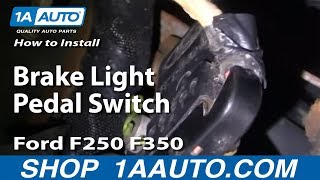
Shop the Parts Behind C1446
Below are the parts most often responsible for code C1446, ranked by how frequently each one is the actual culprit (per the diagnosis above). Tap any to see what we have for your vehicle.



The information in this article is provided for general reference and educational purposes only. Vehicle specifications, procedures, and part compatibility can vary by production date, trim level, and region. Always consult your vehicle's factory service manual and verify part numbers before purchasing or performing repairs. Safety-critical components such as airbags, seat belts, and braking systems should be installed by a qualified professional.
- 🧭 Diagnostic Flowchart
- 🎬 Helpful Videos
- 🛍️ Shop This Part
- What Does C1446 Mean?
- Can I Drive With C1446?
- Common Causes
- Symptoms
- Common Fixes & Costs
- DIY vs Professional
- Used vs. New Parts: Buying Guide
- What Happens If You Wait — Timeline
- Cost of Not Fixing It
- Diagnosis Steps
- When This Code Triggers (Freeze-Frame Conditions)
- Related Codes
- Climate & Environmental Factors
- How to Talk to a Mechanic About This Code
- Where to Take It: Dealer vs Independent vs Chain
- When to Walk Away From the Repair
- What Scan Tool You Need for This Code
- How to Clear the Code After You Fix It
- Will This Fail Emissions / State Inspection?
- Most Commonly Affected Vehicles
- Manufacturer-Specific Notes
- Real Owner Stories
- 2007 Ford Edge with intermittent ABS light and shift lock issues.
- 2010 Ford F-350 with C1446 and C1125 codes.
- 2013 Subaru Crosstrek with multiple dashboard warning lights.
- 2011 Hyundai Sonata with brake lights stuck on.
- How to Prevent This Code From Triggering
- Frequently Asked Questions
- What is a C1446-20 code?
- What are common misdiagnosis mistakes for a C1446?
- My brake lights work, but I still have a C1446 code. What could be the cause?
- Can a bad battery cause a C1446 code?
- Is it safe to drive with a C1446 code?
- How much does it cost to fix a C1446 code?
- Can I fix the C1446 code myself?
- Will clearing the code fix the problem?
- Key Takeaways
- 🎟️ Get 5% Off