

OBD-II Code C1451: Advanced Diagnostic & Repair Guide
The Ultimate Guide to C1451: Causes, Manufacturer-Specific Fixes, and Pro-Level Diagnostics
- Code C1451 has completely different meanings based on the manufacturer: it signals a brake system lockout on Toyota/Lexus, a failed axle locker on Jeeps, and a generic traction fault on Nissans.
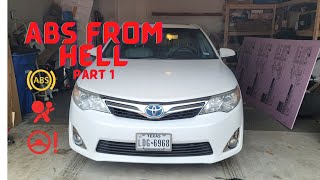
- On Toyota and Lexus hybrids, C1451 is a mandatory safety lockout that requires a bi-directional scan tool to perform an automated brake bleed before it will clear.
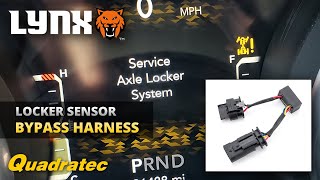
- For 2018-2023 Jeep Wranglers and Gladiators, C1451 indicates a 99% probability of a failed rear axle locker sensor, which can be bypassed with a $50 aftermarket harness.
- Verify your code is C1451 (Chassis) and not P1451 (Powertrain), as P1451 points to an unrelated EVAP emissions failure common on Ford and BMW vehicles.
- Test your 12V battery before replacing expensive modules, as resting voltage below 12.4V frequently triggers false C1451 chassis errors on modern vehicles.
What Does C1451 Mean?
C1451 is a complex chassis code because its meaning changes completely depending on your car's manufacturer. For Toyota and Lexus, it signals a safety lockout in the electronically controlled brake system, usually because a scan-tool-assisted brake bleeding procedure wasn't completed after service. For Jeep, it points to a failure in the electronic axle locker system, almost always a faulty position sensor. For other brands like Nissan, it indicates a generic 'Traction Control Motor Circuit Open' electrical fault.
Technical definition: The official SAE/ISO definition for C1451 varies by manufacturer. Common definitions include: 'Motor Drive Permission Malfunction' (Toyota/Lexus), 'Rear Differential Position Sensor Circuit Short To Ground/Open' (Jeep), or 'Traction Control Motor Circuit Open' (General). The Drivetrain Control Module (DTCM) or Skid Control ECU sets this code when it detects an invalid state or an open circuit in a monitored component.
Can I Drive With C1451?
Yes, But With Caution. Driving is possible, but critical safety systems like ABS, traction control (VSC), and electronic axle lockers are disabled. Your vehicle's basic hydraulic braking functions normally, but stopping distances increase significantly in emergencies or on slippery surfaces. The loss of VSC means the vehicle will not assist in correcting a skid. Address this code promptly to restore full vehicle safety.
Common Causes
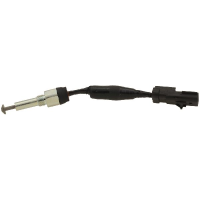
- Failed Rear Axle Locker Position Sensor (Jeep) (Very Common) — On 2018-2023 Jeep Wrangler (JL) and Gladiator (JT) models, C1451 is almost always caused by a failed rear axle locker position sensor. A known design flaw allows gear oil to seep into the sensor, causing a short-circuit. This issue is covered by Jeep Technical Service Bulletin (TSB) 03-002-24.
- Incomplete Brake Bleeding Procedure (Toyota/Lexus) (Very Common) — On Toyota and Lexus vehicles with electronically controlled brakes, this code acts as a safety lockout. It activates if the brake actuator is replaced or if diagnostic commands are used, and the mandatory scan-tool-assisted brake bleeding procedure is not completed. The system locks the ABS pump motor to prevent air circulation.
- Low 12V Battery Voltage (Common) — Modern vehicles are highly sensitive to voltage drops. A weak 12-volt battery fails to supply stable power to control modules, triggering spurious communication errors and chassis codes like C1451. This is the primary trigger for generic 'Chassis Control System Error' messages on Nissans.
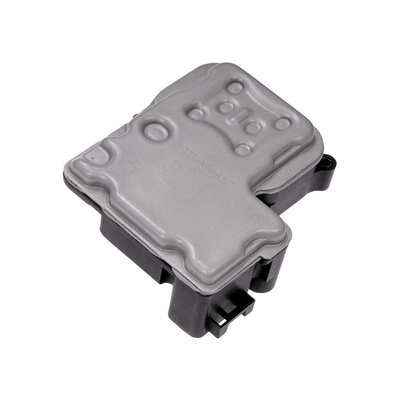
- Failed or Incorrect Brake Actuator Assembly (Toyota/Lexus) (Less Common) — This code triggers if the brake actuator fails mechanically (often preceded by code C1256) or if an incompatible replacement module is installed. Using a second-hand module from a different model year creates a software mismatch, preventing system initialization and locking in the C1451 code.
- Damaged or Corroded Wiring/Connectors (Less Common) — A break, short, or corrosion in the wiring harness leading to the ABS module, traction control motor, or axle locker sensor triggers this code. The control module detects an open or shorted circuit and disables the affected system.
- Faulty EVAP Canister Vent Solenoid (Ford/BMW - as P1451) (Less Common) — On Ford and BMW vehicles, a similar code, P1451 (a powertrain code), points to a malfunction in the Evaporative Emission (EVAP) system's vent control or leak detection pump (DMTL) circuit. This is caused by a faulty solenoid or pump and is completely unrelated to the chassis or brakes.
Symptoms
- ABS, Traction Control (VSC), and Brake Warning Lights On — Multiple warning lights illuminate on the dashboard immediately, indicating the associated safety systems are disabled.
- 'Service Axle Locker System' Message (Jeep) — On affected Jeep models, a specific warning message appears on the instrument cluster, the axle locker switch light blinks, and the electronic lockers become inoperable.
- 'Chassis Control System Error' Message (Nissan) — On Nissan vehicles, a generic chassis error message appears. This is triggered by C1451, but also by simpler issues like a weak battery or faulty wheel speed sensor.
- Spongy or Unresponsive Brake Pedal (Toyota/Lexus) — If air remains trapped in the brake lines due to an incomplete bleed, the brake pedal feels soft and travels further to the floor, reducing braking performance.
- Inability to Clear the Code (scan-tool only — no driver-felt sign) — On Toyota/Lexus vehicles, C1451 is a 'sticky' code stored in non-volatile memory. It cannot be cleared with a standard scan tool or battery disconnect; it only clears after the automated brake bleed is successful.
Diagnostic Flowchart
Tap your situation to follow the diagnostic path that matches what you're seeing on this code.
Common Fixes & Costs
- Install Axle Locker Sensor Bypass Harness (Jeep)
— Parts: $35-$70, Labor: $0-$50 (DIY installation), ~0.3 hr book time
(DIY)
Jeep Wrangler (JL) / Gladiator (JT): OEM N/A (Alt: {"brand": "Z-Automotive", "part_number": "Z_LKR_OEM", "notes": "A popular plug-and-play bypass solution."}) - Perform Manufacturer-Specific Brake Bleed Procedure (Toyota/Lexus) — Parts: $15-$30 (Brake Fluid), Labor: $125-$300 (Shop diagnostic/procedure fee), ~1.5 hr book time (Professional)
- Replace Rear Axle Locker Position Sensor (Jeep)
— Parts: $150-$350, Labor: $600-$1300 (Requires opening differential), ~4.5 hr book time
(Professional)
Jeep Wrangler (JL) / Gladiator (JT): OEM Mopar 68544629AA - Replace 12V Battery (All Makes)
— Parts: $150-$250, Labor: $0-$50, ~0.5 hr book time
(DIY)
Generic (All Makes): OEM N/A (Alt: {"brand": "DieHard / Interstate", "part_number": "Varies by Group Size", "notes": "Ensure AGM batteries are used if orig) - Replace Brake Actuator Assembly (Toyota/Lexus)
— Parts: $1200-$2800, Labor: $400-$800, ~4.5 hr book time
(Professional)
Toyota Prius (2010-2015): OEM Toyota 47070-47060 (Alt: {"brand": "Cardone (Remanufactured)", "part_number": "1H-4015", "notes": "Remanufactured units offer a cost-saving alter) - Repair Damaged Wiring — Parts: $5-$20, Labor: $150-$500 (Depending on harness accessibility), ~2.0 hr book time (Intermediate)
- Replace EVAP Vent Solenoid / DMTL Pump (P1451)
— Parts: $30-$150, Labor: $100-$250, ~1.2 hr book time
(Intermediate)
Ford F-150 (2018): OEM Ford 9U5Z-9F945-C (Alt: {"brand": "Dorman", "part_number": "911-216", "notes": "Price: ~$50-$110"})
Used vs. New Parts: Buying Guide
When a used part is worth it: For the expensive Toyota/Lexus brake actuator, a tested used part from a low-mileage donor saves thousands over a new OEM unit.
Donor-vehicle mileage cap: roughly under 100000 miles for the part to have meaningful remaining life.
Donor quality checklist:
- Verify the exact part number matches; modules from different years are incompatible.
- Ensure the seller offers a 30-90 day warranty.
- For the Jeep sensor, NEVER buy used. Purchase the updated Mopar service kit or an aftermarket bypass harness.
Decision logic:
- If The part is a Jeep axle locker sensor → Buy the new OEM kit or an aftermarket bypass harness. Do not buy used.
- If The part is a Toyota/Lexus brake actuator and budget is the priority → A tested used part from a reputable salvage yard is a viable option.
- If The part is a Toyota/Lexus brake actuator and reliability is the priority → Buy a new OEM or high-quality remanufactured part.
Warranty tradeoff: Used parts typically have a 30-90 day warranty. New aftermarket parts offer 1-year warranties. New OEM parts carry a 12-month/12,000-mile warranty.
Worst-case if a used part fails: $500-$1000 if a used actuator fails after the warranty period, requiring repurchasing the part and paying 4-5 hours of labor.
What Happens If You Wait — Timeline
- Immediate: Warning lights illuminate. Critical safety systems like ABS, traction control, and electronic lockers are immediately disabled. (MPG impact: 0%% · Added cost: $0)
- 1-6 months: The primary risk is 'warning light fatigue,' where drivers ignore new, critical warnings. The vehicle remains drivable but with a significantly reduced safety margin. (MPG impact: 0%% · Added cost: $0)
- 6-12+ months: The vehicle fails mandatory state safety inspections in jurisdictions like New York. The risk of an accident in adverse weather remains elevated. (MPG impact: 0%% · Added cost: $0)
- At the time of an accident: If an accident occurs that ABS or VSC could have prevented, financial consequences include vehicle repair costs, increased insurance premiums, and liability. (MPG impact: N/A% · Added cost: $5,000 - $150,000+)
Cost of Not Fixing It
- Immediate: ABS, Traction Control (VSC), and electronic axle lockers are disabled. Increased risk of skidding and longer stopping distances. (Added cost: N/A)
- 0-6 months: Continued operation without ABS/VSC safety nets increases the statistical risk of an accident. No direct mechanical damage is caused to other components. (Added cost: $0 (unless an accident occurs))
- 6+ months: Ignoring the warning lights leads to 'warning light fatigue,' causing drivers to miss new, critical warnings. (Added cost: $0)
Diagnosis Steps
- Identify Your Vehicle & Code Definition
Identify your vehicle's make. A C1451 on a Toyota is diagnosed completely differently from a C1451 on a Jeep. Confirm the specific meaning for your car before proceeding.
Tools: OBD-II Scanner (Beginner) - Check the 12V Battery and Charging System
Ensure the vehicle's 12V battery is healthy. Check the voltage; it must be above 12.4 volts with the engine off and between 14.0 and 14.8 volts with the engine running.
Tools: Multimeter (Beginner) - Check for Technical Service Bulletins (TSBs)
Search online for TSBs related to C1451 for your specific make. Jeep has TSB 03-002-24 for the axle locker sensor, and Toyota has TSB-0130-9 for Camry Hybrids.
Tools: Internet access (Beginner) - Perform a Scan Tool-Assisted Brake Bleed (Toyota/Lexus)
If you have a Toyota or Lexus, perform the manufacturer-specified brake bleeding procedure. This requires a bi-directional scan tool to command the ABS pump and is the only way to clear the code.
Tools: Bi-directional Scan Tool, Brake Bleeder Kit, Brake Fluid (Professional) - Install an Axle Locker Sensor Bypass Harness (Jeep)
Install an aftermarket bypass harness. If installing the bypass clears the code and allows the locker to function, it definitively proves the internal sensor has failed.
Tools: Aftermarket Bypass Harness (DIY) - Inspect Brake Fluid Level and Condition
Check the fluid level in the master cylinder reservoir. A low brake fluid level allows air to enter the system, a primary cause of faults on Toyota/Lexus models.
Tools: Flashlight, Shop Towels (Beginner) - Perform a Visual Inspection of Wiring
Visually inspect the wiring harnesses associated with the ABS Actuator (Toyota) or Axle Locker (Jeep). Look for damage, chafing, melting, or corrosion.
Tools: Flashlight (Intermediate) - [PRO TIP] Test the Axle Locker Sensor Circuit (Jeep)
Back-probe the sensor connector. You should find 5V on the reference pin and a good ground. The signal wire voltage must switch between 5V and 0V as the locker is commanded on/off by a scan tool.
Tools: Multimeter, Bi-directional Scan Tool (Advanced) - [PRO TIP] Check Scan Tool Communication & Live Data (Toyota/Lexus)
Check for communication with the ABS module. If you have code C1203, communication fails due to an incompatible actuator. View live data to ensure the accumulator pressure sensor reads between 3.0-3.5V.
Tools: Bi-directional Scan Tool (Advanced) - [PRO TIP] Test EVAP Vent Solenoid / DMTL Pump Circuit (P1451)
For Ford's P1451, test the EVAP vent solenoid resistance (48-65 ohms). For BMW's P1451, command the DMTL pump via a scan tool; voltage should drop at least 4V from battery voltage when activated.
Tools: Multimeter, Bi-directional Scan Tool (Advanced)
When This Code Triggers (Freeze-Frame Conditions)
- System State (Toyota/Lexus): N/A (Code sets immediately when the Skid Control ECU is put into an invalid state with a scan tool or after an actuator is replaced, regardless of driving conditions.)
- Ignition Status: Key-On (For Jeep and generic faults, the code sets during the initial power-on self-test before the engine starts.)
- Vehicle Speed: 0 mph (The fault is an electrical circuit check that runs when the vehicle is stationary.)
- Battery Voltage: 11.5V - 14.5V (The control module requires adequate power to run self-diagnostics and detect circuit faults.)
Related Codes
- C1345 — Appears with C1451 on Toyota/Lexus, meaning 'Linear Solenoid Valve Offset Learning' is incomplete. You must perform the brake bleed to clear C1451 first, then perform the solenoid calibration to clear C1345.
- C1203 — A communication error appearing with C1451 on Toyota/Lexus after replacing a brake actuator. This proves the wrong part was installed or the new part is defective.
- C1451-11 / C1451-15 — Jeep-specific sub-codes indicating 'Circuit Short To Ground' and 'Circuit Short to Battery/Open'. Both point to the failed axle locker position sensor.
- C1256 — Indicates 'Low Pressure in Accumulator' on a Toyota, pointing to mechanical failure inside the brake actuator. C1256 is the original problem requiring actuator replacement, while C1451 appears afterward if bled incorrectly.
Climate & Environmental Factors
- Cold Weather: Low ambient temperatures reduce a 12V battery's effective cranking amps, causing low voltage conditions that trigger spurious electronic codes like C1451.
- Humidity and Road Salt: High humidity and road salt corrode the exposed wiring and connectors for the Jeep axle locker sensor, leading to circuit faults.
- High Temperatures (Jeep): Long highway drives generate significant heat in the differential, thinning the gear oil. Thinner oil seeps past the sensor's seals, shorting the internal circuit board.
How to Talk to a Mechanic About This Code
Say this: "For a Toyota/Lexus: 'I have a C1451 code. I need the scan tool-assisted brake bleed procedure performed.' For a Jeep: 'I have a C1451 code. Please diagnose the sensor and quote the installation of Mopar kit #68544629AA per TSB 03-002-24.' For other makes: 'I have a C1451 code. Please perform a full electrical system check, including the battery, before quoting major parts.'"
This specific language directs shops to the required procedure for Toyota, references a known issue for Jeep to prevent wrong part replacement, and starts with the simplest cause for other makes.
Avoid saying:
- 'My ABS light is on, can you fix it?'
- 'Just do whatever it takes to fix it.'
- 'My friend said it's the actuator.'
Questions to ask before authorizing the repair:
- For Toyota: Can your scan tool perform the manufacturer-specific 'Air Bleeding' utility for my model year?
- For Jeep: What is the cost difference between the official sensor replacement and installing an aftermarket bypass harness?
- For any major part replacement: Can you show me the failed part?
- What is the warranty on this specific repair, covering both parts and labor?
Where to Take It: Dealer vs Independent vs Chain
- Dealer:
Best for: Vehicles under warranty., Toyota/Lexus C1451 fixes requiring guaranteed Techstream software., Jeep TSB 03-002-24 official repairs.
Downsides: Highest labor rates., Unwilling to install aftermarket solutions like the Jeep bypass harness. (Typical cost: +50% vs. baseline) - Independent Shop:
Best for Nissan/generic electrical faults. Stop DIY and use an independent hybrid specialist if you lack a bi-directional scanner for Toyota bleeds.
Best for: Out-of-warranty vehicles., Nissan electrical diagnostics., Installing Jeep bypass harnesses.
Downsides: Quality varies; ensure they have advanced bi-directional scan tools for Toyota bleeds. (Typical cost: +0% vs. baseline) - Chain Shop:
AVOID for diagnosis and repair of C1451. The required specialty tools are beyond the scope of most chain shops.
Best for: Replacing a diagnosed bad 12V battery.
Downsides: Lacks specific scan tools for the Toyota brake bleed procedure., Not recommended for the labor-intensive Jeep sensor replacement. (Typical cost: -10% vs. baseline)
When to Walk Away From the Repair
If the estimated repair cost exceeds 50% of the car's private-party value, seriously consider selling the car as-is or trading it in.
- Car worth $8000, fix is $3200: Borderline. This is a 2012 Toyota Prius needing a full brake actuator replacement. The repair cost is 40% of the car's value. Get a second opinion and consider a warrantied used part.
- Car worth $28000, fix is $1300: Fix it. This is a 2018 Jeep Wrangler needing the official dealer sensor replacement. The DIY bypass option makes it an even clearer 'fix' decision.
- Car worth $3000, fix is $2500: Walk away. The repair cost is over 80% of the car's value. Do not authorize this repair.
What Scan Tool You Need for This Code
Minimum: To read and clear the code on non-Toyota vehicles, any basic OBD-II reader works. For a Toyota/Lexus, the minimum is a full bi-directional scan tool.
A basic code reader CANNOT fix this code on a Toyota or Lexus. The C1451 lockout code only clears by performing the 'Air Bleeding' service function, requiring a bi-directional tool.
Budget: BlueDriver Pro (~$100) — Excellent for reading codes on all systems. It reads the C1451 code but lacks the bi-directional control needed to perform the Toyota ABS bleed procedure.
Mid-range: Foxwell NT510 Elite / Launch Creader Elite for Toyota (~$150) — The sweet spot for DIY. These brand-specific tools HAVE the bi-directional 'ABS Bleed' function required to service Toyota/Lexus brakes and clear C1451.
Professional: Autel MaxiCOM MK808 / MK900 series (~$450-900) — Professional-grade tablets offering full bi-directional control for nearly all makes. They reliably perform the Toyota ABS bleed and Jeep axle sensor tests.
Rent vs buy: You cannot rent the necessary bi-directional scan tool. AutoZone's Loan-A-Tool program offers basic code readers, not advanced tools. You must buy a mid-range scanner or pay a shop.
How to Clear the Code After You Fix It
- For Toyota/Lexus: The ONLY way to clear the code is to successfully complete the scan-tool-guided 'Air Bleeding' utility. A standard 'Clear DTCs' command fails.
- For Jeep/Other: After the physical repair is complete, use a standard OBD-II scanner to erase the trouble codes.
- Perform a complete drive cycle to allow the vehicle's readiness monitors to run and confirm the fix.
Drive cycle (~25 minutes): 1. Cold start. 2. Idle for 2-3 minutes. 3. Drive in mixed city traffic for 10-15 minutes. 4. Drive at a steady highway speed (55-60 mph) for 5-10 minutes. 5. Stop and idle for 1-2 minutes before shutting down.
Readiness monitors affected: As a 'C' (Chassis) code, C1451 does not directly affect emissions readiness monitors., If a P1451 (Powertrain) code is present, the EVAP monitor is affected.
Before emissions retest: drive at least 50 miles to fully set monitors.
Watch out for:
- Attempting to clear a Toyota/Lexus C1451 with a basic scanner always fails; the automated bleed procedure is mandatory.
- Disconnecting the 12V battery will not clear the C1451 code in a Toyota/Lexus as it is stored in non-volatile memory.
- Forgetting to clear the code with a scanner after a Jeep repair leaves the warning lights on.
Will This Fail Emissions / State Inspection?
No — by itself this code doesn't fail OBD inspection (but it can keep readiness monitors from setting, which causes a separate fail).
- California: A C-code will not fail the OBD-II smog check. However, an illuminated ABS light causes technicians to refuse dynamometer testing for safety reasons.
- New York: New York performs an annual safety inspection. An illuminated ABS light is an automatic cause for failure.
- Texas: An illuminated ABS light is not a specific failure item for safety inspections, provided base hydraulic brakes function, though individual stations may have stricter policies.
Most Commonly Affected Vehicles
- Jeep Wrangler (JL), Gladiator (JT) (2018-2023) — Extremely common due to a design flaw where the rear axle locker position sensor fails from oil contamination (TSB 03-002-24).
- Toyota Prius (2010-2015) — Very common after brake service if the electronic brake bleeding procedure is not performed correctly with Techstream.
- Toyota Camry Hybrid (2012-2014) — Frequently appears with codes C1345 and C1368, requiring both a brake bleed and a linear solenoid valve calibration.
- Lexus CT200h (2011-2017) — Shares the Gen 3 Prius brake system, making it susceptible to C1451 if brake service lacks proper bleeding procedures.
- Lexus NX300h (2015-2021) — Sets C1451 along with C1345 after brake hydraulic system service, requiring a scan tool for calibration.
- Nissan Rogue, X-Trail (2014-2020) — Displays a 'Chassis Control System Error' message associated with C1451, often caused by a weak battery.
- BMW 3-Series (E46, E90) (2000-2013) — Code P1451 (not C1451) points to a failure in the EVAP system's DMTL pump.
- Ford F-150, Focus (2004-2020) — Code P1451 (not C1451) points to a failure in the EVAP system vent control solenoid circuit.
Manufacturer-Specific Notes
- Toyota / Lexus: This code is a protective feature that disables the ABS pump motor until a scan-tool-guided brake bleeding procedure is completed. It cannot be cleared by disconnecting the battery.
- Jeep: On Wrangler JL and Gladiator JT models, this code guarantees a failed axle locker position sensor due to a design flaw. The official fix is labor-intensive, but an external bypass harness is a popular DIY fix.
- Ford / BMW: These brands use a P1451 code (Powertrain), which is unrelated to brakes. It indicates a fault in the EVAP emissions system.
- Nissan: The generic 'Chassis Control System Error' message is triggered by C1451, but is frequently caused by simpler issues like a faulty wheel speed sensor or low battery voltage, leading to misdiagnosis.
Real Owner Stories
2012 Toyota Prius after DIY brake actuator replacement
A mechanic replaced the brake actuator with a new OEM part and performed a manual brake bleed. Immediately after, the dash lit up with ABS, VSC, and Brake warning lights.
What they tried:
- Attempted a 'paperclip trick' to clear the codes.
- Disconnected the 12V battery overnight.
Outcome: The owner took the car to a dealership. The dealer used Techstream software to perform the official scan-tool-guided brake bleeding procedure. This successfully cleared the C1451 code, allowing the related C1345 code to be cleared via the linear solenoid calibration utility.
Lesson: On a Toyota/Lexus, a manual brake bleed after replacing an actuator is insufficient. The C1451 code is a mandatory lockout cleared only by completing the specific scan tool procedure.
2022 Jeep Wrangler Rubicon at 37,000 miles
The 'Service Axle Locker' light came on permanently. The locker switch flashed, and the lockers refused to engage.
What they tried:
- Ignored the intermittent light initially.
Outcome: The dealer diagnosed code C1451-11. They replaced the faulty internal sensor using the official Mopar Axle Sensor Kit (#68544629AA) and the main bulkhead connector, resolving the issue under warranty.
Lesson: For a Jeep JL/JT, this code guarantees a failed sensor. The official fix is an internal sensor replacement, but a popular DIY alternative is an external bypass harness, which is faster and cheaper out of warranty.
2019 Nissan Rogue with 'Chassis Control System Error'
The 'Chassis Control System Error' message appeared alongside ABS and traction control lights. An independent shop scanned C1451 and quoted $1,500 for a new ABS module.
What they tried:
- Sought a second opinion from an electrical specialist.
Outcome: The second mechanic found the 4-year-old 12V battery had a resting voltage of 12.1V and failed a load test. Replacing the battery for $220 permanently cleared all warning lights and the C1451 code.
Lesson: Always test the 12V battery and charging system before approving expensive component replacements for electronic faults on modern vehicles.
How to Prevent This Code From Triggering
- Perform regular brake fluid flushes (Toyota/Lexus) (Every 2-3 years or 30,000 miles) — Flush brake fluid to prevent moisture from corroding the internal valves of the $1,500+ brake actuator assembly, avoiding premature mechanical failure.
- Proactively replace your 12V battery (Every 3-5 years) — Replace the 12V battery to prevent voltage drops that trigger false C1451 communication errors across sensitive chassis control modules.
- Keep battery terminals and chassis grounds clean (Annually) — Corrosion on terminals creates electrical resistance, causing voltage drops that mimic a failing battery and trigger spurious fault codes.
- Inspect and protect underbody wiring (Jeep) (After off-roading or annually in salt-belt regions) — Cleaning connectors and applying dielectric grease prevents moisture intrusion and circuit faults in the exposed wiring harness leading to the Jeep axle.
Frequently Asked Questions
Can I drive my car with a C1451 code?
Yes, but drive with extreme caution. Your Anti-lock Brakes (ABS), Traction Control (VSC), and electronic axle lockers are disabled. Basic hydraulic braking functions, but stopping distances increase significantly in emergencies.
Why won't the C1451 code clear from my Toyota/Lexus?
The code is stored in non-volatile memory and acts as a safety lockout. The brake control computer only clears the code after confirming the scan-tool-assisted brake bleeding procedure is successfully completed. Standard code readers and battery disconnects cannot erase it.
My Jeep has code C1451. Do I have to replace the whole axle?
No. The official repair replaces only the sensor inside the differential using Mopar kit #68544629AA, as detailed in TSB 03-002-24. An even faster and cheaper option is installing an aftermarket bypass harness.
Can I bypass the Jeep axle locker sensor?
Yes, several aftermarket companies sell plug-and-play bypass harnesses. These devices trick the computer into thinking the sensor functions correctly, clearing the code and restoring locker operation. This popular DIY fix avoids the costly labor of opening the differential.
What scan tool is needed to fix C1451 on a Toyota?
You need a bi-directional scan tool capable of performing advanced brake system service functions. Dealerships use Toyota's proprietary Techstream software. High-end professional scanners from Autel, Launch, and Snap-on also feature the necessary 'automated bleed' utility.
What's the difference between a C1451 and a P1451?
The first letter dictates the affected system. 'C' stands for Chassis (brakes, steering, suspension), while 'P' stands for Powertrain (engine, emissions). A C1451 is a brake or drivetrain issue, whereas a P1451 is an EVAP emissions system fault.
I just had my brakes replaced on my Prius and now I have this code. What happened?
Replacing a major hydraulic component requires a specific scan tool to bleed the brakes. If the mechanic performed a standard manual bleed, the C1451 code appears and disables the system. The vehicle requires the correct automated procedure using a compatible bi-directional scan tool.
Can a weak 12V battery cause a C1451 code?
Yes. A failing battery causes erratic voltage, leading to communication glitches between control modules. The ABS and traction control systems are highly sensitive to voltage drops. Always test the 12V battery before authorizing expensive electronic repairs.
Key Takeaways
- Code C1451 has completely different meanings based on the manufacturer: it signals a brake system lockout on Toyota/Lexus, a failed axle locker on Jeeps, and a generic traction fault on Nissans.
- On Toyota and Lexus hybrids, C1451 is a mandatory safety lockout that requires a bi-directional scan tool to perform an automated brake bleed before it will clear.
- For 2018-2023 Jeep Wranglers and Gladiators, C1451 indicates a 99% probability of a failed rear axle locker sensor, which can be bypassed with a $50 aftermarket harness.
- Verify your code is C1451 (Chassis) and not P1451 (Powertrain), as P1451 points to an unrelated EVAP emissions failure common on Ford and BMW vehicles.
- Test your 12V battery before replacing expensive modules, as resting voltage below 12.4V frequently triggers false C1451 chassis errors on modern vehicles.
Helpful Videos

Shop the Parts Behind C1451
Below are the parts most often responsible for code C1451, ranked by how frequently each one is the actual culprit (per the diagnosis above). Tap any to see what we have for your vehicle.





The information in this article is provided for general reference and educational purposes only. Vehicle specifications, procedures, and part compatibility can vary by production date, trim level, and region. Always consult your vehicle's factory service manual and verify part numbers before purchasing or performing repairs. Safety-critical components such as airbags, seat belts, and braking systems should be installed by a qualified professional.
- 🧭 Diagnostic Flowchart
- 🎬 Helpful Videos
- 🛍️ Shop This Part
- What Does C1451 Mean?
- Can I Drive With C1451?
- Common Causes
- Symptoms
- Common Fixes & Costs
- Used vs. New Parts: Buying Guide
- What Happens If You Wait — Timeline
- Cost of Not Fixing It
- Diagnosis Steps
- When This Code Triggers (Freeze-Frame Conditions)
- Related Codes
- Climate & Environmental Factors
- How to Talk to a Mechanic About This Code
- Where to Take It: Dealer vs Independent vs Chain
- When to Walk Away From the Repair
- What Scan Tool You Need for This Code
- How to Clear the Code After You Fix It
- Will This Fail Emissions / State Inspection?
- Most Commonly Affected Vehicles
- Manufacturer-Specific Notes
- Real Owner Stories
- 2012 Toyota Prius after DIY brake actuator replacement
- 2022 Jeep Wrangler Rubicon at 37,000 miles
- 2019 Nissan Rogue with 'Chassis Control System Error'
- How to Prevent This Code From Triggering
- Frequently Asked Questions
- Can I drive my car with a C1451 code?
- Why won't the C1451 code clear from my Toyota/Lexus?
- My Jeep has code C1451. Do I have to replace the whole axle?
- Can I bypass the Jeep axle locker sensor?
- What scan tool is needed to fix C1451 on a Toyota?
- What's the difference between a C1451 and a P1451?
- I just had my brakes replaced on my Prius and now I have this code. What happened?
- Can a weak 12V battery cause a C1451 code?
- Key Takeaways
- 🎟️ Get 5% Off