

OBD-II Code C1468: Control Module Circuit Failure (Air Suspension or ABS)
What C1468 means, why it triggers, and how to fix it, focusing on Ford, Lincoln, Mercury, and Toyota vehicles.
- Code C1468 flags an internal electrical fault in the air suspension module (Ford/Lincoln) or the ABS/VSC actuator assembly (Toyota/Lexus).
- On Ford and Lincoln vehicles, leaking rubber air springs cause the compressor to overwork and burn out, triggering this code in over 80% of cases.
- On Toyota and Lexus models, C1468 indicates a failed internal solenoid, requiring a $1,500 to $3,500 replacement of the entire ABS actuator assembly.
- Never replace a $500+ control module without first performing a soapy water leak test (Ford) or checking for aftermarket LED headlight interference (Toyota).
- Driving with C1468 disables anti-lock brakes on Toyotas, increasing crash risk, or destroys suspension joints on Fords by forcing the vehicle to ride on its bump stops.
What Does C1468 Mean?
Code C1468 indicates a primary control module has detected an internal electrical circuit failure. On Ford, Lincoln, and Mercury vehicles, this targets the air suspension's Vehicle Dynamics Module (VDM), shutting down the system to prevent electrical fires. On Toyota and Lexus models, it points to an electrical fault within the ABS/VSC (Anti-Lock Brake and Vehicle Stability Control) module, disabling advanced braking safety features.
Technical definition: The SAE/OBD-II definition is 'Air Suspension Control Module Primary Circuit Failure' for Ford-family vehicles, and 'SFR (Front Right) Solenoid Circuit Failure' for Toyota. Both indicate the module self-diagnosed an open or short circuit lasting longer than 0.05 seconds in a critical power, ground, or internal communication line.
Can I Drive With C1468?
Yes, But With Caution. You can drive, but doing so risks severe secondary damage. On Fords, the vehicle rides on its bump stops, destroying tires and suspension joints. On Toyotas, anti-lock braking and stability control are disabled, drastically increasing skid risk during hard braking. Fix this immediately to avoid accidents or cascading repair bills.
Common Causes
- Leaking Air Springs (Air Bags) (Very Common) — Rubber air springs crack and dry rot, causing air leaks. The compressor runs constantly to compensate, eventually burning out and triggering a module circuit fault.
- Failed Air Suspension Compressor (Very Common) — The compressor fails from old age or overwork due to system leaks. A seized motor blows a fuse or damages the module's power circuit.
- Damaged Wiring or Connectors (Common) — Corroded wires or loose pins at the main module connector cause a loss of power or signal. A poor ground connection for the module or compressor is a frequent culprit.
- Faulty Ride Height Sensor (Common) — Broken linkages or internal corrosion cause these sensors to send erratic voltage signals, forcing the module to shut down the system.
- Bad Air Suspension Solenoids (Less Common) — Electronic valves directing airflow stick open or short-circuit, preventing proper leveling and triggering a module fault.
- Electrical Interference from Aftermarket Parts (Rare) — On Toyota 4Runners and Tacomas, non-CAN bus compatible aftermarket LED or HID headlights create electrical noise that falsely triggers the ABS module.
- Low Battery Voltage (Rare) — A weak battery drops system voltage during startup, which sensitive ABS or VDM modules misinterpret as an internal circuit failure.
- Failed Control Module (Rare) — The module itself fails, but this is the least likely cause. Always test for leaks, bad compressors, and wiring shorts before replacing this expensive component.
Symptoms
- 'Check Air Suspension' Warning Light — A direct warning message appears on the dashboard of Ford, Lincoln, and Mercury vehicles.
- ABS, VSC, and Traction Control Lights — On Toyota and Lexus models, this code illuminates multiple braking and stability warning lights simultaneously.
- Vehicle Sagging or Sitting Low — One or more corners of the vehicle sit noticeably lower than the others, most apparent after parking overnight.
- Compressor Runs Constantly or Not at All — You hear a humming sound from the compressor that never shuts off, or it never turns on at all when starting the car.
- Harsh, Bouncy, and Unstable Ride — Without air in the springs, the vehicle rides on its internal bump stops, resulting in a jarring and unstable ride.
- 'Braking Power Low' Warning — Some Toyota models display this message alongside the ABS lights, indicating a severe braking system fault.
Diagnostic Flowchart
Tap your situation to follow the diagnostic path that matches what you're seeing on this code.
Common Fixes & Costs
- Replace Leaking Air Springs/Bags
— Parts: $150-$500 (for a pair), Labor: $300-$600, ~1.5 hr book time
(Intermediate)
: OEM
: OEM - Replace Air Suspension Compressor/Dryer Assembly
— Parts: $150-$500, Labor: $200-$400, ~2.0 hr book time
(Intermediate)
: OEM
: OEM - Replace ABS Actuator/Module Assembly
— Parts: $800-$2000, Labor: $500-$1500, ~3.5 hr book time
(Advanced)
: OEM - Convert to a Coil Spring Suspension
— Parts: $300-$1000, Labor: $400-$800, ~2.5 hr book time
(Intermediate)
: OEM - Replace Ride Height Sensor
— Parts: $50-$150, Labor: $100-$150, ~0.8 hr book time
(DIY)
: OEM - Repair Damaged Wiring or Ground Connection — Parts: $10-$50, Labor: $150-$350, ~1.5 hr book time (Intermediate)
DIY vs Professional
- Replace Leaking Air Springs/Bags — Beginner: False
- Replace Air Suspension Compressor/Dryer Assembly — Beginner: False
- Replace ABS Actuator/Module Assembly — Beginner: False
- Convert to a Coil Spring Suspension — Beginner: False
- Replace Ride Height Sensor — Beginner: True
- Repair Damaged Wiring or Ground Connection — Beginner: False
Used vs. New Parts: Buying Guide
When a used part is worth it: For mechanical parts like an air suspension compressor on an older, high-mileage vehicle, a used part from a reputable salvage yard saves money.
Donor-vehicle mileage cap: roughly under 80000 miles for the part to have meaningful remaining life.
Donor quality checklist:
- Verify the part comes from a vehicle of a similar age and mileage.
- For electronic modules like the ABS actuator, ensure the part number matches exactly.
- Confirm the salvage yard's testing process and standard warranty period.
Decision logic:
- If The part is a safety-critical ABS actuator → Buy a new OEM or high-quality remanufactured unit. The risk of used part failure is too high.
- If The part is an air compressor for a vehicle over 10 years old → A used part is acceptable, but a new aftermarket unit provides a better warranty for a moderate price increase.
- If The cost of a used part plus installation exceeds 70% of a new part plus installation → Buy new for the longer warranty and peace of mind.
Warranty tradeoff: Used parts carry a 30-90 day warranty covering the part only. If it fails, you pay labor again. New aftermarket parts carry 1-year to lifetime warranties.
Worst-case if a used part fails: $400-$800
What Happens If You Wait — Timeline
- 0-4 weeks: Ford: A small air leak develops. The car sags slightly after 8+ hours. Toyota: ABS light illuminates, disabling safety systems. (MPG impact: 0%% · Added cost: $0)
- 1-3 months: Ford: The leak worsens. The compressor runs for minutes after startup, overheating and setting C1468. (MPG impact: 0-1%% · Added cost: $300-$900 (The overworked compressor fails, adding its replacement cost to the original leak repair.))
- 3-6 months: Ford: The compressor dies. The vehicle rides on hard bump stops, creating a harsh ride. Toyota: Ongoing severe safety risk from disabled ABS. (MPG impact: 1-3%% · Added cost: $700-$1800 (Driving on bump stops destroys tires, shocks, and control arm bushings.))
- 6+ months: Ford: Catastrophic suspension component failure occurs. Toyota: High probability of an at-fault accident due to locked brakes during an emergency stop.
Cost of Not Fixing It
- Immediate: Safety systems (ABS, Traction Control) are disabled, increasing skid risk. Air suspension vehicles suffer a harsh, unstable ride. (Added cost: 0)
- 1-6 months: Driving on suspension bump stops causes accelerated, uneven tire wear and destroys shocks, control arm bushings, and ball joints. (Added cost: $300-$1000)
- 6+ months: Continued stress leads to catastrophic failure of multiple suspension components. The safety risk from a disabled ABS system remains severe. (Added cost: $1000-$2500+)
Diagnosis Steps
- Scan for All Trouble Codes
Use an OBD-II scanner capable of reading Chassis ('C') codes. Confirm C1468 and note related codes like C1760 (sensor) or C1725 (pneumatic failure).
Tools: OBD-II Scanner (with ABS/Chassis capability) (Beginner) - Visual Inspection
Park on level ground. Check for sagging corners (Ford) or listen for the air compressor. For Toyotas, inspect the main ABS module connector for green corrosion.
Tools: Flashlight (Beginner) - Check Fuses and Relays
Locate the fuse box and test the air suspension (VDM) or ABS/VSC fuses. A blown fuse confirms an over-current condition, usually from a seized compressor.
Tools: Fuse Puller, Multimeter (Beginner) - Perform a Leak Test (Air Suspension)
Spray soapy water on the air springs, solenoids, and air lines while the system runs. Bubbles indicate an air leak, the most common root cause for Ford vehicles.
Tools: Spray Bottle, Soapy Water (Intermediate) - Test Component Wiring and Connectors
Unplug the compressor or ABS module and use a multimeter to verify 12V+ power and a solid ground (less than 1.0 ohm resistance). Wiggle the harness to expose intermittent shorts.
Tools: Multimeter, Vehicle Wiring Diagram (Intermediate) - Pro Tip: Direct Power Test for Air Compressor
Disconnect the compressor and apply 12V power directly to the motor's power and ground pins using fused jumper wires. If it fails to run, the motor is dead.
Tools: Fused Jumper Wires, 12V Power Source (Advanced) - Pro Tip: Test the Compressor Relay Circuit
Remove the compressor relay. Test the socket for constant 12V+ and a 5-7V ground signal from the VDM when the system activates. Missing ground means a bad VDM or wire.
Tools: Multimeter (Advanced) - Pro Tip: Compare ABS Wheel Speed Sensor Resistance
Measure resistance across the suspect sensor's pins and compare it to a known-good sensor on another wheel. An open circuit (OL) means the sensor failed.
Tools: Multimeter (Advanced) - Pro Tip: Check Ride Height Sensor Voltage
Back-probe the sensor signal wire. Voltage must change smoothly as you move the suspension arm, targeting ~2.8V at normal height. Erratic jumps indicate internal failure.
Tools: Multimeter, Back-probe Pins (Advanced) - Pro Tip: Compressor Amperage Draw Test
Clamp a DC ammeter around the compressor's main power wire. Draw exceeding 30 amps means the motor is failing internally and will soon blow the fuse.
Tools: DC Clamp-on Ammeter (Advanced)
When This Code Triggers (Freeze-Frame Conditions)
- Vehicle Speed: 10-25 mph (The ABS/VSC module self-test runs shortly after initial vehicle movement, triggering the code.)
- System Voltage: 12.0-14.5V (Code sets if voltage is normal, but is also triggered by a severe low voltage event during startup.)
- Engine RPM: 800-2000 RPM (Occurs during low-speed driving, independent of high engine load.)
- Brake Pedal: Off (For Toyota/Lexus, the ABS solenoid circuit self-test occurs when the brake pedal is released.)
Related Codes
- C1725 / C1726 — These indicate 'Air Suspension Pneumatic Failure'. C1468 is an electrical fault, while these are air pressure failures. A dead compressor triggers C1468 alongside these pneumatic codes.
- C1760 — Points to a 'Rear Height Sensor Circuit Failure'. If you have both codes, diagnose C1760 first. Fixing the sensor issue often clears the general C1468 module fault.
- C1469 / C146A / C146B — On Toyota/Lexus, these are sister codes pointing to solenoid circuit failures for other wheels. A group of these codes confirms the single brake actuator assembly failed internally.
- C1225 — Indicates a fault in the 'SM Solenoid Circuit' inside the Toyota/Lexus brake actuator. Seeing C1225 with C1468 guarantees the entire ABS actuator assembly requires replacement.
Climate & Environmental Factors
- Cold Weather: Low temperatures make rubber air springs brittle, increasing crack likelihood. Moisture in the air lines freezes, blocking airflow and burning out the compressor motor.
- High Humidity / Road Salt (Rust Belt): Moisture and road salt accelerate rusting on metal air line fittings, compressor brackets, and module connectors, causing open or short circuits.
How to Talk to a Mechanic About This Code
Say this: "For Ford: 'My air suspension sags and shows C1468. Please perform a leak test on the air springs before quoting a module.' For Toyota: 'I have C1468 and ABS lights. Please check the main connector for corrosion and confirm power/ground before quoting a new ABS actuator.'"
This directs the technician to the root cause, preventing them from immediately quoting the most expensive part. It focuses on leaks for Fords and due diligence for Toyotas.
Avoid saying:
- 'My suspension is broken, fix it.'
- 'My ABS light is on, can you just look at it?'
- 'Just do whatever you think is best.'
Questions to ask before authorizing the repair:
- For Ford: Did you find the air leak? Can you show me the cracked air spring?
- For Ford: If the compressor is bad, can you show me the amperage reading proving it drew too much current?
- For Toyota: Did you find codes like C1225? Did you check for TSBs related to aftermarket lights?
- Will you use OEM, aftermarket, or remanufactured parts?
- What is the warranty on parts and labor?
Where to Take It: Dealer vs Independent vs Chain
- Dealer:
Recommended for complex Toyota/Lexus ABS repairs. Capable but expensive for Ford air suspension.
Best for: Toyota/Lexus ABS actuator replacement requiring proprietary Techstream software for calibration., Vehicles under warranty.
Downsides: Highest labor rates., Refusal to install aftermarket coil conversion kits on Fords. (Typical cost: +50% vs. baseline) - Independent Shop:
Best fit for Ford/Lincoln issues. Viable for Toyota ABS if they demonstrate experience with actuator replacement.
Best for: Ford/Lincoln air suspension repairs., Out-of-warranty vehicles., Installing coil spring conversion kits.
Downsides: Quality varies. Look for ASE certifications., May lack specific tools for Toyota ABS bleeding. (Typical cost: +0% vs. baseline) - Chain Shop:
AVOID. They cannot diagnose C1468 accurately and will misdiagnose or refer you elsewhere.
Best for: Tire replacement and basic brake jobs.
Downsides: Technicians lack diagnostic equipment for complex chassis systems., High pressure to upsell unnecessary services. (Typical cost: -10% vs. baseline)
When to Walk Away From the Repair
If the estimated repair cost exceeds 40-50% of the car's private-party value, seriously consider selling the vehicle.
- Car worth $3500, fix is $1800: Walk away or convert. A $1800 air suspension overhaul on a $3500 Lincoln Town Car is uneconomical. A $1000 coil conversion makes sense, or sell 'as-is'.
- Car worth $14000, fix is $3000: Fix it. A $3000 ABS actuator on a $14,000 Toyota 4Runner is costly but logical, representing only 21% of the vehicle's value.
- Car worth $2500, fix is $1800: Walk away. The repair cost is 72% of the car's value. Sell or scrap the vehicle.
What Scan Tool You Need for This Code
Minimum: A scanner that reads and clears Chassis ('C') codes. Basic engine-only code readers cannot see or clear C1468.
A $20 scanner only reads Powertrain ('P') codes. It is blind to ABS and suspension modules. Free loaner tools from parts stores also lack this capability.
Budget: BlueDriver Pro (~$99) — Reads and clears ABS and chassis codes. Views freeze-frame and live data essential for diagnosis.
Mid-range: Foxwell NT510 Elite (~$150) — Adds bi-directional control to command the air compressor on/off or cycle ABS solenoids for testing and bleeding.
Professional: Autel MaxiCOM MK808S (~$450) — Offers full bi-directional control, electronic brake bleeding, and dealer-like capabilities for a DIYer.
Rent vs buy: Free loaner tools fail to read Chassis codes. You must buy a capable scanner (starting at $100) or pay a shop for a diagnostic scan.
How to Clear the Code After You Fix It
- For Ford, ensure the air suspension service switch in the trunk is 'ON'.
- Use an OBD-II scan tool capable of accessing the Chassis (C) module to clear the code.
- Perform the specific drive cycle to allow the module to re-test the system.
Drive cycle (~5 minutes): For Toyota/Lexus ABS, start the engine and drive at 12 mph (20 km/h) or more for at least 30 seconds. The ABS light remains off if the repair succeeded. For Ford air suspension, the system levels the vehicle shortly after starting.
Readiness monitors affected: None
Watch out for:
- Using a basic OBD-II code reader that only reads Powertrain (P) codes cannot clear a Chassis (C) code like C1468.
- Disconnecting the vehicle's battery fails to clear ABS-related fault codes on modern vehicles.
- Attempting manual reset procedures by jumpering OBD-II pins risks destroying other electronic modules.
Will This Fail Emissions / State Inspection?
No — by itself this code doesn't fail OBD inspection (but it can keep readiness monitors from setting, which causes a separate fail).
- General: Chassis code C1468 does not affect emissions readiness monitors. However, the illuminated ABS/VSC dashboard warning light causes a failure in states requiring separate safety inspections.
- California: The smog check focuses on the Check Engine Light. An ABS light does not cause a smog check failure, and California lacks a statewide annual safety inspection.
- New York: The NYS annual safety inspection checks the ABS system. An illuminated ABS warning light guarantees an inspection failure.
- Texas: An illuminated ABS warning light is explicitly listed as NOT being a cause for rejection in the annual safety inspection.
Most Commonly Affected Vehicles
- Ford Expedition (1997-2006) — Extremely common for air springs to leak and burn out the compressor on this four-corner air suspension system.
- Lincoln Navigator (1998-2006) — Shares the problematic four-corner air suspension system with the Ford Expedition and suffers identical high failure rates.
- Lincoln Town Car (1990-2011) — The rear-only air springs are a frequent failure point. The compressor is located under the air filter box in the engine bay.
- Mercury Grand Marquis (1992-2011) — Shares its platform and rear-only air suspension system with the Lincoln Town Car, making it prone to identical failures.
- Ford Crown Victoria (1992-2011) — Models with the Police Interceptor or Handling and Performance Package use a rear air suspension system that frequently fails.
- Toyota 4Runner (2010-2022) — C1468 indicates an ABS/VSC system fault. It is frequently falsely triggered by electrical noise from aftermarket LED/HID headlights.
- Toyota Corolla (2009-2019) — Points to an internal circuit failure in the ABS actuator assembly. Replacement of the entire actuator is the standard repair.
- Lexus GX470 / GX460 (2003-2022) — C1468 relates to a fault within the ABS/VSC brake actuator assembly, requiring expensive replacement.
- Lexus LX570 (2008-2021) — Points to an internal solenoid circuit failure in the complex ABS/VSC brake actuator assembly.
- Subaru Forester, Outback (Diesel) (2008-2014) — CONFUSION ALERT: On these diesel models, P1468 (Powertrain) indicates a DPF issue related to oil dilution, NOT a chassis fault.
Manufacturer-Specific Notes
- Ford / Lincoln / Mercury: This code exclusively flags air suspension faults. The system is disabled for service using an on/off switch located in the trunk or passenger kick panel area.
- Toyota / Lexus: C1468 relates to the ABS/VSC system. The module performs a self-test when the vehicle exceeds 6 mph, which is exactly when the warning lights appear.
- Toyota (Aftermarket Parts Warning): TSB MC-10172379-9999 confirms aftermarket LED/HID headlights cause electrical interference, falsely triggering ABS codes including C1468. Check this before replacing ABS components.
- GM / Chrysler / Dodge: C1468 is highly specific to Ford and Toyota families. A C1468 reading on a GM or Chrysler vehicle indicates a scanner communication error.
Real Owner Stories
2004 Lincoln Town Car at 150,000 miles - The Classic Misdiagnosis
The 'Check Air Suspension' light illuminated, the rear sagged overnight, and the compressor ran excessively.
What they tried:
- A local shop diagnosed C1468 and replaced the Vehicle Dynamics Module (VDM) for $500. The problem returned the next day.
- A second shop performed a soapy water leak test and found both rear air springs cracked and leaking badly.
Outcome: The second shop replaced both rear air springs and the overworked compressor for $1,200. The original VDM was fine. The C1468 code triggered because the constantly running compressor caused an electrical fault.
Lesson: C1468 points to the result of a failure, not the root cause. A leaking air bag overworks the compressor, causing the electrical fault. Always perform a leak test first.
2018 Toyota 4Runner at 51,000 miles - The Unusual Culprit
ABS, VSC, and 'Braking Power Low' warnings appeared suddenly while driving.
What they tried:
- A scan revealed codes C1468, C146A, and C146B. The battery was replaced, but codes returned when headlights turned on.
- The owner found a Toyota TSB describing aftermarket LED headlights causing ABS module interference.
Outcome: The owner swapped the aftermarket LED bulbs back to original halogens. The codes cleared and never returned. The LEDs created electrical noise interfering with the ABS self-test.
Lesson: Electrical noise from non-OEM parts, especially lighting, falsely triggers sensitive module codes like C1468. Reverting to stock parts is a free diagnostic step.
2001 Ford Expedition at 180,000 miles - The Simple Fix
The air suspension died completely. The compressor wouldn't turn on, and the vehicle sat on its bump stops.
What they tried:
- The owner checked the 30A air suspension fuse under the hood and found it blown.
- He replaced the fuse, the compressor started, but the new fuse blew within a minute.
Outcome: A repeatedly blowing fuse confirmed the compressor motor drew excessive current. The owner replaced the compressor and relay for $250. The system functioned perfectly.
Lesson: Start with simple checks. A fuse that blows immediately confirms a dead short or a seized compressor motor drawing excessive current.
How to Prevent This Code From Triggering
- Clean air springs and inspect for cracks (Ford/Lincoln) (Every 6 months or during tire rotation) — Grit in the rubber folds accelerates dry rot. Wiping them down and inspecting spots developing cracks before they become major leaks.
- Replace the air compressor's desiccant dryer (Ford/Lincoln) (Every 4-5 years or if system is opened for repair) — The dryer removes moisture. Once saturated, moisture passes through, freezing in cold weather or corroding solenoids from the inside out.
- Perform a brake fluid flush (All Vehicles) (Every 2-3 years) — Brake fluid absorbs moisture, corroding delicate internal ABS actuator valves. Fresh fluid prevents solenoid seizure and module failure.
- Maintain a fully charged battery (All Vehicles) (Test annually after 3 years of age) — Low voltage during startup causes sensitive ABS or VDM modules to register false internal fault codes.
- Listen for changes in air compressor run time (Ford/Lincoln) (Daily habit) — A healthy compressor runs for 30-60 seconds. Running for several minutes indicates a new air leak requiring immediate attention.
Frequently Asked Questions
What does 'primary circuit failure' actually mean?
It means the control module detected an electrical short or open circuit within itself or a critical power line. The module shuts down the affected system (air suspension or ABS) to prevent electrical fires or erratic behavior.
I replaced the module/compressor but the code came back. What now?
C1468 often flags the result of a failure, not the root cause. A leaking air spring overworks the compressor, causing an electrical fault that triggers the code. Always perform a soapy water leak test before replacing expensive electronic parts.
On my Toyota, the ABS lights came on right after I installed new LED headlights. Are they related?
Yes, this is a documented issue covered by Toyota TSB MC-10172379-9999. Aftermarket LED or HID headlights generate electrical noise that the ABS module misinterprets as a circuit fault. Reinstall the original halogen bulbs to see if the code clears.
Can a bad battery cause a C1468 code?
Yes. A weak battery causes a severe voltage drop during engine cranking. Sensitive ABS and suspension modules interpret this low voltage as an internal circuit failure, triggering false codes.
Can I just replace the fuse to fix it?
Replacing a blown fuse temporarily restores power, but it will likely blow again immediately. A blown fuse indicates a dead short or a seized compressor motor drawing excessive current. You must find and fix the underlying short or mechanical failure.
How do I reset the C1468 light after a repair?
For Ford air suspension, turn the trunk switch 'OFF' then 'ON', and restart the vehicle. For Toyota ABS faults, you must use an OBD-II scanner with Chassis (C) code capabilities to clear the memory. Disconnecting the battery rarely clears modern ABS codes.
Should I repair the air suspension or convert to regular springs?
Repair the air system if you frequently tow or carry heavy loads and want the auto-leveling feature. If you want a permanent, maintenance-free fix for an older vehicle, a coil spring conversion kit is the most cost-effective choice.
Key Takeaways
- Code C1468 flags an internal electrical fault in the air suspension module (Ford/Lincoln) or the ABS/VSC actuator assembly (Toyota/Lexus).
- On Ford and Lincoln vehicles, leaking rubber air springs cause the compressor to overwork and burn out, triggering this code in over 80% of cases.
- On Toyota and Lexus models, C1468 indicates a failed internal solenoid, requiring a $1,500 to $3,500 replacement of the entire ABS actuator assembly.
- Never replace a $500+ control module without first performing a soapy water leak test (Ford) or checking for aftermarket LED headlight interference (Toyota).
- Driving with C1468 disables anti-lock brakes on Toyotas, increasing crash risk, or destroys suspension joints on Fords by forcing the vehicle to ride on its bump stops.
Helpful Videos
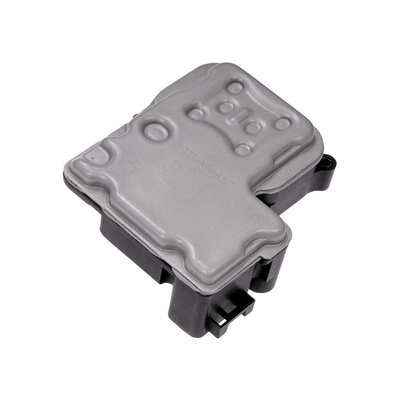
Shop the Parts Behind C1468
Below are the parts most often responsible for code C1468, ranked by how frequently each one is the actual culprit (per the diagnosis above). Tap any to see what we have for your vehicle.




The information in this article is provided for general reference and educational purposes only. Vehicle specifications, procedures, and part compatibility can vary by production date, trim level, and region. Always consult your vehicle's factory service manual and verify part numbers before purchasing or performing repairs. Safety-critical components such as airbags, seat belts, and braking systems should be installed by a qualified professional.
- 🧭 Diagnostic Flowchart
- 🎬 Helpful Videos
- 🛍️ Shop This Part
- What Does C1468 Mean?
- Can I Drive With C1468?
- Common Causes
- Symptoms
- Common Fixes & Costs
- DIY vs Professional
- Used vs. New Parts: Buying Guide
- What Happens If You Wait — Timeline
- Cost of Not Fixing It
- Diagnosis Steps
- When This Code Triggers (Freeze-Frame Conditions)
- Related Codes
- Climate & Environmental Factors
- How to Talk to a Mechanic About This Code
- Where to Take It: Dealer vs Independent vs Chain
- When to Walk Away From the Repair
- What Scan Tool You Need for This Code
- How to Clear the Code After You Fix It
- Will This Fail Emissions / State Inspection?
- Most Commonly Affected Vehicles
- Manufacturer-Specific Notes
- Real Owner Stories
- 2004 Lincoln Town Car at 150,000 miles - The Classic Misdiagnosis
- 2018 Toyota 4Runner at 51,000 miles - The Unusual Culprit
- 2001 Ford Expedition at 180,000 miles - The Simple Fix
- How to Prevent This Code From Triggering
- Frequently Asked Questions
- What does 'primary circuit failure' actually mean?
- I replaced the module/compressor but the code came back. What now?
- On my Toyota, the ABS lights came on right after I installed new LED headlights. Are they related?
- Can a bad battery cause a C1468 code?
- Can I just replace the fuse to fix it?
- How do I reset the C1468 light after a repair?
- Should I repair the air suspension or convert to regular springs?
- Key Takeaways
- 🎟️ Get 5% Off