

Ultimate C1471 Guide: Four-Wheel Drive & ABS Faults (2026 Update)
What code C1471 means, why it triggers, and how to diagnose and fix it like a pro.
- Code C1471 indicates a 4WD electrical fault on most trucks, but signals a critical ABS Hydraulic Control Unit failure on 2005-2008 Ford Escape Hybrids.
- Replace the $30-$80 dash selector switch first on GM trucks, as it causes over 50% of C1471 codes before sensor or motor failures.
- Verify wiring integrity and shift motor operation with a bidirectional scanner before spending $200+ replacing the transfer case position sensor.
- Check the battery voltage (must be >12.4V) and inspect the underbody wiring harness for corrosion before buying replacement parts.
- Stop driving Ford Escape Hybrids with this code immediately to prevent brake failure, and limit truck driving to avoid $4,000 in driveline binding damage.
What Does C1471 Mean?
Code C1471 is a manufacturer-specific Chassis code that most commonly indicates the Transfer Case Control Module (TCCM) has detected an electrical fault in the circuit for the transfer case position sensor. This sensor informs the computer of the transfer case's current gear (e.g., 2H, 4H, 4L). When the sensor's signal is irrational, missing, or doesn't match the commanded gear, the module flags the fault, setting C1471 and illuminating the 'Service 4WD' light. On 2005-2008 Ford Escape Hybrids, this code points to a critical ABS Hydraulic Control Unit failure.
Technical definition: C1471 lacks a universal SAE standard, leading to manufacturer variations. Most commonly, it means 'Transfer Case Range Position Sensor Circuit Malfunction' or 'Four-Wheel Drive Low Range (4x4L) Switch Circuit Fault'. On 2005-2008 Ford Escape Hybrid models, C1471 is defined as an 'ABS Hydraulic Control Unit (HCU) Circuit Failure', indicating a serious brake system problem entirely unrelated to the 4WD system.
Can I Drive With C1471?
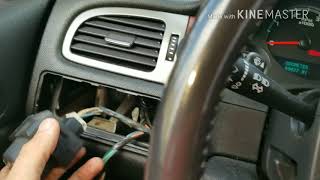
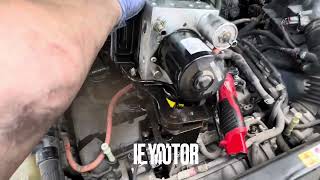
Yes, But With Caution. Yes, but with extreme caution. A 4WD system fault prevents engagement or causes driveline binding on dry pavement, leading to transfer case damage ($2,000-$4,000). On Ford Escape Hybrids, C1471 indicates a compromised ABS Hydraulic Control Unit (HCU). 🎬 Watch: How to swap and initialize the Ford Escape Hybrid HCU Driving with a failing HCU causes sudden hard pedals and increased stopping distance. Stop driving the hybrid immediately to avoid accidents.
Common Causes
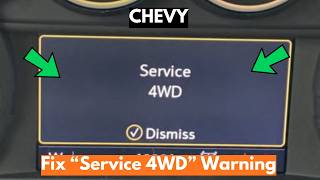
- Failed 4x4 Selector Switch (Very Common) — The dash-mounted switch contains small contacts that wear out over time. This is the most frequent failure point on Chevrolet and GMC trucks, 🎬 Watch: How to fix the Service 4WD warning on Chevy trucks often preceding sensor or motor failure.
- Faulty Transfer Case Position Sensor (Encoder Ring) (Very Common) — Mounted externally on the transfer case, this sensor is exposed to heat, moisture, and road debris. Internal electronic failure is a primary trigger for C1471 on GM, Ford, and Jeep trucks.
- Damaged Wiring or Corroded Connectors (Common) — The wiring harness to the transfer case is vulnerable. Chafing against the frame, heat damage, or corrosion in the connectors from water intrusion causes an open or short in the circuit.
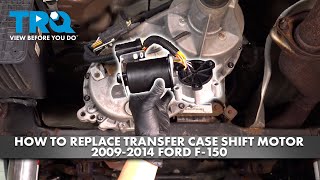
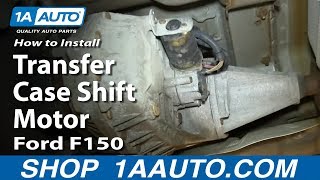
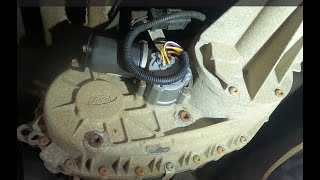
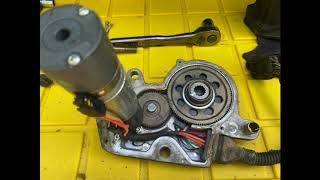
- Faulty Transfer Case Shift Motor (Common) — The electric motor that physically shifts the transfer case 🎬 See this walkthrough on replacing a Ford transfer case shift motor weakens or fails. When the TCCM commands a shift and the position sensor correctly reports no change, it triggers C1471 due to the mismatch.
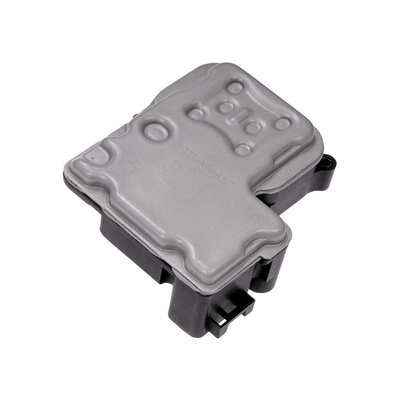
- Internal HCU Failure (Ford Escape Hybrid) (Common) — On 2005-2008 Ford Escape Hybrids, this code points directly to an internal malfunction within the ABS Hydraulic Control Unit. This is a known issue and a critical safety component failure.
- Weak Battery or Poor Ground Connections (Less Common) — Low system voltage during startup causes a cascade of erroneous codes. A corroded ground strap between the engine, frame, and body creates intermittent communication issues with the TCCM.
- Faulty Transfer Case Control Module (TCCM) (Less Common) — The TCCM fails from voltage spikes, moisture damage, or internal solder joint failure. This is the last component to suspect after testing all other parts in the circuit.
- Low or Incorrect Transfer Case Fluid (Rare) — Low or contaminated fluid causes mechanical binding inside the transfer case, preventing the shift motor from completing a shift and leading to a position mismatch fault.
- Faulty Brake Pressure Sensor (Rare) — On a small subset of vehicles, C1471 indicates a fault with a brake pressure sensor within the ABS module, used for stability control calculations.
Symptoms
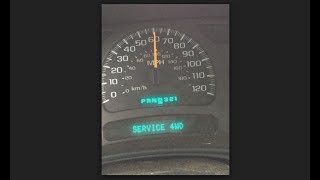
- Service 4WD / Service 4x4 Light is On — The driver information center displays a message indicating the 4WD system requires service.
- 4WD System Inoperative or Stuck — The vehicle fails to shift into or out of any 4WD mode. It remains permanently stuck in 2WD, 4H, or 4L.
- Flashing 4WD Indicator Lights — The lights on the selector switch or dashboard that indicate the current 4WD mode blink continuously instead of staying solid.
- ABS and Red 'BRAKE' Warning Light (Ford Escape Hybrid) — On 2005-2008 Ford Escape Hybrids, C1471 triggers the primary red 'BRAKE' light and an ABS light, indicating a critical brake system failure.
- Grinding or Whining Noise During Shift Attempt — An audible noise when trying to shift 4WD modes indicates a problem with the shift motor or mechanical binding in the transfer case.
- Hard Brake Pedal or Pedal Goes to Floor (Ford Escape Hybrid) — In cases of HCU failure on an Escape Hybrid, the brake pedal suddenly becomes very hard to press or goes to the floor with reduced stopping power.
- TCCM Live Data Mismatch (scan-tool only — no driver-felt sign) — Using a scan tool, the 'Commanded Gear' parameter does not match the 'Actual Gear' parameter reported by the position sensor.
Diagnostic Flowchart
Tap your situation to follow the diagnostic path that matches what you're seeing on this code.
Common Fixes & Costs
- Replace the 4x4 Selector Switch
— Parts: $25-$80, Labor: $50-$150, ~0.5 hr book time
(DIY)
Chevrolet Silverado / GMC Sierra (2007-2013): OEM 19259313 (Alt: Dorman 901-072, Standard Motor Products TCA-88)
Chevrolet Silverado / GMC Sierra (2014-2018): OEM 23228433 (Alt: Dorman 601-604, AC Delco 84254255) - Replace the Transfer Case Position Sensor
— Parts: $70-$250, Labor: $100-$220, ~1.2 hr book time
(Intermediate)
Chevrolet Silverado / GMC Sierra (2007-2018): OEM 84377721 (AC Delco) (Alt: Dorman 600-561, Standard Motor Products TCA-91)
Ford F-150 (2004-2008): OEM 7L1Z-7E440-A (Alt: Dorman 600-805, Walker 250-24953) - Repair Damaged Wiring or Connectors — Parts: $10-$40, Labor: $150-$300, ~1.5 hr book time (Intermediate)
- Replace the Transfer Case Shift Motor
— Parts: $180-$450, Labor: $120-$280, ~1.0 hr book time
(Intermediate)
Chevrolet Silverado / GMC Sierra (w/ NQF case): OEM 19258697 (Alt: Dorman 600-914, Cardone 48-114)
Ford F-150 (ESOF): OEM AL1Z-7G360-A (Alt: Dorman 600-807, Cardone 48-210) - Replace ABS HCU (Ford Escape Hybrid)
— Parts: $1,200-$2,500+, Labor: $400-$800, ~3.5 hr book time
(Professional)
Ford Escape Hybrid (2005-2008): OEM 8M6Z-2C286-A (or 8M64-2C286-AD) (Alt: Cardone (Reman) 12-17221, Dorman (Reman)) - Replace the Transfer Case Control Module (TCCM) — Parts: $250-$750, Labor: $100-$200 (plus programming), ~0.8 hr book time (Professional)
DIY vs Professional
- Replace the 4x4 Selector Switch — Beginner: Yes
Tools: Trim removal tools or a small flat-head screwdriver. - Replace the Transfer Case Position Sensor — Beginner: No, this is for intermediate DIYers.
Tools: Jack and jack stands, socket/wrench set, penetrating oil for rusted bolts. - Replace the Transfer Case Shift Motor — Beginner: No, this is for intermediate to advanced DIYers.
Tools: Jack and jack stands, socket/wrench set, pry bar. - Replace the Transfer Case Control Module (TCCM) — Beginner: No.
Tools: Basic hand tools to access the module (often under the dash or seat). - Replace ABS HCU (Ford Escape Hybrid) — Beginner: No. This is a professional-only repair.
Tools: Full socket set, line wrenches for brake lines, advanced bidirectional scan tool, brake bleeding equipment.
Used vs. New Parts: Buying Guide
When a used part is worth it: For electronic modules like the TCCM or mechanical parts like the shift motor, a used OEM part from a low-mileage donor vehicle is a cost-effective option. It is crucial to match part numbers exactly.
Donor-vehicle mileage cap: roughly under 80000 miles for the part to have meaningful remaining life.
Donor quality checklist:
- Verify the donor vehicle was not scrapped due to a related system failure.
- Avoid parts from rust-belt states, as corrosion is a primary failure mode for these under-vehicle components.
- Ensure the part number is an exact match. Superseded numbers require programming or are incompatible.
Decision logic:
- If The part is a simple dash switch and the new aftermarket part is under $100 → Buy new. The savings on a used switch are minimal and not worth the risk of early failure.
- If The part is an expensive shift motor or TCCM and the vehicle is over 10 years old → A used part from a reputable recycler with a warranty is a reasonable choice to manage repair costs.
- If The part is the ABS HCU for a Ford Escape Hybrid → Favor a new OEM or professionally remanufactured unit with a long warranty. A used part from a junkyard is a high-risk gamble for a safety-critical component.
Warranty tradeoff: Used parts typically come with a 30-90 day warranty on the part itself, but no coverage for labor costs if it fails. New aftermarket parts often have a 1-year to limited lifetime warranty.
Worst-case if a used part fails: $300-$900 if a used electronic module or motor fails after installation, requiring repeat labor costs and the purchase of another part.
What Happens If You Wait — Timeline
- 0-1 month: Initial fault. 'Service 4WD' light appears, often intermittently. 4WD system is disabled as a precaution, but the vehicle drives normally in 2WD. For Escape Hybrid, ABS/Brake lights appear. (MPG impact: 0%% · Added cost: $0)
- 1-6 months: Fault becomes permanent. If stuck in 4WD, driving on dry pavement causes driveline binding, tire hop on turns, and increased tire wear. For Escape Hybrid, brake performance becomes noticeably degraded. (MPG impact: 2-5% (due to driveline binding or inefficient braking)% · Added cost: $50-$400 (for premature tire wear))
- 6-12 months: Sustained damage. Constant driveline binding causes significant stress on U-joints, driveshafts, and internal transfer case components. Grinding or clunking noises become apparent. For Escape Hybrid, the HCU failure leads to a very hard pedal and minimal braking ability. (MPG impact: 5-10%% · Added cost: $400-$2,500 (Cost to replace worn U-joints, driveshaft, or a moderately damaged transfer case))
- 12+ months: Catastrophic failure. The transfer case fails completely, potentially cracking the housing or shearing gears, leaving the vehicle stranded. For the Escape Hybrid, a complete brake failure incident occurs. (MPG impact: 10-20% (if driveable at all)% · Added cost: $2,500-$8,000+ (Full transfer case replacement or accident-related damages))
Cost of Not Fixing It
- Immediate: For 4WD faults, you lose access to 4WD, creating a mobility issue in poor weather. For the Ford Escape Hybrid ABS fault, you have a compromised braking system, drastically increasing the risk of an accident. (Added cost: 0)
- 1-6 Months: If the 4WD system is stuck engaged on a part-time system, driving on dry pavement causes driveline binding. This leads to premature wear on tires, U-joints, and differential gears. (Added cost: $250-$4000 (Tire wear up to full transfer case replacement))
- 6+ Months: Continued driving with a binding driveline leads to catastrophic failure of the transfer case or front differential. For the Escape Hybrid, ignoring the ABS fault leads to complete brake failure. (Added cost: $4000+ (Major driveline failure or accident-related costs))
Diagnosis Steps
- Perform a Full System Scan & Check Battery
Ensure the battery is above 12.4V with the engine off and holding 13.7V-14.7V while running. Use a professional OBD-II scanner to read all modules. Record C1471 and any U-series (communication) codes. Clear them and see which return immediately.
Tools: Multimeter, Professional OBD-II Scanner (Beginner) - Test the 4x4 Dash Switch
With the vehicle running, cycle the 4WD selector switch through all positions. Listen for a click or whir from the transfer case shift motor. If the switch lights blink or do not illuminate, and no sound is heard, the dash switch is the primary suspect.
Tools: None (Visual/Audible Inspection) (Beginner) - Visual Inspection of Wiring and Connectors
Inspect the entire wiring harness running to the transfer case. Look for chafing against the frame, melting near the exhaust, and stretched wires. Unplug the connectors at the position sensor and shift motor to check for green/white corrosion or bent pins.
Tools: Flashlight, Safety Glasses, Mirror (Beginner) - Analyze Scan Tool Live Data
Navigate to the TCCM live data stream. Monitor 'Commanded Gear' and 'Actual Gear'. As you command shifts, both parameters must match. If 'Commanded' changes but 'Actual' does not, the shift is failing to complete.
Tools: Advanced Bidirectional Scanner (Advanced) - Test the Transfer Case Shift Motor
Use a bidirectional scanner to command the motor to activate; you should hear and feel it run. For a definitive test, use a power probe to apply direct power and ground to the motor's pins. A weak, struggling, or silent motor is faulty.
Tools: Advanced Scanner, Power Probe or Jumper Wires, Service Manual (Advanced) - Test the Position Sensor Circuit with a Multimeter
Disconnect the sensor. With the key on, engine off, probe the harness-side connector. Verify a 5V reference signal from the TCCM, a good ground (< 0.1V), and the signal wires. A missing 5V reference points to a wiring or TCCM issue, not a bad sensor.
Tools: Multimeter, Service Manual, Jack and Jack Stands (Advanced) - Test the Position Sensor Resistance (Ohm Test)
For older variable-resistor sensors, disconnect the sensor and connect a multimeter to the signal and ground pins. As an assistant shifts the transfer case lever, the resistance must change smoothly with no dropouts. A reading of infinity (OL) indicates a failed sensor.
Tools: Multimeter, Service Manual, Assistant (Advanced) - Check Transfer Case Fluid
Verify the transfer case fluid is at the correct level and doesn't look like chocolate milk or smell burnt. Incorrect or low fluid causes mechanical shifting issues that the computer misinterprets as a sensor fault.
Tools: Wrench Set, Fluid Pump, Catch Pan (Intermediate) - Diagnose the TCCM
If the switch, sensor, motor, and wiring are good, the TCCM is the culprit. Verify the TCCM has solid power and ground at its main connector. If power is present but it fails to send command signals, the module requires replacement and programming.
Tools: Multimeter, Service Manual (Professional)
When This Code Triggers (Freeze-Frame Conditions)
- Vehicle Speed: 0 mph (at startup) or 15-45 mph (The TCCM detects the fault during the initial key-on self-test before the vehicle moves. It also triggers during city driving when a shift into or out of 4WD is attempted.)
- Engine RPM: 0 (key-on) or 1200-2500 RPM (The code sets with the engine off (key-on) or during normal driving when the TCCM commands a shift and does not receive the expected feedback from the position sensor.)
- System Voltage: 11.5V - 14.8V (The fault typically occurs within the normal operating voltage range. A low voltage condition (<11.5V) during startup causes the TCCM to set erroneous communication or circuit codes.)
- Commanded vs. Actual Position: Mismatch (e.g., Commanded: 4H, Actual: 2H) (The TCCM commands a gear change, and the position sensor reports no change, an invalid position, or the wrong position after the shift motor attempts to move.)
Related Codes
- C0374 — A general 4WD system fault code. C1471 is more specific, pointing to the position sensor circuit. If both are present, C1471 provides a better diagnostic starting point.
- U1000 — A 'Loss of Communication' code. If C1471 appears with a U-code, it strongly suggests the TCCM has lost power, has a bad ground, or has failed entirely.
- P1875 — This is a Ford-specific Powertrain code for '4WD Low Switch Circuit Failure.' It is functionally equivalent to C1471 on a Ford truck, confirming the fault is within the transfer case range selection circuit.
- C1241 / C1391 — Common on hybrid brake systems. C1241 indicates a voltage issue to the brake ECU, while C1391 indicates an abnormal leak in accumulator pressure. If seen alongside C1471 on an Escape Hybrid, they confirm a catastrophic failure in the HCU.
Climate & Environmental Factors
- Rust Belt / Road Salt: Salt and moisture cause severe corrosion on the transfer case housing, the position sensor, and especially the electrical connectors and wiring pins. This leads to intermittent or total circuit failure.
- High Humidity / Water Submersion: Driving through high water or living in a very humid climate compromises connector seals, leading to corrosion and short circuits within the position sensor and shift motor connectors.
- Extreme Cold: In very low temperatures, worn electrical components have increased resistance, causing intermittent signal faults. The grease inside the transfer case shift motor thickens, making the motor work harder and fail to complete a shift.
- Off-Roading: Debris strikes and damages the sensor, motor, or wiring harness. Mud and water packed around the components accelerate corrosion and cause overheating of the shift motor.
How to Talk to a Mechanic About This Code
Say this: "Be specific to your vehicle. For a truck/SUV: "I have a 'Service 4WD' light and a C1471 code. I'd like a diagnosis of the transfer case electrical system, including the position sensor circuit, the dash switch, and the shift motor." For a 2005-2008 Ford Escape Hybrid: "I have a C1471 code with the red 'BRAKE' and ABS lights on. I need a diagnosis of the ABS Hydraulic Control Unit.""
This signals you've done research, directs the technician to the correct system, and prevents them from starting from scratch. It separates the common 4WD fault from the critical Escape Hybrid brake fault, saving time and preventing dangerous misdiagnosis.
Avoid saying:
- 'My 4x4 light is on, can you just fix it?' (Too vague, invites expensive guesses)
- 'I read online it's the sensor, just replace it.' (This is a common misdiagnosis and wastes money)
- 'Just do whatever you think is best.' (Invites upselling without proper diagnostic steps)
Questions to ask before authorizing the repair:
- For a 4WD fault: Did you test the 5V reference and ground at the sensor? Did you command the shift motor with a scan tool to check its operation? Is the problem the sensor, the motor, the wiring, or the TCCM?
- For an Escape Hybrid HCU fault: Have you confirmed the failure is internal to the HCU? What is the cost for a new OEM unit versus a remanufactured one? Does your labor quote include the required electronic ABS bleeding procedure?
- For any repair: Can you provide a detailed estimate with a breakdown of parts and labor? What is the warranty on the parts and the labor for this repair?
Where to Take It: Dealer vs Independent vs Chain
- Dealer:
Required for the Ford Escape Hybrid ABS fault and any repair needing module programming.
Best for: Vehicles under warranty, Ford Escape Hybrid HCU replacement (due to specialized brake bleeding), Repairs requiring module programming (TCCM, ABS) or specific TSB software updates
Downsides: Highest labor rates (1.5-2x independent shops), Recommends entire component replacement when a smaller part or wiring repair suffices (Typical cost: +50% vs. baseline) - Independent Shop:
Best fit for most C1471 issues on trucks/SUVs. A well-equipped independent handles everything short of module programming.
Best for: Out-of-warranty trucks and SUVs with the common 4WD fault, Diagnosing and replacing common failure parts like the dash switch, position sensor, shift motor, or repairing wiring
Downsides: Quality and diagnostic equipment vary greatly; vet shops by reviews and ASE certifications, Lacks expensive, dealership-level tools for module programming (Typical cost: +0% vs. baseline) - Chain Shop:
AVOID for initial diagnosis. The risk of misdiagnosis is high. Only use if you are 100% certain a simple part (like a dash switch) is the cause.
Best for: Simple, pre-diagnosed part replacement like a 4x4 dash switch
Downsides: Technician skill varies widely; not equipped for in-depth electrical diagnosis, High pressure to upsell leads to recommending unnecessary parts instead of proper diagnosis (Typical cost: -10% vs. baseline)
When to Walk Away From the Repair
If the estimated repair cost exceeds 50% of the vehicle's current private-party value, seriously consider selling the vehicle as-is or trading it in rather than repairing it.
- Car worth $5000, fix is $700: Fix it. A $700 repair for a shift motor on a 2007 GMC Sierra valued at ~$5,000 is well below the threshold.
- Car worth $5000, fix is $3500: Walk away. If the transfer case requires full replacement at $3,500, this is 70% of the truck's value. It is not an economic repair.
- Car worth $2500, fix is $4000: Walk away. The HCU replacement on a 2008 Ford Escape Hybrid costs far more than the vehicle's value. This is a total economic loss.
What Scan Tool You Need for This Code
Minimum: A scanner that reads and clears Chassis ('C') codes from the ABS and/or Transfer Case modules. A basic engine-only (P-code) reader is not sufficient.
A cheap $20 scanner fails to see the C1471 code at all. For diagnosis, you need to see live data (e.g., sensor voltage, commanded vs. actual position) from the specific module, requiring a more capable tool.
Budget: XTool A30M / Kingbolen Ediag Elite (~$80) — These Bluetooth dongles connect to a smartphone app and read all system modules, including Chassis codes. They offer live data graphing and limited bidirectional controls, providing incredible value for diagnosing a C1471 fault.
Mid-range: Foxwell NT510 Elite / Autel MaxiCOM MK808S (~$180-380) — A Foxwell NT510 provides deep, brand-specific bidirectional control to command the shift motor. An Autel MK808S is a full tablet offering strong bidirectional control across many brands and performs the ABS automated bleed function needed for an Escape Hybrid HCU replacement.
Professional: Autel MK808BT Pro / Launch X431 series (~$500-1200) — These professional-grade tools offer full bidirectional control, module coding/programming capabilities for TCCM or ABS module replacement, wireless connectivity, and access to advanced functions like vehicle topology maps.
Rent vs buy: Rent only as a last resort. While AutoZone offers a Loan-A-Tool program, the capability of the loaned scanners for chassis codes and live data is inconsistent. For a C1471, buy at least a budget-pick scanner to ensure you properly access the required module and data.
How to Clear the Code After You Fix It
- Use a professional OBD-II scan tool to clear the C1471 code from the Transfer Case Control Module (TCCM) or ABS module.
- Disconnecting the battery is not a reliable method for clearing chassis codes and does not reset the module's fault memory.
- Perform the specific drive cycle recommended by the manufacturer to allow the system to self-test the repair.
Drive cycle (~20 minutes): Start the engine and let it idle in Park/Neutral for 2 minutes. With the vehicle stopped and your foot on the brake, cycle the 4WD switch through each position (2H, 4H, 4L), pausing for 10-15 seconds in each mode to allow the shift to complete. Drive the vehicle for 10-15 minutes, including stop-and-go city driving and steady cruising above 40 mph to verify communication.
Readiness monitors affected: This is a Chassis ('C') code, so it does not directly affect primary emissions-related readiness monitors like the Catalyst or O2 sensor monitors., However, clearing codes with a scanner resets all monitors, requiring a full drive cycle to make the vehicle ready for an emissions test.
Before emissions retest: drive at least 50 miles to fully set monitors.
Watch out for:
- The code returns immediately if the underlying electrical or mechanical fault is not properly fixed.
- Using a basic P-code reader fails to access or clear C-codes from the TCCM or ABS module.
- Forgetting to perform the functional test (cycling through 4WD modes) after the repair is complete.
Will This Fail Emissions / State Inspection?
Yes — this code typically fails an OBD-II emissions inspection.
- California: While C1471 is a chassis code, the illumination of a malfunction light (like 'Service 4WD') is grounds for failure. Clearing the code resets emissions readiness monitors, failing the OBD-II test until a full drive cycle is completed.
- New York: New York's annual inspection includes both safety and emissions checks. An illuminated malfunction indicator lamp is cause for failure. All non-exempt vehicles 1996 and newer are subject to an OBD-II inspection, which this code fails.
- Texas: In the 17 counties requiring emissions testing, an illuminated 'Service 4WD' light associated with a chassis code is an automatic failure of the OBD-II test.
Most Commonly Affected Vehicles
- Chevrolet Silverado / Suburban / Tahoe (2003-2018) — Extremely common issue. Prone to failure of the dash switch and the transfer case position sensor. Later 2014-2018 models are known for widespread electrical issues.
- GMC Sierra / Yukon (2003-2018) — Mechanically identical to their Chevrolet counterparts, suffering from the exact same high failure rates of the selector switch and position sensor.
- Ford Escape Hybrid (2005-2008) — This is the critical exception. C1471 on these models indicates a fault in the ABS Hydraulic Control Unit (HCU), not the 4WD system. It is a major safety issue and an expensive repair.
- Ford F-150 / Expedition (2004-2015) — The Electronic Shift-On-the-Fly (ESOF) system is susceptible to wiring issues, sensor failure, and shift motor failure.
- Jeep Wrangler / Grand Cherokee (2005-2018) — Due to their off-road design, wiring and sensors underneath are highly susceptible to damage from debris and water. Corrosion is a primary cause of chassis codes in this family.
- Dodge Ram 1500 (2006-2018) — Shares similar 4WD system architecture to other domestic trucks and experiences faults with the transfer case encoder motor, position sensor, and wiring harness.
- Nissan Titan / Frontier / Rogue (2010-2020) — On many Nissan models, chassis codes in this range are tied to the ABS/VDC (Vehicle Dynamic Control) system. A fault here disables the 4WD system as a precaution.
- Cadillac Escalade (2003-2014) — Built on the same platform as the Tahoe/Yukon, the Escalade suffers from the same common failures of the 4WD selector switch, position sensor, and encoder motor.
Manufacturer-Specific Notes
- Ford: On 2005-2008 Escape Hybrids, C1471 is an ABS code for HCU failure. It is NOT a 4WD code. This is the most critical quirk associated with this code number.
- General Motors (Chevy/GMC): The 'Service 4WD' message is so commonly caused by a failed dash selector switch that many technicians replace it as a first step. It is inexpensive, easy to access, and has an extremely high failure rate.
- Jeep: On models used for off-roading, a thorough inspection of the wiring harnesses near all four wheels and the transfer case is paramount. Suspension flex and trail debris frequently cause hidden wire damage.
- Subaru: While not typically setting C1471, Subarus are famous for cascading warning lights. A single fault, like a bad brake light switch, illuminates the ABS, VDC, and AWD lights simultaneously.
- Hyundai: A recall on 2013-2015 Santa Fe Sport models was issued for internal ABS module leaks causing electrical shorts. While not always C1471, it shows a precedent for ABS-related chassis codes in the brand.
Real Owner Stories
2007 GMC Sierra 1500 at 140K miles - The Easy Fix
Owner reported 'Service 4WD' message appeared intermittently, especially in cold weather. 4WD would not engage, and the selector switch lights were out.
What they tried:
- Initially suspected a major transfer case issue.
- Read online forums suggesting the dash switch is a common failure point.
Outcome: Replaced the 4x4 selector switch in the dashboard (Part Dorman 901-072). The repair took 15 minutes with a trim tool. Total cost was under $40. The 4WD system immediately began working correctly.
Lesson: On GM trucks, the inexpensive and easy-to-replace dash switch is the most common cause for a 'Service 4WD' message and should be the first part checked or replaced.
2006 Ford F-150 at 115K miles - The Misdiagnosis
'Service 4x4' light on, code C1471 present. The truck was stuck in 2WD and would not shift into 4H.
What they tried:
- Based on the code definition, the owner immediately replaced the transfer case position sensor. The code returned.
- Next, they replaced the transfer case shift motor. The code still returned.
- Finally took it to a shop for professional diagnosis.
Outcome: A technician found a corroded wire in the harness near the transfer case, about a foot away from the sensor connector. The wire had an intermittent open circuit. Repairing the wire for $150 (labor) fixed the issue permanently.
Lesson: The code often points to a 'circuit malfunction,' not necessarily a failed sensor. Always perform a full visual inspection and test the wiring for power, ground, and continuity before replacing expensive components like the shift motor.
2008 Ford Escape Hybrid at 95K miles - The Critical Exception
Red 'BRAKE' light and ABS light came on simultaneously, with a 'Service Brake System' message. The brake pedal felt hard and stopping distance was significantly increased. A scan revealed code C1471.
What they tried:
- Owner initially confused by search results pointing to 4WD problems.
- After more specific searching for 'Escape Hybrid C1471', they discovered it related to the ABS Hydraulic Control Unit (HCU).
Outcome: The vehicle was towed to a dealership. Diagnosis confirmed internal failure of the HCU. The total repair cost was over $4,000 for a new OEM HCU and labor, including bleeding the complex hybrid brake system.
Lesson: For 2005-2008 Ford Escape Hybrids, C1471 is a critical safety code indicating imminent brake system failure. Do not drive the vehicle. This is not a DIY repair due to the specialized equipment needed to bleed the brakes.
2014 Chevy Silverado at 80K miles - The TSB Solution
Service 4WD message appeared with code C0398 and sometimes C1471 after starting the truck in cold weather.
What they tried:
- Cleared codes, but they would return on the next cold start.
Outcome: Owner found GM Technical Service Bulletin (TSB) PIP5250C, which addresses this exact issue. The fix required the dealer to reprogram the Transfer Case Control Module (TCCM) with updated software and then perform a relearn procedure. The dealer charged one hour of labor ($150) for the programming.
Lesson: Before replacing parts, always search for Technical Service Bulletins (TSBs) for your specific vehicle, year, and code. A software update is often a cheaper and more effective fix than throwing hardware at the problem.
How to Prevent This Code From Triggering
- Periodically 'Exercise' the 4WD System (Once a month for 5-10 miles) — Engaging 4H once a month keeps the electric shift motor, actuators, and internal clutches from seizing due to inactivity. It circulates fluid to keep seals lubricated and prevent them from drying out.
- Change Transfer Case Fluid (Every 30,000 to 60,000 miles) — Transfer case fluid lubricates and cools gears and chains. Old fluid leads to increased friction and wear, causing mechanical binding that prevents shifts and triggers a C1471.
- Clean the Undercarriage and Connectors (Seasonally, especially after winter or off-roading) — Road salt, mud, and debris are the primary cause of corrosion on the transfer case wiring harness and connectors. Washing the underbody prevents the shorts and open circuits that cause this code.
- Apply Dielectric Grease to Connectors (Anytime a connector is unplugged for service) — Applying a small amount of dielectric grease to the seal of electrical connectors for the position sensor and shift motor keeps moisture and dirt out, preventing corrosion.
- Ensure Matched Tire Size and Pressure (During every tire rotation (5,000-7,500 miles)) — Running mismatched tire brands or sizes causes the 4WD system to bind. This puts immense stress on the transfer case, leading to mechanical failure that is misinterpreted as a sensor issue.
Frequently Asked Questions
Can I just ignore code C1471?
No. A 4WD fault leaves you without traction and causes expensive driveline damage if stuck engaged. An ABS fault on an Escape Hybrid risks total brake failure.
Is it expensive to fix a C1471 code?
Costs range from $80 for a DIY dash switch replacement to $700 for a shop-installed shift motor. However, an Escape Hybrid ABS HCU failure costs $3,000-$5,000 to repair.
The shop replaced my position sensor, but the C1471 code came back. What's next?
The sensor correctly reported a mismatch caused by another component. Test the transfer case shift motor for weakness and meticulously inspect the wiring harness for intermittent shorts.
My 'Service 4WD' light came on after my battery died. Are they related?
Yes. Low voltage triggers erroneous electronic fault codes in the TCCM. Fully charge the battery and clear the codes before replacing any parts.
What is the difference between a C-code like C1471 and a P-code?
'P' stands for Powertrain (engine, transmission), while 'C' stands for Chassis (ABS, steering, 4WD). C-codes require an advanced scanner to read and clear.
My truck has a manual 4x4 shifter on the floor. Can I still get this code?
Yes. Manual transfer cases use an electronic position sensor to broadcast the current gear to the ABS and Traction Control modules. A failure in this sensor circuit triggers C1471.
Can a bad wheel speed sensor cause a C1471?
No. A faulty wheel speed sensor sets its own specific code (like C0035). C1471 points directly to the transfer case position circuit or the ABS HCU.
Key Takeaways
- Code C1471 indicates a 4WD electrical fault on most trucks, but signals a critical ABS Hydraulic Control Unit failure on 2005-2008 Ford Escape Hybrids.
- Replace the $30-$80 dash selector switch first on GM trucks, as it causes over 50% of C1471 codes before sensor or motor failures.
- Verify wiring integrity and shift motor operation with a bidirectional scanner before spending $200+ replacing the transfer case position sensor.
- Check the battery voltage (must be >12.4V) and inspect the underbody wiring harness for corrosion before buying replacement parts.
- Stop driving Ford Escape Hybrids with this code immediately to prevent brake failure, and limit truck driving to avoid $4,000 in driveline binding damage.
Helpful Videos
Shop the Parts Behind C1471
Below are the parts most often responsible for code C1471, ranked by how frequently each one is the actual culprit (per the diagnosis above). Tap any to see what we have for your vehicle.


The information in this article is provided for general reference and educational purposes only. Vehicle specifications, procedures, and part compatibility can vary by production date, trim level, and region. Always consult your vehicle's factory service manual and verify part numbers before purchasing or performing repairs. Safety-critical components such as airbags, seat belts, and braking systems should be installed by a qualified professional.
- 🧭 Diagnostic Flowchart
- 🎬 Helpful Videos
- 🛍️ Shop This Part
- What Does C1471 Mean?
- Can I Drive With C1471?
- Common Causes
- Symptoms
- Common Fixes & Costs
- DIY vs Professional
- Used vs. New Parts: Buying Guide
- What Happens If You Wait — Timeline
- Cost of Not Fixing It
- Diagnosis Steps
- When This Code Triggers (Freeze-Frame Conditions)
- Related Codes
- Climate & Environmental Factors
- How to Talk to a Mechanic About This Code
- Where to Take It: Dealer vs Independent vs Chain
- When to Walk Away From the Repair
- What Scan Tool You Need for This Code
- How to Clear the Code After You Fix It
- Will This Fail Emissions / State Inspection?
- Most Commonly Affected Vehicles
- Manufacturer-Specific Notes
- Real Owner Stories
- 2007 GMC Sierra 1500 at 140K miles - The Easy Fix
- 2006 Ford F-150 at 115K miles - The Misdiagnosis
- 2008 Ford Escape Hybrid at 95K miles - The Critical Exception
- 2014 Chevy Silverado at 80K miles - The TSB Solution
- How to Prevent This Code From Triggering
- Frequently Asked Questions
- Can I just ignore code C1471?
- Is it expensive to fix a C1471 code?
- The shop replaced my position sensor, but the C1471 code came back. What's next?
- My 'Service 4WD' light came on after my battery died. Are they related?
- What is the difference between a C-code like C1471 and a P-code?
- My truck has a manual 4x4 shifter on the floor. Can I still get this code?
- Can a bad wheel speed sensor cause a C1471?
- Key Takeaways
- 🎟️ Get 5% Off