

OBD-II Code C1472: Transfer Case Clutch Performance
What C1472 means, why it triggers, and how to fix it
- On 2021 and newer Jeep and Dodge vehicles, a DTCM software bug causes over 80% of C1472 codes, requiring a dealer reflash per TSB 08-103-22.
- Never replace a $3,000 transfer case or actuator motor before verifying your VIN against manufacturer software update bulletins.
- Perform a free 15-minute vehicle sleep cycle by walking the key fob 20 feet away if the code triggered immediately after a battery replacement.
- Code C1472 completely disables your 4WD system, creating an immediate safety hazard in rain, snow, or off-road conditions.
- Verify your vehicle's specific code definition, as C1472 indicates a 'Deceleration Sensor' failure on Toyotas rather than a 4WD transfer case issue.
What Does C1472 Mean?
Code C1472 means the Drivetrain Control Module (DTCM) detected the electronic clutch inside the transfer case is failing to operate correctly. The module commanded the clutch to engage or disengage but received incorrect feedback, indicating a performance failure.
Technical definition: The official definition for the C1472-92 variant is 'Transfer Case Clutch Control – Performance or Incorrect Operation'. This indicates the DTCM detected a failure in the transfer case clutch control circuit. On older models, it defines 'Transfer Case Clutch Overheat' due to excessive clutch slip from hard driving in mud or snow.
Can I Drive With C1472?
Yes, But With Caution. You can drive, but the 4WD system is disabled or performs erratically. This poses a safety risk in slippery conditions. Driving long-term with the 'Service 4WD' light on risks significant drivetrain damage if the system attempts to engage unexpectedly.
Common Causes
- Drivetrain Control Module (DTCM) Software Issue (Very Common) — On 2021-2023 Jeep and Dodge models, a software bug triggers this code. Manufacturers issued TSBs 08-103-22 REV. B and S2121000014 REV. C to resolve this via a dealer software update.
- Improper Vehicle Sleep Cycle After Update (Common) — If the code appears immediately after a software update or battery change, the vehicle's electronics failed to shut down and 'sleep' properly, causing communication glitches.
- Low or Incorrect Transfer Case Fluid (Common) — Degraded, low, or incorrect fluid causes the transfer case clutch packs to slip or bind. This prevents the clutch from achieving the commanded state.
- Faulty Drivetrain Control Module (DTCM) (Less Common) — The control module itself fails, particularly on 2014-2020 models. This causes grinding noises or harsh shifting, often without other codes present.
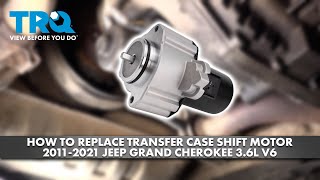
- Failed Transfer Case Actuator / Shift Motor (Less Common) — This exterior electric motor physically executes shifts. The motor burns out or its internal position sensor fails, preventing shift confirmation. 🎬 See this walkthrough on replacing the transfer case shift motor.
- Wiring Harness Damage (Rare) — The undercarriage wiring harness sustains damage from road debris, corrosion, or rodents. A short or open circuit blocks commands and feedback.
- Loose or Corroded Ground Connection (Rare) — A poor DTCM ground connection (specifically G910A on Jeeps) creates erratic voltage, forcing the module to set false performance codes.
- Internal Transfer Case Failure (Rare) — A mechanical failure inside the transfer case, such as a worn clutch pack or stretched chain, prevents correct operation. Mismatched tire sizes or low fluid levels accelerate this damage.
Symptoms
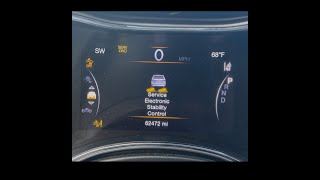
- Service 4WD Light — The 'Service 4WD' warning message illuminates on the dashboard.
- 4WD System Unavailable — The vehicle locks into two-wheel drive, preventing shifts into 4WD High or 4WD Low.
- Grinding or Clunking Noises — Grinding, clicking, or clunking sounds emit from the undercarriage during startup or slow turns as the system attempts to engage.
- Harsh Shifting or Jerking — The vehicle binds, jerks, or shifts harshly at low speeds due to incorrect clutch engagement.
- Flashing 4WD Mode Indicator Lights — The 4WD selector switch lights flash continuously, indicating a failure to engage the selected mode.
Diagnostic Flowchart
Tap your situation to follow the diagnostic path that matches what you're seeing on this code.
Common Fixes & Costs
- DTCM Software Update (Reflash) — Parts: $0 (if under warranty/TSB), Labor: $150-$250, ~1.5 hr book time (Professional)
- Clean and Tighten Ground Connection — Parts: $0, Labor: $50-$100, ~0.5 hr book time (Beginner)
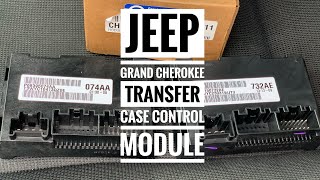
- Replace Drivetrain Control Module (DTCM/TCCM)
— Parts: $300-$450, Labor: $95-$150, ~0.7 hr book time
(DIY)
2021-2023 Jeep Grand Cherokee (WL): OEM Mopar 68464872AM (Alt: N/A)
2014-2020 Jeep Grand Cherokee (WK2): OEM Mopar 68250125AG (Alt: N/A)
2018-2022 Dodge Durango: OEM Mopar 68423302AA (Alt: N/A) - Replace Transfer Case Actuator (Shift Motor)
— Parts: $450-$1200, Labor: $95-$200, ~1.5 hr book time
(Intermediate)
2014-2020 Jeep Grand Cherokee (WK2): OEM Mopar 68321349AE (Alt: Dorman 600-935)
2011-2022 Dodge Durango: OEM Mopar 5143477AA (Alt: Dorman 600-935)
2011-2020 Ford F-150: OEM Ford BL3Z-7G360-A (Alt: Dorman 600-926) - Replace Transfer Case Assembly
— Parts: $2500-$4000, Labor: $650-$1000, ~4 hr book time
(Professional)
2021-2023 Jeep Grand Cherokee (WL): OEM Mopar 68459984AF (MP3028) (Alt: Remanufactured units vary)
Used vs. New Parts: Buying Guide
When a used part is worth it: For the Drivetrain Control Module (DTCM), a refurbished part is a cost-effective option. For the transfer case actuator motor, buying used is never recommended due to internal plastic gear wear.
Donor-vehicle mileage cap: roughly under 60000 miles for the part to have meaningful remaining life.
Donor quality checklist:
- For a DTCM, ensure the part number matches exactly.
- Verify the module has been tested and includes a warranty; refurbished units are superior to untested salvage parts.
- Avoid parts from vehicles in flood-damaged or high-corrosion areas.
Decision logic:
- If The required fix is a software update → Visit a dealership; parts replacement will not solve the issue.
- If The fix is a DTCM and the vehicle is over 100K miles → Purchase a new or refurbished module with a warranty. Used modules carry a high risk of premature failure.
- If The fix is the transfer case actuator motor → Buy a new OEM or reputable aftermarket part. The labor required makes installing a worn used motor a poor investment.
Warranty tradeoff: Salvage yard parts are sold 'as-is' or with a 30-day warranty. Refurbished modules include a 1-year warranty. New aftermarket and OEM parts carry the longest warranties.
Worst-case if a used part fails: $300-$500 if a used electronic module fails after installation, requiring repeat labor and a new part.
What Happens If You Wait — Timeline
- 0-2 weeks: Code sets and 'Service 4WD' light illuminates. 4WD system is disabled by the computer. No mechanical symptoms are present. (MPG impact: 0%% · Added cost: $0)
- 2 weeks - 3 months: Repeated failed engagement attempts cause a sticking actuator motor to overheat or burn out. If the cause is low fluid, internal clutch temperatures rise. (MPG impact: 0-1%% · Added cost: $600-$1400 (if actuator motor fails))
- 3-9 months: Driving on low or degraded fluid causes transfer case clutch packs to glaze and burn. Metal particles circulate in the fluid, accelerating damage to bearings and gears. (MPG impact: 1-3%% · Added cost: $1500-$2500 (internal damage now likely))
- 9+ months: Catastrophic internal failure. The transfer case chain stretches and slips, or clutch packs disintegrate. This leads to loud grinding and complete loss of power transfer. (MPG impact: 3-5%% · Added cost: $3000-$5000+ (full transfer case replacement))
Cost of Not Fixing It
- Immediate: Loss of 4WD/AWD functionality. This creates a significant safety hazard in slippery conditions like rain, snow, or ice. (Added cost: Negligible)
- 1-6 months: Repeated failed engagement attempts cause a sticking actuator motor to burn out, turning a minor software glitch into a hardware replacement. (Added cost: $600-$1400)
- 6+ months: Driving on low fluid or worn clutches causes severe internal damage, such as chain slip or gear destruction, requiring a complete transfer case replacement. (Added cost: $3000-$5000+)
Diagnosis Steps
- Check for Technical Service Bulletins (TSBs)
Verify if your VIN falls under TSBs 08-103-22 REV. B or S2121000014 REV. C. This software bug is the primary cause for 2021+ Jeep/Dodge models and requires a dealer update.
Tools: Phone or computer (Beginner) - Perform a Vehicle Sleep Cycle
Turn the ignition off, close all doors, move the key fob at least 20 feet away, and let the vehicle sit undisturbed for 15 minutes until all interior lights turn off. This resets all modules.
Tools: None (Beginner) - Inspect DTCM Fuses and Ground Connection
Check the Drivetrain Control Module (DTCM) fuses. Locate the main module ground connection (G910A on Jeeps) and verify it is tight and free of corrosion.
Tools: Owner's manual, basic socket set (Beginner) - Check Transfer Case Fluid
Inspect the transfer case fluid level and condition. Low or burnt fluid indicates internal slipping. Top off or replace with manufacturer-specified fluid.
Tools: Basic socket set, fluid pump, owner's manual (Intermediate) - Inspect Wiring and Connectors
Visually inspect the wiring harness connecting the DTCM (under a front seat) to the transfer case actuator motor. Unplug and reconnect to ensure solid contact.
Tools: Flashlight (Intermediate) - Analyze Scan Tool Live Data
Using a bidirectional scan tool, monitor 'Transfer Case Clutch Commanded State' versus 'Actual State'. A mismatch confirms a performance failure. Monitor motor current for spikes indicating a seized motor.
Tools: Professional bidirectional scan tool (Advanced) - Pro Tip: Test DTCM 5-Volt Reference Circuit
Disconnect the transfer case motor harness. Turn the ignition on. Read the 5-volt supply voltage with a scan tool; it must read 4.75-5.25 volts. Measure resistance to ground; below 5.0 Ohms indicates a short.
Tools: Multimeter, professional scan tool (Advanced) - Pro Tip: Test the Transfer Case Actuator Motor
Probe the two large wires on the actuator motor connector with a multimeter. Have an assistant shift 4WD modes. Battery voltage (12.0-12.6V) should appear briefly. If voltage is present but the motor fails to run, replace the motor.
Tools: Multimeter, jumper wires, basic hand tools (Advanced) - Professional Scan and Diagnosis
If manual testing fails, a professional bidirectional scan tool (like wiTECH) must command DTCM self-tests to isolate module faults from internal mechanical failures.
Tools: Professional bidirectional scan tool (Professional)
When This Code Triggers (Freeze-Frame Conditions)
- Engine Coolant Temp: 185-210°F (The fault logs when the vehicle reaches full operating temperature.)
- Vehicle Speed: 20-50 mph (The performance check runs during steady-state city or highway driving, not at a standstill.)
- Engine RPM: 1200-2500 RPM (Corresponds to normal cruising RPMs when the system performs self-checks.)
- Battery Voltage: 13.0-14.5 V (The test runs when the charging system is healthy; abnormal voltage causes separate electrical faults.)
Related Codes
- U0102 — 'Lost Communication With Transfer Case Control Module'. This indicates the DTCM is completely offline due to a power/ground failure or complete module death.
- U0403 — 'Invalid Data Received From Transfer Case Control Module'. The DTCM is online, but sending nonsensical data to other modules. They frequently appear together due to software glitches.
- C1463-94 — 'Front Axle Disconnect Control-Unexpected Operation'. This code is frequently listed in the same TSBs as C1472, stemming from the identical DTCM software glitch.
- C149D-54 / C2206-56 — These codes indicate a severe mechanical fault. If present alongside C1472, manufacturer diagnostic trees point directly to hardware replacement.
Climate & Environmental Factors
- Cold Weather: Extremely cold temperatures thicken transfer case fluid, increasing stress on the actuator motor during initial startup and accelerating wear on failing motors.
- Corrosion (Salt Belt Regions): Road salt causes severe corrosion on the transfer case actuator motor housing, electrical connectors, and DTCM chassis ground points, triggering electrical failures.
How to Clear the Code After You Fix It
- Fix the underlying cause (e.g., update software, replace module).
- Use an OBD-II scan tool to clear the fault codes from the DTCM.
- Perform a full vehicle sleep cycle, especially after a software update or module replacement.
- Complete a drive cycle to ensure the fault does not return.
Drive cycle (~20 minutes): Start the engine from cold and idle for 3 minutes. Drive in the city at 25-40 mph, including several complete stops. Drive on the highway at a steady 55-60 mph for 5 miles. Coast down an exit ramp without braking to below 20 mph.
Readiness monitors affected: None directly
Before emissions retest: drive at least 50 miles to fully set monitors.
Watch out for:
- Clearing the code without addressing software bugs results in the code returning immediately.
- Skipping the vehicle 'sleep cycle' after a module update causes the code to reappear falsely.
- Failing to drive the vehicle under the right conditions prevents the DTCM from re-running internal performance checks.
Will This Fail Emissions / State Inspection?
No — by itself this code doesn't fail OBD inspection (but it can keep readiness monitors from setting, which causes a separate fail).
- General Note: This code illuminates the 'Service 4WD' light, not the Check Engine Light (CEL). Because emissions inspections fail based on an illuminated CEL, C1472 alone does not cause an OBD-II emissions failure.
- California: A smog check fails if the Check Engine Light is on. As C1472 does not trigger the CEL, it passes the emissions portion.
- New York: The NYS inspection checks for CEL illumination. If C1472 is not accompanied by a CEL, it passes the emissions inspection.
- Texas: Annual emissions inspections check for CEL status and readiness monitors. C1472 alone does not cause a failure.
Most Commonly Affected Vehicles
- Jeep Grand Cherokee (WL) (2021-2023) — Extremely common issue due to a software bug in the DTCM, addressed by manufacturer TSBs 08-103-22 REV. B and S2121000014 REV. C.
- Jeep Grand Cherokee 4xe (WL) (2022-2023) — Prone to the same software and module sleep cycle issues as the standard Grand Cherokee.
- Jeep Grand Cherokee (WK2) (2014-2020) — On these models, the code is frequently linked to a failing DTCM/TCCM module or a bad transfer case actuator motor. Failing modules cause grinding noises on startup.
- Dodge Durango (2018-2022) — Shares the same platform and drivetrain components as the Grand Cherokee, making it susceptible to identical DTCM and software-related issues.
- Dodge Durango (2011-2017) — On older models, the code triggers from an overheat condition in the transfer case caused by hard driving in mud or snow.
- Ford F-150 (2011-2020) — A similar 'Transfer Case Clutch Performance' code triggers from a failing Transfer Case Control Module (TCCM), wiring issues, or a faulty shift motor.
- Chevrolet / GMC Silverado, Sierra, Tahoe, Yukon (2007-2018) — These GM vehicles set a C-series code for transfer case performance related to a faulty transfer case encoder motor position sensor or the TCCM itself.
- Subaru Forester, Outback (Diesel models) (2009-2012) — On Subaru diesel models, C1472 means 'DPF Pressure Difference Sensor (Low)'. This relates to the diesel particulate filter system, not the all-wheel-drive system.
Manufacturer-Specific Notes
- Jeep / Dodge / Chrysler (FCA): This code heavily associates with software glitches on 2021+ models. TSBs 08-103-22 REV. B and S2121000014 REV. C explicitly warn technicians not to replace hardware until software is updated.
- Toyota: On Toyota models, C1472 defines a 'Deceleration Sensor' failure. This sensor is part of the ABS and Vehicle Stability Control (VSC) system and has zero relation to the transfer case.
- Ford: Communication codes like U0102 are common. The TCCM is located behind the glove box or kick panel. Diagnostics begin by checking blown fuses and inspecting CAN bus wiring.
- GM (Chevrolet / GMC): A 'Service 4WD' light is often caused by a faulty transfer case encoder motor position sensor. Pulling the 'ATC' fuse in the underhood fuse block for ten minutes resets the TCCM temporarily.
- Jeep / Dodge / Chrysler (FCA): No specific recalls exist for C1472, but the standard 5-year/60,000-mile Powertrain Limited Warranty covers the transfer case and internal components. Software updates are covered under TSBs.
Real Owner Stories
2021 Jeep Grand Cherokee (WL) at 15K miles
Owner reported the 'Service 4WD' light came on for no apparent reason during normal city driving. No symptoms were noticed.
What they tried:
- Took the vehicle to the dealership.
Outcome: The dealer performed a software update (reflash) on the DTCM as specified by TSB 08-103-22. The repair was covered under warranty and took one hour. The code did not return.
Lesson: For any 2021+ Jeep/Dodge product with C1472, the first and most likely fix is a dealer software update. Do not replace expensive hardware before this is done.
2018 Dodge Durango at 75K miles
The 'Service 4WD' light appeared immediately after the owner replaced the vehicle's battery.
What they tried:
- Cleared the code with a basic scanner, but it returned on the next startup.
- Searched online forums and found information about the vehicle 'sleep cycle'.
Outcome: The owner performed a full vehicle sleep cycle by turning the car off, closing the doors, and keeping the key fob far away for 20 minutes. The code cleared and did not return.
Lesson: If C1472 appears right after a battery change or power interruption, a free 'sleep cycle' reset fixes the communication glitch without a trip to the dealer.
2015 Jeep Grand Cherokee (WK2) at 110K miles
Owner heard a grinding/clicking noise from under the vehicle on startup and during slow turns, followed by the 'Service 4WD' light and code C1472.
What they tried:
- A local mechanic suspected an internal transfer case issue and quoted $3,500 for a replacement.
- Owner sought a second opinion at a dealership.
- The dealer diagnosed a faulty Drivetrain Control Module (DTCM) located under the driver's seat.
Outcome: The owner declined the dealer repair, purchased a new DTCM online for $380, and replaced it themselves in 15 minutes. The code cleared and all grinding noises resolved.
Lesson: On older WK2 Grand Cherokees, a failing DTCM causes mechanical-sounding noises. Replacing the module is a simple DIY job that saves thousands compared to a misdiagnosed transfer case.
How to Prevent This Code From Triggering
- Change transfer case fluid. (Every 30,000 to 60,000 miles.) — Heat and mechanical wear break down fluid, reducing its ability to lubricate gears and clutches. Clean fluid prevents overheating and premature wear.
- Engage the 4WD system periodically. (Once every few months for a few miles.) — Cycling the system lubricates internal components, preventing seals from drying out and actuators from seizing due to inactivity.
- Ensure all four tires are matched and properly inflated. (Check pressure monthly; check tread depth at rotation.) — Mismatched tire sizes force the transfer case clutches to constantly slip to compensate for different wheel speeds. This generates excessive heat and leads to premature failure.
- Keep battery terminals and ground connections clean and tight. (Inspect during every oil change.) — The DTCM and actuator motor are sensitive to voltage. A weak battery or corroded ground connection causes erratic behavior and false performance codes.
Frequently Asked Questions
What is the most common misdiagnosis for code C1472?
The most expensive mistake is replacing the transfer case assembly before performing manufacturer-mandated software updates. On modern Jeeps and Dodges, a software glitch causes this code, not a mechanical failure. Technicians must update the DTCM before replacing hardware.
Can I fix code C1472 myself?
Yes, if the cause is a faulty DTCM module. It is a plug-and-play part located under a front seat that takes 15 minutes to replace. However, software updates require proprietary dealer tools.
Why did the 'Service 4WD' light come on after a battery change or software update?
Electronic modules fail to 'go to sleep' properly after power reconnection. Performing a full 15-minute vehicle sleep cycle resets the modules and clears the communication glitch.
Is it safe to drive with code C1472?
The vehicle is mechanically safe to drive, but the 4WD system is disabled. This creates a severe traction hazard in rain, snow, or off-road conditions.
Does a new Drivetrain Control Module (DTCM) need to be programmed?
Most Jeep and Dodge DTCMs are plug-and-play components requiring no dealer programming. Some newer platforms or other brands require a quick calibration procedure using a bidirectional scan tool.
Could my tires have caused this code?
Yes. Mismatched tire sizes or uneven pressures force the transfer case clutches to slip constantly to compensate for different wheel speeds. This overheats the unit, burns the fluid, and triggers performance codes.
What does the '-92' mean in C1472-92?
The '-92' subtype identifier specifies a 'Performance or Incorrect Operation' failure type. This detail helps technicians pinpoint operational faults rather than generic circuit errors.
Key Takeaways
- On 2021 and newer Jeep and Dodge vehicles, a DTCM software bug causes over 80% of C1472 codes, requiring a dealer reflash per TSB 08-103-22.
- Never replace a $3,000 transfer case or actuator motor before verifying your VIN against manufacturer software update bulletins.
- Perform a free 15-minute vehicle sleep cycle by walking the key fob 20 feet away if the code triggered immediately after a battery replacement.
- Code C1472 completely disables your 4WD system, creating an immediate safety hazard in rain, snow, or off-road conditions.
- Verify your vehicle's specific code definition, as C1472 indicates a 'Deceleration Sensor' failure on Toyotas rather than a 4WD transfer case issue.
Helpful Videos
Shop the Parts Behind C1472
Below are the parts most often responsible for code C1472, ranked by how frequently each one is the actual culprit (per the diagnosis above). Tap any to see what we have for your vehicle.


The information in this article is provided for general reference and educational purposes only. Vehicle specifications, procedures, and part compatibility can vary by production date, trim level, and region. Always consult your vehicle's factory service manual and verify part numbers before purchasing or performing repairs. Safety-critical components such as airbags, seat belts, and braking systems should be installed by a qualified professional.
- 🧭 Diagnostic Flowchart
- 🎬 Helpful Videos
- 🛍️ Shop This Part
- What Does C1472 Mean?
- Can I Drive With C1472?
- Common Causes
- Symptoms
- Common Fixes & Costs
- Used vs. New Parts: Buying Guide
- What Happens If You Wait — Timeline
- Cost of Not Fixing It
- Diagnosis Steps
- When This Code Triggers (Freeze-Frame Conditions)
- Related Codes
- Climate & Environmental Factors
- How to Clear the Code After You Fix It
- Will This Fail Emissions / State Inspection?
- Most Commonly Affected Vehicles
- Manufacturer-Specific Notes
- Real Owner Stories
- 2021 Jeep Grand Cherokee (WL) at 15K miles
- 2018 Dodge Durango at 75K miles
- 2015 Jeep Grand Cherokee (WK2) at 110K miles
- How to Prevent This Code From Triggering
- Frequently Asked Questions
- What is the most common misdiagnosis for code C1472?
- Can I fix code C1472 myself?
- Why did the 'Service 4WD' light come on after a battery change or software update?
- Is it safe to drive with code C1472?
- Does a new Drivetrain Control Module (DTCM) need to be programmed?
- Could my tires have caused this code?
- What does the '-92' mean in C1472-92?
- Key Takeaways
- 🎟️ Get 5% Off