

OBD-II Code C1475: A Manufacturer-Specific Fault (Accessory, Brake, or Stability Control)
The Ultimate Guide: What C1475 Means, Why It Triggers, and How to Fix It on Your Specific Vehicle
- On most Ford and GM trucks, C1475 indicates a failed accessory delay relay, which costs under $30 and takes 5 minutes to replace.
- On 2005-2006 Ford Escape and Mercury Mariner Hybrids, C1475 signals a critical ABS brake failure that requires immediate professional diagnosis using a Ford IDS scan tool.
- On Hyundai and Kia models, this code disables the Electronic Stability Program (ESP) and usually requires a $300-$800 Yaw Rate Sensor replacement.
- Basic $20 code readers cannot detect C1475; you must use an advanced OBD-II scanner capable of reading Chassis (C) and Body (B) network codes.
What Does C1475 Mean?
C1475 is a manufacturer-specific code. On most Ford, GM, and Jeep vehicles, it indicates a failure in the 'retained accessory power' circuit, which keeps the radio and windows powered after the engine turns off. On 2005-2006 Ford/Mercury hybrids, it points to a critical ABS brake system failure. On Hyundai/Kia models, it signals an electronic stability control fault.
Technical definition: The SAE/ISO does not standardize C1475; manufacturers assign its meaning. Common definitions include: - **Ford (most models):** 'Accessory Delay Relay Circuit Malfunction'. - **Ford/Mercury (2005-2006 hybrids):** 'ABS Hydraulic Control Unit (HCU) Malfunction'. - **Hyundai/Kia:** 'Yaw Rate & G Sensor Error'.
Can I Drive With C1475?
Yes, but critical on some models For most vehicles (Ford, GM, Jeep), you can drive, but accessories fail or you risk a dead battery. However, on 2005-2006 Ford/Mercury hybrids, this code indicates a SEVERE brake system fault requiring immediate professional diagnosis. On affected Hyundai models, it indicates a disabled stability control system.
Common Causes
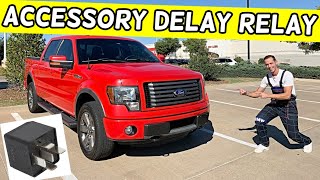
- Faulty Accessory Delay Relay (Very Common) — The relay is an electromechanical switch controlling the accessory circuit. It fails internally, gets stuck open (no power), or gets stuck closed (draining the battery). This is the most frequent cause on non-hybrid Fords. 🎬 Watch: How to locate and replace the accessory delay relay.
- Blown Fuse (Common) — A blown fuse protecting the accessory delay circuit, the relay's control circuit, or the Body Control Module (BCM) triggers this code. Always check fuses first.
- Corroded Fuse Box or Relay Terminals (Common) — On many trucks, water intrusion into the fuse box (Battery Junction Box) corrodes the relay socket terminals. This creates high resistance, preventing a good relay from working.
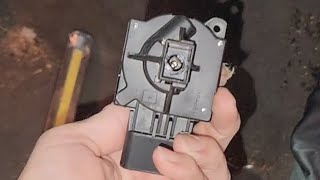
- Failing Ignition Switch (Common) — The ignition switch provides the key position signal (Accessory, Run) to the control module. Internal wear causes it to send erratic signals, leading to intermittent accessory function. 🎬 Watch: Step-by-step guide to replacing a faulty ignition switch.
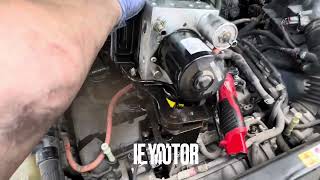
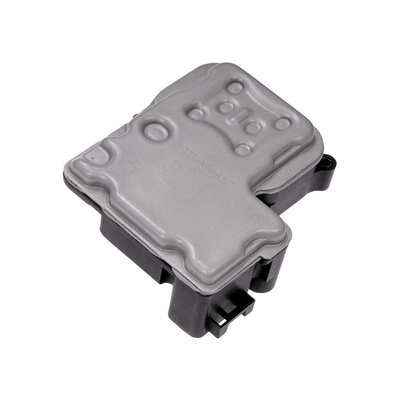
- Faulty ABS Hydraulic Control Unit (HCU) (Less Common) — Specific to 2005-2006 Ford Escape and Mercury Mariner Hybrids, this is the primary cause. 🎬 See this walkthrough on swapping the ABS HCU and initialization. An internal HCU failure triggers C1475, which is entirely unrelated to the accessory circuit on these models.
- Faulty Yaw Rate / G Sensor (Less Common) — On affected Hyundai and Kia models, this code points to a failure of the sensor that measures the vehicle's rotational velocity and lateral G-forces for the stability control system.
- Damaged Wiring or Poor Ground Connection (Less Common) — Wires break, short, or corrode, particularly in the flexible harness between the driver's door and the body. A loose or corroded main body ground also causes low voltage and triggers various electrical codes.
- Faulty Body Control Module (BCM) (Rare) — The BCM commands the accessory relay. A BCM failure causes this code, but it is rare and usually accompanied by numerous other 'B' (Body) and 'U' (Communication) error codes.
Symptoms
- Radio/windows turn off immediately with key — The most direct symptom is the loss of the retained accessory power feature. Accessories shut down instantly when the ignition is turned off.
- Radio/windows won't turn off, causing a dead battery — A stuck accessory relay creates a parasitic drain that depletes the battery overnight.
- ABS and Brake warning lights on — On Ford/Mercury Hybrids, the red 'Brake' and amber 'ABS' lights illuminate on the dash.
- ESC/ESP/Traction Control light on — On affected Hyundai models, this indicates the stability control system is disabled due to a sensor fault.
- Intermittent loss of accessories while driving — A failing ignition switch or a poor connection in the fuse box causes the radio, climate control, and other accessories to cut in and out while the vehicle is running.
- Audible buzzing or constant clicking from fuse box — A chattering or buzzing relay indicates a faulty relay or an unstable voltage supplied to its control circuit.
Diagnostic Flowchart
Tap your situation to follow the diagnostic path that matches what you're seeing on this code.
Common Fixes & Costs
- Replace Accessory Delay Relay — Parts: $10-$40, Labor: $0-$50, ~0.2 hr book time (DIY)
- Replace Blown Fuse — Parts: $1-$5, Labor: $0, ~0.1 hr book time (DIY)
- Repair Corroded Wiring or Fuse Box Terminals — Parts: $10-$50, Labor: $150-$400+, ~2.5 hr book time (Professional)
- Replace Ignition Switch — Parts: $60-$250, Labor: $100-$200, ~1.5 hr book time (Intermediate)
- Replace/Reprogram ABS Hydraulic Control Unit (HCU) — Parts: $600-$2500+, Labor: $250-$1000+, ~3 hr book time (Professional)
- Replace Yaw Rate / G Sensor — Parts: $300-$800, Labor: $100-$250, ~1.8 hr book time (Professional)
Used vs. New Parts: Buying Guide
When a used part is worth it: For expensive electronic modules like the ABS HCU or Yaw Rate Sensor, a used part from a reputable seller with a warranty offers significant savings over a new OEM part. It makes the most sense for older, high-mileage vehicles.
Donor-vehicle mileage cap: roughly under 100000 miles for the part to have meaningful remaining life.
Donor quality checklist:
- Match the part number exactly. Do not rely on make/model/year alone.
- Purchase from a seller that offers a warranty (30-90 days minimum) and a clear return policy.
- Ask about the donor vehicle; avoid parts from flood-damaged or severely wrecked cars.
- For ABS modules, be aware that it requires reprogramming to your vehicle's VIN.
Decision logic:
- If The part is a simple relay or fuse. → Always buy new; the cost is minimal.
- If The part is an ABS HCU or Yaw Rate Sensor and a new OEM part costs over $1000. → A used or remanufactured part is a reasonable choice, provided there is a warranty.
- If The part is known to have a high failure rate (like the 2005-06 Escape HCU). → Favor a remanufactured unit (e.g., from Cardone) over a used one, as the remanufacturer corrects the original design flaw.
Warranty tradeoff: Used parts typically have a 30-90 day warranty. Remanufactured parts often come with a 1-year to limited lifetime warranty. New OEM parts carry a 1-2 year warranty.
Worst-case if a used part fails: 400-800. If a used electronic module is dead on arrival or fails shortly after the warranty period, you pay for labor a second time in addition to buying another part.
What Happens If You Wait — Timeline
- 0-2 weeks: Accessory Fault: Intermittent failure of retained power or a single dead battery event. / Brake Fault (Hybrid): ABS/Brake lights on, pump runs with brake application. / ESC Fault: ESC light on, system disabled. (MPG impact: 0%% · Added cost: $0)
- 2 weeks - 3 months: Accessory Fault: Frequent dead battery if relay is stuck on, requiring jump starts. Battery sulfation begins. / Brake Fault (Hybrid): Pump runs constantly, even with key off, causing a parasitic drain and killing the 12V battery. / ESC Fault: Continued increased risk of losing control in an emergency. (MPG impact: 0-1% (due to alternator strain from recharging battery)% · Added cost: $150-$350 (for a new 12V battery killed by the drain))
- 3-6 months: Accessory Fault: Permanent battery damage; will no longer hold a full charge. / Brake Fault (Hybrid): The constantly running ABS pump motor is under extreme stress and at high risk of burning out. / ESC Fault: Continued risk exposure. (MPG impact: 0-1%% · Added cost: $350 (guaranteed battery replacement))
- 6+ months: Accessory Fault: Annoyance becomes a lifestyle. / Brake Fault (Hybrid): The ABS pump motor burns out. This turns a potential software/connector repair into a mandatory HCU replacement. The vehicle is unsafe to drive. / ESC Fault: A potential accident waiting to happen. (MPG impact: N/A% · Added cost: $2,500-$5,000+ (for the mandatory HCU replacement on the Ford Hybrid))
Cost of Not Fixing It
- Immediate: Accessory Fault (Ford): Annoyance of non-working radio/windows or the risk of a dead battery. ESC Fault (Hyundai): Disabled stability control, increasing the risk of losing control in an emergency maneuver. (Added cost: 0)
- Short Term (Weeks to Months): Accessory Fault: Cost of a new battery if the relay is stuck on. Brake HCU Fault (Ford Hybrid): The hydraulic pump runs constantly, causing premature wear and draining the 12V battery. (Added cost: 150-350)
- Long Term (6+ Months): Brake HCU Fault (Ford Hybrid): The constantly running pump motor burns out, turning a potential software/connector repair into a mandatory and very expensive full HCU replacement. This poses a severe safety risk of brake failure. (Added cost: 2500-5000+)
Diagnosis Steps
- Verify the Code and Symptoms
Use an OBD-II scanner capable of reading 'C', 'B', and 'U' codes from all modules. Note the specific module that set the code (e.g., ABS, BCM). Confirm the symptoms match the code's definition for your vehicle. Basic powertrain-only scanners cannot detect C1475.
Tools: OBD-II Scanner (All-Module Capable) (Beginner) - Check All Related Fuses
Consult your owner's manual to locate all fuse boxes. Inspect fuses labeled 'Accessory Delay', 'Radio', 'BCM', 'ECU', and 'ABS'. Use a multimeter to test continuity on each fuse, as visual inspection is often misleading. Replace any blown fuses.
Tools: Owner's Manual, Multimeter, Fuse Puller (Beginner) - Swap the Accessory Delay Relay
For non-hybrid/non-Hyundai faults, find the accessory delay relay in the fuse box. Swap it with an identical relay from a non-critical system (like the horn). If the horn stops working and your accessories now function correctly, the relay is faulty and requires replacement.
Tools: Owner's Manual (Beginner) - Inspect Fuse Box and Wiring
Look closely at the relay socket for green/white corrosion or melted plastic from overheating. Examine the wiring harnesses connected to the fuse box and the main ground strap from the battery to the chassis for corrosion or damage. Wiggle the fuse box or harnesses while testing for the symptom to pinpoint a loose connection.
Tools: Flashlight (Intermediate) - Test the Relay Socket Voltages
Remove the relay. Using a multimeter, test the socket terminals. The 'always hot' pin must read battery voltage (12.2V-12.6V). The 'control signal' pin must switch from 0V to >10.5V when the key turns to ACC/RUN. The ground pin must show <1.0 ohm of resistance to chassis ground. A missing voltage or bad ground points to a wiring or BCM issue, not the relay.
Tools: Multimeter, Vehicle-specific Wiring Diagram (Advanced) - Perform a Parasitic Draw Test
If you have a dead battery symptom, perform a parasitic draw test. With the vehicle off and doors closed, disconnect the negative battery terminal and place a multimeter (10A scale) in series. Wait 5-45 minutes for modules to sleep. A draw above 50mA is problematic. Pull the accessory delay relay; if the draw drops significantly, that circuit is stuck on.
Tools: Multimeter with 10A setting, Wrench for battery terminal (Advanced) - Test Ignition Switch Signals
Using a wiring diagram, back-probe the ignition switch connector. With the multimeter, verify that the correct wires receive 12V+ in the 'Accessory' and 'Run' key positions. A drop in voltage or an incorrect signal indicates a failing ignition switch.
Tools: Multimeter, Vehicle-specific Wiring Diagram, Back-probe kit (Advanced) - Manufacturer Specific: Ford Hybrid HCU Diagnosis
For 2005-2006 Escape/Mariner Hybrids, this step is mandatory. A Ford-specific IDS scan tool is required. Follow TSB 06-22-1 to retrieve the subfault data from EEPROM Location 0x6B in the ABS module. A value of '0x10' or '0x11' means the module can be reprogrammed. Any other value requires a full HCU replacement. Do not attempt to diagnose the accessory circuit.
Tools: Ford IDS Scan Tool (Professional)
When This Code Triggers (Freeze-Frame Conditions)
- Vehicle Speed: 0 MPH (Code often sets during the module's key-on self-test before the vehicle moves.)
- System Voltage: 11.8V - 12.5V (Engine is off, ignition is in the 'ON' position. Low voltage (<11.5V) is a potential cause.)
- Ignition Status: ON or RUN (The fault is typically detected when the BCM or ABS module powers up and performs its initial checks.)
- Brake Pedal Status: Not Applied (For ABS or ESC related faults, the code often triggers during a self-test, not necessarily during a braking event.)
Related Codes
- B1359 — Ford/Jaguar code for 'Run/Accessory Circuit Failure'. This is a direct companion to C1475. B1359 points to the input side (ignition switch), while C1475 points to the output side (relay circuit). Diagnose the ignition switch first if both are present.
- U0140 — 'Lost Communication With Body Control Module'. If present, diagnose this U-code first. The BCM cannot command the accessory relay if it's offline.
- P0562 — 'System Voltage Low'. If this code appears with C1475, diagnose the charging system first. A failing alternator, bad battery, or poor ground causes modules to malfunction and set false codes.
- B1318 — 'Battery Voltage Low'. This is a BCM-specific version of P0562. If stored in the BCM along with C1475, it strongly suggests the BCM is not receiving proper voltage to operate correctly.
Climate & Environmental Factors
- High Humidity / Rain: Significantly increases the likelihood of C1475 on vehicles where the cause is a corroded fuse box or relay socket. Water leaks past degraded seals and settles in fuse boxes, causing terminals to corrode.
- Extreme Cold: Exacerbates issues with a weak battery, causing low system voltage that triggers false C1475 codes along with other electrical faults. It also makes aged plastic connectors brittle and prone to cracking.
How to Talk to a Mechanic About This Code
Say this: "State your vehicle and code, then the specific issue. For example: - **Ford F-150 (Accessory Issue):** 'I have a C1475 code and a parasitic battery drain. Can you perform a draw test focused on the accessory delay relay circuit and inspect the fuse box for corrosion?' - **Ford Escape Hybrid (Brake Issue):** 'My 2006 Escape Hybrid has a C1475 with the ABS light on. I need a diagnosis using a Ford IDS scanner to check the ABS module's EEPROM data per TSB 06-22-1 to see if it's the HCU.' - **Hyundai Santa Fe (ESC Issue):** 'I have a C1475 with the ESC light on. Can you diagnose the yaw rate sensor circuit and provide an estimate that includes post-replacement calibration?'"
This specific language shows you've done your research. It directs the technician to the most likely cause for your specific vehicle, preventing misdiagnosis (like treating the hybrid's brake issue as an accessory fault) and avoiding unnecessary diagnostic time.
Avoid saying:
- 'My check engine light is on.' (This isn't a check engine light code.)
- 'Just fix whatever is wrong.' (This is an open invitation for upselling.)
- 'A guy online said it's the relay.' (State the suspected part, but ask for a confirmation diagnosis.)
Questions to ask before authorizing the repair:
- Can you please explain what tests you performed to confirm this part has failed?
- For the Ford Hybrid, what was the EEPROM sub-code? Does it require a reflash or a full replacement?
- For the Hyundai, does your shop have the tool to perform the yaw rate sensor calibration after replacement?
- Is there a warranty on the recommended parts and the labor?
- Can you show me the corroded terminals or the failed part after the repair?
Where to Take It: Dealer vs Independent vs Chain
- Dealer:
REQUIRED for the Ford Escape/Mariner Hybrid HCU fault. A safe but expensive choice for other C1475 variants.
Best for: 2005-2006 Ford Escape/Mariner Hybrid HCU diagnosis (requires Ford IDS tool)., Vehicles still under warranty., Complex software reprogramming or module replacement.
Downsides: Highest labor rates (1.5-2x independent shops)., More likely to replace a whole assembly rather than attempting a wiring or terminal repair. (Typical cost: +75% vs. baseline) - Independent Shop:
Best fit for the common accessory-related faults. A good choice for the Hyundai ESC fault if the shop is well-equipped. AVOID for the Ford Hybrid brake fault unless they are a proven Ford specialist.
Best for: Accessory-related C1475 on Ford/GM/Jeep (e.g., parasitic draw testing, relay/switch replacement)., Out-of-warranty vehicles where cost is a factor., Hyundai/Kia yaw rate sensor replacement, provided they confirm they have calibration capabilities.
Downsides: Quality and diagnostic skill vary widely; vet shops by reviews and ASE certifications., May not own manufacturer-specific tools like the Ford IDS needed for the hybrid brake issue. (Typical cost: +0% vs. baseline) - Chain Shop:
Not recommended. The complexity and vehicle-specific nature of this code make it a poor fit for the chain shop model. Risk of misdiagnosis is high.
Best for: Simple, obvious fixes like a relay or fuse replacement if you've already diagnosed it yourself.
Downsides: Technician skill is highly variable; may lack the advanced electrical diagnostic experience for parasitic draws or module issues., High pressure to upsell services like fluid flushes., Unlikely to have tools for module reprogramming or sensor calibration. (Typical cost: -10% vs. baseline)
When to Walk Away From the Repair
If the total estimated repair cost exceeds 50% of the vehicle's current private-party market value, you should seriously consider selling the car as-is or trading it in rather than fixing it.
- Car worth $3200, fix is $3500: Walk away. The repair cost for the HCU on a 2006 Ford Escape Hybrid is more than the car is worth.
- Car worth $8000, fix is $450: Fix it. A wiring repair or ignition switch replacement on an F-150 is well below the threshold.
- Car worth $4000, fix is $900: Fix it. Replacing a yaw rate sensor on an older Hyundai is a significant but reasonable cost relative to the car's value.
What Scan Tool You Need for This Code
Minimum: A scanner that can read manufacturer-specific Body ('B') and Chassis ('C') codes from the ABS, BCM, and other modules.
A basic $20 engine code reader cannot see code C1475. It only reads 'P' (Powertrain) codes. You will plug it in, see 'No Codes Found,' and be misled into thinking there is no issue, while a critical brake or body fault exists.
Budget: BlueDriver Pro or Autel MaxiAP AP200 (~$60-120) — These Bluetooth dongles connect to your smartphone and scan all vehicle modules (ABS, BCM, etc.) to correctly read and clear a C1475 code. They also provide live data, which is useful for diagnostics.
Mid-range: Foxwell NT510 Elite or Autel MaxiCOM MK808 (~$180-450) — These handheld tools offer full-system diagnostics plus service functions. Crucially for the Hyundai/Kia C1475, they perform the necessary 'Yaw Rate Sensor Calibration' and other resets after a part is replaced.
Professional: Autel MaxiSys Series (e.g., MS906) or Launch X431 Series (~$600-1500+) — Provides full bidirectional control to command relays and modules directly, making diagnosis much faster. Includes advanced coding and programming functions needed for module replacements. This is dealer-level capability.
Rent vs buy: For a one-time diagnosis, major auto parts stores like AutoZone and O'Reilly offer a loaner tool program. You pay a deposit (equal to the tool's cost), use the scanner, and get a full refund upon return. This is a great way to access a mid-range scanner for free.
How to Clear the Code After You Fix It
- Fix the underlying mechanical or electrical fault first.
- Use a compatible OBD-II scan tool to access the specific module (ABS, BCM) and clear the 'C' code.
- Perform 2-3 key cycles (On-Off-On) to verify the code does not immediately return.
Drive cycle (~15 minutes): A specific drive cycle is not usually required for this code. After clearing, drive the vehicle for 10-15 minutes. For ABS/ESC faults, the light turns off after its self-test if the repair is successful, often after exceeding 10-15 MPH. For accessory faults, the BCM confirms the repair on the next key cycle.
Readiness monitors affected: None directly. However, if the battery was disconnected as part of the repair, all emissions readiness monitors reset and a full powertrain drive cycle is needed.
Before emissions retest: drive at least 100 miles to fully set monitors.
Watch out for:
- Using a basic scanner that cannot read or clear manufacturer-specific 'C' (Chassis) codes.
- Simply disconnecting the battery does not clear the code from the module's memory and resets all other vehicle settings.
- Clearing the code without fixing the root cause results in the code returning almost immediately.
Will This Fail Emissions / State Inspection?
No — by itself this code doesn't fail OBD inspection (but it can keep readiness monitors from setting, which causes a separate fail).
- California: This code itself will not fail the OBD-II portion of the smog check, which focuses on powertrain ('P') codes. However, if the ABS or Brake warning light is on, the inspector refuses to test the vehicle on a dynamometer for safety reasons.
- New York: An illuminated ABS warning light is grounds for failing the safety inspection. Recent legislation explicitly includes the ABS light as a failure item.
- Texas: For the annual safety inspection, an illuminated ABS, Brake, or ESC warning light causes the vehicle to fail.
Most Commonly Affected Vehicles
- Ford F-150 / F-250 / F-350 / Excursion (1999-2010) — Very common to have a failed relay or corrosion in the fuse box (CJB/BJB). Wiggling the relay or fuse box temporarily restores function, pointing to a bad connection.
- Ford Escape Hybrid (2005-2006) — CRITICAL: C1475 indicates a known ABS Hydraulic Control Unit (HCU) fault, not an accessory issue. Affects vehicles built from 8/2/2004 to 3/30/2006. See TSB 06-22-1.
- Mercury Mariner Hybrid (2006) — Shares the same platform and critical ABS Hydraulic Control Unit (HCU) issue as the 2005-2006 Ford Escape Hybrid.
- Hyundai Santa Fe / Tucson (2001-2009) — On these models, C1475 indicates a 'Yaw Rate & G Sensor Error' for the Electronic Stability Program. This disables the ESP system.
- Jeep Grand Cherokee (WJ) (1999-2004) — Known for widespread electrical issues. Symptoms of a C1475 are often caused by a failing ignition switch or a faulty Body Control Module (BCM).
- Ford Explorer / Mountaineer (2002-2010) — Prone to standard accessory delay relay and ignition switch failures that trigger this code.
- Ford Windstar (1995-2003) — Frequently suffers from accessory delay relay failures, often presenting as a parasitic battery drain.
- Chevrolet / GMC Silverado / Sierra (2014-2019) — These trucks are known for issues with main body ground straps which corrode and cause low voltage conditions, triggering an array of seemingly unrelated chassis and body codes.
- Lincoln Town Car (1999-2003) — Shares its electrical architecture with other Ford platforms and is susceptible to accessory delay relay failure.
Manufacturer-Specific Notes
- Ford / Mercury: On 2005-2006 Escape and Mariner Hybrid models, C1475 is a critical brake code detailed in TSB 06-22-1. Diagnosis requires a Ford IDS scan tool to read EEPROM location 0x6B. The fix is either a software update and greasing the HPA connector or a very expensive HCU replacement.
- Hyundai / Kia: On models like the Santa Fe and Tucson, C1475 means 'Yaw Rate & G Sensor Error'. This is part of the Electronic Stability Program (ESP) and is unrelated to accessories. After replacing the sensor, a 'Steering Angle Sensor Calibration' and 'Yaw Rate Sensor Calibration' must be performed with a compatible scan tool.
- General Motors: On many modern GM trucks and SUVs, a faulty or corroded main ground strap between the frame and body causes widespread electrical chaos. This sets dozens of codes at once, including chassis codes, and causes symptoms like loss of power steering and flickering lights.
- Jeep (WJ Grand Cherokee): On 1999-2004 models, the Body Control Module (BCM) and ignition switch are common failure points that create a cascade of electrical issues. A problem with the accessory delay relay is often just one of many symptoms pointing to a failing BCM or ignition switch.
Real Owner Stories
2008 Ford F-150 with 115K miles - The Easy Fix
Owner found the truck battery dead on two consecutive mornings. No warning lights were on, but the radio would not turn off with the key.
What they tried:
- Initially replaced the battery, assuming it was old. The new battery also died overnight.
- Performed a parasitic draw test and found a draw over 2 amps.
- Started pulling fuses and found the draw disappeared when pulling the fuse for the accessory delay relay.
Outcome: Replaced the accessory delay relay (Part #FOAZ-14N089-A, cost $15). The parasitic draw dropped to a normal 25mA, and the problem was solved.
Lesson: For a parasitic battery drain, don't assume the battery is bad. A simple relay swap or fuse pull quickly isolates the circuit causing the problem, saving hundreds on diagnostics.
2006 Ford Escape Hybrid with 140K miles - The Critical Misdiagnosis
ABS and red 'Brake' warning lights came on. A local general mechanic scanned the codes, found C1475, and told the owner it was an 'Accessory Relay' fault and not to worry about it.
What they tried:
- Owner ignored the light for a month, but noticed a humming noise from under the hood that ran constantly.
- The 12V battery started dying repeatedly.
- Took the vehicle to a Ford dealership for a second opinion.
Outcome: The dealership correctly identified C1475 on this specific hybrid as a critical HCU (Hydraulic Control Unit) failure per TSB 06-22-1. Because the pump ran constantly for over a month, the motor burned out. What could have been a software reflash and connector repair ($400-$600) became a full HCU replacement costing over $3,000.
Lesson: The meaning of C1475 is vehicle-specific. On a 2005-2006 Escape/Mariner Hybrid, it is ALWAYS a critical brake fault. Ignoring it or misdiagnosing it as an accessory issue leads to catastrophic repair costs and potential brake failure.
2007 Hyundai Santa Fe with 95K miles - The Sensor and Calibration
The ESC warning light came on and would not turn off. The vehicle drove normally in good conditions. A scan revealed code C1475, 'Yaw Rate & G Sensor Error'.
What they tried:
- The owner, a DIYer, located the yaw rate sensor under the center console and replaced it with a used part from an online seller for $50.
- After replacement, the ESC light remained on and the code would not clear.
Outcome: The owner took the car to an independent shop. The technician explained that after replacement, the new sensor requires a 'zero point calibration' using a professional scan tool. The shop performed the calibration for $125. The ESC light turned off and the system functioned normally.
Lesson: Many modern sensor replacements are not just a physical swap. Safety system components like yaw rate sensors require a software calibration step to function, which requires a specific scan tool.
How to Prevent This Code From Triggering
- Apply dielectric grease to relay and fuse terminals. (Any time a relay/fuse is replaced or during other electrical work.) — Dielectric grease is a non-conductive, silicone-based grease that seals out moisture and oxygen, preventing the corrosion that causes high resistance and electrical faults in fuse boxes.
- Inspect and clear cowl and sunroof drains. (Once per year, especially before rainy seasons.) — Clogged drains cause rainwater to overflow and leak into the cabin, often dripping directly onto the interior fuse box (Central Junction Box) or related wiring, leading to corrosion and shorts.
- Ensure the under-hood fuse box (BJB) cover is fully seated and latches are intact. (After every service or battery replacement.) — A common cause of water intrusion into the Battery Junction Box on Ford trucks is a cover that was not properly latched after a service, allowing water to get past the seal.
- Periodically clean battery terminals and main chassis grounds. (Every 2-3 years or during battery replacement.) — Corrosion on main power and ground connections creates high resistance, lowering overall system voltage. This causes modules to malfunction and set false codes, including C1475.
Frequently Asked Questions
Can I fix code C1475 myself?
Yes, if the cause is a blown fuse or bad relay on a standard vehicle. If the problem involves a faulty control module, brake HCU, or requires advanced diagnostics, take it to a professional.
Can a bad accessory delay relay drain my battery?
Yes. If the relay's internal switch gets stuck in the 'on' position, it continuously powers accessories even when the car is off. This creates a parasitic drain that kills a battery overnight.
I replaced the relay and fuse, but C1475 came back. What's next?
Use a multimeter to test the relay's socket in the fuse box for correct power (>12V), ground (<1 ohm), and signal voltages. If the socket tests good, the problem is likely in the wiring or the Body Control Module (BCM). If the socket shows corrosion, the fuse box itself requires repair or replacement.
What is the most common misdiagnosis for C1475?
For 2005-2006 Ford Escape and Mercury Mariner Hybrids, the most dangerous misdiagnosis is treating it as an accessory problem. On these specific vehicles, the code exclusively points to a critical ABS brake module fault.
Can a cheap OBD-II scanner read code C1475?
Usually, no. Inexpensive scanners typically only read generic 'P' (Powertrain) codes. C1475 is a 'C' (Chassis) or 'B' (Body) code requiring an advanced scan tool that communicates with the ABS and Body Control Modules.
Where is the accessory delay relay located?
It is almost always in a main fuse box, either under the hood (Battery Junction Box) or inside the cabin (Central Junction Box). Check your owner's manual for the exact diagram and location.
Is C1475 an expensive code to fix?
The cost varies dramatically based on the vehicle. It costs under $20 for a simple fuse or relay, or several hundred dollars for an ignition switch. For specific Ford Hybrids, it costs over $3,000 for a new ABS Hydraulic Control Unit.
Why does this code have different meanings for different cars?
While 'P' (Powertrain) codes are standardized, manufacturers define their own 'C' (Chassis) and 'B' (Body) codes. This is why C1475 points to an accessory relay on a Ford F-150, a brake module on a Ford Escape Hybrid, and a stability sensor on a Hyundai.
What module controls the accessory delay relay?
The Body Control Module (BCM) typically controls it. However, on some older Ford trucks and SUVs, the logic for the accessory delay feature is built directly into the instrument cluster.
Can a bad battery cause code C1475?
Yes. A weak battery causes low system voltage, making control modules behave erratically and set false codes. If you have C1475 alongside codes like P0562 (System Voltage Low), test your battery and charging system before chasing other faults.
Key Takeaways
- On most Ford and GM trucks, C1475 indicates a failed accessory delay relay, which costs under $30 and takes 5 minutes to replace.
- On 2005-2006 Ford Escape and Mercury Mariner Hybrids, C1475 signals a critical ABS brake failure that requires immediate professional diagnosis using a Ford IDS scan tool.
- On Hyundai and Kia models, this code disables the Electronic Stability Program (ESP) and usually requires a $300-$800 Yaw Rate Sensor replacement.
- Basic $20 code readers cannot detect C1475; you must use an advanced OBD-II scanner capable of reading Chassis (C) and Body (B) network codes.
Helpful Videos
Shop the Parts Behind C1475
Below are the parts most often responsible for code C1475, ranked by how frequently each one is the actual culprit (per the diagnosis above). Tap any to see what we have for your vehicle.



The information in this article is provided for general reference and educational purposes only. Vehicle specifications, procedures, and part compatibility can vary by production date, trim level, and region. Always consult your vehicle's factory service manual and verify part numbers before purchasing or performing repairs. Safety-critical components such as airbags, seat belts, and braking systems should be installed by a qualified professional.
- 🧭 Diagnostic Flowchart
- 🎬 Helpful Videos
- 🛍️ Shop This Part
- What Does C1475 Mean?
- Can I Drive With C1475?
- Common Causes
- Symptoms
- Common Fixes & Costs
- Used vs. New Parts: Buying Guide
- What Happens If You Wait — Timeline
- Cost of Not Fixing It
- Diagnosis Steps
- When This Code Triggers (Freeze-Frame Conditions)
- Related Codes
- Climate & Environmental Factors
- How to Talk to a Mechanic About This Code
- Where to Take It: Dealer vs Independent vs Chain
- When to Walk Away From the Repair
- What Scan Tool You Need for This Code
- How to Clear the Code After You Fix It
- Will This Fail Emissions / State Inspection?
- Most Commonly Affected Vehicles
- Manufacturer-Specific Notes
- Real Owner Stories
- 2008 Ford F-150 with 115K miles - The Easy Fix
- 2006 Ford Escape Hybrid with 140K miles - The Critical Misdiagnosis
- 2007 Hyundai Santa Fe with 95K miles - The Sensor and Calibration
- How to Prevent This Code From Triggering
- Frequently Asked Questions
- Can I fix code C1475 myself?
- Can a bad accessory delay relay drain my battery?
- I replaced the relay and fuse, but C1475 came back. What's next?
- What is the most common misdiagnosis for C1475?
- Can a cheap OBD-II scanner read code C1475?
- Where is the accessory delay relay located?
- Is C1475 an expensive code to fix?
- Why does this code have different meanings for different cars?
- What module controls the accessory delay relay?
- Can a bad battery cause code C1475?
- Key Takeaways
- 🎟️ Get 5% Off