

OBD-II Code C1478: Brake Booster Pressure Sensor Circuit Stuck
What C1478 means, why it triggers, and how to fix it
- Code C1478 triggers when the brake booster pressure sensor voltage gets stuck (often at ~4.8V or ~1.0V), instantly disabling your ABS and significantly increasing stopping distances.
- For 2005-2008 Ford Escape and Mercury Mariner hybrids, Ford TSB SSM 45870 confirms the root cause is almost always an internally collapsed $50 front brake hose, not the $5,000+ ABS module.
- Expect an immediate hard brake pedal, illuminated ABS/Brake dashboard lights, and a 'Regen Brakes Disabled' warning on hybrid vehicles.
- Diagnose this code by monitoring the 'Brake Boost Pressure Sensor' PID on an advanced scan tool; a healthy sensor drops from roughly 4.8V to 1.0V when the pedal is pressed.
- Never drive a vehicle with an active C1478 code, as the sudden loss of power braking assist causes a high risk of rear-end collisions.
What Does C1478 Mean?
Code C1478 means the Engine Control Module (ECM) or ABS module does not detect a brake pressure change when you press the brake pedal. The computer expects a fluctuating signal from the brake booster pressure sensor, but the voltage is 'stuck'. This indicates a failure in the power braking assist system, prompting the vehicle to disable safety features like ABS and regenerative braking.
Technical definition: The official SAE/OBD-II definition is "Brake Booster Pressure Sensor Circuit Stuck". This code sets when the ECM or ABS module detects the voltage signal from the vacuum sensor assembly has not changed for a specified period (e.g., 1.2 seconds) despite vehicle movement or brake pedal operation. A faulty sensor fails to monitor vacuum levels, leading to increased stopping distances and reduced braking power.
Can I Drive With C1478?
No — Do Not Drive. Do not drive the vehicle. This code signifies a critical braking system failure that disables your ABS and stability control. You will experience a sudden, significant reduction in braking power and a hard brake pedal, dramatically increasing your stopping distance. Continuing to drive risks a complete loss of braking assist, making the vehicle extremely difficult to stop in an emergency.
Common Causes
- Internally Restricted or Swollen Brake Hose (Very Common) — Especially on 2005-2008 Ford Escape and Mariner hybrids, flexible rubber brake hoses swell or collapse internally. This restricts fluid flow, trapping pressure and tricking the sensor into reading 'stuck'. This notorious issue is frequently misdiagnosed as a failed ABS module.
- Failed Brake Booster Vacuum/Pressure Sensor (Common) — The sensor measuring brake booster pressure fails electronically or mechanically, sending a fixed voltage reading to the computer regardless of brake pedal position.
- Cracked, Clogged, or Disconnected Vacuum Hose (Common) — The brake booster relies on engine vacuum or an electric pump. If the supply hose is cracked, leaking, clogged, or disconnected, pressure cannot change during braking, triggering the code.
- Faulty ABS Hydraulic Control Unit (HCU) (Less Common) — The ABS hydraulic pump and valve assembly fails due to stuck valves or internal electrical faults. However, this expensive component is often wrongly blamed when the actual problem is a collapsed brake hose.
- Damaged or Debris-Contaminated ABS Tone/Encoder Ring (Less Common) — Magnetic encoder rings read wheel speed. If cracked or contaminated with metallic debris, they send erratic signals to the ABS module, occasionally misinterpreted as a pressure fault.
- Wiring or Connector Issues (Less Common) — Wiring between the pressure sensor and the computer corrodes, chafes, or loosens. A short to ground or an open circuit prevents the correct signal from reaching the module.
- Loose/Corroded Electronic Brake Module Connector (Rare) — On certain Subaru models, the main electrical connector to the electronic brake module vibrates loose. This interrupts communication and triggers multiple brake system codes.
- Low or Contaminated Brake Fluid (Rare) — Extremely low or old, contaminated brake fluid introduces air or debris into the hydraulic system, affecting pressure readings and HCU valve operation.
- Faulty Engine Control Module (ECM) or ABS Module (Very Rare) — The control module itself fails and incorrectly interprets the sensor's signal. Consider this only after exhaustively ruling out all other possibilities.
Symptoms
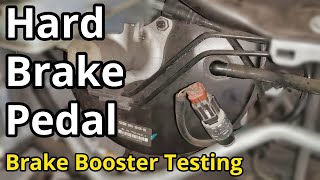
- Hard Brake Pedal and Reduced Braking Power — The brake pedal feels significantly harder to press, requiring much more physical effort 🎬 See these three simple tests to check your brake booster and distance to stop the vehicle.
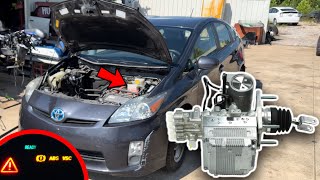
- Dashboard Warning Lights and Messages — The ABS, red Brake warning, and Stability Control lights illuminate simultaneously 🎬 Watch: How to diagnose an ABS light with a scan tool, often accompanied by a 'Check Brake System' message.
- 'Regen Brakes Disabled' Message (Hybrids) — Hybrid vehicles display a warning that the regenerative braking system is disabled as a safety precaution.
- Grinding or Buzzing Noise When Braking — A continuous grinding or buzzing noise from the front of the vehicle indicates the ABS pump is running continuously or activating incorrectly.
- Brake Pedal Pulsation at Low Speeds — A faulty wheel speed sensor signal tricks the ABS into activating at low speeds (3-15 mph), causing an unwarranted pulsing sensation in the brake pedal.
Diagnostic Flowchart
Tap your situation to follow the diagnostic path that matches what you're seeing on this code.
Common Fixes & Costs
- Replace Flexible Brake Hoses
— Parts: $50-$150, Labor: $200-$450, ~1.5 hr book time
(Intermediate)
2005-2008 Ford Escape / Mercury Mariner: OEM Motorcraft BRH19 (Alt: Dorman H620317, Raybestos BH382462) - Replace Brake Booster Vacuum Sensor
— Parts: $60-$250, Labor: $75-$150, ~0.8 hr book time
(DIY)
2005-2008 Ford Escape / Mercury Mariner: OEM Motorcraft (part of booster assembly) (Alt: Standard Motor Products AS333, Dorman 904-793) - Replace Brake Booster Vacuum Line
— Parts: $30-$100, Labor: $50-$120, ~0.5 hr book time
(DIY)
2005-2008 Ford Escape / Mercury Mariner: OEM Ford 7L8Z-2C053-B (V6) (Alt: Dorman (application-specific)) - Secure Loose ABS Module Connector — Parts: $1, Labor: $50-$150, ~0.5 hr book time (DIY)
- Replace ABS Module/HCU
— Parts: $500-$2500, Labor: $250-$600, ~4.5 hr book time
(Professional)
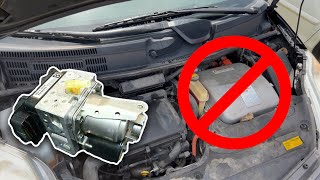
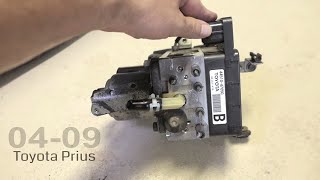
2004-2009 Toyota Prius: OEM Toyota 44500-47141 (Alt: Cardone Remanufactured)
2005-2008 Ford Escape Hybrid: OEM Ford 6L8Z-2C286-A (Alt: Remanufacturing services)
DIY vs Professional
- Replace Flexible Brake Hoses — Beginner: No
Tools: Jack and jack stands, flare nut wrenches, line pinch-off pliers, torque wrench, brake fluid, fluid catch pan. - Replace Brake Booster Vacuum Sensor — Beginner: Yes
Tools: Basic hand tools (socket set, wrenches). - Replace Brake Booster Vacuum Line — Beginner: Yes
Tools: Pliers, basic hand tools. - Replace ABS Module/HCU — Beginner: No
Tools: Advanced scan tool for bleeding and configuration, flare nut wrenches, torque wrench, extensive knowledge of brake hydraulics.
Used vs. New Parts: Buying Guide
When a used part is worth it: For the expensive ABS Module/HCU, a used part from a reputable dismantler with a warranty is a cost-effective option on older, high-mileage vehicles. Avoid used parts for wear items like brake hoses.
Donor-vehicle mileage cap: roughly under 100000 miles for the part to have meaningful remaining life.
Donor quality checklist:
- Verify the part number matches exactly; modules are vehicle-specific.
- Purchase from a seller offering a 90-day warranty.
- Check the donor VIN history to avoid flood or heavily wrecked vehicles.
Decision logic:
- If The faulty part is a brake hose or vacuum line. → Always buy new. These are inexpensive safety-critical wear items.
- If The faulty part is the ABS Module/HCU and the vehicle is over 10 years old or 150K miles. → A tested, warrantied used part is a reasonable choice to keep repair costs down.
- If The faulty part is the ABS Module/HCU and the vehicle is newer or has low mileage. → Favor a new OEM or professionally remanufactured unit for longevity.
Warranty tradeoff: Used parts typically have a 30-90 day warranty covering the part only. New aftermarket parts offer 1-year warranties. New OEM parts offer a 12-month/12,000-mile warranty.
Worst-case if a used part fails: $400-800 if a used ABS module fails after installation, requiring repeat labor costs.
What Happens If You Wait — Timeline
- Immediately: Code C1478 is set. ABS, Brake, and Stability Control warning lights illuminate. ABS and regenerative braking are disabled. (MPG impact: 0%% · Added cost: $0)
- First Drive: Driver experiences a hard brake pedal and significantly increased stopping distances. The risk of a collision increases dramatically. (MPG impact: 0%% · Added cost: Potentially infinite (cost of an accident))
- Days to Weeks of Continued Driving: If the fault causes the ABS pump to run continuously, the pump motor burns out, draining the battery and destroying the module. (MPG impact: 0%% · Added cost: $1,500 - $4,000+)
- Weeks to Months: Driving without ABS functionality puts extra stress on remaining brake components. A persistent vacuum leak leans out the air-fuel mixture. (MPG impact: 1-5%% · Added cost: $200 - $800)
Cost of Not Fixing It
- Immediately: Significantly increased risk of an accident due to a hard pedal and disabled ABS. (Added cost: Potentially infinite (cost of an accident))
- Short-Term (Days to Weeks): A continuously running ABS pump motor burns out the motor or ABS module, turning a simple fix into a major expense. (Added cost: $800 - $3000+)
- Long-Term (Months): Continued driving stresses remaining brake components. A leaking brake booster diaphragm creates a vacuum leak affecting engine performance. (Added cost: $200 - $500+)
Diagnosis Steps
- Read All Trouble Codes from All Modules
Use an OBD-II scanner with ABS capability to confirm C1478. Check for related codes like C1479, C1480, and C1481, which often appear together and point to a specific hydraulic restriction.
Tools: OBD-II Scanner (with ABS support) (Beginner) - Check for Technical Service Bulletins (TSBs)
Search for TSBs related to C1478 for your specific vehicle. For example, Ford TSB SSM 45870 explicitly advises checking flexible brake hoses before replacing the expensive HCU.
Tools: Internet Access (Beginner) - Inspect Flexible Brake Hoses (Critical Step)
Crucial for Ford models: Hoses look perfect externally but collapse internally. Disconnect the hose to check for blockages or flow rate. A collapsed hose acts like a one-way valve, trapping pressure.
Tools: Jack, Jack Stands, Basic Hand Tools, Fluid Catch Pan (Intermediate) - Perform a Visual Inspection of the Vacuum System
Inspect the brake booster and all connected vacuum hoses for cracks, loose connections, or damage. Check wiring and connectors at the brake booster sensor and ABS module for corrosion.
Tools: Flashlight, Inspection Mirror (Beginner) - Test the Brake Booster Pressure Sensor with Live Data
Using an advanced scan tool, monitor the 'Brake Boost Pressure Sensor' PID. With the engine running, press and release the brake pedal. The value must change significantly (e.g., dropping from ~4.8V to ~1.0V). A fixed value confirms a sensor or circuit fault.
Tools: Advanced Scan Tool (Advanced) - [PRO TIP] Verify Sensor Voltage at the Connector
Disconnect the sensor. Using a multimeter, verify the 5V reference and ground. Reconnect and back-probe the signal wire. Voltage should be ~4.5-4.8V with no brake application and drop to 0.5-1.0V when pressed. A stuck voltage indicates a bad sensor.
Tools: Multimeter, Vehicle-Specific Wiring Diagram, Back-probe Kit (Advanced) - [PRO TIP] Check for Voltage Drop on Power and Ground
With the sensor connected and system active, place one multimeter lead on the positive battery terminal and the other on the sensor's power supply wire. The reading must be under 0.5V. Repeat for the ground side. Readings above 0.2V indicate excessive resistance.
Tools: Multimeter, Vehicle-Specific Wiring Diagram (Advanced) - Inspect Wheel Speed Sensor Tone Rings
Visually inspect the ABS tone rings on each wheel hub for cracks, missing teeth, or heavy rust buildup. Damaged rings send false signals that indirectly trigger pressure faults.
Tools: Jack, Jack Stands, Flashlight, Brake Cleaner (Intermediate)
When This Code Triggers (Freeze-Frame Conditions)
- Vehicle Speed: 10-45 mph (The fault is often detected during city driving when the brakes are applied under various conditions.)
- Brake Pedal Switch: On (The code is set when the computer expects a pressure change because the brake pedal is depressed, but no change is observed.)
- Brake Booster Pressure Sensor Voltage: Stuck at ~4.8V or ~1.0V (The core of the fault is the sensor voltage not changing. Freeze frame will capture the 'stuck' value.)
- Engine RPM: 800-2500 RPM (Can occur at idle or during normal driving RPMs, as the brake system self-test is continuous.)
Related Codes
- C1479 — Indicates the sensor's reading is illogical or out of range. C1479 means the signal is bad; C1478 means the signal is completely stuck.
- C1480 — When present with C1478 on Ford Escape Hybrids, this code strongly confirms internally restricted brake hoses, ruling out a complex electronic failure.
- C1481 — Another code covered by Ford TSB SSM 45870. When seen with C1478, it points away from the expensive HCU and toward a simple hose replacement.
- C1313 — A pressure sensor plausibility fault. Logged when the brake booster pressure sensor's reading conflicts with data from the brake pedal position or wheel speed sensors.
- U2023 — A communication fault code indicating a breakdown between the ABS module and other systems, usually caused by the primary hydraulic or sensor fault.
Climate & Environmental Factors
- High Heat: Elevated temperatures accelerate rubber aging, causing brake hoses to harden, become brittle, or soften, compromising structural integrity from the inside out.
- Humidity: High humidity degrades rubber hoses through hydrolysis, causing swelling and internal collapse, directly contributing to the Ford Escape/Mariner issue.
How to Talk to a Mechanic About This Code
Say this: "I have a C1478 code. If it's a Ford Escape Hybrid, please inspect the front brake hoses for internal restrictions per TSB SSM 45870 before quoting an HCU replacement. For other cars, please check the brake booster pressure sensor's live data."
This signals you are an informed customer. It directs the mechanic to the most common fixes first, preventing a premature and costly misdiagnosis of the expensive ABS module.
Avoid saying:
- 'My ABS light is on, can you fix it?'
- 'The car is braking weird, just do whatever it needs.'
- 'I heard it might be the ABS computer, can you replace it?'
Questions to ask before authorizing the repair:
- Did you check the flexible brake hoses for internal blockages, not just visual defects?
- What did the brake booster pressure sensor voltage read when you pressed and released the pedal?
- If you are recommending an ABS module replacement, what specific tests did you perform to rule out the hoses, sensor, and wiring first?
- Does the recommended repair require a specialized ABS bleed procedure or VIN programming afterwards, and is that included in the quote?
- What is the warranty on the parts and labor for this repair?
Where to Take It: Dealer vs Independent vs Chain
- Dealer:
Use for warranty work or as a last resort for module programming. Be cautious and armed with TSB information.
Best for: Vehicles under a manufacturer warranty or extended warranty program., Confirmed ABS module/HCU failures requiring proprietary software for VIN programming and bleeding.
Downsides: Highest labor rates., More likely to misdiagnose common issues like the Ford Escape brake hoses and quote the most expensive part. (Typical cost: +50% vs. baseline) - Independent Shop:
Best fit, provided you choose a reputable shop with strong diagnostic skills. They are more likely to attempt cheaper repairs first.
Best for: Out-of-warranty vehicles where cost is a major factor., Diagnosing known issues based on TSBs and real-world experience.
Downsides: Quality and diagnostic capability vary widely. Ensure the shop has experience with modern ABS systems. (Typical cost: +0% vs. baseline) - Chain Shop:
AVOID for diagnosing this code. The risk of an incorrect and expensive diagnosis is very high.
Best for: Simple, confirmed fixes like replacing an external vacuum line.
Downsides: Technicians often lack advanced diagnostic tools and training for complex ABS issues., High pressure to sell parts leads to misdiagnosis and unnecessary repairs. (Typical cost: -10% vs. baseline)
When to Walk Away From the Repair
If the estimated repair cost exceeds 50% of the car's private-party value, seriously consider selling or trading in the vehicle.
- Car worth $3500, fix is $5300: Walk away. A $5,300 HCU replacement quote on a $3,500 Ford Escape Hybrid is not economical.
- Car worth $3500, fix is $600: Fix it. If the diagnosis is correct and it only needs brake hoses and a sensor, the repair is well worth it.
- Car worth $15000, fix is $2500: Fix it. A major but necessary repair on a newer, more valuable car is typically a sound investment.
What Scan Tool You Need for This Code
Minimum: A scanner that reads and clears Chassis (ABS) codes and displays live data for the brake system.
A basic $20 engine code reader cannot access the ABS module. You must watch the live voltage from the brake booster pressure sensor to confirm if it is stuck.
Budget: BlueDriver Pro (~$100) — Connects to your smartphone, reads ABS codes, and graphs live data to watch the brake pressure sensor voltage.
Mid-range: Foxwell NT510 Elite / Autel MaxiCheck Pro (~$150) — Offers robust ABS diagnostics, live data, and basic ABS bleed functions for specific vehicles.
Professional: Autel MaxiCOM MK808 / Foxwell NT809 (~$450-600) — Provides full bidirectional control and the ABS 'Auto Bleed' function required to properly bleed the brake system after replacing an HCU or hoses.
Rent vs buy: Buying is necessary. Parts store rental tools are basic code readers that cannot access ABS live data or perform an ABS bleed.
How to Clear the Code After You Fix It
- Perform the necessary hydraulic bleeding procedure if the system was opened.
- Use an OBD-II scan tool with ABS capability to clear the code from the ABS module.
- Turn the ignition off, then back on, and check if the code returns immediately.
Drive cycle (~20 minutes): Drive the vehicle making several stops from various speeds (15 mph, 30 mph, 45 mph) to allow the ABS module to verify the pressure sensor responds correctly.
Readiness monitors affected: This is a Chassis code and does not directly affect emissions readiness monitors., If the fault causes a CAN bus communication error, it indirectly prevents other modules from completing readiness tests.
Watch out for:
- Forgetting to bleed the brakes properly after replacing hydraulic components.
- Using a basic OBD-II code reader that cannot access or clear ABS codes.
- Not fixing the root cause; the code returns immediately upon the first brake application.
Will This Fail Emissions / State Inspection?
No — by itself this code doesn't fail OBD inspection (but it can keep readiness monitors from setting, which causes a separate fail).
- California: An illuminated ABS light is not an emissions failure and will not fail the smog check, though it is a safety issue.
- New York: An illuminated ABS warning light is grounds for failure of the annual safety inspection.
- Texas: A red 'Brake' warning light fails the safety inspection, but an amber 'ABS' warning light is not a cause for rejection.
Most Commonly Affected Vehicles
- Ford Escape Hybrid (2005-2008) — Extremely prone to this code due to internally swelling brake hoses, frequently misdiagnosed as a failed HCU. Addressed in Ford TSB SSM 45870.
- Mercury Mariner Hybrid (2006-2008) — Shares the Escape's platform and identical brake hose collapse issue.
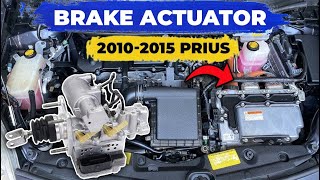
- Toyota Highlander Hybrid (2006-2010) — Prone to brake actuator assembly or pressure sensor faults within the electronically controlled brake system. Covered under Warranty Enhancement Program ZG1.
- Toyota Prius (2004-2009) — Known for complex brake actuator and booster assembly failures requiring dealer-level diagnostic tools like Techstream.
- Toyota Yaris (2006-2018) — Linked to brake booster or associated sensor faults. Diagnosis requires checking sensor voltage changes during pedal operation.
- Lexus RX400h (2006-2008) — Experiences failures in the complex electronically controlled braking system, including the brake actuator.
- Chevrolet Silverado (2007-2013) — Trucks with hydroboost or vacuum brake boosters experience sensor and booster failures triggering this code.
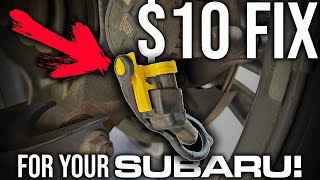
- Subaru Outback (2015-2019) — Brake system errors are frequently caused by a loose main connector on the electronic brake module in the trunk. A zip tie secures the connection.
Manufacturer-Specific Notes
- Ford: On 2005-2008 Escape/Mariner Hybrids, this code is almost always caused by internally restricted front brake hoses, not the HCU. Ford TSB SSM 45870 addresses this misdiagnosis.
- Toyota/Lexus: Points to a failure within the expensive brake actuator/booster assembly. Toyota issued Warranty Enhancement Program ZG1 extending coverage to 10 years/150,000 miles.
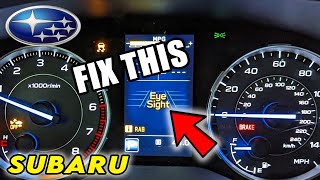
- Subaru: On 2015-2019 Outbacks, a flashing brake light and disabled Eyesight system are caused by a loose main connector on the electronic brake module. A zip tie resolves the error.
- Volkswagen/Skoda: Do not confuse chassis code C1478 with powertrain code P1478. On VWs, P1478 refers to the AV Control Unit and is unrelated to braking.
Real Owner Stories
2008 Ford Escape Hybrid at 109K miles
ABS and red brake lights came on intermittently, with 'Check Brake System' and 'Regen Brakes Disabled' messages. The vehicle had almost no braking power.
Outcome: The owner found Ford's TSB SSM 45870 online. They fixed the issue by replacing the front flexible brake hoses for a few hundred dollars, avoiding the HCU replacement.
Lesson: On a 2005-2008 Ford Escape/Mariner Hybrid, C1478 combined with C1480 almost always points to internally collapsed brake hoses. Insist your mechanic follow the TSB.
2009 Toyota Prius at 154K miles
Heard an intermittent buzzing noise from the dash. Eventually, the Brake, ABS, and VSC lights all illuminated.
Outcome: The owner replaced the brake actuator assembly. Toyota's ZG1 warranty enhancement covers this for some VINs, saving thousands if eligible.
Lesson: On a Toyota hybrid, a persistent buzzing noise from the engine bay is an early warning sign of brake actuator failure. Check if your VIN is covered under warranty enhancements.
2017 Subaru Outback
Flashing brake light, EPB light on, and 'Eyesight Disabled' warnings appeared on the dash.
Outcome: The plastic locking tab on the main electrical connector had failed. The owner secured the connector firmly using a zip tie, clearing all codes.
Lesson: On modern Subarus, multiple brake warnings are often triggered by a loose electrical connector in the trunk. Check this before agreeing to expensive module replacements.
How to Prevent This Code From Triggering
- Perform a complete brake fluid flush every 2-3 years or 30,000 miles. (Every 2-3 years) — Brake fluid absorbs moisture, lowering its boiling point and causing internal corrosion in the ABS module and calipers. Clean fluid protects the hydraulic system.
- Inspect flexible rubber brake hoses at every oil change. (Every 5,000-7,500 miles) — Regularly checking for cracks, bulges, softening, or leaks catches hose degradation before it leads to an internal collapse or dangerous rupture.
- Clean brake dust and road grime off calipers and sensors. (During tire rotations or brake service) — Heavy buildup interferes with wheel speed sensor readings and accelerates corrosion of connectors and fittings.
- When replacing brake hoses, consider upgrading to stainless steel braided lines. (During replacement) — Stainless steel braided hoses offer superior resistance to expansion, physical damage, and heat degradation, preventing internal swelling.
Frequently Asked Questions
Is it safe to drive with code C1478?
No, it is not safe. This code indicates a serious fault in the brake system that disables ABS and power assist. You must have the vehicle towed to a repair shop.
Why is the repair for a Ford Escape Hybrid so expensive?
Shops frequently misdiagnose the problem as a failed Hydraulic Control Unit (HCU), quoting $5,000+. The actual cause is usually a $50 set of flexible brake hoses.
My mechanic wants to replace the whole ABS module for $5,000. What should I do?
Get a second opinion immediately. Show the new mechanic Technical Service Bulletin SSM 45870 and insist they inspect the flexible brake hoses for internal restrictions first.
My mechanic checked the brake hoses and they look fine. Can they still be the problem?
Yes. The common failure mode on Ford Escape/Mariner Hybrids is an internal restriction where the inner lining collapses, preventing fluid flow. A visual inspection is insufficient; a professional must check the hose for flow or blockage.
What's the difference between a C1478 and a P1478 code?
The first letter indicates the system. 'C' codes are for the Chassis (including ABS), while 'P' codes are for the Powertrain. A P1478 code is unrelated to the brakes.
Can I fix code C1478 myself?
Simple fixes like replacing an external vacuum hose are DIY-friendly. However, replacing brake hoses or the ABS module requires complex hydraulic bleeding procedures and should be left to a professional.
Will clearing the code make it go away?
No. Clearing the code only turns the warning lights off temporarily. The computer runs a self-test immediately, and the code returns as soon as the fault is detected again.
What does 'Regen Brakes Disabled' mean on my hybrid?
When the computer detects a serious fault in the hydraulic brake system, it disables regenerative braking as a safety precaution to prioritize conventional mechanical braking.
Key Takeaways
- Code C1478 triggers when the brake booster pressure sensor voltage gets stuck (often at ~4.8V or ~1.0V), instantly disabling your ABS and significantly increasing stopping distances.
- For 2005-2008 Ford Escape and Mercury Mariner hybrids, Ford TSB SSM 45870 confirms the root cause is almost always an internally collapsed $50 front brake hose, not the $5,000+ ABS module.
- Expect an immediate hard brake pedal, illuminated ABS/Brake dashboard lights, and a 'Regen Brakes Disabled' warning on hybrid vehicles.
- Diagnose this code by monitoring the 'Brake Boost Pressure Sensor' PID on an advanced scan tool; a healthy sensor drops from roughly 4.8V to 1.0V when the pedal is pressed.
- Never drive a vehicle with an active C1478 code, as the sudden loss of power braking assist causes a high risk of rear-end collisions.
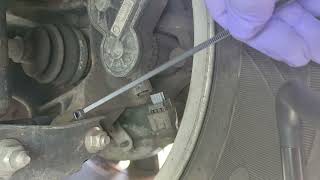
Helpful Videos

Shop the Parts Behind C1478
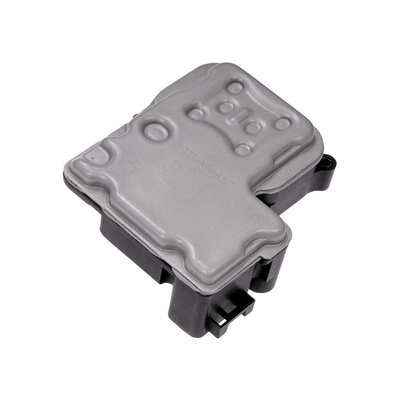
Below are the parts most often responsible for code C1478, ranked by how frequently each one is the actual culprit (per the diagnosis above). Tap any to see what we have for your vehicle.



The information in this article is provided for general reference and educational purposes only. Vehicle specifications, procedures, and part compatibility can vary by production date, trim level, and region. Always consult your vehicle's factory service manual and verify part numbers before purchasing or performing repairs. Safety-critical components such as airbags, seat belts, and braking systems should be installed by a qualified professional.
- 🧭 Diagnostic Flowchart
- 🎬 Helpful Videos
- 🛍️ Shop This Part
- What Does C1478 Mean?
- Can I Drive With C1478?
- Common Causes
- Symptoms
- Common Fixes & Costs
- DIY vs Professional
- Used vs. New Parts: Buying Guide
- What Happens If You Wait — Timeline
- Cost of Not Fixing It
- Diagnosis Steps
- When This Code Triggers (Freeze-Frame Conditions)
- Related Codes
- Climate & Environmental Factors
- How to Talk to a Mechanic About This Code
- Where to Take It: Dealer vs Independent vs Chain
- When to Walk Away From the Repair
- What Scan Tool You Need for This Code
- How to Clear the Code After You Fix It
- Will This Fail Emissions / State Inspection?
- Most Commonly Affected Vehicles
- Manufacturer-Specific Notes
- Real Owner Stories
- 2008 Ford Escape Hybrid at 109K miles
- 2009 Toyota Prius at 154K miles
- 2017 Subaru Outback
- How to Prevent This Code From Triggering
- Frequently Asked Questions
- Is it safe to drive with code C1478?
- Why is the repair for a Ford Escape Hybrid so expensive?
- My mechanic wants to replace the whole ABS module for $5,000. What should I do?
- My mechanic checked the brake hoses and they look fine. Can they still be the problem?
- What's the difference between a C1478 and a P1478 code?
- Can I fix code C1478 myself?
- Will clearing the code make it go away?
- What does 'Regen Brakes Disabled' mean on my hybrid?
- Key Takeaways
- 🎟️ Get 5% Off