

OBD-II Code C1481: Manufacturer-Specific Circuit Failure (Differential, Airbag, or Exhaust)
What C1481 means, why it triggers, and how to fix it across different brands
- Code C1481 has completely different meanings depending on the brand: it indicates a failed airbag clock spring on Hyundai/Kia, a broken electronic differential on Land Rover/Jeep, or a seized exhaust throttle on Nissan.
- For Hyundai and Kia vehicles, C1481 (often read as B1481) means the driver's airbag is disabled due to a broken clock spring, a repair that costs $250-$550 but is often covered by Hyundai's 15-year Campaign TXXC warranty.
- On Land Rover and Jeep models, C1481 points to a rear differential actuator failure; driving on pavement with this fault causes severe drivetrain binding and turns a $900 actuator replacement into a $4,000 differential rebuild.
- Never replace a Land Rover or Jeep differential actuator without first load-testing the battery, as a voltage drop below 12.5V during startup frequently triggers a false C1481 code.
- Diagnosing C1481 requires a mid-range scan tool (like the $180 Foxwell NT510) capable of reading chassis and SRS codes, as basic $20 engine readers cannot access the modules triggering this fault.
What Does C1481 Mean?
Code C1481 is a manufacturer-specific chassis code with entirely different meanings depending on the vehicle brand. For Jaguar, Land Rover, and Jeep, it indicates an electrical circuit failure in the electronic rear differential's locking motor. On Hyundai and Kia, this code (often appearing as B1481) signals a high resistance fault in the driver's airbag deployment circuit. For Nissan diesel models, it appears as P1481 and points to a fault with the exhaust throttle control actuator.
Technical definition: The official definition for C1481 is highly manufacturer-specific. - **Jaguar/Land Rover**: 'Differential Lock-Up Motor Circuit Failure', indicating an open, short to ground, or short to power within the Rear Differential Control Module (RDCM), wiring, or locking motor. - **Jeep**: 'Rear Differential Position Sensor Circuit 2 - Circuit Short to Ground or Open', often appearing with companion code C148F. - **Hyundai/Kia**: Displayed as B1481, meaning 'Driver Airbag Resistance too High (2nd stage)', pointing to a fault in the airbag squib circuit, almost always the clock spring. - **Nissan**: Displayed as P1481, indicating an 'Exhaust Throttle Control Fault' related to the actuator motor for the DPF regeneration valve.
Can I Drive With C1481?
Yes, but not recommended Driving is possible but strongly discouraged. If the code relates to an airbag system (Hyundai/Kia), the airbags are disabled and will not deploy in a crash, posing a life-threatening safety risk. If the code relates to the electronic locking differential (Jaguar, Land Rover, Jeep), driving on paved surfaces causes drivetrain binding, shuddering on turns, and accelerated tire wear. Continuing to drive turns a $900 actuator repair into a $4,000+ differential replacement.
Common Causes
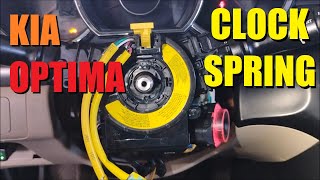
- Failed Clock Spring (Very Common) — On Hyundai and Kia vehicles where C1481/B1481 indicates an airbag fault, a failed clock spring is the primary cause. This coiled ribbon of wire in the steering column breaks from repeated turning, creating high resistance in the airbag circuit. 🎬 Watch: How to fix the B1481 clock spring on a Kia.
- Damaged or Corroded Wiring Harness (Very Common) — For differential faults on Land Rover and Jeep, the wiring harness to the rear differential motor is highly exposed to moisture, road salt, and debris. Wires chafe or connector pins corrode, causing an open or short circuit.
- Failed Rear Differential Locking Motor/Actuator (Common) — The electric motor that physically locks the differential fails internally from wear, moisture intrusion, or electrical shorts. The motor and its internal position sensor are typically replaced as a single unit.
- Seized Exhaust Throttle Valve (Common) — On Nissan diesel models, carbon buildup causes the exhaust throttle valve to stick. The actuator motor struggles to move the valve, draws excessive current, and triggers the P1481 circuit fault.
- Low or Contaminated Differential Fluid (Common) — Electronic locking differentials require specific fluid types and levels. Low or contaminated fluid causes mechanical parts to bind, placing excessive load on the motor and triggering a circuit fault code.
- Weak Vehicle Battery (Less Common) — Jaguar and Land Rover vehicles are notoriously sensitive to battery voltage. A weak battery dropping below 12.5V during startup causes false electronic fault codes, including C1481 and 'E-Diff Fault' messages.
- Faulty Rear Differential Control Module (RDCM) (Less Common) — The control module commanding the locking motor fails due to internal faults or water damage. On Land Rover models, it is located in the rear trunk area and is susceptible to moisture.
- Blown Fuses or Bad Relays (Rare) — A blown fuse or a faulty relay in the differential, airbag, or engine control circuit cuts power to the respective system and triggers this code.
Symptoms
- Airbag Warning Light & Dead Steering Wheel Controls — On Hyundai/Kia models, the SRS warning light illuminates. Because the clock spring powers multiple steering wheel components, the horn, cruise control, and radio buttons frequently stop working at the same time.
- 'E-Diff System Fault' or 'Service 4x4' Message — The vehicle's computer disables special off-road or performance driving modes once it detects a differential fault, displaying a specific drivetrain warning message on the dashboard.
- Shuddering, Binding, or Clunking on Turns — If the electronic differential is stuck partially or fully locked, you feel a severe shudder, binding, or hear clunking noises from the rear during slow, tight turns on pavement.
- Reduced Engine Power or DPF Issues — For Nissan diesel models, a stuck exhaust throttle hinders the Diesel Particulate Filter (DPF) regeneration process, forcing the vehicle into a reduced power or 'limp home' mode.
- Cascade of Unrelated Warning Lights (also visible on scanner) — On Land Rover products, a failing differential actuator disrupts the CAN bus network, causing a flurry of unrelated warnings like 'HDC Fault', 'Transmission Fault', and suspension lowering.
Diagnostic Flowchart
Tap your situation to follow the diagnostic path that matches what you're seeing on this code.
Common Fixes & Costs
- Replace Clock Spring
— Parts: $100-$250, Labor: $150-$300, ~1.5 hr book time
(Professional)
: OEM - Replace Rear Differential Locking Motor/Actuator
— Parts: $350-$800, Labor: $250-$500, ~2.0 hr book time
(Professional)
: OEM - Repair or Replace Rear Differential Wiring Harness — Parts: $50-$250, Labor: $200-$500, ~2.5 hr book time (Intermediate)
- Clean or Replace Exhaust Throttle Actuator
— Parts: $200-$500, Labor: $150-$350, ~1.8 hr book time
(Intermediate)
: OEM - Change Rear Differential Fluid — Parts: $70-$150, Labor: $100-$200, ~0.8 hr book time (DIY)
- Replace and Reprogram Rear Differential Control Module (RDCM) — Parts: $300-$800, Labor: $150-$300, ~1.2 hr book time (Professional)
DIY vs Professional
- Replace Clock Spring 🟢 Beginner
Tools: Trim removal tools, socket set, torque wrench, steering wheel puller, professional scan tool. - Repair or Replace Rear Differential Wiring Harness 🟢 Beginner
Tools: Jack and jack stands, socket set, wire cutters/strippers, soldering iron, heat shrink tubing, multimeter. - Replace Rear Differential Locking Motor/Actuator 🟢 Beginner
Tools: Jack and jack stands, socket set with extensions, torque wrench, RTV sealant, advanced scan tool. - Change Rear Differential Fluid 🟢 Beginner
Tools: Jack and jack stands, socket/wrench for drain/fill plugs, fluid pump, drain pan.
Used vs. New Parts: Buying Guide
When a used part is worth it: A tested, used unit from a low-mileage vehicle offers significant savings for a complete differential assembly or control module. For a clock spring, a new OEM part is mandatory due to safety functions.
Donor-vehicle mileage cap: roughly under 75000 miles for the part to have meaningful remaining life.
Donor quality checklist:
- Verify the part number matches exactly.
- Ensure the donor vehicle was not in a severe rear-end accident.
- Never buy a used clock spring, as it is a wear item with limited remaining life.
Decision logic:
- If The part is a clock spring → Buy new OEM. The safety risk and labor cost of a used part failing is not worth the savings.
- If The part is a differential actuator motor → A new aftermarket or remanufactured unit is the best balance of cost and reliability.
- If The part is a complete differential assembly → A used part from a reputable salvage yard with a warranty is the most cost-effective option.
Warranty tradeoff: Used parts typically come with a 30-90 day warranty on the part only. New OEM parts carry a 1-2 year warranty.
Worst-case if a used part fails: $400-$800 if a used part fails after installation, primarily due to repeated labor costs.
What Happens If You Wait — Timeline
- Immediate: For Hyundai/Kia: Airbag light on, system is disabled. For Jeep/LR: 'E-Diff Fault' light on, system disabled. For Nissan: Check Engine Light on. (MPG impact: 0-2%% · Added cost: $0)
- 0-3 Months: For Jeep/LR: If diff is stuck locked, driving on pavement causes tire scrubbing and drivetrain binding. For Nissan: Failed DPF regenerations begin. (MPG impact: 3-8%% · Added cost: $300-$800)
- 3-6 Months: For Jeep/LR: Continued stress causes excessive wear on differential clutch packs and axle shafts. For Nissan: DPF becomes progressively more clogged. (MPG impact: 10-20%% · Added cost: $500-$1,500)
- 6+ Months: For Jeep/LR: Catastrophic failure of the differential internals requires complete assembly replacement. For Nissan: The DPF becomes fully blocked and requires replacement. (MPG impact: >20%% · Added cost: $2,500-$6,000+)
Cost of Not Fixing It
- Immediate: For Hyundai/Kia: Airbags are disabled and will not deploy in a crash, presenting a critical safety failure. (Added cost: N/A)
- 0-3 months: For Jeep/Land Rover: Driving with a locked differential on pavement causes accelerated tire wear, drivetrain binding, and stress on axles. (Added cost: $300-$800)
- 3+ months: For Jeep/Land Rover: Continued stress causes catastrophic failure of the differential's internal gears, requiring a complete rear differential replacement. (Added cost: $2,500-$6,000+)
- Ongoing: For Nissan: A faulty exhaust throttle prevents proper DPF regeneration, leading to a clogged DPF and reduced engine power. (Added cost: $1,500-$4,000)
Diagnosis Steps
- Confirm Code Definition for Your Specific Vehicle
Use a professional scan tool to confirm what C1481 means for your specific make and model. Misinterpreting the code (e.g., looking for a differential fault on a Hyundai) guarantees a misdiagnosis.
Tools: Professional OBD-II Scanner (Beginner) - Check for Related Trouble Codes
Scan all vehicle modules. C1481 rarely appears alone. Look for C148F or P186D on Jeep/Land Rover, or B1346 on Hyundai/Kia. Network codes (U-codes) point to a wiring or module issue.
Tools: OBD-II Scanner (with multi-system capability) (Beginner) - Inspect Fuses and Test Battery Health
Locate and inspect all fuses related to the identified system. On Jaguar/Land Rover, fully charge and load test the battery. A healthy battery must read above 12.6V at rest and maintain above 10.5V during cranking.
Tools: Fuse Puller, Digital Multimeter, Digital Battery Tester (Beginner) - Perform a Detailed Visual Inspection
For Jeep/LR: Safely raise the vehicle and trace the wiring harness from the rear differential. Look for chafed wires, melting near the exhaust, and corrosion in the main connector. For Nissan: Locate the exhaust throttle actuator and inspect the valve linkage for visible seizure.
Tools: Jack and Jack Stands, Flashlight, Safety Glasses (Intermediate) - [Pro Tip] Live Data Analysis (Hyundai/Kia)
Access the SRS control module live data. Monitor 'Driver Airbag Resistance Stage 1' and 'Stage 2'. The reading should be stable (2.0-3.5 ohms). Slowly turn the steering wheel lock to lock. If resistance spikes above 5.0 ohms or shows 'OL', the clock spring is bad.
Tools: Advanced Scan Tool with Live Data (Advanced) - [Pro Tip] Actuator Circuit Voltage Test (Jeep/LR)
Back-probe the electrical connector at the Rear Differential Control Module (RDCM). Command the differential lock 'on' with a scan tool. You should see battery voltage (12-14V) sent to the motor. If voltage is present but the motor doesn't operate, the actuator has failed.
Tools: Multimeter, Wiring Diagram, Back-Probe Kit, Advanced Scan Tool (Advanced) - [Pro Tip] Differential Motor Resistance Test (Jeep/LR)
Disconnect the differential actuator motor connector. Measure the resistance between the motor's power and ground pins. A healthy motor shows 2 to 10 Ohms. A reading of 'OL' indicates a broken internal winding; near zero Ohms suggests an internal short.
Tools: Multimeter, Vehicle-Specific Service Manual (Advanced) - Actuator Motor Bench Test (Jeep/LR)
If the actuator is removed, briefly apply power to the motor's power and ground pins using a 12V battery. Reversing polarity runs the motor in the opposite direction. If the motor does not run, it is seized and requires replacement.
Tools: 12V Battery, Jumper Wires (Advanced) - Check Differential Fluid
If diagnosing a differential fault, check the fluid level and condition. Dark, burnt-smelling fluid or fluid heavily contaminated with metallic particles indicates severe internal wear requiring a complete differential overhaul.
Tools: Wrench/Socket Set, Fluid Pump, Drain Pan (Intermediate)
When This Code Triggers (Freeze-Frame Conditions)
- System: Varies (Set by the Drivetrain Control Module (Jeep/LR), SRS module (Hyundai/Kia), or Engine Control Module (Nissan).)
- Vehicle Speed: 0-15 MPH (Differential faults trigger during low-speed, tight turns. Airbag faults are detected during the initial key-on self-test.)
- System Voltage: 11.5V - 14.5V (On Land Rover/Jaguar, a low voltage condition (below 12.5V) at startup triggers a false E-Diff fault.)
- Warning Lights: On (Accompanied by an Airbag/SRS light (Hyundai/Kia), a 'Service 4WD System' message (Jeep/LR), or a Check Engine Light (Nissan).)
Related Codes
- B1346 — A Hyundai/Kia code for 'Driver Airbag Resistance too High (1st stage)'. Seeing this alongside B1481 (2nd stage) is a near-certain diagnosis of a failed clock spring.
- C148F — A Jeep-specific code for 'Rear Differential Measured Motor Current Out of Range'. It suggests the motor is drawing abnormal current due to a binding mechanism or internal short.
- P186D — A Land Rover-specific code for 'Actuator Stuck'. When it appears with C1481, it strongly implies the motor has physically seized, causing the electrical circuit fault.
- U0102 — A generic 'Lost Communication with Transfer Case Control Module' code. If present alongside C1481, the fault lies in the control module or CAN bus network wiring, not just the motor.
Climate & Environmental Factors
- Road Salt / High Humidity: Significantly increases the failure rate of the rear differential wiring harness on Jeep and Land Rover models. Salt accelerates corrosion of connector pins and penetrates wire insulation, causing shorts.
- Extreme Cold: Causes a weak vehicle battery to drop below the minimum voltage threshold required by sensitive control modules on Jaguar and Land Rover vehicles, triggering false C1481 codes upon startup.
- Off-Roading / Water Crossings: Physical impact damages the exposed differential actuator on Jeep and Land Rover vehicles. Submerging the rear axle forces moisture into the actuator motor or connectors, leading to rapid failure.
How to Talk to a Mechanic About This Code
Say this: "For Hyundai/Kia: 'I have an airbag light on and code B1481. Can you check my VIN to see if it's covered under the 15-year extended warranty, Campaign TXXC?' For Land Rover/Jeep: 'I have a C1481 code and an E-Diff warning. Please check battery voltage and the wiring harness at the rear differential before condemning the actuator motor.'"
This language signals that you have researched the specific nature of this code. It directs the technician toward the most cost-effective diagnostic paths and puts known warranties front and center.
Avoid saying:
- 'My check engine light is on.'
- 'The internet said it's the actuator.'
- 'Just fix whatever is needed.'
Questions to ask before authorizing the repair:
- Did you verify the clock spring is NOT covered by the warranty extension?
- Does your quote include the mandatory software calibration and update required by the TSB?
- What was the result of the physical inspection of the exhaust valve? Was it stuck?
Where to Take It: Dealer vs Independent vs Chain
- Dealer:
Recommended, and often required. For Hyundai/Kia warranty work, it's the only choice. For Land Rover/Jeep, their access to proprietary software for post-repair calibration is critical.
Best for: Hyundai/Kia vehicles to claim the clock spring extended warranty., Land Rover/Jeep repairs requiring mandatory software updates and module programming.
Downsides: Highest labor rates., May default to replacing an entire assembly when a smaller component repair is possible. (Typical cost: +50% vs. baseline) - Independent Shop:
Good fit, provided you confirm they have the capability to perform required software updates/calibrations for JLR/Jeep repairs.
Best for: Out-of-warranty Hyundai/Kia clock spring replacements., Brand-specialist independents with the right diagnostic tools.
Downsides: May not have the expensive, dealer-level software required for post-repair calibrations on Jeep/Land Rover. (Typical cost: +0% vs. baseline) - Chain Shop:
AVOID for diagnosis and repair. The complexity and software requirements of code C1481 are beyond the scope of a typical chain repair shop.
Best for: Simple fluid changes.
Downsides: Technicians lack specialized knowledge for this code's multiple meanings., Will not have the required software for airbag or differential control module calibration. (Typical cost: -10% vs. baseline)
When to Walk Away From the Repair
If the estimated repair cost exceeds 50% of the car's current private-party value, consider selling or trading it in.
- Car worth $7000, fix is $650: Fix it. A clock spring or exhaust actuator repair is well below the threshold.
- Car worth $6000, fix is $1300: Fix it. A differential actuator replacement is a significant but worthwhile repair to restore functionality.
- Car worth $6000, fix is $4500: Walk away. If the actuator failure has led to a full differential replacement on an older vehicle, the cost is too high.
What Scan Tool You Need for This Code
Minimum: A tool that reads manufacturer-specific codes (B-codes, C-codes) from ALL vehicle modules, specifically the SRS and Drivetrain modules.
A basic $20 engine code reader will show 'No Codes', as C1481 is not an engine code on most affected vehicles.
Budget: BlueDriver Pro (~$100) — Reads and clears airbag and chassis codes. Views live data for airbag resistance, crucial for diagnosing a Hyundai/Kia clock spring.
Mid-range: Foxwell NT510 Elite (~$180) — Adds bidirectional controls to command the differential lock motor on/off and performs Steering Angle Sensor calibrations.
Professional: Autel MaxiCOM MK808 (~$450) — Provides OEM-level special functions required to perform the mandatory 'relearn' procedure for a new differential actuator on Land Rover and Jeep vehicles.
Rent vs buy: Rent from an auto parts store for an initial code scan, but you must buy a mid-range or pro-level tool to complete the repair calibrations.
How to Clear the Code After You Fix It
- Reconnect the battery if it was disconnected for the repair.
- Use an OBD-II scan tool to clear the fault codes from the specific module (SRS, DTCM, or ECM).
- For Land Rover/Jeep differential actuator replacements, perform a module calibration procedure with an advanced scan tool.
- For Hyundai/Kia clock spring replacements, perform a Steering Angle Sensor (SAS) calibration.
Drive cycle (~20 minutes): For airbag systems, the module self-tests at key-on; if successful, the light stays off. For differential systems, a short drive involving slow left and right turns verifies the repair. For Nissan P-codes, a full OBD-II drive cycle is needed.
Readiness monitors affected: Nissan P1481 affects the EGR/VVT System and Catalyst monitors., C-codes and B-codes do not affect emissions readiness monitors.
Before emissions retest: drive at least 50 miles to fully set monitors.
Watch out for:
- Clearing the code without fixing the hardware fault results in the code returning immediately.
- Failing to perform the required software calibration after replacing a differential actuator causes the new part to function incorrectly.
Will This Fail Emissions / State Inspection?
Yes — this code typically fails an OBD-II emissions inspection.
- California: A Check Engine Light (Nissan P1481) is an automatic failure. An airbag light (Hyundai/Kia B1481) does not cause an emissions failure but is a critical safety issue.
- New York: An illuminated airbag warning lamp is noted as an advisory during the safety inspection but is not cause for rejection on its own.
- Texas: An active Check Engine Light causes an automatic failure of the OBD-II test. An airbag light is not part of the emissions test.
Most Commonly Affected Vehicles
- Land Rover Discovery 3/4 (LR3/LR4) (2005-2016) — Extremely common for C1481 due to rear differential actuator failure or wiring harness corrosion. TSB LTB00228NAS4 addresses a mandatory software update after replacing the actuator motor.
- Land Rover Range Rover Sport (2006-2013) — Shares the same platform and electronic differential as the Discovery 3, making it prone to identical wiring and actuator motor failures.
- Hyundai Sonata, Elantra (2011-2019) — The code is B1481 for 'Driver Airbag Resistance too High', caused by a faulty clock spring. Hyundai issued extended warranty Campaign TXXC (15 years/unlimited miles) for this part on many models.
- Jeep Grand Cherokee (WK2) (2011-2021) — On models with the Electronic Limited-Slip Differential (ELSD), this code points to the actuator motor. TSB 21-006-14 and 21-001-14 require a software update and possible motor replacement.
- Jaguar XF, XJ, XK/XKR (2008-2015) — These models use an 'E-Diff' susceptible to this fault. It is frequently triggered by a weak battery, resulting in an 'E-Diff Fault' dashboard message.
- Nissan Qashqai, X-Trail, Juke (1.5/1.6 dCi) (2014-2020) — Code P1481 signifies an 'Exhaust Throttle Control Fault' on diesel models. The cause is a seized valve due to carbon buildup or a failing actuator motor.
- Jeep Wrangler (JK/JL) (2007-Present) — Models equipped with electronic locking differentials throw this code due to damage to the exposed wiring harness during off-road use or water crossings.
- Kia Optima, Sorento (2011-2019) — Shares platforms with Hyundai, so code B1481 points to a high-resistance airbag fault caused by the clock spring. Check for applicable warranty extensions.
Manufacturer-Specific Notes
- Hyundai / Kia: Code C1481 (read as B1481) exclusively relates to the airbag system. The clock spring failure is so prevalent that Hyundai issued extended warranty Campaign TXXC, covering affected models for 15 years/unlimited miles.
- Jaguar / Land Rover: These vehicles are extremely sensitive to battery voltage. A dying battery reading below 12.5V at rest causes a cascade of false electronic errors, including C1481 and 'E-Diff Fault'.
- Jeep: On Grand Cherokees with the ELSD, using the correct fluid (Mopar 75W-85 GL-5 with friction modifier) is critical. Generic fluid causes clutch pack chatter and damage.
- Nissan: The P1481 code on diesel models is for an exhaust throttle, not an intake throttle body. This valve creates backpressure for the EGR system and assists in DPF regeneration.
Real Owner Stories
2011 Hyundai Sonata with 110K miles
Airbag light stayed on, and the horn and steering wheel buttons stopped working.
What they tried:
- Researched online and found the clock spring was covered under extended warranty Campaign TXXC.
- Called a dealer who confirmed the diagnosis would be free if it was the warrantied part.
Outcome: The dealership confirmed the failed clock spring and replaced it under Hyundai's 15-year/unlimited-mileage extended warranty. Total cost to owner: $0.
Lesson: Always check for extended warranties or recalls for the clock spring before paying for a diagnosis or repair on Hyundai/Kia vehicles.
2008 Land Rover LR3 with 51K miles
A 'Christmas tree' of warning lights appeared (HDC, suspension, E-Diff fault) and the vehicle was stuck in access height.
What they tried:
- Replaced the battery, but the faults remained.
- Took it to an independent Land Rover shop for diagnosis.
Outcome: The shop diagnosed a failed rear differential locking motor. The owner sourced a replacement motor and had it installed, resolving the network errors.
Lesson: A cascade of seemingly unrelated warning lights on Land Rovers points to a failing battery or a fault with the rear differential motor causing CAN bus network issues.
2016 Nissan Qashqai 1.5 dCi
Check engine light came on with a 'Stop/Start System Faulty' message and reduced engine power.
What they tried:
- Pulled code P1481.
- Dealer quoted £700 to replace the exhaust throttle actuator.
Outcome: A mechanic found the exhaust throttle valve was stuck due to carbon buildup. They manually freed it and applied penetrating lubricant, clearing the code without replacing parts.
Lesson: For Nissan P1481, attempt to clean and lubricate the valve's external linkage before paying for a costly actuator replacement.
How to Prevent This Code From Triggering
- Periodically Clean Undercarriage and Electrical Connectors (Once per year, especially after winter) — Prevents road salt and grime from causing corrosion on the exposed rear differential wiring harness and actuator connector on Jeep/Land Rover models.
- Change Rear Differential Fluid with OEM-Specified Fluid (Every 30,000-60,000 miles) — Clean fluid with correct friction modifiers prevents binding in the clutch packs, which overloads and burns out the actuator motor.
- Maintain a Healthy Battery (Ongoing) — Regularly checking battery health and replacing it every 4-5 years prevents spurious 'E-Diff Fault' messages on voltage-sensitive Jaguar and Land Rover vehicles.
Frequently Asked Questions
Why does my scan tool say C1481 is an airbag code? I thought it was for the differential.
C1481 is a manufacturer-specific code. On a Land Rover or Jeep, it points to the differential locker, but on a Hyundai or Kia, it points to a high-resistance fault in the driver's airbag circuit. You must use a scanner that correctly identifies your vehicle's make.
Can a bad clock spring be the cause if my horn and steering wheel buttons still work?
Yes. The clock spring contains multiple coiled wires for different functions. It is very common for only the airbag circuit to break while the horn and buttons continue to function perfectly.
What does the 'E-Diff Fault' message mean on my Land Rover?
This message indicates the vehicle's computer has detected a problem with the electronic locking rear differential and disabled it. Common causes include a failed actuator motor, corroded wiring, or low battery voltage.
How much does it cost to fix code C1481?
Costs vary by manufacturer. A Hyundai/Kia clock spring replacement runs $250-$550 but is often covered by extended warranties. Land Rover/Jeep differential actuators cost $600-$1300, while a Nissan exhaust throttle repair averages $300-$700.
Can I fix code C1481 myself?
An intermediate DIYer can tackle a wiring repair or a Nissan exhaust actuator. However, replacing an airbag clock spring or a Land Rover differential motor is best left to professionals due to safety risks and the need for specialized programming software.
Will clearing the code make it go away?
No. The control module runs a self-test every time you start the vehicle. If the underlying electrical or mechanical problem isn't fixed, the fault is detected again immediately.
Is it safe to drive with the airbag light on?
No. An illuminated airbag light means the Supplemental Restraint System (SRS) is disabled. In the event of an accident, the airbags will not deploy, presenting a critical safety risk.
Key Takeaways
- Code C1481 has completely different meanings depending on the brand: it indicates a failed airbag clock spring on Hyundai/Kia, a broken electronic differential on Land Rover/Jeep, or a seized exhaust throttle on Nissan.
- For Hyundai and Kia vehicles, C1481 (often read as B1481) means the driver's airbag is disabled due to a broken clock spring, a repair that costs $250-$550 but is often covered by Hyundai's 15-year Campaign TXXC warranty.
- On Land Rover and Jeep models, C1481 points to a rear differential actuator failure; driving on pavement with this fault causes severe drivetrain binding and turns a $900 actuator replacement into a $4,000 differential rebuild.
- Never replace a Land Rover or Jeep differential actuator without first load-testing the battery, as a voltage drop below 12.5V during startup frequently triggers a false C1481 code.
- Diagnosing C1481 requires a mid-range scan tool (like the $180 Foxwell NT510) capable of reading chassis and SRS codes, as basic $20 engine readers cannot access the modules triggering this fault.
Helpful Videos
Shop the Parts Behind C1481
Below are the parts most often responsible for code C1481, ranked by how frequently each one is the actual culprit (per the diagnosis above). Tap any to see what we have for your vehicle.



The information in this article is provided for general reference and educational purposes only. Vehicle specifications, procedures, and part compatibility can vary by production date, trim level, and region. Always consult your vehicle's factory service manual and verify part numbers before purchasing or performing repairs. Safety-critical components such as airbags, seat belts, and braking systems should be installed by a qualified professional.
- 🧭 Diagnostic Flowchart
- 🎬 Helpful Videos
- 🛍️ Shop This Part
- What Does C1481 Mean?
- Can I Drive With C1481?
- Common Causes
- Symptoms
- Common Fixes & Costs
- DIY vs Professional
- Used vs. New Parts: Buying Guide
- What Happens If You Wait — Timeline
- Cost of Not Fixing It
- Diagnosis Steps
- When This Code Triggers (Freeze-Frame Conditions)
- Related Codes
- Climate & Environmental Factors
- How to Talk to a Mechanic About This Code
- Where to Take It: Dealer vs Independent vs Chain
- When to Walk Away From the Repair
- What Scan Tool You Need for This Code
- How to Clear the Code After You Fix It
- Will This Fail Emissions / State Inspection?
- Most Commonly Affected Vehicles
- Manufacturer-Specific Notes
- Real Owner Stories
- 2011 Hyundai Sonata with 110K miles
- 2008 Land Rover LR3 with 51K miles
- 2016 Nissan Qashqai 1.5 dCi
- How to Prevent This Code From Triggering
- Frequently Asked Questions
- Why does my scan tool say C1481 is an airbag code? I thought it was for the differential.
- Can a bad clock spring be the cause if my horn and steering wheel buttons still work?
- What does the 'E-Diff Fault' message mean on my Land Rover?
- How much does it cost to fix code C1481?
- Can I fix code C1481 myself?
- Will clearing the code make it go away?
- Is it safe to drive with the airbag light on?
- Key Takeaways
- 🎟️ Get 5% Off