

C1504 on 2016 Dodge Durango: TPMS Sensor Fault Causes and Fixes
Code C1504 on a 2016 Dodge Durango indicates a fault with the Tire Pressure Monitoring System (TPMS) sensor in wheel position #4, typically the right rear. The most common cause is a dead sensor battery. The fix involves replacing the sensor with the correct 2016 model year part (Mopar P/N 68313387AB or equivalent) and letting the system relearn, which usually requires a tire shop.
- C1504 points to a problem with the right rear TPMS sensor.
- The most likely cause is a dead battery in the original sensor.
- A flashing TPMS light means a system fault; a solid light means low pressure.
- You must use a TPMS sensor specifically for the 2016 model year (Mopar P/N 68313387AB); a 2015 sensor will not work.
- Repair requires a tire shop to replace the sensor and is not a typical DIY job.
What's Unique About the 2016-2016 Dodge DURANGO
For the 2016 Dodge Durango, a critical factor is a mid-generation parts change. A manufacturer Technical Service Bulletin (TSB #68313387A$) explicitly warns that TPMS sensors from 2015 and 2016 models are not interchangeable. The 2015 models use Mopar part number 68241067AB, while the 2016 models require part number 68313387AB (or its subsequent revisions like 68313387AC). Installing the wrong model-year sensor, even if it's a genuine Mopar part, will cause this fault code.
Diagnostic Flowchart
Tap your situation to follow the diagnostic path that matches what you're seeing on this vehicle.
Symptoms You May Notice
- TPMS warning light flashes for 60-90 seconds on startup, then stays on solid.
- A "Service Tire Pressure System" or similar message appears in the driver information center (EVIC).
- The pressure reading for the right rear tire shows dashes (--) on the display.
- Check Engine Light (CEL) may illuminate in some cases, though this is less common than just the TPMS light.
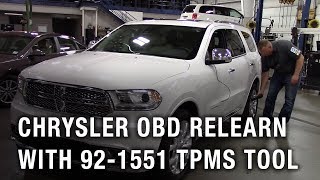
- Replacing the wrong sensor. Code C1504 refers to sensor position #4. However, if tires were rotated without a proper relearn, the sensor for position #4 might be physically located on a different wheel. A TPMS tool should be used to test each wheel to find the non-responsive sensor 🎬 See how to use a TPMS tool for the relearn process before any work is done.
Most Likely Causes
- Dead TPMS Sensor Battery 🔴 High Probability → Shop Tire Pressure Monitoring System (TPMS) Sensor TPMS sensor batteries have a finite lifespan of about 7-10 years. A 2016 vehicle is at the age where original sensor batteries commonly fail.
How to confirm: A tire shop can use a TPMS diagnostic tool to attempt to 'wake up' or read the sensor. If the tool gets no response, the sensor is dead.
Typical fix: Replace the TPMS sensor in the affected wheel. It is often recommended to replace all four sensors at the same time if they are original, as the others are likely to fail soon.
Est. part cost: $25-$75 per sensor - Incorrect Model Year Sensor Installed 🟡 Medium Probability As per TSB #68313387A$, 2015 and 2016 Durango TPMS sensors are not interchangeable. A recent tire or sensor replacement may have involved the installation of an incompatible part (e.g., using a 68241067AB on a 2016 model).
How to confirm: Verify the part number of the installed sensor against the OEM part specified for a 2016 model (68313387AB/AC). A TPMS tool may also show the sensor is transmitting but at the wrong frequency or protocol that the vehicle cannot read.
Typical fix: Replace the incorrect sensor with the correct OEM or equivalent sensor for a 2016 Dodge Durango, which operates at 433 MHz.
Est. part cost: $25-$75 per sensor - Internal Sensor Failure or Damage ⚪ Low Probability Sensors can be damaged during tire installation or fail internally from vibration and age.
How to confirm: A TPMS tool may read an error from the sensor, such as 'Damaged Accel' or 'Damaged Press', or it may get no reading at all.
Typical fix: Replace the faulty TPMS sensor.
Est. part cost: $25-$75 per sensor
Rare But Worth Checking
- Wireless Control Module (WCM) Fault: This is rare. The WCM (also known as SKREEM) is the receiver for the TPMS signals. Before suspecting the module, all sensors and their programming should be thoroughly checked, as sensor failure is far more common.
- Missing IOD Fuse: An older Chrysler TSB notes that if the vehicle is driven for an extended period without the Ignition Off Draw (IOD) fuse installed (common when vehicles are in dealer inventory), the WCM receiver circuit is not powered, which can log C1501-C1504 codes. While less likely on a personal vehicle, it's a possibility if recent electrical work was performed.
- Radio Frequency Interference (RFI): Cheap, poorly-shielded aftermarket electronics, especially cell phone chargers or dash cams plugged into the 12V outlets, can emit radio noise that interferes with the 433 MHz TPMS signals. This can cause intermittent loss of communication with one or more sensors. The fix is to unplug all aftermarket devices and drive to see if the fault clears. If it does, replace the offending device with a higher-quality, shielded one.
Diagnosis Steps
- Verify the symptom: Check if the TPMS light flashes on startup and then stays solid. A solid light from the start indicates low pressure, not a system fault.
- Scan for Codes: Use an OBD-II scanner capable of reading Chassis 'C' codes to confirm C1504 is present. Note any suffixes like '-31' (No Signal) or '-96' (Component Internal Failure).
- Test Sensors with TPMS Tool: Take the vehicle to a tire shop. They will use a handheld TPMS tool at each wheel to attempt to read the sensor's ID, pressure, battery status, and frequency.
- Identify the Faulty Sensor: The tool will fail to get a response from the bad sensor. This confirms which physical wheel contains the faulty unit, regardless of tire rotation history.
- Inspect the Valve Stem: Check for corrosion or damage, which can sometimes indicate a problem with the sensor unit.
- Verify Part Number: If a sensor was recently replaced, confirm it is the correct part for a 2016 model (Mopar 68313387AB/AC or equivalent 433 MHz sensor).
- Replace Sensor: If a sensor is confirmed bad or incorrect, have the tire shop dismount the tire and replace the sensor.
- Perform Relearn Procedure: After replacement, the system needs to learn the new sensor ID. For a 2016 Durango, this is typically an automatic process that occurs by driving the vehicle for up to 20 minutes at a speed above 15 MPH (24 km/h). 🎬 Watch: How to reset your Dodge Durango tire pressure sensor
Parts You'll Likely Need
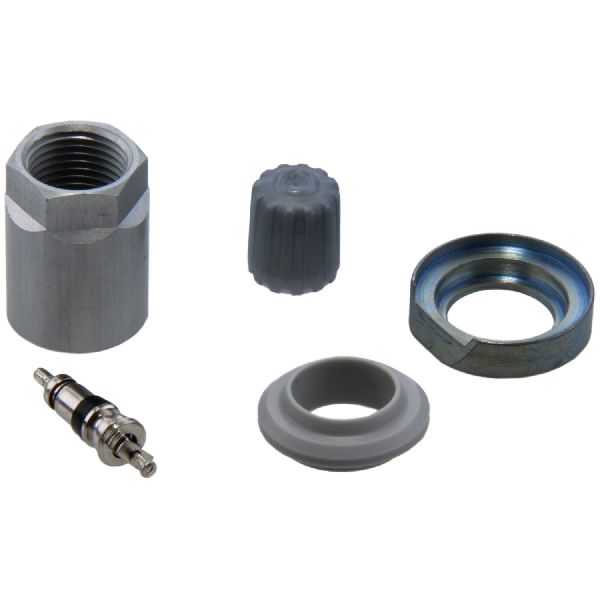
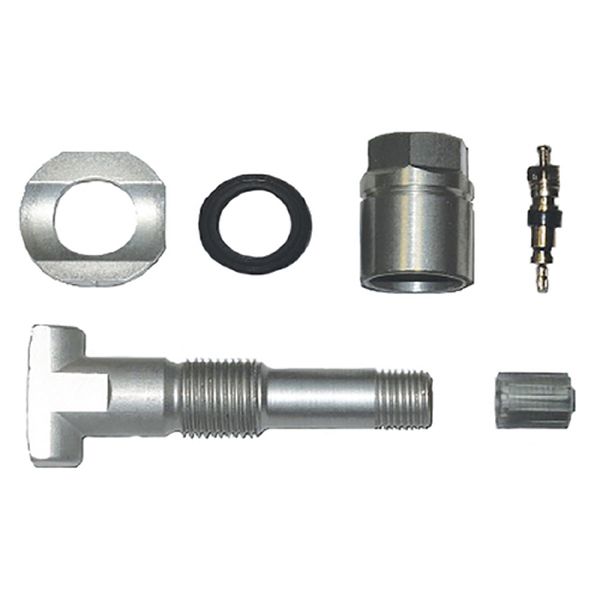
- Tire Pressure Monitoring System (TPMS) Sensor
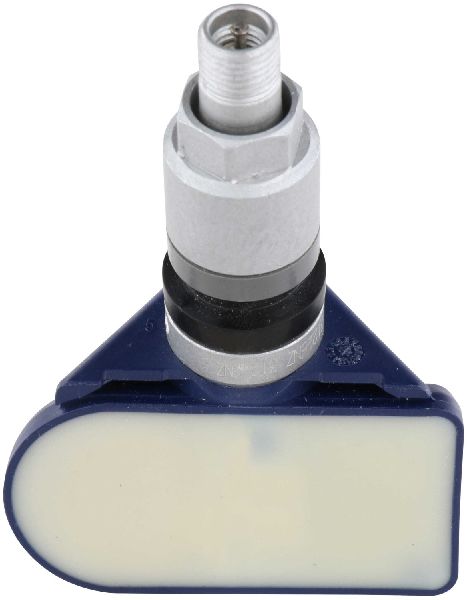
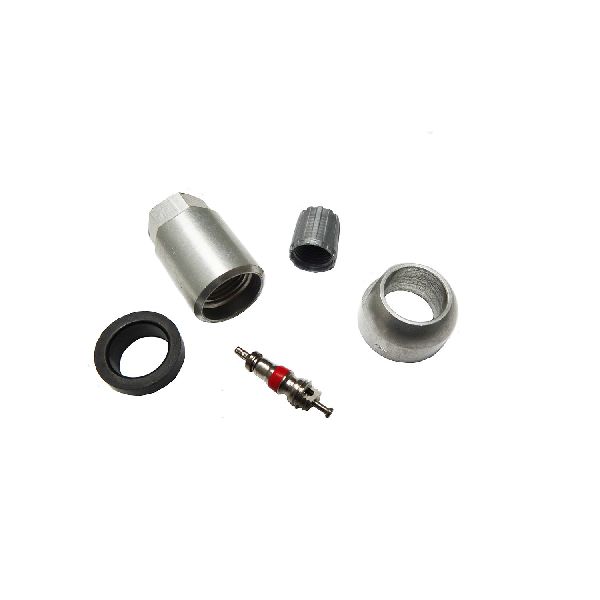
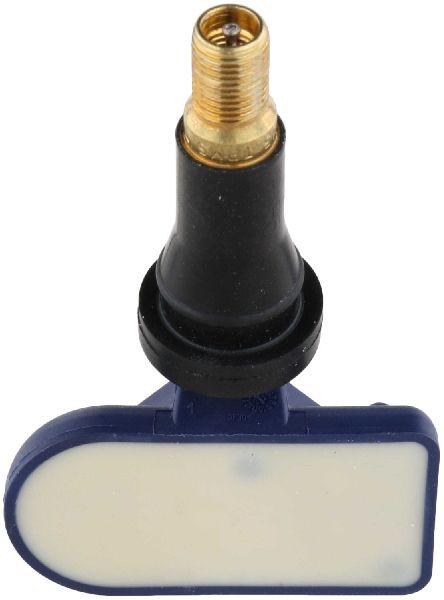
(OEM #68313387AB, 68313387AC)— This is the component that fails, most often due to an expired internal battery. It must be the correct 433 MHz sensor for the 2016 model year. The 2015 sensor (68241067AB) will not work.
Trusted brands: Mopar, Schrader, Continental, Dorman
OEM price range: $60-$90
Aftermarket price range: $25-$60
Related Codes That Often Appear With This One
- C1501, C1502, C1503 — These codes correspond to faults in sensors #1 (LF), #2 (RF), and #3 (LR) respectively. Seeing multiple codes may indicate that all sensor batteries are failing around the same time due to age, or a systemic issue like a missing IOD fuse.
Technical Service Bulletins (TSBs) & Recalls
- 68313387A$: Notes that 2015 and 2016 TPM sensors are not interchangeable and mentions an investigation into codes C1501-31 through C1504-31.
- TSB 22-003-16: While not directly for C1504, this TSB for the related Jeep Grand Cherokee platform discusses TPMS issues related to the spare tire, highlighting the system's sensitivity to all monitored wheels.
Platform-Specific Known Issues
- A key issue for this vehicle is the parts incompatibility between the 2015 and 2016 model years, as highlighted in TSB #68313387A$. Using the 2015 sensor (Mopar P/N 68241067AB) on a 2016 model will result in a system fault. The correct part for 2016 is Mopar P/N 68313387AB or a later revision.
Mechanic-Grade Diagnostic Values
- TPMS Sensor Transmission Frequency — expected: 433 MHz. Failure: A reading of 315 MHz indicates an incorrect sensor for the model year.
- WCM/SKREEM Module Power Supply — expected: 12V+ at Pin 6 (Fused B+) of the module connector with key on.. Failure: No voltage indicates a wiring or fuse issue upstream of the module.
- WCM/SKREEM Module Ground — expected: Continuity to ground at Pin 3 (Ground) of the module connector.. Failure: High resistance or an open circuit indicates a bad ground connection, which can cause intermittent faults.
Hidden / Shadow Codes Worth Checking
- C1504-31: No Signal. This indicates the WCM has not received a signal from the sensor for a predetermined amount of time. This is often due to a dead battery or RFI. (see via Dealer-level scan tool (wiTECH) or advanced aftermarket scanner capable of reading chassis codes with suffixes.)
- C1504-96: Component Internal Failure. The sensor has performed a self-test and detected an internal hardware fault with its pressure transducer, accelerometer, or other internal electronics. (see via Dealer-level scan tool (wiTECH) or advanced aftermarket scanner. A TPMS-specific tool might also report errors like 'Damaged Accel' or 'H/W fail'.)
Scan Tool Commands That Help
- wiTECH or equivalent: TPM Module Data Display — Use this to view the live status reported by the WCM for each sensor. Look for PIDs like 'Tire 4 Pressure Sensor HW Defective', 'Tire 4 Loss of Sensor Signal', or 'Tire 4 Missing Sensor ID' to pinpoint the exact failure mode reported by the module.
- wiTECH or equivalent: TPM Sensor Position Parameter Update — This routine is used after replacing the WCM or if the sensor locations are scrambled and not relearning automatically. It forces the module to update its stored sensor IDs and their locations.
Wiring & Ground Locations
- WCM (Wireless Control Module) / SKREEM — Located on the right side of the steering column, near the ignition lock cylinder, concealed beneath the steering column shrouds.. This module is the receiver for all TPMS sensor signals. A fault with its power, ground, or the module itself can prevent communication with one or all sensors.
- WCM Connector Pin 3 (Ground) — On the 6-pin connector for the WCM. It is a black wire.. A poor ground connection at this pin can cause intermittent TPMS communication failures and other seemingly random electrical issues related to the immobilizer system.
- WCM Connector Pin 6 (Fused B+) — On the 6-pin connector for the WCM. It is a red wire.. This is the main power feed for the module. Loss of power here will cause a total loss of TPMS and immobilizer function.
Real Owner Repair Stories
- Ford Truck Enthusiasts Forum / Reddit r/Honda (Multiple vehicle makes/models, including Ford Expedition and Honda CR-V) — TPMS fault light would appear intermittently, often after 30+ minutes of highway driving, and then clear itself later.
❌ Tried (didn't work) Dealer could not find any stored codes., Tire shop confirmed all four TPMS sensors were in perfect working order and transmitting correctly.
✅ What actually fixed it The root cause was identified as Radio Frequency Interference (RFI) from a cheap, aftermarket USB cell phone charger plugged into a 12V power outlet. Unplugging the charger caused the TPMS fault to disappear within minutes. Replacing the cheap charger with a high-quality, shielded brand (like Anker) permanently resolved the issue.
OEM Part Supersession History
68313387AA, 68313387AB→68313387AC— Standard part revision by the manufacturer for improved reliability or supplier change.
Heads up: Part number 68313387AC replaces the previous AA and AB versions and is the correct part for a 2016 Durango. It is not backward compatible with 2015 models, which require a different part number (e.g., 68241067AB).
Helpful Videos
We Have This Part in Stock


The information in this article is provided for general reference and educational purposes only. Vehicle specifications, procedures, and part compatibility can vary by production date, trim level, and region. Always consult your vehicle's factory service manual and verify part numbers before purchasing or performing repairs. Safety-critical components such as airbags, seat belts, and braking systems should be installed by a qualified professional.
- Dodge DURANGO:
- 🧭 Diagnostic Flowchart
- 🎬 Helpful Videos
- 🛍️ Shop This Part
- What's Unique About the 2016-2016 Dodge DURANGO
- Symptoms You May Notice
- Most Likely Causes
- Rare But Worth Checking
- Diagnosis Steps
- Parts You'll Likely Need
- Related Codes That Often Appear With This One
- Technical Service Bulletins (TSBs) & Recalls
- Platform-Specific Known Issues
- Mechanic-Grade Diagnostic Values
- Hidden / Shadow Codes Worth Checking
- Scan Tool Commands That Help
- Wiring & Ground Locations
- Real Owner Repair Stories
- OEM Part Supersession History
- 🎟️ Get 5% Off