

OBD-II Code C1517: Steering Position/Torque Sensor Circuit Malfunction & Suspension Faults
What C1517 means, why it triggers, and how to fix it
- Code C1517 disables your vehicle's Electronic Stability Control and ABS, significantly increasing crash risk during emergency maneuvers.
- The most frequent fix is a 15-minute Steering Angle Sensor recalibration using a bi-directional scan tool, costing $100-$150 at an independent shop.
- On 2000-2006 Mercedes-Benz S-Class models, C1517 indicates an Airmatic suspension failure; always test the $20 relay before replacing the $1,000 compressor.
- For 2004-2018 Toyota and Lexus vehicles, this code points directly to a failed torque sensor in the electric power steering rack, requiring a $300-$700 replacement.
What Does C1517 Mean?
C1517 is a manufacturer-specific code indicating the main computer lost the signal from the sensor group reading the steering wheel's exact position, turning speed, and applied torque. This data is critical for modern safety systems. When the signal drops or sends illogical data, the computer shuts down ABS and ESC, illuminating dashboard warning lights.
Technical definition: The SAE/ISO definition for C1517 varies significantly by manufacturer. For Toyota, Lexus, and Hyundai, it indicates a 'Steering Angle/Position Sensor Circuit Malfunction' or 'Torque Sensor Circuit Malfunction'. For Mercedes-Benz and some Volkswagen models, it points to an air suspension (Airmatic) fault, such as 'Critical vehicle level at front axle'. On some Toyota hybrids, it indicates an 'Oil Pump Control Circuit' issue.
Can I Drive With C1517?
Yes, But With Caution. You can drive, but extreme caution is required because ABS and Electronic Stability Control (ESC) are disabled. The vehicle cannot assist you in a skid or during emergency braking. On vehicles with electric power steering, a sudden loss of power assist makes the steering extremely heavy, significantly increasing crash risk at low speeds. Do not drive long-term to avoid stressing related steering components.
Common Causes
- Steering Angle Sensor Calibration Required (Very Common) — After a wheel alignment, battery replacement, or suspension repair, the sensor loses its 'zero point'. It requires recalibration with a bi-directional diagnostic tool to relearn the straight-ahead position. 🎬 Watch: How to calibrate the steering angle sensor after an alignment.
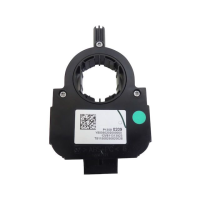
- Faulty Steering Angle Sensor / Torque Sensor (Very Common) — The sensor assembly itself is the most frequent hardware failure. Located in the steering column's clock spring or integrated into the power steering rack, it wears out or fails internally over time.
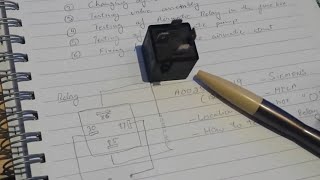
- Failing Airmatic Relay or Compressor (Mercedes-Benz) (Common) — On Mercedes-Benz vehicles, C1517 triggers from a failing Airmatic system relay (Part No. A0025421319 🎬 See this guide on testing the Airmatic relay for Mercedes models.) or a weak air compressor. A faulty relay sticks, causing the compressor to burn out, or fails to provide power entirely.
- Damaged Wiring or Connectors (Common) — Wires leading to the sensor become frayed, corroded, or disconnected. Because the sensor sits in the steering column, wiring is easily disturbed during other repairs. This is a known cause for Lexus/Toyota torque sensor codes.
- Faulty Stability Control Sensor Cluster (Ford) (Less Common) — In 2007-2010 Ford Edges, steering angle data is processed by a stability control sensor cluster containing yaw rate and accelerometer sensors. A failure within this cluster triggers C1517.
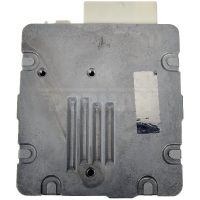
- Faulty Power Steering Control Module (PSCM) or ECU (Less Common) — The control module interpreting the sensor's data fails. This is the primary suspect only after the sensor and wiring are confirmed functional.
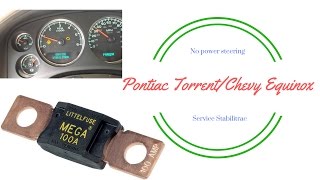
- Low Battery Voltage or Blown EPS Fuse (Rare) — Sensitive electronic modules set fault codes if system voltage drops. A failing battery, corroded ground, or a blown 80-amp mega fuse (common on Chevy Equinox after an improper jump-start 🎬 Watch: Fixing power steering loss on Equinox models after a jump-start.) causes a total loss of power steering and triggers this code.
Symptoms
- Traction Control or Stability Control (ESC/VSC) Light On — The stability system is the primary consumer of steering angle data and disables itself immediately upon detecting a fault.
- ABS Light On — The Anti-lock Braking System relies on steering angle data for emergency braking decisions and disables itself alongside the ESC.
- Power Steering Warning Light On (EPS) — On vehicles with electric power steering, this illuminates to indicate a fault within the steering assist system.
- Heavy or Stiff Steering — Electric or electric-hydraulic power steering systems default to a non-assisted mode, making the wheel extremely difficult to turn.
- Airmatic 'Visit Workshop' Message (Mercedes-Benz) — Triggers a suspension-specific warning. The vehicle becomes stuck at a high ride height or is unable to raise itself from a low height.
Diagnostic Flowchart
Tap your situation to follow the diagnostic path that matches what you're seeing on this code.
Common Fixes & Costs
- Recalibrate Steering Angle Sensor — Parts: $0, Labor: $100-$150, ~1 hr book time (Professional)
- Replace Steering Angle Sensor
— Parts: $150-$400, Labor: $150-$300, ~1.5 hr book time
(Intermediate)
Toyota Camry (2012-2014): OEM 89245-06050 (Alt: Dorman 601-053)
Ford Edge (2007-2010): OEM 7T4Z-3C187-A (Alt: Cardone 19-B3618) - Replace Airmatic Relay (Mercedes-Benz)
— Parts: $15-$40, Labor: $0-$50, ~0.2 hr book time
(Beginner)
Mercedes-Benz S-Class W220: OEM A0025421319 (Alt: Hella 007791011) - Replace Airmatic Compressor (Mercedes-Benz)
— Parts: $250-$700, Labor: $200-$400, ~2 hr book time
(Intermediate)
Mercedes-Benz S-Class W220: OEM A2203200104 (Alt: Arnott P-3219) - Repair Damaged Wiring or Connector — Parts: $10-$50, Labor: $100-$200, ~1.5 hr book time (Intermediate)
- Replace Power Steering ECU — Parts: $400-$1000, Labor: $150-$300, ~1.5 hr book time (Professional)
Used vs. New Parts: Buying Guide
When a used part is worth it: For electronic parts like a Steering Angle Sensor, a used OEM part from a low-mileage, accident-damaged vehicle is a cost-effective alternative. For mechanical parts like an Airmatic compressor, buy a professionally remanufactured unit with a warranty.
Donor-vehicle mileage cap: roughly under 60000 miles for the part to have meaningful remaining life.
Donor quality checklist:
- Verify the part number exactly, including any superseded numbers.
- Ensure the donor vehicle was not scrapped for electrical or flood damage.
- Require the seller to bench-test electronic components prior to shipping.
- Demand the VIN of the donor vehicle to verify its history.
Decision logic:
- If The part is a simple electronic component like a relay or fuse → Buy new. The low cost and high reliability make used parts illogical.
- If The part is a complex electronic module (Steering Sensor, ECU) and the vehicle is over 10 years old → Buy a tested, used OEM part from a reputable salvage yard to save 50-70%.
- If The part is a high-wear mechanical item like an Airmatic compressor → Buy a new or remanufactured part with a warranty. The labor for replacement is too high to risk a premature used part failure.
Warranty tradeoff: Used parts typically include a 30-90 day warranty covering only the part. New aftermarket parts offer 1-year to limited lifetime warranties. New OEM parts carry a 1-2 year warranty, covering labor if installed by a dealer.
Worst-case if a used part fails: $300-$600 (The cost of repeat labor to install another part if the used one fails shortly after the warranty period.)
What Happens If You Wait — Timeline
- Immediate: Warning lights illuminate. ABS and stability control are disabled. On some cars, power steering assist is lost. (MPG impact: 0%% · Added cost: $0 (Safety risk is the primary concern))
- 1-3 months (Steering Fault): If the fault is due to misalignment, uneven tire wear begins. The outer or inner edges of the tires show accelerated wear, reducing tire life by up to 25%. (MPG impact: 1-3%% · Added cost: $150-$300 (Premature tire replacement))
- 1-3 months (Airmatic Leak): A small leak forces the compressor to run frequently to maintain ride height. This constant cycling dramatically accelerates wear on the compressor's piston and motor. (MPG impact: 0-1%% · Added cost: $200-$500 (Accelerated compressor wear))
- 3+ months (Airmatic Leak): The overworked Airmatic compressor burns out completely. The vehicle sags and cannot raise itself. The repair escalates to a mandatory compressor replacement. (MPG impact: 0%% · Added cost: $900-$2,500 (Cost to replace the compressor, relay, and fix the original leak))
Cost of Not Fixing It
- Immediate: Disabled ABS and Electronic Stability Control (ESC) systems, significantly increasing the risk of losing control in an emergency maneuver or on slippery surfaces. (Added cost: N/A (Safety Risk))
- 0-3 Months: For steering faults, continued driving causes uneven tire wear if the alignment is off. For Mercedes Airmatic faults, a small leak forces the compressor to run excessively, accelerating wear. (Added cost: $150-$300 (Tire Wear))
- 3+ Months: Ignoring a Mercedes Airmatic leak or faulty relay burns out the compressor, escalating a $20 fix to a $1,000+ replacement. For steering faults, complete failure of the power steering rack occurs. (Added cost: $900-$2500)
Diagnosis Steps
- Scan for All Trouble Codes
Use an OBD-II scanner capable of reading Chassis codes. C1517 often appears with clues: C121A points to calibration, while U0126 points to a communication failure. Document all codes.
Tools: OBD-II Scanner (with ABS/Chassis capability) (Beginner) - Attempt Steering Angle Sensor Calibration
Using a bi-directional scan tool, perform the steering angle sensor 'zero-point' calibration. If the calibration completes and the code stays off after a test drive, the issue is resolved. If it fails, a hardware fault exists.
Tools: Advanced Bi-directional OBD-II Scanner (Intermediate) - Review Live Sensor Data
View the live data stream from the steering angle sensor. As you turn the wheel, the angle reading must change smoothly and return to 0° when straight. Jumps, freezes, or no signal confirm a bad sensor.
Tools: Advanced OBD-II Scanner (Intermediate) - Test Airmatic Relay (Mercedes-Benz Only)
Remove the Airmatic relay (Position 'O' in the passenger-side engine fuse box). Apply 12V to pins 85 and 86; you should hear a click and measure continuity between pins 30 and 87. If it fails, replace it before condemning the compressor.
Tools: Multimeter, 12V power source (Intermediate) - Visually Inspect Wiring and Connectors
Access the steering angle sensor on the steering column. Look for damaged wires, loose connectors, or corrosion. On a Chevy Equinox, unplugging and replugging the main EPS module connector sometimes resolves the issue.
Tools: Flashlight, Trim removal tools (Intermediate) - Test the Sensor Circuit (Voltage/Ground)
Using a multimeter and wiring diagram, test for proper voltage (typically a 5V reference and 12V power) and ground at the sensor's connector to confirm it receives operating power.
Tools: Digital Multimeter, Vehicle-specific wiring diagram (Advanced) - Pro Tip: Check CAN Bus Resistance
Disconnect the battery. At the OBD-II port, measure resistance between CAN High (Pin 6) and CAN Low (Pin 14). A healthy bus reads 60 Ω. A reading of 120 Ω indicates a module is offline. A reading near 0 Ω indicates a short.
Tools: Digital Multimeter (Advanced) - Pro Tip: Check CAN Bus Live Voltage
With battery connected and ignition on, measure DC voltage. CAN High (Pin 6 to ground) should be ~2.6V and CAN Low (Pin 14 to ground) should be ~2.4V. If both read ~2.5V, they are shorted together.
Tools: Digital Multimeter (Advanced) - Advanced: Test Airmatic Compressor Performance (Mercedes-Benz)
Initiate a compressor test via scanner. A healthy compressor generates 14+ bar (203 PSI). If it fails to meet this pressure or takes too long, the compressor is weak and requires replacement.
Tools: Advanced OBD-II Scanner (with MB-specific functions) (Advanced) - Advanced: Test Sensor Resistance
For analog sensors, identify the signal, reference, and ground pins. Measure resistance between pin combinations while an assistant turns the steering wheel. Resistance must change smoothly without sudden drops or spikes.
Tools: Digital Multimeter, Vehicle-specific wiring diagram (Advanced)
When This Code Triggers (Freeze-Frame Conditions)
- Vehicle Speed: 15-50 mph (Logs during normal driving, especially during or immediately after a turn, when the sensor's angle reading conflicts with the vehicle's speed and wheel speed sensor data.)
- Steering Angle/Rate of Turn: Any value (Triggers if the sensor signal becomes erratic, freezes, shows a large illogical jump while turning, or fails to return to 0° when driving straight.)
- Airmatic Compressor Run Time (Mercedes-Benz): > 90 seconds (Sets when the air suspension compressor runs for over 90 seconds without the vehicle reaching its target ride height, indicating a leak or a weak compressor.)
- System Voltage: < 11.5V or > 15V (Logs during engine start-up or driving if battery voltage drops, causing glitches in sensitive electronic modules like the PSCM or Airmatic controller.)
Related Codes
- C121A — Means 'Steering Angle Sensor Not Initialized'. If recalibration fails and C1517 is present, it confirms a hardware (sensor/wiring) fault.
- U0126 — Indicates 'Lost Communication With Steering Angle Sensor Module'. C1517 means the module is online but sending bad data; U0126 means the module is completely offline due to a blown fuse or disconnected wiring.
- C0051 — A generic SAE code for 'Steering Wheel Position Sensor'. The ABS module logs C0051 for an invalid signal, while the Power Steering module logs the more detailed C1517.
- C1511 / C1512 — Common on Toyota/Lexus, referring to 'Torque Sensor 1 Circuit' and 'Torque Sensor 2 Circuit'. They appear alongside C1517 and point directly to a fault within the torque sensor assembly.
Climate & Environmental Factors
- Cold Weather: Impacts Mercedes-Benz Airmatic systems. Low temperatures cause air pressure to drop, rubber air bags to become brittle, and moisture in the air lines to freeze, causing blockages. The air compressor works harder, leading to premature failure.
- Humidity: Increases the moisture the Airmatic compressor draws in. If the system's air dryer is saturated, moisture condenses in the lines. In cold weather, this moisture freezes, causing blockages and damage to valves.
How to Talk to a Mechanic About This Code
Say this: "I have a C1517 code on my [Make/Model] and the ABS/ESC lights are on. I'd like to book a diagnostic appointment. Please start by checking the live data from the steering angle sensor before recommending part replacements. If it's a Mercedes, please test the Airmatic relay and compressor pressure first."
This directs the technician toward a specific, data-driven diagnostic path (live data, pressure tests) rather than swapping expensive parts, and shows you are aware of common misdiagnoses like the Mercedes relay.
Avoid saying:
- 'My traction control light is on, can you just fix it?'
- 'I think I need a new steering sensor, can you give me a price?'
- 'Just do whatever it takes to get the lights off.'
Questions to ask before authorizing the repair:
- What did the live data from the steering angle sensor show when you turned the wheel? Was it smooth, frozen, or erratic?
- If you are recommending a sensor replacement, have you confirmed it cannot be resolved with a recalibration first?
- For a Mercedes Airmatic fault, what was the compressor's peak pressure and did you test the relay?
- Does the estimate include the mandatory steering angle sensor calibration after the part is replaced?
- What is the warranty on the parts and labor for this specific repair?
Where to Take It: Dealer vs Independent vs Chain
- Dealer:
A strong, safe choice for complex versions of this code, especially on German brands, but the most expensive option.
Best for: Vehicles under warranty., Complex manufacturer-specific issues like Ford's stability control sensor cluster., Recalls and service campaigns.
Downsides: Highest labor rates, often 1.5-2x an independent shop., Defaults to replacing an entire assembly (e.g., steering rack) when only a smaller component failed. (Typical cost: +50% vs. baseline) - Independent Shop:
Best fit for most common C1517 scenarios, provided you choose a reputable shop with modern diagnostic scanners.
Best for: Out-of-warranty vehicles where cost is a factor., Common, well-documented C1517 causes like a Toyota steering sensor replacement or a Mercedes Airmatic relay., Getting a second opinion on a high dealership quote.
Downsides: You must verify the shop owns a bi-directional scanner capable of performing a steering angle sensor calibration before booking. (Typical cost: +0% vs. baseline) - Chain Shop:
AVOID for diagnosis and repair. They often lack the tools to complete the job by performing the necessary sensor calibration, forcing you to pay another shop.
Best for: Simple, unrelated maintenance like oil changes or tires.
Downsides: Technicians are incentivized by commission, leading to upsells., They rarely possess the advanced, bi-directional scan tools required for steering angle sensor calibration. (Typical cost: -10% vs. baseline)
When to Walk Away From the Repair
If the estimated repair cost exceeds 40-50% of the car's private-party value, consider selling or trading it in.
- Car worth $4000, fix is $2200: Walk away. The repair cost is over 50% of the car's value. The money is better put toward a replacement vehicle.
- Car worth $12000, fix is $750: Fix it. This repair is well below the threshold and restores critical safety systems, preserving the car's value.
- Car worth $3000, fix is $150: Fix it. If the fix is a simple calibration or a cheap relay, it is a small investment to keep an otherwise functional car on the road.
What Scan Tool You Need for This Code
Minimum: A scanner that reads and clears Chassis (C) codes from the ABS and SRS modules. A basic engine-only code reader will not see code C1517.
To properly diagnose C1517, you must see live data from the steering angle sensor. To complete the repair, you need bi-directional control to perform the mandatory sensor calibration.
Budget: BlueDriver Pro (~$100) — Reads and clears ABS/Chassis codes and views live sensor data on your phone. It CANNOT perform the final steering angle sensor calibration.
Mid-range: Foxwell NT614 Elite / NT650 (~$180) — Provides the critical function for this code: Steering Angle Sensor (SAS) calibration. It reads codes, views live data, and performs the reset procedure, making it a complete DIY solution.
Professional: Autel MaxiCOM MK808S / Launch X431 Series (~$500-1200) — Offers full bi-directional control, OEM-level diagnostics, and all special reset functions including SAS calibration. Can test individual components like commanding the Airmatic compressor on.
Rent vs buy: Parts store loaner tools are basic code readers that cannot perform the mandatory SAS calibration. If you plan to do the fix yourself, you must buy a mid-range tool with SAS calibration capability.
How to Clear the Code After You Fix It
- Reconnect the battery if it was disconnected during repair.
- Use an OBD-II scan tool to clear the C1517 code from the ABS, PSCM, or Suspension module.
- Perform a steering angle sensor calibration/reset procedure using a bi-directional scan tool. This is mandatory even if the sensor was not replaced.
- For Mercedes Airmatic repairs, allow the system to cycle and level the vehicle.
- Perform a complete drive cycle to run the system's internal self-tests.
Drive cycle (~20 minutes): 1. Cold start (engine off for 4+ hours). 2. Idle for 3 minutes. 3. Drive in mixed city/highway conditions, executing several full left and right turns. 4. Drive for 5 minutes at a steady 50 mph. Some vehicles self-calibrate the steering sensor when driven perfectly straight for 10 seconds at highway speeds.
Readiness monitors affected: As a Chassis (C-code), this does not directly affect emissions readiness monitors., However, clearing all codes resets emissions monitors, requiring a full drive cycle before a smog test.
Before emissions retest: drive at least 50 miles to fully set monitors.
Watch out for:
- Clearing the code without fixing the root cause guarantees the code returns upon startup.
- Skipping the mandatory steering angle sensor calibration after a replacement or wheel alignment causes the code to persist.
- Manual resets (turning the wheel lock-to-lock) fail on most modern vehicles; a bi-directional scan tool is required.
Will This Fail Emissions / State Inspection?
No — by itself this code doesn't fail OBD inspection (but it can keep readiness monitors from setting, which causes a separate fail).
- California: A C-code like C1517 with an illuminated ABS or ESC light will NOT cause a failure of the emissions-only smog check.
- New York: New York's annual inspection includes a safety inspection. While an ABS or ESC light passes the emissions portion, it results in an automatic failure for the safety inspection.
- Texas: In counties requiring it, the Texas inspection is a single safety and emissions test. An illuminated ABS light is an automatic failure in the safety inspection portion.
Most Commonly Affected Vehicles
- Toyota Prius (2004-2009) — Prone to failure of the torque sensor integrated into the power steering rack. Subject to a recall for the steering intermediate extension shaft. The steering rack assembly OEM part number is 45510-47021.
- Mercedes-Benz S-Class (W220) (2000-2006) — C1517 is a very common code for the Airmatic air suspension. It indicates the compressor took too long to build pressure due to a weak compressor, a leak, or a faulty relay (Position 'O' in passenger engine fuse box).
- Lexus RX Series (2007-2015) — Frequently experiences torque sensor failures within the electronic power steering column, triggering C1517 and related codes like C1511/C1512. Often traced to a wiring fault rather than the sensor itself.
- Toyota Camry (2012-2018) — The steering angle sensor is a known failure point. Part number 89245-06050 is a common replacement for 2012-2014 models.
- Ford Edge (2007-2010) — Points to a fault within the stability control sensor cluster containing the yaw rate and accelerometer sensors. Diagnosis requires following Ford's 'Pinpoint Test F'. The OEM part number is 7T4Z-3C187-A.
- Chevrolet Equinox (2005-2009) — Associated with faults in the electric power steering (EPS) unit. Check the 80A mega fuse in the under-hood fuse box (especially after a jump start) before replacing parts.
- Hyundai Sonata (2015-2019) — Subject to several steering-related recalls, including poor wiring harness connections (2015) and faulty Smart Junction Box software (2015-2017). Investigate these electrical patterns first.
- Volkswagen Passat (2005-2013) — Similar to Mercedes-Benz, C1517 indicates a suspension fault. Aftermarket catalogs list suspension components, such as Monroe shock absorbers, under this code number.
Manufacturer-Specific Notes
- Toyota / Lexus: C1517 specifically points to a 'Torque Sensor Malfunction'. This sensor measures the driver's input force. A low battery causes these codes to appear on startup; ensure the battery is healthy before replacing the steering rack.
- Mercedes-Benz: C1517 is exclusively used for the Airmatic suspension. The cause is a weak compressor, leaking strut, or a faulty $20 relay, not the steering system. Always diagnose the Airmatic relay and check for leaks before replacing a compressor.
- Ford: Grouped with C-codes pointing to a 'Stability Control Sensor Cluster Fault'. Diagnosis requires testing the cluster module and its dedicated CAN bus network using Ford's Pinpoint Test F.
- Chevrolet / Pontiac: A sudden loss of power steering is often a blown 80A EPS 'mega fuse'. Disconnecting the main power to the EPS module for 5 minutes restores function if the issue is a software glitch rather than a hard failure.
- Hyundai: Subject to multiple steering recalls (Campaigns 17V167000 and 16V190000) for EPS motor connector damage and faulty circuit boards. Always check for open recalls before starting repairs.
Real Owner Stories
2008 Mercedes W220 S-Class at 130K miles
Owner received an 'Airmatic Visit Workshop' message and code C1517. The vehicle's front end would not raise, and the compressor was not turning on.
What they tried:
- Owner initially feared the Airmatic compressor had failed, a $1,000+ repair.
- Checked the 40A fuse for the system, which was good.
- Located and replaced the Airmatic relay in the front fuse box. The old relay was faulty.
Outcome: Replacing the $25 relay immediately fixed the problem. The compressor started working, the vehicle raised to the correct height, and the C1517 code cleared.
Lesson: On Mercedes vehicles, always test the inexpensive Airmatic relay before assuming the costly compressor has failed. This simple check saves over $1,000.
2013 Toyota Camry at 115K miles
ABS, Traction Control, and Power Steering warning lights came on simultaneously. Codes C1517 and C121A were present. The steering felt normal.
What they tried:
- The code appeared shortly after having a wheel alignment performed at a national tire chain.
- The shop attempted to clear the codes, but they returned immediately.
- The shop did not have the correct tool to perform a steering angle sensor calibration.
Outcome: Owner took the car to an independent shop. The technician used a Techstream scan tool to perform the 'zero-point calibration'. The procedure took 15 minutes and cost $120. The codes cleared permanently.
Lesson: Code C1517 appearing after a wheel alignment means the steering angle sensor needs recalibration. Ensure the alignment shop can perform this mandatory procedure.
2007 Ford Edge at 95K miles
ABS and traction control lights were on. The vehicle threw a cluster of codes including C1517, C1279, and C2769.
What they tried:
- Initial diagnosis at a general repair shop suggested replacing the ABS module.
- Owner sought a second opinion.
- A second mechanic followed Ford's 'Pinpoint Test F', leading to the stability control sensor cluster under the rear seat.
Outcome: The stability control sensor cluster was faulty. Replacing the cluster (Part # 7T4Z-3C187-A) and performing the IVD Initialization sequence resolved all codes. The repair cost $450.
Lesson: On certain Ford models, C1517 points to an integrated stability sensor cluster. Following the manufacturer's specific diagnostic procedure is critical to avoid misdiagnosing the ABS module.
How to Prevent This Code From Triggering
- Perform a four-wheel alignment periodically (Every 1-2 years or 12,000-15,000 miles.) — Prevents the steering wheel from being off-center, which causes a conflict between the steering sensor and wheel speed sensors, triggering a fault.
- For Mercedes Airmatic: Periodically inspect air springs and lines (Annually or every 15,000 miles.) — Visually check rubber air springs for cracks and listen for hissing. Catching a small leak early prevents the air compressor from overworking and burning out.
- Use a battery maintainer if the vehicle is stored for long periods (During storage periods longer than 2 weeks.) — Prevents low voltage conditions that cause sensitive electronic modules to set false codes upon startup.
- Use a surge protector when jump-starting (During any jump-start procedure.) — Modern vehicles are sensitive to voltage spikes. A surge protector clamps these spikes, protecting the ECU and PSCM from permanent damage.
Frequently Asked Questions
Can a bad wheel alignment cause code C1517?
Yes. If the steering wheel is not centered when driving straight, the steering angle sensor's reading conflicts with the wheel speed sensors. The computer interprets this conflict as a sensor fault and sets code C1517. A calibration is always required after an alignment.
Is it safe to drive with code C1517?
It is not recommended. Your Electronic Stability Control (ESC) and ABS are disabled, which are crucial for maintaining control in an emergency. If you have electric power steering, it can fail suddenly, making the car extremely difficult to steer.
Why does C1517 mean a suspension problem on my Mercedes?
Mercedes-Benz reuses code numbers for different systems. On models with Airmatic, engineers assigned C1517 to the air suspension control module to indicate a pressure or ride height problem. It usually means the compressor ran too long without reaching target pressure.
Can I replace the steering angle sensor myself?
This is an intermediate-to-advanced DIY task requiring airbag and steering wheel removal. You must disconnect the battery to prevent explosive airbag deployment. Crucially, a new sensor requires calibration with a professional bi-directional scan tool, which most DIYers do not own.
Will clearing the code fix the problem?
No. Clearing the code only erases the fault record. The control module runs its self-test upon startup, and the code returns immediately if the underlying mechanical or electrical fault persists.
What is the most common misdiagnosis with C1517?
On a Mercedes-Benz, the most common mistake is replacing a $1,000+ Airmatic compressor when the actual fault is a $20 relay. On other cars, mechanics often replace the steering angle sensor when it only needs a software recalibration after an alignment.
How much does it cost to fix code C1517?
A simple software recalibration costs $100-$150 at an independent shop. Replacing a steering angle sensor typically costs $300-$700 including parts and labor. For Mercedes Airmatic issues, a relay is under $50, but a new compressor runs $450-$1,100 installed.
Key Takeaways
- Code C1517 disables your vehicle's Electronic Stability Control and ABS, significantly increasing crash risk during emergency maneuvers.
- The most frequent fix is a 15-minute Steering Angle Sensor recalibration using a bi-directional scan tool, costing $100-$150 at an independent shop.
- On 2000-2006 Mercedes-Benz S-Class models, C1517 indicates an Airmatic suspension failure; always test the $20 relay before replacing the $1,000 compressor.
- For 2004-2018 Toyota and Lexus vehicles, this code points directly to a failed torque sensor in the electric power steering rack, requiring a $300-$700 replacement.
Helpful Videos
Shop the Parts Behind C1517
Below are the parts most often responsible for code C1517, ranked by how frequently each one is the actual culprit (per the diagnosis above). Tap any to see what we have for your vehicle.

The information in this article is provided for general reference and educational purposes only. Vehicle specifications, procedures, and part compatibility can vary by production date, trim level, and region. Always consult your vehicle's factory service manual and verify part numbers before purchasing or performing repairs. Safety-critical components such as airbags, seat belts, and braking systems should be installed by a qualified professional.
- 🧭 Diagnostic Flowchart
- 🎬 Helpful Videos
- 🛍️ Shop This Part
- What Does C1517 Mean?
- Can I Drive With C1517?
- Common Causes
- Symptoms
- Common Fixes & Costs
- Used vs. New Parts: Buying Guide
- What Happens If You Wait — Timeline
- Cost of Not Fixing It
- Diagnosis Steps
- When This Code Triggers (Freeze-Frame Conditions)
- Related Codes
- Climate & Environmental Factors
- How to Talk to a Mechanic About This Code
- Where to Take It: Dealer vs Independent vs Chain
- When to Walk Away From the Repair
- What Scan Tool You Need for This Code
- How to Clear the Code After You Fix It
- Will This Fail Emissions / State Inspection?
- Most Commonly Affected Vehicles
- Manufacturer-Specific Notes
- Real Owner Stories
- 2008 Mercedes W220 S-Class at 130K miles
- 2013 Toyota Camry at 115K miles
- 2007 Ford Edge at 95K miles
- How to Prevent This Code From Triggering
- Frequently Asked Questions
- Can a bad wheel alignment cause code C1517?
- Is it safe to drive with code C1517?
- Why does C1517 mean a suspension problem on my Mercedes?
- Can I replace the steering angle sensor myself?
- Will clearing the code fix the problem?
- What is the most common misdiagnosis with C1517?
- How much does it cost to fix code C1517?
- Key Takeaways
- 🎟️ Get 5% Off