

OBD-II Code C1526: System Sensor or Calibration Fault
What C1526 means, why it triggers, and how to fix it
- Code C1526 has widely different meanings for different car brands, affecting the brakes, steering, or suspension.
- The first step is always to identify your vehicle's specific definition for C1526 before attempting any diagnosis.
- On Toyota/Lexus, it's usually a simple calibration issue. On Ram, check for software updates (TSBs) first. On Ford and Mercedes, it often points to a major hydraulic component failure.
- Do not ignore this code. It disables critical safety systems and can make the vehicle unsafe to drive, especially in emergency situations.
What Does C1526 Mean?
Code C1526 is a manufacturer-specific code, meaning it has different definitions depending on on your car brand. It generally points to a problem with a sensor reading, a component calibration, or a hydraulic/pressure issue in a critical system. The car's computer has detected a signal that is incorrect, incomplete, or out of the expected range from systems like the brakes, steering, or suspension.
Technical definition: The official SAE/OBD-II definition for C1526 is not standardized and varies by manufacturer. Common definitions include: Rotation Angle Sensor Initialization Incomplete (Toyota/Lexus), Brake Pedal Travel Sensor Fault (Ford), Left Rear Ride Height Sensor Malfunction (Ram/Dodge), Malfunction in Pressure Supply (Mercedes-Benz), and Brake Switch System or Downhill Brake Control Switch Error (Kia/Hyundai).
Can I Drive With C1526?
Yes, But With Caution. Driving is possible but not recommended. The fault can disable critical safety systems like ABS, power steering, or stability control. Continued driving with a steering fault can damage the power steering pump, while a braking fault significantly increases stopping distances and the risk of wheel lock-up in an emergency. It is advised to drive cautiously to a repair shop as soon as possible, avoiding high speeds and hard braking.
Common Causes
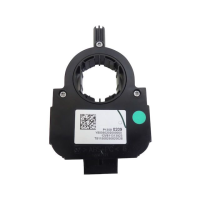
- Incomplete Steering Angle Sensor Calibration (Toyota/Lexus) 🔴 Very Common → Shop Steering Angle Sensor — The power steering system has not been properly calibrated after a repair like a wheel alignment or battery replacement. The system is flagging that this necessary step is undone or was interrupted. This is a procedural issue, not a broken part.
- Faulty Ride Height Sensor or Linkage (Ram/Dodge) 🔴 Very Common — The sensor measuring the height of the vehicle's corner is broken, disconnected, or its linkage is damaged. This is a primary cause on vehicles with air suspension, often accompanied by a 'Service Air Suspension' message.
- Failed Brake System Component (Ford, Kia) 🟠 Common — On Ford Hybrids, this often points to a failing brake master cylinder or ABS hydraulic control unit. On Kia models, it can be a simple faulty brake light switch or a problem with the downhill brake control switch.
- Low Hydraulic Fluid or Pressure (Mercedes-Benz) 🟠 Common — On vehicles with Active Body Control (ABC), the C1526 code can be triggered by low fluid levels in the Pentosin reservoir or a failing ABC pump, leading to a 'Malfunction in pressure supply' message.
- Software Glitch Requiring a Module Update (Ram) 🟠 Common — On some Ram 1500 trucks, C1526 may be falsely triggered due to a software issue in the Air Suspension Control Module (ASCM). TSB 08-127-23 REV. A and 08-127-23 address this, requiring a dealer to reprogram the module.
- Wiring or Connector Issue 🟡 Less Common — Corroded, loose, or damaged wires or connectors leading to the affected sensor (e.g., ride height, brake pedal, or steering sensor) can interrupt the signal. Wiggle-testing the harness while observing sensor data can help identify these intermittent faults.
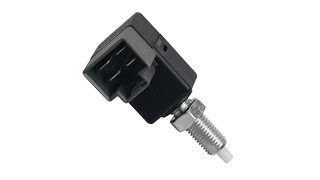
- Faulty Downhill Brake Control (DBC) Switch (Kia/Hyundai) 🟡 Less Common — A malfunction in the DBC switch can trigger C1526, sometimes causing the vehicle to enter limp mode, especially when accelerating uphill. 🎬 Watch how to replace a faulty Kia brake light switch.
- Faulty Control Module (All Brands) ⚪ Rare — The control module itself (Air Suspension, ABS, or Power Steering) has failed. This is often the last thing to check after confirming sensors, wiring, and software are all correct.
Symptoms
- Warning Lights on Dash — The ABS, Traction Control, 'Service Air Suspension', or Brake warning light will be illuminated.
- Heavy or Stiff Steering (Toyota/Lexus) — The power steering assist is reduced or disabled, making the steering wheel very difficult to turn, especially at low speeds.
- Air Suspension Inoperative (Ram/Dodge) — The vehicle may be stuck at one ride height, often the lowered 'entry/exit' mode, and a 'Service Air Suspension' message appears.
- Increased Brake Pedal Effort and Stopping Distance (Ford) — The brake pedal feels much harder to press, and stopping distances are longer because the anti-lock brake system is disabled.
- Vehicle Goes into Limp Mode (Kia) — On some Kia models, a C1526 related to the downhill brake control switch can cause the vehicle to hesitate and enter limp mode, especially when accelerating uphill.
- ABC Warning Message (Mercedes-Benz) — A white or red 'ABC Warning' message will appear on the dash, often indicating low pressure in the Active Body Control system.
Diagnosis Steps
- Identify Your Vehicle's System
Because C1526 is manufacturer-specific, the first step is to identify which system is affected. Search online for your vehicle's make, model, year, and 'C1526' to determine if it relates to the brakes, steering, or suspension. This will guide the rest of your diagnosis.
Tools: Internet access 🟢 Beginner - Check for Technical Service Bulletins (TSBs)
Before replacing parts, check for TSBs. For Ram 1500s (2022-2023), TSB 08-127-23 REV. A points to a software update for the Air Suspension Control Module (ASCM) to fix false C1526-2A codes. This step can save significant time and money.
Tools: Internet access 🟢 Beginner - Perform System Calibration (Toyota/Lexus)
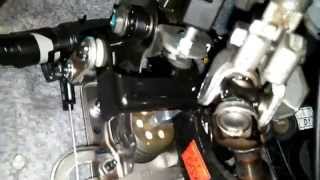
If you have a Toyota or Lexus with a steering-related C1526, the issue is often a missing calibration. This procedure requires a professional-grade scan tool to initialize the rotation angle and torque sensors. 🎬 See this trick for calibrating Toyota and Lexus steering sensors. Attempting this can be the quickest fix.
Tools: Advanced OBD-II Scan Tool 🟠 Advanced - Inspect the Relevant Sensor, Linkage, and Wiring
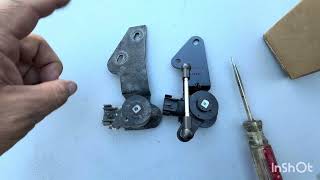
For suspension codes (Ram), visually inspect the left rear ride height sensor and its linkage for damage. 🎬 Watch this walkthrough on replacing a Ram ride height sensor. For brake codes (Ford), inspect the brake pedal travel sensor. For all, carefully inspect the wiring harness and electrical connector for corrosion, pushed-out pins, or damage.
Tools: Flashlight 🟡 Intermediate - Pro Tip: Test Ride Height Sensor Voltage (Ram)
For Ram air suspension faults, use a multimeter or scan tool to monitor the sensor's signal. The sensor typically operates on a 5-volt reference. A healthy sensor should produce a variable voltage signal that changes smoothly as the suspension is raised or lowered. A signal that is stuck at 0V, 5V, or doesn't change indicates a faulty sensor or wiring issue. A service manual may specify that the signal frequency should not roll over from >90% to <10% in under a second.
Tools: Multimeter, Scan Tool, Service Manual 🟠 Advanced - Pro Tip: Test Steering Sensor Resistance (Toyota/Lexus)
If calibration fails repeatedly, test the sensor itself. Disconnect the sensor connectors at the steering column. Using a multimeter, check the resistance between the terminals. For example, on some models, resistance between terminals RZSN and RZG should be 50-140 Ω, and between RZV and RZG should be 15-45 Ω. Values outside this range point to a failed sensor within the steering column assembly.
Tools: Multimeter, Service Manual 🟠 Advanced - Check Hydraulic Fluid and System Pressure (Mercedes-Benz)
For ABC codes, check the Pentosin hydraulic fluid level in the reservoir. If low, top it off and check for leaks. If the level is good, use a STAR diagnostic tool to monitor system pressure. It should hold steady between 180-200 bar. Pressure that is low or drops significantly during a 'rodeo' test points to a failing ABC pump or pressure accumulator.
Tools: Pentosin CHF 11S Fluid, STAR Diagnostic Tool 🟠 Advanced - Diagnose Control Module and Major Components
If all sensors, wiring, and calibrations are good, the problem may be with a major component (like the ABS module on a Ford) or the control module itself. This step requires a professional scan tool to check for internal module faults or software updates.
Tools: Advanced OBD-II Scan Tool 🔴 Professional - Pro Tip: Test Brake Switch Continuity (Kia/Hyundai)
For a DBC or Brake Switch error on a Kia/Hyundai, use a multimeter to test the switch. Disconnect the switch connector. Set the multimeter to continuity (beep) mode. With the brake pedal not pressed, there should be no continuity between the power and signal pins. When the brake pedal is pressed, the multimeter should beep, indicating continuity. A switch that is always open or always closed has failed.
Tools: Multimeter 🟠 Advanced
Common Fixes & Costs
- Perform Steering Angle Sensor Calibration — Parts: $0, Labor: $100-$250 🔴 Professional
- Replace Ride Height Sensor
— Parts: $50-$450, Labor: $100-$150
🟡 Intermediate
Ram 1500 (Rear Left): OEM 68277079AC (replaces 68277079AB), 68235505AA (Alt: Dorman 926-204, Autopart Premium APHLS0235 ($55-$65)) - Replace Brake Light Switch
— Parts: $15-$80, Labor: $70-$130
🛠️ DIY
Kia Sorento (2013-2015): OEM 93810-3K000, 93810-2E000 (Alt: Standard Motor Products SLS-342, Facet 7.1294) - Replace ABS Hydraulic Control Unit (Ford Escape)
— Parts: $700-$1300, Labor: $300-$450
🔴 Professional
Ford Escape Hybrid (2005-2008): OEM 8M6Z-2C286-A (HCU Assembly), 5M6Z-2140-B (Master Cylinder) (Alt: Cardone (remanufactured), Dorman (remanufactured)) - Replace Mercedes ABC Pump
— Parts: $950-$2200, Labor: $450-$650
🔴 Professional
Mercedes SL/S/CL-Class: OEM A0034665001, A0034662701 (Varies by model) (Alt: Bosch, Arnott (remanufactured)) - Reprogram Air Suspension Control Module (Ram) — Parts: $0, Labor: $100-$200 🔴 Professional
Most Commonly Affected Vehicles
- Ram 1500 (2013-2023) — Frequently logs C1526 for issues with the rear air suspension ride height sensors. For 2022-2023 models, TSB 08-127-23 REV. A recommends a software update for the ASCM before replacing parts for a C1526-2A code.
- Toyota 4Runner, various models (2003-present) — Commonly triggers C1526 when the steering angle sensor initialization is not performed after service. Part numbers for the sensor vary by year; for example, 2005-2009 models may use part #89245-35020, while 2010+ models may use #89245-30110.
- Ford Escape Hybrid (2005-2008) — Prone to C1526 due to failures in the brake pedal travel sensor, which often requires expensive replacement of the master cylinder or Hydraulic Control Unit (HCU).
- Mercedes-Benz SL-Class, S-Class, CL-Class (2002-2012) — On models with Active Body Control (ABC), C1526 with a sub-code like '-016' indicates a malfunction in the hydraulic pressure supply, often tied to a failing ABC pump or a fluid leak.
- Lexus IS-F, IS250, various models (2008-2014) — Similar to Toyota, C1526 is often paired with C1515 and indicates that the torque sensor and rotation angle sensor calibrations have not been completed, resulting in a stiff or inoperative power steering system.
- Kia Sorento (2013-2015) — Can set C1526 related to the downhill brake control (DBC) switch or the main brake switch system. A faulty DBC switch can cause hesitation and limp mode.
- Jeep Various Models (N/A) — On some Jeep models, C1526 can have different meanings entirely, such as C1526-11 for 'Fuel Level Sensor 2-Circuit Short To Ground' or C1526-76 for 'Parking Aid Sensor Incorrect Mounting Position', highlighting the need to check the manufacturer-specific definition.
- Hyundai Tucson/ix35 (2010-2015) — Similar to its Kia counterpart, C1526 is defined as a 'DBC Switch Error', indicating a short circuit in the Downhill Brake Control switch, which disables the feature.
Manufacturer-Specific Notes
- Toyota / Lexus: This code is almost always a calibration issue, not a broken part. It is most frequently triggered because a technician forgot to perform a steering system calibration after a wheel alignment or battery replacement.
- Ram / Dodge: The code often has a suffix (e.g., C1526-15 'Short to Battery or Open' or C1526-2A 'Stuck') that is critical for diagnosis. Always check for TSBs like 08-127-23 REV. A, as a software update for the Air Suspension Control Module (ASCM) is a very common fix.
- Ford: On early Escape Hybrids, this code is a very strong indicator of a failing master cylinder or hydraulic control unit (HCU), a well-documented and expensive issue. Ford issued TSB 05-8-5 for 2005 models for this issue, but no widespread recall was issued despite numerous NHTSA complaints.
- Mercedes-Benz: The code is part of the complex Active Body Control (ABC) system and will have a sub-code (e.g., C1526-016) that specifies the exact nature of the fault, such as 'Malfunction in pressure supply'. This often points to a failing pump or a fluid leak.
- Kia / Hyundai: The code often relates to the Downhill Brake Control (DBC) system. A faulty switch can not only disable the DBC feature but also cause unrelated drivability issues like hesitation and limp mode.
Related Codes
- C1525 — On Toyota/Lexus vehicles, this code for 'Rotation Angle Sensor Initialization Undone' is a companion to C1526. C1525 means the initialization process was never started, whereas C1526 means it was started but failed to complete. Both point to the need to perform the calibration.
- C1515 — On Toyota/Lexus models, this code for 'Torque Sensor Zero Point Adjustment Undone' frequently accompanies C1526. C1515 indicates the torque sensor hasn't been calibrated, while C1526 points to the rotation angle sensor. They are separate calibrations within the same power steering procedure. Seeing both confirms a full steering system calibration is required.
- C152A — On Ram trucks, this code for the 'Right Rear Ride Height Sensor' often appears alongside C1526 for the left rear sensor. Seeing both codes together strongly suggests a systemic issue like a software glitch in the control module (addressed by TSBs), a wiring harness problem, or a vehicle-wide issue, rather than two independent sensor failures.
- C1526-016 — On Mercedes-Benz vehicles, this is a specific sub-code where '-016' specifies 'Malfunction in pressure supply'. This points the diagnosis directly at the Active Body Control (ABC) hydraulic system, likely a failing pump or a significant leak, rather than a generic sensor fault.
DIY vs Professional
- Perform Steering Angle Sensor Calibration — Beginner:
- Replace Ride Height Sensor (Ram) — Beginner:
- Replace Brake Light Switch (Kia) — Beginner:
- Replace ABS Hydraulic Control Unit (Ford) — Beginner:
- Replace Mercedes ABC Pump — Beginner:
Climate & Environmental Factors
- Cold Weather: Ram air suspension and Mercedes ABC systems are known to have issues in freezing temperatures. For Ram, moisture in the air lines can freeze, causing the compressor to overwork or valves to stick, triggering faults. For Mercedes, the hydraulic fluid can thicken, causing pump strain and pressure warnings, especially on older systems or those with low fluid levels.
- High Humidity: In humid climates, moisture is more likely to be drawn into the Ram's air suspension system, leading to condensation. This water can accumulate in the compressor or lines, causing corrosion and increasing the likelihood of freezing-related failures in winter.
Frequently Asked Questions
Can I fix code C1526 myself?
It depends on the cause. Replacing a brake light switch on a Kia is a simple DIY job. However, replacing an ABS module on a Ford, reprogramming a control module on a Ram, or replacing an ABC pump on a Mercedes requires special tools and should be left to a professional.
Why did C1526 appear after a wheel alignment or battery change?
On many vehicles, especially Toyota/Lexus, the steering angle sensor must be recalibrated after an alignment or a power loss from disconnecting the battery. If this step is skipped, the car's computer logs C1526 because the sensor's 'straight ahead' position is no longer correctly stored.
What is a common misdiagnosis for C1526?
A common mistake is immediately replacing the sensor without checking for other possibilities. On a Ram 1500, seeing both rear height sensor codes (C1526 and C152A) often points to a software TSB, not two failed sensors. On a Toyota, the code is far more likely a calibration issue than a broken sensor.
The ride height sensor and wiring look fine on my Ram, what's next?
If a visual inspection reveals no damage, the next step is to check for Technical Service Bulletins (TSBs). Ram has issued TSBs (like 08-127-23 REV. A) indicating that a software update for the Air Suspension Control Module may be required to fix the code. This should be checked before replacing parts.
Is it safe to drive with code C1526?
It is not recommended. The fault can disable your ABS, stability control, power steering, or active suspension. This can lead to dangerously long stopping distances, loss of control in an emergency, or extremely difficult steering at low speeds.
How much does it cost to diagnose C1526?
Most repair shops charge a diagnostic fee, typically between $100 and $200, which covers the first hour of labor to read the codes, check for TSBs, and determine the root cause.
Will clearing the code fix the problem?
No. Clearing the code will only turn the warning light off temporarily. Since C1526 relates to a hardware, software, or calibration fault, the code will return as soon as the computer runs its self-test again, often immediately upon starting the vehicle.
What does the suffix on a Ram C1526 code mean?
The suffix provides critical diagnostic information. For example, C1526-15 means 'Short to Battery or Open,' pointing to a wiring or connector problem. C1526-2A means the sensor is 'Stuck,' which is often resolved by the software update mentioned in TSB 08-127-23 REV. A.
Helpful Videos


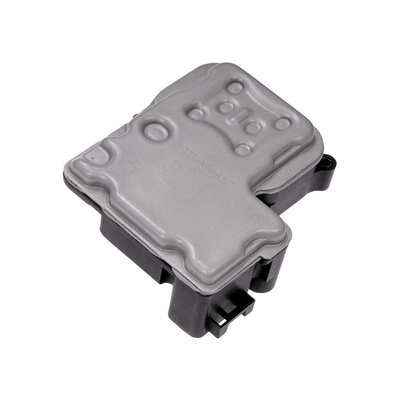
Shop the Parts Behind C1526
Below are the parts most often responsible for code C1526, ranked by how frequently each one is the actual culprit (per the diagnosis above). Tap any to see what we have for your vehicle.



The information in this article is provided for general reference and educational purposes only. Vehicle specifications, procedures, and part compatibility can vary by production date, trim level, and region. Always consult your vehicle's factory service manual and verify part numbers before purchasing or performing repairs. Safety-critical components such as airbags, seat belts, and braking systems should be installed by a qualified professional.
- 🎬 Helpful Videos
- 🛍️ Shop This Part
- What Does C1526 Mean?
- Can I Drive With C1526?
- Common Causes
- Symptoms
- Diagnosis Steps
- Common Fixes & Costs
- Most Commonly Affected Vehicles
- Manufacturer-Specific Notes
- Related Codes
- DIY vs Professional
- Climate & Environmental Factors
- Frequently Asked Questions
- Can I fix code C1526 myself?
- Why did C1526 appear after a wheel alignment or battery change?
- What is a common misdiagnosis for C1526?
- The ride height sensor and wiring look fine on my Ram, what's next?
- Is it safe to drive with code C1526?
- How much does it cost to diagnose C1526?
- Will clearing the code fix the problem?
- What does the suffix on a Ram C1526 code mean?
- 🎟️ Get 5% Off