

OBD-II Code C1531: Brake Pedal Signal Fault
What C1531 means, why it triggers, and how to fix it
- Code C1531 almost always indicates a faulty or misadjusted $25 brake light switch, particularly on 2008-2018 Subaru models.
- Driving with C1531 disables critical safety systems like ABS and stability control, increasing stopping distances and rear-end collision risks.
- Inspect the 7.5A stop lamp fuse and the $10 plastic brake pedal stopper pad before buying any replacement parts.
- Manufacturer definitions vary wildly; C1531 means a simple brake switch on a Subaru, but signals a $2,000+ steering ECU failure on Toyota and Lexus vehicles.
What Does C1531 Mean?
C1531 is a chassis trouble code that most often means the vehicle's computer detects a problem with the signal from the brake light switch. The computer sees a conflict; for example, the brake pressure sensor indicates braking, but the switch signal indicates no braking. Because this signal is critical for safety systems like ABS and stability control (VDC/VSC), the computer disables them and turns on warning lights. On some vehicles, this also disables Hill Start Assist and cruise control.
Technical definition: The official SAE/ISO definition for C1531 varies significantly by manufacturer. For many Subaru vehicles, it is defined as 'Brake Light Switch OFF Stuck Malfunction'. For some Toyota and Lexus models, it indicates an 'ECU Malfunction' in the Variable Gear Ratio Steering (VGRS) or Vehicle Stability Control systems. For Mitsubishi, it means 'Motor terminal voltage abnormality' or 'Motor current too low' in the electric power steering system. Another definition for Toyota is 'Battery Module Temperature Sensor 1 Circuit Low Voltage'.
Can I Drive With C1531?
Yes, But With Caution. Yes, but it is highly unsafe. Driving with code C1531 means critical safety systems like your anti-lock brakes (ABS) and stability control (VSC/VDC) are disabled. This increases your stopping distance, especially on wet or gravel surfaces, and dramatically reduces your ability to steer and maintain control during an emergency stop. Your brake lights are often inoperative, creating a major rear-end collision risk. Address the issue immediately rather than continuing to drive.
Common Causes
- Faulty Brake Light Switch (Very Common) — The switch itself, a small sensor near the top of the brake pedal arm, fails internally. This is the most frequent cause, especially on certain Subaru models where updated parts were issued due to contamination from silicone gases inside the cabin.
- Misadjusted Brake Light Switch (Common) — The switch is not positioned correctly to detect the initial movement of the brake pedal. It is often threaded in too far or not far enough, requiring a simple adjustment to fix the timing of the signal. Subaru TSBs provide specific pedal stroke measurements (e.g., 5.5mm +/- 2.5mm) for precise adjustment.
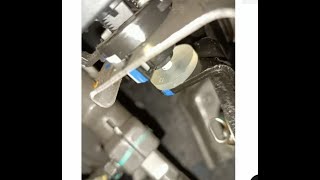
- Degraded Pedal Stopper Pad (Common) — On some vehicles, particularly Kia and Hyundai models, a small plastic or rubber pad on the brake pedal arm that physically contacts the switch's plunger becomes brittle and disintegrates. When it breaks, the plunger is no longer depressed when the pedal is at rest, causing the brake lights to stay on and triggering a fault code.
- Blown Stop Lamp Fuse or Incorrect Bulb (Common) — A blown fuse for the brake light circuit prevents the switch from sending a signal. This is often a side effect of installing an incorrect, higher-wattage brake light bulb (e.g., a 23W bulb instead of a 5W) which overloads the circuit and causes a short.
- Damaged Wiring or Connectors (Less Common) — The wires leading to the brake light switch, ABS module, or the connectors themselves become frayed, corroded, or disconnected, interrupting the signal. The pigtail connector at the switch is a known point of failure.
- Low System Voltage (Rare) — A weak or failing battery causes a drop in system voltage, leading to unpredictable behavior from various electronic modules, including the ABS/VSC controller. This generates spurious fault codes like C1531.
- VGRS ECU Malfunction (Toyota/Lexus) (Rare) — On specific Toyota and Lexus models, C1531 does not point to the brake system but to a failure within the steering system's electronic control unit or related components like a vane pump switch.
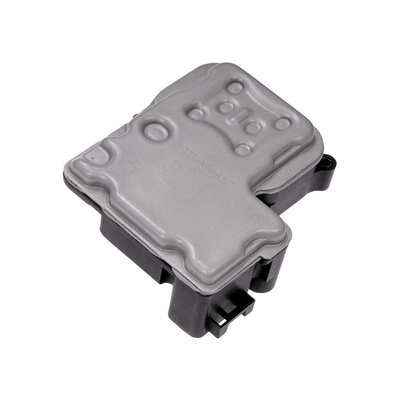
- Faulty ABS/VSC Control Module (Rare) — The main computer (ECU) that controls the anti-lock brakes and stability control has failed. This is the least likely and most expensive cause, and should only be considered after all other possibilities are exhausted.
Symptoms
- ABS and/or Traction Control (VDC/VSC) Warning Light On — This is the most common symptom. The computer disables these safety systems when it cannot trust the brake signal.
- Brake Lights Don't Work or Are Stuck On — The switch fails to complete the circuit to turn the lights on, or fails in a 'stuck on' position, which drains the battery.
- Cannot Shift Out of Park — The shift interlock requires a signal from the brake switch to allow the gear selector to move out of Park.
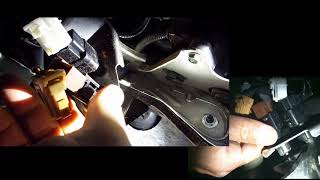
- Push-Button Start Won't Work — Vehicles with push-button ignition require a valid brake pedal signal to allow the engine to start. A faulty switch prevents the vehicle from starting, often showing a 'depress brake pedal to start' message even when the pedal is pressed. 🎬 Watch: How to replace a Nissan brake switch to fix starting issues.
- Cruise Control Does Not Work or Flashes — The cruise control system uses the brake switch signal to disengage. If the signal is faulty, the cruise control will not set. On many Subarus, a flashing cruise control light accompanies the check engine light for this fault.
- Hill Start Assist Warning Light On — Like ABS and VSC, the Hill Start Assist system depends on a reliable brake signal and disables itself if a fault is detected.
Diagnostic Flowchart
Tap your situation to follow the diagnostic path that matches what you're seeing on this code.
Common Fixes & Costs
- Replace Brake Light Switch — Parts: $15-$65, Labor: $75-$150, ~0.7 hr book time (DIY)
- Adjust Brake Light Switch — Parts: $0, Labor: $75-$125, ~0.5 hr book time (DIY)
- Replace Brake Pedal Stopper Pad — Parts: $5-$15, Labor: $50-$100, ~0.4 hr book time (DIY)
- Replace Blown Fuse — Parts: $1-$5, Labor: $0-$50, ~0.2 hr book time (DIY)
- Repair or Replace VGRS ECU (Toyota) — Parts: $500-$2800, Labor: $150-$400, ~1.5 hr book time (Professional)
- Repair or Replace ABS/VSC Control Module — Parts: $800-$2500, Labor: $150-$700, ~2 hr book time (Professional)
DIY vs Professional
- Replace Blown Fuse 🟢 Beginner
Tools: Fuse puller (often included in fuse box) or small pliers. - Replace Brake Pedal Stopper Pad 🟢 Beginner
Tools: Pliers, small pick or screwdriver. - Replace Brake Light Switch 🟢 Beginner
Tools: Basic hand tools (e.g., 12mm or 14mm wrench), flashlight. - Adjust Brake Light Switch 🟢 Beginner
Tools: Wrenches, flashlight, measuring tape. - Repair or Replace ABS/VSC/VGRS Module 🟢 Beginner
Tools: Advanced scan tool, socket set, torque wrench, sometimes specialized calibration tools.
Used vs. New Parts: Buying Guide
When a used part is worth it: For the most common fix (brake light switch), it almost NEVER makes sense to buy a used part. The part is inexpensive new, and old parts (especially original Subaru switches) have a very high failure rate.
Donor-vehicle mileage cap: roughly under 10000 miles for the part to have meaningful remaining life.
Donor quality checklist:
- Do not buy a used brake light switch. For Subaru, ensure the new part is the updated, redesigned version (e.g., the blue switch).
- If buying a high-cost module (like an ABS or VGRS unit), source from a reputable remanufacturer with a warranty or a very low-mileage donor vehicle with a clear history.
Decision logic:
- If The required part is a brake light switch → Always buy a new OEM or high-quality aftermarket part. The cost savings of a used part are negligible and the risk of premature failure is very high.
- If The required part is an expensive ECU/module → A used part from a low-mileage vehicle is a viable option to save money, but a remanufactured unit with a warranty is often a safer bet.
Warranty tradeoff: Used parts from a salvage yard typically have a 30-day warranty at best. New aftermarket switches often carry a 1-year to lifetime warranty. New OEM parts carry a 1-year/12k-mile warranty.
Worst-case if a used part fails: $100-$200. If a used switch fails, you will have to pay for repeat labor in addition to the cost of the new part you should have purchased initially.
What Happens If You Wait — Timeline
- Immediate: Code C1531 sets. ABS, VSC/Traction Control, and Hill Start Assist warning lights illuminate. These safety systems are now disabled. (MPG impact: 0%% · Added cost: $0)
- 0-1 day: Symptoms manifest. Car may not shift from Park or may not start (if push-button). Brake lights may be stuck on or completely inoperative, creating a severe rear-end collision risk. (MPG impact: 0%% · Added cost: $0 - $300 (Cost of a tow if stranded; cost of an accident if brake lights fail).)
- 1-7 days: If the brake lights are stuck on, the battery will completely drain. A standard car battery drains in as little as 4-8 hours by the brake lights. This leaves you with a no-start condition requiring a jump start or a new battery. (MPG impact: 0%% · Added cost: $150 - $300 (For a new battery and/or roadside assistance).)
- 1 week+: Vehicle will fail any state safety inspection due to the ABS light and/or non-functional brake lights. Continued driving without ABS/VSC increases risk and causes uneven tire wear during panic stops. If lights are stuck on, prolonged heat melts bulb sockets or wiring insulation. (MPG impact: 0%% · Added cost: $50 - $250+ (Failed inspection fees, potential wiring repair, or tire wear).)
Cost of Not Fixing It
- Immediate: Major safety risk due to disabled ABS, stability control, and inoperative brake lights. High risk of a rear-end collision. (Added cost: Potentially infinite (cost of an accident).)
- 0-1 month: If brake lights are stuck on, the battery drains, requiring a jump start or a new battery. Inability to shift out of park or start the car leaves you stranded. (Added cost: $150-$300 (for a new battery and/or tow).)
- 1-6 months: Failure of state safety inspection. Continued operation without ABS causes premature tire wear from wheel lock-up during hard braking. (Added cost: $50-$200 (failed inspection fees, tire wear).)
Diagnosis Steps
- Verify Brake Light Function
Have a helper stand behind the vehicle while you press and release the brake pedal. Note if the lights turn on, stay on, flicker, or do not illuminate at all. This is the simplest first test of the system.
Tools: Helper or a reflective surface (like a wall/window) (Beginner) - Visually Inspect the Brake Light Switch and Pedal
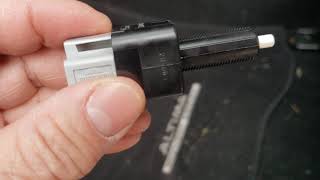
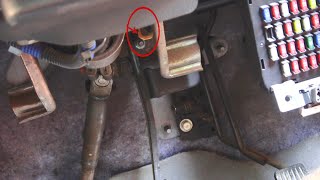
Look up under the dashboard at the top of the brake pedal arm. You will see a small plunger-style switch. Check that it is securely mounted and that its electrical connector is plugged in tightly. Inspect the point of contact on the pedal arm for a small plastic/rubber stopper pad; check if it is broken or missing.
Tools: Flashlight (Beginner) - Check the Stop Lamp Fuse
Locate the fuse box (often inside the cabin near the driver's left knee or under the hood). Find the fuse labeled for the 'Stop Lamp' or brake lights (e.g., a 7.5A fuse on many Subarus) and visually inspect it to see if it is blown.
Tools: Fuse puller, flashlight (Beginner) - Test the Switch with a Multimeter
Disconnect the switch's electrical connector. Set a multimeter to the continuity (beep) or Ohms setting. Test the two main terminals for the brake light circuit. The switch must show continuity (near-zero Ohms) when the plunger is out (pedal pressed) and open circuit (no beep or 'OL') when the plunger is pressed in. Some switches have a second set of contacts for cruise control that work in the opposite manner.
Tools: Multimeter, basic hand tools (Intermediate) - Measure Pedal Stroke for Adjustment
For many Subarus, a precise pedal stroke measurement is required. Place a piece of tape on the floor mat and the brake pedal. Measure the distance from a fixed point (like the steering wheel) to the pedal at rest ('A'). Slowly press the pedal until the brake lights just turn on and measure again ('B'). The difference (A-B) is the pedal stroke. The specification is often 5.5mm +/- 2.5mm. Each adjustment 'notch' on the switch changes the stroke by about 4mm.
Tools: Measuring tape, flashlight, wrenches (Advanced) - Check for Power at the Connector
With the ignition on, use a multimeter set to DC Volts to check for power on one of the terminals in the wiring harness connector that plugs into the switch. You must see a reading close to battery voltage (approx. 12V). If there is no voltage, there is a wiring problem between the fuse box and the switch.
Tools: Multimeter (Advanced) - Pro Tip: Live Data Analysis
Using an advanced scan tool, monitor the live data for both the 'Stop Light Switch' and the 'Master Cylinder Pressure Sensor'. Press the brake pedal slowly. The switch status must change from 'OFF' to 'ON' at the exact moment brake pressure begins to rise. A delay or mismatch confirms a switch or adjustment issue.
Tools: Advanced OBD-II Scan Tool (Professional) - Pro Tip: Check for Parasitic Draw
If the symptom is brake lights staying on and draining the battery, perform a parasitic draw test. Set a multimeter to measure Amps and connect it in series with the negative battery terminal. With the car off, observe the current draw. Disconnect the brake light switch. If the amperage draw drops significantly, the switch is faulty and failing to open the circuit.
Tools: Multimeter with Amp setting (Advanced)
When This Code Triggers (Freeze-Frame Conditions)
- Vehicle Speed: 35-55 mph (Steady highway driving or deceleration.)
- Brake Pressure Sensor: > 10 bar (Brake pedal is being pressed.)
- Brake Light Switch Signal: OFF (The conflicting signal that triggers the fault.)
- Engine RPM: 1500-2500 (Normal range for cruising speed.)
Related Codes
- C0054 — On Subaru vehicles, this is a direct companion code to C1531. C1531 is set by the VDC module for a 'stuck OFF' signal, while C0054 is the ABS module flagging a general circuit fault. They point to the same root cause (the switch or its adjustment) and are resolved together. TSBs 06-48-15R and 06-46-14R address both codes simultaneously.
- P0571 — This is the Powertrain Control Module's (PCM) version of the fault. While C1531 is the chassis module disabling ABS/VSC, P0571 is the engine module disabling cruise control. If you see both codes, the brake switch is almost certainly the single point of failure affecting both systems.
- C1241 — On many Toyota and Lexus vehicles, C1241 indicates low battery voltage has been supplied to the ABS/VSC control module. If it appears with C1531 (which on these makes indicates ECU failure), it is critical to first rule out a weak battery or charging system issue, as low voltage triggers multiple, seemingly unrelated codes.
- C1289 — On Toyota/Lexus vehicles with VGRS, this code for a VGRS malfunction often appears alongside C1531 (ECU Malfunction). The presence of both strongly suggests a problem within the VGRS system rather than the brake system.
Climate & Environmental Factors
- Cold Weather: Extremely cold temperatures make plastic components more brittle and susceptible to cracking. This affects both the internal plastic parts of the brake light switch itself and the small plastic 'stopper pad' on the brake pedal arm. A pad that is already aged and hardened easily shatters in the cold, leading to the brake lights staying on.
- Humidity / Moisture: High humidity or water intrusion into the driver's footwell leads to corrosion on the electrical terminals of the switch connector, causing an intermittent or failed signal. The official cause for the major Subaru recall was contamination from silicone gases released by interior car care products, which formed an insulating layer on the switch contacts.
How to Talk to a Mechanic About This Code
Say this: "I have an ABS and traction control light on, and my scanner is showing code C1531. My car is a [Your Make, Model, Year]. I suspect it's a faulty or misadjusted brake light switch, which I know is a very common issue on these cars. I'd like to schedule a diagnostic to confirm that."
This signals that you've done your research and know the most probable cause. It focuses the technician on the highest-likelihood, lowest-cost repair first and prevents them from starting with a broad, expensive diagnostic for a generic 'ABS light' complaint.
Avoid saying:
- 'My ABS light is on, can you fix it?' (Too vague, invites a wide-ranging and expensive diagnostic process).
- 'I think I need a new ABS module.' (Never suggest the most expensive fix first).
- 'Just do whatever it takes to turn the light off.'
Questions to ask before authorizing the repair:
- Did you test the brake light switch and check its adjustment according to the manufacturer's service bulletin?
- Have you checked the stop lamp fuse and inspected the brake pedal stopper pad?
- If you are recommending an ABS module, can you show me the data that proves the switch and its wiring are good?
- What is the warranty on the recommended repair, for both parts and labor?
Where to Take It: Dealer vs Independent vs Chain
- Dealer:
Best for: Vehicles under warranty or covered by a specific recall for this issue (like many Subarus)., Complex cases on Toyota/Lexus/Mitsubishi where C1531 points to a steering ECU failure., If a VDC module software update is required (Subaru).
Downsides: Highest labor rates., May be less willing to perform a simple adjustment and may default to replacing the switch. (Typical cost: +50% vs. baseline) - Independent Shop:
Best fit for the vast majority of C1531 cases, which are simple mechanical or electrical component replacements.
Best for: Most out-of-warranty vehicles, especially Subaru, Nissan, Kia, and Hyundai models where this is a common and straightforward brake switch repair., Cost-effective diagnosis and repair of the switch, fuse, or stopper pad.
Downsides: Quality varies, so check reviews and look for ASE certifications., May not have the specific software (e.g., Subaru SSM, Toyota Techstream) for advanced diagnostics or module updates if the problem is not the switch. (Typical cost: +0% vs. baseline) - Chain Shop:
Use with caution. Acceptable for a straightforward switch replacement if you are confident in the diagnosis, but AVOID for initial diagnosis of an ABS light.
Best for: Simple fuse replacement if you are unable to do it yourself.
Downsides: Technician skill varies greatly., High pressure to upsell; may misdiagnose the simple switch issue and recommend a more expensive repair like an ABS module or wheel speed sensors. (Typical cost: -10% vs. baseline)
When to Walk Away From the Repair
If the estimated repair cost exceeds 40-50% of the car's Kelley Blue Book private-party value, you should pause and consider your options.
- Car worth $4000, fix is $200: Fix it. This is a low-cost repair that restores critical safety features and is well below the threshold.
- Car worth $5000, fix is $2800: Walk away. This scenario likely involves a failed ABS or VGRS module on an older vehicle. The repair cost is over 50% of the car's value.
- Car worth $15000, fix is $400: Fix it. Even if it requires a slightly more involved diagnostic, the cost is a small fraction of the vehicle's value.
What Scan Tool You Need for This Code
Minimum: An OBD-II reader that can read Chassis (C-codes) and view live data for the brake switch status.
A basic $20 code reader only shows engine codes (P-codes) and will not see the C1531 code at all. You need a scanner that accesses the ABS/VSC module to properly diagnose this issue.
Budget: BlueDriver Pro Scan Tool (~$100) — Reads and clears ABS/Chassis codes like C1531 on a wide range of vehicles. It displays live data, allowing you to see the brake switch status change from 'On' to 'Off' as you press the pedal, which is crucial for confirming a fix.
Mid-range: Foxwell NT630 Plus (~$130) — Provides deep diagnostics for ABS and SRS systems. It reads and clears C1531, views live sensor data, and includes bi-directional control to perform an ABS auto-bleed after certain repairs, which is a valuable feature for more advanced brake work.
Professional: Autel MaxiCOM MK808BT (~$450) — Offers full-system, professional-level diagnostics. It reads and clears codes from all modules, graphs live data, and performs bi-directional control. For GM vehicles, it performs the necessary Brake Pedal Position Sensor 'relearn' procedure after replacement. For Toyota/Lexus, it performs the steering angle sensor calibration needed for VGRS issues.
Rent vs buy: Most auto parts stores (like AutoZone) offer free code reading, but their tools may not read ABS codes. If you plan to do the repair yourself, buying a tool like the BlueDriver is a worthwhile investment for future diagnostics.
How to Clear the Code After You Fix It
- Use an OBD-II scan tool to clear codes from the ABS/VDC module.
- Perform brake light switch adjustment verification.
- Conduct a road test including several brake applications to confirm the fix.
Drive cycle (~30 minutes): If the battery was disconnected, a full drive cycle is needed to reset emissions readiness monitors. This typically includes a cold start (sit overnight), 5-10 minutes of city driving with stops, followed by 15 minutes of steady highway speed (55-60 mph), then allowing the car to cool down.
Readiness monitors affected: Catalyst Monitor, EVAP Monitor, O2 Sensor Monitor
Before emissions retest: drive at least 100 miles to fully set monitors.
Watch out for:
- Simply clearing the code without fixing the switch or its adjustment causes the code to return immediately.
- Disconnecting the battery clears the fault code but also resets all emissions readiness monitors, leading to a failed smog test if not driven sufficiently afterward.
Will This Fail Emissions / State Inspection?
No — by itself this code doesn't fail OBD inspection (but it can keep readiness monitors from setting, which causes a separate fail).
- California: An illuminated ABS light will NOT cause a failure of the OBD-II emissions (smog) test. However, if the brake lights are inoperative, it is a safety violation and can be ticketed.
- New York: The NYS inspection includes a safety component. An illuminated ABS warning light or inoperative brake lights will cause the vehicle to fail the annual safety inspection.
- Texas: The state safety inspection (in applicable counties) requires all lamps to be functional, including brake lights. An illuminated ABS light is also a cause for inspection failure.
Most Commonly Affected Vehicles
- Subaru Impreza (2008-2016) — Extremely common issue. Subaru issued multiple Technical Service Bulletins (TSBs) and a recall (NHTSA #19V149000). The original black or gray switches (Part No. 83311AA011) fail frequently and were replaced by a redesigned blue switch (Part No. 83311FJ001).
- Subaru WRX (2015-2018) — Commonly caused by a misadjusted switch or the need for a VDC module software update from a dealer, per TSB 06-77-20R. The pedal stroke activation spec is 3mm to 7mm.
- Subaru Forester (2014-2018) — Shares the same platform and faulty brake light switch design as other affected Subarus. TSB 06-46-14R applies for adjustment procedures.
- Subaru Crosstrek (XV) (2013-2017) — Affected by the same TSBs regarding faulty and misadjusted brake light switches. TSB 07-128-18R provides advanced diagnostic procedures using master cylinder pressure readings.
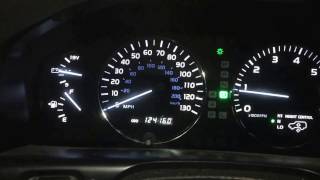
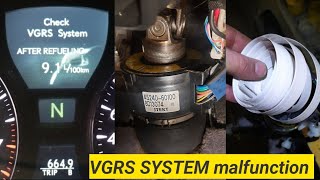
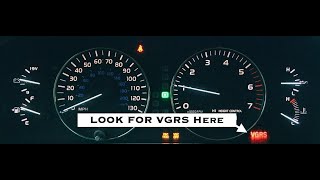
- Toyota Land Cruiser / Prado / Lexus LX470 (2003-2007) — On these models, C1531 points to an internal malfunction of the VGRS (Variable Gear Ratio Steering) ECU, which is a completely different and more complex issue. It is accompanied by VSC/TRAC lights and requires diagnosis with a tool like Techstream.
- Nissan Juke, Sentra, Altima, Versa (2011-2019) — A faulty brake light switch is a very common cause for intermittent or complete failure of the push-button start system. The car does not detect that the brake pedal is depressed and refuses to start. The Sentra has two switches on the pedal; the upper one is for the brake lights/start signal.
- Kia / Hyundai Optima, Sportage, Sonata, Elantra (2011-2016) — These models are known for brake light switch failures. Another very common issue is the plastic stopper pad on the pedal arm breaking, which prevents the switch from being depressed, causing the brake lights to stay on and drain the battery.
- Chevrolet Equinox, Malibu (2016-2024) — While not always logging a C1531, these vehicles use a 'Brake Pedal Position Sensor' for the same function. A critical repair note is that after replacement, a relearn procedure must be performed in both the Engine Control Module (ECM) and the Body Control Module (BCM). Failure to do so causes the code to return.
Manufacturer-Specific Notes
- Subaru: This is the most common brand for C1531. The cause is almost always a faulty or misadjusted switch. Subaru issued a massive recall (NHTSA Campaign ID: 19V149000, Subaru recall WUE-90) for over 1.3 million vehicles. The failure was caused by silicone-based chemicals from consumer products (like interior cleaners) creating a non-conductive film on the switch contacts. The fix is to replace the switch with the updated part (P/N 83311FJ001).
- Toyota / Lexus: C1531 typically points to a more serious internal ECU failure, either in the Power Steering Control Module or the Variable Gear Ratio Steering (VGRS) ECU. This is not a simple switch issue and is not a typical DIY repair. Diagnosis often requires checking if the code reappears after a steering angle sensor initialization.
- Mitsubishi: On models like the Lancer, C1531 indicates 'Motor terminal voltage abnormality' for the electric power steering system, pointing to a fault in the EPS motor, its wiring, or the EPS ECU. Diagnosis involves checking CAN bus lines before condemning the ECU.
- General Motors (Chevrolet/GMC): On modern GM vehicles, the part is called a Brake Pedal Position Sensor. After replacement, it requires a 'relearn' procedure to be performed in TWO separate modules: the Body Control Module (BCM) and the Engine Control Module (ECM). Failing to perform the relearn in both modules results in the code returning or other system malfunctions.
Real Owner Stories
2015 Subaru Forester with multiple dash lights
ABS, VDC, and Hill Start Assist lights came on, and the transmission was locked in Park. This happened shortly after a DIY brake light bulb change.
Outcome: The root cause was a blown 7.5A stop lamp fuse. The fuse had blown because the owner inadvertently installed an incorrect, higher-wattage (23W vs. 5W) brake light bulb, which created a short. Replacing the fuse with the correct amperage and installing the proper bulb resolved all symptoms and cleared the code.
Lesson: If a fault appears after a recent repair, always suspect the work you just did. A simple mistake like using the wrong bulb triggers misleading codes that point to more complex components like the brake light switch.
2012 Kia Optima with brake lights stuck on
The owner found their brake lights were staying on even with the car off, leading to a dead battery. The traction control light was also illuminated.
Outcome: The cause was a disintegrated brake pedal stopper pad, a small $8 rubber piece that presses the switch's plunger. Without the pad, the plunger remained extended, keeping the brake lights on. A temporary fix was made with a piece of rubber and double-sided tape, and a permanent fix was done by inserting a new stopper pad, which resolved the battery drain and cleared the warning lights.
Lesson: On Kia and Hyundai models, before replacing the switch itself, always visually inspect the small plastic/rubber stopper pad on the pedal arm. Its failure is a very common and inexpensive fix for 'brake lights stuck on' symptoms.
2006 Lexus LX470 with VGRS and VSC lights
The VGRS, VSC OFF, and VSC TRAC lights were all illuminated on the dash, and the steering wheel was off-center.
Outcome: The owner, guided by forum advice, used a diagnostic tool (Techstream) and found codes C1531 (ECU Malfunction) and C1289 (VGRS Malfunction). Instead of replacing the ECU, they first attempted a 'Zero Point Calibration' of the steering angle sensor. In many cases, this recalibration resolves the conflict and clears the codes. If that fails, the next step is sourcing a used VGRS ECU from a salvage yard for a fraction of the dealer price.
Lesson: On Toyota/Lexus vehicles, C1531 points to a steering system ECU failure, not the brake light switch. Before agreeing to a multi-thousand dollar ECU replacement, always attempt a Zero Point Calibration and investigate sourcing a warranted used or remanufactured ECU.
How to Prevent This Code From Triggering
- Periodically treat plastic/rubber components in the footwell (Every 1-2 years) — Applying a quality rubber and plastic protectant keeps parts like the brake pedal stopper pad from drying out, becoming brittle, and disintegrating, which is a common failure point on Kia/Hyundai models.
- Avoid using interior cleaning products containing silicone near the driver's footwell (Always) — On millions of recalled Subarus, the official cause of switch failure was silicone gas from consumer products seeping into the switch housing and depositing an insulating film on the electrical contacts.
- Apply dielectric grease to the switch connector (When replacing the switch) — Applying a small amount of dielectric grease to the electrical connector's pins seals out moisture and prevents corrosion, ensuring a reliable electrical signal over the long term, especially in humid climates.
- Install a relay for auxiliary brake lights (When installing aftermarket parts) — If you add trailer wiring or other auxiliary lighting that taps into the brake circuit, using a relay prevents overloading the stock brake light switch. Excessive electrical current causes premature failure of the switch's internal contacts.
Frequently Asked Questions
Can I just clear the C1531 code and keep driving?
You can clear the code, but it returns immediately if the underlying fault remains. Driving with this code disables your ABS and stability control, reducing vehicle safety in an emergency stop or skid.
Why did my ABS light come on for a brake light problem?
ABS and stability control systems require precise braking data to function correctly. If the brake light switch signal is unreliable or conflicts with the brake pressure sensor, the system shuts down as a precaution. This shutdown triggers the ABS warning light.
I replaced the switch and fuse, but the code came back. What now?
First, verify the switch adjustment using the manufacturer's exact pedal stroke specifications. Second, confirm you are using the correct wattage incandescent bulbs, as incorrect bulbs overload the circuit. Finally, inspect the plastic stopper on the pedal arm; if broken, the switch cannot function.
What is a common misdiagnosis when dealing with C1531?
A common and expensive mistake is replacing the ABS/VDC control module without thoroughly checking the brake light switch, its adjustment, and the stop lamp fuse. Another pitfall is replacing wheel speed sensors simply because the ABS light is on. On a Subaru, C1531 almost always leads back to the inexpensive brake switch.
Can aftermarket LED brake lights cause a C1531 code?
Yes, LED bulbs draw significantly less electrical current than standard incandescent bulbs. The vehicle's computer interprets this low current draw as a burnt-out bulb or a circuit fault, triggering the code. To prevent this, install an in-line load resistor for each LED bulb to mimic a traditional bulb's electrical load.
My car has a push-button start and it won't start. Could this code be the cause?
Absolutely. Most vehicles with push-button ignition require you to press the brake pedal to start the engine. If the C1531 code is present due to a failed brake switch, the car never receives the pedal signal and refuses to start.
Why are my cruise control and brake lights flashing on my Subaru?
Subaru programs its vehicles to disable cruise control as a safety precaution whenever a Check Engine Light triggers. The flashing cruise light alerts you to this disabled state. While a loose gas cap is a common trigger, a C1531 fault related to the brake switch also causes it.
Key Takeaways
- Code C1531 almost always indicates a faulty or misadjusted $25 brake light switch, particularly on 2008-2018 Subaru models.
- Driving with C1531 disables critical safety systems like ABS and stability control, increasing stopping distances and rear-end collision risks.
- Inspect the 7.5A stop lamp fuse and the $10 plastic brake pedal stopper pad before buying any replacement parts.
- Manufacturer definitions vary wildly; C1531 means a simple brake switch on a Subaru, but signals a $2,000+ steering ECU failure on Toyota and Lexus vehicles.
Helpful Videos

Shop the Parts Behind C1531
Below are the parts most often responsible for code C1531, ranked by how frequently each one is the actual culprit (per the diagnosis above). Tap any to see what we have for your vehicle.




The information in this article is provided for general reference and educational purposes only. Vehicle specifications, procedures, and part compatibility can vary by production date, trim level, and region. Always consult your vehicle's factory service manual and verify part numbers before purchasing or performing repairs. Safety-critical components such as airbags, seat belts, and braking systems should be installed by a qualified professional.
- 🧭 Diagnostic Flowchart
- 🎬 Helpful Videos
- 🛍️ Shop This Part
- What Does C1531 Mean?
- Can I Drive With C1531?
- Common Causes
- Symptoms
- Common Fixes & Costs
- DIY vs Professional
- Used vs. New Parts: Buying Guide
- What Happens If You Wait — Timeline
- Cost of Not Fixing It
- Diagnosis Steps
- When This Code Triggers (Freeze-Frame Conditions)
- Related Codes
- Climate & Environmental Factors
- How to Talk to a Mechanic About This Code
- Where to Take It: Dealer vs Independent vs Chain
- When to Walk Away From the Repair
- What Scan Tool You Need for This Code
- How to Clear the Code After You Fix It
- Will This Fail Emissions / State Inspection?
- Most Commonly Affected Vehicles
- Manufacturer-Specific Notes
- Real Owner Stories
- 2015 Subaru Forester with multiple dash lights
- 2012 Kia Optima with brake lights stuck on
- 2006 Lexus LX470 with VGRS and VSC lights
- How to Prevent This Code From Triggering
- Frequently Asked Questions
- Can I just clear the C1531 code and keep driving?
- Why did my ABS light come on for a brake light problem?
- I replaced the switch and fuse, but the code came back. What now?
- What is a common misdiagnosis when dealing with C1531?
- Can aftermarket LED brake lights cause a C1531 code?
- My car has a push-button start and it won't start. Could this code be the cause?
- Why are my cruise control and brake lights flashing on my Subaru?
- Key Takeaways
- 🎟️ Get 5% Off