

OBD-II Code C1551: Power Steering ECU Power Supply Failure
What C1551 means, why it triggers, and how to fix it comprehensively
- Code C1551 triggers when the Electronic Power Steering (EPS) module receives less than 9 volts or more than 16 volts during the ignition 'ON' cycle.
- Always test the 12V battery and inspect the 'EPS' or 'ECU-IG' fuses before replacing expensive components, as low system voltage is the most common trigger.
- On Hyundai and Kia models, a clicking noise in the steering column indicates a failed $10 flexible coupler, which often causes this electrical code as a secondary symptom.
- Replacing the Power Steering ECU requires a mandatory 'Torque Sensor Zero Point Calibration' using a professional bidirectional scan tool to restore steering assist.
What Does C1551 Mean?
Code C1551 indicates a fault in the ignition (IG) power supply circuit providing power to the Electronic Power Steering (EPS) control module. When this power supply fails, the EPS system shuts down as a fail-safe, reverting to heavy manual steering.
Technical definition: IG Power Supply Voltage Malfunction. The Power Steering ECU detects an open or short in the ignition (IG) power source circuit when the ignition switch is 'ON'. The ECU expects 9 to 16 volts and sets the code if voltage falls outside this range for 6 seconds.
Can I Drive With C1551?
Yes, But With Caution. You can drive, but steering requires significantly more physical effort. This is dangerous in emergencies, tight parking, or at low speeds. It increases driver fatigue, accident risk, and causes automatic failure during state safety inspections.
Common Causes
- Blown 'EPS' or 'ECU-IG' fuse (Very Common) — A blown fuse is the most frequent and inexpensive cause. Fuses protect the circuit from power surges or shorts and are the first component to check.
- Failing 12V battery or alternator (Common) — A weak 12V battery dropping below 9 volts during startup triggers this code, especially on Toyota Prius models.
- Poor connection or corroded terminals at the EPS ECU (Common) — Moisture and road salt corrode the EPS ECU connector, interrupting the 9-16V power flow.
- Damaged or shorted EPS circuit wiring (Common) — Wiring harnesses chafe against metal brackets or melt near exhaust components, causing shorts to ground or open circuits.
- Degraded flexible steering coupler (Hyundai/Kia) (Common) — A disintegrating rubber coupler inside the steering motor binds the assembly, causing electrical faults alongside a clicking noise.
- Faulty Power Steering ECU (Less Common) — Internal component breakdown, such as a failed capacitor or cracked solder joint, requires ECU replacement or repair.
- Faulty Ignition Switch (Rare) — Worn internal contacts in the ignition switch cause intermittent power loss to the EPS-IG circuit.
- Improperly Installed Aftermarket Accessories (Rare) — Remote starters or alarms tapped into ignition circuits create voltage drops that confuse the EPS module.
Symptoms
- Power steering warning light illuminated — The dashboard illuminates a steering wheel icon with an exclamation mark, or the letters 'PS' or 'EPS'.
- Heavy or difficult steering — Complete loss of power assist makes the steering wheel extremely hard to turn, especially at low speeds.
- Intermittent loss of power steering — Power assist cuts in and out over bumps or during turns, indicating a loose connection or chafed wire.
- Clicking or clunking noise from steering column — On Hyundai and Kia models, a rattling noise accompanies the electrical fault, pointing to a failed flexible steering coupler.
Diagnostic Flowchart
Tap your situation to follow the diagnostic path that matches what you're seeing on this code.
Common Fixes & Costs
- Replace blown fuse — Parts: $1-$10, Labor: $0 (DIY), ~0.2 hr book time (DIY)
- Replace 12V battery — Parts: $150-$250, Labor: $0-$50, ~0.5 hr book time (DIY)
- Repair wiring or clean ground connection — Parts: $5-$50, Labor: $150-$450, ~2.0 hr book time (Intermediate)
- Replace Flexible Steering Coupler (Hyundai/Kia)
— Parts: $5-$20, Labor: $300-$500, ~2.5 hr book time
(Professional)
: OEM
: OEM - Replace Power Steering ECU
— Parts: $250-$1500+, Labor: $150-$350, ~2.5 hr book time
(Professional)
: OEM
: OEM - Repair Power Steering ECU (Mail-in service) — Parts: $150-$300, Labor: $100-$200, ~1.5 hr book time (Intermediate)
DIY vs Professional
- Replace blown fuse — Beginner:
- Replace 12V battery — Beginner:
- Repair wiring or clean ground connection — Beginner:
- Replace Flexible Steering Coupler (Hyundai/Kia) — Beginner:
- Replace Power Steering ECU — Beginner:
Used vs. New Parts: Buying Guide
When a used part is worth it: A used or remanufactured Power Steering ECU is a cost-effective option for older, high-mileage vehicles where a new OEM part is overly expensive or unavailable.
Donor-vehicle mileage cap: roughly under 80000 miles for the part to have meaningful remaining life.
Donor quality checklist:
- Verify the part number matches exactly.
- Purchase from a reputable seller offering a warranty (30-90 days for used, 1 year for remanufactured).
- Avoid parts from vehicles with flood or severe collision damage.
- Confirm the seller tests the modules before shipping.
Decision logic:
- If Vehicle is under warranty or less than 5 years old → Buy new OEM to ensure compatibility and longevity.
- If Budget is the primary concern on an older vehicle → A tested used or remanufactured ECU is a reasonable choice.
- If The goal is a balance of cost and reliability → Favor a remanufactured unit from a known brand, which includes a longer warranty than a used part.
Warranty tradeoff: Used parts typically have a 30-90 day functional warranty. Remanufactured parts come with a 1-year to limited lifetime warranty. New OEM parts carry a 1-year warranty.
Worst-case if a used part fails: $500-$1000 if a used/reman part is dead on arrival, requiring you to pay for diagnostic, removal, and re-installation labor a second time.
What Happens If You Wait — Timeline
- First Occurrence: Power steering fails intermittently on startup and is restored by restarting the car. This indicates a borderline condition like a weak battery. (MPG impact: 0%% · Added cost: $0)
- 1-4 weeks: The failure becomes permanent. The warning light stays on constantly, and there is no power assist at any time. (MPG impact: 0%% · Added cost: $50-$150 (Cost of professional diagnosis))
- 1-6 months: Heavy steering dramatically increases the risk of an accident in emergency maneuvers. The vehicle automatically fails state safety inspections. (MPG impact: 0%% · Added cost: $500+ (Potential insurance deductible from a low-speed collision))
- 6+ months: Continued use puts secondary strain on mechanical steering components like the steering rack, while the severe risk of a major accident persists. (MPG impact: 0%% · Added cost: $2000+ (Potential cost of a significant at-fault accident))
Cost of Not Fixing It
- Immediate: Significantly increased risk of an accident due to heavy steering, especially during low-speed maneuvers or emergencies. Driver fatigue increases rapidly. (Added cost: Cost of an insurance deductible or total loss of vehicle in a crash.)
- 1-6 months: Accelerated wear on mechanical steering components like tie rods and the steering gear due to increased manual force. (Added cost: $200-$800)
- 6+ months: The vehicle automatically fails state safety inspections, rendering it illegal to drive on public roads. (Added cost: Towing and repair costs become unavoidable.)
Diagnosis Steps
- Scan for All Codes
Use a professional-grade OBD-II scanner to access Chassis (C) and Network (U) codes. Document all codes from every module. Related codes like C1552, C1554, or U0131 provide crucial context.
Tools: OBD-II Scanner (with Chassis/ABS capability) (Beginner) - Inspect the Fuses
Locate the fuse boxes. Consult the owner's manual to identify the specific fuses for the Electronic Power Steering, labeled 'EPS', 'ECU-IG', or 'P/S'. Test the fuses for continuity with a multimeter. A reading of less than 1 ohm is required.
Tools: Owner's Manual, Fuse Puller, Multimeter (Beginner) - Perform a Battery and Charging System Test
Test the 12V battery's state of health and the alternator's output. With the engine running, voltage must be stable between 13.2 and 14.8 volts. Low system voltage (below 12V with engine off) triggers module errors.
Tools: Multimeter or Battery Tester (Beginner) - Inspect the ECU Connector and Wiring
Locate the power steering ECU. Disconnect its main electrical connector and inspect for corrosion, water damage, backed-out pins, or harness damage.
Tools: Repair Manual, Flashlight (Intermediate) - Check for Voltage at the ECU Connector
With the connector unplugged and the ignition ON (engine off), test for voltage at the 'IG Power Supply' pin. You must see a steady voltage between 9.0 and 16.0 volts. A reading of 0V indicates an open circuit or blown fuse.
Tools: Multimeter, Repair Manual with Wiring Diagram (Intermediate) - Check ECU Ground Circuit Resistance and Voltage Drop
With the ignition OFF, measure resistance between the ECU's main ground pin and a clean chassis ground point. It must be less than 1.0 Ohm. Next, with the ECU connected and ignition ON, perform a voltage drop test on the ground pin. A reading above 0.2 volts indicates high resistance.
Tools: Multimeter, Repair Manual with Wiring Diagram (Advanced) - Perform a 'Wiggle Test'
Have a helper turn the steering wheel back and forth while you carefully wiggle the EPS wiring harness and connectors. If the power steering cuts out, you have isolated the wiring problem.
Tools: Assistant (Advanced) - Analyze Live Data PIDs
Access the EPS module's live data stream. Monitor the 'IG Power Supply' PID. With the ignition on, this value must mirror battery voltage. Erratic values contradicting direct multimeter measurements indicate an internal ECU fault.
Tools: Professional Scan Tool (Advanced) - Check for Parasitic Draw from Aftermarket Devices
Temporarily disconnect remote starters or aftermarket alarms tapped into ignition circuits. If the code disappears, the device is creating a partial short.
Tools: Basic Hand Tools (Advanced)
When This Code Triggers (Freeze-Frame Conditions)
- Ignition Status: ON (Fault is detected within seconds of turning the key to the ON position, before the engine starts.)
- EPS ECU IG Pin Voltage: < 9V or > 16V (The code sets when the voltage read at the ignition power supply pin falls outside the acceptable range.)
- Vehicle Speed: 0 mph (This is a startup self-test fault, typically occurring when the vehicle is stationary.)
- Engine RPM: 0 (The fault is logged during the Key On, Engine Off (KOEO) power-up sequence.)
Related Codes
- C1552 — Points to a fault in the P-IG power supply circuit (high-amperage power for the steering motor). Diagnose C1551 first, as its failure triggers C1552.
- C1554 — Indicates a failure of the power steering relay integrated inside the EPS ECU. C1554 is an internal failure requiring ECU replacement.
- C1555 — Indicates a motor relay welding failure, definitively pointing to a failed relay inside the control unit.
- U0131 — Lost Communication with Power Steering Control Module. This is a symptom of C1551; without ignition power, the EPS module cannot communicate on the CAN bus.
Climate & Environmental Factors
- Road Salt / High Humidity: Salt spray and moisture seep into connectors for the EPS ECU and wiring harness, causing high resistance or short circuits.
- Extreme Cold: Extreme cold places heavy strain on the 12V battery. A weak battery fails to provide the stable voltage (above 9V) required by the EPS module during startup.
Where to Take It: Dealer vs Independent vs Chain
- Dealer:
Best for: Vehicles still under warranty., Repairs requiring ECU replacement and programming with manufacturer-specific software (e.g., Toyota Techstream).
Downsides: Significantly higher labor rates (1.5-2x) than independent shops., May default to replacing an entire expensive assembly rather than diagnosing a simpler wiring fault. (Typical cost: +50% vs. baseline) - Independent Shop:
Best first choice. A reputable independent shop is equipped for the initial diagnostic steps. If they determine the ECU requires programming they cannot perform, take it to a dealer for that final step.
Best for: Out-of-warranty vehicles where cost is a factor., Initial diagnosis of C1551, including checking fuses, battery, wiring, and grounds., Known pattern failures like the Hyundai/Kia flexible coupler.
Downsides: Quality varies widely; vet shops based on reviews and ASE certifications., May not own the expensive software needed for ECU calibration after replacement. (Typical cost: +0% vs. baseline) - Chain Shop:
Avoid for C1551 diagnosis. They are generally not the right choice for tracing electrical circuit faults. The risk of an incorrect and expensive repair is high.
Best for: Simple, routine maintenance like oil changes, tires, and battery replacement.
Downsides: Technicians lack in-depth electrical diagnostic training for a C-code., Higher risk of misdiagnosis and unnecessary parts replacement. (Typical cost: -10% vs. baseline)
When to Walk Away From the Repair
If the estimated repair cost for the power steering exceeds 40-50% of your car's private-party value, carefully consider your options.
- Car worth $3500, fix is $1800: Walk away. The repair cost is over 50% of the car's value. It is not a sound financial decision.
- Car worth $10000, fix is $1200: Fix it. The repair cost is well below the threshold and restores a critical safety function.
- Car worth $5000, fix is $450: Fix it. A sub-$500 repair for a wiring or coupler issue on a $5,000 car is an excellent value.
What Scan Tool You Need for This Code
Minimum: A scanner that reads and clears Chassis (C) codes, sometimes listed as ABS/SRS/Transmission systems.
A standard $20-$40 OBD-II code reader only reads Powertrain (P) codes and will NOT see the C1551 code. You must use a tool that accesses modules like ABS and EPS.
Budget: BlueDriver Pro (~$100) — Connects to a smartphone app and reads/clears enhanced codes (including Chassis 'C' codes). It views live data from the EPS module, useful for diagnosis.
Mid-range: Foxwell NT510 Elite (~$180) — Offers manufacturer-specific diagnostics. It includes the special function for 'Steering Angle Sensor Calibration', necessary if the ECU is replaced.
Professional: Autel MaxiCOM MK808 / MK808S (~$450-550) — A professional tablet scanner offering full bidirectional control. It performs the 'Torque Sensor Zero Point Calibration' required after an EPS ECU replacement.
Rent vs buy: Most parts store loaner tools are basic code readers that cannot see 'C' codes. Buying a tool like the BlueDriver or Foxwell NT510 is a worthwhile investment.
How to Clear the Code After You Fix It
- Fix the underlying electrical fault (e.g., replace fuse, repair wire, replace battery).
- Use an OBD-II scan tool to clear the Chassis (C) fault codes.
- Cycle the ignition off, then on, and confirm the warning light does not return.
- If the ECU was replaced, perform the manufacturer-specific Torque Sensor Zero Point Calibration.
Drive cycle (~15 minutes): A specific drive cycle is not required. After clearing the code, a 15-minute test drive with several left and right turns confirms the power assist is functioning correctly.
Readiness monitors affected: None directly by C1551, All monitors reset if the battery is disconnected for the repair
Before emissions retest: drive at least 100 miles to fully set monitors.
Watch out for:
- Clearing the code without fixing the electrical problem results in the code returning immediately.
- Replacing the Power Steering ECU without performing the mandatory torque sensor calibration keeps the system inoperative.
Will This Fail Emissions / State Inspection?
Yes — this code typically fails an OBD-II emissions inspection.
- California: An illuminated power steering warning light constitutes a safety system failure and causes automatic inspection failure.
- New York: The power steering system is a required component of the annual safety inspection. A lit warning light results in an automatic failure.
- Texas: A power steering system that is not operating, indicated by the warning light and lack of assist, fails the state safety inspection.
Most Commonly Affected Vehicles
- Toyota Prius (2001-2009) — Extremely common on Gen 1 and Gen 2 models. Often caused by an aging 12V auxiliary battery or internal failure of the Power Steering ECU.
- Toyota RAV4 (2006-2012) — Known for internal failures of the Power Steering ECU. Mail-in ECU repair services are a cost-effective option.
- Lexus LS430 (2001-2006) — The code is often set by the Variable Gear Ratio Steering (VGRS) control ECU. Diagnosis focuses on the 'ECU-IG1' fuse and power/ground to the VGRS module.
- Hyundai Sonata, Elantra (2011-2015) — The flexible coupler (56315-2K000-FFF) is a famous failure point for noise, but the entire column, motor, or ECU also fails, triggering this code.
- Kia Optima, Sorento, Soul (2011-2015) — Shares the same MDPS architecture as Hyundai. TSB CHA084 provides guidance on diagnosing the motor, ECU, or column housing.
- Honda Civic, Accord (2012-2022) — EPS issues arise from a blown main fuse, especially after a collision or an incorrect jump-start.
- Subaru Impreza, WRX, Forester, Outback (2012-2020) — Known for critical ground points on the engine block that corrode or are left loose after other repairs, causing intermittent EPS faults.
- Chevrolet Equinox, GMC Terrain (2012-2016) — TSB 16-NA-004 points to the engine wiring harness chafing on the high-pressure fuel pump cover, causing shorts.
Manufacturer-Specific Notes
- Toyota/Lexus: A mandatory 'Torque Sensor Zero Point Calibration' is required after ECU replacement using a tool like Techstream.
- Hyundai/Kia: These brands have an extended warranty (Campaign TXX7) for the flexible steering coupler (part 56315-2K000-FFF) to 10 years/100,000 miles.
- GM (Chevrolet/GMC): TSB 16-NA-004 highlights a specific wiring harness chafing issue on the fuel pump cover as a common cause for power steering failure on 2012-2016 Equinox/Terrain models.
- Subaru: Recall WUC-88 (NHTSA 19V065000) for 2019 Forester/Crosstrek addresses an internal EPS unit connector that short circuits.
Real Owner Stories
2008 Toyota Prius at 150K miles - The Simple Fix
Owner reported the red 'P/S' warning light came on and steering became very heavy. The code C1551 was present.
What they tried:
- Owner suspected the expensive power steering ECU was faulty.
- Performed a Battery and Charging System Test.
- The 12V auxiliary battery was over 5 years old and holding a charge of only 11.8V.
Outcome: Replaced the 12V auxiliary battery for $200. The code was cleared and did not return. Power steering function was fully restored.
Lesson: On a Toyota Prius, C1551 is frequently caused by a weak 12V auxiliary battery. Always test battery health before assuming a complex ECU failure.
2013 Hyundai Elantra at 85K miles - The Misdiagnosis Story
Owner experienced a loud 'clunk' and 'clicking' noise when turning the wheel, followed by an intermittent loss of power steering and a C1551 code.
What they tried:
- A general repair shop diagnosed a faulty power steering ECU.
- The shop replaced the ECU for $900, but the clicking noise remained and the fault returned.
Outcome: A Hyundai specialist recognized the clicking noise. The actual cause was a disintegrated flexible steering coupler. Debris from the failed coupler caused the steering motor to bind, leading to the electrical fault. Replacing the $10 coupler fixed both the noise and the code.
Lesson: On Hyundai/Kia vehicles, a clicking noise is a critical symptom. The root cause is often the mechanical failure of the flexible coupler, not the ECU.
2010 Toyota RAV4 at 110K miles - The Wiring Gremlin
Power steering failed intermittently on startup. The C1551 code was stored. Battery and fuses were good.
What they tried:
- A technician found 0V at the IG power supply pin at the ECU connector.
- The technician traced the IG power supply wire from the fuse box.
- A 'wiggle test' on the harness near the fuse box caused the power to flicker.
Outcome: A wire in the harness had chafed against a metal bracket behind the dashboard, causing an intermittent open circuit. The wire was repaired for $150 in labor. The ECU was not faulty.
Lesson: Do not replace an ECU based on a code alone. A reading of 0V at the connector proves the ECU isn't getting power, meaning the problem is upstream in the wiring.
How to Prevent This Code From Triggering
- Maintain Battery Health (Test annually after 3 years) — The EPS module is highly sensitive to voltage. A weak battery dropping below 9V during startup is a leading cause of C1551.
- Clean Battery Terminals and Ground Points (Every 12-24 months) — Corrosion creates high resistance, causing voltage drops to the EPS module. Clean terminals with a baking soda solution and a wire brush.
- Apply Dielectric Grease to Connectors (When connectors are exposed for other repairs) — Applying dielectric grease to weather seals blocks moisture intrusion, preventing corrosion that leads to power supply faults.
- Regularly Wash the Vehicle's Undercarriage (Monthly, especially in winter) — Washing away road salt reduces corrosive elements that damage wiring harnesses and electrical connectors.
Frequently Asked Questions
Can I reset the C1551 code myself?
Yes, you can clear the code with an OBD-II scanner. However, because C1551 indicates a hardware or circuit failure, the code returns immediately upon the next ignition cycle if the root cause remains unfixed.
What does 'IG Power Supply' actually mean?
'IG' stands for 'Ignition'. This refers to a power circuit energized only when the key is in the 'ON' or 'START' position. Code C1551 means the power steering module is missing this crucial wake-up signal.
I replaced the EPS ECU and the code is still there. What now?
Verify the part number is an exact match for your vehicle's VIN. You must perform a 'Torque Sensor Zero Point Calibration' using a dealer-level scan tool after ECU replacement. The system remains inoperative and keeps the code active until this calibration succeeds.
What are the most common misdiagnosis mistakes for C1551?
The biggest mistake is replacing the expensive Power Steering ECU without performing basic electrical checks. Always rule out blown fuses, a weak 12V battery, and poor ground connections first. Another error is failing to perform the required steering angle calibration after installing a new ECU.
Can a bad ground cause the C1551 code?
Yes. A poor ground connection increases circuit resistance. The EPS module monitors its power and ground; a weak ground path mimics a power supply problem, triggering the C1551 code.
What happens if the power steering light comes on and then goes off?
This indicates an intermittent fault. It is usually caused by a loose connector, a chafing wire touching ground, or a failing relay. Finding the root cause requires performing a 'wiggle test' on the wiring harness while monitoring live data.
My power steering failed right after changing the battery. Are they related?
Yes. A voltage spike or accidental reverse polarity during a battery swap easily blows the main EPS fuse. Always check the high-amperage EPS fuses and ensure battery terminals are tight and clean after a replacement.
Key Takeaways
- Code C1551 triggers when the Electronic Power Steering (EPS) module receives less than 9 volts or more than 16 volts during the ignition 'ON' cycle.
- Always test the 12V battery and inspect the 'EPS' or 'ECU-IG' fuses before replacing expensive components, as low system voltage is the most common trigger.
- On Hyundai and Kia models, a clicking noise in the steering column indicates a failed $10 flexible coupler, which often causes this electrical code as a secondary symptom.
- Replacing the Power Steering ECU requires a mandatory 'Torque Sensor Zero Point Calibration' using a professional bidirectional scan tool to restore steering assist.
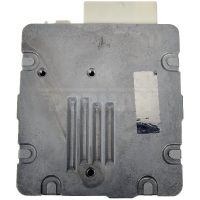
Shop the Parts Behind C1551
Below are the parts most often responsible for code C1551, ranked by how frequently each one is the actual culprit (per the diagnosis above). Tap any to see what we have for your vehicle.



The information in this article is provided for general reference and educational purposes only. Vehicle specifications, procedures, and part compatibility can vary by production date, trim level, and region. Always consult your vehicle's factory service manual and verify part numbers before purchasing or performing repairs. Safety-critical components such as airbags, seat belts, and braking systems should be installed by a qualified professional.
- 🧭 Diagnostic Flowchart
- 🛍️ Shop This Part
- What Does C1551 Mean?
- Can I Drive With C1551?
- Common Causes
- Symptoms
- Common Fixes & Costs
- DIY vs Professional
- Used vs. New Parts: Buying Guide
- What Happens If You Wait — Timeline
- Cost of Not Fixing It
- Diagnosis Steps
- When This Code Triggers (Freeze-Frame Conditions)
- Related Codes
- Climate & Environmental Factors
- Where to Take It: Dealer vs Independent vs Chain
- When to Walk Away From the Repair
- What Scan Tool You Need for This Code
- How to Clear the Code After You Fix It
- Will This Fail Emissions / State Inspection?
- Most Commonly Affected Vehicles
- Manufacturer-Specific Notes
- Real Owner Stories
- 2008 Toyota Prius at 150K miles - The Simple Fix
- 2013 Hyundai Elantra at 85K miles - The Misdiagnosis Story
- 2010 Toyota RAV4 at 110K miles - The Wiring Gremlin
- How to Prevent This Code From Triggering
- Frequently Asked Questions
- Can I reset the C1551 code myself?
- What does 'IG Power Supply' actually mean?
- I replaced the EPS ECU and the code is still there. What now?
- What are the most common misdiagnosis mistakes for C1551?
- Can a bad ground cause the C1551 code?
- What happens if the power steering light comes on and then goes off?
- My power steering failed right after changing the battery. Are they related?
- Key Takeaways
- 🎟️ Get 5% Off